Madrid, Toledo, Barcelona
Spain's two great capitals and the city of three cultures, linked by high-speed rail.
- Madrid
- Toledo
- Segovia
- Barcelona
Day by day
- Day 1
Arrival in Madrid: Puerta del Sol and Plaza Mayor
Spain is in the Schengen area and uses the euro: EU citizens need only a valid identity card. Madrid, the capital, lies in the centre of the country on the plateau, at about 650 metres; summers are very hot and winters can be cold.
From Barajas airport you reach the centre by metro, local train or express bus in about thirty to forty minutes.
In the afternoon start at the Puerta del Sol, the city's most famous square, home to kilometre zero, the tile from which all Spain's national roads are measured, and the statue of the bear and the strawberry tree, Madrid's symbol. On New Year's Eve people gather here to eat twelve grapes on the twelve strokes of the clock.
Then walk to the Plaza Mayor, a few minutes away, a large seventeenth-century rectangular square enclosed by arcaded buildings with balconies, where markets, festivals and bullfights were once held. Nearby, the San Miguel market, in an early twentieth-century iron and glass building, has stalls of Spanish produce where you eat tapas standing up.
In the evening do as the Spanish do: dinner is late, after nine, moving from bar to bar for tapas, small plates to share, with a glass of wine or a small beer, called a caña.
Practical tip: in crowded areas of the centre and on the metro watch out for pickpockets; carry your backpack in front.
- Day 2
The Prado, the Retiro and La Latina
In the morning visit the Prado, one of the world's most important art museums, with the largest collection of Spanish painting. The most famous rooms are those of Velázquez, with Las Meninas, the portrait of the royal family with the painter himself at work, Goya, with the Black Paintings and The Third of May 1808, showing the executions, and El Greco. There are also masterpieces by Bosch, such as The Garden of Earthly Delights, Titian, Raphael and Rubens. A ticket costs 15 euros, and entry is at no cost in the last two hours of opening, with long queues. Buy your ticket online and choose the rooms you want to see beforehand: you cannot see everything in one day.
In the afternoon stroll through the Retiro park behind the museum, the city's great park, with a lake where you rent rowing boats, the Crystal Palace, a nineteenth-century iron and glass greenhouse used for art exhibitions, and the rose garden. The Prado and Retiro landscape is a UNESCO World Heritage site.
In the evening head to La Latina, one of the oldest districts, with lanes full of tapas bars, especially on Cava Baja street. On Sunday mornings the Rastro, the great open-air flea market, takes place here.
Practical tip: after the Prado, the Thyssen and Reina Sofía museums are a short walk away; a pass for all three saves money if you want to see them all.
- Day 3
The Royal Palace and the Reina Sofía
In the morning visit the Royal Palace, the official residence of the King of Spain, although the royal family lives in a smaller palace outside the city. It is one of the largest royal palaces in Europe, with more than three thousand rooms, built in the eighteenth century on the site of an old Arab fortress. You visit the state rooms, with ceilings painted by Tiepolo, the throne room, the royal pharmacy and the royal armoury, one of the world's most important collections of arms and armour. In front of the palace stand Almudena Cathedral and the Campo del Moro gardens.
On Wednesdays and Saturdays at noon the changing of the guard takes place in front of the palace; once a month there is the solemn changing, with horses and music.
In the afternoon visit the Reina Sofía museum of modern and contemporary art, near Atocha station, home to Picasso's Guernica, the large black and white painting of the destruction of the Basque town during the Spanish Civil War in 1937, along with works by Dalí and Miró.
In the evening walk along the Gran Vía, the great avenue of theatres and shops with early twentieth-century buildings, and go up to one of the rooftop terraces to watch the sunset.
Practical tip: buy Royal Palace tickets online, as they sell out in high season; also check closing days for official ceremonies.
- Day 4
Toledo, the city of three cultures
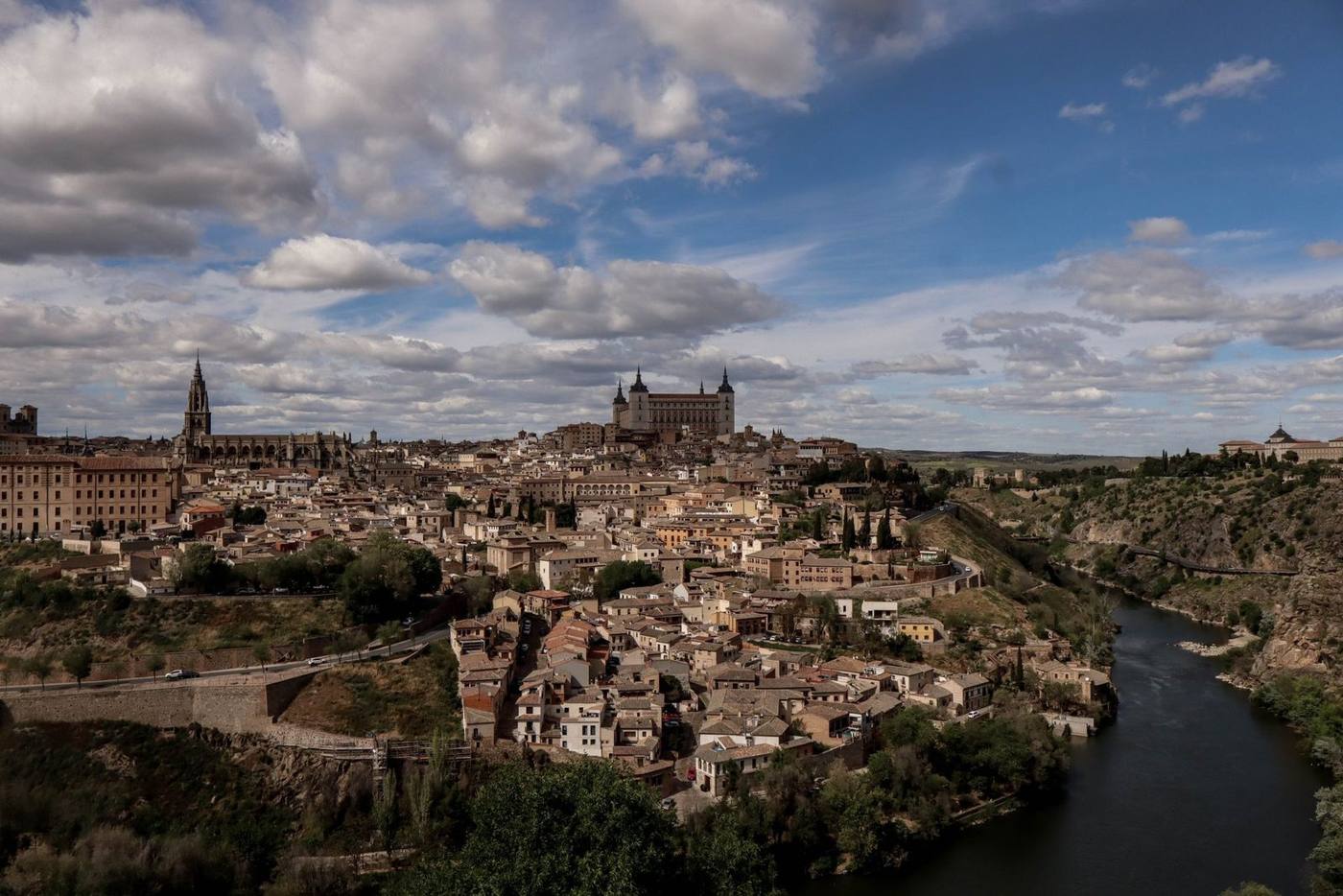
Today is a day trip to Toledo, about thirty minutes from Madrid by high-speed train from Atocha station. The old town, a UNESCO World Heritage site, stands on a rocky hill surrounded on three sides by a bend of the River Tagus. For centuries in the Middle Ages, Christians, Muslims and Jews lived side by side here, which is why Toledo is called the city of three cultures.
From the station go up to the centre by bus or escalator, then visit the cathedral, one of Spain's largest Gothic churches, with its carved wooden choir, the Transparente, a Baroque work that lets light in through the ceiling above the altar, and the sacristy with paintings by El Greco and Goya.
Then visit the church of Santo Tomé, home to El Greco's famous painting The Burial of the Count of Orgaz, and the Jewish quarter, with the Santa María la Blanca synagogue and its white horseshoe arches, and the Tránsito synagogue with the Sephardic museum. El Greco lived and worked in Toledo for almost forty years; his house museum is in the quarter.
In the afternoon cross the river and climb to the Valle viewpoint on the opposite hill for the most famous view of the city. Try Toledo marzipan, an almond and sugar sweet typical of the city.
In the evening return to Madrid by train.
Practical tip: Toledo's streets are steep and stony; wear comfortable shoes and carry water, especially in summer.
- Day 5
Segovia: the aqueduct and the Alcázar
Today is a day trip to Segovia, about thirty minutes from Madrid by high-speed train from Chamartín station, then a short bus ride to the centre. Segovia's old town is also a UNESCO World Heritage site.
The first monument is the Roman aqueduct, built about two thousand years ago, with more than 160 arches of granite blocks stacked without mortar, up to about twenty-eight metres high in Azoguejo square. It carried water to the city until recent times. Climb the steps beside it to see it from above.
Then walk through the centre to the cathedral, the last great Gothic cathedral built in Spain, in the sixteenth century, called the lady of cathedrals, and to the Alcázar, the castle on top of the rock where two rivers meet, with its pointed towers. It is said to have inspired Sleeping Beauty's castle. You visit the royal rooms, with wooden ceilings decorated in Moorish style, and climb the tower for the view over the countryside.
For lunch try cochinillo asado, roast suckling pig, Segovia's signature dish, traditionally cut with the edge of a plate to show how tender it is.
In the evening return to Madrid by train.
Practical tip: Segovia is cooler than Madrid, even on summer evenings; bring a light jacket.
- Day 6
The train to Barcelona and the Barri Gòtic
In the morning take the high-speed train from Madrid to Barcelona, in about two and a half hours at more than three hundred kilometres an hour. Several companies run the route at different prices; book ahead for the best fares.
Barcelona is the capital of Catalonia, a region with its own language, Catalan, spoken alongside Spanish, and a strong identity. The city lies on the Mediterranean between the hills and the beach.
In the afternoon stroll through the Barri Gòtic, the Gothic Quarter, the ancient heart of the city, with narrow stone lanes, hidden squares and Santa Eulàlia cathedral, whose cloister is home to thirteen white geese, one for each year of the saint, martyred at thirteen. Nearby are the King's Square and remains of the Roman walls and temple.
Then walk down La Rambla, the city's most famous pedestrian avenue, to the Boqueria, the great covered market, with stalls of fruit, ham and fish and bars where you eat at the counter.
In the evening visit the Born district, with the basilica of Santa Maria del Mar, one of the most beautiful Catalan Gothic churches, and the Picasso Museum in the medieval palaces of carrer de Montcada.
Practical tip: in Barcelona, especially on La Rambla, the metro and the beach, pickpockets are very active; never leave your phone on a bar table.
- Day 7
The Sagrada Família and Passeig de Gràcia
In the morning visit the Sagrada Família, the great basilica designed by Antoni Gaudí, begun in 1882 and still under construction. Gaudí worked on it for more than forty years and is buried in the crypt. The façades are covered with sculptures telling the life of Christ, and the interior feels like a stone forest, with columns branching like trees and stained glass filling the church with blue and green light on one side and red and orange on the other. The Tower of Jesus, the tallest, was completed recently. The basic ticket starts at 26 euros and must be bought online with a date and time; with the tower climb it costs more.
In the afternoon walk along Passeig de Gràcia, the city's elegant boulevard, lined with buildings in Catalan modernisme, the architectural style of the early twentieth century. Here stand two of Gaudí's most famous works: Casa Batlló, with its wavy façade covered in coloured glass and a roof shaped like a dragon's back, and Casa Milà, known as La Pedrera, with its undulating stone façade and chimneys shaped like warriors on the roof. Both can be visited with a ticket.
In the evening, in season, watch the light and music show of the Magic Fountain of Montjuïc.
Practical tip: the Sagrada Família can only be entered with an online ticket at the booked time; cover shoulders and knees.
- Day 8
Park Güell, Gràcia and Barceloneta
In the morning visit Park Güell on the hill, a park Gaudí designed as a residential estate for wealthy families, never completed and later turned into a public park. The monumental zone, with paid entry, has the large terrace with the wavy bench covered in broken ceramic mosaic, trencadís, the staircase with the mosaic salamander, a symbol of the city, and the hall of a hundred columns. A ticket costs 18 euros and must be bought online with an entry time. From the park you enjoy views over the whole city to the sea.
Then walk down into Gràcia, an old village absorbed by the city, with squares full of bars and children playing, craft workshops and a village atmosphere. In August, during the Festa Major, residents decorate the streets with handmade installations.
In the afternoon go to Barceloneta, the old fishermen's quarter by the sea, with narrow streets and a long sandy beach where you swim and walk along the promenade to the Olympic port.
In the evening try seafood paella or fideuà, a kind of paella made with short thin noodles, by the sea.
Practical tip: for Park Güell choose an early morning slot, with fewer people and the best light for photos.
- Day 9
Montserrat or Girona
Today is a trip out of the city. The two classic choices are Montserrat and Girona.
Montserrat, about an hour from Barcelona by train and then cable car or rack railway, is a strangely shaped mountain over a thousand metres high, with rocks that look like stone fingers. Halfway up stands the Benedictine monastery, one of Catalonia's holiest places, home to La Moreneta, a medieval Black Madonna statue that pilgrims come to touch. At midday on weekdays the Escolania, one of Europe's oldest boys' choirs, sings in the basilica. From the monastery trails and funiculars lead to the peaks, such as the path to Sant Jeroni, the highest point.
Girona, about forty minutes from Barcelona by high-speed train, is a medieval city on the River Onyar, with colourful houses overlooking the water, the red iron bridge designed by Gustave Eiffel, the cathedral with its Baroque staircase and one of Europe's best-preserved Jewish quarters, the Call. You can walk round the medieval walls.
In the evening return to Barcelona for a last dinner.
Practical tip: at the top of Montserrat it is colder and windy; bring a jacket and walking shoes. Both trips are easy to do on your own by train, without a guided tour.
- Day 10
The last morning and departure
The last morning is for whatever you missed. You can go up Montjuïc, the hill by the sea, by cable car from the port or by funicular from the metro, to visit the Joan Miró Foundation, with the colourful works of the Catalan painter, or Montjuïc castle, overlooking the port. Alternatively visit the Palau de la Música Catalana, a modernista concert hall with a stained glass ceiling, or the Hospital de Sant Pau, a former hospital with decorated pavilions.
El Prat airport is about thirty minutes from the centre by train, metro or express bus.
Things to take home: vacuum-packed ibérico ham, olive oil, saffron, turrón, Spanish nougat, Rioja wine or Catalan cava, and hand-painted ceramics.
Practical tip: in Barcelona and Madrid a small tourist tax is added to accommodation prices, per person per night; allow for it. Spain is considered safe for travellers, with care needed mainly against pickpockets in tourist areas. Check your government's travel advice before leaving, and allow time for airport security checks. If you have time left, make a last stop at the Boqueria market to buy dried fruit, spices and cheese to take home, and have a last coffee with a pastry in one of the historic cafés of the centre.
A trip of cities and museums, made easy by high-speed trains. Toledo and Segovia are simple day trips from Madrid. In Barcelona, book the Sagrada Família and Park Güell ahead, and watch out for pickpockets in the centre.
Before you go
- Documents and visa
- EU citizens need a valid identity card or passport. Other nationalities should check the Schengen rules.
- Health and vaccines
- No vaccines required. EU citizens should bring their EHIC; in summer the south often goes above 40 °C. Emergencies: 112.
- Money and payments
- Euro. Cards are accepted almost everywhere. Catalonia, the Balearics and some other areas charge a tourist tax per person per night.
- Power sockets
- Types C and F, 230 volts.
- Time zone
- Central European Time (UTC+1, summer UTC+2); the Canary Islands are one hour behind.
- Safety
- A safe country. In Barcelona and Madrid pickpocketing is common on the metro, on the Ramblas and in crowded places. Official advice: GOV.UK.
Information checked in November 2026 for Italian and EU citizens. Rules change: always check before you travel.
Variations
In 6 days: Madrid with the Prado and the Royal Palace, a day trip to Toledo, then two days in Barcelona with the Sagrada Família and Park Güell.
In 14 days: add Andalusia, with Seville, Córdoba and the Alhambra in Granada, reachable from Madrid by high-speed train.
Frequently asked questions
How much is the Prado?
A ticket costs 15 euros, and entry is at no cost in the last two hours of opening. It is best to buy online to avoid queues.
Do I need to book the Sagrada Família?
Yes: entry is only with an online ticket for a set date and time. The basic ticket starts at 26 euros; with the tower climb it costs more.
How do I get from Madrid to Barcelona?
By high-speed train, in about two and a half hours, centre to centre. Several companies run the route: booking early gets better prices.
Indicative itinerary written by World Atlas. Before booking, check timetables, seasonal openings, documents and safety.
 7 daysEasy
Andalusia: Seville, Córdoba and Granada
Spain's three most beautiful Moorish cities, among flamenco, patios and the Alhambra.
 7 daysEasy
Tenerife and La Gomera
Sun all year: Teide volcano, the Los Gigantes cliffs, whales and the La Gomera forest.
 10 daysModerate
Green Spain: Basque Country, Cantabria and Asturias
The Spain you don't expect: pintxos in San Sebastián, the Guggenheim, cliffs and the Picos de Europa.