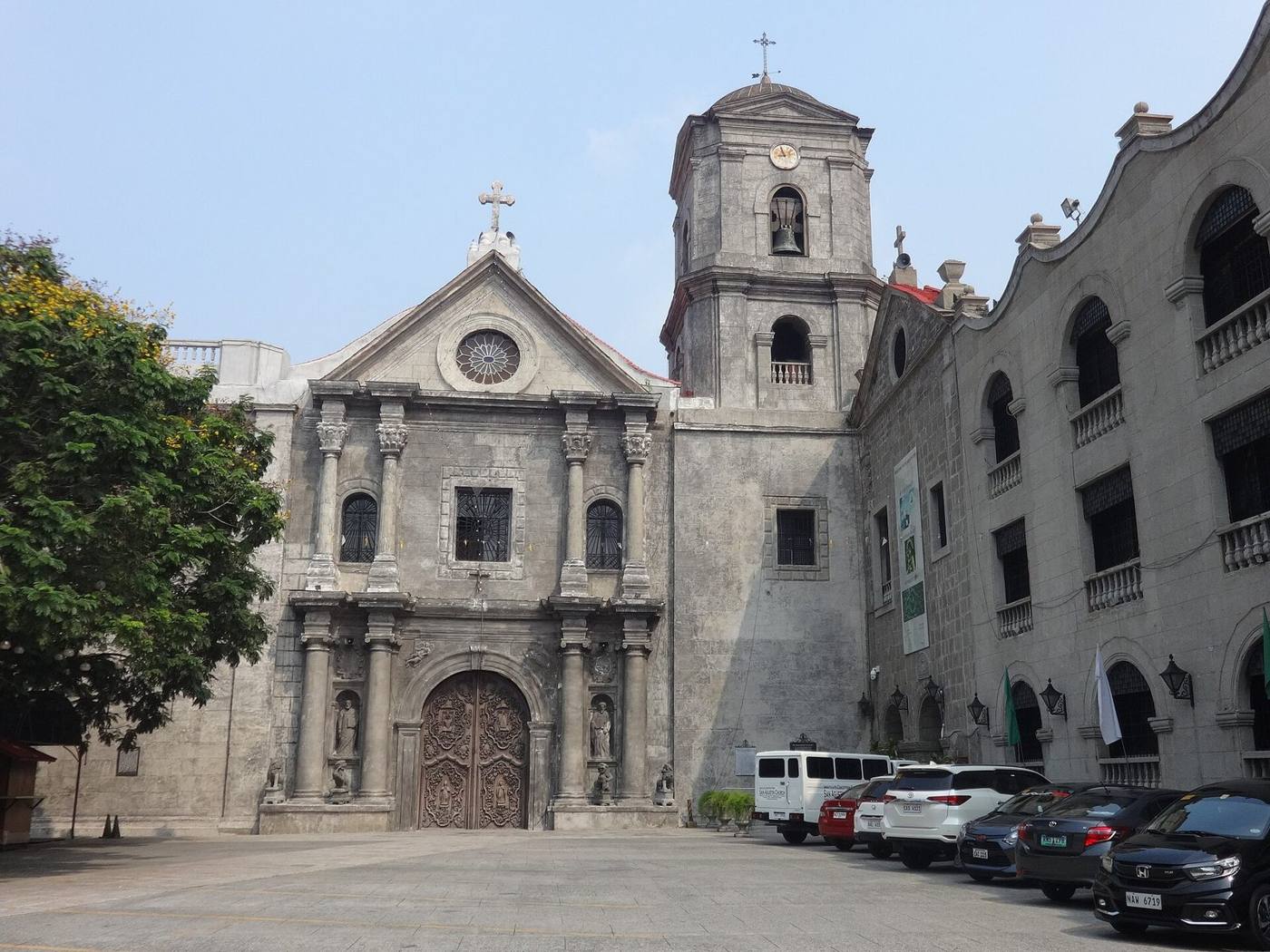
Manila, Intramuros and Taal volcano
The capital before the islands: the Spanish walled city of Intramuros with Fort Santiago and San Agustín Church (UNESCO), the National Museum, Binondo, the world's oldest Chinatown, then Tagaytay on its ridge overlooking the lake and Taal volcano.
- Manila
- Intramuros
- Binondo
- Tagaytay
- Taal
Day by day
- Day 1
Intramuros on foot or by bike: San Agustín and Fort Santiago
EU citizens can enter the Philippines without a visa for tourist stays of up to thirty days with a passport valid for at least six months and an onward ticket; within 72 hours before arrival you must complete the no-cost eTravel form online on the official Philippine government website. Check the rules for your nationality.
Manila, the capital, is a huge, chaotic metropolis of more than thirteen million people, with some of the worst traffic in the world, skyscrapers, poor districts, giant shopping malls and a historic heart that tells of more than three centuries of Spanish rule and half a century of American rule. From the airport you reach the centre by taxi or ride app, in a time that varies greatly with traffic.
In the morning visit Intramuros, the walled city, the fortified quarter built by the Spanish from the sixteenth century, with stone walls, bastions, paved streets and colonial houses. You get around on foot, by horse-drawn carriage or on bamboo bikes rented with a guide. San Agustín church, from 1607, is the oldest stone church in the Philippines, having survived earthquakes and the Second World War, a UNESCO World Heritage site, with a trompe l'oeil painted ceiling and a museum in the convent.
In the afternoon reach Fort Santiago at the northern end of the walls on the Pasig River, where the national hero José Rizal was imprisoned before his execution in 1896; his last footsteps are marked on the ground. Also visit Manila Cathedral and Casa Manila, a reconstructed colonial house with period furniture.
Practical tip: Manila is hot and humid all year; visit Intramuros early in the morning or late in the afternoon.
- Day 2
The National Museum and Binondo's street food
In the morning visit the National Museum of the Philippines in Rizal Park near Intramuros, a complex of neoclassical buildings housing the fine arts museum, with Juan Luna's Spoliarium, a huge late nineteenth-century painting showing the bodies of gladiators dragged from the arena, a symbol of Filipino pride, and the anthropology museum, with finds from the galleon San Diego, sunk in 1600, and galleries on the cultures of the island peoples, with textiles, gold jewellery and the Manunggul burial jars. Entry is at no cost.
Then stroll through Rizal Park, the city's large green park, with the monument to José Rizal watched over by an honour guard.
In the afternoon cross the Pasig River to Binondo, considered the oldest Chinatown in the world, founded in 1594 by the Spanish for Chinese merchants who had converted to Catholicism. It is a crowded, lively district with the basilica of San Lorenzo Ruiz, shops selling medicinal herbs and gold, temples and above all street food, best discovered on a guided walk: steamed and fried dumplings, pork buns, rice cakes, prawn fritters and traditional sweets.
In the evening, at sunset, go to the Manila Bay promenade along Roxas Boulevard, famous for its sunsets over the sea.
Practical tip: in Binondo and crowded areas wear your backpack in front and keep your phone in your pocket.
- Day 3
Tagaytay and the view over Taal volcano
Today is a trip to Tagaytay, a town on a ridge about sixty kilometres south of Manila, two to three hours by car depending on traffic. At about six hundred metres, Tagaytay has a cooler, breezier climate than the capital and is where Manila residents go at weekends.
From the viewpoints along the ridge you see one of the most famous landscapes in the Philippines: Taal Lake, filling a huge ancient volcanic caldera, with Taal volcano island in the middle, one of the country's most active volcanoes, with its own small crater. It is a volcano within a lake, on an island within a larger lake. In January 2020 Taal had a strong eruption, with ash columns kilometres high and the evacuation of tens of thousands of people.
Trips to the volcano island depend on the alert level set by the Philippine Institute of Volcanology, PHIVOLCS: when the alert is high, the island is off limits and boats on the lake may also be restricted. Always check the alert before planning; from the Tagaytay viewpoints you can see the panorama anyway.
For lunch try bulalo, a beef shank and marrow soup typical of the area, and kapeng barako, a strong coffee from Batangas province.
In the afternoon visit People's Park in the Sky on the highest point of the ridge, with views over the lake and Manila Bay.
In the evening return to Manila or stay in Tagaytay.
Practical tip: fog often rolls into Tagaytay in the afternoon; for the best view go in the morning.
- Day 4
Back to Manila and departure or a flight to the islands
The last day depends on the rest of your trip. Many travellers use Manila as a starting point for the islands: its airports have short flights to Palawan, Cebu, Bohol, Siargao and Boracay.
If you have a few hours in Manila, in the morning visit the Manila Chinese Cemetery in the north of the city, where wealthy Chinese families built tombs like houses, with rooms, kitchens and air conditioning, or the Makati district, the modern financial centre, with the Ayala Museum, telling Philippine history through a series of large dioramas and a collection of pre-colonial gold objects.
Alternatively, if you are interested in Second World War history, take the ferry from Manila Bay to Corregidor Island at the mouth of the bay, with ruined American barracks and guns, the Malinta tunnels and memorials, on a day trip.
The main international airport, Ninoy Aquino, is in the Pasay and Parañaque area; at rush hour allow up to two hours of traffic.
Things to take home: dried mango, the most famous Philippine treat, barako coffee, traditional textiles, and bamboo and mother-of-pearl objects.
Practical tip: the Philippines are prone to typhoons, especially from June to November; check forecasts and leave margins for domestic flights. The United States has warnings for some areas in the south of the country, far from Manila. Check your government's travel advice before leaving.
Manila traffic is among the slowest in Asia: allow plenty of time for every journey. Taal is an active volcano: access to the island depends on the alert level and is often closed; the view from Tagaytay is always possible. The national museums are at no cost. EU citizens enter without a visa for up to 30 days; the eTravel form must be filled in online within 72 hours of departure. The UK advises against all travel to western and central Mindanao and the Sulu archipelago; the US also advises against the rural and mountainous interior of Leyte, Mindoro, Negros and Samar. From July to November typhoons can cancel flights and ferries.
Before you go
- Documents and visa
- Passport valid for at least six months and an onward ticket; no visa for tourism up to 30 days for EU citizens. In the 72 hours before the flight you fill in the no-cost eTravel form online.
- Health and vaccines
- No compulsory vaccines arriving from Europe. Protect yourself against mosquitoes because of dengue and keep away from dogs and monkeys because of rabies. Drink only bottled water. Emergencies: 911.
- Money and payments
- Philippine peso. On small islands cash machines are few and often empty: carry cash.
- Power sockets
- Types A, B and C, 220 volts: bring a universal adapter.
- Time zone
- UTC+8 all year.
- Safety
- The United States rates the Philippines level 2, with level 4 for the Sulu archipelago, the southern Sulu Sea and Marawi, and level 3 for much of Mindanao. Typhoons occur from June to November. Official advice: GOV.UK.
Information checked in November 2026 for Italian and EU citizens. Rules change: always check before you travel.
Variations
In 2 days: Intramuros and Binondo on day one, Tagaytay and the Taal viewpoint on day two.
In 10 days: after Manila fly to Palawan for El Nido and its lagoons, or to Bohol for the Chocolate Hills and tarsiers.
Frequently asked questions
Do I need a visa for the Philippines?
EU citizens need no visa for tourist stays of up to thirty days, with a valid passport and an onward ticket. Within 72 hours before arrival complete the no-cost eTravel form online.
Can you climb Taal volcano?
It depends on the alert level set by PHIVOLCS: with a high alert the island is off limits. From the Tagaytay viewpoints the panorama is always visible.
When is the best time for Manila?
December to May, in the dry season. From June to November it rains a lot and there is a risk of typhoons.
Indicative itinerary written by World Atlas. Before booking, check timetables, seasonal openings, documents and safety.
 5 daysEasy
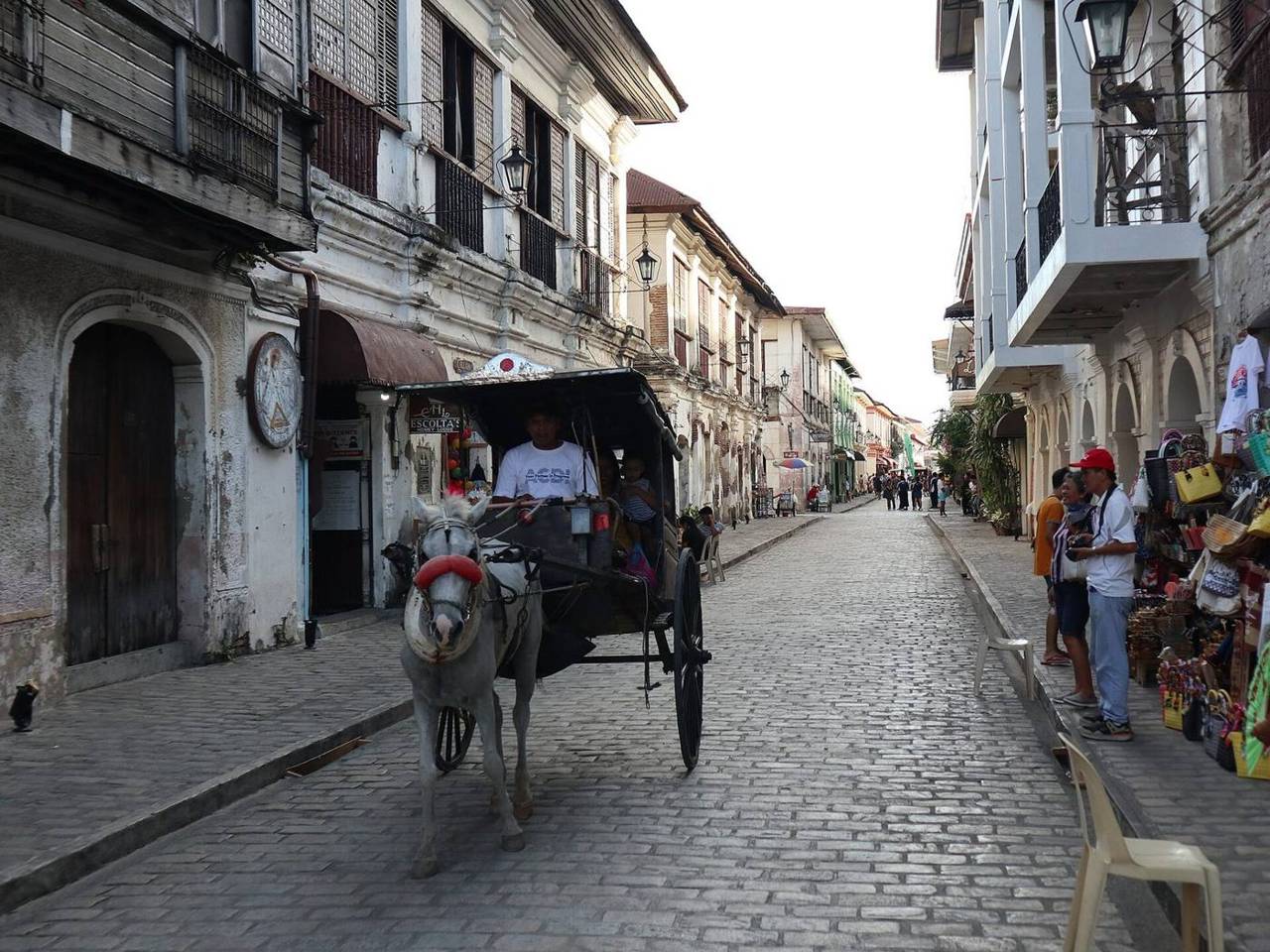
Vigan and the Ilocos coast
Colonial northern Luzon: Vigan, a UNESCO-listed Spanish town with Calle Crisologo and horse-drawn carriages, the earthquake baroque church of Paoay, also UNESCO, the La Paz sand dunes, Cape Bojeador lighthouse and the beaches of Pagudpud.
 5 daysEasy
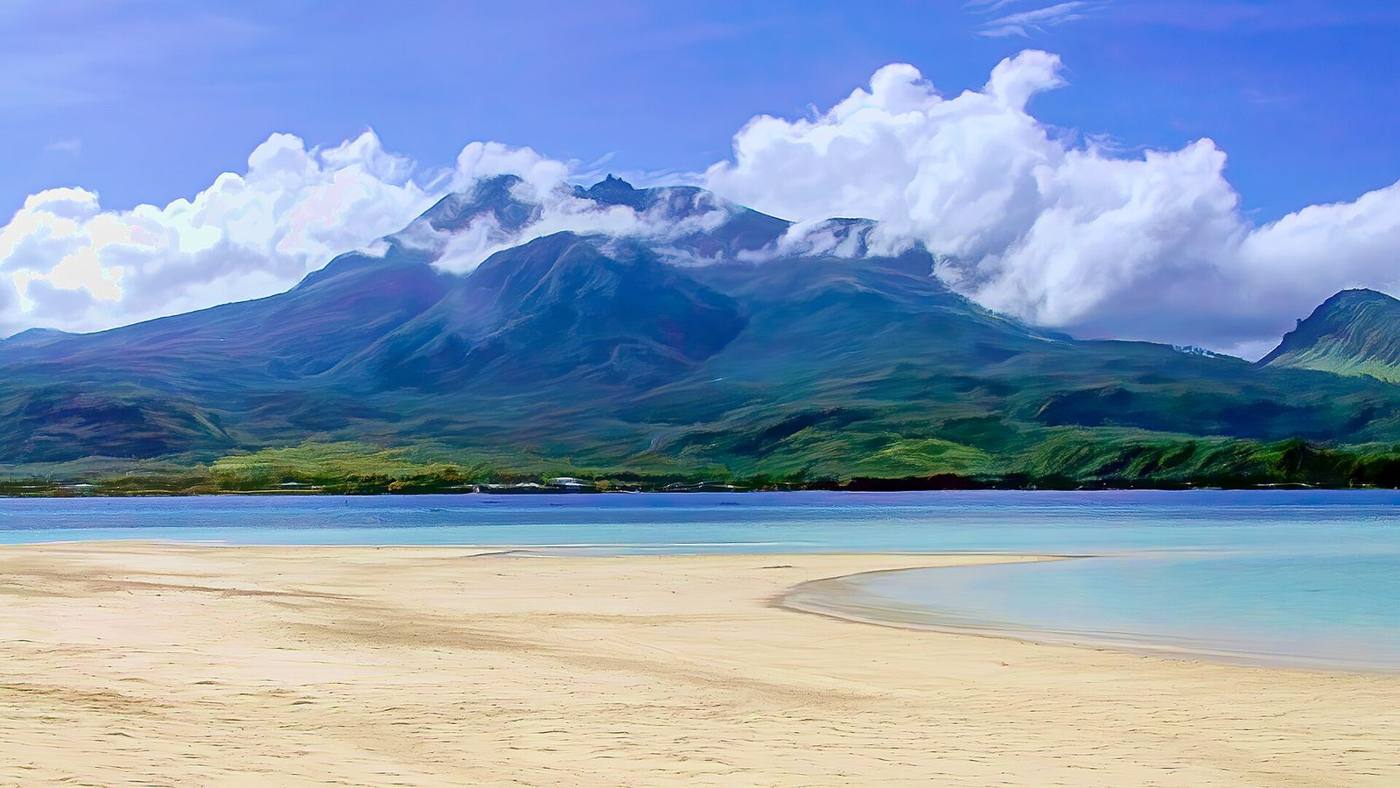
Camiguin, the island born of fire
A small island with seven volcanoes: the white sandbar of White Island facing Mount Hibok-Hibok, the sunken cemetery marked by a cross in the sea, hot and cold springs, the Katibawasan and Tuasan waterfalls and the ruins of the old Gui-ob church.
 5 daysEasy
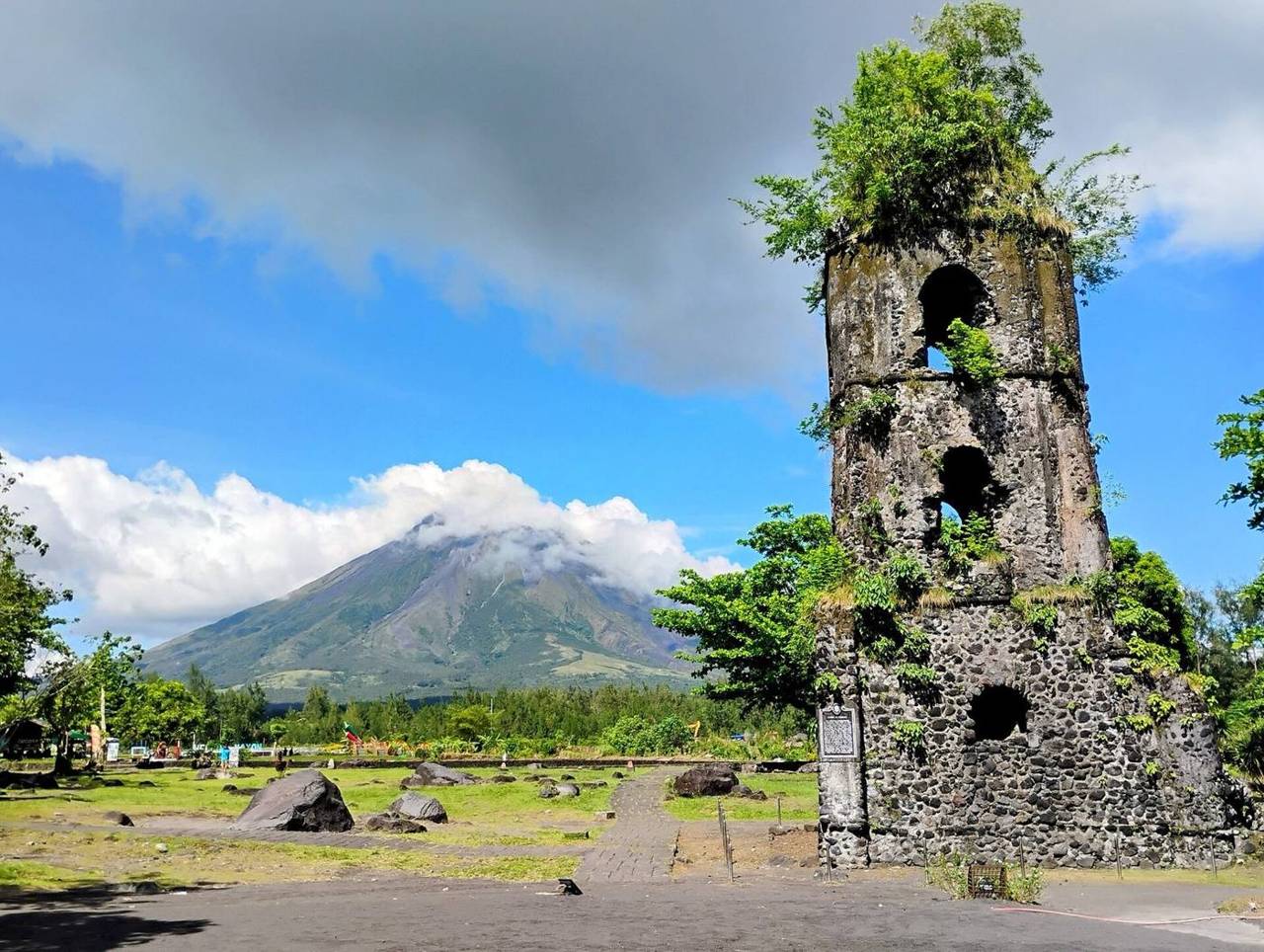
Donsol, the whale sharks and Mayon volcano
Southern Luzon: in Donsol you swim with wild whale sharks, without feeding them, with community boats and guides, then fireflies on the river at night, and Legazpi with the perfect cone of Mayon volcano and the Cagsawa church ruins buried by the 1814 eruption.