Vigan and the Ilocos coast
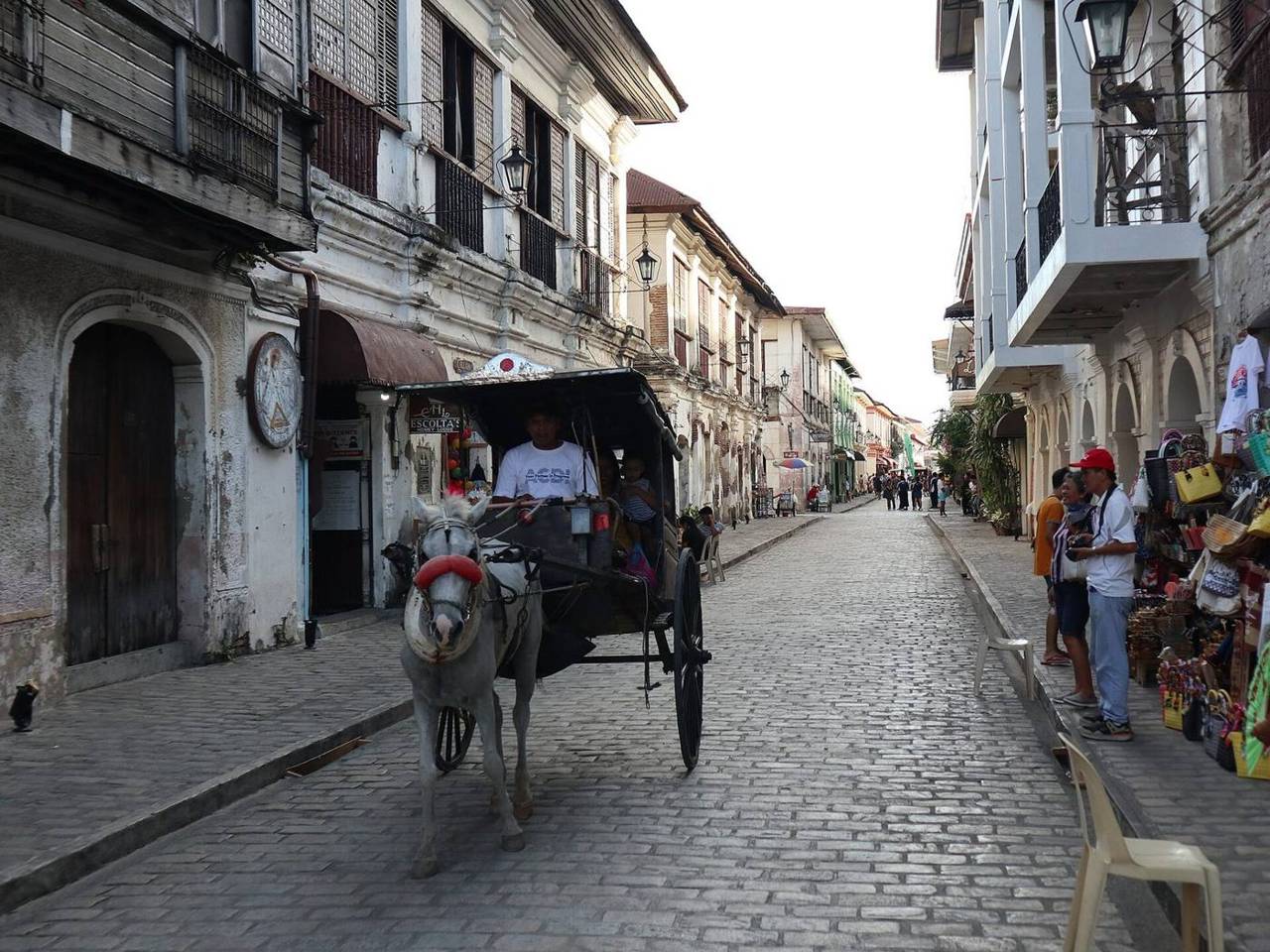
Colonial northern Luzon: Vigan, a UNESCO-listed Spanish town with Calle Crisologo and horse-drawn carriages, the earthquake baroque church of Paoay, also UNESCO, the La Paz sand dunes, Cape Bojeador lighthouse and the beaches of Pagudpud.
- Laoag
- Vigan
- Paoay
- La Paz
- Cape Bojeador
- Pagudpud
Day by day
- Day 1
The flight from Manila to Laoag and the road to Vigan
The Ilocos region, on the north-west coast of Luzon island in the Philippines, is different from the tropical islands many people imagine: a long coast on the South China Sea with sand dunes, cliffs and white beaches, Spanish colonial towns, baroque churches of brick and coral and a flavourful cuisine. The inhabitants, the Ilocanos, are known throughout the country for their practical, hard-working spirit. In five days you see Vigan, the churches of Paoay, the La Paz dunes, Cape Bojeador and Pagudpud.
In the morning, take the flight from Manila to Laoag, the capital of Ilocos Norte, in about an hour. From Laoag to Vigan, in Ilocos Sur province, it is about eighty kilometres, about two hours by car or bus along the coast road, past rice fields, tobacco fields and villages with old churches.
On the way, stop at the church of Santa Maria, one of the four baroque churches of the Philippines listed as UNESCO World Heritage, built on a hill and reached by a long stone stairway, with its bell tower set apart from the church.
In the late afternoon you reach Vigan and take a first walk in the old town, which lights up with yellow lamps at sunset.
In the evening, taste Ilocano cuisine: the Vigan empanada, fried and orange, filled with egg, green papaya and sausage, longganisa, the local garlic sausage, and bagnet, crispy pork belly.
In the evening, sleep in Vigan.
Practical tip: Italian citizens enter the Philippines without a visa for up to 30 days. The eTravel form must be completed online in the 72 hours before arrival.
- Day 2
Vigan: Calle Crisologo, the potters and the square at sunset
Vigan, founded by the Spanish in 1572, is the best-preserved colonial town in Asia and has been a UNESCO World Heritage Site since 1999. The old town combines Spanish style, the Chinese style of the merchants who traded here and Filipino architecture: two-storey houses with a ground floor of stone and brick and an upper floor of wood, with large sliding windows made of capiz shells, thin and translucent.
Early in the morning, walk along Calle Crisologo, the most famous street, paved with stones and lined with old houses on both sides, before the tourists arrive. You can also tour the centre in a calesa, the horse-drawn carriage still used in town.
Visit the eighteenth-century cathedral of Saint Paul, in earthquake baroque style, with thick walls to withstand earthquakes and a separate bell tower. Then visit one of the house museums, such as the birthplace of Father Burgos, a Filipino priest executed by the Spanish in 1872, with objects from Ilocano history.
In the afternoon, go to a burnay workshop, where the large dark earthenware jars used to store vinegar, fish sauce and sugarcane wine are made. Potters still work at the wheel with techniques brought by the Chinese centuries ago, and the kilns are very old.
At sunset, go to Plaza Salcedo, with its fountain that comes alive in the evening with a show of water, light and music.
In the evening, sleep in Vigan.
Practical tip: at midday it is very hot. Visit the centre early in the morning and in the evening, and rest in the middle of the day.
- Day 3
The Paoay church and the La Paz dunes
In the morning, head north again towards Laoag. Stop in Paoay, about two hours from Vigan, to see the church of San Agustín, the most famous example of earthquake baroque in the Philippines and a UNESCO site since 1993. Built at the end of the seventeenth century and completed in 1710, it has a facade with huge scrolled side buttresses, tall and massive, made of brick and coral blocks, to support the church during earthquakes. The separate bell tower was used as a lookout during the revolution against Spain and then during the Second World War.
Near the church is Paoay Lake, the largest lake in the region, surrounded by hills.
At the end of the morning, reach Laoag and visit the centre, with the church of Saint William and its sinking bell tower, which for centuries has been tilting and sinking into the sandy ground.
In the afternoon, go to the La Paz sand dunes, just outside Laoag, a vast area of dunes along the coast where several films have been shot. Here you can take a 4x4 ride over the dunes, with steep climbs and drops, or try sandboarding, sliding down the sand on a board. At sunset the dunes turn golden and the sun sinks into the sea.
In the evening, taste Laoag food, such as pinakbet, vegetables stewed with fish sauce.
In the evening, sleep in Laoag.
Practical tip: the 4x4 ride on the dunes is very bumpy. If you have back problems, prefer a walk on the dunes.
- Day 4
Cape Bojeador and Pagudpud
In the morning, continue north along the coast. Pass through Bangui, where dozens of large white wind turbines line the beach, among the first built in South-East Asia and now one of the symbols of the region.
First, stop in Burgos to visit the Cape Bojeador lighthouse, built by the Spanish and lit in 1892 on a hill above the sea, in red brick, with a spiral staircase and a garden. Still working, it marks the north-westernmost point of Luzon. Near the lighthouse are the Kapurpurawan rocks, formations of white limestone carved by wind and waves into strange shapes along the coast.
In the afternoon you reach Pagudpud, at the northern tip of Luzon, with some of the most beautiful beaches in the Philippines: Saud beach, with fine white sand, turquoise water and coconut palms, and Blue Lagoon beach further east, with calm blue water.
Near Pagudpud there is also the Patapat viaduct, an elevated bridge over a kilometre long built along the coast above the sea, at the foot of forest-covered mountains. Not far away are the Kabigan falls, reached by a short walk through fields and forest.
In the evening, sleep in Pagudpud, by the sea.
Practical tip: from October to March the sea at Pagudpud can be rough, with waves suited to surfing. Swim only in calm areas and ask about currents.
- Day 5
Back to Laoag and the flight
On your last morning, enjoy Saud beach at dawn, when the sand is still cool and the beach empty, with fishing boats coming back to shore.
Then head south towards Laoag, about an hour and a half to two hours away. On the way, if you have not done so, stop to see the Bangui windmills up close on the beach, or at the Laoag market to buy local products: sugarcane vinegar, longganisa, chichacorn, crunchy fried corn, and the hand-woven Ilocos blankets called inabel, with geometric patterns.
If you have time, in Batac, south of Laoag, you can taste the Batac empanada, different from Vigan's, and visit the museum on the town's history. The town is also known for its fresh produce and small markets.
In the afternoon, go to Laoag airport for your flight back to Manila.
This trip combines well with the mountains of the Cordillera, Sagada and the rice terraces of Banaue and Batad, reachable overland in a day, or with Manila and Intramuros, or with the islands of Palawan.
Practical tip: the United States has the Philippines at level 2, but the risk areas are mainly in the south, on Mindanao and in the Sulu archipelago. The Ilocos region is calm, with normal precautions.
A different Philippines, Spanish and rural, little visited by foreigners. From Manila you can also take an overnight bus, about ten hours. The sea at Pagudpud is rough in winter. EU citizens enter without a visa for up to 30 days; the eTravel form must be filled in online within 72 hours of departure. The UK advises against all travel to western and central Mindanao and the Sulu archipelago; the US also advises against the rural and mountainous interior of Leyte, Mindoro, Negros and Samar. From July to November typhoons can cancel flights and ferries.
Before you go
- Documents and visa
- Passport valid for at least six months and an onward ticket; no visa for tourism up to 30 days for EU citizens. In the 72 hours before the flight you fill in the no-cost eTravel form online.
- Health and vaccines
- No compulsory vaccines arriving from Europe. Protect yourself against mosquitoes because of dengue and keep away from dogs and monkeys because of rabies. Drink only bottled water. Emergencies: 911.
- Money and payments
- Philippine peso. On small islands cash machines are few and often empty: carry cash.
- Power sockets
- Types A, B and C, 220 volts: bring a universal adapter.
- Time zone
- UTC+8 all year.
- Safety
- The United States rates the Philippines level 2, with level 4 for the Sulu archipelago, the southern Sulu Sea and Marawi, and level 3 for much of Mindanao. Typhoons occur from June to November. Official advice: GOV.UK.
Information checked in November 2026 for Italian and EU citizens. Rules change: always check before you travel.
Variations
In 3 days: Vigan and Paoay.
In 8 days: add Sagada and the Banaue and Batad rice terraces.
Frequently asked questions
When is the best time to go?
From November to April, in the dry season. From June to October there are rains and a risk of typhoons.
What documents do I need?
A passport: Italian citizens enter without a visa for up to 30 days, and the eTravel form must be completed in the 72 hours before arrival.
How do I get around?
With a car and driver or the buses linking Laoag, Vigan and Pagudpud. In towns people use tricycles and, in Vigan, calesas.
Indicative itinerary written by World Atlas. Before booking, check timetables, seasonal openings, documents and safety.
 5 daysEasy
Camiguin, the island born of fire
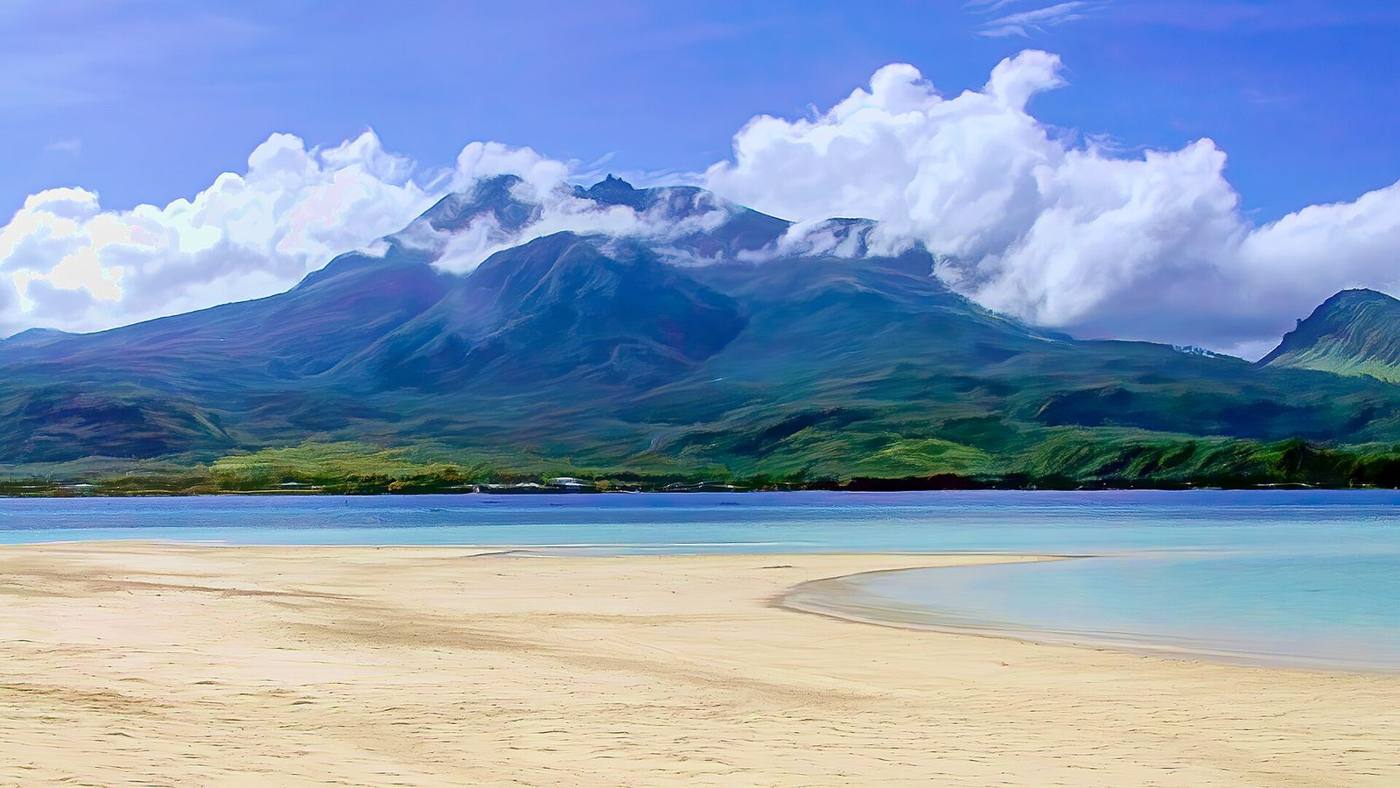
A small island with seven volcanoes: the white sandbar of White Island facing Mount Hibok-Hibok, the sunken cemetery marked by a cross in the sea, hot and cold springs, the Katibawasan and Tuasan waterfalls and the ruins of the old Gui-ob church.
 5 daysEasy
Donsol, the whale sharks and Mayon volcano
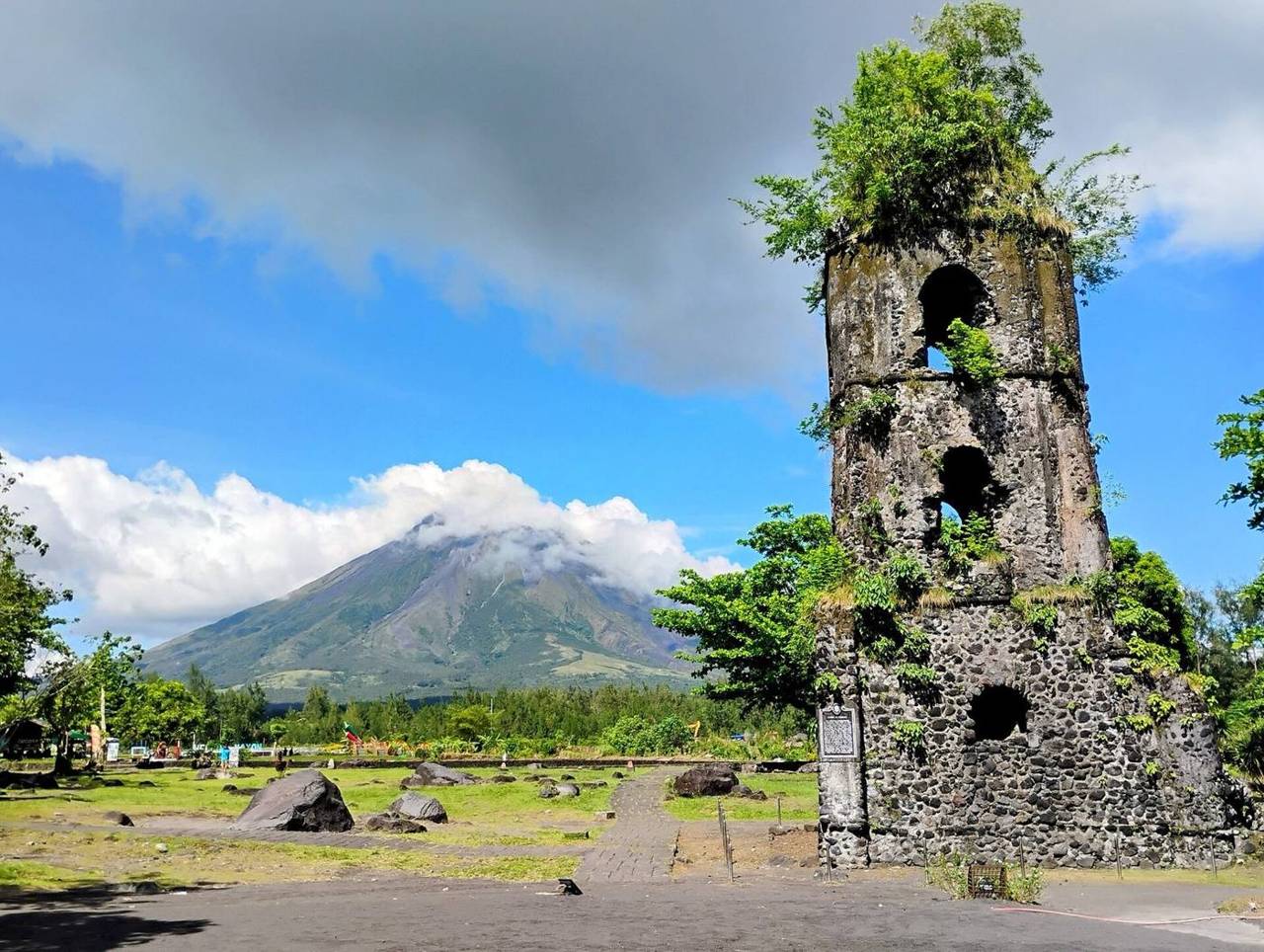
Southern Luzon: in Donsol you swim with wild whale sharks, without feeding them, with community boats and guides, then fireflies on the river at night, and Legazpi with the perfect cone of Mayon volcano and the Cagsawa church ruins buried by the 1814 eruption.
 5 daysEasy
Port Barton and San Vicente
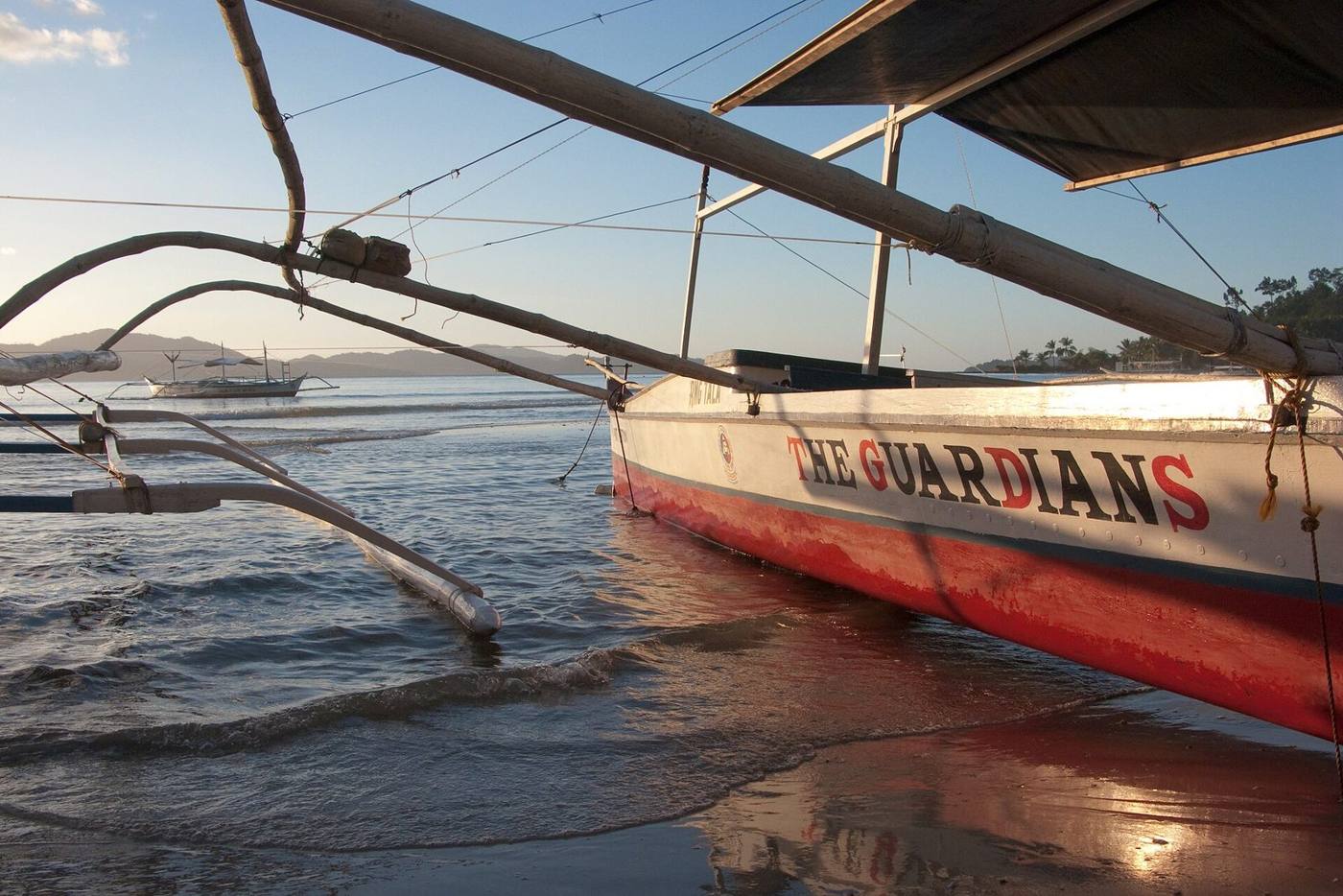
Palawan without the El Nido crowds: the village of Port Barton with boat trips among islets, reefs and turtles, Pamuayan Falls, then Long Beach in San Vicente, over 14 km of almost empty sand.