Lima, Cusco, the Sacred Valley and Machu Picchu
Essential Peru, acclimatising in the Sacred Valley before going up to Cusco.
- Lima
- Cusco
- Pisac
- Ollantaytambo
- Machu Picchu
- Vinicunca
Day by day
- Day 1
Arrival in Lima: Miraflores and Barranco
To enter Peru, EU travellers need a passport with at least six months' validity on arrival; no visa is needed for tourism, up to a maximum of 183 days. Flights from Europe usually arrive in Lima in the evening. Use the airport's official taxis or a pre-booked transfer: the recommended areas to stay are Miraflores and Barranco on the coast, about an hour from the airport depending on traffic.
If you arrive early, walk along the Malecón in Miraflores, the clifftop promenade above the Pacific Ocean, with parks, paragliders soaring over the cliffs and the Parque del Amor. Nearby is Huaca Pucllana, a great adobe pyramid built over fifteen hundred years ago among modern buildings: visits are guided, including in the evening under floodlights.
Barranco, the bohemian district south of Miraflores, has colourful colonial houses, murals, art galleries and the wooden Puente de los Suspiros, the Bridge of Sighs. It is the right place for your first dinner.
Lima is considered one of the world's food capitals: try ceviche, raw fish cured in lime with red onion and chilli, which locals eat mainly at lunch, and a pisco sour. Practical tip: from June to October Lima is often covered by a grey mist called garúa, although it almost never rains; do not be fooled, as strong sun arrives from December to March.
- Day 2
Flight to Cusco and down into the Sacred Valley
In the morning take the flight to Cusco, about an hour and twenty minutes. Cusco lies at about 3,400 metres: instead of stopping in the city straight away, head down to the Sacred Valley of the Incas, between 2,800 and 2,900 metres, about an hour and a half away. Sleeping lower for the first nights helps your body adjust to altitude and reduces altitude sickness.
The Sacred Valley is the valley of the Urubamba River, fertile and green, farmed for centuries with maize, potatoes and quinoa, with villages at the foot of snow-capped mountains. On the way stop at the Taray viewpoint over the whole valley, and perhaps at one of the Andean communities' weaving centres, where women show how alpaca wool is spun and how colours are obtained from plants, insects and minerals.
In the afternoon rest: on your first day at altitude walk slowly, drink plenty of water and mate de coca, the coca-leaf infusion common in the Andes, and avoid alcohol and heavy meals. Headaches, shortness of breath and difficulty sleeping are normal in the first nights; if symptoms worsen a lot, see a doctor and descend.
Stay two nights in the Sacred Valley, in Urubamba or near Ollantaytambo. Practical tip: anyone with heart, blood pressure or breathing problems should talk to their doctor before travelling to the Andes.
- Day 3
Pisac, the Maras salt pans and Moray
In the morning visit Pisac: the town has a lively craft market, especially on Sundays, Tuesdays and Thursdays, with textiles, ceramics and Andean fruit. Above the town on the mountain lies the Pisac archaeological complex, one of the valley's finest: farming terraces stepping down the slope, a temple quarter with walls of perfectly cut stones, and the largest known Inca cemetery, with hundreds of tombs dug into the cliff opposite.
In the afternoon climb onto the Chinchero and Maras plateau, among farmland with snowy peaks behind. The Maras salt pans are thousands of small white and brown pools cut into a valley slope, used since Inca times and still today: a stream of salty water from a spring fills them, and when the water evaporates local families harvest the salt by hand.
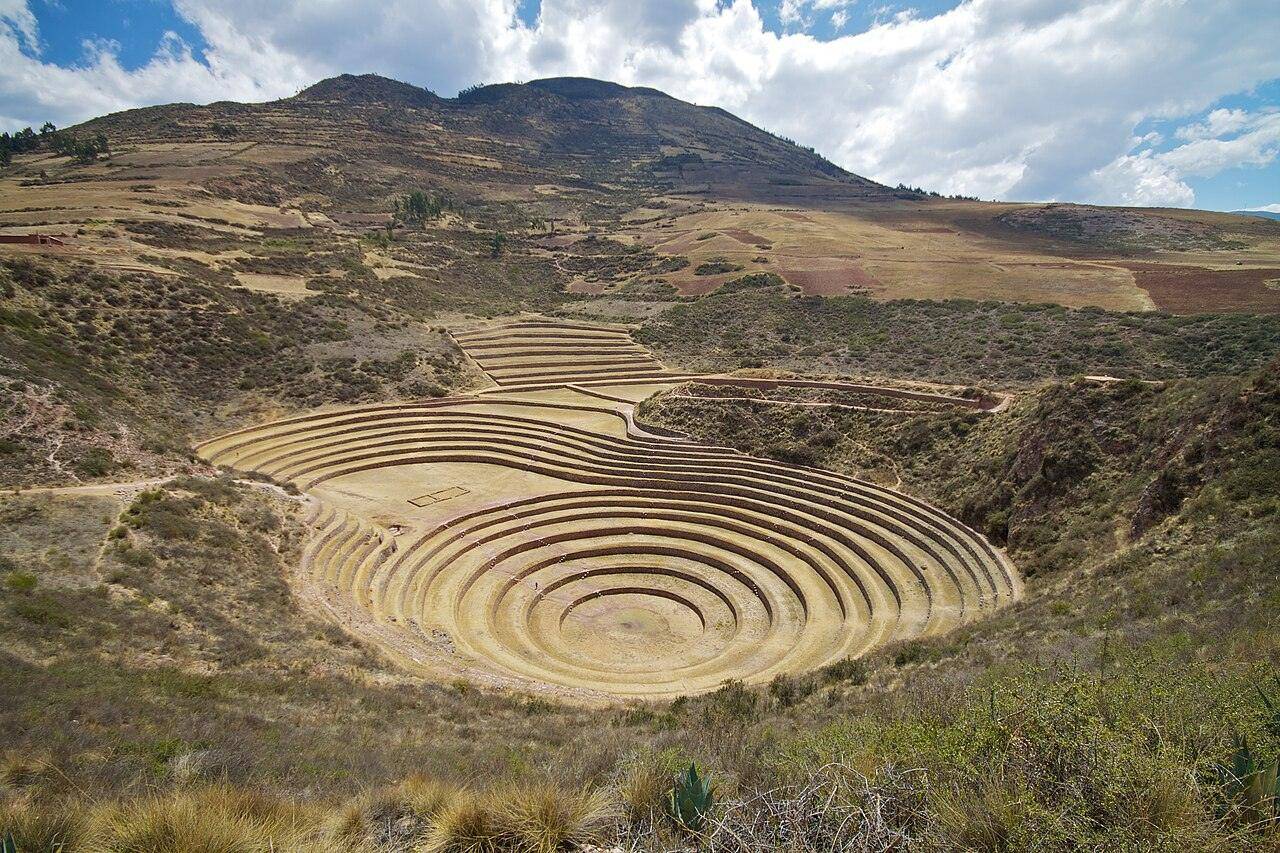
Nearby is Moray, a site of great concentric circular terraces dug into the ground like an amphitheatre. Scholars believe it was probably an Inca agricultural laboratory, where the temperature difference between top and bottom allowed experiments with different crops.
Return to the Sacred Valley. Practical tip: in Cusco and the valley you can buy the tourist ticket, which covers many of the region's archaeological sites and museums; check which ones it includes before buying.
- Day 4
Ollantaytambo and the train to Aguas Calientes
In the morning visit Ollantaytambo, the only Inca town still inhabited on its original plan: the narrow streets, the water channels running beside the houses and the stone courtyards are those of five hundred years ago. Above the town stands the fortress, with great terraces and the Temple of the Sun, built from six huge monoliths of pink porphyry brought from a quarry across the river. Here the Incas won one of their few battles against the Spanish.
In the afternoon take the train from Ollantaytambo to Aguas Calientes, the town at the foot of Machu Picchu: about an hour and a half along the Urubamba River, through a valley that narrows steadily between rock walls as the vegetation turns tropical. Apart from the Inca Trail on foot, the train is the only way in; there are two companies and several classes, to be booked early because seats are limited. Luggage allowances are small: leave large suitcases at your accommodation in the valley or in Cusco.
Aguas Calientes is a town squeezed between river and mountain, full of lodgings, restaurants and shops, with the hot springs that give it its name. Have an early dinner and go to bed: tomorrow you are up at dawn. Practical tip: Machu Picchu tickets are sold on the Ministry of Culture's official website, are named and timed, and in peak season sell out months ahead. Buy them as soon as you have your dates.
- Day 5
Machu Picchu at dawn
Machu Picchu, a UNESCO World Heritage site, is the Inca city built in the fifteenth century on a saddle between two mountains, at about 2,400 metres, above the Urubamba gorge. The Spanish never found it; Hiram Bingham made it known to the world in 1911. From town you go up by bus, about half an hour of hairpins, or on foot up a steep staircase of about an hour and a half.
Entry is timed and follows one of the circuits set by the Ministry of Culture: some pass the upper terraces, with the classic view down over the city, others the lower level, among temples and houses. According to 2026 rates, tickets for foreign adults cost 152 soles for the standard circuits and 200 soles for those including a climb up one of the mountains, such as Huayna Picchu or Machu Picchu Mountain, which have very limited places. Tickets are not sold at the site entrance.
With a guide, required under park rules, you will see the Temple of the Sun with windows aligned to the solstices, the Intihuatana stone, the Temple of the Three Windows, the Temple of the Condor and the farming terraces where llamas graze. In the early hours mist often covers the mountains and then lifts suddenly: the most moving moment.
In the afternoon return to Aguas Calientes and take the train to Ollantaytambo, then the transfer to Cusco. Practical tip: bring your original passport, checked together with your ticket; there are no toilets or cafés inside the site, only at the entrance.
- Day 6
Back to Cusco and the old town
After yesterday's long day, take the morning easy in Cusco, the ancient capital of the Inca Empire and a UNESCO World Heritage site. You are now used to the altitude, but still walk slowly up the steep streets of the centre.
Start at the Plaza de Armas, the heart of the city, with the cathedral built by the Spanish on the foundations of the Inca Viracocha's palace, and the Church of the Society of Jesus. Inside the cathedral hangs a Last Supper painted by the Cusco school with a guinea pig on the platter at the centre of the table, an example of how Andean artists blended Catholicism with their own culture.
In the afternoon wander the narrow streets around the square, where the walls of colonial houses rest on Inca walls of perfectly fitted stones without mortar. On Hatun Rumiyoc street is the famous twelve-angled stone, fitted to its neighbours with incredible precision.
In the evening visit a market or the centre for native art, where Andean dance performances are often held. Stay three nights in Cusco. Practical tip: in the Plaza de Armas many people in traditional dress with llamas and alpacas ask for a few soles for a photo; it is their living, so if you take the picture pay the agreed amount.
- Day 7
Cusco: Qorikancha, San Blas and Sacsayhuamán
In the morning visit Qorikancha, the Temple of the Sun, the most important in the Inca Empire: according to the chronicles its walls were lined with gold sheets and its garden held life-size gold plants and animals. The Spanish looted it and built the Santo Domingo convent on top, but the Inca walls, of perfectly smooth curved stones, are still visible in the cloister and have withstood earthquakes better than the colonial buildings.
Then climb into San Blas, the artisans' quarter, with steep streets, white houses with blue doors, the workshops of woodcarvers and potters, and the small church with its carved wooden pulpit, considered a masterpiece of Andean baroque. From the square at the top you see the whole city.
In the afternoon go up to Sacsayhuamán above the city, a great Inca fortress and ceremonial site with three rows of zigzag walls built from gigantic stone blocks, some weighing over a hundred tonnes, fitted perfectly. Every year on 24 June the Inti Raymi, the Festival of the Sun, is celebrated here. Nearby are the sites of Q'enqo, Puka Pukara and Tambomachay, the Inca bath with its fountains.
In the evening try Andean cooking: alpaca, hundreds of potato varieties, quinoa and soup. Practical tip: Cusco nights are cold even in summer, often close to freezing from May to August; bring a fleece and a jacket.
- Day 8
Rainbow Mountain
Today is a demanding day: Rainbow Mountain, called Vinicunca, about three hours' drive south-east of Cusco. Departures are very early, around four in the morning. The mountain stands at about 5,000 metres: minerals in the soil colour it in stripes of red, yellow, green, purple and white. It became famous only a few years ago, when melting snow left it exposed.
From the car park you walk uphill for about an hour and a half to two hours on a wide but steep path at very high altitude, among llamas and alpacas and the snowy peaks of Ausangate. You can also ride part of the way on horseback with local herders. The last stretch to the viewpoint is the hardest. The scenery is spectacular, but the wind and cold at the top are intense.
A less crowded alternative is Palccoyo mountain, with similar colours and a shorter, easier walk. Either way, ask your agency to stop for breakfast on the way and lunch on the return.
You return to Cusco in the late afternoon, tired. Practical tip: do this trip only after several days at altitude and if you feel well; if you get a strong headache, nausea or confusion on the climb, stop and descend at once. Bring gloves, a hat, strong sunscreen, water and some food.
- Day 9
Back to Lima and a Peruvian dinner
In the morning fly back to Lima. If your flight is early, the afternoon is at no cost to explore the city. Lima's historic centre, a UNESCO World Heritage site, lies around the Plaza Mayor, with the cathedral where Francisco Pizarro is buried, the conquistador who founded the city in 1535, the Government Palace with its noon changing of the guard, and the enclosed wooden balconies of the colonial houses.
Visit the Monastery of San Francisco, with its old library and underground catacombs holding the bones of thousands of people buried there until the nineteenth century. Or, in the Pueblo Libre district, the Larco Museum, a colonial house with an extraordinary collection of ceramics, gold jewellery and textiles from Peru's pre-Columbian civilisations, from the Moche to the Chimú and the Incas, set in a beautiful flowering garden.
The evening is for a Peruvian dinner: Lima's cooking blends Andean, Spanish, African, Chinese and Japanese traditions. Try lomo saltado, beef stir-fried with onions and tomatoes, ají de gallina, chicken in a creamy yellow chilli sauce, and Nikkei dishes from Japanese-Peruvian cuisine. Many famous restaurants must be booked weeks ahead.
Stay in Miraflores or Barranco. Practical tip: in Lima's historic centre stay on the main streets and return to Miraflores or Barranco before dark.
- Day 10
Departure
The last day depends on your flight time. Flights to Europe usually leave in the evening, so you have most of the day. In the morning walk along the Miraflores coast to the shopping centre on the cliff, or take the steps down to the beach to watch surfers riding the Pacific waves, present all year round.
If you want one last visit, about an hour south of Lima lies Pachacamac, a great pre-Hispanic sanctuary with adobe temples and pyramids, dedicated to a creator god and visited by pilgrims for over a thousand years, with a modern museum. Or visit one of Lima's markets, such as Surquillo market near Miraflores, to see Peru's incredible variety of tropical fruit, potatoes and chillies.
In the afternoon pack and leave for the airport with plenty of time: Lima's rush-hour traffic is among the worst in South America, and the journey can take more than an hour.
Things to take home: alpaca textiles and sweaters, bought from cooperative shops to be sure of the quality; Peruvian pisco, cacao and coffee; painted ceramics. Practical tip: reach the airport at least three hours before international flights and keep your passport handy, as it is checked several times.
Peru's essentials, well designed: sleeping first in the lower Sacred Valley helps a lot with altitude. Machu Picchu tickets are limited and must be booked well in advance. Rainbow Mountain is above 5,000 metres and should only be done after a few days of acclimatisation.
Before you go
- Documents and visa
- Passport with at least six months' validity on arrival; no visa is needed for tourism, up to a maximum of 183 days.
- Health and vaccines
- No compulsory vaccines for Lima and the Andes; yellow fever vaccination is recommended for the Amazon. Beware of altitude sickness in Cusco and the Andes. Emergencies: 105 police, 116 fire.
- Money and payments
- Peruvian sol. Cards work in cities and hotels; in markets, villages and for tips you need cash.
- Power sockets
- Types A and C, 220 volts: you may need an adapter for flat-pin sockets.
- Time zone
- UTC-5 all year: Peru does not use daylight saving time.
- Safety
- The United States rates Peru level 2. Avoid the Apurímac, Ene and Mantaro valley (VRAEM), the Colombian border in Loreto and some rural areas named by governments. Official advice: GOV.UK.
Information checked in November 2026 for Italian and EU citizens. Rules change: always check before you travel.
Variations
In 7 days: Lima, the Sacred Valley with Pisac and Ollantaytambo, Machu Picchu and a day in Cusco, skipping Rainbow Mountain.
In 15 days: add Lake Titicaca from Puno, with the Uros floating islands, and Arequipa with the Colca Canyon and its condors.
Frequently asked questions
How much is Machu Picchu and where do I buy tickets?
According to 2026 rates, foreign adults pay 152 soles for the standard circuits and 200 soles including a mountain climb. Tickets are sold on the Ministry of Culture's official website, are named and timed, and are not sold at the site entrance.
How can I avoid altitude sickness?
By sleeping the first nights in the Sacred Valley, lower than Cusco, walking slowly, drinking plenty and avoiding alcohol and heavy meals. If symptoms are severe, descend and see a doctor.
When is the best time to go?
From May to September, the dry season, with clear skies but cold nights in the Andes. From December to March it rains a lot in Cusco, and in February the Inca Trail is closed for maintenance.
Indicative itinerary written by World Atlas. Before booking, check timetables, seasonal openings, documents and safety.
 15 daysModerate
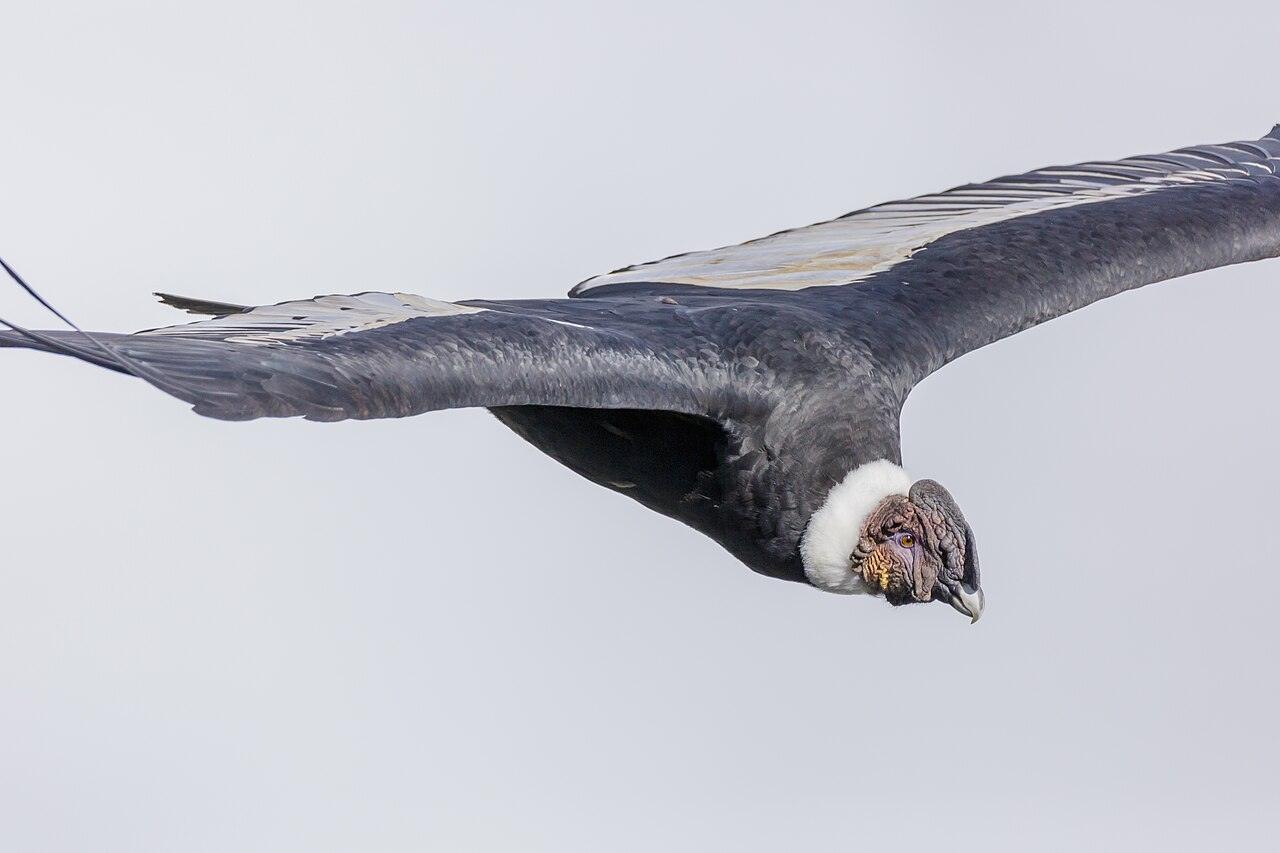
Classic Peru: Nazca, Arequipa, Colca, Titicaca and Machu Picchu
The great southern loop: the Nazca Lines, the white city, the Colca condors, the Titicaca islands and the Incas.
 7 daysEasy
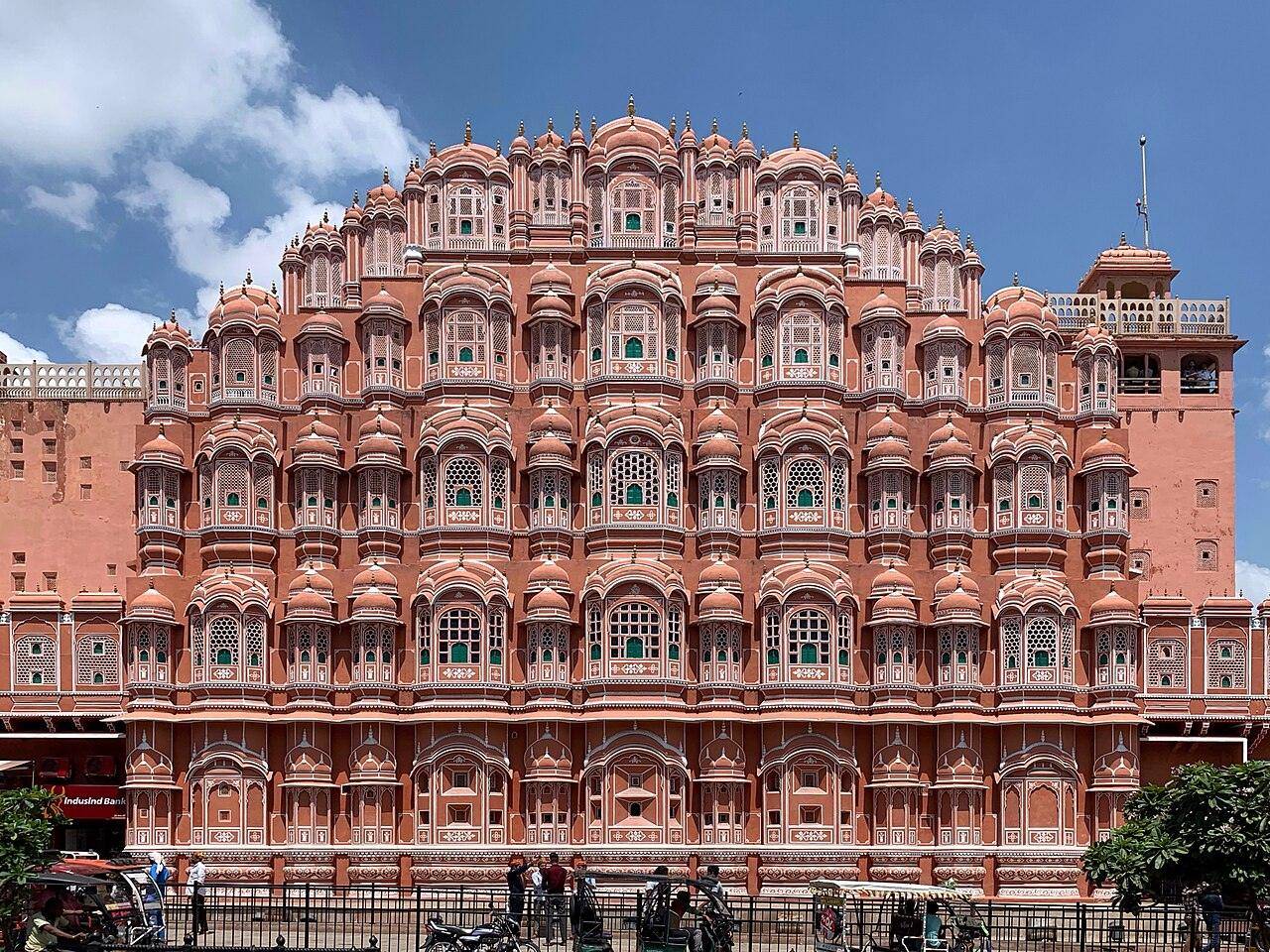
The Golden Triangle: Delhi, Agra and Jaipur
A first time in India: the Taj Mahal at dawn, the forts of Rajasthan and the life of Old Delhi, in one week.
 15 daysModerate
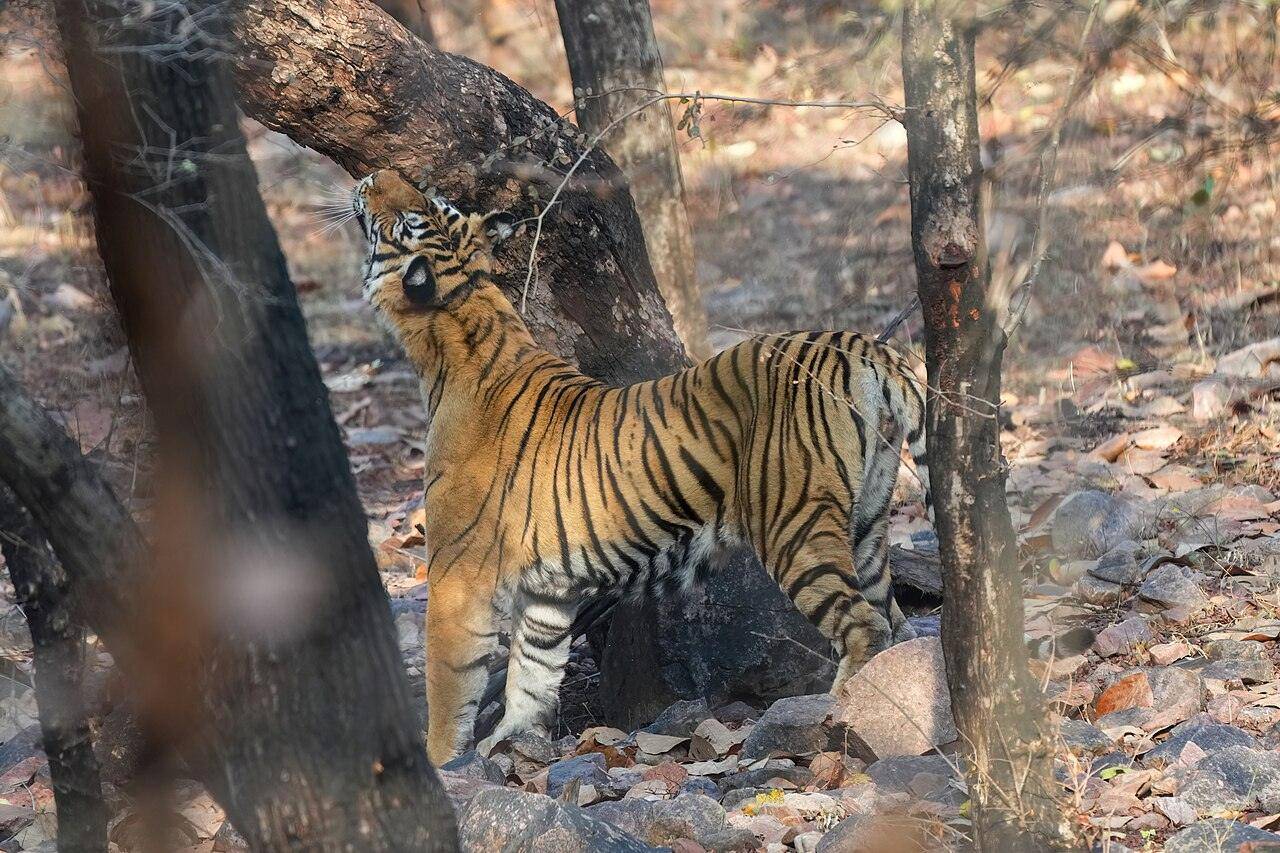
Rajasthan and the tigers of Ranthambore
Palaces, desert and safari: from the Taj Mahal to the blue and golden cities of Rajasthan, with two days in tiger country.