Nepal and Tibet: Kathmandu to Lhasa
The Kathmandu valley and then Tibet: the Potala in Lhasa, the monasteries of Shigatse and Gyantse, the turquoise Yamdrok lake and the view from Everest's north base camp.
- Kathmandu
- Lhasa
- Yamdrok
- Gyantse
- Shigatse
- Everest North Base Camp
Day by day
- Day 1
Arrival in Kathmandu
This eighteen-day trip links the Kathmandu valley and Tibet: the Potala Palace and the Jokhang temple in Lhasa, the great monasteries, the turquoise lake of Yamdrok, Gyantse, Shigatse and the north face of Everest seen from Rongbuk. It is a trip of medium difficulty, but you spend many days at high altitude.
Before you go: for Nepal, Italian citizens need a passport valid for at least six months and a tourist visa, issued on arrival at Kathmandu airport after you fill in the online form. Other nationalities should check their own rules. Demonstrations are possible in Nepal: avoid them and check your government's travel advice. Foreigners can enter Tibet only with an authorised agency, with the Tibet permit and with a guide and driver for the whole route: independent travel is not allowed. The agency will tell you whether, entering from Nepal, you need the Chinese group visa or whether short-stay entry to China without a visa is enough, a temporary measure that must be checked. At certain times Tibet may close to foreigners.
You land at Kathmandu airport, at about 1,400 metres, and reach your hotel. In the evening take a walk in the Thamel district, between mountain gear shops, prayer flags and the traffic of rickshaws and scooters.
Sleep in Kathmandu, for three nights.
Practical tip: bring US dollars in cash for the Nepalese visa, in recent notes that are not damaged, and choose insurance that covers high altitude and repatriation.
- Day 2
Durbar Square and Swayambhunath
Today you discover the old heart of Kathmandu and hand in your documents for Tibet.
In the morning meet the agency's contact and hand over your passport and forms. From now on the timing depends on the offices: keep your plans flexible and do not book anything rigid for the next two days.
Then go to Durbar Square, the square of the kings, a UNESCO World Heritage Site, with pagoda temples of wood and brick, statues of deities and the old royal palace. Some buildings were damaged by the 2015 earthquake and a few are still being restored. In the small Kumari Ghar palace lives the Kumari, the girl worshipped as a living goddess: sometimes she appears at the courtyard window, but she must not be photographed. Check prices and times.
In the afternoon climb to Swayambhunath, the stupa on the hill west of the city, also called the monkey temple. You reach it up a long staircase. At the top the white dome is crowned by the eyes of the Buddha painted on all four sides, surrounded by prayer wheels, small temples and colourful flags moving in the wind. From the terrace you see the whole valley.
Walk around the stupa clockwise, as the faithful do, and turn the prayer wheels with your right hand.
In the evening try momo, steamed dumplings filled with vegetables or meat, with a spicy tomato sauce.
Sleep in Kathmandu.
Practical tip: at Swayambhunath keep bags and food tightly closed, because the monkeys are quick and not afraid of people.
- Day 3
Pashupatinath and Boudhanath
Today you visit the two most important holy places in the valley, one Hindu and one Buddhist.
In the morning go to Pashupatinath, the great temple of Shiva on the banks of the Bagmati river, one of the holiest sites in Hinduism. Only Hindus may enter the main temple, but from the opposite bank you see the ghats, the stone steps on the river where cremations take place, and the sadhus, ascetics with painted faces. It is a place of grief and prayer: watch in silence, from a distance, and do not photograph families up close. Check prices and times.
Then walk or take a taxi to Boudhanath, one of the largest stupas in the world, a UNESCO World Heritage Site. A large Tibetan community lives here, arrived after 1959, and around the stupa there are monasteries, shops selling incense and religious objects, and cafés with terraces. It is the first real image of the Tibet you will see in the coming days.
In the afternoon walk around the stupa with the pilgrims, who move slowly, telling their beads and murmuring prayers. Enter a nearby monastery, if it is open to visitors, and listen to the monks chanting.
Towards evening collect your passport and permits from the agency, check the names and dates and keep copies. Pack for altitude, with warm layers, sun cream and sunglasses.
Sleep in Kathmandu.
Practical tip: keep a copy of the permit and passport on your phone as well, because in Tibet your documents are checked many times.
- Day 4
The flight over the Himalaya to Lhasa
Today you fly from Kathmandu to Lhasa, one of the most spectacular flights in the world.
Get to the airport very early: document checks for Tibet are long. The flight lasts just over an hour and crosses the Himalayan range. With a clear sky, from the window you see a line of snow-covered peaks, and with some luck Everest too. Choose your side carefully: ask at the desk which side faces the mountains.
On arrival at Gonggar airport you meet the agency's guide and driver, who stay with you for the whole trip. The road to Lhasa follows the valley of the Yarlung Tsangpo river, the Tibetan name of the Brahmaputra, and takes about an hour.
Lhasa lies at about 3,650 metres. You arrive by plane from a much lower city, so your body has no time to adjust: this is the most delicate day of the trip. Settle into your hotel and rest. Almost everyone feels something, such as headache, shortness of breath, restless sleep or little appetite.
In the afternoon, only if you feel well, take a short, flat walk near the hotel. Do not climb steep stairs, do not carry weight, avoid very hot showers and do not drink alcohol.
In the evening eat lightly: a noodle soup, thukpa, or Tibetan momo. Drink plenty of water and tea.
Sleep in Lhasa, for four nights.
Practical tip: if your headache gets worse, if you vomit or if you struggle to breathe even at rest, tell the guide at once: the most effective cure for altitude sickness is to go down.
- Day 5
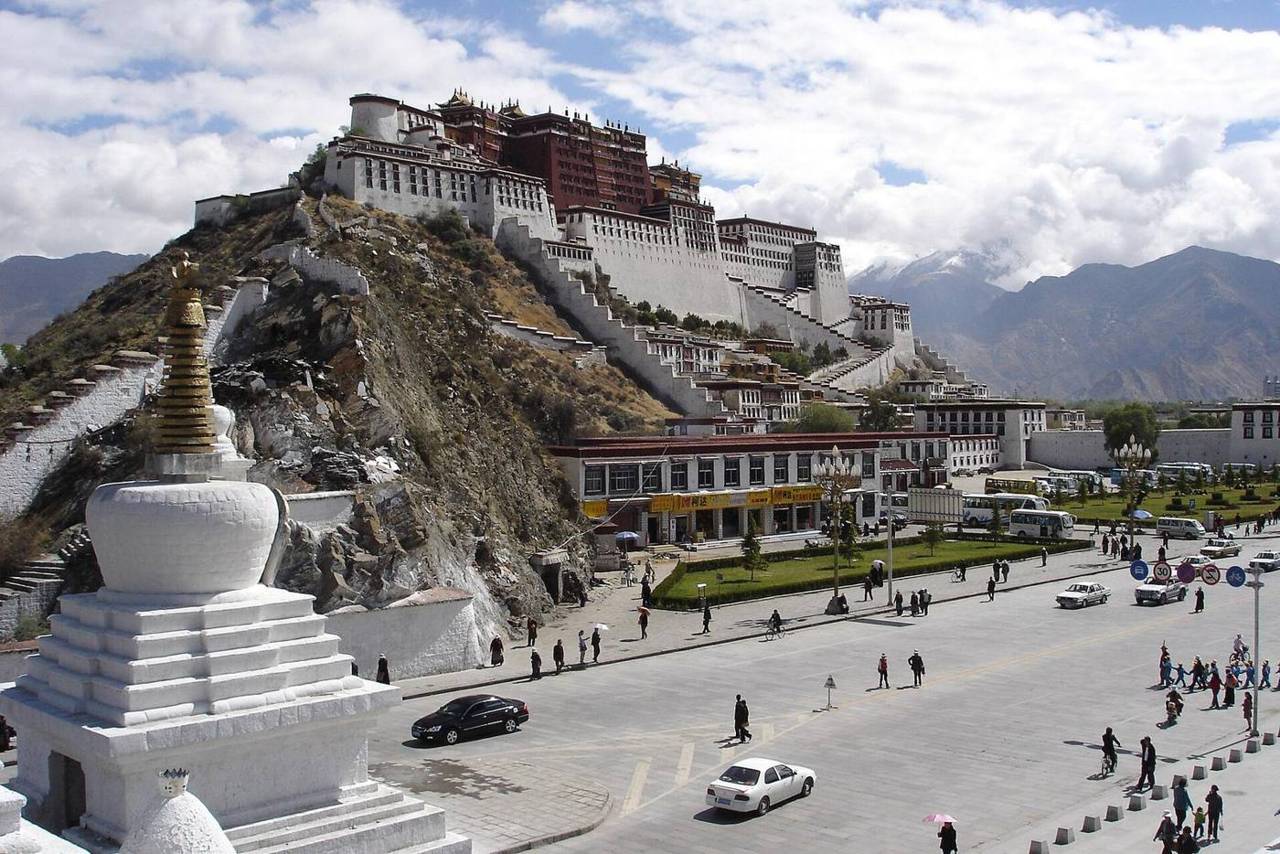
The Potala Palace
Today you visit the symbol of Tibet, the Potala Palace.
The Potala rises on the red hill in the centre of Lhasa, with its white and red walls and golden roofs. It was built in the seventeenth century by the fifth Dalai Lama, on a site where, according to tradition, a palace of King Songtsen Gampo already stood in the seventh century. Until 1959 it was the winter residence of the Dalai Lamas and the seat of government. Today it is a museum and a UNESCO World Heritage Site.
Visits run at fixed times, with a limited number of entries per day: the guide books your ticket in advance. The climb is long, with steep stone staircases up to the entrance. Go slowly, stop often and breathe. Inside you cross the White Palace, with the apartments of the Dalai Lamas, and the Red Palace, with chapels, statues and the golden tombs of earlier Dalai Lamas. Time inside is limited and photography is not allowed. Check prices and times.
In the afternoon rest. Then, towards evening, follow the pilgrims on the Potala kora, the ritual circuit around the palace, along a flat path with hundreds of prayer wheels and stones carved with mantras.
For the most famous photo of the Potala, cross the road and climb the small hill of Chakpori, opposite the palace, or stop in the square below the hill at sunset.
Sleep in Lhasa.
Practical tip: bring only what you need, because there are security checks at the Potala entrance and some items, such as lighters and liquids, are not allowed.
- Day 6
The Jokhang and the Barkhor
Today you discover the religious heart of Lhasa, the Jokhang temple and the Barkhor quarter.
In the morning go to the Jokhang, the holiest temple in Tibet, founded in the seventh century by King Songtsen Gampo. In front of the entrance pilgrims prostrate themselves full length on worn mats, while the air is full of smoke from the juniper burners. Inside, in the light of yak butter lamps, you see the chapels with their statues and the most revered of all, the Jowo Shakyamuni, the young Buddha. It is part of the Potala UNESCO site. Check prices and times.
From the roof of the Jokhang, between the golden symbols of the wheel and the two deer, you have one of the finest views over the square and, in the distance, the Potala.
Then walk the Barkhor, the pilgrimage circuit around the temple. Go clockwise with pilgrims from all over Tibet: nomads in long coats, women with braided hair and turquoise, monks in red robes. The stalls sell prayer beads, prayer flags, incense and copper objects.
In the afternoon explore the lanes around, with old white Tibetan houses and black window frames, and stop in a tea house for salty butter tea or sweet milk tea.
Remember that there are frequent checks in the old town and that your guide must know where you are.
Sleep in Lhasa.
Practical tip: do not photograph pilgrims up close without asking and never photograph soldiers or checkpoints.
- Day 7
The monasteries of Sera and Drepung
Today you visit the two great monasteries of Lhasa, which once housed thousands of monks.
In the morning go to Drepung, at the foot of a mountain west of the city. Founded in 1416, for centuries it was one of the largest monasteries in the world, a true city of white buildings on the slope. Walking through the prayer halls, the kitchens with giant pots and the chapels full of statues, you understand how important monastic life was in Tibet. The visit is uphill: go slowly. Check prices and times.
For lunch eat something simple and rest a little.
In the afternoon go to Sera, north of Lhasa, founded a few years after Drepung. Its most famous moment is the monks' debate, usually held in the afternoon in a tree-shaded courtyard: a seated monk answers while another, standing, asks questions with strong gestures, clapping his hands and stamping his foot at each point. It is an exercise in logic and in the study of Buddhist texts. Ask your guide whether the debate takes place on the day of your visit, because it is not held every day.
Watch from a distance, without walking among the monks and without using flash.
In the evening prepare to leave: from tomorrow you leave Lhasa and climb higher, towards passes above five thousand metres. It is your fourth day at altitude and you should feel better.
Sleep in Lhasa.
Practical tip: buy or bring a thermos flask, because in the car and on the passes hot tea helps against cold and fatigue.
- Day 8
Lake Yamdrok
Today you leave Lhasa and reach one of the three sacred lakes of Tibet.
The road leaves the Yarlung Tsangpo valley and climbs through many hairpin bends to the Kamba La pass, at almost five thousand metres. At the top, among the prayer flags, Lake Yamdrok suddenly appears, long and narrow, an intense turquoise, stretching between the mountains in many arms. Get out of the car here, but move slowly: at this altitude every step is heavy.
Then go down along the lake shore, past villages, yak pastures and sheep. Stop for a short walk by the water, where Tibetans leave small piles of stones as offerings.
In the afternoon the road continues west and climbs to the Karola pass, above five thousand metres, where a glacier comes down almost to the road. The landscape is harsh and grand, with snowy peaks above the screes.
At sunset you reach Gyantse, a small Tibetan town in a fertile valley planted with barley, with white houses and the fortress on the hill.
In the evening eat a hot dish, such as tsampa, roasted barley flour kneaded with butter tea, or a soup with yak meat.
Sleep in Gyantse, for one night.
Practical tip: on the passes the wind is strong and icy even in summer. Keep a windproof jacket, a hat and gloves within reach, not in the boot.
- Day 9
Gyantse and the Kumbum
Today you visit Gyantse, one of the least changed Tibetan towns.
In the morning enter the monastery complex of Pelkor Chode, enclosed by a wall that climbs the hill. The main hall holds large statues, wall paintings and a quiet atmosphere, with few visitors and many local pilgrims.
Next to it rises the Kumbum, the town's most famous monument, built in the fifteenth century. It is a huge stupa of several storeys, with golden roofs and the eyes of the Buddha painted near the top. Inside there are dozens of small chapels, one after another, full of murals and statues: this is why the name means «a hundred thousand images». Climb slowly, floor by floor, up the narrow stairs, to the terrace at the top, with views over the town's rooftops and the fortress. Check prices and times.
In the afternoon walk along the old main street, with white Tibetan houses, courtyards with yaks and carts. Above you see the dzong, the fortress on the rock, linked to the resistance against the British military expedition of 1904.
Towards evening the road continues to Shigatse, Tibet's second city, in about an hour and a half between barley fields and villages.
In the evening try Tibetan dumplings or yak meat stir-fried with vegetables.
Sleep in Shigatse, for one night.
Practical tip: in the Kumbum chapels the light is dim and the steps are high and uneven. Bring a small torch and lean on the walls when you go down.
- Day 10
Shigatse and Tashilhunpo Monastery
Today you visit Shigatse and its great monastery.
In the morning enter Tashilhunpo Monastery, founded in 1447 by the first Dalai Lama and later the seat of the Panchen Lamas, the second religious authority in Tibet. The complex is vast, with golden roofs, courtyards, prayer halls and narrow lanes between the monks' houses.
The most striking place is the chapel of Maitreya, the Buddha of the future, with a gigantic golden statue more than twenty metres high, seated on a throne, its serene face looking down at you. There are also the golden tombs of some Panchen Lamas. In the courtyards you see monks studying, chatting or cleaning butter lamps. Check prices and times.
After the visit walk the kora, the circuit around the monastery, along a path on the hillside with prayer wheels and views over the town.
In the afternoon walk through the Shigatse market, where farmers and nomads sell dried yak cheese, butter, barley, knives and traditional clothes. It is a good place to watch everyday life.
In the evening get ready for the highest part of the trip: tomorrow you head for Everest. Check your warm clothes, water supply, snacks and camera battery, because the cold drains it quickly.
Sleep in Shigatse.
Practical tip: at Rongbuk the facilities are few and simple. Bring a light sleeping bag or a sleeping bag liner, wet wipes and a supply of cash.
- Day 11
The road to Everest
Today is a long day on the road towards the north face of Everest.
From Shigatse follow the main road west, across vast plateaus, low villages and barley fields. You pass several checkpoints, where the guide shows the permit: keep your passport to hand.
Then the car climbs to the Gyatso La pass, above five thousand metres, and further on you enter the Qomolangma nature reserve, the Tibetan name for Everest. Here you leave the main road and take the mountain road with dozens of hairpin bends. From the Pang La pass, with a clear sky, you see a line of Himalayan giants, including Everest, Lhotse, Makalu and Cho Oyu, some of the highest mountains in the world.
You then drop into a valley and climb south, along a river between moraines, to Rongbuk Monastery, one of the highest in the world, at almost five thousand metres. In front of you rises the north face of Everest, which at 8,849 metres is the highest mountain on Earth.
If the sky is clear, watch the sunset: the snow on the summit turns orange and then pink, while the valley is already dark. It gets very cold as soon as the sun disappears.
In the evening eat something hot and go to bed early. At this altitude sleep is often light: that is normal.
Sleep at Rongbuk, for two nights.
Practical tip: climb to altitude drinking plenty and moving slowly. If you have a bad headache or struggle to breathe, tell the guide at once.
- Day 12
Sunrise on the north face
Today is the day of Everest.
Get up before dawn and wrap up well: temperatures are below zero for much of the year. Go out in front of the monastery and wait. The first light touches the summit, which turns gold, while the valley stays in blue shadow. It is the moment that makes the whole trip special.
After breakfast reach the visitors' area of the north base camp, beyond which tourists may not go. You get there by shuttle bus or, for a stretch, on foot along the valley. The rules and access points change often: follow your guide's instructions. From here the north face rises above the Rongbuk glacier, huge and close, with the ridges climbed by expeditions in spring.
Walk slowly, without hurrying: even a few steps uphill take your breath away. Stop, look and take your photos without rushing.
In the afternoon return to Rongbuk and visit the small monastery, with its prayer hall and the white stupa with colourful flags in front of the mountain. Monks and nuns live here, in one of the highest inhabited places on the planet.
At sunset look at the mountain again and, if the sky is clear, stay outside for a few minutes for the stars, densely packed above the valley.
Sleep at Rongbuk.
Practical tip: keep your phone and camera batteries in an inside pocket, close to your body, because in the cold they drain in a few minutes.
- Day 13
Back to Shigatse
Today you leave Everest and drop to lower altitudes.
In the morning look one last time at the north face in the early light. Then take the hairpin road again and cross the Pang La pass once more. If the sky was cloudy on the first day, this is your second chance to see the whole Himalayan range.
Back on the main road, you travel for hours across the plateau. Stop in the villages along the way, where the houses have flat roofs covered with yak dung left to dry, used as fuel for cooking and heating. You see women working in the fields, children coming home from school and colourful tractors.
If your guide agrees and time allows, stop in a small town for hot tea or a plate of noodles. The journey is long, so get out now and then and walk a little.
In the late afternoon you reach Shigatse. After two nights at almost five thousand metres, here you will feel you breathe much better, even though the town is still at about 3,800 metres. Take a hot shower and rest.
In the evening, if you have the energy, go back to the area around Tashilhunpo Monastery, where elderly people walk the circuit with their prayer beads even after dark.
Sleep in Shigatse.
Practical tip: after days at high altitude your skin and lips are very dry. Use a moisturising cream and a lip balm with sun protection.
- Day 14
From Shigatse to Lhasa along the river
Today you return to Lhasa by a different road from the one you took on the way out.
Instead of passing Lake Yamdrok again, follow the road that runs along the Yarlung Tsangpo valley, the great river that further downstream, in India, takes the name Brahmaputra. The road is lower and less tiring: it follows the river's bends between bare mountains, sandy beaches, dunes and small groves of willow and poplar.
Stop in the villages, where you see houses with prayer flags on the roof and courtyards with stacks of wood and dung. In some stretches you see fishermen's boats and suspension bridges covered with colourful flags.
Alternatively, if your agency suggests leaving Tibet overland for Nepal, from Shigatse you head for the Kerung crossing, called Gyirong in Chinese, towards the Rasuwa area. In recent years this crossing has been closed to foreigners for long periods, including after floods: ask the agency whether it is open when you travel. If it is not, you return by plane from Lhasa, as in this programme.
In the afternoon you reach Lhasa. After the plateau the city will seem almost big and noisy.
In the evening have a relaxed dinner, perhaps a yak curry or rice with vegetables, and toast the trip with sweet milk tea.
Sleep in Lhasa, for two nights.
Practical tip: keep your Tibet permit until the very last moment, because it is checked at the airport on departure too.
- Day 15
The last day in Lhasa
Today is a quiet day in Lhasa, to see again the places you liked and say goodbye to the city.
In the morning visit the Norbulingka, the park with the summer palace of the Dalai Lamas, built from the eighteenth century and now part of the Potala UNESCO site. You walk among trees, lawns, flower gardens and pavilions, with the rooms where the Dalai Lamas lived in summer, the wall paintings and everyday objects. It is a calm place, where Tibetan families come for picnics on sunny days. Check prices and times.
Then go back to the Barkhor and walk the circuit around the Jokhang one last time with the pilgrims. It is the right moment to buy a few souvenirs, such as a prayer flag, a wooden rosary, a bowl or Tibetan incense.
In the afternoon, if your guide agrees, visit the small Ramoche temple, linked to the Chinese princess who married King Songtsen Gampo, or rest in a tea house with a view of the Potala.
At sunset return to the Potala for a last photo, when the white walls turn pink and the lights come on.
In the evening pack your bag and check your passport, permit and plane ticket to Kathmandu.
Sleep in Lhasa.
Practical tip: do not buy antiques or objects that look antique, such as statues or religious texts, because they can cause problems at customs when you leave China.
- Day 16
The flight to Kathmandu and Boudhanath
Today you leave Tibet and return to Nepal.
In the morning the guide and driver take you to Gonggar airport, about an hour's drive. Arrive very early: there are many checks and the Tibet permit is verified on departure. Say goodbye to the guide who has been with you throughout, and leave a tip if you were happy.
The flight to Kathmandu crosses the Himalaya again: if you sit on the mountain side, it is your last chance to see the great peaks from above.
When you land in Kathmandu you feel the difference at once: the air is warmer and more humid, breathing is easier and the city is full of colour, horns and the smell of food. Go through Nepalese immigration again and reach your hotel.
In the afternoon, after some rest, go back to Boudhanath. After Tibet the stupa will look different: you will recognise the pilgrims' gestures, the prayers and the symbols you saw in Lhasa and Shigatse.
At sunset sit on a terrace overlooking the white dome, while butter lamps are lit around the base and the faithful keep walking around.
In the evening celebrate with dal bhat, Nepal's national dish, with rice, lentil soup, vegetable curry and pickles.
Sleep in Kathmandu, for two nights.
Practical tip: after Tibet many people have a dry nose and a cough. Drink a lot and rest your voice for a couple of days.
- Day 17
Patan and Bhaktapur
Today you visit the two ancient royal cities of the Kathmandu valley, both UNESCO World Heritage Sites.
In the morning go to Patan, south of the Bagmati river, the city of craftsmen. Its Durbar Square is one of the most beautiful in Nepal, with pagoda temples, columns topped by statues of kings and the old royal palace. The palace houses the Patan Museum, one of the best in Asia for Hindu and Buddhist religious art, with bronze statues and ritual objects clearly explained. Check prices and times.
Then walk through the lanes around to the Golden Temple, a small Buddhist monastery with a courtyard full of bells and golden statues. In the workshops you see craftsmen working metal with ancient techniques.
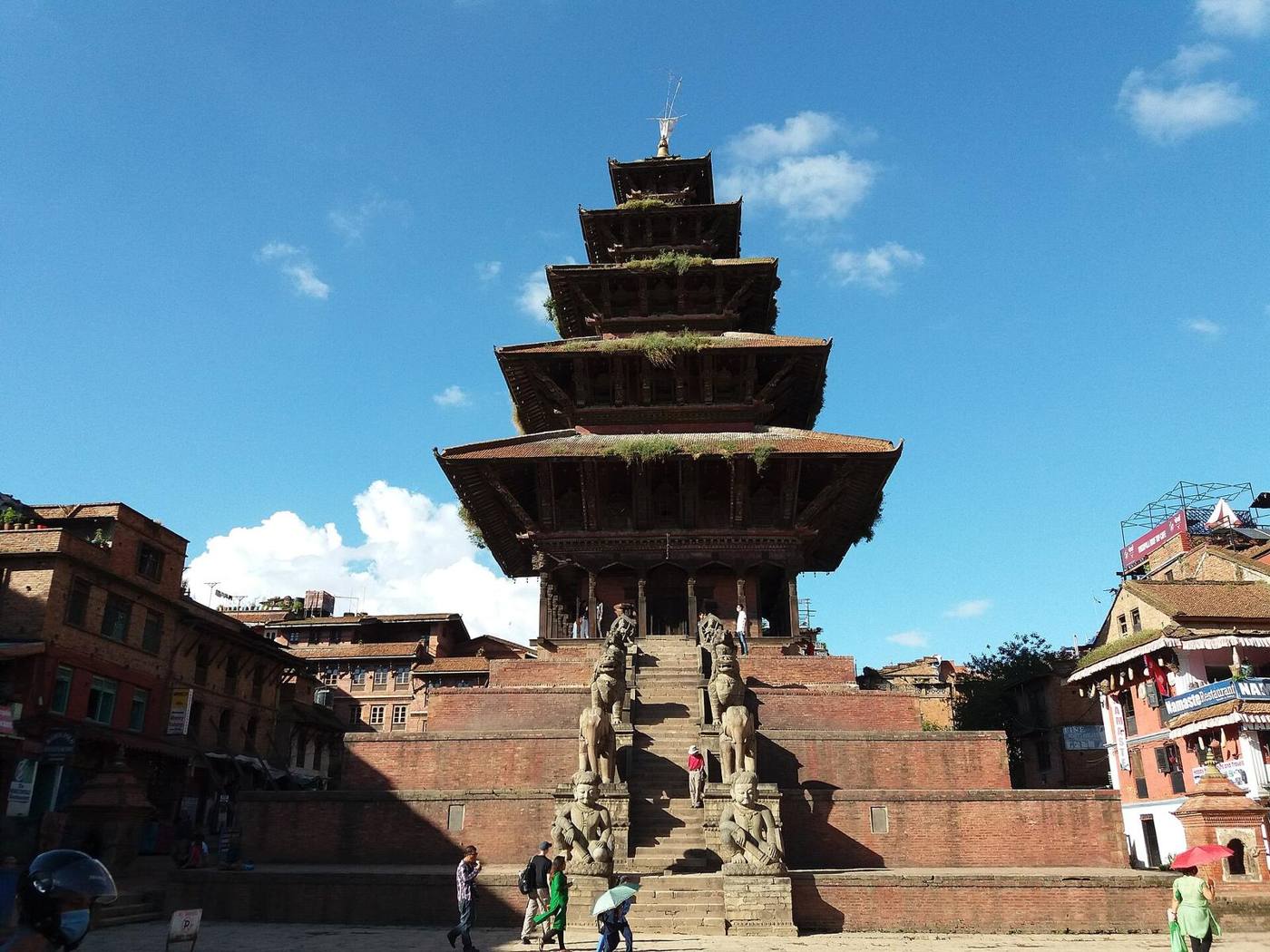
In the afternoon reach Bhaktapur, in the east of the valley, about an hour's drive. It is the best preserved of the three cities, with brick streets, courtyards and squares where people work pottery in the sun. Visit Taumadhi square, with the five-roofed Nyatapola temple, and Durbar Square with the Golden Gate. There is a ticket to enter the city: check prices and times.
Taste juju dhau, the sweet, creamy yoghurt of Bhaktapur, served in clay bowls.
Return to Kathmandu in the evening.
Sleep in Kathmandu.
Practical tip: arrive in Bhaktapur in the afternoon and stay until sunset, when the day groups leave and the squares become quiet.
- Day 18
Departure
This is the last day of the trip.
If your flight leaves late, go back early in the morning to Swayambhunath or Pashupatinath, when the light is soft and the faithful arrive for morning prayers. Or take a last stroll in Thamel to buy tea, spices, wool shawls or a Tibetan rug. Then head to Kathmandu airport, very early, because traffic and checks can be slow.
In eighteen days you have seen the Kathmandu valley, with the temples of Durbar Square, Swayambhunath, Pashupatinath and the great stupa of Boudhanath, and the royal cities of Patan and Bhaktapur. You flew over the Himalaya to Lhasa and visited the Potala, the Jokhang and the monasteries of Sera and Drepung. Then you crossed the passes of Tibet, with the turquoise lake of Yamdrok, the Kumbum of Gyantse and Tashilhunpo Monastery in Shigatse, all the way to sunrise on the north face of Everest at Rongbuk.
When to go: the best months are October and November, with clear skies and the mountains in view, and March and April, when the days grow longer. In summer the weather in Tibet is mild, but monsoon clouds often hide the Himalaya. In winter it is very cold and some services close. At certain times of year Tibet may close to foreigners, sometimes at short notice: check with the agency before booking your flights.
Practical tip: when you come home from a high-altitude trip, plan a quiet day after your return, because the tiredness can still be felt afterwards.
A dream trip, but with strict rules: you can only enter Tibet in an organised group with a guide and permits, which can change at the last minute. Lhasa is at 3,650 metres and you arrive by plane: take the first days very easy.
Before you go
- Documents and visa
- Passport valid for at least six months from the date of entry and a tourist visa, issued on arrival at Kathmandu airport. Fill in the form online up to 15 days ahead or at the airport kiosks. According to the Department of Immigration the visa costs 30 US dollars for 15 days, 50 for 30 days and 125 for 90 days: bring US dollars in cash. Border officers may ask for health insurance with repatriation and the address of your first night.
- Health and vaccines
- No compulsory vaccines when arriving from Europe; yellow fever is needed only if you come from a risk country. In the Terai, the southern plain, there is a malaria risk: ask your doctor. Above 3,000 metres climb slowly to avoid altitude sickness. Drink only bottled or treated water. Police 100, tourist police 1144.
- Money and payments
- Nepalese rupee. Cash dominates; ATMs are found in Kathmandu, Pokhara and the towns, far fewer on the trails. Cards work in the larger hotels.
- Power sockets
- Types C, D and M, 230 volts: bring a universal adapter. Power cuts are frequent.
- Time zone
- UTC+5:45 all year.
- Safety
- After the youth protests of 8 and 9 September 2025, with at least 75 deaths and the fall of the government, the country voted on 5 March 2026; since March 2026 a new government has held a large majority. Demonstrations and strikes are still possible and can turn violent: avoid them. The United States advises increased caution. The UK warns that areas hit by the flood of 26 August 2026 in Rasuwa district may remain unstable. A licensed guide is required in national parks and protected areas. According to the UK, no Nepali airline meets international safety standards, and mountain flights are often delayed by the weather. Official advice: GOV.UK.
Information checked in November 2026 for Italian and EU citizens. Rules change: always check before you travel.
Variations
In twelve days: one day less in Kathmandu and a return from Lhasa after Shigatse, without the road to Everest.
In twenty-one days: add a few days of short trekking in the hills around Kathmandu or Pokhara before Tibet.
Frequently asked questions
Can you travel to Tibet independently?
No. Foreigners enter Tibet only with an authorised agency, with the Tibet permit and with a guide and driver for the whole trip. The rules can change at the last minute.
Do I need a Chinese visa if I start from Nepal?
It depends on the rules at the time. Entering from Nepal you often need the Chinese group visa, issued in Kathmandu in a few working days. Ask the agency whether entry to China without a visa is enough for you. Other nationalities should check their own rules.
Is the Kerung crossing open?
In recent years the Kerung crossing, towards Rasuwa, has been closed to foreigners for long periods. Ask the agency whether it is open when you travel. The flight between Kathmandu and Lhasa is the more reliable alternative.
Indicative itinerary written by World Atlas. Before booking, check timetables, seasonal openings, documents and safety.
 7 daysEasy
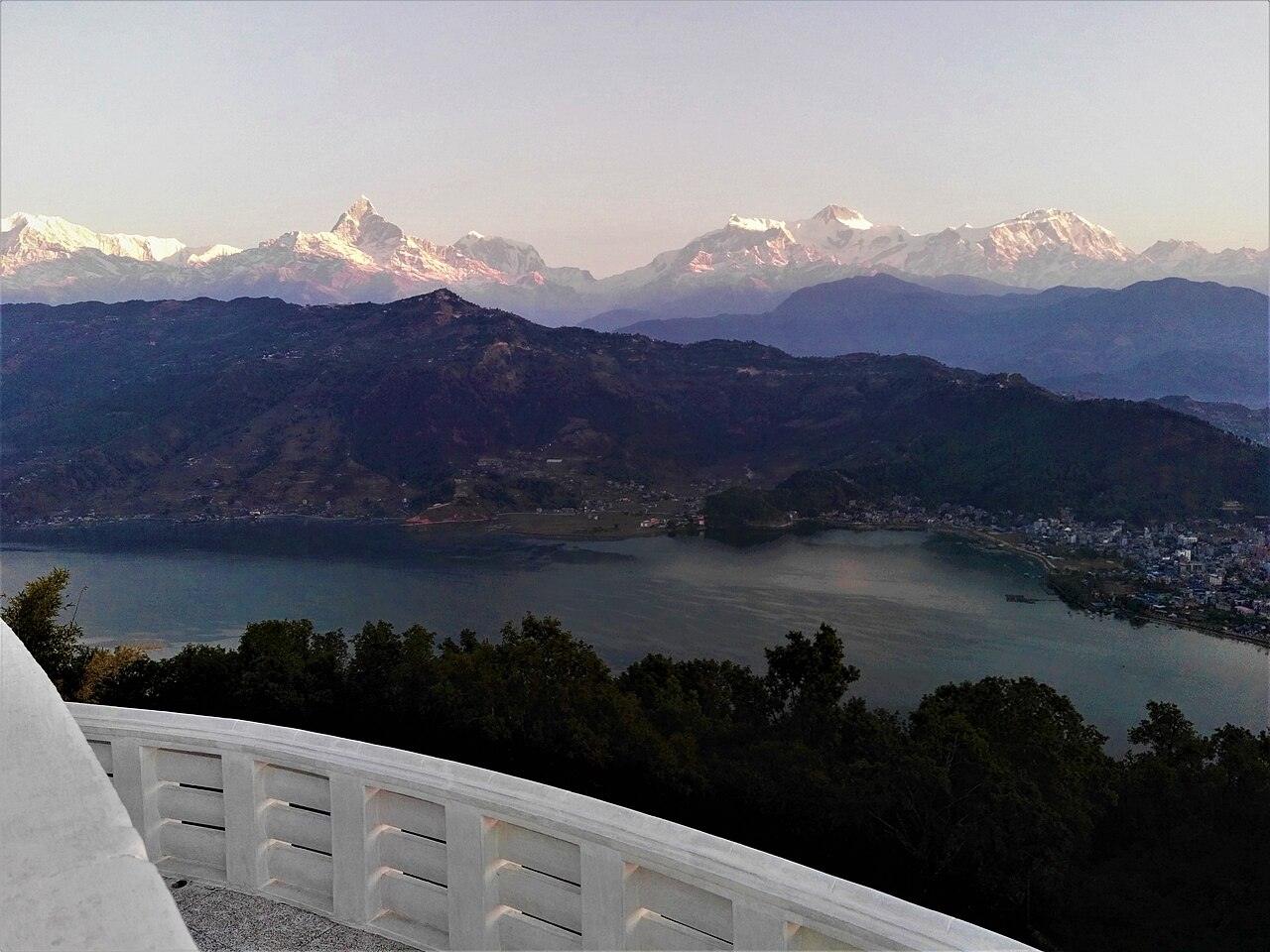
Kathmandu, Pokhara and Poon Hill
The temples of the Kathmandu Valley, the lake at Pokhara and a short trek with sunrise over the Annapurnas.
 15 daysChallenging
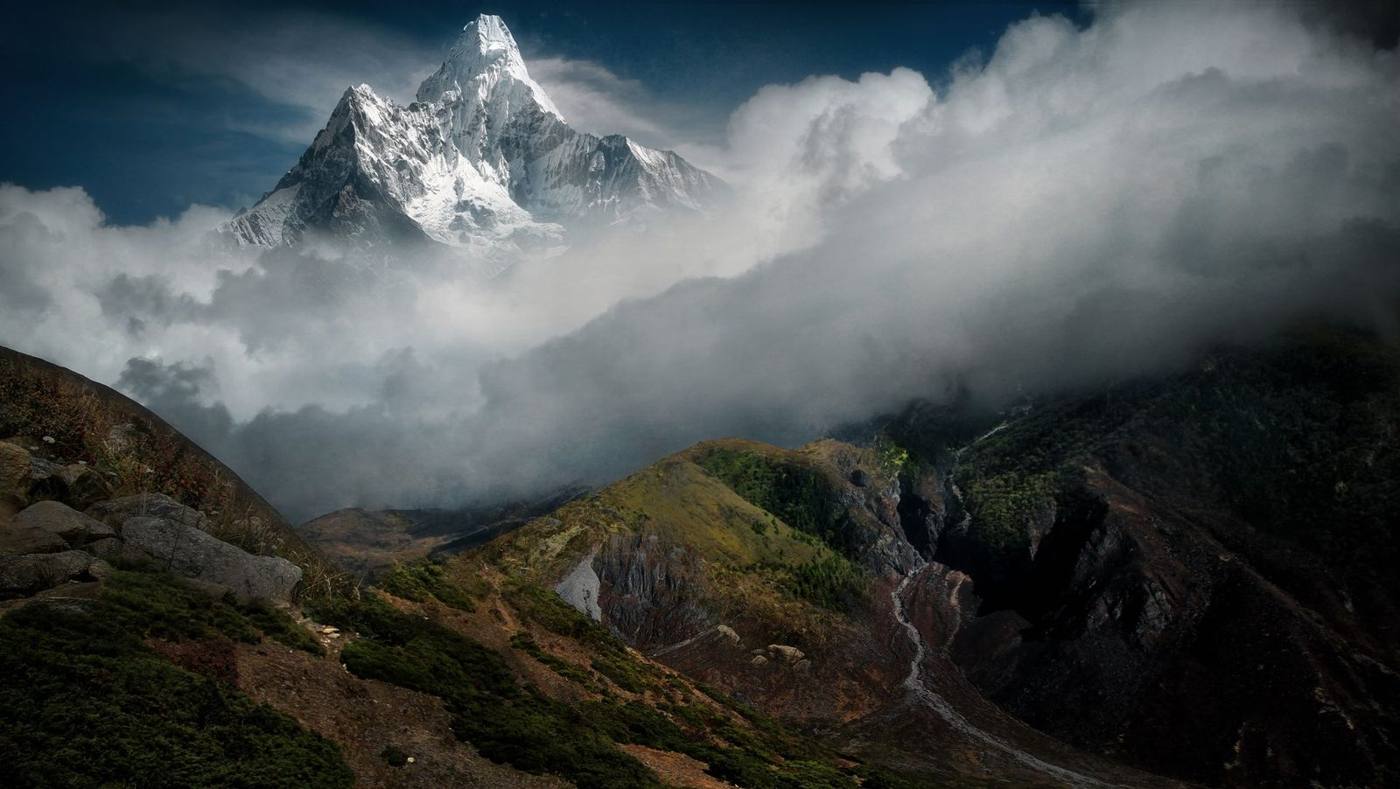
Everest trek and Chitwan
The spectacular flight to Lukla, Sherpa villages and the Everest viewpoint of Kala Patthar, then the rhinos of Chitwan. Good fitness required.
 16 daysEasy
All of Nepal: the Kathmandu valley, Pokhara and Chitwan
The valley's three royal cities, a short trek with Annapurna views, rafting on the Trisuli, the rhinos of Chitwan and Lumbini, birthplace of the Buddha.