Kathmandu, Pokhara and Poon Hill
The temples of the Kathmandu Valley, the lake at Pokhara and a short trek with sunrise over the Annapurnas.
- Kathmandu
- Bhaktapur
- Pokhara
- Ghorepani
- Poon Hill
Day by day
- Day 1
Arrival in Kathmandu, Thamel
This seven-day trip is the right week for a first time in Nepal: the temples of the Kathmandu Valley, the medieval town of Bhaktapur, the lake at Pokhara and a short trek with sunrise over the Annapurnas from Poon Hill.
Before you go: Italian citizens need a passport valid for at least six months and a tourist visa, issued on arrival at Kathmandu airport after you fill in the online form. According to Nepal's Department of Immigration the visa costs 30 US dollars for 15 days and 50 for 30 days: bring the dollars in cash. Other nationalities should check their own rules. After the protests of September 2025 the country voted on 5 March 2026 and has a new government, but demonstrations and strikes are still possible: avoid them and check your government's travel advice before leaving. A licensed guide is required for trekking in the Annapurna Conservation Area.
You land at Kathmandu international airport, a few kilometres from the centre. After the visa, change some money into rupees and take a prepaid taxi.
In the afternoon settle into Thamel, the travellers' district, with lanes full of mountain gear shops, bookshops and prayer flags. If the traffic gets to you, you can stay in Patan or Bhaktapur, which are quieter.
At sunset relax in the Garden of Dreams, a restored neoclassical garden near Thamel. Check prices and times.
In the evening have momos, steamed dumplings filled with meat or vegetables, and dal bhat.
Sleep in Kathmandu, for two nights.
Practical tip: meet the registered agency organising your trek today: it arranges the guide and the permits and tells you what to pack.
- Day 2
Durbar Square, Swayambhunath, Pashupatinath and Boudhanath
Today you visit the four most famous sites of the Kathmandu Valley, a UNESCO World Heritage Site.
Early in the morning climb to Swayambhunath, the stupa on the hill west of the city, also called the Monkey Temple for the monkeys living on its stairway. From the top the Buddha's eyes painted on the tower look out over the valley. Walk round the stupa clockwise and spin the prayer wheels. Check prices and times.
Then go down to Kathmandu Durbar Square, the square of the old Hanuman Dhoka royal palace, with wooden pagodas, some rebuilt after the 2015 earthquake. Nearby is the house of the Kumari, the girl worshipped as a living goddess. Check prices and times.
At midday take a taxi to Pashupatinath, the great Shiva temple on the Bagmati river, the holiest place in Nepal for Hindus. The main temple is open only to Hindus, but from the opposite bank you can see the ghats, the stone steps where cremations take place, and the sadhus, the ascetics. Watch respectfully and do not photograph the rites close up.
In the afternoon go to Boudhanath, one of the largest stupas in the world, the heart of the Tibetan community in Nepal. At sunset join the pilgrims walking round the stupa reciting prayers, while the butter lamps are lit.
In the evening have dinner on a terrace overlooking the illuminated stupa.
Sleep in Kathmandu.
Practical tip: today's sites are far apart and traffic is slow: use taxis, agree on the fare before getting in and bring a mask against the smog.
- Day 3
Bhaktapur and the journey to Pokhara
Today you visit the valley's medieval town and then leave for Pokhara.
Early in the morning go to Bhaktapur, about an hour from Kathmandu, the best preserved of the three old royal cities of the valley. Foreigners pay a ticket to enter the old town: check prices and times.
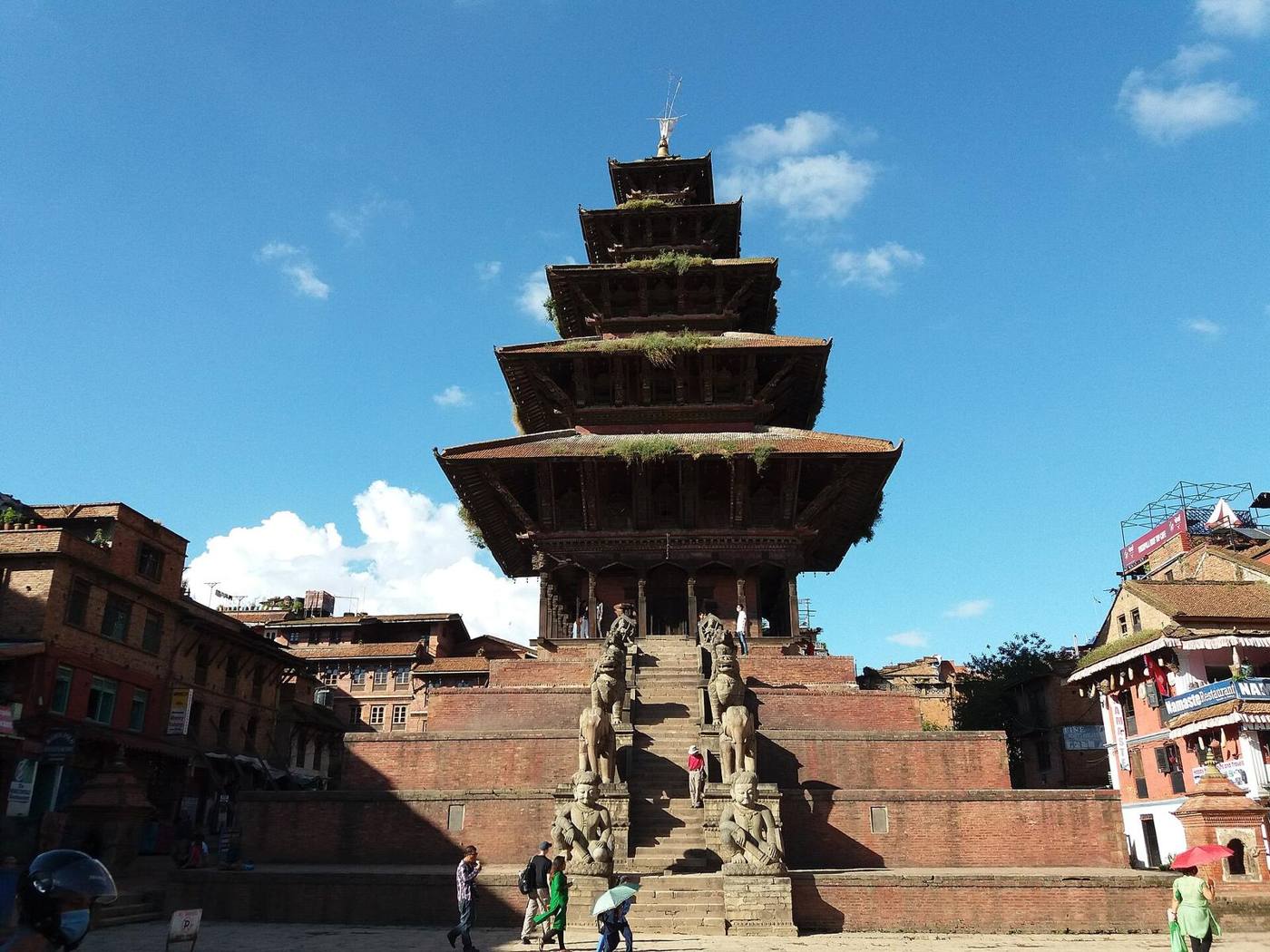
Start at Durbar Square, with the palace of 55 carved wooden windows and the Golden Gate. Then walk to Taumadhi Square, where the Nyatapola Temple rises, a five-storey pagoda with guardian statues on its stairway, one of the tallest temples in Nepal.
Pass through Pottery Square, where craftsmen shape clay on the wheel and leave the pots to dry in the sun. Taste juju dhau, Bhaktapur's sweet yoghurt, served in a clay bowl.
At midday head back towards the airport or the bus station.
In the afternoon reach Pokhara. The flight takes about half an hour, with the mountains on the right if the sky is clear. By bus it takes six to eight hours on a busy mountain road, and in that case it is better to leave in the morning and see Bhaktapur on another day.
In the evening stroll along Lakeside in Pokhara, with the lights reflected on the water.
Sleep in Pokhara.
Practical tip: domestic flights in Nepal are often postponed for fog or cloud, and according to the British government no Nepali airline meets international safety standards: weigh up your choice and keep the day flexible.
- Day 4
The trek to Ghorepani
Today you start the short trek in the Annapurna Conservation Area.
Early in the morning leave Pokhara by jeep with your guide. The road drops towards Nayapul and then climbs the valley to Ulleri or a nearby village, where the trail begins. The guide carries the conservation area permits and the TIMS card, arranged by the agency. Check prices and times.
From here you walk uphill for four to five hours. The trail climbs stone steps between farmed terraces, then enters a forest of oak and rhododendron, the trees that in March and April are covered in red and pink flowers. You pass Magar and Gurung villages, with stone houses and children waving.
At midday have lunch at a tea house on the trail, with a plate of dal bhat to give you energy for the climb.
In the afternoon you reach Ghorepani, a village at about 2,850 metres on a saddle between the mountains. If the sky is clear, you can already see Dhaulagiri and the Annapurnas from here.
The evening is cold: sit by the stove in the common room, where trekkers swap stories.
Sleep in Ghorepani.
Practical tip: bring a light down jacket, a sleeping bag or liner, a head torch and some snacks. The trek suits anyone who walks regularly and causes no altitude problems, but climb steadily and drink often.
- Day 5
Sunrise from Poon Hill
Today you see the most famous sunrise in Nepal and return to Pokhara.
In the morning, still in the dark, around five, climb with your head torch to Poon Hill, at 3,210 metres, about an hour of steps from the village. At the top there is a viewing tower and plenty of people: arrive early for a good spot.
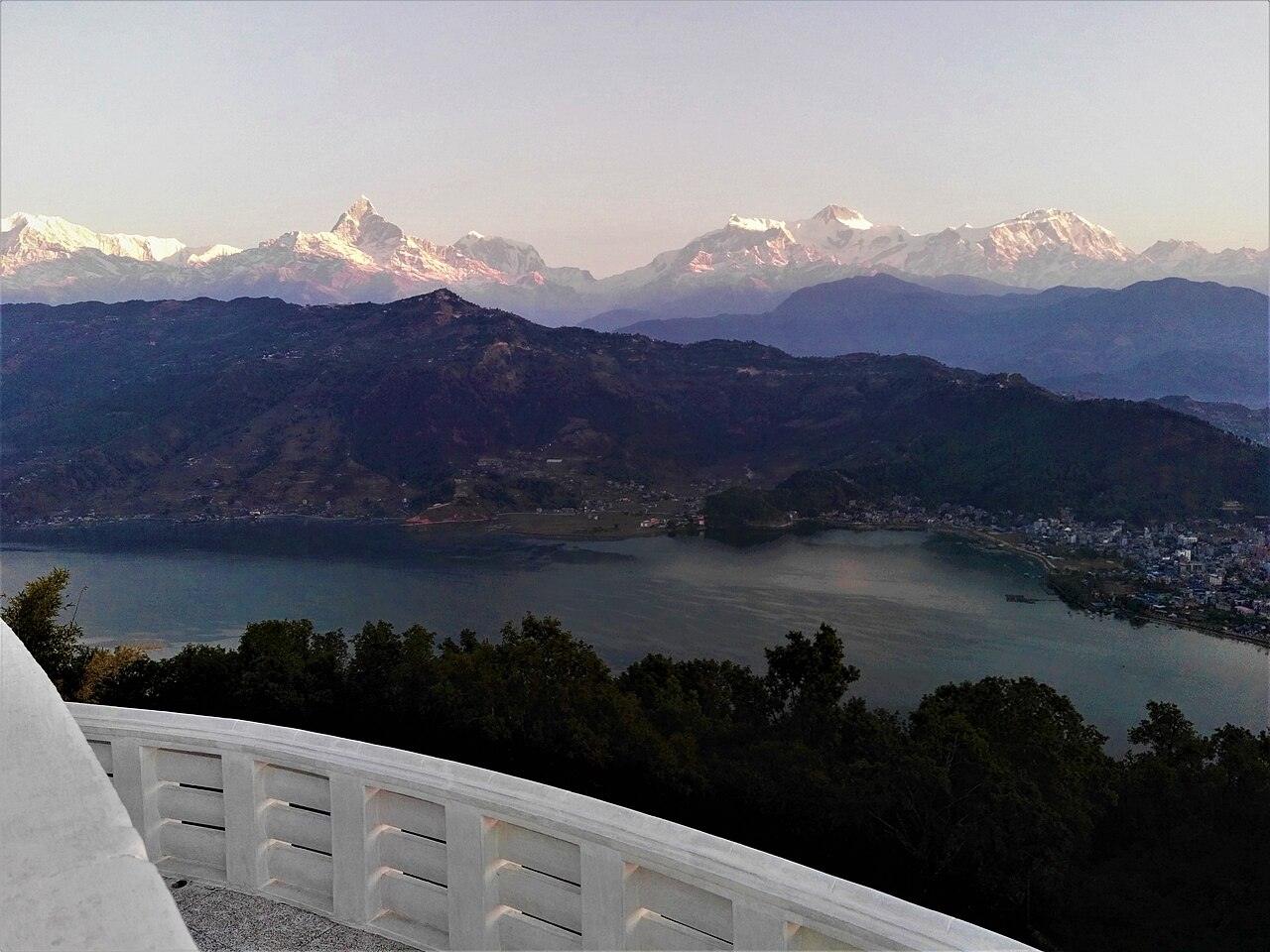
As the sun rises, the light touches the peaks one after another: Dhaulagiri to the west, one of the fourteen mountains over 8,000 metres, then Annapurna South, Annapurna I and Machapuchare, the fishtail mountain, sacred and closed to climbers. It is one of the widest Himalayan panoramas you can reach in so little time.
Go back to Ghorepani for a hot breakfast.
At midday begin the descent towards Ulleri on the same stone steps, harder on the knees than on the lungs. Use poles and take your time.
In the afternoon meet the jeep and drive back to Pokhara, about three hours. Alternatively, with an extra day, you can go down from Ghorepani to Tadapani and Ghandruk, a large Gurung village.
In the evening rest on the lakeside and celebrate the trek.
Sleep in Pokhara, for two nights.
Practical tip: at dawn on Poon Hill the temperature can drop below zero even in autumn: gloves, a hat and a down jacket are essential.
- Day 6
Pokhara: Phewa Lake and the Peace Pagoda
Today you enjoy Pokhara at a gentle pace after the trek.
In the morning hire a colourful rowing boat on Phewa Lake, with a boatman or rowing yourself. On clear mornings Machapuchare is reflected in the still water. Stop at the island of the Tal Barahi Temple, a small pagoda dedicated to the goddess Barahi, where worshippers arrive by boat with offerings. Check prices and times.
Then cross the lake to the southern shore and walk up through the woods, about an hour, to the World Peace Pagoda, a white stupa built by Japanese Buddhist monks on a hill above the lake. From the terrace you see all of Pokhara, the lake and, behind them, the Annapurna range. Take off your shoes and stay quiet near the stupa.
At midday go back down to town by taxi or on foot.
In the afternoon visit the International Mountain Museum, which tells the story of the great Himalayan expeditions, the mountain peoples and the geology of the range. Check prices and times. If you prefer, watch the paragliders gliding down from Sarangkot above the lake.
At sunset sit on the lakeside and watch the boats coming in.
In the evening have lake fish or a Nepali thali.
Sleep in Pokhara.
Practical tip: in Pokhara the mountains are clearest early in the morning: after ten, especially in spring, the clouds rise and hide the peaks.
- Day 7
Back to Kathmandu
Today you return to Kathmandu and the trip ends.
Early in the morning, if the sky is clear, watch the sunrise over the Annapurnas one last time from the lakeside or the terrace of your lodging.
Then take the flight to Kathmandu, about half an hour, or the tourist bus, six to eight hours. If you are connecting to an international flight the same day, choose an early domestic flight and keep at least four or five hours of margin, because weather delays are frequent.
In the afternoon, if you have time, visit Patan, the third royal city of the valley, with its Durbar Square, the stone Krishna Temple and the Patan Museum, with a fine collection of sacred bronze art. Check prices and times. Patan is also the best place to buy the cast bronze statues of the Newar craftsmen.
In these seven days you have seen essential Nepal: the royal squares and great stupas of the Kathmandu Valley, the medieval town of Bhaktapur, the lake at Pokhara and sunrise from Poon Hill over the Annapurnas and Dhaulagiri.
When to go: the best months are October and November, with the clearest skies after the monsoon, and March and April, when the rhododendrons bloom but the mountains are more often hazy. From June to September the monsoon brings rain, cloud and leeches on the trail. In winter you can still walk, but Ghorepani is very cold.
Sleep in Kathmandu.
Practical tip: give your guide and porter a tip at the end of the trek, in rupees, handing it to them directly.
The right week for a first time in Nepal: temples, a lake and a short trek with sunrise over the Annapurnas. The Poon Hill trek suits anyone who walks regularly, with no altitude issues. Traffic and smog in Kathmandu are heavy, so staying in Bhaktapur or Patan is nicer.
Before you go
- Documents and visa
- Passport valid for at least six months from the date of entry and a tourist visa, issued on arrival at Kathmandu airport. Fill in the form online up to 15 days ahead or at the airport kiosks. According to the Department of Immigration the visa costs 30 US dollars for 15 days, 50 for 30 days and 125 for 90 days: bring US dollars in cash. Border officers may ask for health insurance with repatriation and the address of your first night.
- Health and vaccines
- No compulsory vaccines when arriving from Europe; yellow fever is needed only if you come from a risk country. In the Terai, the southern plain, there is a malaria risk: ask your doctor. Above 3,000 metres climb slowly to avoid altitude sickness. Drink only bottled or treated water. Police 100, tourist police 1144.
- Money and payments
- Nepalese rupee. Cash dominates; ATMs are found in Kathmandu, Pokhara and the towns, far fewer on the trails. Cards work in the larger hotels.
- Power sockets
- Types C, D and M, 230 volts: bring a universal adapter. Power cuts are frequent.
- Time zone
- UTC+5:45 all year.
- Safety
- After the youth protests of 8 and 9 September 2025, with at least 75 deaths and the fall of the government, the country voted on 5 March 2026; since March 2026 a new government has held a large majority. Demonstrations and strikes are still possible and can turn violent: avoid them. The United States advises increased caution. The UK warns that areas hit by the flood of 26 August 2026 in Rasuwa district may remain unstable. A licensed guide is required in national parks and protected areas. According to the UK, no Nepali airline meets international safety standards, and mountain flights are often delayed by the weather. Official advice: GOV.UK.
Information checked in November 2026 for Italian and EU citizens. Rules change: always check before you travel.
Variations
In 5 days: Kathmandu and Pokhara by air, without the trek, with sunrise from Sarangkot instead of Poon Hill.
In 10 days: extend the trek via Tadapani, Ghandruk and the village of Landruk, and add a night in Bhaktapur.
Frequently asked questions
What documents do I need for Nepal?
Italian citizens need a passport valid for at least six months and a tourist visa, issued on arrival in Kathmandu. According to the Department of Immigration it costs 30 US dollars for 15 days and 50 for 30 days. Other nationalities should check their own rules.
Do I need a guide for Poon Hill?
Yes. Since 1 April 2023 foreigners must have a licensed guide in national parks and protected areas, and Poon Hill is in the Annapurna Conservation Area. The guide is booked through a registered agency, which also arranges the permits: check current prices.
Is the Poon Hill trek difficult?
It suits anyone who walks regularly. There are many stone steps up and down, but the highest point, 3,210 metres, does not usually cause problems if you climb steadily and drink often.
Indicative itinerary written by World Atlas. Before booking, check timetables, seasonal openings, documents and safety.
 15 daysChallenging
Everest trek and Chitwan
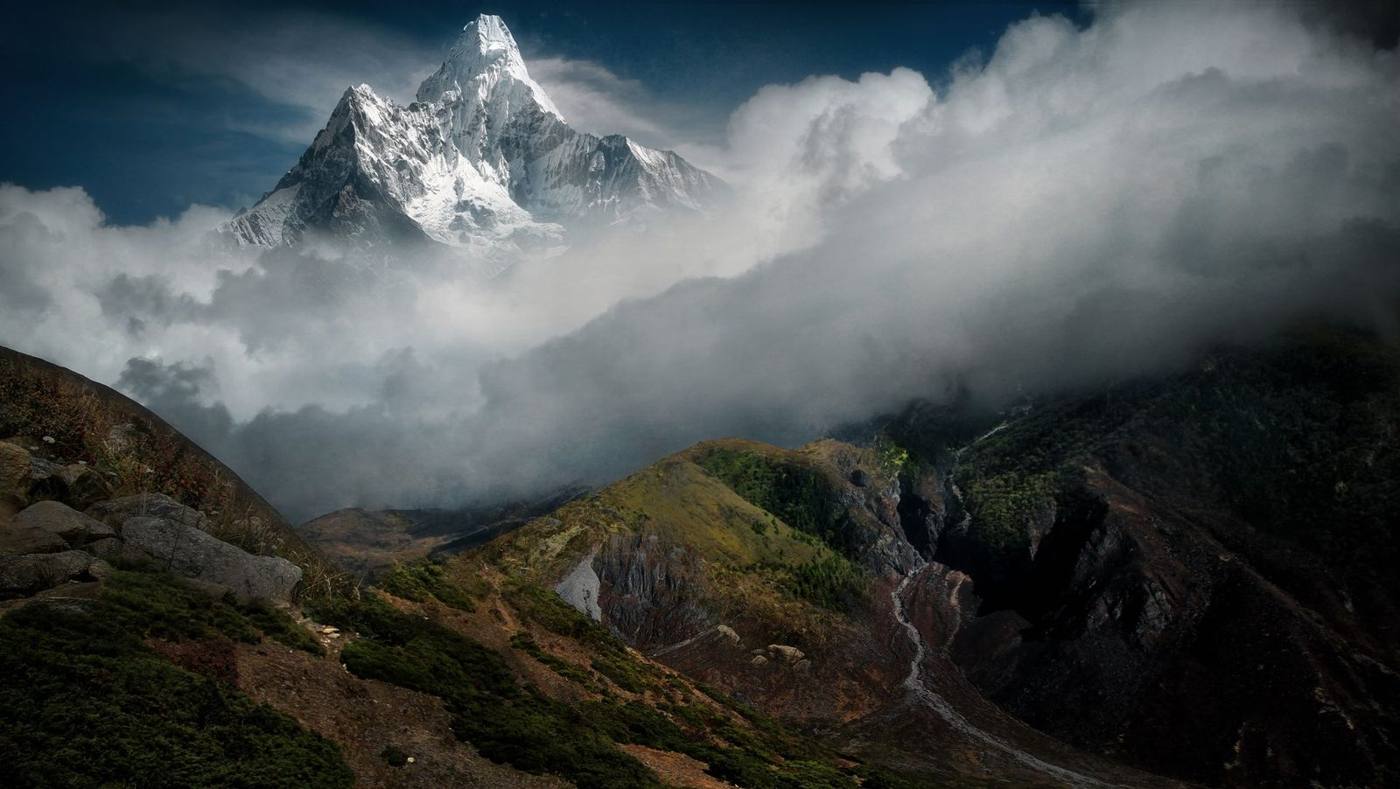
The spectacular flight to Lukla, Sherpa villages and the Everest viewpoint of Kala Patthar, then the rhinos of Chitwan. Good fitness required.
 16 daysEasy
All of Nepal: the Kathmandu valley, Pokhara and Chitwan
The valley's three royal cities, a short trek with Annapurna views, rafting on the Trisuli, the rhinos of Chitwan and Lumbini, birthplace of the Buddha.
 12 daysModerate
Everest View: Namche and Tengboche
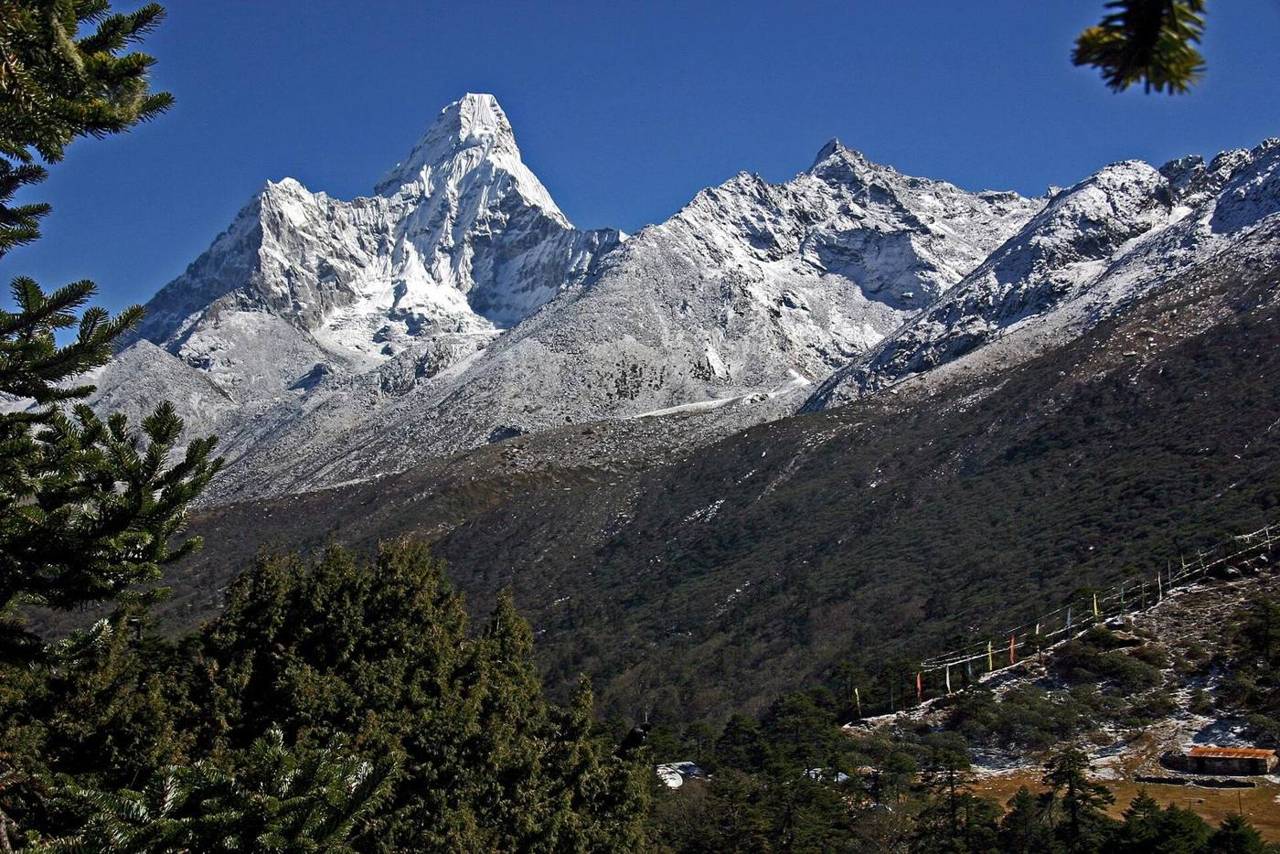
The short trek in the Khumbu valley: the flight to Lukla, Namche Bazaar, Tengboche monastery and Everest before your eyes, without going too high.