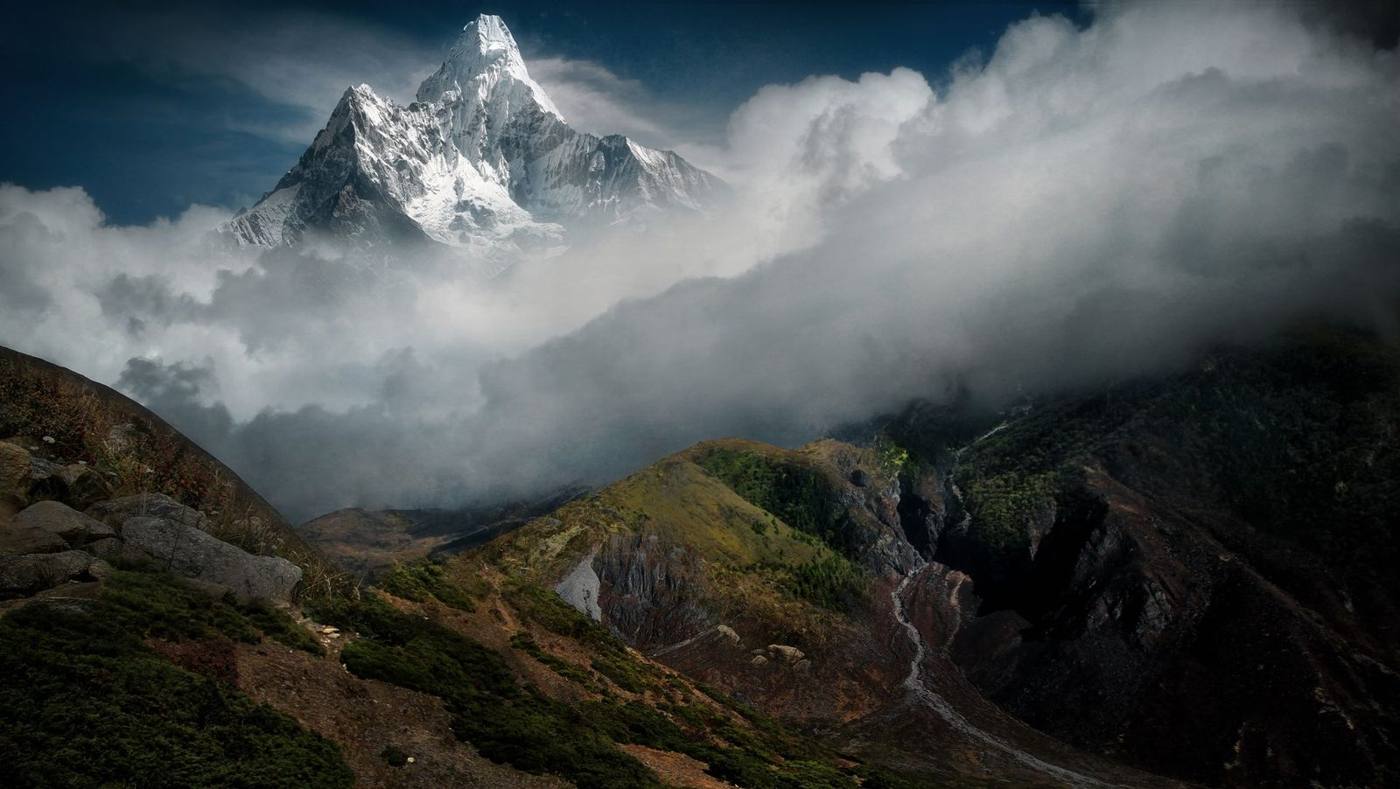
Everest trek and Chitwan
The spectacular flight to Lukla, Sherpa villages and the Everest viewpoint of Kala Patthar, then the rhinos of Chitwan. Good fitness required.
- Kathmandu
- Lukla
- Namche Bazaar
- Tengboche
- Dingboche
- Kala Patthar
- Chitwan
Day by day
- Day 1
Arrival in Kathmandu
This fifteen-day trip combines the great trek in the Khumbu valley, the land of the Sherpas, with Chitwan National Park on the southern plain. You will fly to Lukla, climb to Namche Bazaar, the monastery of Tengboche and Dingboche, and at dawn look at Everest from the Kala Patthar viewpoint, above 5,500 metres. Then you will go down into the jungle to look for rhinos. You need to be properly fit.
Before you go: Italian citizens need a passport valid for at least six months and a tourist visa, issued on arrival at Kathmandu airport after you fill in the online form. According to Nepal's Department of Immigration the visa costs 30 US dollars for 15 days, 50 for 30 days and 125 for 90 days. Other nationalities should check their own rules. After the protests of September 2025 the country voted on 5 March 2026 and has a new government, but demonstrations are still possible: avoid them and check your government's travel advice before leaving. Since 1 April 2023 foreigners must have a licensed guide in parks and protected areas; in the Khumbu the local municipality has its own rules, which have changed several times: check with your agency before you go.
You land in Kathmandu and settle into your hotel. In the afternoon meet the registered agency and your guide, who arrange the Sagarmatha National Park permit and the Khumbu municipality fee. Check prices and times. In the evening check your gear and rent whatever is missing.
Practical tip: choose insurance that covers helicopter rescue above 5,000 metres, and talk to your doctor about altitude before you leave.
- Day 2
The flight to Lukla and the walk to Phakding
Wake up at dawn for the flight to Lukla, the gateway to the Khumbu. The flight takes just over half an hour and, when the sky is clear, you see the Himalayan range on the left. The Lukla runway is short, uphill and built against the mountain: the landing is a thrill. In high season flights may leave from Ramechhap airport, a few hours' drive from Kathmandu: ask your agency.
Be aware that flights only leave in good visibility and are often delayed or cancelled. According to the British government no Nepali airline meets international safety standards. This is why the plan has spare days at the end, and it is worth having a changeable international ticket.
In Lukla, at about 2,800 metres, you meet the porters and have breakfast. Then you start walking downhill towards the Dudh Koshi, the «milk river», between potato fields, stone houses and prayer walls with carved stones. Always pass to the left of mani walls and stupas, as Buddhists do.
After three or four hours you reach Phakding, a village on the river, where you sleep. The stage is easy: it helps your body adjust and lets you find the rhythm of walking.
Practical tip: keep water, a jacket, sun cream and your documents in your daypack, because the main bag travels with the porters and arrives later.
- Day 3
The Hillary bridge and the climb to Namche Bazaar
Today is the first hard day. The path climbs the Dudh Koshi valley, crosses the river several times on suspension bridges covered in prayer flags and passes through the village of Monjo, where you enter Sagarmatha National Park. Show your permits at the checkpoint.
The park has been inscribed by UNESCO since 1979. It is home to the Himalayan tahr, a kind of wild goat, the Himalayan monal, Nepal's national bird, and the musk deer.
After Jorsale comes the most spectacular point: the Hillary bridge, high above the meeting of two rivers. Then the long zigzag climb through the pine forest begins. Halfway up, if the sky is clear, you see the summit of Everest for the first time, far away, behind the ridge of Nuptse and Lhotse.
Climb slowly, with short steps, and breathe calmly. In the afternoon you reach Namche Bazaar, at about 3,400 metres, the Sherpa town built in tiers like an amphitheatre on the mountainside. There are gear shops, bakeries, a cash machine and internet access. It is the last place to buy anything you have forgotten.
In the evening eat dal bhat, rice with lentil soup and vegetables, the dish that gives you energy for the whole trek.
Practical tip: from here upwards do not drink alcohol and avoid long hot showers, which make you more tired at altitude.
- Day 4
Acclimatisation in Namche and a view of Everest
Today you do not move on: it is the acclimatisation day, and it must not be skipped. The trekkers' rule is «climb high, sleep low». In the morning climb with your guide above the town, to the viewpoint near Syangboche airstrip, on the hill above 3,700 metres. From here you see Everest, Lhotse and above all Ama Dablam, the most elegant mountain in the valley.
If you feel well, carry on to the villages of Khumjung and Khunde, with stone houses with green roofs and potato fields. In Khumjung there is the school founded by Edmund Hillary in the 1960s, and the monastery keeps an object the monks present as a yeti scalp. Check prices and times.
Return to Namche for lunch. In the afternoon visit the national park visitor centre, on the hill above the town, with information on the park's nature, Sherpa culture and the history of the expeditions, starting with the first ascent of Everest by Edmund Hillary and Tenzing Norgay in 1953.
Listen to your body. A slight headache is normal, but if it gets worse, or if you have nausea, dizziness or are very short of breath even at rest, tell your guide at once. With serious symptoms the only cure is to go down.
Practical tip: drink three or four litres of water a day, boiled or filtered, and carry a flask for hot tea.
- Day 5
Tengboche monastery
You leave Namche on a scenic path along the hillside, almost level, with Ama Dablam ahead of you and Everest in the background. It is one of the finest stretches of the trek. Then the path drops to the river at Phunki Tenga, where there are prayer wheels turned by the water.
From the river a steep climb begins through rhododendron forest, full of red and pink flowers in spring. Walk calmly and stop often. In about two hours you reach Tengboche, at almost 3,900 metres, on a saddle surrounded by mountains.
Tengboche monastery is the most important in the valley. It was rebuilt after a fire in 1989, with the help of many friends of the Khumbu. In the afternoon, at around three, the monks gather for prayers: you can go in quietly, taking off your shoes and hat, and sit at the back. Do not use flash. In autumn the Mani Rimdu festival is held here, with masked dances: ask for the dates.
At sunset go outside to watch Everest and Ama Dablam turn pink and then orange. It is one of the finest moments of the trip. Sleep in Tengboche or, if there is no room, in the nearby village of Deboche.
Practical tip: carry small notes for offerings at the monastery and for tea along the path.
- Day 6
Pangboche and the climb to Dingboche
In the morning the path drops through the forest and crosses the river again, then climbs gently towards Pangboche. Here stands one of the oldest monasteries in the Khumbu: ask your guide whether it is open. The trees get smaller and smaller and then disappear: you enter the high mountain landscape, with juniper bushes and yak pastures.
After Somare the valley opens out and you meet the first yak trains, with their bells and colourful loads. When they pass, always stand on the mountain side, never on the drop side, because yaks can push you.
At the fork take the left-hand path, which climbs into the Imja Khola valley. In the afternoon you reach Dingboche, at about 4,400 metres, a village of stone walls protecting the potato and barley fields from the wind. Ahead of you rises the face of Lhotse, and behind you the north face of Ama Dablam.
At this altitude the body works harder: even short climbs leave you breathless. After you arrive rest, drink tea and eat well, even if you have little appetite.
In the evening it is very cold, and in the dining rooms the stove is only lit for a few hours. Put on all your warm layers, a woolly hat and gloves.
Practical tip: keep your phone and camera batteries in your sleeping bag, because the cold drains them quickly.
- Day 7
Acclimatisation in Dingboche
Today is the second acclimatisation day, the most important of the trip before going above 5,000 metres. Here too the rule is: climb high, sleep low.
In the morning, with your guide, climb the hill above the village towards Nangkartshang. The path is steep and your breath gets short. You do not need to reach the top: it is enough to gain a few hundred metres of height, stay up there for a while and come down. From above the view is magnificent: Makalu, one of the five highest mountains in the world, far to the east, Island Peak, the Chukhung valley and, below you, the stone walls of Dingboche.
Go back to the village for lunch and spend the afternoon resting. Read, write, play cards with other trekkers. This rest is as much part of the trek as the walking.
In the next valley, at Pheriche, during the trekking months there is a clinic run by volunteer doctors who give short talks on altitude sickness. If you get the chance, go: you learn to recognise the symptoms in yourself and in your companions.
Check with your guide how you are: breathing rate, sleep, appetite. If the symptoms are strong, the right decision is to stay another day or go down, not to carry on.
Practical tip: ask your doctor before the trip whether medicines to prevent altitude sickness are suitable for you, and carry the written instructions.
- Day 8
Thukla and Lobuche
You leave Dingboche and climb the slope above the village, then walk across a broad, gentle plateau, with views of the peaks of Taboche and Cholatse. It is a short stage in kilometres, but tiring because of the altitude.
At Thukla, in the middle of the day, take a break with a hot meal. Then the steep climb begins up the moraine of the Khumbu glacier to the pass. At the top you find a silent place, full of chortens and stone memorials with prayer flags: they remember the climbers and Sherpas who died on Everest. Stop for a few minutes out of respect.
After the pass the path drops a little and follows the valley along the glacier, between stones and sparse grass. In the early afternoon you reach Lobuche, at almost 5,000 metres, a small group of houses beneath the mountains. The landscape is now one of ice and rock: the vegetation has almost disappeared.
The night in Lobuche is hard: it is very cold and many people sleep badly because of the altitude. Go to bed early, because tomorrow you get up before dawn.
Before you sleep get everything ready: head torch with new batteries, warm clothes, a bottle full of hot water and something to eat for the morning.
Practical tip: put the hot water bottle in your sleeping bag: it keeps you warm at night and in the morning the water is not frozen.
- Day 9
Kala Patthar at dawn and the descent
This is the most important day of the trip. You leave in the dark with your head torch, very early, with your guide. The path follows the glacier moraine to Gorak Shep, the last village before base camp, in a basin of grey sand. Then the climb to Kala Patthar begins, the «black rock», a hill of stones above 5,500 metres.
The climb is slow and every step costs effort. You stop often, eat a biscuit, drink hot tea. When you reach the top, in the early hours of the morning, the reward is huge: Everest is in front of you, with its black pyramid, and the morning light sets the snow alight. Around you are Nuptse, Changtse and Pumori, and below the Khumbu glacier flowing down from the great icefall towards base camp.
Everest, which the Nepalis call Sagarmatha, is 8,849 metres high according to the official measurement of 2020. Stay at the top only long enough for photos: the cold and the wind are strong.
Then go down to Gorak Shep for breakfast and keep descending, past Lobuche and Thukla, to Pheriche or Dingboche. Going down makes you feel better straight away: breathing becomes easier and tonight you will sleep better.
If you feel ill on the way up, do not push on: turn round and go down. Everest can also be seen from lower down.
Practical tip: wear thin gloves under the thick ones, so you can take photos without taking everything off.
- Day 10
The descent to Namche Bazaar
Today is a long stage but almost all downhill. From Pheriche you walk down the broad valley, then pass Pangboche again and climb the short slope up to Tengboche. If you missed the monks' prayers before, today may be your chance to stop at the monastery.
After Tengboche the path drops through the rhododendron forest to the river, and then comes the day's last climb to the hillside path leading to Namche. It is hard after so many days of walking, but the air has more oxygen and your legs respond better.
Along the way look at the valley with new eyes: on the way up you walked slowly, concentrating on your breathing; today you can enjoy the scenery, the villages and people's work. Greet with «namaste» the porters climbing with huge loads, sometimes heavier than themselves.
In the afternoon you reach Namche Bazaar. After the days at high altitude the town feels like a city: bakeries, cafes, hot showers, shops. Treat yourself to cake and hot tea, and call home.
The evening is the right time to wash clothes, dry your boots and check your feet: treat any blisters straight away before the final descent.
Practical tip: if you buy souvenirs in Namche, choose light ones, because tomorrow you carry everything to Lukla.
- Day 11
The last stage to Lukla
The last walking stage takes you back to Lukla. In the morning you go down the long climb of the third day, now all downhill, to the Hillary bridge. Look after your knees: use trekking poles and go down with short steps.
Then follow the Dudh Koshi, pass Monjo again and leave the national park. Along the path you meet trekkers on their way up, with tired faces and curious eyes: this is when you realise how far you have walked. Give them some advice, if they ask.
After Phakding the path climbs back towards Lukla: it is the last climb, longer than you remember. In the afternoon you reach the town, where many trekkers celebrate the end of the walk.
The evening is the time to say goodbye to the porters and thank them, as they often do not continue with you to Kathmandu. In Nepal it is customary to tip the guide and porters at the end of the trek. Ask your agency how much is usual and hand it over in person, in an envelope, with a thank you, «dhanyabad».
Before you sleep confirm tomorrow's flight time with your guide. Flights leave early in the morning, when the sky is clearest.
Practical tip: keep what you need for an extra night in Lukla in your hand luggage, in case the flight is cancelled because of the weather.
- Day 12
The flight to Kathmandu
Early in the morning go to the small Lukla runway. If the weather is good, the plane takes off downhill towards the valley and in half an hour you are back in Kathmandu, or in Ramechhap if the flight leaves from there. If the flight is delayed, be patient: this is why the plan has spare days.
Back in the city, enjoy a long shower and a big lunch. In the afternoon, if you have the energy, visit the stupa of Boudhanath, one of the largest in the world and the centre of the Tibetan community in Nepal. Walk round the stupa clockwise with the pilgrims as they spin the prayer wheels, and look at the eyes of the Buddha painted on the tower. It is inscribed by UNESCO together with the other monuments of the valley. Check prices and times.
Alternatively, if you are tired, wander slowly through the streets of Thamel, the travellers' district, and look for a gift: Himalayan tea, wool scarves, Tibetan singing bowls. Bargain calmly and with a smile.
In the evening pack your bag for Chitwan. Leave the heavy trekking gear at the hotel, such as your sleeping bag and boots, which you do not need in the jungle.
Practical tip: if you have lost days because of the Lukla flights, shorten Chitwan and skip the city visit, but do not give up the margin before your international flight.
- Day 13
To Chitwan and the life of the Tharu
Today you leave the mountains and go down to the Terai plain, in the south of Nepal. You can reach Chitwan by car or tourist bus, with about six hours on the road between hills, rivers and rice fields, or with a short flight to Bharatpur. The difference from the Khumbu is enormous: here it is hot, the air is humid and everything is green.
Chitwan National Park has been inscribed by UNESCO since 1984. It is one of the most important protected areas in Asia for the Indian one-horned rhinoceros, and it is also home to the Bengal tiger, leopard, sloth bear, deer and hundreds of bird species. You may only enter the park with authorised nature guides. Check prices and times.
In the afternoon settle into one of the villages on the edge of the park and take a walk at sunset along the Rapti river. Sometimes rhinos come out of the tall grass to drink, right in front of the village.
In the evening visit a Tharu village, home to the people who have lived in the Terai for centuries. Their houses are made of mud and straw, with decorated walls. You can watch traditional stick dances.
Practical tip: in Chitwan there is a risk of mosquito-borne diseases: use repellent, wear long sleeves in the evening and ask your doctor before the trip.
- Day 14
Canoeing on the Rapti and a jungle safari
Wake up at dawn, when the jungle is most alive. The first activity is a canoe trip down the Rapti river, in a long dugout canoe carved from a tree trunk. You glide silently through the morning mist and watch the banks: mugger crocodiles bask on the sand and, with a little luck, gharials, crocodiles with a long thin snout, now rare. Kingfishers, herons and storks fly over the water.
Then you go ashore for a jungle walk with two experienced guides. The guides explain the footprints, the scratches on trees and the alarm calls of deer and monkeys. Always follow their instructions: rhinos and wild elephants can be dangerous.
In the afternoon take a jeep safari deeper into the park, where you have a better chance of seeing rhinos and, very rarely, the tiger. We advise you not to ride elephants, because their training is often cruel: watching them from a distance, roaming wild in the forest, is far better.
In the evening, when you get back, sit on the riverbank for the sunset. The sun sinks red behind the trees, while the fishermen's boats come back to shore.
Practical tip: for the safari wear neutral colours, green or brown, bring binoculars and keep quiet, because animals hear voices from far away.
- Day 15
Back to Kathmandu and departure
On the last morning, if you have time, take a bike ride through the rice fields and villages around the park, or a walk in the community forest by the river. Then set off for Kathmandu, by car or with the flight from Bharatpur, and from there take your international flight.
In fifteen days you have had the spectacular flight to Lukla, the Hillary bridge, the town of Namche Bazaar and the villages of Khumjung, Tengboche monastery, Dingboche and Lobuche, Everest at dawn from Kala Patthar, and then the Chitwan jungle with its rhinos, the crocodiles of the Rapti river and the Tharu villages.
When to go: the best months are October and November, with the clearest skies and the mountains visible almost every day, and March and April, with rhododendrons in flower and milder temperatures, but more cloud in the afternoon. From June to September the monsoon brings rain and cloud, and Lukla flights are cancelled even more often. In winter, from December to February, the sky is often clear, but nights at high altitude are very cold. In Chitwan the best months for wildlife are the dry ones, from October to April; in spring it is already very hot.
Remember that rescue at high altitude often depends on helicopters and the weather: always carry the phone numbers of your insurer and agency.
Practical tip: book your international return flight on a changeable ticket, because Lukla delays can change the whole plan.
A trip you never forget, but it must be prepared seriously: you go above 5,000 metres and acclimatisation cannot be shortened. The flight to Lukla is often cancelled for weather, so spare days are essential. Chitwan at the end is the right rest, with good chances of seeing rhinos.
Before you go
- Documents and visa
- Passport valid for at least six months from the date of entry and a tourist visa, issued on arrival at Kathmandu airport. Fill in the form online up to 15 days ahead or at the airport kiosks. According to the Department of Immigration the visa costs 30 US dollars for 15 days, 50 for 30 days and 125 for 90 days: bring US dollars in cash. Border officers may ask for health insurance with repatriation and the address of your first night.
- Health and vaccines
- No compulsory vaccines when arriving from Europe; yellow fever is needed only if you come from a risk country. In the Terai, the southern plain, there is a malaria risk: ask your doctor. Above 3,000 metres climb slowly to avoid altitude sickness. Drink only bottled or treated water. Police 100, tourist police 1144.
- Money and payments
- Nepalese rupee. Cash dominates; ATMs are found in Kathmandu, Pokhara and the towns, far fewer on the trails. Cards work in the larger hotels.
- Power sockets
- Types C, D and M, 230 volts: bring a universal adapter. Power cuts are frequent.
- Time zone
- UTC+5:45 all year.
- Safety
- After the youth protests of 8 and 9 September 2025, with at least 75 deaths and the fall of the government, the country voted on 5 March 2026; since March 2026 a new government has held a large majority. Demonstrations and strikes are still possible and can turn violent: avoid them. The United States advises increased caution. The UK warns that areas hit by the flood of 26 August 2026 in Rasuwa district may remain unstable. A licensed guide is required in national parks and protected areas. According to the UK, no Nepali airline meets international safety standards, and mountain flights are often delayed by the weather. Official advice: GOV.UK.
Information checked in November 2026 for Italian and EU citizens. Rules change: always check before you travel.
Variations
In twelve days: climb only as far as Tengboche and Pangboche, without Kala Patthar, and keep Chitwan for the end.
In eighteen days: add the Gokyo valley and its lakes, always with acclimatisation days and an experienced guide.
Frequently asked questions
What documents do I need for Nepal?
Italian citizens need a passport valid for at least six months and a tourist visa, issued on arrival in Kathmandu. According to the Department of Immigration it costs 30 US dollars for 15 days, 50 for 30 days and 125 for 90 days. Other nationalities should check their own rules.
Do I need a guide in the Khumbu?
Since 1 April 2023 foreigners must have a licensed guide in Nepal's parks and protected areas, but in the Khumbu the local municipality has its own rules, which have changed several times. Check with a registered agency. In any case, with Kala Patthar above 5,500 metres, a guide is the safest choice.
Is the flight to Lukla safe?
It is spectacular but difficult: the runway is short and flights only leave in good visibility, so they are often delayed or cancelled. According to the British government no Nepali airline meets international safety standards. Always keep spare days.
Indicative itinerary written by World Atlas. Before booking, check timetables, seasonal openings, documents and safety.
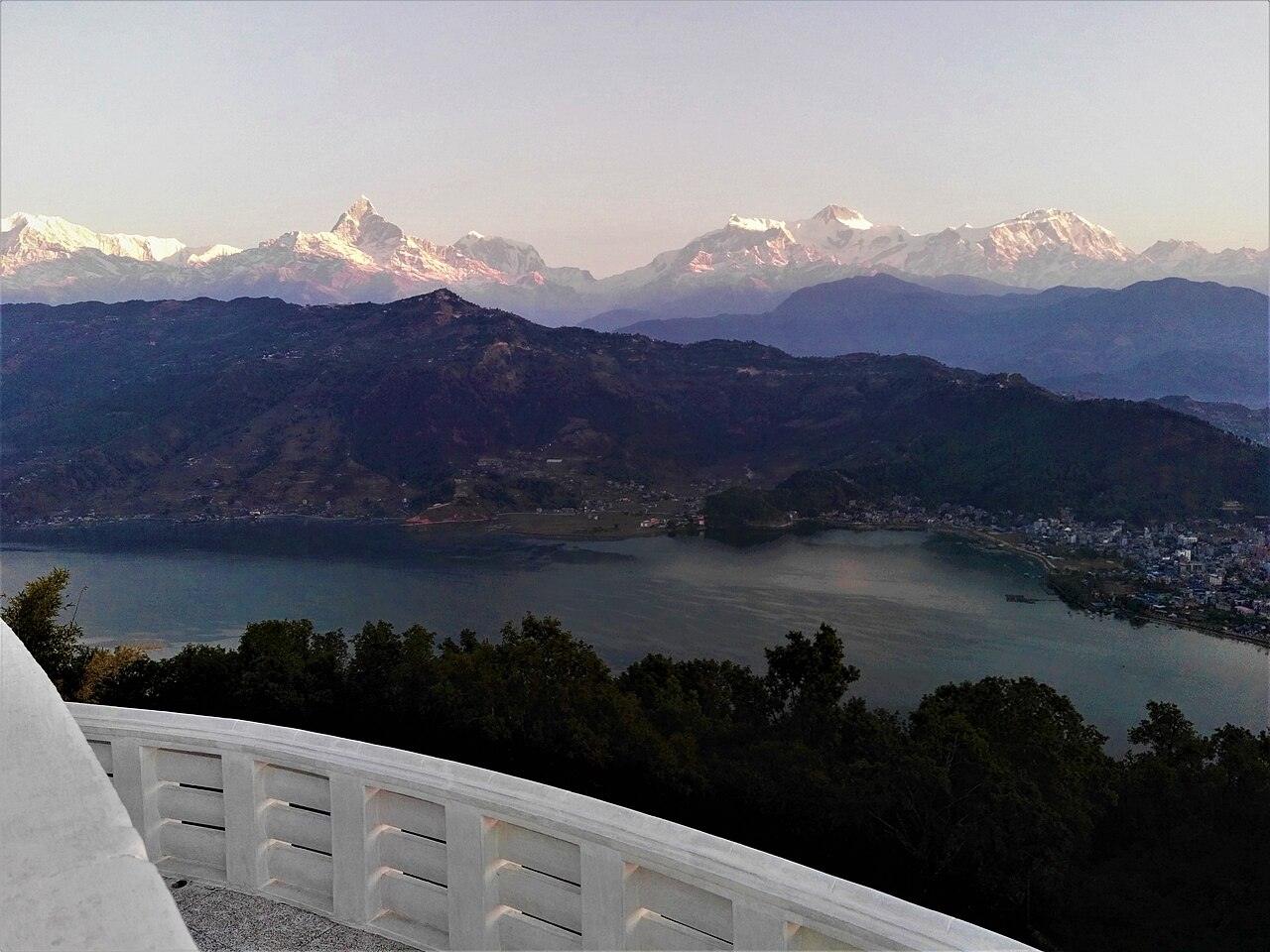 7 daysEasy
Kathmandu, Pokhara and Poon Hill
The temples of the Kathmandu Valley, the lake at Pokhara and a short trek with sunrise over the Annapurnas.
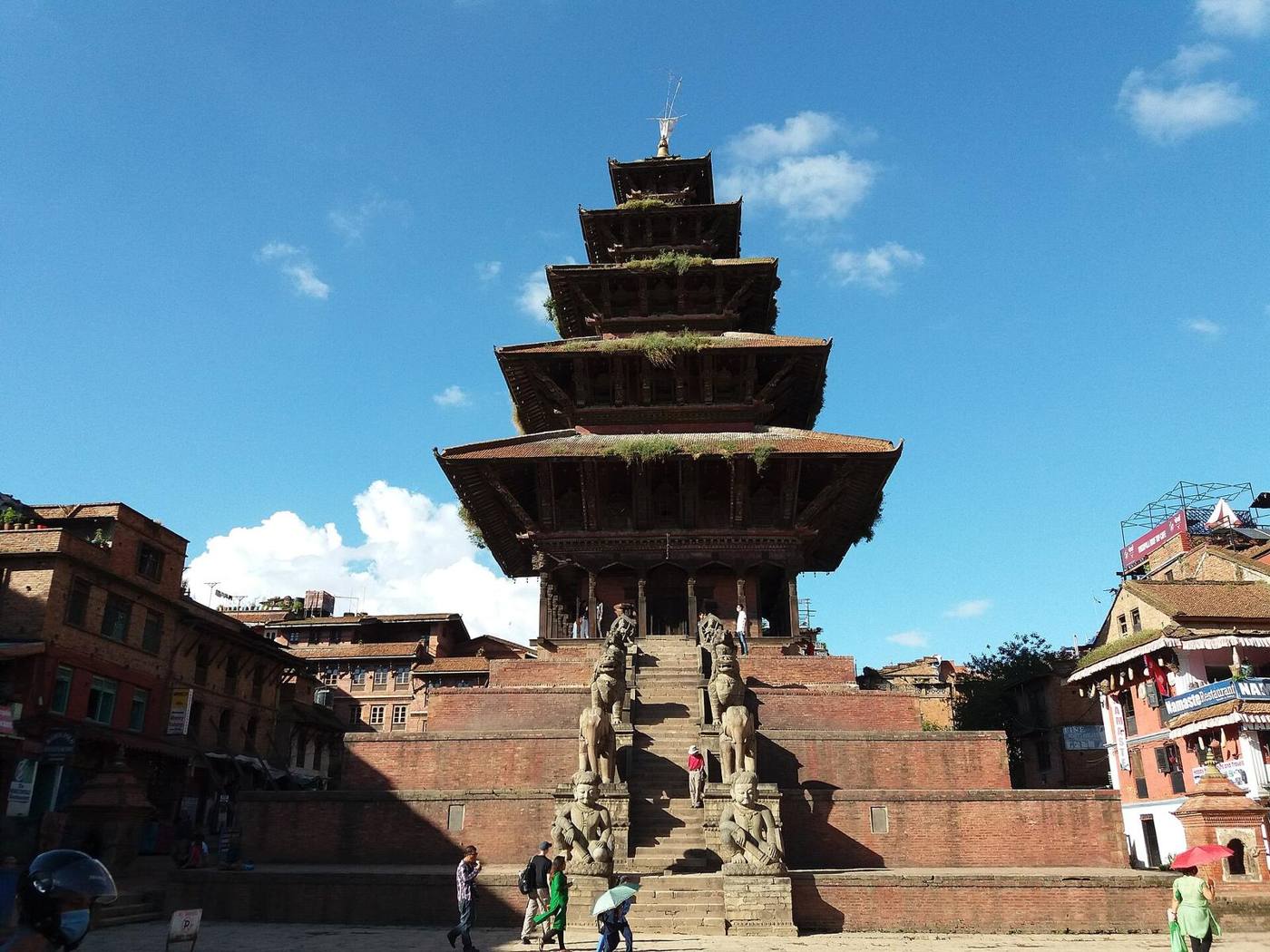 16 daysEasy
All of Nepal: the Kathmandu valley, Pokhara and Chitwan
The valley's three royal cities, a short trek with Annapurna views, rafting on the Trisuli, the rhinos of Chitwan and Lumbini, birthplace of the Buddha.
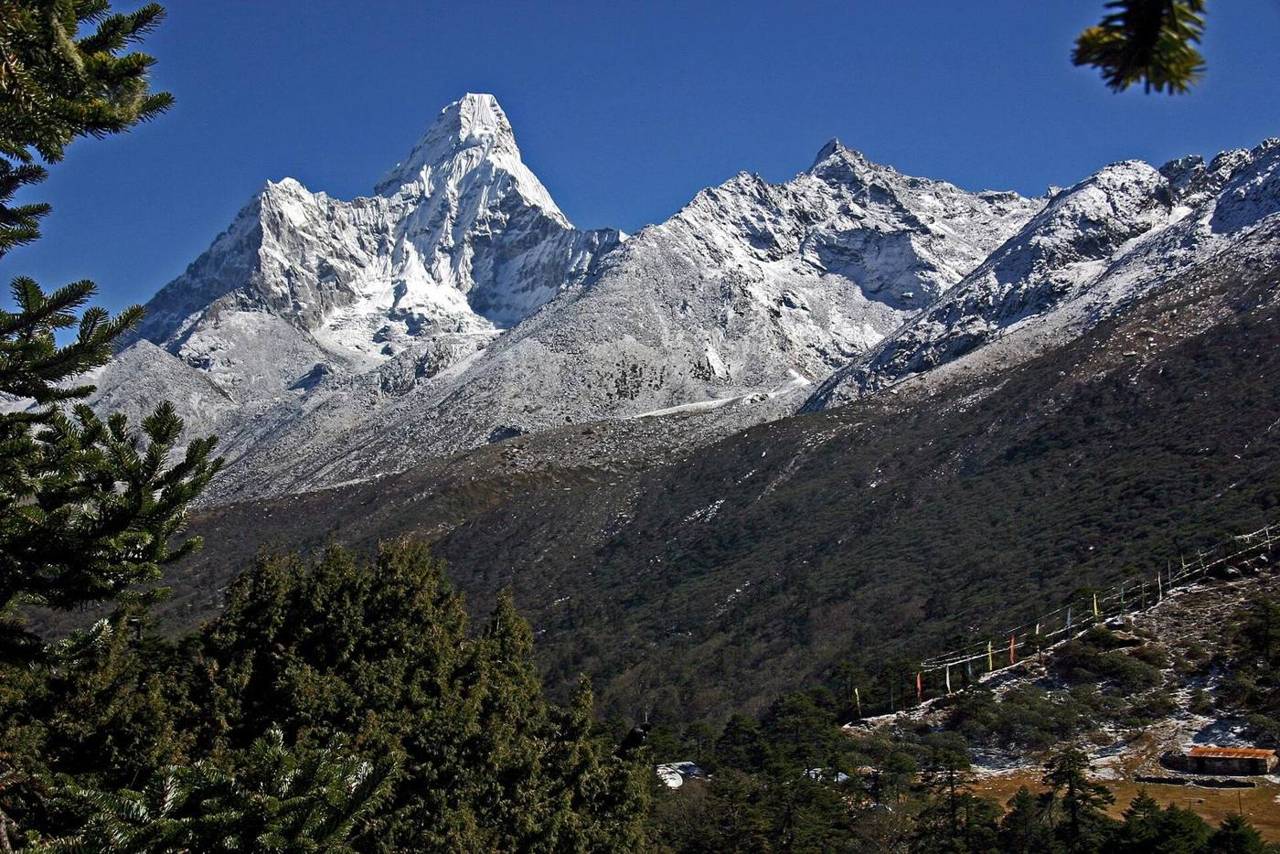 12 daysModerate
Everest View: Namche and Tengboche
The short trek in the Khumbu valley: the flight to Lukla, Namche Bazaar, Tengboche monastery and Everest before your eyes, without going too high.