Everest View: Namche and Tengboche
The short trek in the Khumbu valley: the flight to Lukla, Namche Bazaar, Tengboche monastery and Everest before your eyes, without going too high.
- Kathmandu
- Lukla
- Phakding
- Namche Bazaar
- Khumjung
- Tengboche
Day by day
- Day 1
Arrival in Kathmandu
This twelve-day trip is the short trek in the Khumbu valley, the land of the Sherpas: the flight to Lukla, the town of Namche Bazaar, the village of Khumjung and the monastery of Tengboche, with Everest before your eyes, without climbing to base camp altitudes. It suits anyone who walks regularly.
Before you go: Italian citizens need a passport valid for at least six months and a tourist visa, issued on arrival at Kathmandu airport after you fill in the online form. According to Nepal's Department of Immigration the visa costs 30 US dollars for 15 days and 50 for 30 days. Other nationalities should check their own rules. After the protests of September 2025 the country voted on 5 March 2026 and has a new government, but demonstrations are still possible: avoid them and check your government's travel advice before leaving. Since 1 April 2023 foreigners must have a licensed guide in parks and protected areas; in the Khumbu the local municipality has its own rules, which have changed several times: check with your agency before you go. In any case, walking with a guide remains the safest choice.
You land in Kathmandu and settle into Thamel.
In the afternoon meet the registered agency and your guide. The agency arranges the Sagarmatha National Park permit and the Khumbu municipality entry fee. Check prices and times.
In the evening check your gear and rent whatever is missing.
Sleep in Kathmandu, for two nights.
Practical tip: choose insurance that covers helicopter rescue up to 4,000 metres and beyond, and talk to your doctor about altitude before you leave.
- Day 2
The Kathmandu Valley
Today you visit the great sacred sites of the Kathmandu Valley, a UNESCO World Heritage Site, and get used to Nepal before the mountains.
Early in the morning climb to Swayambhunath, the stupa on the hill west of the city, known as the Monkey Temple. From the top the Buddha's eyes painted on the tower look out over the whole valley. Walk round the stupa clockwise and spin the prayer wheels. Check prices and times.
Then go to Pashupatinath, the great Shiva temple on the Bagmati river, the holiest place in Nepal for Hindus. The main temple is open only to Hindus, but from the opposite bank you can see the cremation ghats and the sadhus, the ascetics. Watch respectfully and do not photograph the rites close up. Check prices and times.
At midday have lunch near Boudhanath.
In the afternoon visit Boudhanath, one of the largest stupas in the world, at the heart of Kathmandu's Tibetan and Sherpa community. Many Khumbu Sherpas have family here, and many of the monasteries in the area are linked to those you will see in the mountains. Step into a monastery to hear the monks at prayer.
At sunset walk round the stupa with the pilgrims, while the butter lamps are lit.
In the evening pack your bag: luggage weight on the Lukla flight is limited, so ask the agency for the exact limit and leave what you do not need at your hotel in Kathmandu.
Sleep in Kathmandu.
Practical tip: in high season many Lukla flights leave from Ramechhap, about four or five hours by road from Kathmandu, instead of the capital: ask the agency where you leave from and at what time.
- Day 3
The flight to Lukla and the walk to Phakding
Today you fly into the heart of the Himalayas and start walking.
Very early in the morning go to the airport. The flight to Lukla takes about half an hour in small propeller planes, with snowy mountains outside the window. It is one of the most spectacular flights in the world and also one of the most feared: the Lukla runway, at about 2,860 metres, is short, uphill and ends against the mountain. Flights leave only with good visibility and are often delayed or cancelled for fog and cloud. According to the British government no Nepali airline meets international safety standards: weigh up this risk.
In Lukla you meet your porter, drink a hot tea and set off on foot.
The trail drops gently into the valley of the Dudh Koshi, the river of milk, named for its white glacial water. You pass Sherpa villages with stone houses, potato fields, mani walls carved with prayers and the first suspension bridges covered in flags.
At midday have lunch at a tea house on the trail.
In the afternoon you reach Phakding, at about 2,600 metres, after three or four hours of easy walking. This first day is short on purpose: Phakding is lower than Lukla and helps your body adjust.
Sleep in Phakding.
Practical tip: always pass to the left of mani walls and stupas, keeping them on your right. On the suspension bridges let yak trains cross first, and wait for them on the mountain side, never on the drop side.
- Day 4
The climb to Namche Bazaar
Today you climb to Namche Bazaar, the Sherpa capital, at 3,440 metres.
In the morning set off early. The trail follows the river upstream, passes the villages of Benkar and Monjo and reaches the entrance of Sagarmatha National Park, the Nepali name for Everest, a UNESCO World Heritage Site. At the checkpoint show your permits.
Then go down to Jorsalle, the last village before the big climb, and have lunch here.
In the afternoon cross the Hillary Bridge, a long and very high suspension bridge above the meeting of two rivers, covered in prayer flags. From here begins the hardest climb of the trek: about two or three hours of zigzags through the pine forest. Halfway up, on clear days, there is a spot where you see the summit of Everest for the first time, far away, behind the ridge of Nuptse and Lhotse.
You reach Namche Bazaar, an amphitheatre of houses with colourful roofs on a horseshoe-shaped slope, with gear shops, bakeries and tea houses. On Saturday mornings there is a market, when people from the surrounding villages and porters with goods arrive.
In the evening rest: today's climb has been long.
Sleep in Namche Bazaar, for two nights.
Practical tip: climb at a slow, steady pace, even if you feel well. Drink plenty, avoid alcohol and tell your guide at once if you have a bad headache, nausea or trouble sleeping.
- Day 5
Acclimatisation: the Everest viewpoint and Khumjung
Today is the acclimatisation day: you climb higher and then return to sleep in Namche, the golden rule of the mountains.
Early in the morning climb with your guide above the town, on a steep path, to the park visitor centre, with a small exhibition on Sherpa nature and culture. Check times. Then continue to the Syangboche plateau and the Everest viewpoint, at about 3,880 metres, a terrace famous for its view.
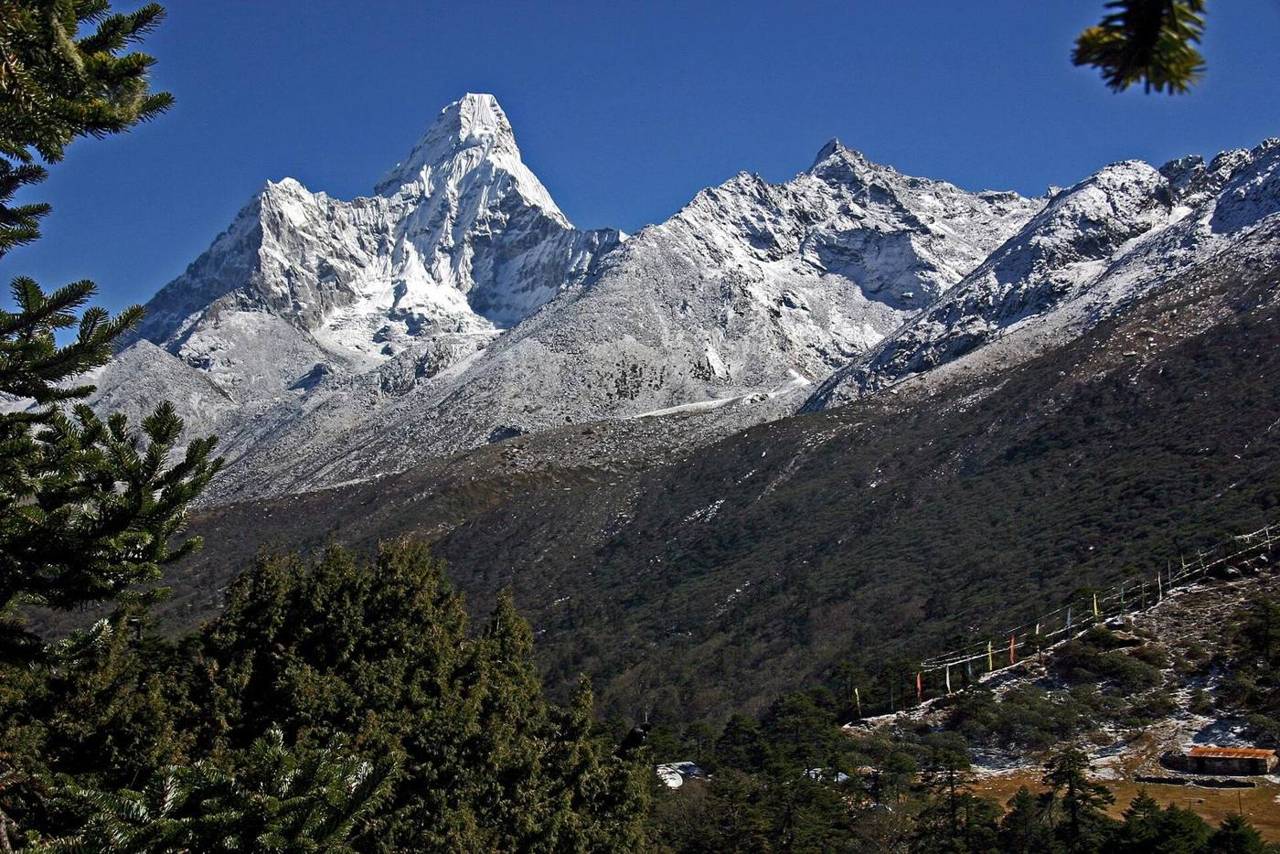
From here, if the sky is clear, you see everything: Everest, at 8,849 metres, Lhotse, Nuptse, Ama Dablam with its elegant shape, and Thamserku. It is one of the finest mountain panoramas in the world, reached in just a few hours of walking.
At midday walk down to Khumjung, a large Sherpa village in a green hollow, with potato fields enclosed by stone walls. Visit the school founded in 1961 by Edmund Hillary, who with Tenzing Norgay was the first to climb Everest, and the village monastery, which keeps what tradition says is a yeti scalp. Check prices and times.
In the afternoon return to Namche by another path and rest.
In the evening take a stroll round town and have a hot herbal tea.
Sleep in Namche Bazaar.
Practical tip: even if the acclimatisation day seems pointless, never skip it: it is your best defence against altitude sickness. If your symptoms get worse, the cure is to go down.
- Day 6
Tengboche and the monastery ceremony
Today you reach Tengboche, at 3,860 metres, with the most famous monastery in the Khumbu.
In the morning leave Namche on a contouring path, one of the most scenic of the trek: almost level, with Ama Dablam and Everest in front of you. Look on the slopes for the Himalayan monal, the national bird of Nepal, with its metallic colours, and for tahr, the wild goats.
At midday go down to the river at Phunki Tenga, where you have lunch next to prayer wheels turned by the water.
In the afternoon climb for about two hours through rhododendron and birch forest to Tengboche, on a panoramic saddle. The Buddhist monastery has been rebuilt several times, most recently after a fire in 1989, and is the spiritual centre of the Sherpas. In the afternoon the monks usually gather for prayers: if it is open to visitors, go in quietly, without shoes, and sit at the side of the hall. Do not take photos during the ceremony. Check times.
In autumn, following the lunar calendar, the Mani Rimdu festival is held here, with masked dances: check the dates.
At sunset watch the last light on Everest and Ama Dablam from the monastery terrace.
Sleep in Tengboche.
Practical tip: nights in Tengboche are very cold: sleep in your hat and keep your water bottle and batteries inside your sleeping bag so they do not freeze.
- Day 7
Pangboche and the return towards Namche
Today you climb to Pangboche, the highest point of the trip, and then begin the return.
Early in the morning, after breakfast, walk down to Deboche, in the forest, and cross the Imja Khola river on a suspension bridge. Then climb gently to Pangboche, at about 3,950 metres, a Sherpa village at the foot of Ama Dablam.
In the upper part of the village is a small monastery that tradition counts among the oldest in the Khumbu, surrounded by juniper trees. Go in without shoes and leave an offering. Check times. From here Ama Dablam looks very close, with its sharp ridge and hanging glacier.
At midday have lunch in Pangboche and enjoy your last look at the great mountains.
In the afternoon head back: pass Tengboche again, drop to the river at Phunki Tenga and climb the contouring path back to Namche. It is a long day, six or seven hours, but easier on the lungs because you are losing height.
In the evening, in Namche, celebrate the high point of the trek with your guide and porter. If you like, buy Khumbu souvenirs, such as yak wool scarves and prayer flags.
Sleep in Namche Bazaar.
Practical tip: if you feel tired today, sleep in Tengboche or in a village along the trail, such as Kyangjuma, and shorten the stage: your guide can rearrange the nights.
- Day 8
Down to Lukla
Today you walk down to Lukla, where the trek ends.
Early in the morning leave Namche with a last look at the horseshoe town. Go down the long climb of day 4, now downhill, through the pine forest to the Hillary Bridge. Use your poles and go slowly: on the descent your knees work hard.
Then you pass Jorsalle and Monjo, where you leave Sagarmatha National Park at the checkpoint.
At midday have lunch in Phakding or along the trail. Look again at the villages you walked through on the first day: now you recognise the tea houses, the mani walls and the bridges, and breathing is no longer a problem, because you are more than eight hundred metres lower than Namche.
In the afternoon the last stretch is uphill, gentle but long, to Lukla. In all it takes six or seven hours of walking. Once in Lukla, confirm tomorrow's flight time with the agency.
In the evening have a celebration dinner with your guide and porter, after six days of walking together.
This is the right moment for tips: hand them directly to each person, in rupees, with your thanks. For porters, tips are an important part of their earnings.
Sleep in Lukla.
Practical tip: keep your documents, money, medicines and a warm jacket in your daypack: if tomorrow's flight is delayed, you could spend hours at the airport or another night in Lukla.
- Day 9
The flight to Kathmandu
Today you leave the Khumbu and return to Kathmandu.
Very early in the morning go to Lukla airport, a short walk from the village. The first flights leave at dawn, when the sky is clearest: in good weather, small planes land and take off one after another. Watch the other planes take off from the short downhill runway, which stops at the edge of the valley.
If fog or cloud grounds the flights, you wait: sometimes you leave after a few hours, other times the next day. That is why the trip has two spare days in Kathmandu, which should never be cut.
The flight takes about half an hour. If you land in Ramechhap, there are another four or five hours by road to Kathmandu.
In the afternoon you reach Kathmandu. Treat yourself to a hot shower, the first real one in days, and an afternoon of rest. If you still have energy, take your trekking clothes to a laundry in Thamel and return any rented gear. Then take a walk in the Garden of Dreams, quiet and green, a few steps from Thamel. Check prices and times.
In the evening have dinner in Thamel and celebrate the trek.
Sleep in Kathmandu, for three nights.
Practical tip: if flights are cancelled for many days, in high season you can return from Lukla by helicopter. It costs much more: ask your agency and your insurer beforehand which costs are covered.
- Day 10
Bhaktapur, the medieval town
Today, if the Lukla flight left on time, you use the first spare day to visit Bhaktapur, the medieval town of the valley.
In the morning go to Bhaktapur by taxi, about an hour from Kathmandu. It is the best preserved of the three old royal cities of the valley, with brick streets, pagoda temples and courtyards. Foreigners pay a ticket to enter the old town: check prices and times.
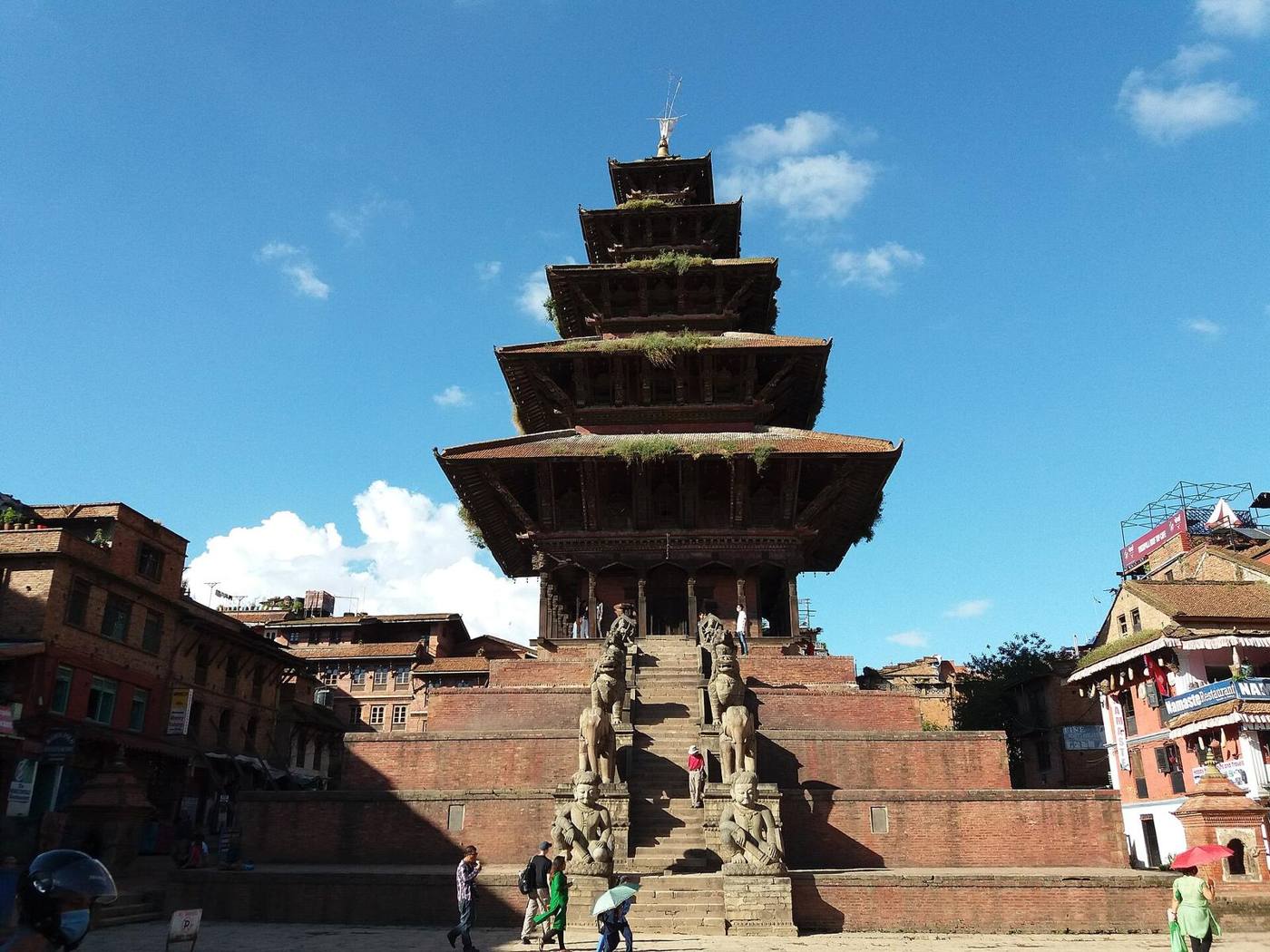
Start at Durbar Square, with the palace of 55 carved wooden windows and the Golden Gate. Then walk to Taumadhi Square, where the Nyatapola Temple rises, a five-storey pagoda with guardian statues on its stairway.
At midday taste juju dhau, Bhaktapur's sweet yoghurt, served in a clay bowl.
In the afternoon pass through Pottery Square, where craftsmen shape clay on the wheel, and continue to Dattatreya Square, with the Peacock Window, a carved wooden window with a peacock spreading its tail.
Stay until sunset, when the groups leave and the town returns to its residents, with the bells of evening prayer.
In the evening go back to Kathmandu, or sleep in Bhaktapur if you prefer a quiet night.
Sleep in Kathmandu.
Practical tip: if the Lukla flight was delayed, today is your spare day: give up Bhaktapur without regret and keep your plans open until you reach Kathmandu.
- Day 11
Patan, the city of art
Today, with the last spare day, you visit Patan, the Newar city of art, south of Kathmandu.
In the morning go to Patan, also called Lalitpur, the city of beauty, a few kilometres from the centre. Patan Durbar Square is perhaps the most elegant in the valley, with the 17th-century stone Krishna Temple and the old royal palace.
Inside the palace visit the Patan Museum, with a fine, well-explained collection of bronze statues and sacred objects. Check prices and times.
At midday have a Newar dish for lunch, such as samay baji, with beaten rice, spiced meat, beans and vegetables.
In the afternoon visit the Golden Temple, a Buddhist monastery with a gilded roof and a courtyard full of bells, and the Kumbeshwar Temple, a five-storey pagoda. Then walk past the workshops of the craftsmen who cast bronze statues: it is the best place for a quality souvenir.
At sunset sit on the steps of a temple in Durbar Square and watch the life of the neighbourhood.
In the evening have your last Nepali dinner, with the dal bhat you ate throughout the trek or a Newar dish.
Sleep in Kathmandu.
Practical tip: if the Lukla flight arrived a day or two late, use today to rest and pack: Patan can also be seen in half a day before you leave.
- Day 12
Departure
Today you leave Nepal.
In the morning, if your flight is late, take a last walk at Boudhanath, near the airport, and circle the stupa once more with the pilgrims and the Sherpa and Tibetan monks. Check prices and times.
Then go to the airport with plenty of time: security checks can be slow and the traffic is unpredictable.
In these twelve days you have seen the Khumbu without the hardships of base camp: the temples and stupas of the Kathmandu Valley, the spectacular flight to Lukla, the Sherpa villages along the Dudh Koshi, the Hillary Bridge and the climb to Namche Bazaar, the view of Everest from the Syangboche viewpoint, the village of Khumjung, the monastery of Tengboche with the monks at prayer and Pangboche at the foot of Ama Dablam, then the royal cities of Bhaktapur and Patan.
When to go: the best months are October and November, with the clearest skies and the mountains visible almost every day, and March and April, with rhododendrons in flower and milder temperatures, but more cloud in the afternoon. From June to September the monsoon brings rain and cloud, and Lukla flights are cancelled even more often. In winter, from December to February, the sky is often clear but the nights are very cold.
Practical tip: book your international flight home only after allowing the two spare days after Lukla, and choose a changeable ticket.
To see Everest without the effort of base camp. The Lukla flight is one of the world's most spectacular (and feared), often cancelled for fog: never drop the two buffer days in Kathmandu. Suitable for regular walkers.
Before you go
- Documents and visa
- Passport valid for at least six months from the date of entry and a tourist visa, issued on arrival at Kathmandu airport. Fill in the form online up to 15 days ahead or at the airport kiosks. According to the Department of Immigration the visa costs 30 US dollars for 15 days, 50 for 30 days and 125 for 90 days: bring US dollars in cash. Border officers may ask for health insurance with repatriation and the address of your first night.
- Health and vaccines
- No compulsory vaccines when arriving from Europe; yellow fever is needed only if you come from a risk country. In the Terai, the southern plain, there is a malaria risk: ask your doctor. Above 3,000 metres climb slowly to avoid altitude sickness. Drink only bottled or treated water. Police 100, tourist police 1144.
- Money and payments
- Nepalese rupee. Cash dominates; ATMs are found in Kathmandu, Pokhara and the towns, far fewer on the trails. Cards work in the larger hotels.
- Power sockets
- Types C, D and M, 230 volts: bring a universal adapter. Power cuts are frequent.
- Time zone
- UTC+5:45 all year.
- Safety
- After the youth protests of 8 and 9 September 2025, with at least 75 deaths and the fall of the government, the country voted on 5 March 2026; since March 2026 a new government has held a large majority. Demonstrations and strikes are still possible and can turn violent: avoid them. The United States advises increased caution. The UK warns that areas hit by the flood of 26 August 2026 in Rasuwa district may remain unstable. A licensed guide is required in national parks and protected areas. According to the UK, no Nepali airline meets international safety standards, and mountain flights are often delayed by the weather. Official advice: GOV.UK.
Information checked in November 2026 for Italian and EU citizens. Rules change: always check before you travel.
Variations
In 9 days: fly to Lukla, climb to Namche, do the acclimatisation day at Khumjung and return, without Tengboche, always with a spare day.
In 16 days: from Tengboche continue to Dingboche and Chukhung, above 4,400 metres, with extra acclimatisation days and an experienced guide.
Frequently asked questions
What documents do I need for Nepal?
Italian citizens need a passport valid for at least six months and a tourist visa, issued on arrival in Kathmandu. According to the Department of Immigration it costs 30 US dollars for 15 days and 50 for 30 days. Other nationalities should check their own rules.
Do I need a guide in the Khumbu?
Since 1 April 2023 foreigners must have a licensed guide in Nepal's parks and protected areas, but in the Khumbu the local municipality has its own rules, which have changed several times. Check with a registered agency before you go. The Sagarmatha park permit and the municipality fee are paid separately: check current prices.
Is the Lukla flight safe?
It is spectacular but demanding: the runway is short and flights leave only with good visibility, so they are often delayed or cancelled. According to the British government no Nepali airline meets international safety standards. Always keep at least two spare days in Kathmandu.
Indicative itinerary written by World Atlas. Before booking, check timetables, seasonal openings, documents and safety.
 7 daysEasy
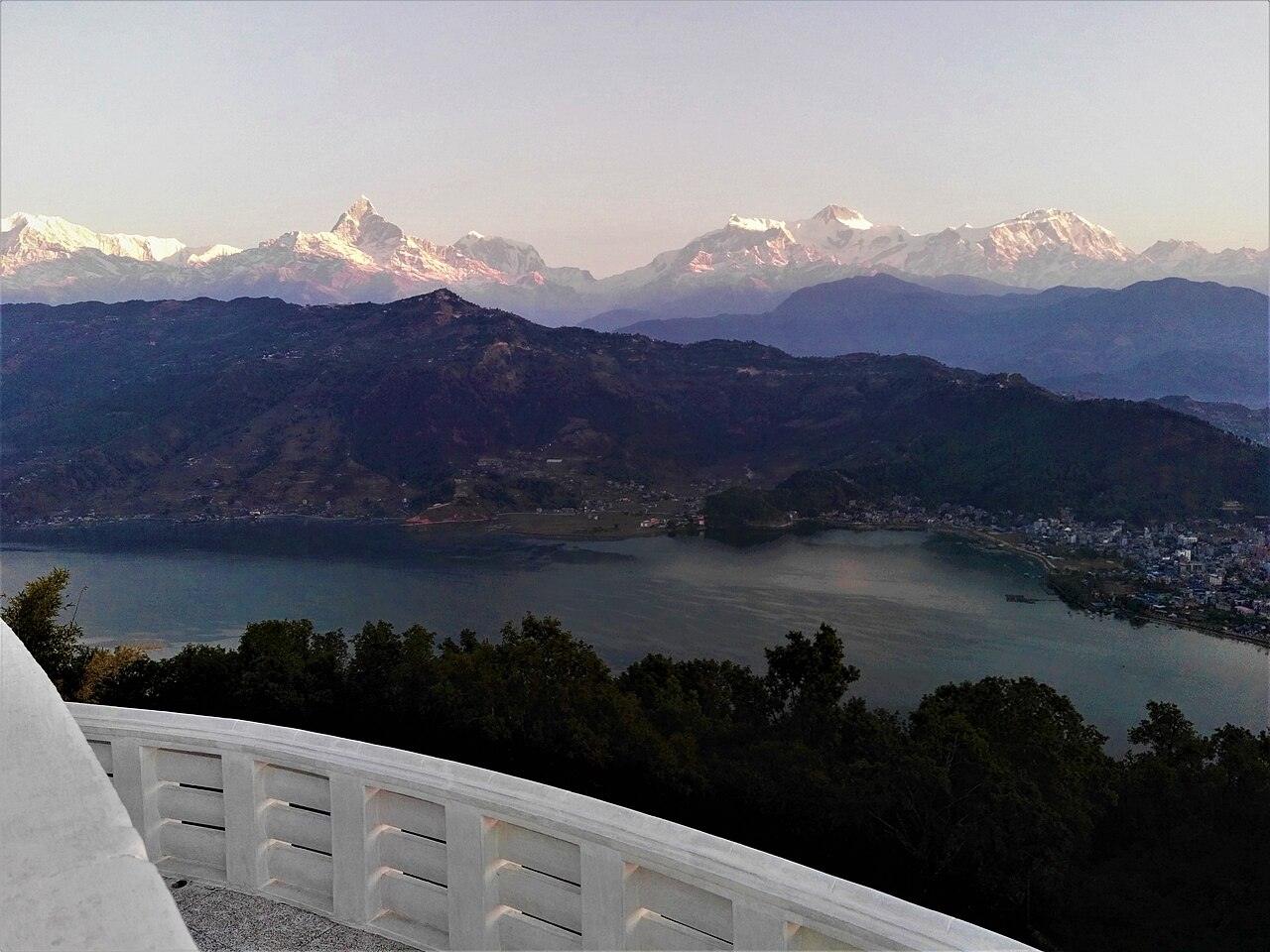
Kathmandu, Pokhara and Poon Hill
The temples of the Kathmandu Valley, the lake at Pokhara and a short trek with sunrise over the Annapurnas.
 15 daysChallenging
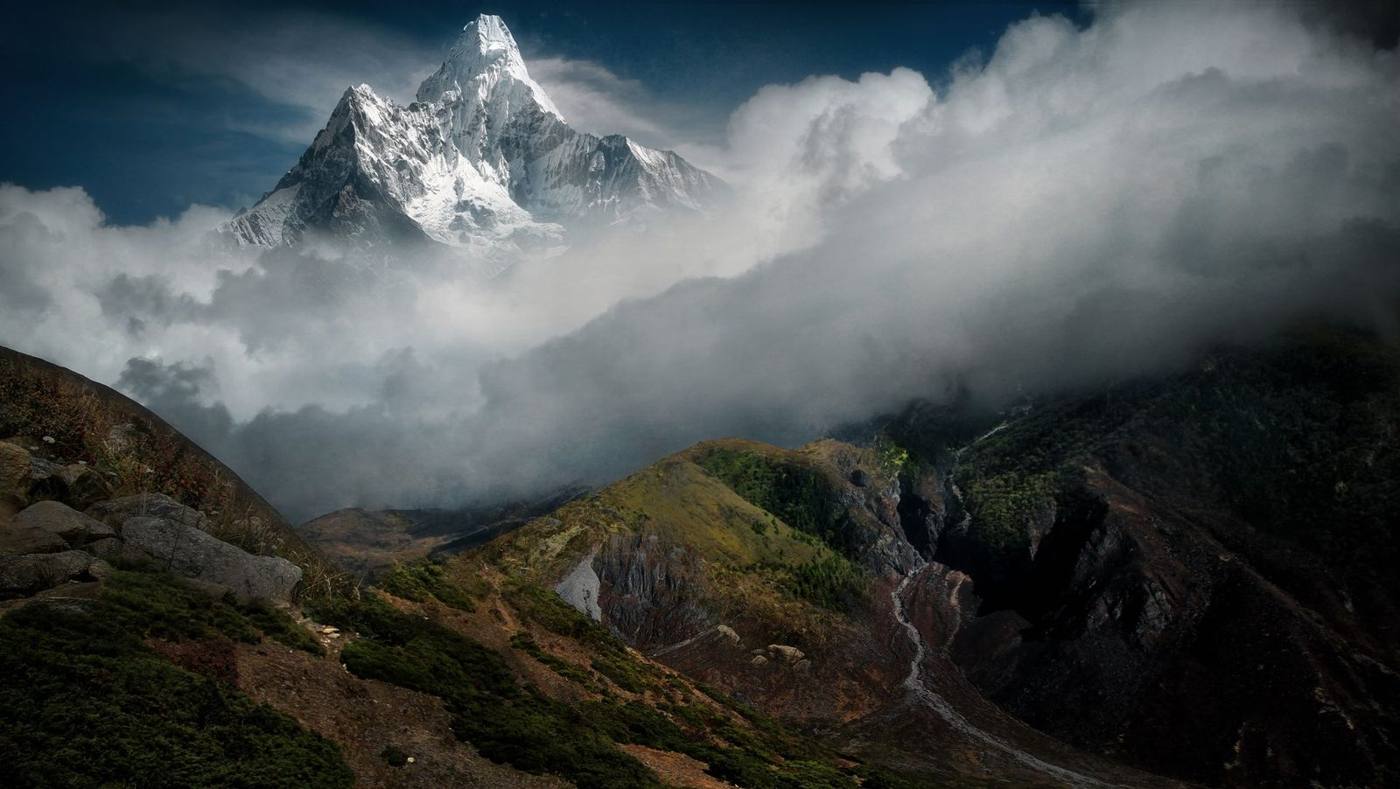
Everest trek and Chitwan
The spectacular flight to Lukla, Sherpa villages and the Everest viewpoint of Kala Patthar, then the rhinos of Chitwan. Good fitness required.
 16 daysEasy
All of Nepal: the Kathmandu valley, Pokhara and Chitwan
The valley's three royal cities, a short trek with Annapurna views, rafting on the Trisuli, the rhinos of Chitwan and Lumbini, birthplace of the Buddha.