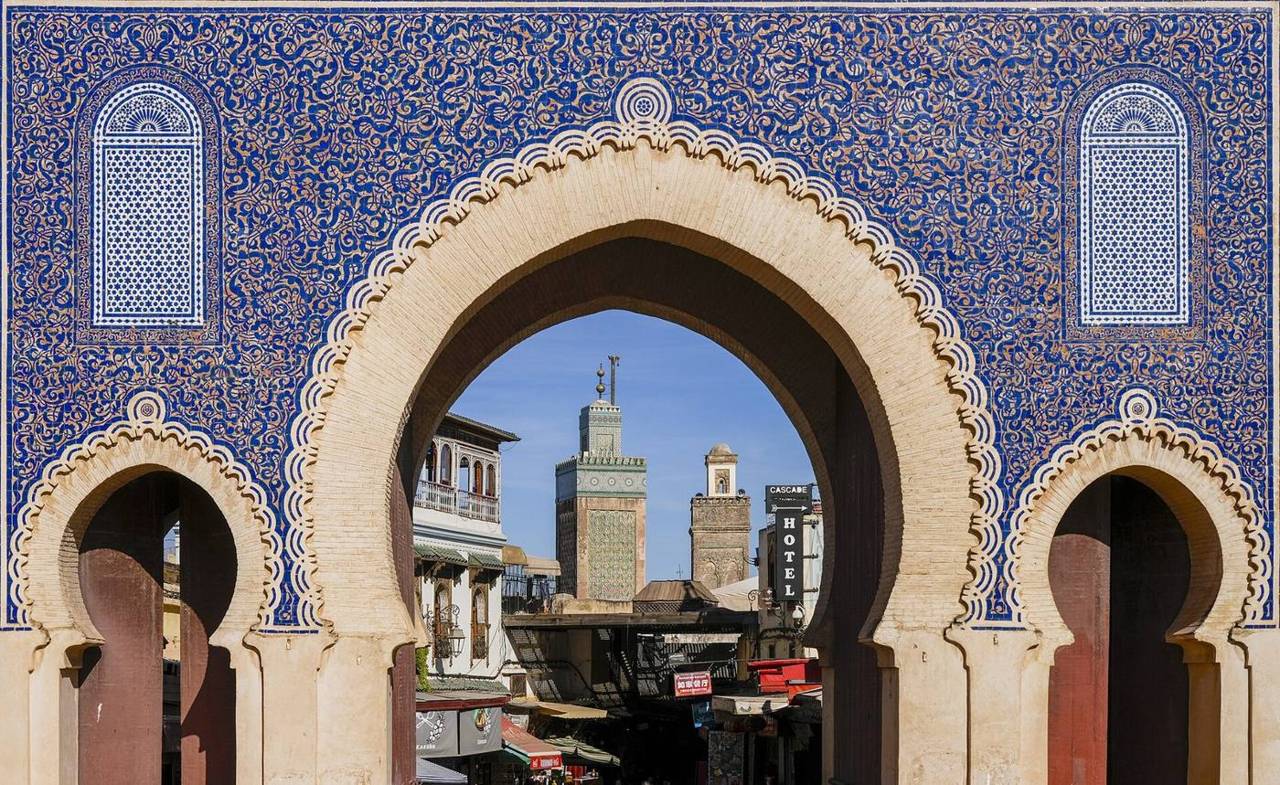
Fez in depth, Sefrou and Bhalil
The largest medieval medina in the Maghreb, at an easy pace: the Bou Inania and Al-Attarine madrasas, the Chouara tanneries, the artisans' quarters, the Mellah of Fès el-Jdid, the view from the Marinid tombs, then Sefrou with its old Jewish quarter and the cave houses of Bhalil.
- Fez
- Sefrou
- Bhalil
Day by day
- Day 1
Fès el-Bali: Bou Inania, Al-Attarine and the Qarawiyyin
EU citizens can enter Morocco without a visa for tourist stays of up to ninety days with a valid passport; check the rules for your nationality. Fès-Saïss airport has direct flights from several European cities; a taxi reaches the medina in about twenty minutes. There are also trains from Casablanca and Rabat.
Fès is the oldest of Morocco's imperial cities, founded at the end of the eighth century, and its medina, Fès el-Bali, is a UNESCO World Heritage site: a medieval city still very much alive, with about nine thousand lanes and no cars, where goods are still carried by donkey. Stay in a riad, a traditional house with an inner courtyard, in or near the medina.
In the morning enter through the Blue Gate, Bab Boujloud, covered in blue tiles outside and green inside. Soon after comes the Bou Inania madrasa, from the fourteenth century, a Quranic school with a marble courtyard and walls covered in ceramic mosaic, carved stucco and sculpted cedarwood. It is one of the few that non-Muslims may enter.
Walk down the main street, Talaa Kebira, to the heart of the medina, to the small and splendid Al-Attarine madrasa near the spice market, and to the Al-Qarawiyyin mosque and university, founded in 859 by a woman, Fatima al-Fihri, and considered one of the oldest universities in the world still operating. Non-Muslims cannot enter, but you can see the courtyard from the door.
Practical tip: it is easy to get lost in the medina; on the first day an official guide with a badge, booked through your riad, is worth it.
- Day 2
The Chouara tanneries, the craftsmen and the Merenid tombs
In the morning visit the Chouara tanneries, the most famous in Fès, working for centuries: from the terraces of the surrounding leather shops you look down on round stone vats full of colour, where craftsmen standing knee-deep tan and dye hides by traditional methods, using natural substances such as poppy for red, indigo for blue, mint and saffron. At the shop entrances you are given a sprig of mint to hold under your nose, because the smell is very strong. The best light and the busiest activity are in the morning.
Then walk through the craftsmen's quarters, each with its own trade: Seffarine square, with coppersmiths hammering great pots and trays; the dyers' souk, with skeins of wool hung out to dry; weavers, carpenters working cedarwood and embroiderers. Also visit the Nejjarine museum of wooden arts, in an old fondouk, a caravanserai where merchants stopped with their goods, with a rooftop terrace.
In the late afternoon walk or take a taxi up to the Merenid tombs, the ruined mausoleums of the dynasty that ruled Fès in the fourteenth century, on the hill north of the medina. From here at sunset you see the whole old city, with its minarets, flat roofs and the surrounding hills, as the call to prayer rises from hundreds of mosques.
Practical tip: in the tanneries and shops you should never feel obliged to buy; bargain calmly and with a smile.
- Day 3
Fès el-Jdid, the Mellah and the royal palace
Today visit Fès el-Jdid, the new city, built in the thirteenth century by the Merenid dynasty beside the old medina, with great walls, wide avenues and the royal palace.
Start at the royal palace, Dar el-Makhzen, the king's residence when he is in Fès. It cannot be visited, but its façade, with seven gilded bronze doors surrounded by ceramic mosaic and carved cedarwood, is one of Morocco's most famous images.
Next to it is the Mellah, the old Jewish quarter, the first in Morocco, created in the fifteenth century. The houses here differ from those of the medina, with wooden and iron balconies overlooking the street. Visit the restored seventeenth-century Ibn Danan synagogue and the Jewish cemetery, with whitewashed tombs running down the hillside.
In the afternoon stroll through the Jnan Sbil gardens, a large public park between Fès el-Jdid and the medina, with palm-lined paths, fountains and a pond, a quiet place where families come to walk. Then visit the Dar Batha museum, in a nineteenth-century palace with an Andalusian garden, devoted to Islamic arts and the crafts of Fès, with blue ceramics, painted wood and carpets.
In the evening have dinner at your riad and try pastilla, a crisp pastry filled with pigeon or chicken, almonds, cinnamon and sugar, a Fès speciality.
Practical tip: on Friday at midday many medina shops close for prayers; plan your souk visit for another day.
- Day 4
Sefrou and Bhalil on a day trip, then departure
Today is a trip out of town, south of Fès at the foot of the Middle Atlas, by car or taxi, about half an hour's drive.
The first stop is Sefrou, a small town with a quiet medina crossed by the Aggai river and surrounded by walls and orchards. Sefrou had a large Jewish community for centuries, and its old Mellah is one of the best preserved in the country. It is famous for cherries: every June the cherry festival is held, one of Morocco's oldest festivals, with a parade and the election of a cherry queen. In the medina you still see craftsmen making silk buttons for kaftans.
Then reach Bhalil, a village a few kilometres away built on a hillside, with houses painted white, blue, pink and yellow, and troglodyte homes carved into the rock where some families still live. Villagers often welcome visitors for mint tea and show the rooms in the rock. The village women sew silk buttons by hand for djellabas, the long traditional robes.
In the afternoon return to Fès for departure from the airport or station.
Things to take home: blue Fès ceramics, leather goods, babouche slippers, carpets, brassware, argan oil and spices.
Practical tip: in Morocco you pay in dirhams, the local currency, which can only be exchanged in the country; carry cash for the villages. Check your government's travel advice before leaving.
It is easy to get lost in the medina: on the first day an official guide, with a badge, is worth it. Mosques are closed to non-Muslims; the Qarawiyyin is seen from its door. Sefrou is half an hour away. EU citizens enter without a visa for up to 90 days with a passport. The border with Algeria is closed: keep away from the border strip.
Before you go
- Documents and visa
- EU visitors need a passport valid for the whole stay; identity cards are not accepted. No visa is needed for tourist stays of up to 90 days.
- Health and vaccines
- No vaccines required. Drink bottled water and take out travel health insurance: public healthcare is limited and private clinics charge. Emergencies: 19 police, 15 ambulance.
- Money and payments
- Moroccan dirham, which cannot be exported beyond a small sum: change a little at a time and keep the receipts. Cash is needed everywhere in medinas and villages.
- Power sockets
- Types C and E, 220 volts.
- Time zone
- UTC+1 for most of the year; Morocco changes its clocks during Ramadan, so check before travelling.
- Safety
- The main risk named by governments is terrorism; avoid the 20 km strip along the closed Algerian border and the frontier areas of Western Sahara. Official advice: GOV.UK.
Information checked in November 2026 for Italian and EU citizens. Rules change: always check before you travel.
Variations
In 2 days: the medina with the madrasas and tanneries on the first day, Fès el-Jdid and the Merenid tombs on the second.
In 7 days: add Meknès and the Roman ruins of Volubilis, and Chefchaouen, the blue town in the Rif mountains.
Frequently asked questions
Do I need a visa for Morocco?
EU citizens can stay up to ninety days as tourists without a visa, with a valid passport.
Do I need a guide in the Fès medina?
It is not compulsory, but very useful on the first day: the medina has thousands of lanes. Choose an official guide with a badge, booked through your riad.
When is the best time for Fès?
Spring, from March to May, and autumn, from September to November. Summer is very hot, winter cool and sometimes rainy.
Indicative itinerary written by World Atlas. Before booking, check timetables, seasonal openings, documents and safety.
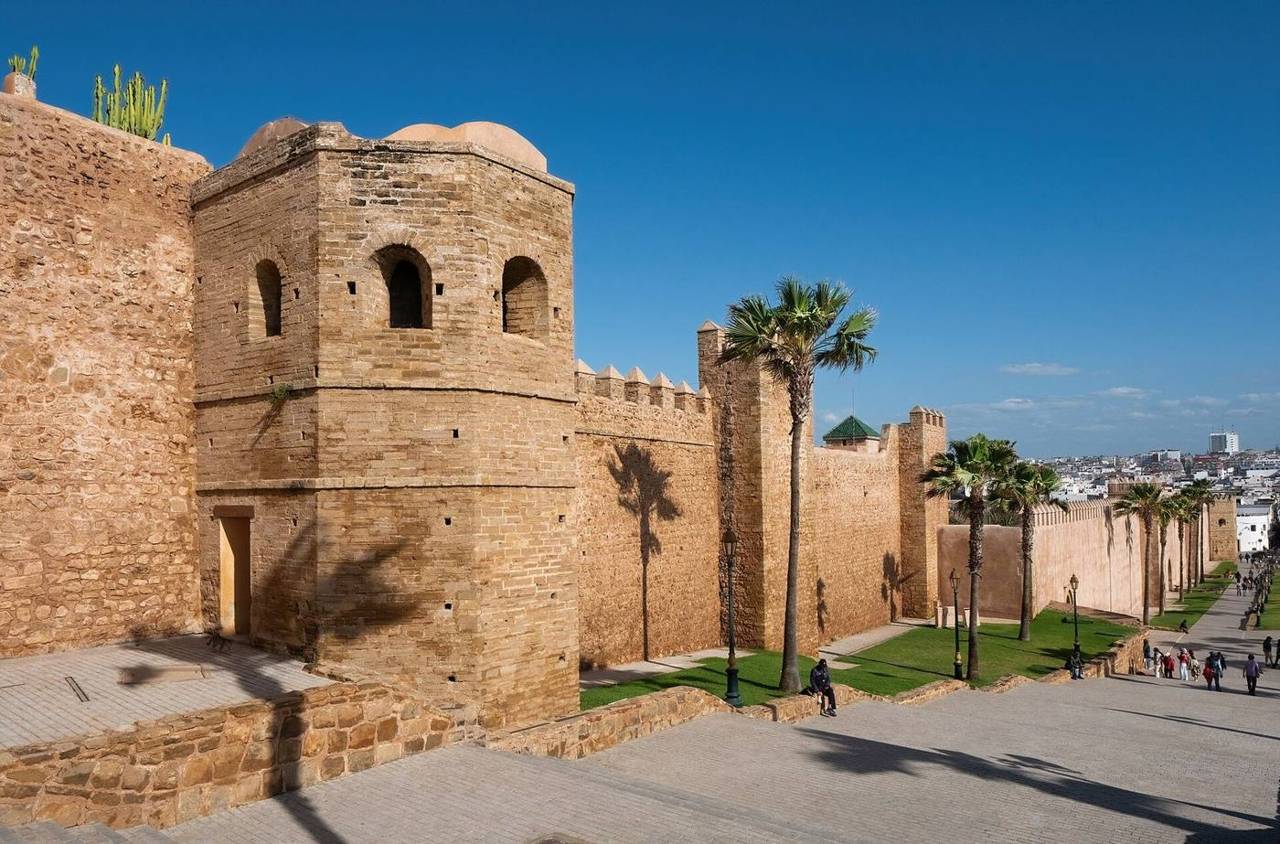 5 daysEasy
Rabat, Casablanca, El Jadida and Oualidia
Atlantic, modern Morocco: Rabat, a UNESCO-listed capital, with the Hassan Tower, the Kasbah of the Udayas and the Chellah, the great Hassan II Mosque in Casablanca, the Portuguese cistern in El Jadida, Azemmour on its river and the Oualidia lagoon.
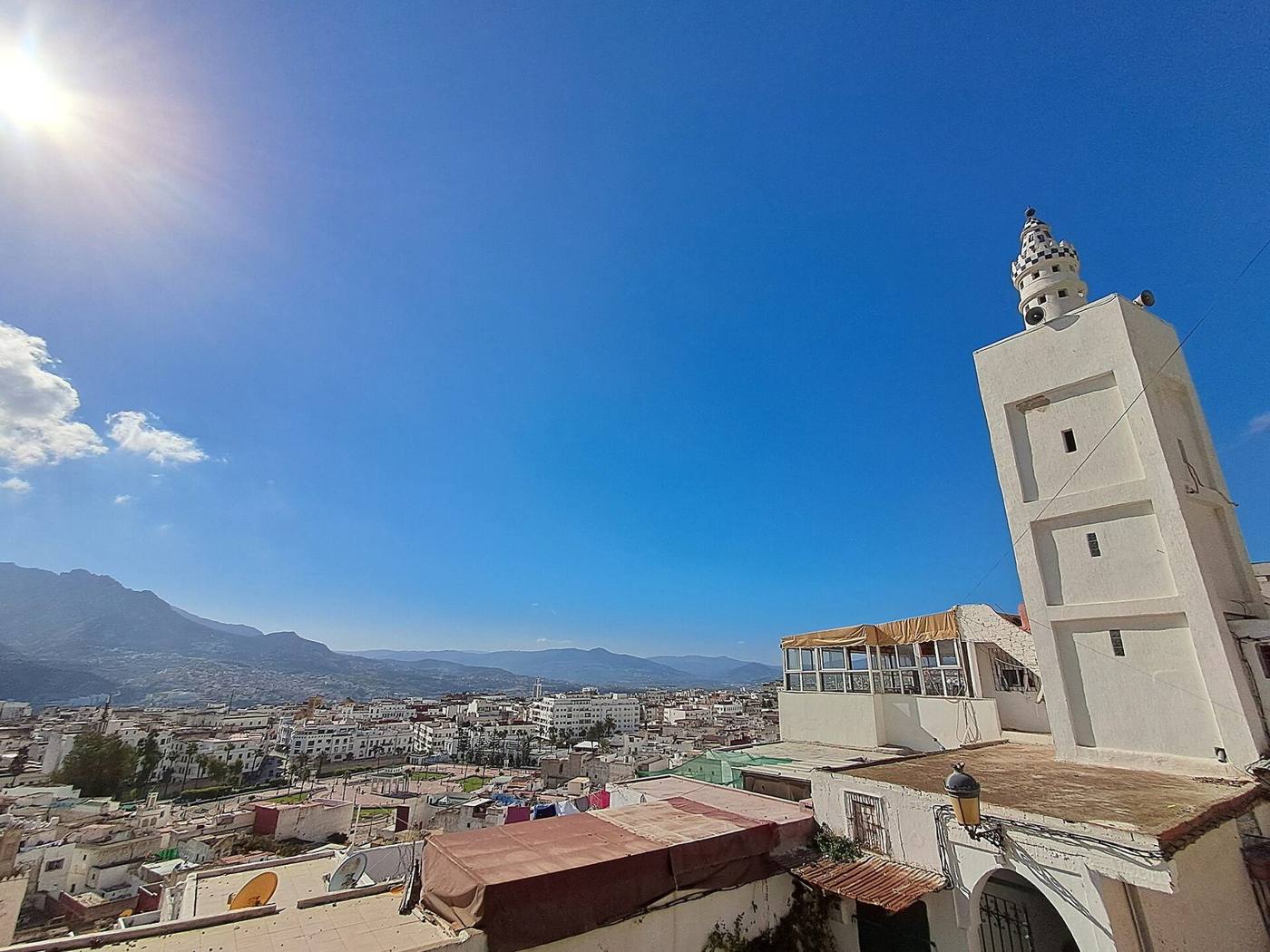 5 daysEasy
Tangier, Tetouan and the Mediterranean coast
Morocco's Andalusian north: Tangier with its kasbah, Cape Spartel and the Caves of Hercules, the medina of Tetouan (UNESCO) with its white houses and craftsmen, the beaches of Martil and Oued Laou and the coast road towards Al Hoceima National Park.
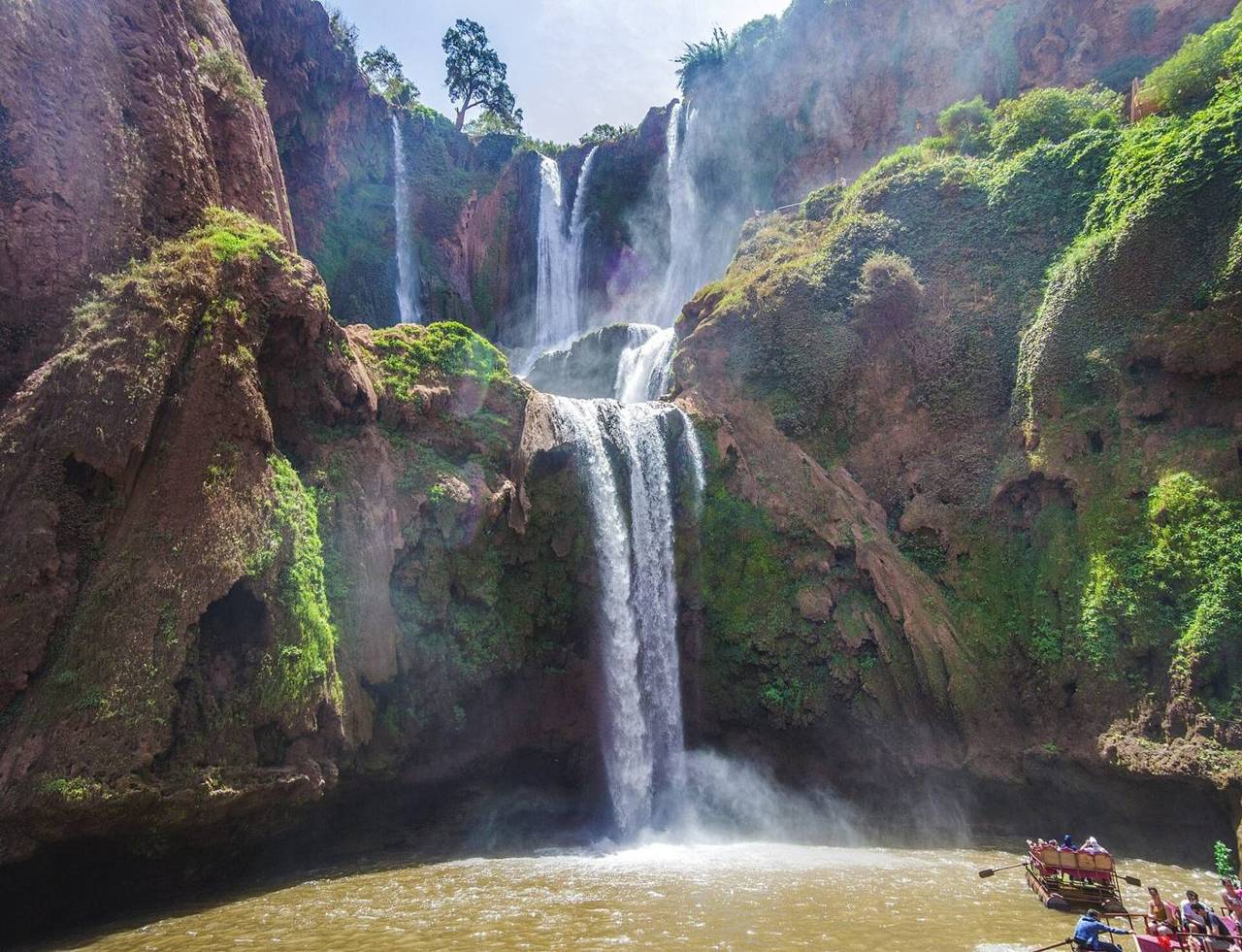 5 daysModerate
Ouzoud Falls and the Aït Bouguemez valley
The green Central Atlas: the Ouzoud Falls, over a hundred metres high among olive trees and Barbary macaques, then the Aït Bouguemez valley, known as the happy valley, with earthen villages, terraced fields, the fortified granary of Sidi Moussa, dinosaur footprints and walks with muleteers.