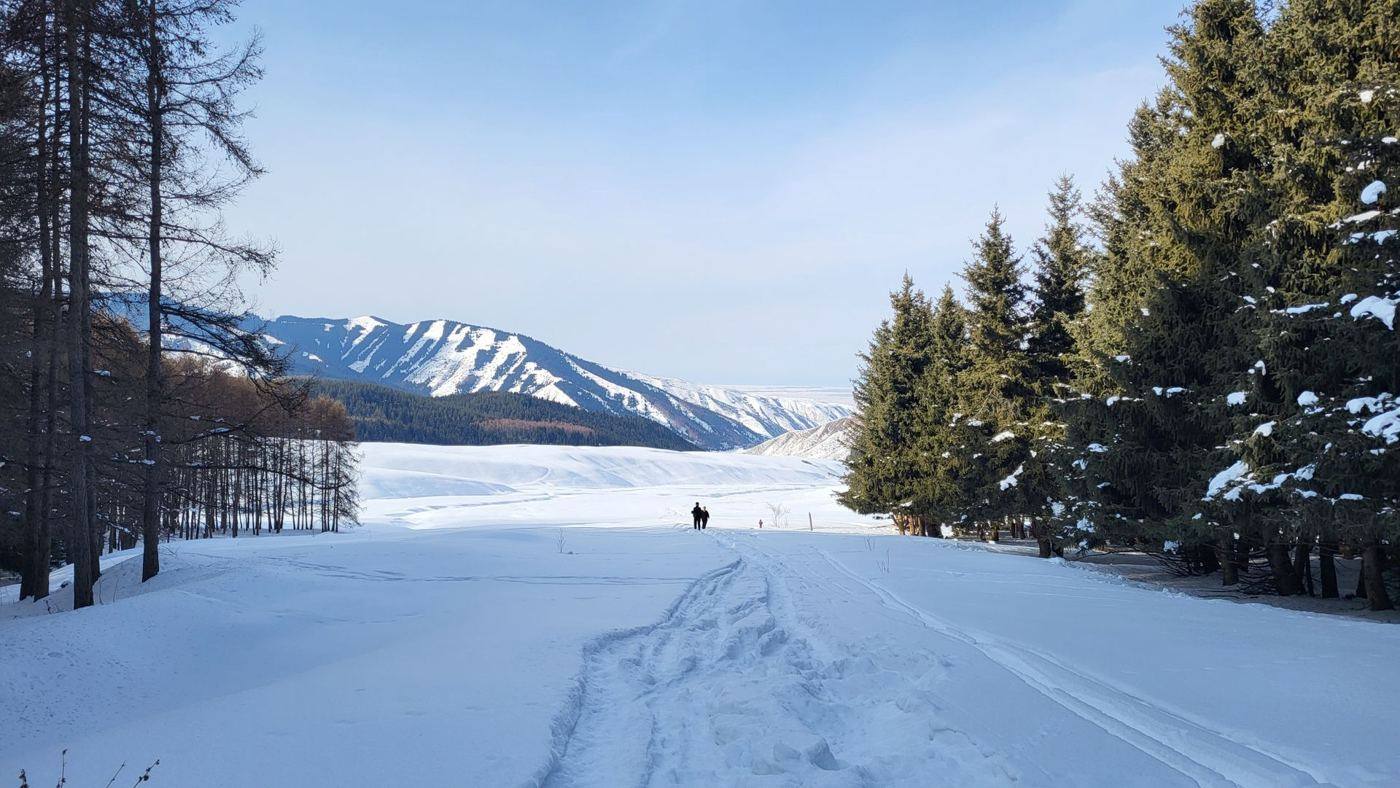
Skiing at Karakol
The ski resort among the pines at Karakol, with dry snow and low prices, Lake Issyk-Kul that never freezes and the hot springs.
- Karakol
- Karakol ski base
- Jeti-Ögüz
Day by day
- Day 1
Arrival in Karakol
This winter trip takes you to Karakol, the town at the eastern end of Lake Issyk-Kul, with its ski resort among the fir forests: dry snow, quiet slopes, superb off-piste for experienced skiers, and to finish, the hot springs of Jeti-Ögüz.
Before you go: Italian citizens enter Kyrgyzstan without a visa for up to 30 days in every 60 days, with a passport valid for at least six months from arrival; the electronic identity card is not enough. Other nationalities should check their own rules. The country is generally calm. In winter roads outside Bishkek can be blocked by snow and ice makes driving difficult: choose an experienced driver and do not travel at night. In the mountains the avalanche risk is real. You need insurance covering skiing, off-piste and rescue.
You reach Karakol after the flight to Bishkek and about six hours by road along the north shore of the lake, or with a domestic flight when there is one. The lake, dark blue, does not freeze even in winter.
In the afternoon walk around the centre of Karakol, a town of low wooden houses with decorated windows. Visit the Holy Trinity Cathedral, a wooden Orthodox church from the late nineteenth century with onion domes. Then go to the Dungan Mosque, built of wood in the early twentieth century in the style of a Chinese temple, with colourful roofs. Check prices and times.
In the evening try ashlyan-fu, the cold noodle soup typical of the town, or a hot meat soup.
Sleep in Karakol for three nights.
Practical tip: hire skis or a board on the first day, in town or at the resort. Try your boots on properly before going up.
- Day 2
The first day on the slopes
Today you go up to the Karakol ski resort, in the valley south of the town, among the fir forests of the Tian Shan.
In the morning take a taxi or the resort bus: in less than an hour you are at the lifts. The resort is small compared with the big European ones, with a few chairlifts that climb from the forest to ridges above 3,000 metres. The runs cross the forest and open slopes, with distant views over Lake Issyk-Kul. Check prices and times for ski passes and lifts.
The snow here is often dry and light, because the climate is continental and dry. The slopes are quiet even at weekends, and on sunny days you can ski for hours without queues.
Start with the easiest runs to get to know the terrain and the quality of the snow. Facilities are simple: there are few mountain huts, signs are basic and the runs are not always groomed as in Europe.
At midday stop at one of the resort's food points for a hot soup or a plate of plov. At altitude it is very cold, and the wind on the ridges can be strong.
In the afternoon, when the light fades, ski down to the base and return to town.
In the evening relax in a sauna or a banya, the Russian steam bath, which you find in several houses in Karakol.
Sleep in Karakol.
Practical tip: the sun at altitude is strong even when it is cold. Bring sun cream, sunglasses or goggles, and cover your face well on windy days.
- Day 3
Off-piste among the fir trees
Today is the day for those who want off-piste, the real reason many skiers come all the way to Karakol. For everyone else it is a second, relaxed day on the slopes.
If you are an experienced skier, the off-piste among the fir trees and on the open slopes above the resort is superb, with powder snow after snowfalls. But the mountains here are wild and rescue is limited. Never leave the runs alone or without a local guide who knows the conditions of the day.
For off-piste you need avalanche equipment, that is a transceiver, shovel and probe, and the skill to use it. Always ask for the avalanche bulletin and give up if the risk is high. Check that your insurance covers off-piste and mountain rescue.
If you prefer the runs, try the longer ones that go down through the forest, or take a few hours of lessons with an instructor at the resort to improve your technique. Even non-skiers can ride the chairlift, if allowed, to see the view over the mountains and the lake. Check prices and times.
At altitude the air is thinner: if you feel a headache or breathlessness, slow down and drink plenty. Anyone with health problems should talk to their doctor before the trip.
In the evening in town have dinner with lagman or manti, large steamed dumplings.
Sleep in Karakol.
Practical tip: after heavy snowfall wait for your guide to assess the slope. The best off-piste days are often the ones just after, with clear skies and settled snow.
- Day 4
The hot springs of Jeti-Ögüz and the journey back
Today you rest your legs with a hot bath at Jeti-Ögüz and then take the road back towards Bishkek.
In the morning leave Karakol heading west and take the road into the Jeti-Ögüz valley, a little under an hour away. At the entrance to the valley you see the famous red rocks of the Seven Bulls, a row of great sandstone walls that look like animals on the move, and a little further on the Broken Heart rock, a wall split in two. With snow, the red of the rocks against the white is a wonderful sight.
Further up the valley there are hot springs, with pools and tubs of thermal water. Take a hot bath while snow lies all around. Follow the rules of the pools and ask your doctor first if you have heart or blood pressure problems. Check prices and times.
After lunch take the road towards Bishkek along the shore of the lake. Allow many hours of travel and leave early, to arrive before dark.
In four days you have seen Karakol with its wooden cathedral and the Dungan Mosque, you have skied at the resort among the fir trees, with dry snow and empty slopes, and you have ended the trip with the red rocks and hot springs of Jeti-Ögüz. It is affordable adventure skiing, with simple facilities and grand mountains.
When to go: the best period is from December to March. January and February have the coldest, driest snow; in March the days are longer and milder.
Practical tip: keep a spare day before your return flight. With snowfall the road to Bishkek can close for a few hours.
Affordable adventure skiing, with superb off-piste for experts. Facilities are basic. The flight to Bishkek is followed by six hours on the road.
Before you go
- Documents and visa
- Passport valid for at least six months from the date of arrival. Since 31 December 2025, British and EU citizens can enter without a visa for up to 30 days in every 60 days, counted from the day of entry. For longer stays you must leave before the limit or register online within five days of arrival. Some areas near the borders, such as Kel-Suu lake, Chatyr-Kul lake and the approaches to Lenin Peak, need a border zone permit arranged in advance: you cannot buy it at the checkpoint.
- Health and vaccines
- No compulsory vaccinations for travellers from Europe: check which are recommended at least eight weeks before you go. In the mountains there is a risk of altitude sickness: climb gradually and talk to your doctor before you travel. Medical facilities are basic, especially outside Bishkek: take insurance covering medical costs and repatriation. Ambulance 103, police 102, fire 101.
- Money and payments
- Kyrgyz som. ATMs and cards are found in Bishkek, Osh and Karakol; in villages, valleys and yurt camps you need cash. Cash above the equivalent of 10,000 dollars must be declared.
- Power sockets
- Types C and F, 220 volts: you need an adapter for British plugs.
- Time zone
- A single time zone, UTC+6 all year: six hours ahead of the UK in winter, five in summer.
- Safety
- The country is generally calm, but there are bag snatchers and pickpockets in Bishkek, especially at Osh Bazaar. Since the 2025 border agreement with Tajikistan there have been no new clashes, but the situation can change quickly and there may be mines in the border areas of Batken region; the United States advises reconsidering travel within about 30 kilometres of the Tajik border. Do not photograph border posts, military sites or police stations. In the mountains there are avalanches, landslides and limited rescue: do not hike alone. The risk of earthquakes is high. Official advice: GOV.UK.
Information checked in November 2026 for Italian and EU citizens. Rules change: always check before you travel.
Variations
In 3 days: Karakol, a day on the slopes and the hot springs of Jeti-Ögüz.
In 6 days: add two more ski days and a stop on the north shore of Issyk-Kul, on the road from Bishkek.
Frequently asked questions
Is the Karakol resort good for beginners?
Yes, there are easy runs and instructors on site, but the resort is small and facilities are simple. Its strong point remains off-piste for experienced skiers, always with a guide.
How do you get to Karakol in winter?
You fly to Bishkek and then drive for about six hours along the north shore of the lake. In winter the road can have snow and ice: choose an experienced driver and do not travel at night.
Do you need special insurance?
Yes, choose a policy that covers skiing, off-piste if you do it, mountain rescue and repatriation. Rescue in the area is limited.
Indicative itinerary written by World Atlas. Before booking, check timetables, seasonal openings, documents and safety.
 9 daysModerate
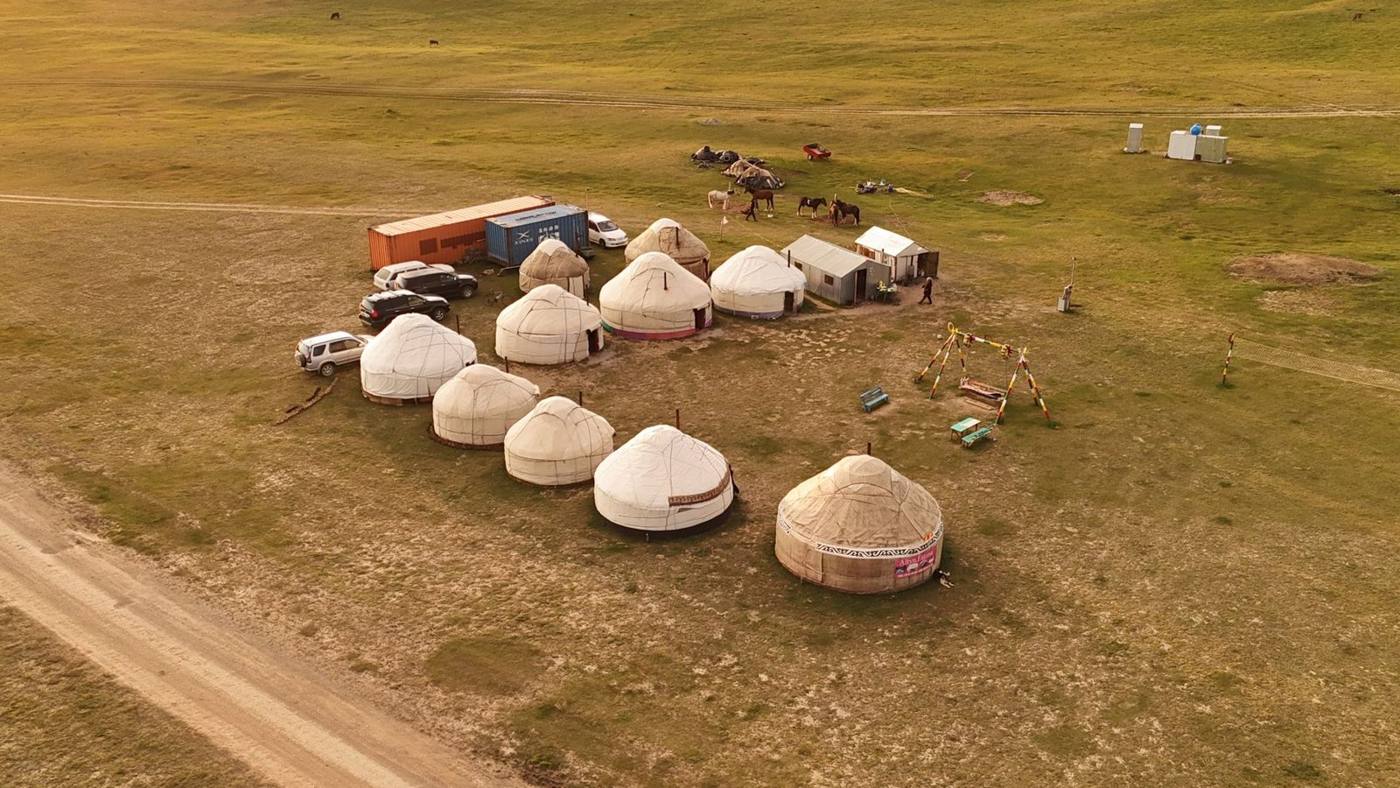
Issyk-Kul and Song-Köl
Lake Issyk-Kul, the Skazka fairy-tale canyon, Karakol and the Jeti-Ögüz valley, then the herders' yurts by the high lake of Song-Köl.
 4 daysChallenging
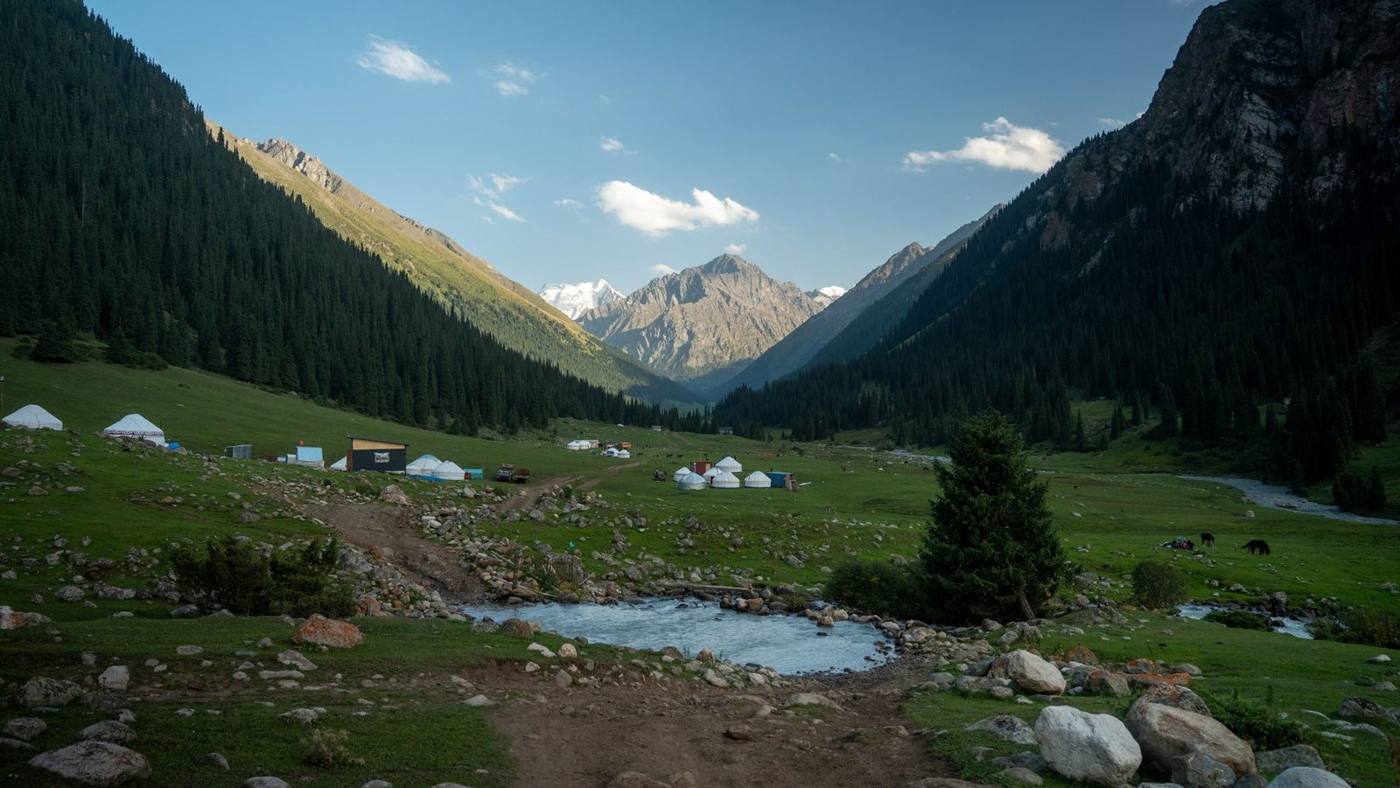
Ala-Köl lake trek
The classic trek from Karakol: the Karakol valley, turquoise Ala-Köl lake at 3,500 metres, the pass at 3,900 and the descent to the hot springs of Altyn-Arashan.
 7 daysModerate
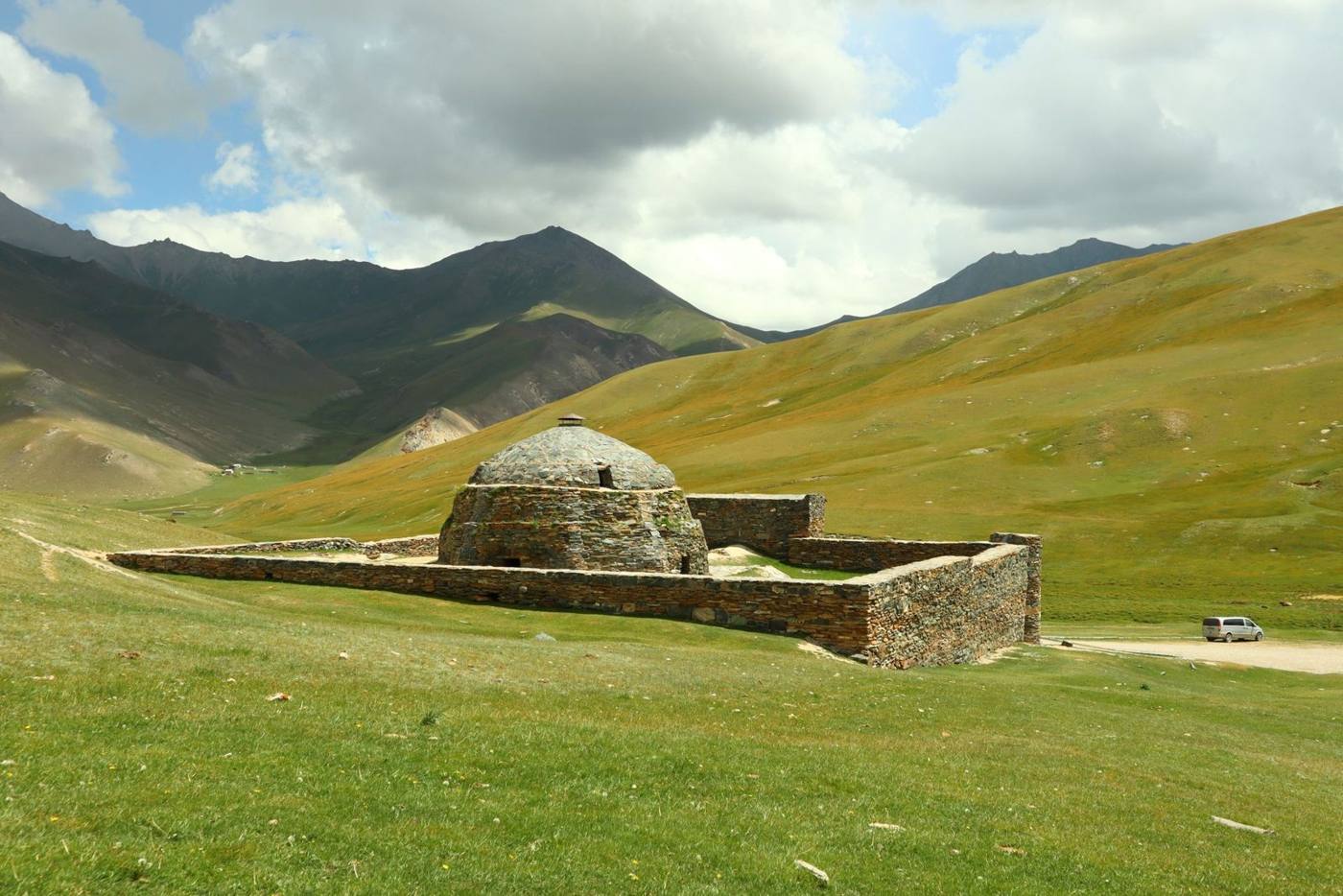
The south and Tash Rabat
The stone caravanserai of Tash Rabat on the Silk Road, Naryn, Osh with the sacred Sulaiman-Too mountain and the country's biggest bazaar.