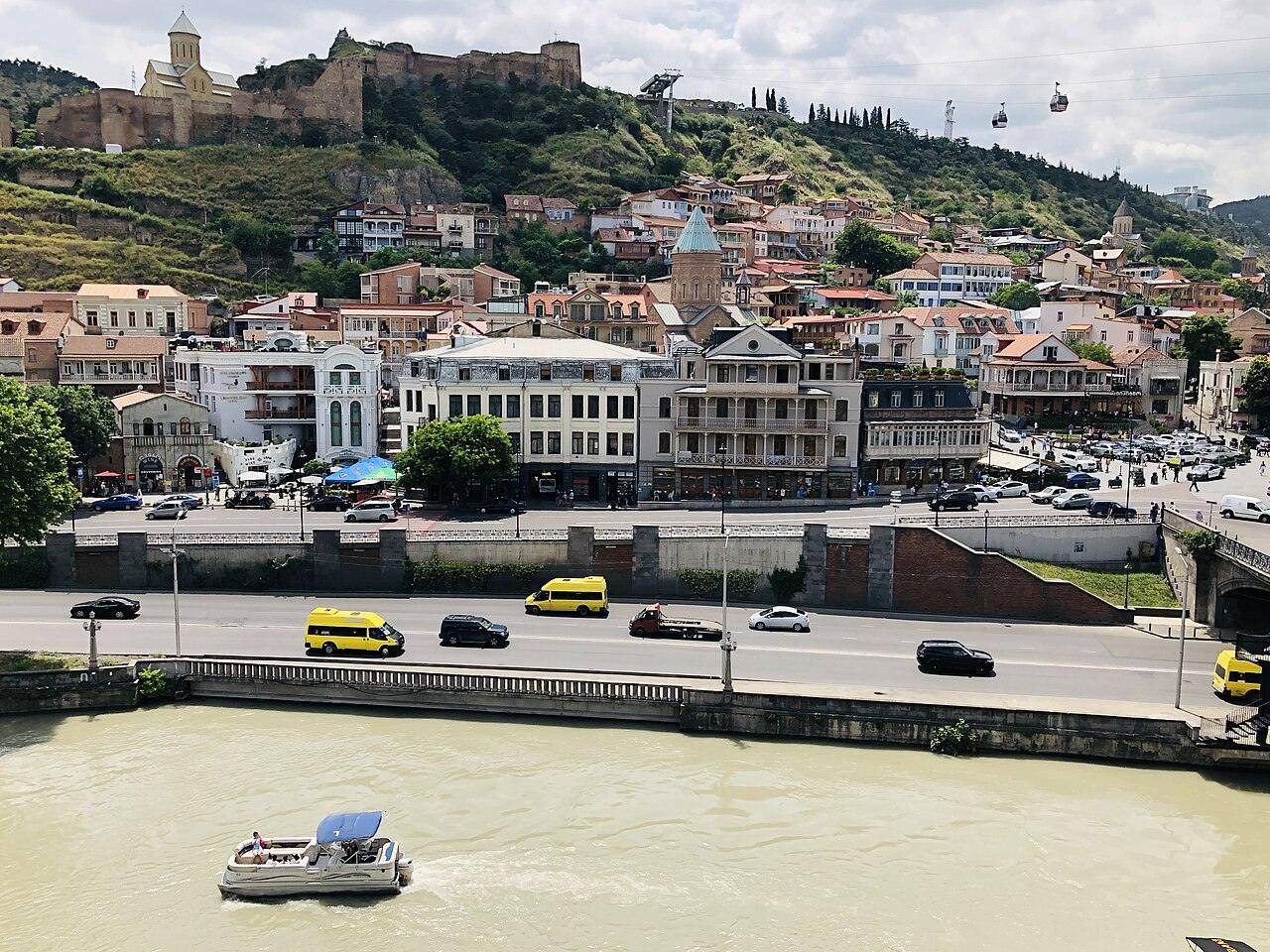
Tbilisi, Kazbegi and Kakheti wine
The capital of baths and wooden balconies, the church below Kazbek and the cellars where wine is made in clay jars.
- Tbilisi
- Mtskheta
- Ananuri
- Kazbegi
- Sighnaghi
Day by day
- Day 1
Arrival in Tbilisi
This trip is the ideal first week in Georgia: the capital Tbilisi, ancient Mtskheta, the Georgian Military Road up to Kazbegi beneath Mount Kazbek and the wine hills of Kakheti, with Sighnaghi and Bodbe monastery.
Before you go: for Italian citizens the recommended document is a passport, valid for at least six months from the date of entry. The electronic identity card is accepted only if you transit through Schengen countries, but there have been cases of refusal: use the same document to enter and to leave. No visa is needed for stays of up to 365 days. Since 2026 health and accident insurance with cover of at least 30,000 lari has been compulsory. Other nationalities should check their own rules. Italy's travel advice warns against all travel to Abkhazia and South Ossetia, and the UK also advises against the areas immediately next to their boundary lines: this trip does not go there. In Tbilisi there have been political protests outside Parliament for nearly two years, sometimes with clashes: stay away from demonstrations and crowds.
You land at Tbilisi airport, about half an hour from the centre. Withdraw some lari at the airport or in town: changing money is easy.
In the afternoon settle in near the old town and take a first walk along the Mtkvari river to the Bridge of Peace, the glass and steel footbridge joining the two banks. At sunset watch the lights of Narikala fortress come on up on the hill.
In the evening try khinkali, large dumplings filled with meat and broth, and khachapuri, cheese bread.
Sleep in Tbilisi, for two nights.
Practical tip: khinkali are eaten with your hands, holding them by the little knot of dough; bite gently and drink the broth first, then leave the knot on your plate.
- Day 2
The old town, Narikala and the sulphur baths
Today you explore Tbilisi's old town on foot. Tradition says the city was founded in the 5th century by King Vakhtang Gorgasali near the hot springs, and its name comes from the Georgian word for warm.
In the morning start from Freedom Square and walk down into the old town along Leselidze Street, with Sioni cathedral and the 6th century Anchiskhati basilica, the oldest church in the city. Look up: many houses have carved wooden balconies, often a little crooked, hanging over the courtyards.
At midday go up to Narikala fortress, built from the 4th century onwards, by the cable car from Rike park or on foot in about twenty minutes. Check prices and times. From the walls you see the whole city and the river, and next to you stands the great statue of Mother Georgia, holding a bowl of wine for friends and a sword for enemies.
In the afternoon walk down to the Abanotubani district, where the brick domes of the sulphur baths rise out of the ground. You can bathe in the public pools or book a private room for an hour: check prices and times. Then walk up the gorge behind the baths to the small Leghvtakhevi waterfall.
In the evening cross the river and climb to Metekhi church, on its cliff, for the view over the city lit up at night.
Sleep in Tbilisi.
Practical tip: Rustaveli Avenue, with Parliament, is the centre of the protests, especially on Saturday evenings and on political anniversaries: check local news and, if there is a demonstration, take another route.
- Day 3
Mtskheta, Jvari and Ananuri fortress
Today you leave Tbilisi and head up towards the Greater Caucasus on the Georgian Military Road, built by the Russians in the early 19th century along the line of an ancient trade route.
In the morning stop at Mtskheta, about twenty minutes from the capital. It was the capital of the ancient kingdom of Iberia, where tradition says Georgia converted to Christianity in the 4th century, and its monuments are a UNESCO World Heritage Site. First drive up to Jvari monastery, from the 6th century, on a hill above the meeting of the Aragvi and Mtkvari rivers: the two waters have different colours and you see them clearly from above.
Then go down into town and visit Svetitskhoveli cathedral, from the 11th century, where tradition places the robe of Christ. Go in with your shoulders covered; women usually cover their hair with a scarf, often available at the entrance.
At midday you reach Ananuri fortress, from the 17th century, on the shore of the Zhinvali reservoir, with two churches inside the walls and outer walls carved with crosses and vines. Climb the highest tower for the view over the turquoise lake.
In the afternoon the road climbs through hairpin bends towards Gudauri and the Jvari pass, at almost 2,400 metres, then drops into the Terek valley to Stepantsminda, the village everyone still calls Kazbegi.
In the evening have a hot mountain dish for dinner, such as kharcho, a meat soup with walnuts.
Sleep in Stepantsminda, for two nights.
Practical tip: beyond Stepantsminda the Military Road leads to the Russian border: it is not part of this trip, so stop in the village and do not carry on north.
- Day 4
Gergeti Trinity church and the Juta valley
Today is the mountain day of the trip, facing Kazbek, one of the highest extinct volcanoes in the Caucasus, at over 5,000 metres.
Early in the morning climb to Gergeti Trinity church, from the 14th century, at about 2,170 metres, on a meadow above Stepantsminda. It is the most famous image of Georgia: the small stone church standing alone, with the Kazbek glacier behind. You can walk up in about an hour and a half from the village, on a steep path through the woods, or go by 4x4 on the paved road. Arrive early: with the sun low the light is better, and clouds usually roll in around midday.
At midday come back down and go by 4x4 or taxi to the village of Juta, at about 2,200 metres, in a side valley below the rock spires of the Chaukhi massif. From there walk for about an hour and a half on an easy path along the stream, through flowering meadows, to the foot of the peaks. You can return the same way.
If your legs are trained you can climb on to Lake Chaukhi, about two hours more, on a steeper path. Set off only in good weather.
In the afternoon return to Stepantsminda and rest with the view of Kazbek turning pink at sunset.
Do not go into the Truso valley: it runs very close to the boundary line with South Ossetia, an area the UK advises against.
Sleep again in Stepantsminda.
Practical tip: even in summer the weather at Juta and Gergeti changes quickly: bring a waterproof jacket, a warm layer and water.
- Day 5
Back to Tbilisi and the modern city
Today you come down from the mountains and return to the capital, with a few stops along the way.
In the morning, just after Gudauri, stop at the viewpoint with the Friendship Monument, a large semicircular concrete arch decorated with colourful mosaics, from 1983, overlooking a deep gorge. In summer paragliders fly below you.
Then drive down to Pasanauri, in the Aragvi valley, the village that tradition calls the home of khinkali. It is the right place for lunch before heading back to the city.
In the afternoon you reach Tbilisi and visit the city of the 19th and 20th centuries. At the Georgian National Museum, on Rustaveli Avenue, look at the gold treasury of the ancient kingdoms of Colchis and Iberia, with jewellery more than two thousand years old. Check prices and times.
Then go up to Holy Trinity cathedral, called Sameba, completed in 2004, one of the largest Orthodox churches in the world, on Elia hill. Go in with your shoulders and legs covered.
Towards evening walk through the Sololaki district, with its Art Nouveau houses, peeling facades and painted entrance halls, and then on to the Dry Bridge, the open-air flea market selling old cameras, paintings, coins and Soviet souvenirs.
In the evening try pkhali, a vegetable paste with walnuts, and badrijani, aubergine rolls filled with walnut paste.
Sleep in Tbilisi, for two nights.
Practical tip: in Tbilisi do not flag down taxis in the street: book them with an app, so you know the price before you get in.
- Day 6
Kakheti: Sighnaghi, Bodbe and wine in clay jars
Today you go to the Kakheti region, east of Tbilisi, the cradle of Georgian wine. Wine has been made in Georgia for about eight thousand years, and the traditional method in the clay jars called qvevri is on UNESCO's list of intangible heritage.
In the morning you cross the hills and reach Sighnaghi in about two hours, a small hilltop town with red roofs and wooden balconies. Walk along its 18th century walls, built by King Erekle II, with more than twenty towers: in some sections you can climb onto the walkway. In front of you opens the wide Alazani valley, full of vineyards, and on clear days you see the snowy peaks of the Caucasus on the horizon.
At midday visit Bodbe monastery, a few minutes from town, among the cypresses, where Saint Nino is buried, the woman who according to tradition brought Christianity to Georgia in the 4th century. Go in with your shoulders and legs covered.
In the afternoon enjoy a tasting at a family winery in the area. You will see the jars buried in the floor, where the juice ferments with the skins: this gives the amber coloured, very aromatic white wines typical of the region. Also try saperavi, Georgia's most famous red wine, and chacha, the grape pomace brandy.
In the evening return to Tbilisi, about two hours by road.
Sleep in Tbilisi.
Practical tip: if you drink at the winery, do not drive: Georgia's drink-driving limit is lower than the UK's. Book a driver for the day.
- Day 7
Departure from Tbilisi
Today is departure day. If your flight is late, you still have a few hours for the city.
In the morning go to the station market, known as Dezerter, Tbilisi's large covered market, with spices, cheeses, honey, dried fruit and churchkhela, walnuts threaded on a string and coated in thickened grape juice. It is also the place to buy spices to take home, such as khmeli suneli, the herb mix of Georgian cooking.
Then, if you have time, stop in the old town for a last coffee, or take the funicular up Mtatsminda hill for the view over the city from above. Check prices and times.
In the afternoon go to the airport, about half an hour from the centre, and take your flight home.
In these seven days you have seen the best of Georgia without strain: the wooden balconies, Narikala fortress and the sulphur baths of Tbilisi, Jvari monastery and the cathedral of Mtskheta, Ananuri fortress, Gergeti church beneath Kazbek and the Juta valley, and finally Sighnaghi, Bodbe and the clay jar wine of Kakheti.
When to go: the best months are May to October. In June the mountains are green and full of flowers, while September and October are harvest time in Kakheti. In winter the Military Road to Kazbegi can close because of snow, sometimes for days.
Practical tip: if you take wine or chacha home, put the bottles in your hold luggage, wrapped in clothes, and check the amounts allowed by your airline and by customs.
The perfect week to discover Georgia without strain: city, mountains and wine. Gergeti church beneath Mount Kazbek is one of the finest views in the Caucasus. The military road to Kazbegi can close for snow in winter, so May to October is best.
Before you go
- Documents and visa
- Passport valid for the whole stay. British citizens can visit without a visa for up to one year. Since 1 January 2026 health and accident insurance is compulsory, valid for the whole stay, with cover of at least 30,000 lari: you may be asked for proof on arrival. Some British citizens have been refused entry or had trouble leaving, apparently linked to taking part in demonstrations or to unpaid fines.
- Health and vaccines
- No compulsory vaccinations. Medical facilities in remote areas are limited: you need insurance covering medical costs and repatriation. Georgia has strict rules on medicines: some products sold over the counter in the UK, such as those containing codeine, are illegal. Carry prescription medicines with the prescription and original packaging. Emergencies: 112.
- Money and payments
- Georgian lari. Withdrawing cash and changing euros or dollars is easy in Tbilisi and the main towns; carry cash in mountain villages.
- Power sockets
- Types C and F, 230 volts: you need an adapter for British plugs.
- Time zone
- UTC+4 all year, four hours ahead of the UK in winter, three in summer.
- Safety
- The UK advises against all travel to the Russian occupied regions of Abkhazia and South Ossetia, and against all but essential travel to the areas immediately next to the administrative boundary lines, which are generally unmarked. Protests have taken place in Tbilisi almost every day for nearly two years, centred on Parliament on Rustaveli Avenue, and some have turned violent: avoid demonstrations and large gatherings. At the Udabno caves of David Gareja, take care not to cross the unmarked border with Azerbaijan; the land border with Azerbaijan is closed. Mountain rescue can be limited. Official advice: GOV.UK.
Information checked in November 2026 for Italian and EU citizens. Rules change: always check before you travel.
Variations
In 5 days: Tbilisi, Mtskheta and Kazbegi, without the day in Kakheti.
In 9 days: add a night in Sighnaghi or Telavi, with Alaverdi cathedral and Gremi citadel, and a day at Uplistsikhe and Gori.
Frequently asked questions
What document do I need for Georgia?
A passport valid for at least six months from entry is the recommended document for Italian citizens. The electronic identity card is accepted only if you transit through Schengen countries, but there have been refusals. No visa is needed for up to 365 days and health insurance is compulsory. Other nationalities should check their own rules.
Is Georgia safe?
The areas advised against are Abkhazia, South Ossetia and the areas immediately next to their boundary lines, which this trip avoids: that is why it skips the Truso valley. In Tbilisi there are often protests outside Parliament: avoid demonstrations.
Can I go to Kazbegi in winter?
Yes, but the Military Road can close because of snow, sometimes for days. From May to October the road is usually open and the paths at Gergeti and Juta can be walked.
Indicative itinerary written by World Atlas. Before booking, check timetables, seasonal openings, documents and safety.
 15 daysModerate
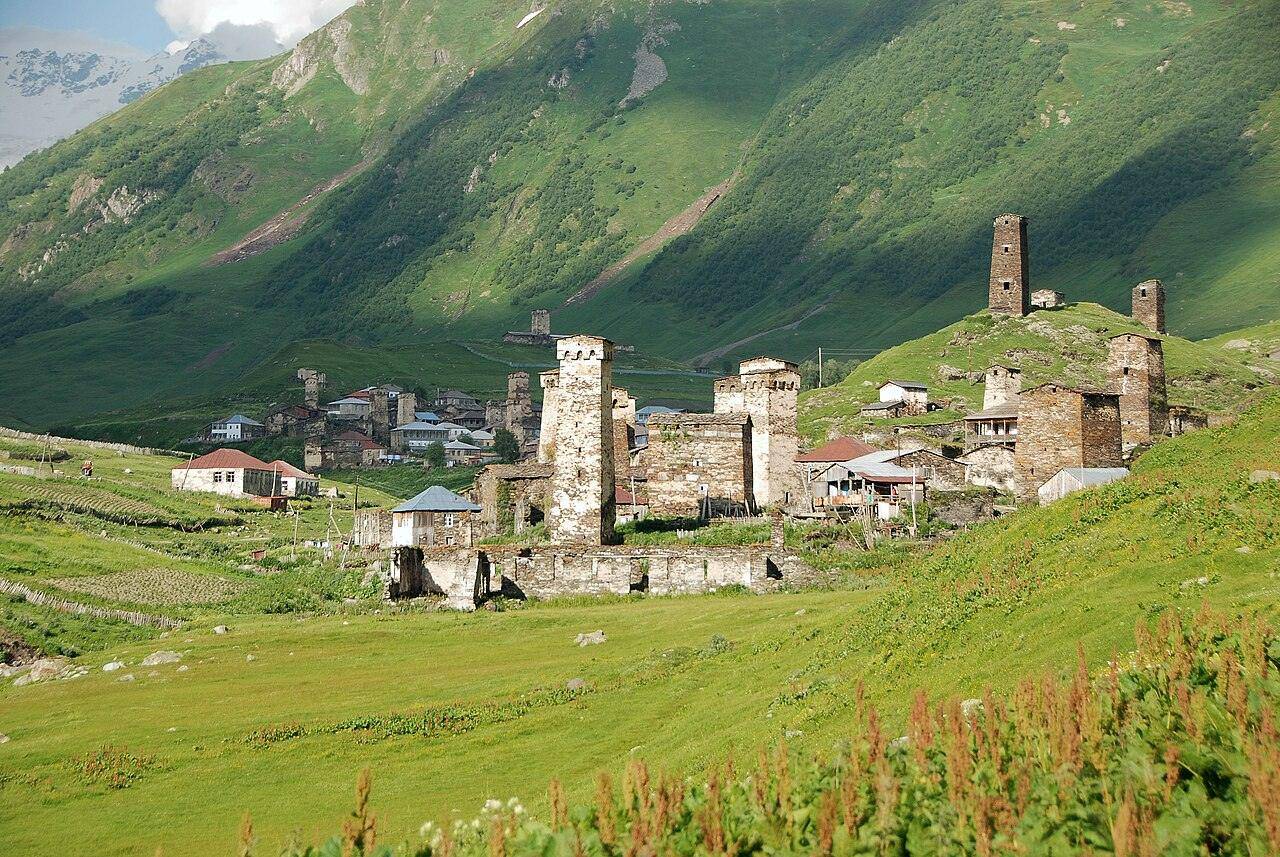
Complete Georgia: Svaneti, the Caucasus and caves
The medieval towers of Mestia and Ushguli, the cave monastery of Vardzia, Kutaisi and its canyons, with the Caucasus as a backdrop.
 7 daysEasy
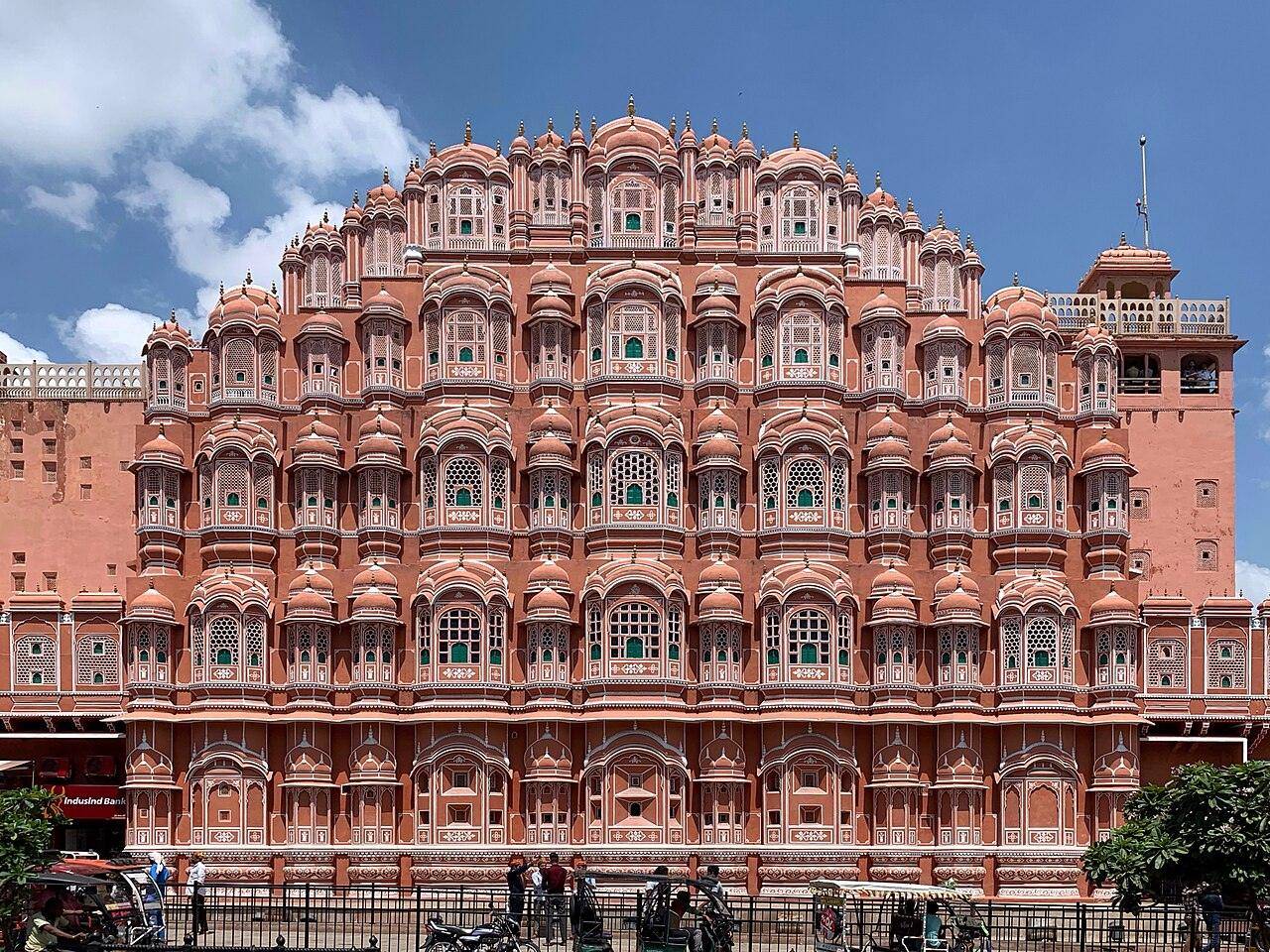
The Golden Triangle: Delhi, Agra and Jaipur
A first time in India: the Taj Mahal at dawn, the forts of Rajasthan and the life of Old Delhi, in one week.
 15 daysModerate
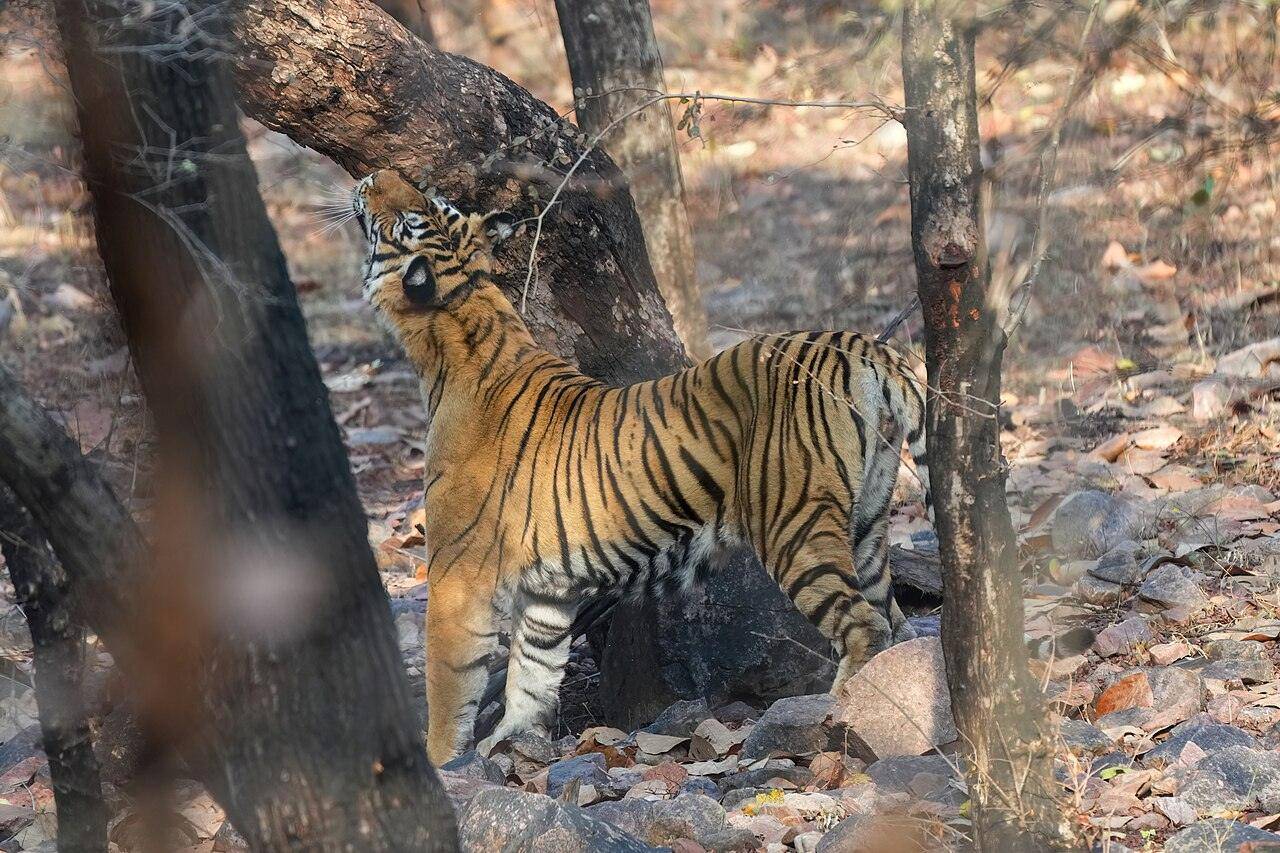
Rajasthan and the tigers of Ranthambore
Palaces, desert and safari: from the Taj Mahal to the blue and golden cities of Rajasthan, with two days in tiger country.