Complete Georgia: Svaneti, the Caucasus and caves
The medieval towers of Mestia and Ushguli, the cave monastery of Vardzia, Kutaisi and its canyons, with the Caucasus as a backdrop.
- Tbilisi
- Kazbegi
- Kutaisi
- Mestia
- Ushguli
- Borjomi
- Vardzia
- Sighnaghi
Day by day
- Day 1
Arrival in Tbilisi
This trip is the complete tour of Georgia in two weeks: Tbilisi, the Military Road up to Kazbegi beneath Mount Kazbek, Kutaisi with its monasteries and canyons, the medieval towers of Svaneti between Mestia and Ushguli, the waters of Borjomi, the cave monastery of Vardzia and the wine hills of Kakheti.
Before you go: for Italian citizens the recommended document is a passport, valid for at least six months from the date of entry. The electronic identity card is accepted only if you transit through Schengen countries, but there have been cases of refusal: use the same document to enter and to leave. No visa is needed for stays of up to 365 days. Since 2026 health and accident insurance with cover of at least 30,000 lari has been compulsory. Other nationalities should check their own rules. Italy's travel advice warns against all travel to Abkhazia and South Ossetia, and the UK also advises against the areas immediately next to their boundary lines: that is why this route skips the Truso valley and stays away from the lines. In Tbilisi there have been political protests outside Parliament for nearly two years, sometimes with clashes: stay away from demonstrations.
You land at Tbilisi airport, about half an hour from the centre. Withdraw some lari at the airport or in town: changing money is easy.
In the afternoon settle in near the old town and walk along the Mtkvari river to the Bridge of Peace, the glass and steel footbridge between the two banks.
In the evening try khinkali, large dumplings filled with meat and broth, and khachapuri, cheese bread.
Sleep in Tbilisi, for two nights.
Practical tip: khinkali are eaten with your hands, holding them by the little knot of dough; bite gently, drink the broth first and leave the knot on your plate.
- Day 2
The old town, Narikala and the sulphur baths
Today you explore the historic centre of Tbilisi on foot. Tradition says the city was founded in the 5th century by King Vakhtang Gorgasali near the hot springs, and its name comes from the Georgian word for warm.
In the morning start from Freedom Square and walk down into the old town, with Sioni cathedral and the 6th century Anchiskhati basilica, the oldest church in the city. Look up: many houses have carved wooden balconies, often a little crooked, hanging over the courtyards.
At midday go up to Narikala fortress, built from the 4th century onwards, by the cable car from Rike park or on foot in about twenty minutes. Check prices and times. From the walls you see the whole city, and beside you stands the statue of Mother Georgia, holding a bowl of wine for friends and a sword for enemies.
In the afternoon walk down to the Abanotubani district, where the brick domes of the sulphur baths rise out of the ground. You can bathe in the shared pools or book a private room for an hour: check prices and times. Then walk up the gorge behind the baths to the small Leghvtakhevi waterfall.
In the evening cross the river and climb to Metekhi church, on its cliff, for the view over the city lit up at night.
Sleep in Tbilisi.
Practical tip: Rustaveli Avenue, with Parliament, is the centre of the protests, especially on Saturday evenings and on political anniversaries: check local news and, if there is a demonstration, take another route.
- Day 3
Mtskheta, Ananuri and the Military Road
Today you leave Tbilisi and climb towards the Greater Caucasus on the Georgian Military Road, built by the Russians in the early 19th century along the line of an ancient trade route.
In the morning stop at Mtskheta, about twenty minutes from the capital. It was the capital of the ancient kingdom of Iberia, where tradition says Georgia became Christian in the 4th century, and its monuments are a UNESCO World Heritage Site. First drive up to Jvari monastery, from the 6th century, on a hill above the meeting of the Aragvi and Mtkvari rivers, which have two different colours. Then visit Svetitskhoveli cathedral, from the 11th century, where tradition places the robe of Christ. Go in with your shoulders covered; women usually cover their hair with a scarf.
At midday you reach Ananuri fortress, from the 17th century, on the shore of the Zhinvali reservoir, with two churches inside the walls. Climb the highest tower for the view over the turquoise water.
In the afternoon the road climbs through hairpin bends towards Gudauri and the Jvari pass, at almost 2,400 metres. Just before the pass stop at the Friendship Monument, from 1983, a large concrete arch with colourful mosaics above a deep gorge. Then drop into the Terek valley to Stepantsminda, the village everyone still calls Kazbegi.
In the evening have a hot mountain dish for dinner, such as kharcho, a meat soup with walnuts.
Sleep in Stepantsminda, for two nights.
Practical tip: beyond Stepantsminda the Military Road leads to the Russian border: it is not part of this trip, so stop in the village and do not carry on north.
- Day 4
Gergeti church and the Juta valley
Today is the mountain day facing Kazbek, one of the highest extinct volcanoes in the Caucasus, at over 5,000 metres.
Early in the morning climb to Gergeti Trinity church, from the 14th century, at about 2,170 metres, on a meadow above Stepantsminda. It is the most famous image of Georgia: the small stone church standing alone, with the Kazbek glacier behind. You can walk up in about an hour and a half from the village, on a steep path through the woods, or go by 4x4 on the paved road. Arrive early: with the sun low the light is better, and clouds often roll in around midday.
At midday come back down and go by 4x4 or taxi to the village of Juta, at about 2,200 metres, in the Sno valley, below the rock spires of the Chaukhi massif. From there walk for about an hour and a half on an easy path along the stream, through flowering meadows, to the foot of the peaks. You can return the same way. If your legs are trained, carry on to Lake Chaukhi, about two hours more on a steeper path, only in good weather.
In the afternoon return to Stepantsminda and rest, watching Kazbek turn pink at sunset.
We have taken the Truso valley out of the programme, although it often appears in Kazbegi tours: it runs very close to the boundary line with South Ossetia, an area the UK advises against.
Sleep again in Stepantsminda.
Practical tip: even in summer the weather at Juta and Gergeti changes quickly: bring a waterproof jacket, a warm layer and water.
- Day 5
The long road to Kutaisi and Gelati monastery
Today you cross Georgia from east to west, from the mountains of Kazbek to the region of Imereti. It is a long transfer day, about six hours of driving with stops.
In the morning leave Stepantsminda early and drive down the Military Road, past the Jvari pass and the Zhinvali reservoir. Stop at Pasanauri, in the Aragvi valley, the village tradition calls the home of khinkali.
At midday take the motorway west. The stretch near Gori runs not far from the boundary line with South Ossetia: stay on the main road, do not turn off to the north and do not stop in the villages of the area. After Khashuri the road climbs to the Rikoti pass, through thick forest, and then drops towards the plain of Imereti.
In the afternoon you reach Gelati monastery, a few kilometres from Kutaisi, founded in 1106 by King David IV the Builder and a UNESCO World Heritage Site. There was an academy here, one of the great centres of Georgian culture in the Middle Ages. In the main church look at the mosaic of the Virgin in the apse, from the 12th century, and the frescoes on the walls. At the entrance lies the tomb of King David, who wanted to be buried under the gate so that everyone would step on him as they came in.
In the evening, in Kutaisi, have khachapuri imeruli for dinner, the round cheese-filled bread of this region, with a white wine from Imereti.
Sleep in Kutaisi.
Practical tip: at Gelati go in with your shoulders and legs covered; keep a scarf in your bag, because women usually cover their hair.
- Day 6
Martvili canyon and the climb to Mestia
Today you visit a canyon in the plain of Samegrelo and then climb into Svaneti, the land of towers. It is a long day, with many hours of mountain road.
Early in the morning go to Martvili canyon, about an hour from Kutaisi, carved by the Abasha river into the limestone. You walk on walkways and steps along the walls, above clear green water, with small waterfalls and pools between mossy rocks. If there is enough water you can take a short boat ride through the narrowest part. Check prices and times and arrive at opening time: the groups come later.
At midday carry on to Zugdidi. Here follow the main road towards the mountains and do not head towards the Enguri bridge, which leads to Abkhazia, an area advised against.
In the afternoon the road climbs along the lake of the Enguri dam, one of the tallest arch dams in the world, with turquoise water between the mountains. Then you enter the narrow, wooded Enguri gorge and climb for about three hours to Mestia, the main town of Upper Svaneti, at about 1,500 metres. Upper Svaneti is a UNESCO World Heritage Site.
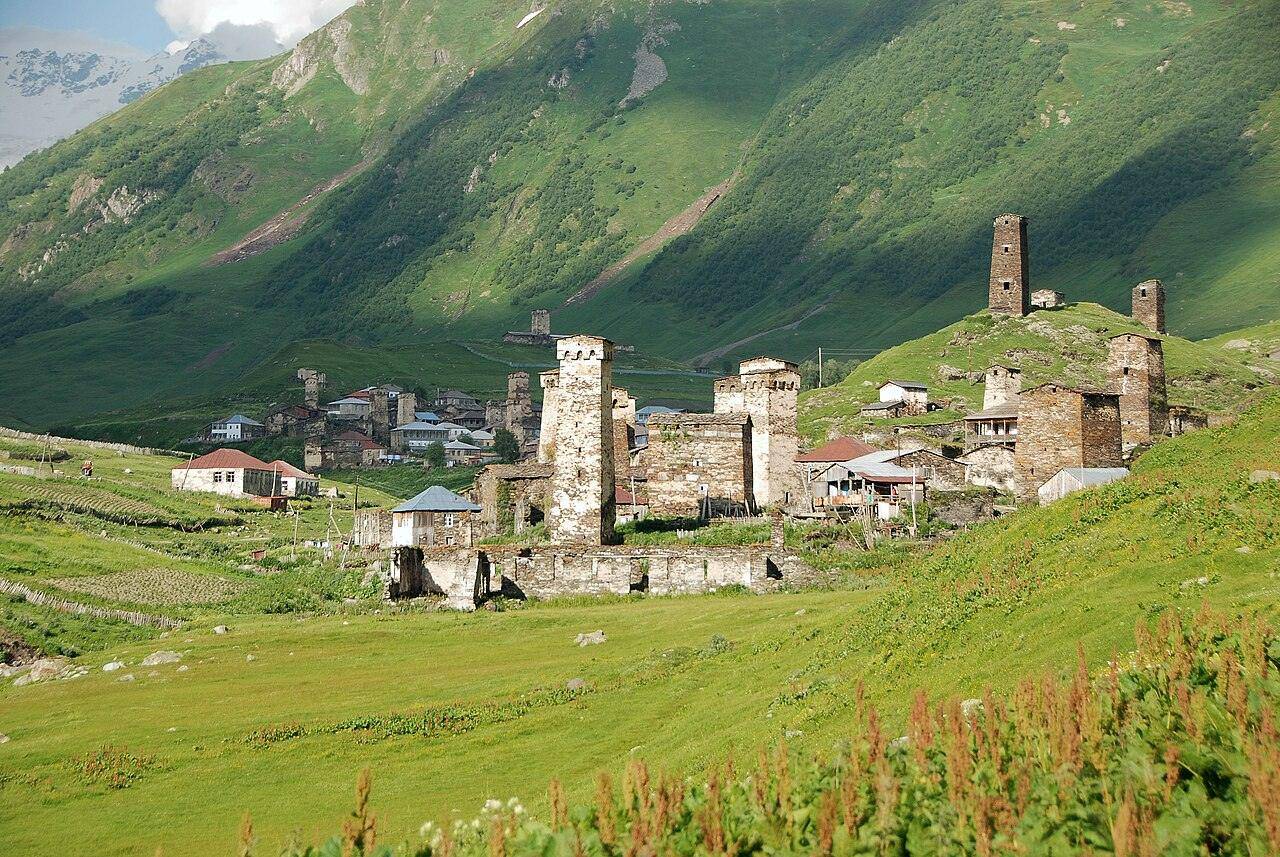
Towards evening you see the first stone towers, tall and narrow, built in the Middle Ages by families to defend themselves from attacks and feuds.
In the evening try kubdari, the bread filled with spiced meat typical of Svaneti, and Svan salt, mixed with herbs and garlic.
Sleep in Mestia, for three nights.
Practical tip: the road between Zugdidi and Mestia has many bends and stretches with landslides: stop regularly and, if you get car sick, sit in the front.
- Day 7
Mestia and the Chalaadi glacier
Today you stay in Mestia and take your first walk in Svaneti, up to the front of a glacier.
In the morning visit the Svaneti Museum of History and Ethnography, with medieval icons, silver and gold crosses and ancient manuscripts that families kept for centuries in churches and towers, far from invaders. Check prices and times. Then walk among the towers of the town: some can be visited, with steep, narrow wooden ladders inside.
At midday take a taxi or a 4x4 to the start of the path to the Chalaadi glacier, north-east of the town. You cross the Mestiachala river on a suspension bridge and then walk through birch and fir woods, on an almost level path with a few stony stretches. In a couple of hours you stand in front of the tongue of ice, grey with debris, from which the stream flows.
Do not go too close to the glacier front: blocks of ice and stones can break off at any moment. Stop on the rocks in front of it for a packed lunch and photos.
In the afternoon return the same way to town. If you still have energy, ride the Hatsvali chairlift for the view of the twin summit of Ushba, called the Matterhorn of the Caucasus. Check prices and times.
In the evening try chvishtari, cornbread with cheese, and tashmijabi, mashed potato with stretchy cheese.
Sleep in Mestia.
Practical tip: even though the path is easy, wear walking boots: after rain the stones near the glacier become very slippery.
- Day 8
Ushguli and Lamaria church
Today you go to Ushguli, the group of villages beneath Shkhara, the highest peak in Georgia.
In the morning leave Mestia early by 4x4. The road, partly paved and partly gravel, climbs for about two and a half hours through woods, meadows and small villages with towers, along the Enguri valley.
At midday walk through the four villages of Ushguli, at about 2,100 metres, one of the highest settlements in Europe lived in all year round. Stone towers rise among the houses, stables and haylofts, and in winter snow cuts the villages off for months. Climb to Lamaria church, medieval, on a hill above the village, with its tower beside it and the great white wall of Shkhara in front.
Then, if the weather is good, take a short walk on the ridge above Ushguli, about two hours there and back, to see all the villages from above and the valley climbing towards the glacier. If you want to walk more, you can follow the track towards the Shkhara glacier, but allow a whole day.
In the afternoon return to Mestia on the same road, with the light dropping over the towers of the villages along the valley.
In the evening have bean soup, warm bread and a glass of chacha, home-made grape spirit.
Sleep in Mestia.
Practical tip: in Ushguli photograph the villages early or late, when the low sun lights up the towers; around midday Shkhara is often covered in cloud.
- Day 9
Back to Kutaisi and Prometheus cave
Today you leave Svaneti and drive down to the plain, with a stop underground.
In the morning leave Mestia early and drive back through the Enguri gorge and along the lake of the dam, with your last views of the snowy peaks. In Zugdidi stay on the main road and continue towards Kutaisi. It is about five hours of driving.
At midday you reach Prometheus cave, near Tskaltubo, about twenty kilometres from Kutaisi. The route crosses several underground halls with stalactites, stalagmites, columns and stone cascades, lit with coloured lights. Inside it is cool even in summer, so keep a sweater. If the water allows, you can leave by boat on the underground river. Check prices and times.
In the afternoon, in Kutaisi, climb to Bagrati cathedral, on the hill above the city, built in the early 11th century by King Bagrat III, the first king of united Georgia. Destroyed by the Ottomans in the 17th century, it has been rebuilt in recent times. From the churchyard you see the whole city and the Rioni river.
Then walk down to the centre and pass the Colchis fountain and the covered market, full of spices, cheese and fruit. Kutaisi was in the kingdom of Colchis, where Greek myth places the Golden Fleece sought by Jason and the Argonauts.
In the evening taste the food of nearby Samegrelo, the spiciest in Georgia, with elarji, cornmeal with stretchy cheese.
Sleep in Kutaisi.
Practical tip: in the cave the floor is damp and there are many steps: wear shoes with a non-slip sole.
- Day 10
Borjomi and its waters
Today you head south-east into the Borjomi valley, famous all over the Caucasus for its mineral water.
In the morning leave Kutaisi and take the road east, over the Rikoti pass. At Khashuri turn south and follow the valley of the Mtkvari river, squeezed between forested mountains. It is about two and a half hours of driving.
At midday you reach Borjomi, a spa town born in the 19th century, when the court of the tsars chose it for cures. In the centre there are still wooden houses with verandas and colourful balconies. Go into the central park, along the stream, and taste the water from the spring: it is warm, salty and fizzy, and not everyone likes it. From the park a cable car climbs to the plateau above the town, with a view over the valley. Check prices and times.
In the afternoon walk for about half an hour beyond the end of the park, through the woods, to the open-air sulphur pools with warm water: check prices and times. Or visit the visitor centre of Borjomi-Kharagauli National Park, one of the largest in Georgia, and walk a short stretch of trail through the forest.
Towards evening, if you have time, stop at the Green Monastery, a small medieval church of greenish stone in the middle of the woods, a few kilometres from town.
In the evening have mtsvadi for dinner, grilled meat skewers, and wild mushrooms baked in a clay dish.
Sleep in Borjomi.
Practical tip: buy a few bottles of Borjomi water to take home; local people also use it for stomach troubles.
- Day 11
Vardzia and Rabati fortress
Today you visit the most famous rock-cut monastery in Georgia, in the south of the country, near the border with Turkey.
In the morning leave Borjomi heading south, pass Akhaltsikhe and follow the Mtkvari valley, narrower and drier as you go. Along the way stop at Khertvisi fortress, on a rocky spur where two rivers meet, one of the oldest in Georgia.
At midday you reach Vardzia, carved into a mountain face above the river at the end of the 12th century, in the time of Queen Tamar. It was a monastic town with hundreds of rooms on several levels: cells, chapels, wine cellars, refectories and water channels. An earthquake in the 13th century brought down part of the mountain, and today many caves open onto the void. In the rock-cut church of the Dormition look at the frescoes with the portrait of Queen Tamar. Check prices and times. The visit takes about two hours, with steps, narrow tunnels and exposed stretches.
In the afternoon return to Akhaltsikhe and visit Rabati fortress, a large complex on the hill with walls, towers, a mosque, a synagogue and a church, restored in recent years. It tells of the centuries when the region was under Georgian and then Ottoman rule. At sunset the walls turn orange.
In the evening taste the food of the region, with bread baked in a clay oven and mountain cheeses.
Sleep in Akhaltsikhe.
Practical tip: at Vardzia it is very hot in summer and there is little shade: arrive at opening time, bring water and a hat, and leave smooth-soled shoes at home.
- Day 12
Back to Tbilisi and the modern city
Today you return to the capital and discover the more modern side of Tbilisi.
In the morning leave Akhaltsikhe and drive back up the valley to Borjomi and Khashuri, then take the motorway east. It is about three and a half hours of driving. Again today, near Gori, stay on the motorway and do not turn off to the north, where the boundary line with South Ossetia runs.
At midday you reach Tbilisi. Have lunch and then ride the funicular up Mtatsminda hill, for the widest view over the city and the river. Check prices and times.
In the afternoon walk down Rustaveli Avenue, with its 19th century buildings, the opera house and the Georgian National Museum, which displays the gold of Colchis and the remains of the ancient inhabitants of Dmanisi. Check prices and times. Then cross the river and browse the Dry Bridge market, where people sell Soviet objects, old cameras, paintings and drinking horns.
Towards evening climb to the Holy Trinity cathedral, Sameba, built between the 1990s and 2004, one of the largest Orthodox churches in the world, on Avlabari hill. Inside you often hear the chants of the liturgy.
In the evening have pkhali for dinner, little balls of vegetables and walnuts, and lobio, bean stew served in a clay pot.
Sleep in Tbilisi.
Practical tip: again today, check the news before walking along Rustaveli Avenue: if there is a demonstration outside Parliament, reach the museum by a side street.
- Day 13
Sighnaghi and Bodbe monastery
Today you enter Kakheti, the wine region east of Tbilisi, between the Alazani valley and the mountains of the Caucasus.
In the morning drive east and climb into the hills of Kakheti, among vineyards, orchards and small villages. It is about two hours on the road.
At midday visit Bodbe monastery, in the woods above the valley, where Saint Nino is buried, the woman who, according to tradition, brought Christianity to Georgia in the 4th century. It is a place of pilgrimage: go in with your shoulders and legs covered and speak quietly. From the monastery garden you see the whole Alazani valley and, on clear days, the Caucasus range.
In the afternoon you reach Sighnaghi, a small hilltop town with wooden balconies, cobbled streets and 18th century walls built by King Erekle II, with more than twenty towers. Walk along a stretch of the walls, climb a tower and look out over the valley and the mountains.
Towards evening visit a family winery, where wine is still made in qvevri, large clay jars buried in the ground. This ancient method is on the UNESCO intangible heritage list. Try an amber white wine, fermented with its skins, strong in taste and slightly tannic.
In the evening have chakapuli for dinner, lamb stew with tarragon and white wine, with bread baked in a pit oven.
Sleep in Sighnaghi, or elsewhere in Kakheti, for two nights.
Practical tip: if you taste a lot of wine, do not drive: the alcohol limit for drivers in Georgia is very low. Book a driver for the day.
- Day 14
Telavi, Alaverdi and Gremi
Today you explore the upper part of the Alazani valley, with the churches and palaces of the kings of Kakheti.
In the morning go to Telavi, the old capital of the kingdom of Kakheti, about an hour from Sighnaghi. In the centre stands the fortress of King Erekle II, called Batonis Tsikhe, and next to it a huge, very old plane tree that tradition says is several centuries old. Then visit the Tsinandali estate, the 19th century residence of the poet Alexander Chavchavadze, with its house museum and a large English-style park. Check prices and times.
At midday you reach Alaverdi cathedral, from the 11th century, one of the tallest churches in Georgia, among the vineyards with the mountains behind. The monks still make wine in qvevri next to the monastery.
In the afternoon go to Gremi citadel, on the hill above the road, with the 16th century Church of the Archangels and the royal tower, from the time when Gremi was the capital of Kakheti. Inside there is a small museum, and from the tower you see the whole valley. Check prices and times. If you have time, climb to Nekresi monastery as well, on a wooded slope with a wide view over the plain.
In the evening have a final dinner with a supra, the Georgian feast with the toasts of the tamada, the toastmaster, with many small dishes, warm bread, cheeses and house wine.
Sleep in Kakheti.
Practical tip: buy the wine to take home in these days, directly from family wineries; for the flight wrap the bottles well and put them in your checked luggage.
- Day 15
Departure
Today is departure day.
In the morning drive back to Tbilisi, about two hours from Kakheti. If your flight is late, take a last walk through the central market, near the station, to buy spices, mountain honey and churchkhela, walnuts threaded on a string and coated in thickened grape juice. Then go to the airport, about half an hour from the centre.
In these two weeks you have seen the whole of Georgia: the old town of Tbilisi, Mtskheta and Ananuri, Gergeti church beneath Kazbek and the Juta valley, Gelati monastery and Bagrati cathedral, Martvili canyon, the towers of Mestia, the Chalaadi glacier and the villages of Ushguli beneath Shkhara, Prometheus cave, the waters of Borjomi, Vardzia monastery, Rabati fortress and finally Sighnaghi, Bodbe, Telavi, Alaverdi and Gremi in the land of wine. The limit of this trip is the long days on the road, especially between Kazbegi and Kutaisi and towards Svaneti, but in return you combine real mountains, monasteries and excellent food in a single journey.
When to go: the best period is from May to October. In May and June the valleys are green and full of flowers; July and August are the best months for Svaneti and Juta, but it is very hot on the plains. In September and October the grape harvest takes place in Kakheti. In winter the mountain roads can close because of snow.
Practical tip: before you leave, register your trip with your country's travel service, for Italians Dove Siamo Nel Mondo, and keep a digital copy of your passport and insurance policy.
The best of Georgia in two weeks: real mountains, monasteries, cave towns and excellent food. The roads to Svaneti are long, so allow full days for transfers. It is still an affordable and very welcoming country.
Before you go
- Documents and visa
- Passport valid for the whole stay. British citizens can visit without a visa for up to one year. Since 1 January 2026 health and accident insurance is compulsory, valid for the whole stay, with cover of at least 30,000 lari: you may be asked for proof on arrival. Some British citizens have been refused entry or had trouble leaving, apparently linked to taking part in demonstrations or to unpaid fines.
- Health and vaccines
- No compulsory vaccinations. Medical facilities in remote areas are limited: you need insurance covering medical costs and repatriation. Georgia has strict rules on medicines: some products sold over the counter in the UK, such as those containing codeine, are illegal. Carry prescription medicines with the prescription and original packaging. Emergencies: 112.
- Money and payments
- Georgian lari. Withdrawing cash and changing euros or dollars is easy in Tbilisi and the main towns; carry cash in mountain villages.
- Power sockets
- Types C and F, 230 volts: you need an adapter for British plugs.
- Time zone
- UTC+4 all year, four hours ahead of the UK in winter, three in summer.
- Safety
- The UK advises against all travel to the Russian occupied regions of Abkhazia and South Ossetia, and against all but essential travel to the areas immediately next to the administrative boundary lines, which are generally unmarked. Protests have taken place in Tbilisi almost every day for nearly two years, centred on Parliament on Rustaveli Avenue, and some have turned violent: avoid demonstrations and large gatherings. At the Udabno caves of David Gareja, take care not to cross the unmarked border with Azerbaijan; the land border with Azerbaijan is closed. Mountain rescue can be limited. Official advice: GOV.UK.
Information checked in November 2026 for Italian and EU citizens. Rules change: always check before you travel.
Variations
In 10 days: Tbilisi, Kazbegi with Gergeti and Juta, Kutaisi and Svaneti with Mestia and Ushguli, without Borjomi, Vardzia and Kakheti.
In 18 days: add two days of trekking from Mestia to Ushguli and a night in Telavi with the rock-cut monastery of David Gareja.
Frequently asked questions
What document do I need for Georgia?
For Italian citizens the recommended document is a passport valid for at least six months from entry. The electronic identity card is accepted only if you transit through Schengen countries, but there have been refusals. No visa is needed for up to 365 days and health insurance is compulsory. Other nationalities should check their own rules.
Is Georgia safe?
The areas advised against are Abkhazia, South Ossetia and the areas immediately next to their boundary lines, which this trip avoids: that is why it skips the Truso valley and passes Gori only on the motorway. In Tbilisi there are often protests outside Parliament: avoid demonstrations.
Is it worth hiring a car?
You can, but the mountain roads to Mestia and Ushguli are slow, with landslides and gravel stretches, and driving in Georgia is very aggressive. Many travellers choose a driver for the long transfers and a 4x4 for Ushguli.
Indicative itinerary written by World Atlas. Before booking, check timetables, seasonal openings, documents and safety.
 7 daysEasy
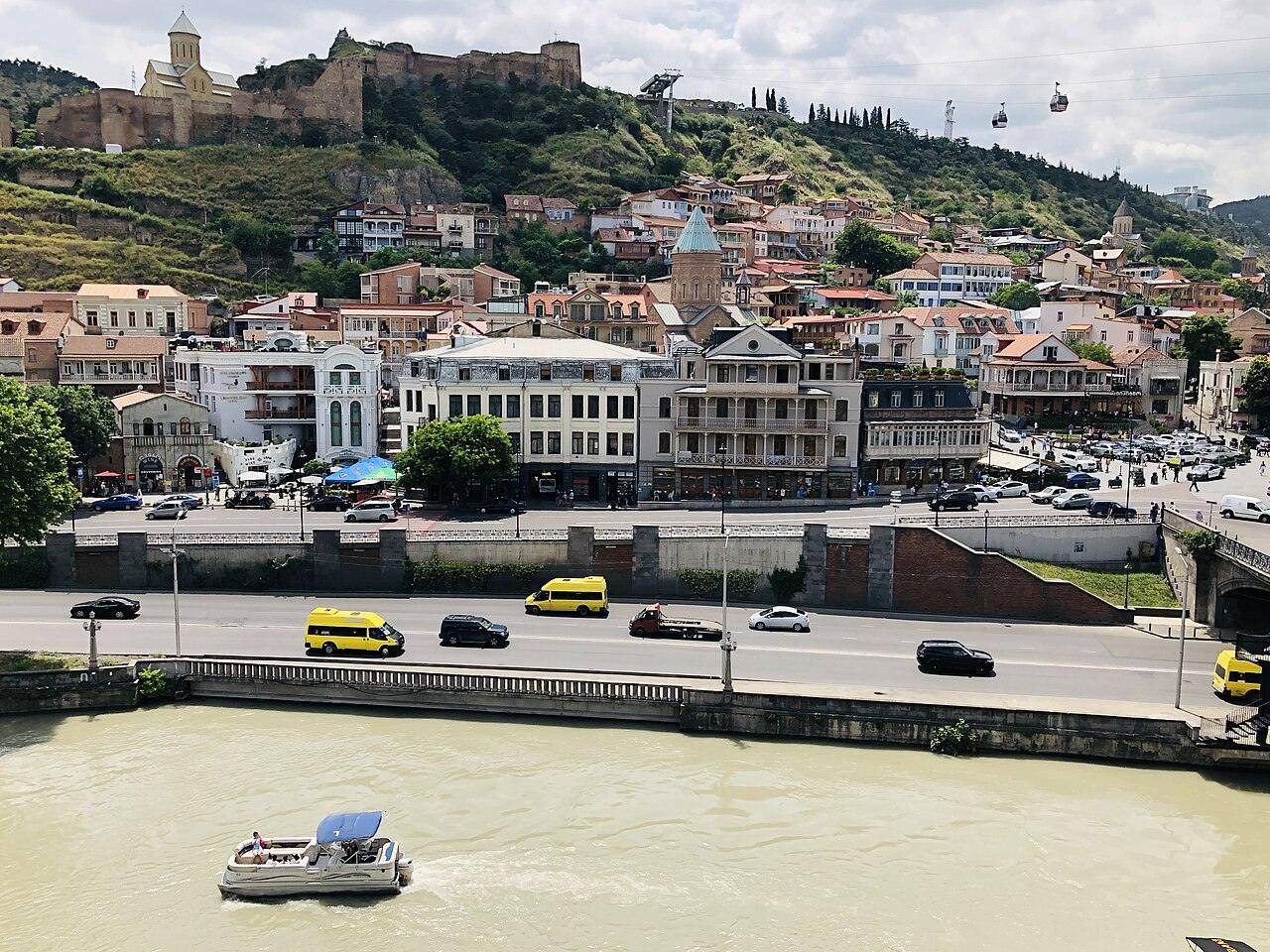
Tbilisi, Kazbegi and Kakheti wine
The capital of baths and wooden balconies, the church below Kazbek and the cellars where wine is made in clay jars.
 7 daysEasy
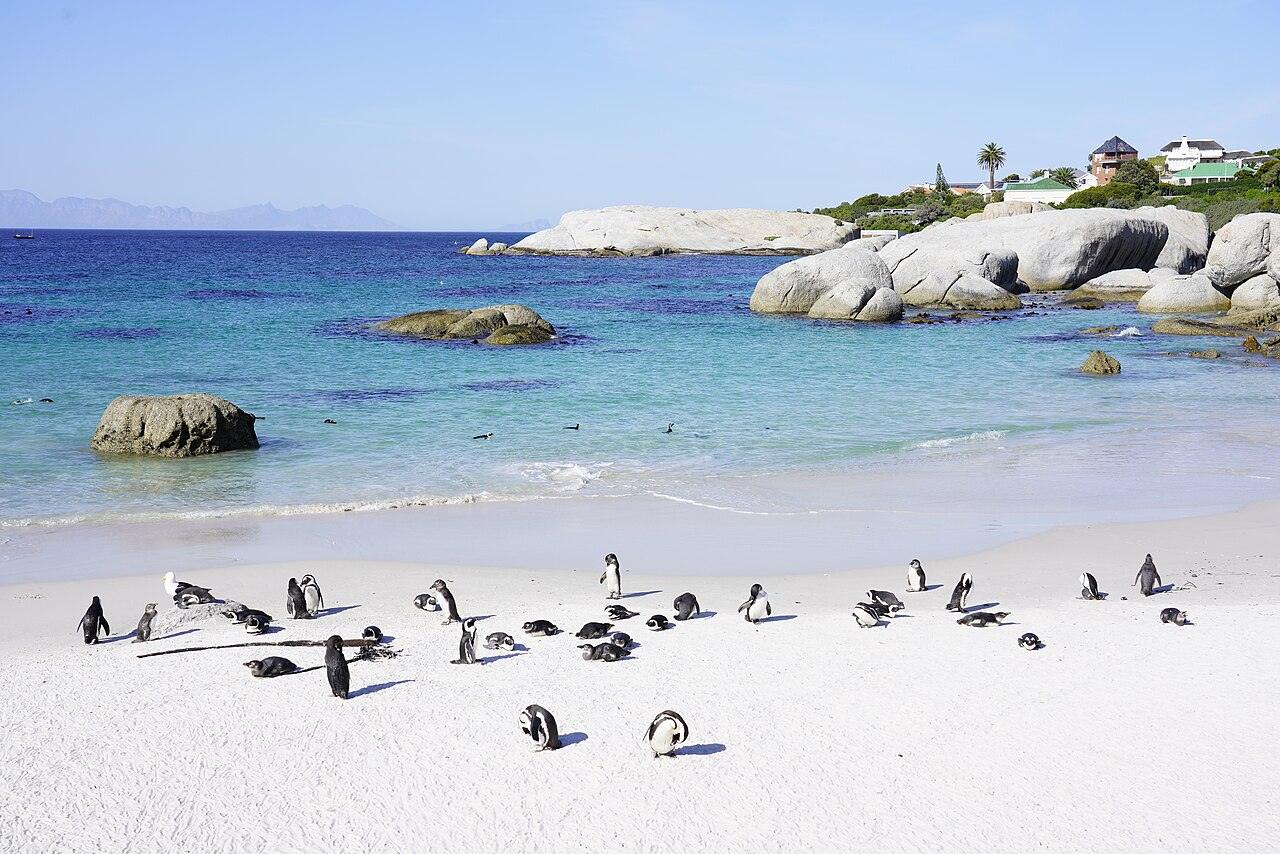
Cape Town and the Cape Peninsula
A week of Table Mountain, the penguins of Boulders Beach, the Cape of Good Hope and the Stellenbosch vineyards.
 15 daysModerate
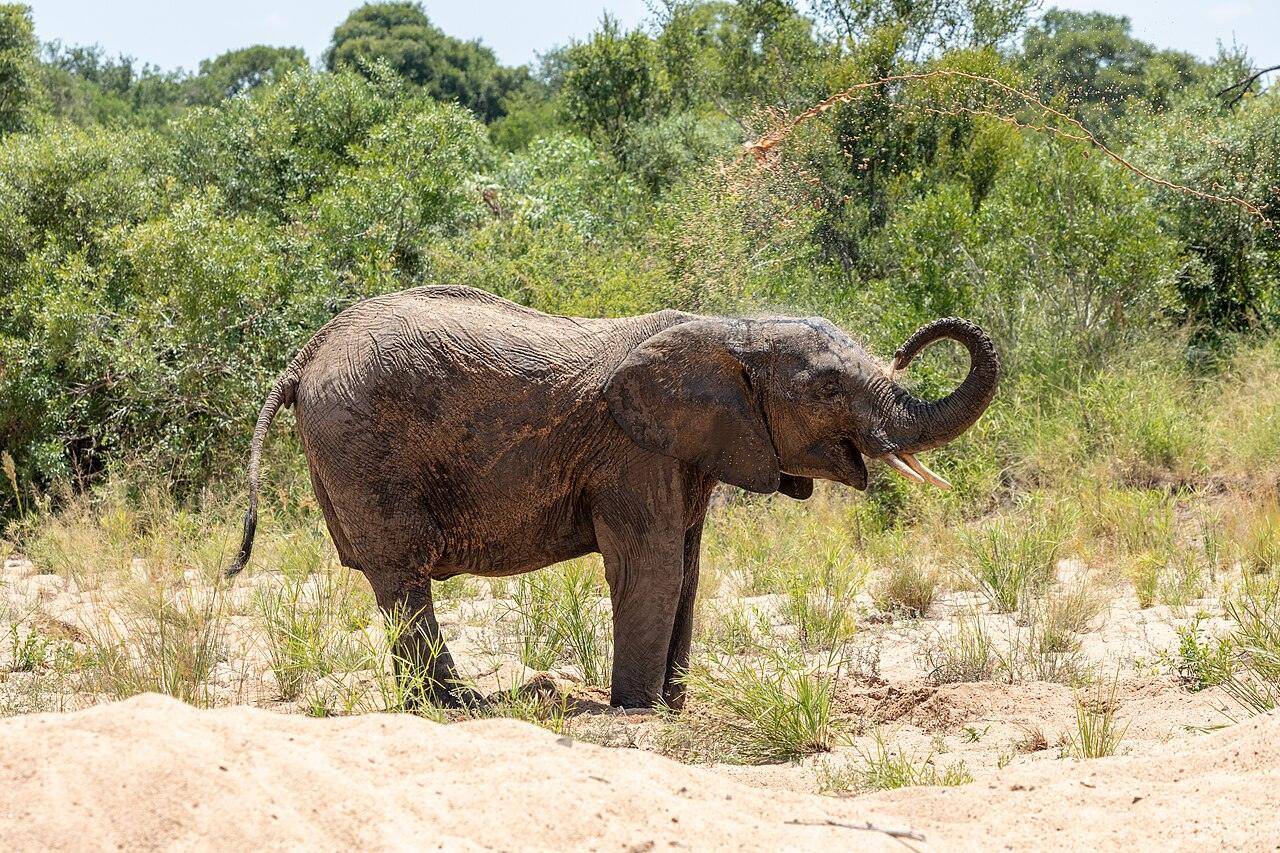
Kruger, the Garden Route and Cape Town
The great classic: a Kruger safari, the scenic Garden Route and a finale in Cape Town.