The Loire châteaux
Chambord, Chenonceau, Amboise and Villandry, by car or by bike along the Loire à Vélo, with the cellars of Vouvray and Chinon.
- Blois
- Chambord
- Amboise
- Chenonceau
- Tours
- Villandry
- Chinon
Day by day
- Day 1
Arrival in Blois and the royal château
France is in the Schengen area and uses the euro: EU citizens need only a valid identity card. The Loire Valley between Sully-sur-Loire and Chalonnes is a UNESCO World Heritage site: along France's longest river, Renaissance kings and nobles built dozens of châteaux among forests, vineyards and gardens.
From Paris you reach Blois by train in about an hour and a half from Austerlitz station. To tour the châteaux it is best to rent a car or a bike; alternatively, in season, shuttles run from the station.
In the afternoon visit the royal château of Blois in the town centre, home to seven kings and ten queens of France. The four wings around the courtyard show four different periods: Gothic, the red-brick Renaissance of Louis XII, the wing of François I with its great open spiral staircase on the courtyard, and the classical seventeenth-century wing. In the rooms, ceilings and walls are painted in their original colours. Here in 1588 the Duke of Guise was assassinated on the orders of King Henri III.
Opposite the château, the House of Magic, dedicated to Robert-Houdin, a famous illusionist born in Blois, has golden dragons emerging from its windows every half hour.
In the evening stroll through the old town's lanes with half-timbered houses to the cathedral, and look at the Loire from the bridge.
Practical tip: on summer evenings a sound and light show is projected onto the façades in the château courtyard.
- Day 2
Chambord and Cheverny
In the morning drive to Chambord, about twenty minutes from Blois, the largest château in the Loire, built by François I from 1519 as a hunting residence in the middle of a huge forest park enclosed by a wall about thirty-two kilometres long. The château has 426 rooms, 282 fireplaces and a roof crowded with turrets, chimneys and lanterns, like a small city of stone.
At its centre is the famous double helix staircase, two intertwined spiral staircases on which two people can go up and down without ever meeting; many believe the idea came from Leonardo da Vinci, who spent his last years in France as the king's guest. Climb to the roof terraces to see the turrets and the park up close.
In 2026 a ticket costs 21 euros for residents of the European Economic Area and 31 euros for visitors from outside; it is at no cost for under-18s and for EU citizens aged 18 to 25. Bikes and golf carts can be rented in the park.
In the afternoon visit the château of Cheverny, about twenty minutes away, still lived in by the same family for over six hundred years, with furnished interiors and kennels housing a pack of about a hundred hunting hounds. The château inspired Hergé's Marlinspike Hall in the Tintin comics.
Practical tip: arrive at Chambord at opening time; morning light on the façade is the best for photos.
- Day 3
Amboise, Clos Lucé and Chenonceau
In the morning drive west to Amboise, about forty minutes from Blois, a town on the Loire dominated by the royal château on the cliff above the river. Charles VIII lived and reigned here and François I grew up here. In the small Saint-Hubert chapel on the edge of the ramparts lies the tomb of Leonardo da Vinci.
A few minutes' walk away, visit Clos Lucé, the red-brick house where Leonardo da Vinci spent the last three years of his life at the invitation of François I and where he died in 1519. You see his bedroom, his study and the kitchen, and in the park there are large-scale models of his inventions, such as the tank, the swing bridge and the flying machine, which you can touch.
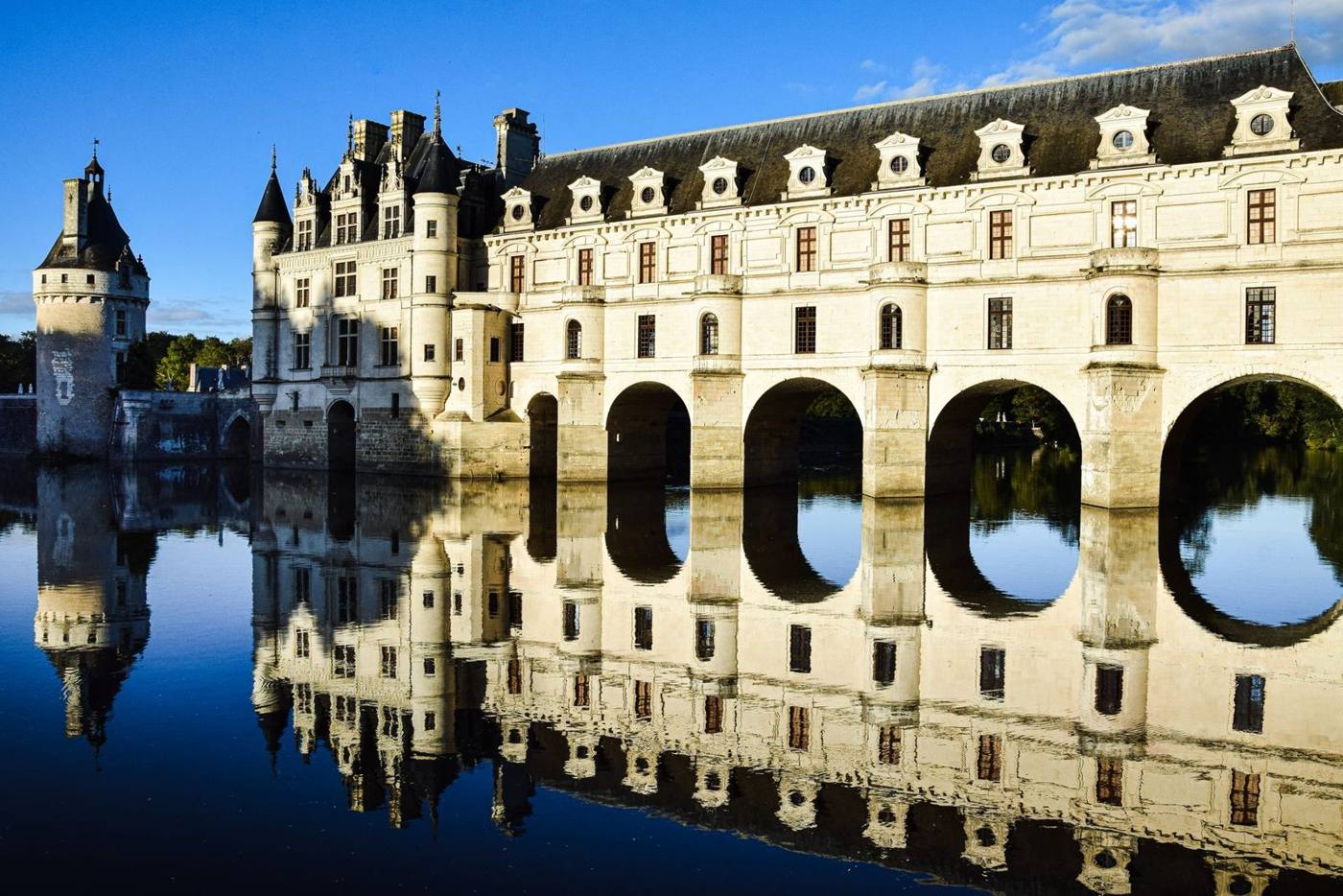
In the afternoon reach the château of Chenonceau, about twenty minutes away, called the ladies' château because it was built, embellished and protected by several women over the centuries. It is famous for its two-storey gallery built like a bridge over the River Cher, its arches reflected in the water. There are the gardens of Diane de Poitiers and Catherine de' Medici, kitchens in the bridge piers and a maze. During the First World War the gallery became a hospital.
In the evening stay in Amboise.
Practical tip: at Chenonceau on summer days, arrive early in the morning or late in the afternoon to avoid crowds in the gallery.
- Day 4
The Loire by bike and the wines of Vouvray
Today is a day by bike on the Loire à Vélo, a cycle route of about nine hundred kilometres following the river from inland France to the Atlantic. The route is almost entirely flat and well signposted, on quiet country roads and separate tracks. In Amboise you can rent ordinary or electric bikes, and many places along the route welcome cyclists.
Ride west from Amboise to Vouvray, about twenty kilometres, through vineyards and white stone villages, with the river always beside you. Along the way the bank rises, and troglodyte houses are carved into the white tufa rock, homes dug into caves, some still lived in, along with cellars where wine is aged.
In Vouvray visit a cellar carved into the tufa to taste the local wine, a Chenin Blanc that can be dry, sweet or sparkling. Many cellars offer tastings; some must be booked.
In the afternoon continue to Tours, about ten kilometres further, or return to Amboise by train, which carries bikes on many regional services.
In the evening try Loire cooking: rillettes from Tours, Sainte-Maure goat's cheese, pike with beurre blanc and tarte Tatin, the upside-down apple tart born in the valley.
Practical tip: if you drink wine on the bike tour, taste in moderation; the same road rules apply as for cars.
- Day 5
Villandry, Azay-le-Rideau and Chinon
In the morning visit the château of Villandry, about twenty minutes from Tours, famous above all for its Renaissance gardens, among the most beautiful in Europe, laid out on three levels. There is the ornamental kitchen garden, with vegetables planted in geometric patterns of different colours, the gardens of love, with box hedges clipped into hearts, the water garden and the maze. From the viewpoint you see the whole design from above.
Then reach the château of Azay-le-Rideau, about fifteen minutes away, built in the sixteenth century on an island in the River Indre, so that it seems to float on the water. The writer Honoré de Balzac described it as a faceted diamond set in the Indre. Inside are furnished rooms, tapestries and a grand Renaissance staircase.
In the afternoon continue to Chinon, about thirty minutes away, a medieval town on the Vienne with a royal fortress on the hill. Here in 1429 Joan of Arc met the future King Charles VII to persuade him to fight the English. You visit the towers, the remains of the royal palace and an exhibition on the saint's life. Below the fortress the lanes of the old town have half-timbered houses.
In the evening taste the red wine of Chinon, made from Cabernet Franc.
Practical tip: the Villandry gardens change with the seasons; spring brings flowers, while in summer and autumn the kitchen garden is at its fullest.
- Day 6
Tours and the train to Paris
In the morning visit Tours, the valley's main city, about forty minutes from Chinon. The old centre has the Gothic Saint-Gatien cathedral, with medieval stained glass and the two towers of its façade, the old quarter around place Plumereau, with medieval half-timbered houses and café terraces, and the basilica of Saint-Martin, built over the tomb of St Martin, the city's patron saint, who shared his cloak with a poor man.
Walk along the Loire bank, where in summer the guinguettes open, open-air bars with music and tables by the river.
If you have time, visit the Fine Arts Museum in the old bishops' palace, with a great cedar of Lebanon planted in the courtyard in the eighteenth century, or stop at the château of Langeais, about twenty minutes away, a medieval fortress with furnished interiors and tapestries.
In the afternoon take the train to Paris: from Saint-Pierre-des-Corps station near Tours, the high-speed train reaches Montparnasse in about an hour and a quarter.
Things to take home: Loire wines such as Vouvray, Chinon or Sancerre, jars of rillettes, goat's cheese, honey, and chocolate and fruit sweets from the Tours pastry shops.
Practical tip: many châteaux close earlier in winter, and some close entirely for a few weeks; always check opening times before setting off. Check your government's travel advice before leaving.
An elegant, relaxed trip, an hour by train from Paris. Two châteaux a day is the maximum before they start to blur. Cycling is the nicest way to get around, on almost flat paths, and bikes can be hired with luggage transfer. In summer the evening shows at the châteaux are worth staying for.
Before you go
- Documents and visa
- EU citizens need a valid identity card or passport. Other nationalities should check the Schengen rules.
- Health and vaccines
- No vaccines required. EU citizens should bring their EHIC. Emergencies: 112.
- Money and payments
- Euro. Cards are accepted almost everywhere; every accommodation charges the taxe de séjour per person per night.
- Power sockets
- Types C and E, 230 volts.
- Time zone
- Central European Time (UTC+1), summer time (UTC+2) from the last Sunday of March to the last Sunday of October.
- Safety
- A safe country, with a high terrorism alert level and security checks at museums and stations. In Paris watch for pickpockets on the metro. Official advice: GOV.UK.
Information checked in November 2026 for Italian and EU citizens. Rules change: always check before you travel.
Variations
In 3 days: Chambord and Cheverny, then Amboise with Clos Lucé and Chenonceau, based in Blois or Amboise.
In 9 days: add the châteaux further west, such as Saumur and Angers with the Apocalypse Tapestry, or the city of Orléans and the château of Sully-sur-Loire.
Frequently asked questions
How much is Chambord?
In 2026 a ticket costs 21 euros for residents of the European Economic Area and 31 euros for other visitors. It is at no cost for under-18s and for EU citizens aged 18 to 25.
Do I need a car to see the châteaux?
It is the most convenient way, but you can also visit by bike along the Loire à Vélo, or by train and shuttles from Blois, Amboise and Tours stations in season.
How many châteaux can you see in a day?
Two, or three at most: each large château needs at least two hours, plus the gardens and travel.
Indicative itinerary written by World Atlas. Before booking, check timetables, seasonal openings, documents and safety.
 9 daysEasy
Normandy and Brittany
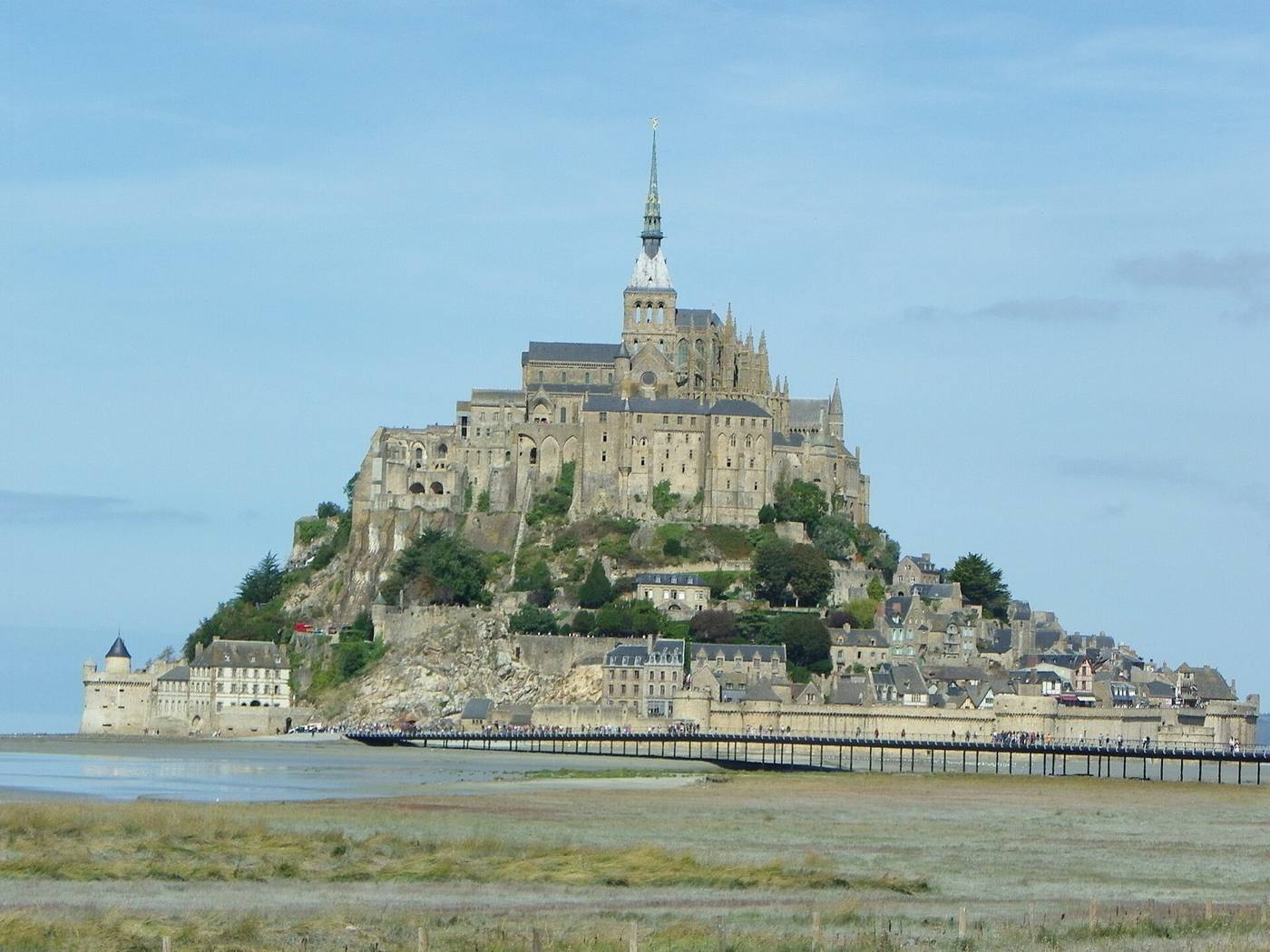
Giverny and Monet, the cliffs of Étretat, Honfleur, the D-Day beaches, Mont-Saint-Michel and the Breton coast from Saint-Malo to the Pink Granite Coast.
 8 daysEasy
Bordeaux and the Dordogne
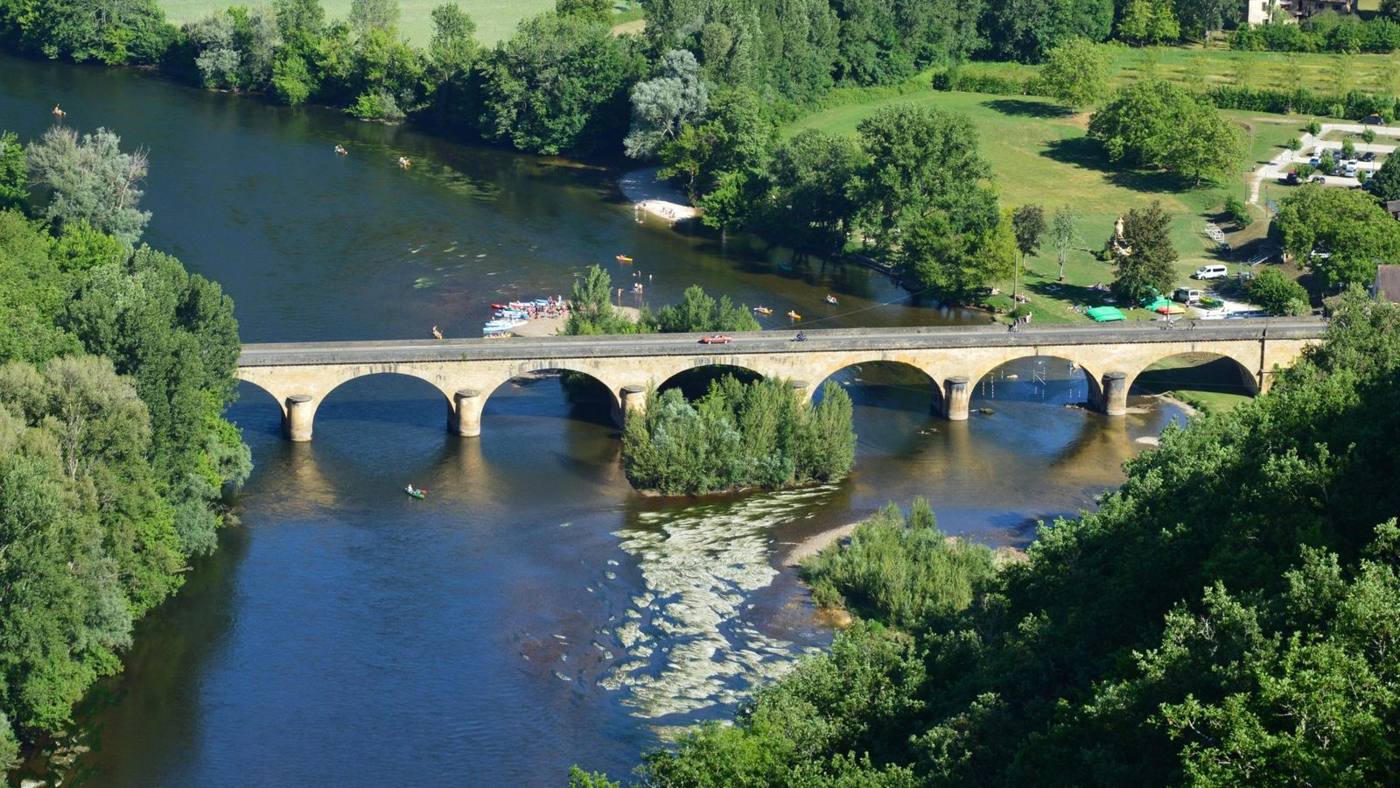
Bordeaux and Saint-Émilion, the villages of the Dordogne valley such as Sarlat and La Roque-Gageac, the prehistoric caves of Lascaux and Rocamadour.
 7 daysEasy
Alsace and Burgundy
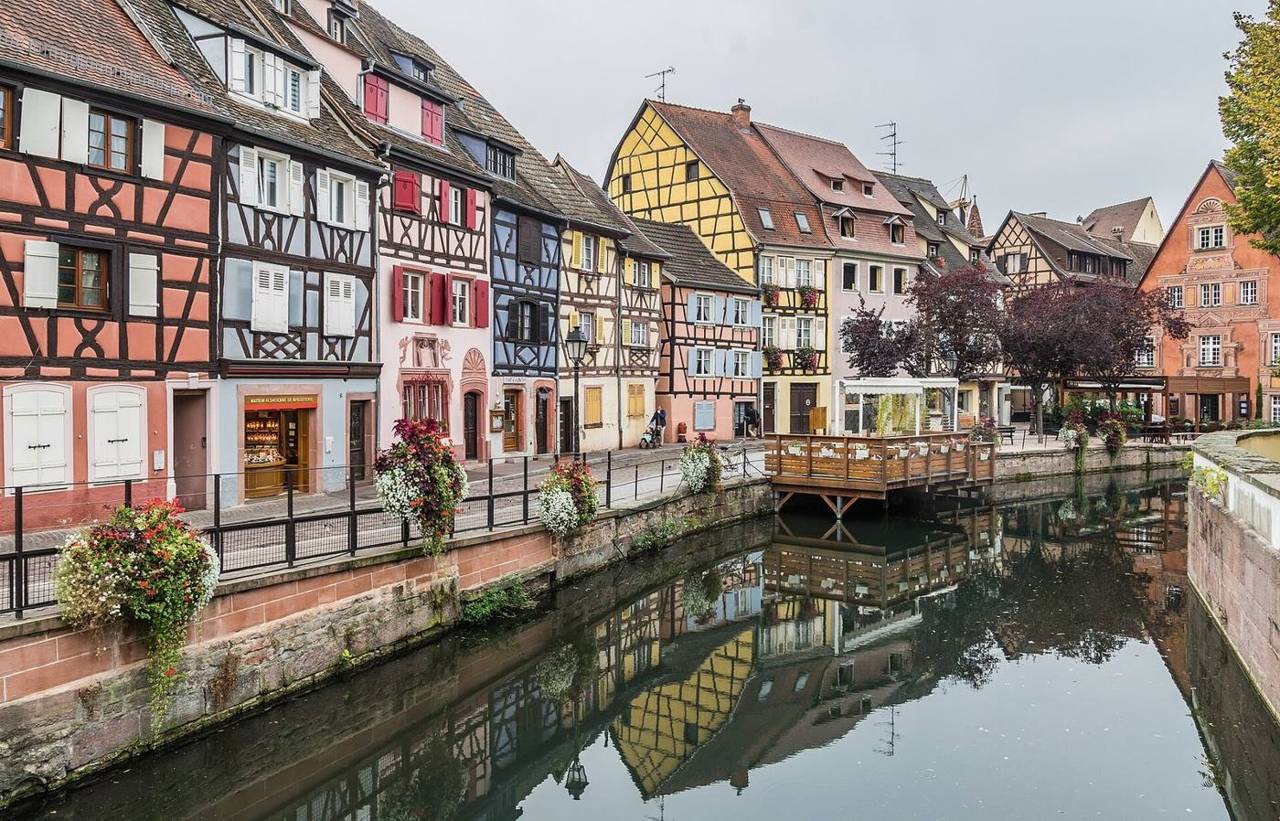
Strasbourg, the Alsace wine route through Riquewihr, Eguisheim and Colmar, then Burgundy with Beaune, the Côte de Nuits and Dijon.