The complete Croatia
From Zagreb to Dubrovnik in two weeks: Plitvice, Istria, Zadar, Krka, Split, Hvar and Korčula.
- Zagreb
- Rovinj
- Plitvice
- Zadar
- Krka
- Split
- Hvar
- Korčula
- Dubrovnik
Day by day
- Day 1
Arrival in Zagreb
This trip crosses the whole of Croatia in two weeks: the capital Zagreb, the hilltop towns of Istria, the Plitvice lakes and the Krka waterfalls, the Roman and Venetian cities of Dalmatia, the islands of Hvar and Korčula, and finally Dubrovnik. You travel by rental car as far as Split, then by ferry between the islands.
Before you leave: Croatia is part of the European Union and the Schengen area and uses the euro. Italian citizens need a valid electronic identity card for travel abroad or a passport; the paper identity card has no longer been valid for travel abroad since 3 August 2026. Other nationalities should check their own rules.
You arrive at Zagreb airport, about half an hour from the centre. Alternatively, from Italy you can arrive by car through Slovenia.
Zagreb is a quiet, green city, with the medieval upper town on the hill and the nineteenth century lower town, with the palaces, parks and squares of the Austro-Hungarian era.
In the afternoon walk in Ban Jelačić square, the centre of the city, and climb to Dolac market, the open air market with red umbrellas above the square. Then visit the twin towered cathedral.
In the evening dine on štrukli, pastry filled with cheese and baked, or turkey with mlinci, thin sheets of pasta.
Sleep in Zagreb.
Practical tip: in Zagreb the centre is explored on foot and by tram. You do not need the car until the third day.
- Day 2
Zagreb, the upper town
Today you discover Zagreb at a slow pace.
In the morning climb to the upper town, Gornji Grad, on foot by the stairs or by the funicular, one of the shortest in the world. At the top is the Lotrščak tower, from which a cannon is fired every day at noon. From the tower you see the whole city.
Then walk to St Mark's church, with its roof of coloured tiles forming the coats of arms of Croatia and Zagreb. Around it are the parliament and the government building. Pass through the Stone Gate, the only surviving gate of the medieval walls, with a small chapel where candles are lit before an image of the Virgin.
In the afternoon visit the Museum of Broken Relationships, a museum born in Zagreb that displays objects donated by people from all over the world after the end of a love affair, with their stories. It is original and moving. Check times and tickets. If you prefer art, go to the Mimara museum or the gallery of Croatian naive art.
In the evening walk along Tkalčićeva street, an old street full of cafés and bars, and Zrinjevac park, with its music pavilion.
Sleep in Zagreb.
Practical tip: in Croatia coffee is drunk sitting down for a long time. There is no hurry: nobody will bring the bill unless you ask.
- Day 3
To Istria: Rovinj
Today you leave the capital and go to the Istrian peninsula, on the Adriatic.
Pick up the rental car and drive west. From Zagreb to Rovinj is about three hours on the motorway, passing Rijeka and the tunnel under Mount Učka. The motorway has tolls: check prices.
Rovinj, Rovigno in Italian, is one of the most beautiful towns on the Adriatic. The historic centre is built on a peninsula that was once an island, with coloured houses packed tightly together above the sea. It was Venetian for centuries and Italian is still spoken: signs are bilingual.
In the afternoon climb the cobbled streets to the church of St Euphemia, at the top of the hill, with a bell tower similar to St Mark's in Venice. From the churchyard you see the sea and the islands.
Then go down to the fishing harbour and walk the alleys full of art workshops. At sunset sit on the rocks where people swim, beside the old town.
In the evening dine on Adriatic fish, black cuttlefish risotto or Istrian fuži pasta with truffle.
Sleep in Rovinj.
Practical tip: cars cannot enter the centre of Rovinj. Leave the car in the paid car parks outside the old town.
- Day 4
The hill towns: Motovun and Grožnjan
Today you visit inland Istria, the land of hill towns, wine and truffles.
Inland Istria is very different from the coast: green hills, woods, vineyards, olive groves and medieval stone villages on hilltops, reminiscent of Tuscany.
In the morning go to Motovun, about an hour from Rovinj. The town is built on a hilltop above the Mirna valley. You walk up to the walls and along the ramparts, with views over the valley and the Motovun forest, where white and black truffles are found.
In the afternoon go to Grožnjan, a small artists' town, with galleries, studios and summer music schools. The cobbled streets are quiet and full of flowers.
Along the way stop at a local winery to taste Istrian malvazija, the peninsula's white wine, and teran, the red. Many estates offer visits and tastings by booking.
If you have time, also visit Hum, which presents itself as the smallest town in the world, with a few houses inside its walls.
In the evening return to Rovinj or sleep at a farm stay in the hills.
Sleep in Istria.
Practical tip: white truffles are gathered in autumn, from September to December. In those months there are fairs and festivals in the towns.
- Day 5
To Plitvice: the upper lakes
Today you leave Istria and go to the Plitvice lakes, Croatia's most famous national park.
From Istria to Plitvice is about three and a half hours by road, first on the motorway and then on mountain roads through the woods. You arrive at midday.
Plitvice Lakes National Park is a UNESCO World Heritage site. It is a forest valley with sixteen lakes linked by waterfalls, one above the other, divided by natural barriers of travertine, a rock that grows from the limestone carried by the water. The water is extremely clear, green and turquoise.
The ticket is personal and timed, and must be bought online in advance. In 2026 the adult price was 23 euros in April, May and October, and 40 euros from June to September until 4 pm, 3 pm in September, then 25 euros. Check current prices and book early.
In the afternoon visit the upper lakes, larger and less crowded, on wooden boardwalks over the water among the woods. You cross the largest lake, Kozjak, on the park's electric boat.
Swimming in the lakes is forbidden.
Sleep near the park.
Practical tip: sleeping near the park lets you enter at opening time the next day, before the groups.
- Day 6
Plitvice: the lower lakes and the Great Waterfall
Today you enter the park at opening time and visit the lower lakes, the most spectacular.
Early in the morning enter by the entrance nearest the lower lakes. The lower lakes lie in a limestone canyon, with high walls, caves and waterfalls pouring from every side. The wooden boardwalks pass right over the water and beside the falls.
At the end of the canyon is the Great Waterfall, Veliki slap, the highest waterfall in Croatia, about 78 metres, falling from the canyon wall. From the top of the wall there is a viewpoint where you see the canyon with its stepped lakes: it is the park's most famous image.
The trails are marked with letters: choose a route of four or six hours to see the upper and lower lakes.
In the afternoon, after the visit, drive to Zadar, about two hours. Along the way you cross the Velebit mountains and descend towards the Dalmatian coast.
In the evening you reach Zadar.
Sleep in Zadar.
Practical tip: at Plitvice in summer the boardwalks are full and you walk in a line. In spring and autumn, with the colours of the woods, the visit is more beautiful and quieter. Bring water and comfortable shoes: you walk for hours.
- Day 7
Zadar and sunset at the sea organ
Today you discover Zadar, one of the oldest cities in Croatia, on the Dalmatian coast.
Zadar is built on a peninsula, with the historic centre surrounded by Venetian walls. It has more than three thousand years of history: Illyrian, Roman, Byzantine, Venetian.
In the morning walk through the Roman forum, with its columns and ancient stones, beside the church of St Donatus, a round ninth century church built with stones from the forum. Next to it is the cathedral of St Anastasia, with a bell tower from which you see the city and the islands. In the centre also visit the museum of sacred gold and silver, in the Benedictine convent. Check times and tickets.
In the afternoon leave the city for a walk along the coast, or swim on nearby beaches.
At sunset go to the tip of the peninsula. Here is the sea organ, a work by the architect Nikola Bašić: under the stone steps by the sea there are pipes that play with the movement of the waves, day and night. You sit on the steps to listen. Next to it is the Greeting to the Sun, a large circle of glass panels that lights up in colours at night with energy gathered during the day. The director Alfred Hitchcock said Zadar's sunset is the most beautiful in the world.
Sleep in Zadar.
Practical tip: try maraschino, the marasca cherry liqueur typical of Zadar.
- Day 8
The Krka waterfalls and Šibenik
Today you visit the Krka waterfalls and the city of Šibenik.
From Zadar to Krka National Park takes about an hour. The park follows the Krka River through its canyon to the sea, with waterfalls, lakes and monasteries.
The main waterfall, Skradinski buk, is a series of cascades hundreds of metres long, among plants and travertine barriers. A loop trail on wooden boardwalks circles the falls, past restored watermills. Since 2021 swimming below the falls is forbidden. The ticket price changes by month: check prices.
In summer you arrive from the town of Skradin on the park boat, a beautiful trip up the river.
In the afternoon go to Šibenik, a short distance away. The historic centre is a maze of stone alleys and stairs on the hillside. In the middle is the cathedral of St James, a UNESCO World Heritage site, built entirely of stone without bricks or wood, with a frieze of 71 heads carved on the outer walls, portraits of the people of the time. Above the city is St Michael's fortress, with views over the sea and the islands.
In the evening continue to Split, about an hour.
Sleep in Split.
Practical tip: arrive at Krka at opening time. In summer at midday the boardwalks are crowded and it is hot.
- Day 9
Split and Diocletian's palace
Today you discover Split, the city born inside a Roman palace.
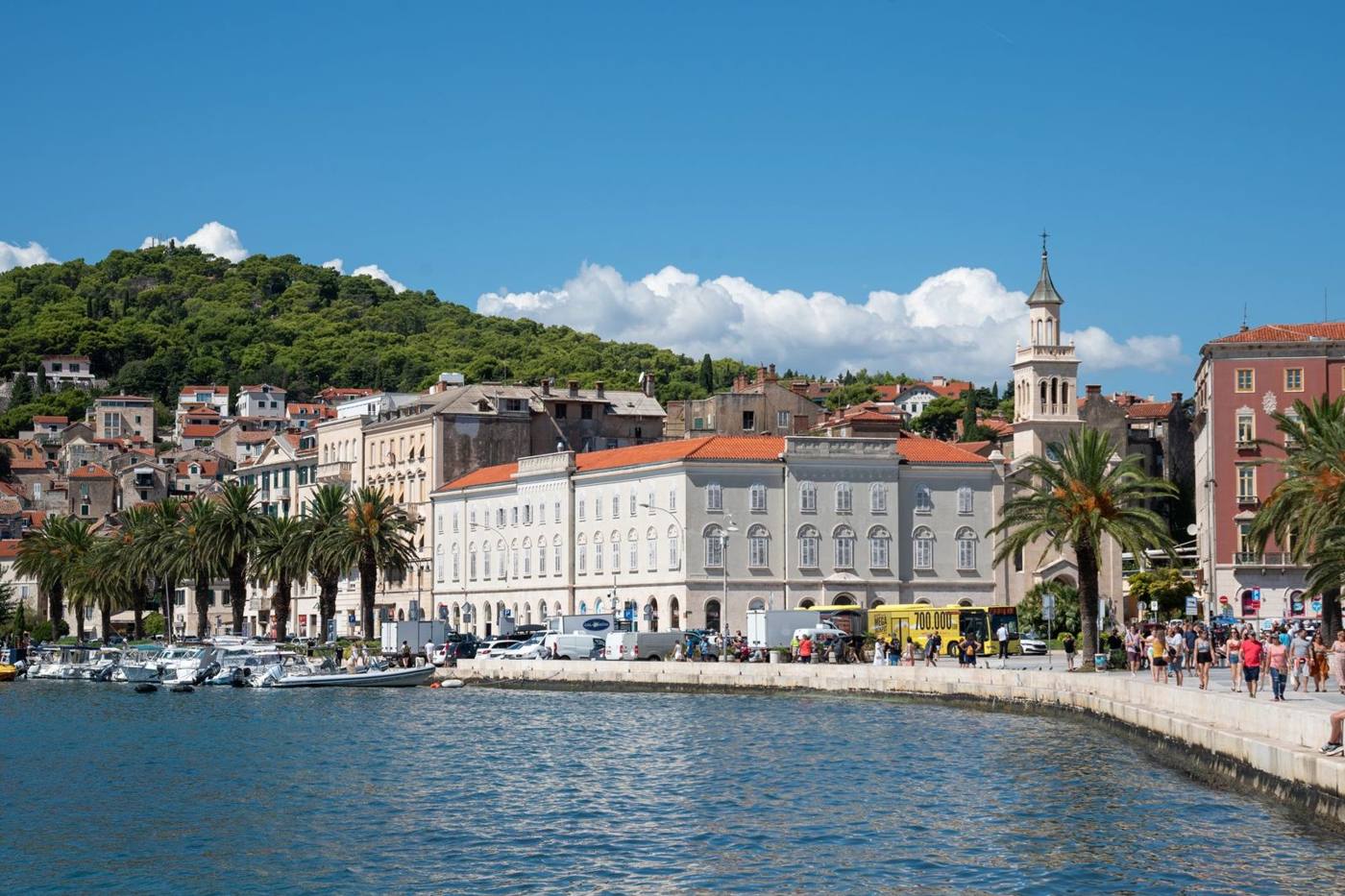
Split is Croatia's second city. Its historic centre is the palace the Roman emperor Diocletian had built for his old age, around 300 AD. When the empire fell, the inhabitants took refuge inside the walls and built their houses between the columns and walls of the palace. Today it is a UNESCO World Heritage site and a living city, with houses, shops, bars and churches inside the ancient walls.
In the morning enter by the bronze gate on the sea and walk through the palace's underground halls. Then climb to the peristyle, the colonnaded square where the emperor showed himself to the people. Next to it is the cathedral of St Domnius, built in Diocletian's mausoleum. Climb the bell tower to see the city and the harbour. Check tickets.
In the afternoon walk along the Riva, the palm lined seafront, and then climb Marjan hill, a pine park above the city, with paths and small beaches.
In the evening dine in the palace alleys.
Sleep in Split.
Practical tip: return the car in Split. You do not need it on the islands and in Dubrovnik, and parking is expensive.
- Day 10
By ferry to Hvar
Today you leave the mainland and go to the island of Hvar.
From Split harbour fast catamarans leave for Hvar town and car ferries for Stari Grad, on the same island. The catamaran takes about an hour. Check the times, which change between summer and winter, and buy tickets in advance in high season.
Hvar is one of the sunniest islands in the Adriatic, famous for lavender, vineyards and Hvar town, elegant and lively.
In the afternoon walk around Hvar town: St Stephen's square, one of the largest in Dalmatia, the cathedral, the Venetian arsenal with one of the oldest public theatres in Europe, founded in the early seventeenth century.
Climb to the Spanish fortress above the town, on foot among pines and agaves, in about twenty minutes. From the top you see the town, the harbour full of boats and the Pakleni islands off the coast.
In the evening, Hvar has a lot of nightlife in summer. If you want quiet, sleep in Stari Grad, the island's oldest town, founded by the Greeks.
Sleep in Hvar.
Practical tip: in summer lodging in Hvar is expensive and fills up early. Book months in advance. In spring and autumn it costs much less.
- Day 11
Hvar: the Pakleni islands and the Stari Grad plain
Today you spend a full day on Hvar, between the sea and the interior.
In the morning take a taxi boat from Hvar harbour to the Pakleni islands, a group of small pine covered islands just off the town. There are bays with clear water, small pebble beaches and rocks. Boats leave every morning and return in the afternoon: check prices and times.
In the afternoon, if you prefer the interior, rent a scooter or car and cross the island. The Stari Grad plain is an agricultural landscape cultivated by the Greeks in the fourth century BC, with fields still divided by dry stone walls as they were then. It is a UNESCO World Heritage site.
In the centre of the island are old stone villages, some almost abandoned, such as Velo Grablje and Malo Grablje, where lavender was once grown. In late June and July the lavender fields bloom purple.
Along the south coast there are wineries where you taste plavac mali, the red wine of Dalmatia.
In the evening a last dinner in Hvar.
Sleep in Hvar.
Practical tip: on Hvar's inland roads drive carefully. They are narrow, with blind bends and no barriers. Sound your horn before tight bends.
- Day 12
Korčula, the town of Marco Polo
Today you go to the island of Korčula, further south.
Catamarans leave Hvar for Korčula: the trip takes about an hour and a half. Check the times: there are not many sailings.
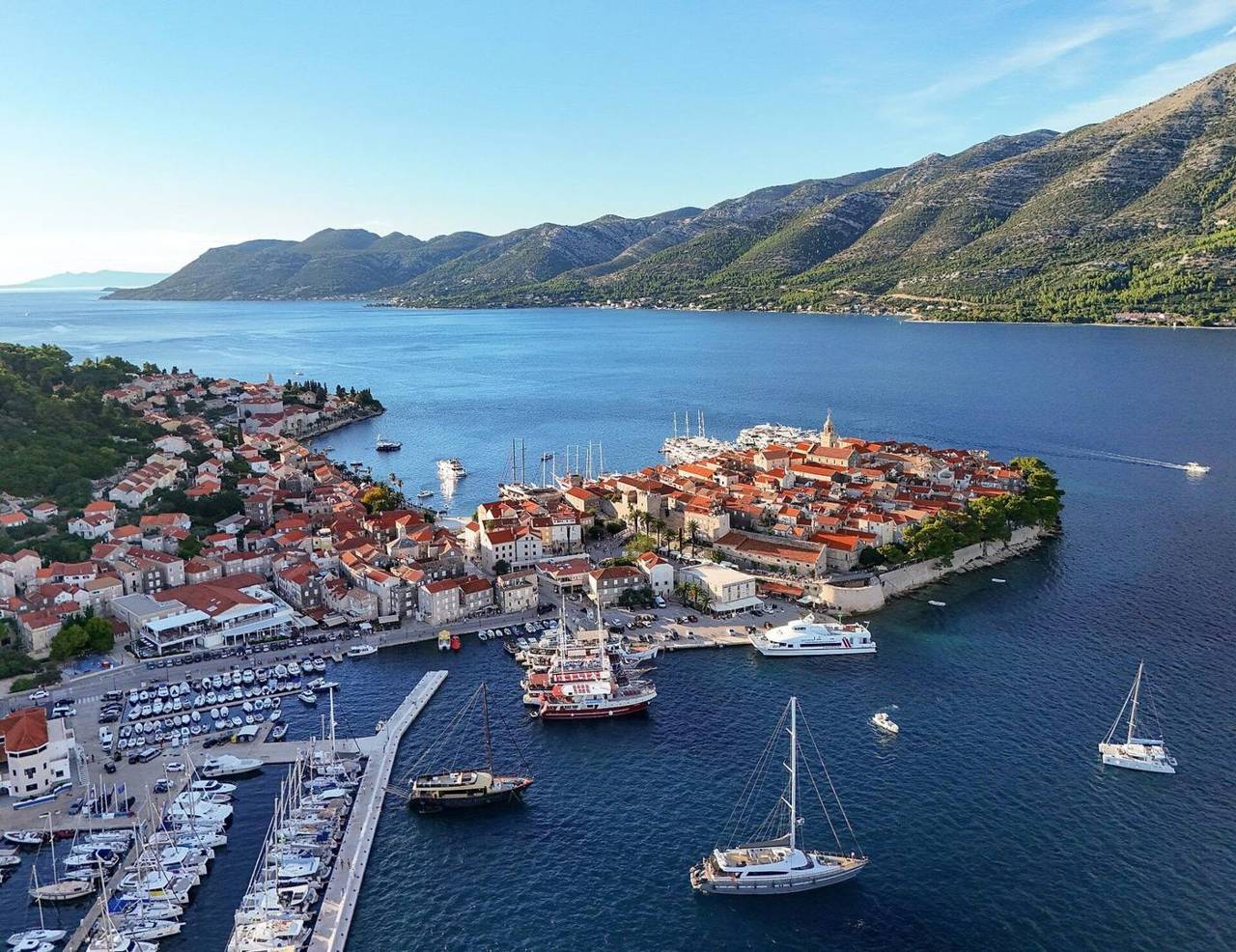
Korčula, Curzola in Italian, is a green island of pines and vineyards. Korčula town is built on a small peninsula, enclosed by walls and towers. The streets are laid out like a fishbone: those to the west are straight to let in the cool summer wind, those to the east are curved to protect from the cold winter wind.
In the afternoon walk through the old town. Visit St Mark's cathedral, with its carved portal and works of art, and the house where according to tradition Marco Polo was born. It is not certain he was born here, but the town remembers him proudly.
At sunset climb one of the towers or sit on the walls on the west side, with views over the channel and the Pelješac peninsula.
In summer, on some evenings, there is the moreška, a traditional sword dance telling of a battle between two kings for a princess. Check the dates.
In the evening try grk, a white wine made only in Lumbarda, on the island.
Sleep in Korčula.
Practical tip: in Korčula rent a bicycle to reach the sandy beaches of Lumbarda, rare in Dalmatia.
- Day 13
To Dubrovnik and the walls
Today you reach Dubrovnik, the pearl of the Adriatic.
From Korčula to Dubrovnik there are catamarans, about two hours, or ferries with a bus across the Pelješac peninsula. Along the Pelješac road you pass Ston, with its medieval walls over five kilometres long, among the longest in Europe, and salt pans still in use. Ston is famous for its oysters and mussels.
Dubrovnik is a fortified city on the sea, a UNESCO World Heritage site, enclosed by high and intact walls. For centuries it was the Republic of Ragusa, an independent state of merchants and sailors, a rival of Venice.
In the afternoon walk the walls, the full circuit around the city, about two kilometres, with views over the red roofs, the churches and the sea. The walls ticket costs 40 euros and is the same as the one day Dubrovnik Pass, which also includes some museums. Walk in the late afternoon, when the sun is lower and there are fewer people.
In the city a tourist tax per night is also paid: 2.65 euros from April to September and 1.86 euros the rest of the year, with children under 12 exempt.
Sleep in Dubrovnik.
Practical tip: early in the morning, before the cruise ships arrive, the old town is almost empty. It is the best time for photos.
- Day 14
Dubrovnik and departure
The last day is in Dubrovnik, before the flight.
Early in the morning walk along the Stradun, the main street paved with polished stone, between Onofrio's fountain and the clock tower. Visit the Rector's Palace, seat of the republic's government, and the Franciscan monastery, with one of the oldest pharmacies in Europe still in operation.
If you have time, take the cable car up Mount Srđ, above the city, to see Dubrovnik and the islands from above. On the mountain there is a museum about the war of the 1990s, when the city was shelled. Check times and prices.
Alternatively, take the boat to the island of Lokrum, opposite the city, with a botanical garden, peacocks and rocks for swimming. Check the times.
Dubrovnik airport is about half an hour south of the city. Leave a margin for summer traffic.
What to take home: Dalmatian olive oil, plavac mali and Istrian malvazija wine, truffles or truffle sauces from Istria, Hvar lavender, Zadar maraschino, Pag lace and a necktie, which was born in Croatia.
This trip shows the whole of Croatia: the Austro-Hungarian capital, Venetian Istria, the lakes and waterfalls, the Roman and medieval cities of Dalmatia, the islands and Dubrovnik.
Practical tip: July and August are the most expensive and crowded months. May, June and September are the best months for this trip.
The full tour for those who want to see the whole country in one trip. You need a car as far as Split, then ferries are better: dropping the car in another city carries a fee, so ask beforehand. In 14 days the pace is fast and the beach takes second place; with three weeks you can breathe.
Before you go
- Documents and visa
- EU citizens need a valid identity card or passport: Croatia has been in the Schengen area since 2023. Other nationalities should check the Schengen rules.
- Health and vaccines
- No vaccines required. EU citizens should bring their EHIC. Emergencies: 112.
- Money and payments
- Euro since 2023. Cards are accepted almost everywhere, but carry some cash on small islands. Every accommodation charges a tourist tax per person per night.
- Power sockets
- Types C and F, 230 volts.
- Time zone
- Central European Time (UTC+1, summer UTC+2).
- Safety
- A very safe country. In remote inland areas some minefields from the 1990s war remain, marked with signs: stay on the paths. Official advice: GOV.UK.
Information checked in November 2026 for Italian and EU citizens. Rules change: always check before you travel.
Variations
In 8 days: Zagreb, Plitvice, Split and Dubrovnik, without Istria and without the islands.
In 18 days: add the Kvarner islands after Istria, or Mljet and the Bay of Kotor in Montenegro after Dubrovnik.
Frequently asked questions
What document do I need?
Croatia is part of the European Union and the Schengen area and uses the euro. Italian citizens need a valid electronic identity card for travel abroad or a passport. Other nationalities should check their own rules.
How much do Plitvice and the Dubrovnik walls cost?
At Plitvice in 2026 the ticket was 23 euros in April, May and October and 40 euros from June to September, less in the late afternoon; it is personal. The Dubrovnik walls cost 40 euros, the same as the one day Dubrovnik Pass.
Can you swim at Plitvice and Krka?
No. Swimming is forbidden at Plitvice and has been forbidden at Krka since 2021. You swim in the sea and on the islands.
Indicative itinerary written by World Atlas. Before booking, check timetables, seasonal openings, documents and safety.
 7 daysEasy
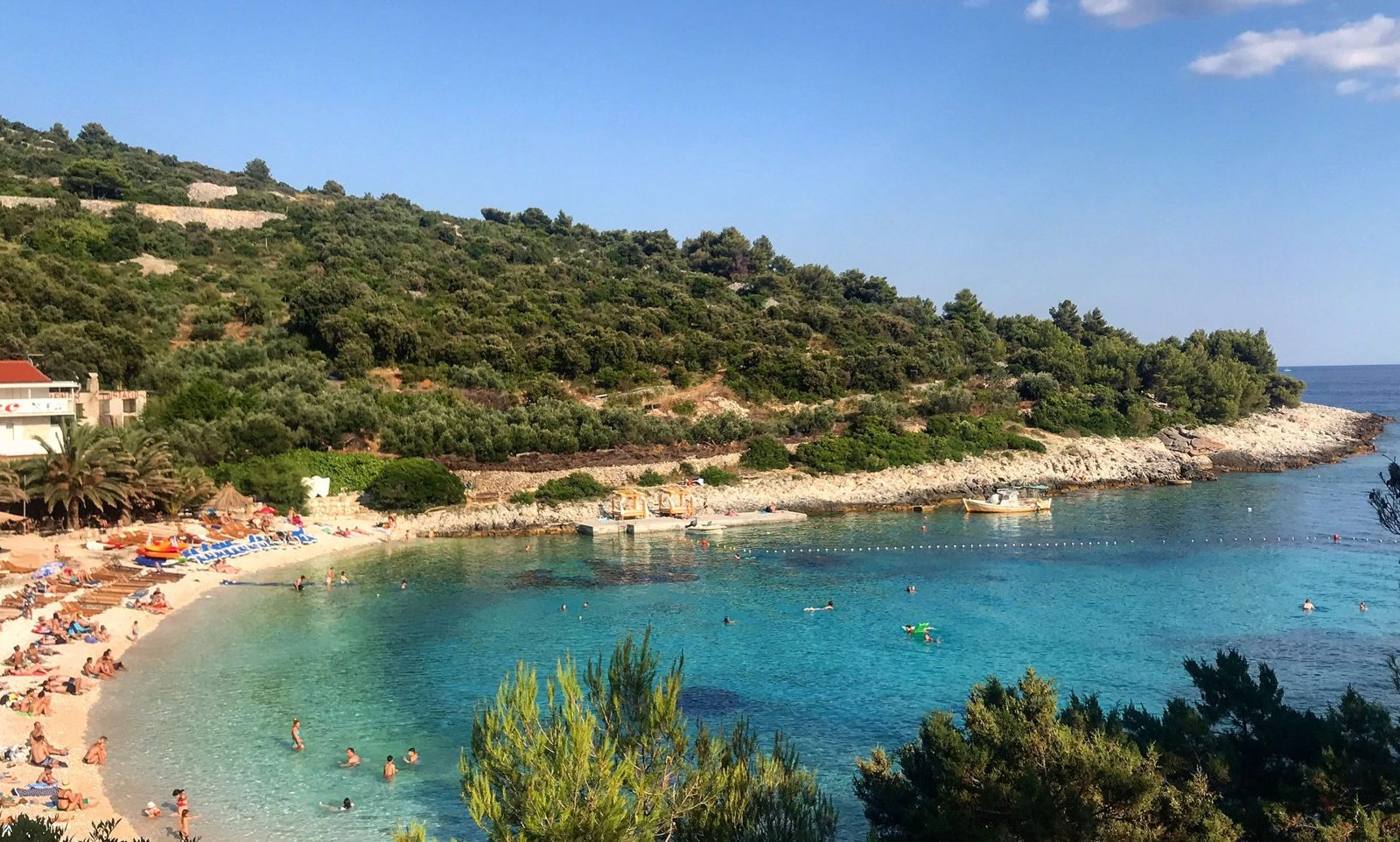
The far islands: Vis and Lastovo
Dalmatia's most remote islands, closed to foreigners until 1989: the Blue Cave of Biševo, Stiniva cove and the dark skies of Lastovo.
 5 daysEasy
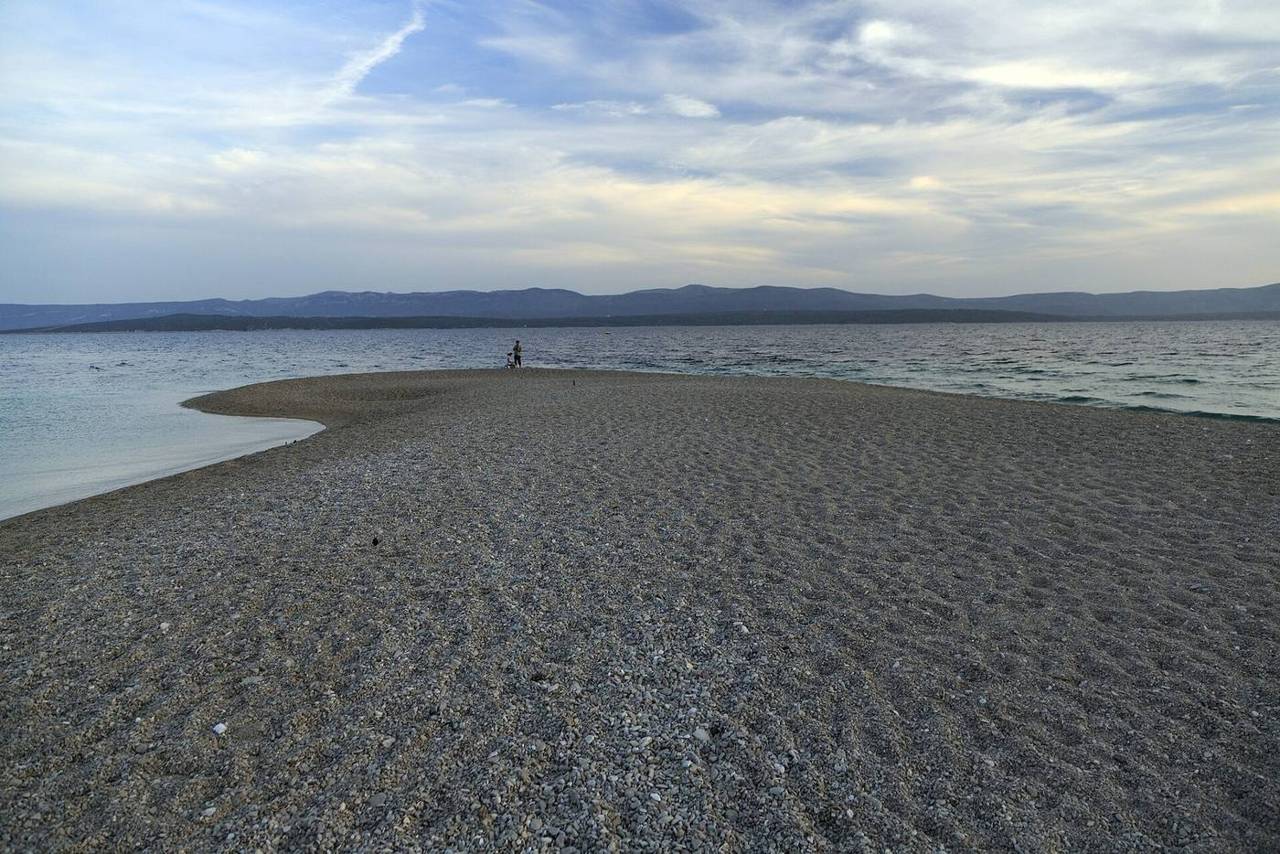
Hvar and Brač
The islands off Split: Zlatni Rat beach at Bol, Blaca hermitage and the stone quarries of Pučišća on Brač, then Hvar with the fortress above the harbour, lavender fields, the Stari Grad Plain (UNESCO) and the Pakleni islands by boat.
 5 daysEasy
Korčula and Mljet National Park
Two islands in southern Dalmatia: Korčula, a fishbone-plan walled town on the sea, with its pošip wineries and sword dance, and Mljet, a national park with two saltwater lakes in the pine forest and the Benedictine monastery on St Mary's islet.