Guilin, Yangshuo and the Longji rice terraces
Karst peaks along the Li River by boat, Yangshuo by bike along the Yulong River and the rice terraces of the Zhuang and Yao villages.
- Guilin
- Li River
- Yangshuo
- Xingping
- Longji
- Guilin
Day by day
- Day 1
Arrival in Guilin and Elephant Trunk Hill
Guilin, in southern China in the Guangxi autonomous region, has been famous for centuries for its karst landscape: hundreds of sugarloaf limestone hills rising from rice paddies and rivers, painted for centuries by Chinese artists. Until 31 December 2026 Italian and many other European citizens can enter China without a visa for stays of up to 30 days; check whether the scheme has been extended and covers your nationality. Before leaving install Alipay and WeChat for QR code payments.
You reach Guilin by plane from the big cities or by high-speed train, for example from Guangzhou or Shanghai. The airport is about forty minutes from the centre. To stay, choose the centre, near the Li River and the lakes.
In the afternoon walk along the river to Elephant Trunk Hill, the city's symbol: a rock hill bending down to the water, forming an arch like an elephant drinking. You can see it well from the opposite bank without entering the park.
At sunset stroll around the lakes in the centre, Sun Lake and Moon Lake, with their two illuminated pagodas, one golden and one silver, reflected in the water. In the evening try Guilin rice noodles, the local speciality, served with meat, peanuts and pickled vegetables. Practical tip: the climate is humid and hot in summer; from April to September it rains often, so bring a light umbrella.
- Day 2
By boat on the Li River to Yangshuo
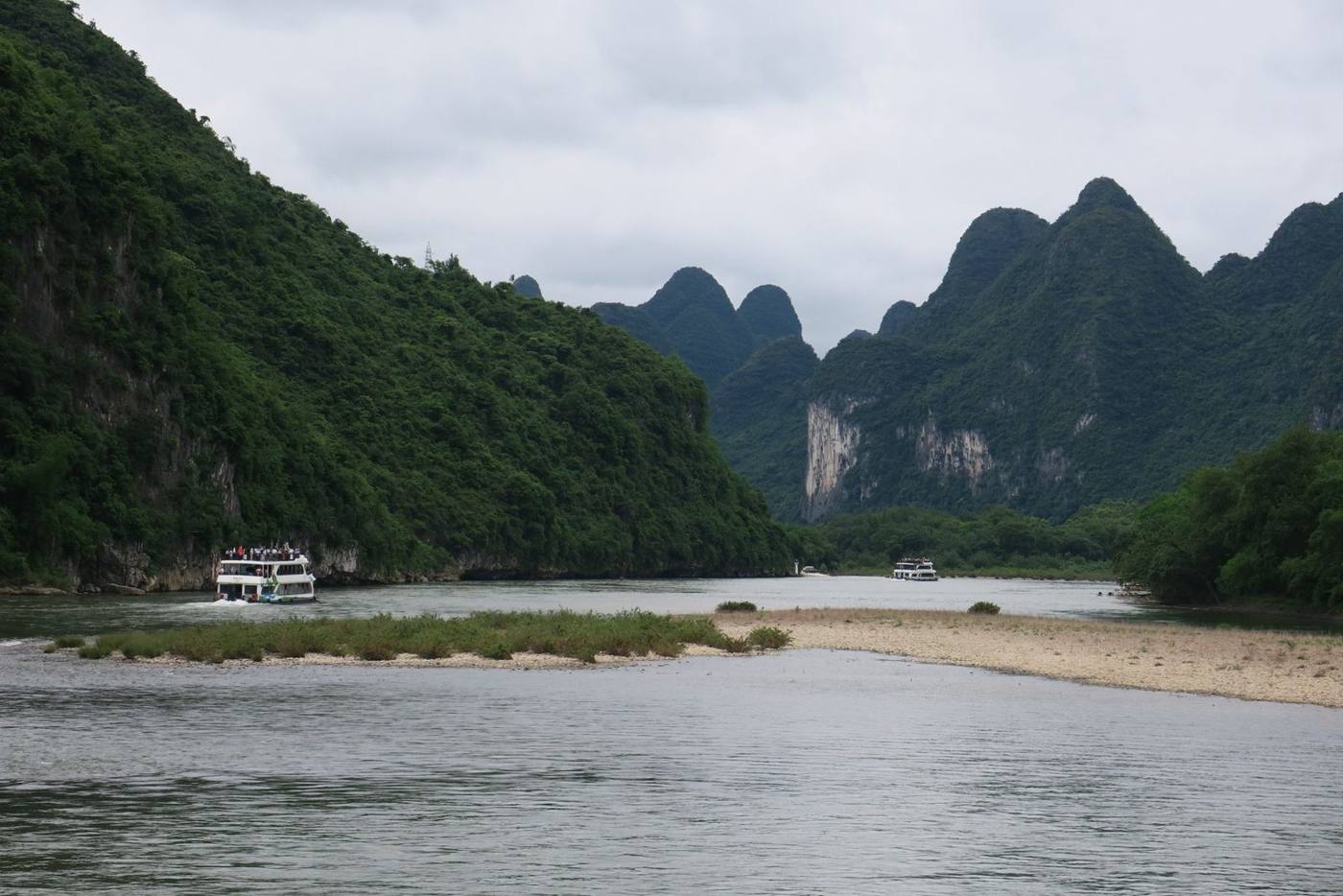
Today is China's most famous cruise: the Li River between Guilin and Yangshuo, about eighty kilometres between limestone hills, bamboo on the banks, buffalo in the water, villages and fishermen. Boats leave in the morning from piers south of Guilin and take about four or five hours, depending on the water level. Tickets are bought with your passport through agencies or travel apps and usually include the transfer to the pier.
For a quieter experience you can do only the finest stretch, between Yangdi and Xingping, on a motorised bamboo raft: this is the landscape shown on the back of the twenty-yuan note, with the mountain that looks like a painting. Hold a note in your hand and compare it with the view.
Along the river you pass hills with poetic names, such as Nine Horses Fresco Hill, where according to tradition whoever sees all nine horses on the rock face will have great luck.
In the afternoon you reach Yangshuo, a town surrounded by hills, very touristy in the centre but with beautiful countryside. To stay, choose one of the guesthouses in the countryside along the Yulong River, quieter, or the centre, convenient in the evening. Practical tip: when the water is low, in winter, some boats do not reach Yangshuo and the route changes; ask before buying.
- Day 3
Yangshuo by bicycle and the Yulong River
Today is the finest day of the trip. The countryside around Yangshuo is discovered by bicycle, rented in town or at your guesthouse, on flat roads and paths among rice paddies, villages and hills. E-bikes are handy for longer routes.
Follow the Yulong River, a tributary of the Li, smaller and calmer, with green, clear water. Along the river you take a ride on bamboo rafts poled by a boatman in silence, hopping over small weirs. It is one of the most relaxing moments of the trip. Dragon Bridge, a Ming dynasty arched stone bridge, is one of the most photographed spots.
Along the way you meet villages with grey brick houses and small temples, fields of rice, mandarins and pomelo, and Moon Hill, with a great natural arch that looks like a moon in the sky: you climb a steep staircase for about twenty minutes to see the countryside from above.
In the evening in Yangshuo you can watch the Impression Liu Sanjie show on the river, created by director Zhang Yimou, with hundreds of performers on boats and illuminated hills in the background. Practical tip: bring sunscreen and water; on a bicycle the sun is strong and the kilometres add up without your noticing.
- Day 4
Sunset from Xianggong and the village of Xingping
In the morning go to Xingping, about an hour from Yangshuo, one of the oldest villages in the area, on the Li River, with wooden houses and narrow stone streets. From here a riverside trail, one of the most beautiful in the region, leads among hills and bends to the twenty-yuan note view. You can walk part of it and return by raft.
Xingping's fishermen are famous for cormorant fishing: an ancient technique in which birds fish for the fisherman, with a ring round their necks that stops them swallowing large fish. Today it is mainly a tradition shown to visitors; many photographers pay to portray the old fishermen with lanterns and cormorants.
In the afternoon climb Laozhai Hill above Xingping, by a steep staircase of about half an hour, for one of the most spectacular views over the Li River and the hills.
At sunset go to Xianggong Hill, about half an hour from Xingping, the most famous viewpoint in the area: from the top you see the Li River curving between dozens of limestone hills, with mist and golden light. At dawn the view is even more beautiful, with morning mists. Practical tip: the viewpoints are crowded with photographers at dawn and sunset; arrive early to get a good spot.
- Day 5
To the Longji rice terraces
Today you leave Yangshuo and head north to the Longji rice terraces, the Dragon's Backbone, about three hours away. You pass through Guilin and then climb into the mountains. The last stretch to the villages of Ping'an and Dazhai is on foot, because cars stop below; porters carry luggage for a fee, but it is better to leave your large bag in Guilin and bring only a backpack.
The Longji terraces have been carved into the mountainsides for over seven hundred years by the Zhuang and Yao communities, covering whole mountains from the valley floor to over a thousand metres. The landscape changes with the seasons: in spring, when flooded, the terraces become mirrors of water; in summer they are green; in September and October they turn gold for the harvest; in winter they are sometimes covered in frost.
Ping'an is the most convenient village, with wooden houses on the terraces and two viewpoints called Seven Stars with the Moon and Nine Dragons and Five Tigers. Dazhai, larger and higher, has even more spectacular terraces, with a cable car up to the viewpoints.
Sleep in a wooden house on the terraces. Practical tip: the Yao women of Huangluo village are famous for their very long hair, which they cut only once in their lives; the shows for tourists are paid.
- Day 6
A walk through the terraces
Today is a whole day on foot among the paddies. The trail between Ping'an and Dazhai, about three or four hours, is one of the most beautiful in China: it crosses Zhuang and Yao villages, runs along ridges between the terraces and climbs up and down stone stairways and earth paths. The route is simply marked; you can do it alone or with a local guide, useful for learning about village life.
Along the way you see traditional three-storey wooden houses, with the ground floor for animals, the middle floor for the family and the attic for storing rice and maize. In the villages Yao women wear traditional dress and work in the fields with baskets on their backs.
In Dazhai climb to the highest viewpoints, such as Sea of Clouds or Music from Paradise, with views over entire terraced mountains. If you do not want to walk uphill, take the cable car.
In the evening, in the villages, try rice cooked in bamboo tubes over the fire, a local speciality, and oil tea, a Yao drink made with fried tea leaves, ginger and puffed rice. Sleep in Dazhai or Ping'an. Practical tip: the paths are slippery when it rains; you need hiking shoes. In the wettest months, May to August, check the forecast before setting out.
- Day 7
Back to Guilin and departure
Early in the morning enjoy the terraces at dawn, when mist rises from the valleys and the first rays light up the villages: one of the finest moments of the trip. Then walk down to the car park and take the transfer to Guilin, about two hours.
If your flight or train leaves in the afternoon, in Guilin you can visit Reed Flute Cave north-west of the city, a karst cave with stalactites and stalagmites lit in coloured lights, and ancient inscriptions on the walls left by visitors more than a thousand years ago. Alternatively climb Fubo Hill or Folded Brocade Hill in the centre for a view over the city, the river and the surrounding hills.
Another option is Seven Star Park, with hills arranged like the Big Dipper, caves, ancient trees and stone inscriptions.
Things to take home: local tea, Guilin chilli sauce, bamboo objects, osmanthus wine and osmanthus sweets, from the flower that is the symbol of Guilin, whose name means osmanthus forest.
Practical tip: Guilin airport has direct flights to the big Chinese cities and some Asian cities; international flights home usually need a connection. For high-speed trains the stations are Guilin North and Guilin; check carefully which one is on your ticket.
The Chinese landscape of classical paintings, relaxing and easy. Yangshuo's centre is very touristy, but a bike ride takes you straight into the countryside. From April to June it rains often and haze is common. The terraces are green in summer, golden in late September, less attractive in winter.
Before you go
- Documents and visa
- Passport with at least six months' validity. Until 31 December 2026 Italian and many other European citizens need no visa for tourism up to 30 days; check whether the scheme has been extended and covers you.
- Health and vaccines
- No compulsory vaccines arriving from Europe. In big cities check air quality. Emergencies: 110 police, 120 ambulance, 119 fire.
- Money and payments
- Renminbi yuan. Almost everything is paid with Alipay and WeChat QR codes, which can be linked to foreign cards; carry some cash.
- Power sockets
- Types A, C and I, 220 volts: a universal adapter is useful.
- Time zone
- UTC+8 all year: all of China uses Beijing time.
- Safety
- The United States rates China level 2 because of arbitrary enforcement of local laws. Always carry your passport. Many Western websites and apps are blocked. Official advice: GOV.UK.
Information checked in November 2026 for Italian and EU citizens. Rules change: always check before you travel.
Variations
In 5 days: Guilin, the Li River and two days in Yangshuo with cycling and the Yulong River, skipping Longji.
In 10 days: add Zhangjiajie, the sandstone mountains that inspired the film Avatar, or the Dong villages of Chengyang and Zhaoxing.
Frequently asked questions
Do I need a visa for China?
Until 31 December 2026 Italian and many other European citizens can enter without a visa for stays of up to 30 days for tourism. Check before you go whether the scheme has been extended and covers your nationality.
Is the full Li River cruise worth it?
The full cruise from Guilin to Yangshuo takes four or five hours. To avoid the crowds you can do only the finest stretch between Yangdi and Xingping, by bamboo raft.
When is the best time for Longji?
May to June for flooded, green terraces, September and October for golden rice. Summer is hot and rainy; winter cool and misty.
Indicative itinerary written by World Atlas. Before booking, check timetables, seasonal openings, documents and safety.
 12 daysModerate
Yunnan from Dali to Shangri-La
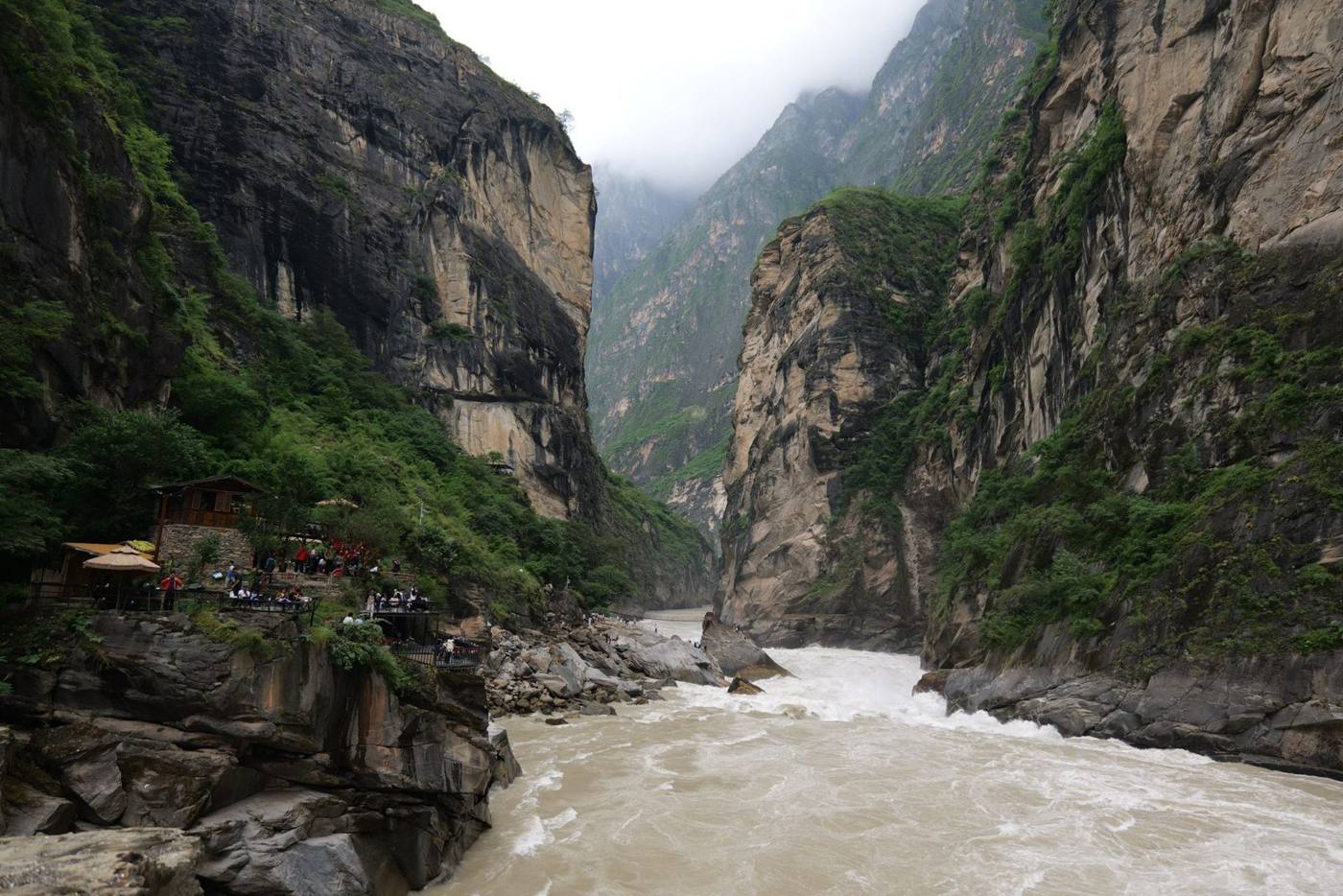
Yunnan's minorities, Lake Erhai at Dali, the old town of Lijiang, the Tiger Leaping Gorge trek and the Tibetan monastery of Shangri-La.
 6 daysEasy
Zhangjiajie and Fenghuang
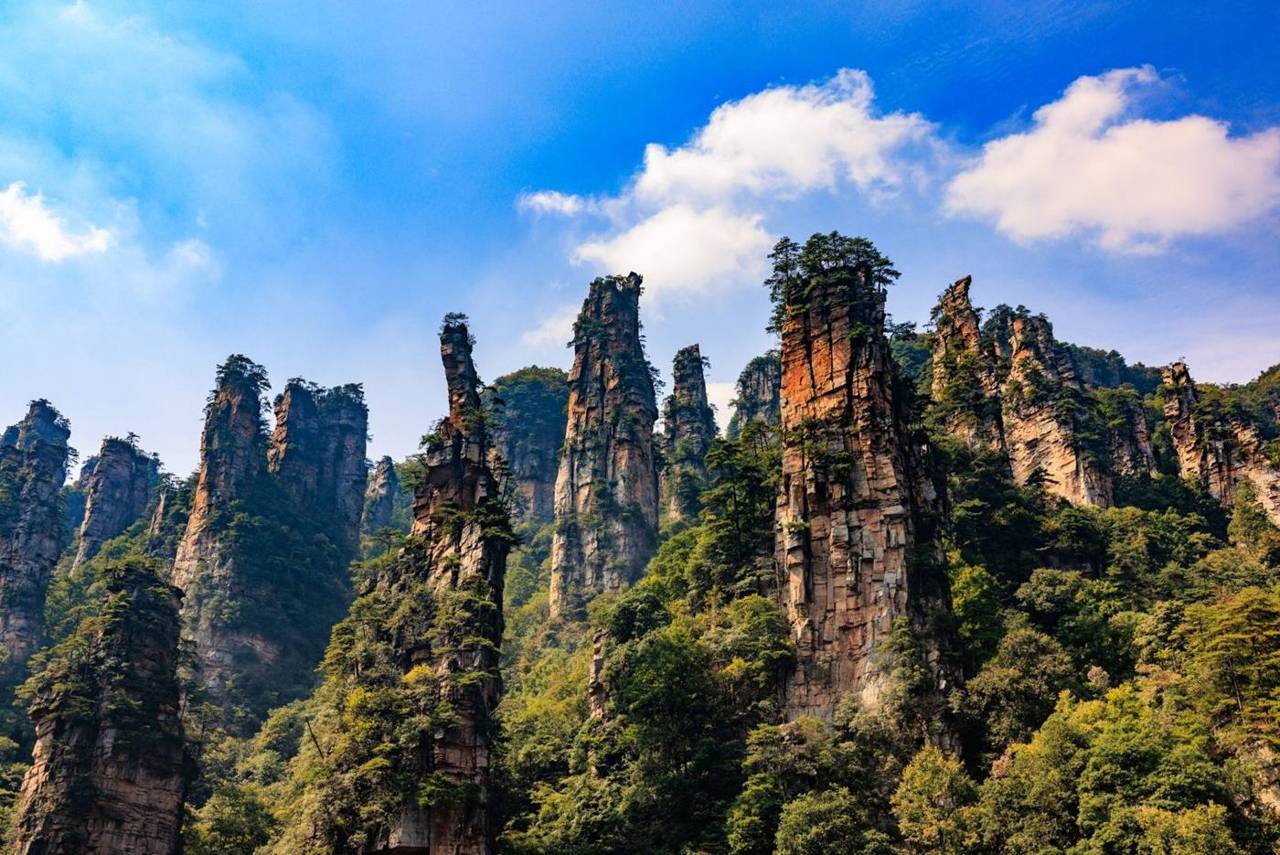
The sandstone pillars that inspired Avatar, Heaven's Gate on Tianmen Mountain and the ancient stilt town of Fenghuang.
 9 daysEasy
Sichuan: pandas and Jiuzhaigou
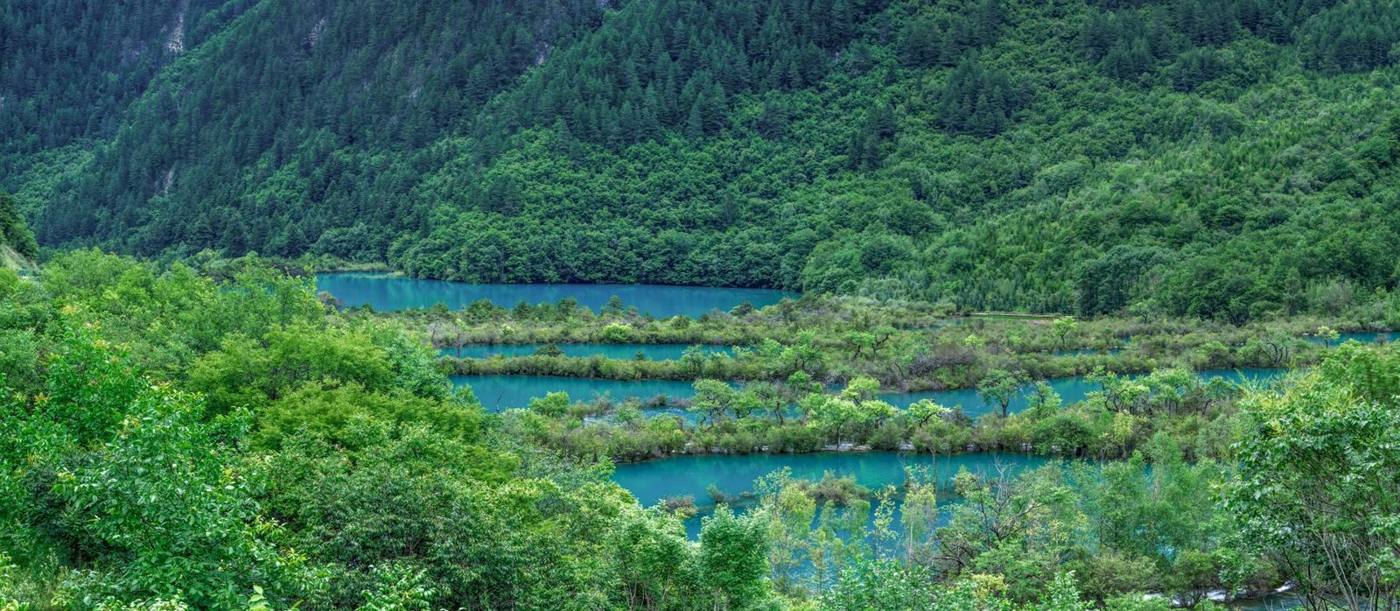
The giant pandas of Chengdu, the Leshan Giant Buddha, sacred Mount Emei and the turquoise lakes of the Jiuzhaigou valley.