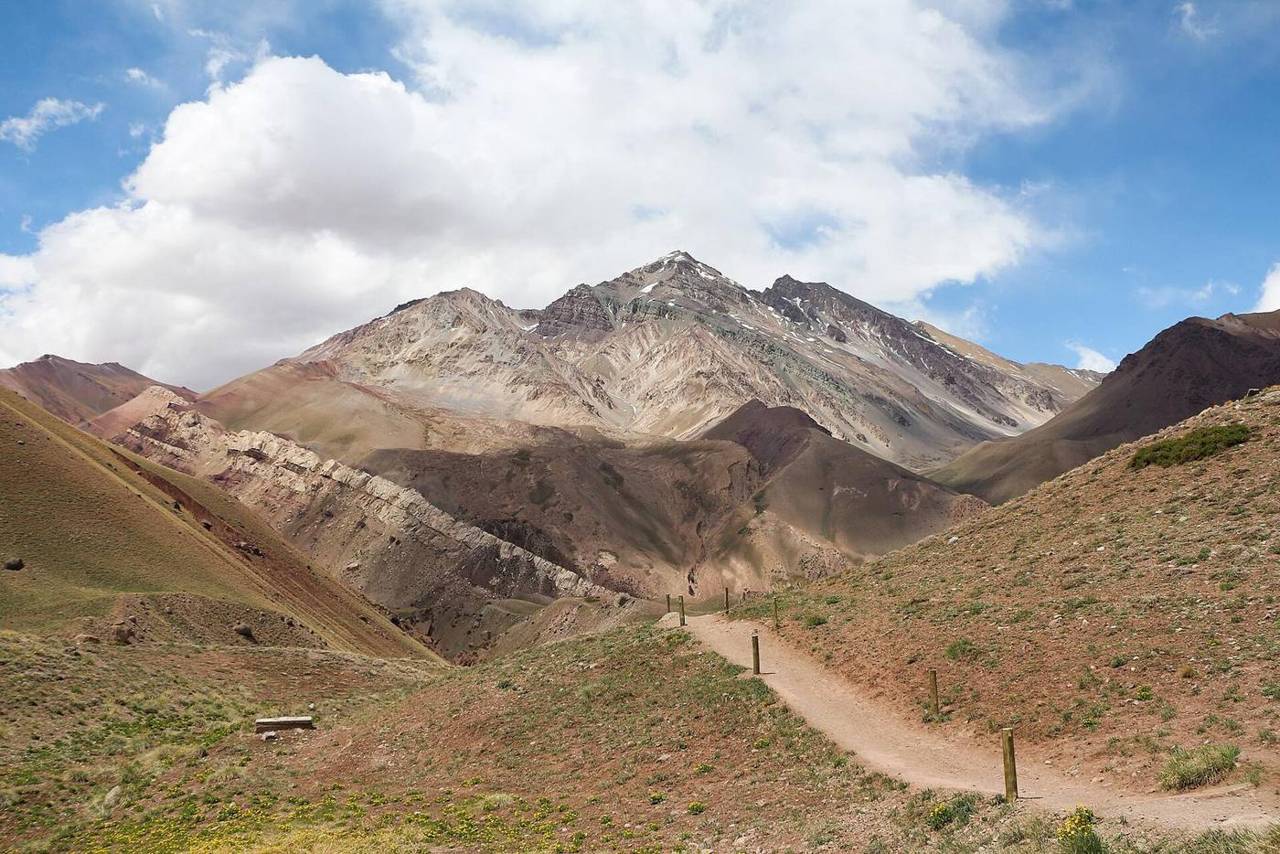
Aconcagua: the highest summit in the Americas
The expedition to Aconcagua's 6,962 metres by the normal route, with three weeks to acclimatise and climb safely.
- Mendoza
- Penitentes
- Confluencia
- Plaza de Mulas
- Nido de Cóndores
- Aconcagua
Day by day
- Day 1
Arrival in Mendoza
This trip is a high-altitude expedition on Aconcagua, in Argentina, the highest mountain in the Americas and in the world outside Asia, almost seven thousand metres high. You climb by the normal route, from the Horcones valley, with three weeks to acclimatise, base camps and high camps, and reserve days for the weather. It is not a trek: you need experience above five thousand metres, excellent physical fitness and a medical check before you leave.
Before you go: to enter Argentina, Italian citizens need a valid passport; no visa is needed for up to 90 days and health insurance valid for the whole stay is required. Other nationalities should check their own rules. The United States government rates Argentina at level 1. To climb Aconcagua you also need evacuation and medical assistance insurance, which is compulsory for the permit.
You land at Mendoza airport on a domestic flight from Buenos Aires, in about two hours, or from Santiago de Chile.
Mendoza is a green, orderly city at the foot of the Andes, with tree-lined avenues and small irrigation channels along the streets. Today, rest after the journey: the time difference and the long flight take their toll, and in the coming days your body will need all its energy.
In the afternoon, walk slowly around Plaza Independencia and General San Martín Park. Drink plenty of water: the air in Mendoza is dry.
In the evening, have an asado, the Argentine barbecue, but go easy on the wine.
Overnight in Mendoza, for two nights.
Practical tip: inflation in Argentina is high and prices change often. Ask your accommodation whether it is better to pay by card or in cash, because the exchange rate can be very different.
- Day 2
Mendoza: permits and equipment
Today is the day for organisation, one of the most important of the expedition.
The climbing permit for Aconcagua is bought through the service companies registered with the park, which use the official system of the provincial park. The permit is personal, cannot be transferred to anyone else and is not refunded. Fees for foreigners are set in dollars and paid in pesos: check prices on the official site of Aconcagua Provincial Park, because they change every season. Together with the permit you must show the evacuation and medical assistance insurance, compulsory for climbers.
With your guide or agency, check all your equipment: double high-altitude boots, crampons, ice axe, heavy down jacket, gloves and mittens, a sleeping bag for temperatures well below freezing, glacier glasses, sun cream and an insulated bottle. In Mendoza you can hire or buy whatever is missing.
Split your luggage in two: the part the mules will carry to base camp, in strong bags with a set maximum weight, and the backpack you will carry yourself every day.
In the afternoon, rest and take a last walk around the city. If you can, call home: in the mountains phone coverage is poor.
In the evening, have a light dinner and go to bed early.
Overnight in Mendoza.
Practical tip: take medicines for altitude only after discussing them with your doctor before you leave, and keep your documents, permit and insurance policy with you: the park rangers check them at the entrance and in the camps.
- Day 3
To Penitentes
Today you leave Mendoza and climb towards the Andes on National Route 7, the road to Chile. The journey takes about three hours.
The road follows the Mendoza River, passes the turquoise lake of Potrerillos and the village of Uspallata, in a wide valley with mountains of many colours, red, ochre, grey and green. Then it climbs through ever narrower gorges, with snowy peaks ahead.
You reach Penitentes, a small ski resort at more than 2,500 metres, closed in summer, which expeditions use as a base before entering the park. The name comes from the rocks on the mountain opposite, which look like monks in a line, the penitents.
Here you hand over your base camp bags to the muleteers: the mules will carry them up to Plaza de Mulas, while you walk up with a light backpack.
In the afternoon, take a short walk to Puente del Inca, a few kilometres away, a natural rock bridge over the river, coloured yellow and orange by the minerals of the hot springs. Walk slowly: at this altitude your body begins to adapt, and the first rule is not to hurry.
In the evening, if the sky is clear, look at the stars: far from the cities, the Andean sky is pitch black.
Overnight in Penitentes.
Practical tip: from today drink four to five litres of water a day and eat even if you are not hungry. A slight headache is normal, but if it gets worse tell your guide at once.
- Day 4
Horcones and Confluencia
Today you enter Aconcagua Provincial Park. A few minutes' drive brings you to the Horcones valley, at almost 3,000 metres, where the park rangers' centre is. Here you show your permit, register and receive a numbered rubbish bag: you must bring it back full when you leave, otherwise you will be fined. Higher up you will also receive a bag for human waste in the high camps. The park is very strict about this: the mountain must stay clean.
Then you start walking. The path passes near Laguna Horcones, from where you see the great south face of Aconcagua, crosses the river on a suspension bridge and climbs the valley among rocks and low shrubs. In about three or four hours of easy walking you reach Confluencia, the first camp, at about 3,500 metres, where two valleys meet.
At Confluencia you have the first compulsory medical check: a park doctor measures your blood pressure, heart rate and blood oxygen, and asks how you feel. It is the first of several checks: they show how your body is adapting to altitude.
In the afternoon, rest in your tent, drink and eat.
Overnight in Confluencia, for two nights.
Practical tip: walk slowly enough to be able to talk without getting out of breath. At first it seems too slow, but it is the right way to climb high. Protect yourself from the sun: at this altitude it burns in a few minutes.
- Day 5
Acclimatisation at Plaza Francia
Today is the first real acclimatisation day. The rule of high altitude is simple: climb high during the day and go back down to sleep lower. This way the body gets used to the altitude without having to spend the night too high.
From Confluencia, take the path towards Plaza Francia, in the valley that leads below the south face of Aconcagua. The path climbs gently over a moraine, a great heap of stones left by the glacier, to the Plaza Francia viewpoint, at about 4,200 metres. It takes four to six hours there and back.
From here you see the south face of Aconcagua, one of the highest walls in the world, almost three thousand metres high, with hanging glaciers and avalanches that come down with a sound like thunder. It is one of the most impressive mountain views in the Andes.
Do not push on to the end at all costs: if you feel tired or have a headache, stop earlier and turn back. Today's aim is not to go far, but to help your body adapt.
In the afternoon, return to Confluencia and rest. Eat well, drink a lot and check the colour of your urine: it should be pale.
Overnight in Confluencia.
Practical tip: the symptoms of altitude sickness are headache, nausea, severe tiredness, loss of appetite and disturbed sleep. Do not hide them from your guide or the doctor: if they get worse, the only real cure is to go down.
- Day 6
The long march to Plaza de Mulas
Today is one of the longest walking days of the whole expedition: from Confluencia to Plaza de Mulas, the base camp, at about 4,300 metres. It usually takes seven to nine hours of walking.
The path enters Playa Ancha, a very wide, flat valley of stones and sand, where you walk for hours with the river beside you and high mountains on both sides. The wind here is often strong and carries dust: keep a scarf or neck gaiter over your face.
Towards the end of the valley you pass Piedra Ibáñez, a resting point, and then the Cuesta Brava begins, the hardest climb of the day, on a path of stones and gravel that climbs steeply as the effort of altitude makes itself felt.
At the top of the climb you reach Plaza de Mulas, the large base camp of the normal route, on a stony plain below the glaciers of Aconcagua and Cerro Cuerno. There are expedition tents, dining tents and the post of the park rangers and doctors.
Here you find the bags carried by the mules. Set up your tent and rest: tonight you will probably have little appetite, but eat anyway.
Overnight in Plaza de Mulas.
Practical tip: today carry plenty of water, at least three litres, and snacks that are easy to eat. Start early, to avoid the strong afternoon wind in Playa Ancha, and do not rush on the Cuesta Brava.
- Day 7
Rest at base camp
Today is a rest day at Plaza de Mulas. After yesterday's long march your body needs time to adapt to this altitude, higher than almost all the summits of the Alps.
At base camp you have the second medical check: the doctor measures your blood oxygen and blood pressure again, listens to your lungs and decides whether you can continue. If the readings are not good, you may be asked to wait one or two days or to go down. It is a decision for your safety: accept it.
Spend the morning calmly. Wash your clothes if it is sunny, dry your sleeping bag, sort out your equipment. Eat little and often, drink tea, soup and water.
In the afternoon, take a short walk around the camp, climbing about a hundred metres and coming back down, just to move your legs. Near the camp is the Horcones glacier, with ice penitents, spikes and blades of ice as tall as a person, carved by the sun and wind.
At sunset, watch the red light on the surrounding walls: sunsets at Plaza de Mulas are spectacular, but as soon as the sun disappears the temperature plunges.
Overnight in Plaza de Mulas, for two more nights.
Practical tip: at night the temperature often drops below freezing even at base camp. Sleep with your hat on, put your water bottle, batteries and contact lenses inside your sleeping bag, and keep a head torch within reach.
- Day 8
Cerro Bonete
Today you make an important acclimatisation climb: the ascent of Cerro Bonete, a mountain of about 5,000 metres opposite Aconcagua, on the other side of the valley.
Starting from Plaza de Mulas, the path crosses the valley and then climbs a long slope of scree and sand, technically easy but tiring because of the altitude. It usually takes six to eight hours there and back.
Reaching the top of Bonete is a good test: you see how your body reacts above five thousand metres, with the same rule as always, climb high and go back down to sleep lower. If you reach the top tired but without strong symptoms, it is a good sign for the following days.
From the summit the view is huge: in front of you is the whole west face of Aconcagua, with the normal route zigzagging up, and all around dozens of Andean peaks, many above five thousand metres.
Come down calmly: on the descent the scree slides and many falls happen when you are tired.
In the afternoon, return to Plaza de Mulas, eat well and rest.
Overnight in Plaza de Mulas.
Practical tip: today put into practice the technique of slow steps and deep breathing that you will use in the high camps. Use trekking poles, which help a lot going up and down, and bring gloves and a jacket even if it is warm at base camp.
- Day 9
Load carry and preparation
Today the expedition prepares for the highest part of the mountain. Many guides use this day for a load carry: you climb with part of the food and equipment to Plaza Canadá or a little higher, leave it in a cache and go back down to sleep at base camp.
The path climbs from the camp in tight zigzags on a scree slope, below the glacier. In about three or four hours you reach Plaza Canadá, at about 4,900 metres, a small camp on a rock terrace with a wide view over the Horcones valley. Leave the equipment well closed and marked with your name, permit number and date, as the park rules require, then go down.
Alternatively, if Bonete was tiring, your guide may decide on another rest day: follow their advice.
In the afternoon, pack your backpack for the high camps. Every gram counts: take only what you really need, that is warm clothes in layers, a down jacket, spare gloves, light high-energy food, a stove and gas, and a first aid kit.
In the evening, eat a large meal and go to sleep early. From tomorrow the nights will be colder and shorter.
Overnight in Plaza de Mulas.
Practical tip: in the high camps there is no running water: you melt snow on the stove, which takes a lot of time and a lot of gas. Work out your fuel carefully and always bring a little extra.
- Day 10
Plaza Canadá
Today you leave base camp and begin sleeping higher. You climb again to Plaza Canadá, at about 4,900 metres, this time to spend the night.
The path is the same as yesterday: tight zigzags on scree and rock, with base camp getting smaller and smaller below you. Walk slowly and steadily. If you left a cache yesterday, today your backpack is a little lighter.
At Plaza Canadá the camp is on small stone platforms, close to one another. Pitch your tent sheltered from the wind and secure it well with stones and ropes: here the gusts can be very violent, especially at night.
In the afternoon, rest, melt snow for water and eat something hot. From here the view over the valley and the surrounding mountains is grand, with the peaks turning pink at sunset.
The first night at almost five thousand metres is often difficult: sleep is light and your breathing may stop for a few seconds and then start again faster. It is a normal reaction to altitude, but if you wake up out of breath or with a severe headache, tell your guide at once.
Overnight in Plaza Canadá.
Practical tip: always keep your boot liners inside your sleeping bag, so they are not frozen in the morning. Go to the toilet before sleeping and keep a dedicated bottle, so you do not have to leave the tent in the cold of the night.
- Day 11
Nido de Cóndores
Today you climb to Nido de Cóndores, the condors' nest, the largest high camp on the normal route, at about 5,400 metres.
From Plaza Canadá the path climbs scree slopes and passes the Cambio de Pendiente, at about 5,200 metres, where the climb becomes less steep and you walk on a broad ridge. The landscape becomes ever more barren: only rock, scree, snow and the deep blue sky of high altitude. It usually takes four to five hours.
Nido de Cóndores is a large plateau with glaciers and snowfields around it, and an immense view over the Andes and, on clear days, as far as Chile. There is a semi-permanent park ranger post here, where rangers check permits and can help in an emergency.
Pitch your tent, rest and drink. The cold here is intense and the wind can be extremely strong: night temperatures drop far below freezing. Many expeditions stay here an extra night to adapt better before the last camp.
Watch yourself and your companions: confusion, difficulty walking straight, a strong cough or shortness of breath at rest are serious signs of high-altitude cerebral or pulmonary oedema. In these cases you must go down at once, with someone accompanying you.
Overnight in Nido de Cóndores.
Practical tip: at this altitude the sun reflected off the snow burns eyes and skin in a few minutes. Always wear glacier glasses, even when it is cloudy, and put sun cream on your lips and under your chin.
- Day 12
Plaza Cólera, the last camp
Today you climb to the last camp before the summit, Plaza Cólera, at about 6,000 metres. Some expeditions use the Berlín camp instead, at about 5,800 metres, a little lower: your guide chooses according to the group and the weather.
The path climbs steeply in zigzags over scree and rock, with your breath getting ever shorter. Take many short breaks, and eat and drink at every stop. It usually takes three to five hours.
At Plaza Cólera the camp is on a broad, exposed ridge, where the wind often blows hard. From here you see the summit of Aconcagua above you and, to the west, an ocean of mountains stretching to Chile. Pitch your tent carefully, tying it to heavy stones.
In the afternoon, prepare everything for the summit climb: heavy clothes ready, crampons, ice axe, head torch with new batteries, food and at least a litre and a half of hot water in insulated bottles.
Your guide checks the weather forecast: you only go up with a window of good weather and light wind. On the summit of Aconcagua the wind can exceed a hundred kilometres an hour and bring the wind chill down to minus forty. The viento blanco, a storm of wind and snow, is one of the gravest dangers on the mountain.
In the evening, eat something hot and try to sleep for a few hours.
Overnight in Plaza Cólera.
Practical tip: before the summit, agree on a turnaround time with your guide: if you are not at the top by then, you turn back, whatever happens. Most accidents happen on the descent, because of tiredness.
- Day 13
Summit day
Today is the first day of the summit window, if the weather allows. It is a very long day, usually ten to fourteen hours up and down.
You wake up in the middle of the night, in the most intense cold, and set off by head torch. The path climbs to the remains of the Independencia refuge, above 6,300 metres, then to the Portezuelo del Viento, a pass where the wind is often very strong. From here you make the Travesía, a long traverse across the side of the mountain, sometimes on hard snow, where crampons are needed.
You reach the Cueva, a cave under the rock, where you stop to eat and drink before the hardest part: the Canaleta, a steep gully of stones and scree that leads to the final ridge. Here each step costs several breaths.
From the ridge, after a last stretch, you reach the summit of Aconcagua, at about 6,960 metres, the highest point in the Americas. Around you lie the whole Andes and Chile, and on the clearest days it is said that you can see the Pacific Ocean in the distance. Stay only briefly: take a photo and go down.
The descent is long and dangerous because of tiredness. Eat and drink, and go down calmly to Plaza Cólera.
Many do not reach the top: turning back is a wise choice, not a defeat.
Overnight in Plaza Cólera.
Practical tip: check your companions' fingers, toes and faces often: white or grey patches on the skin are the first sign of frostbite. If you lose feeling in your fingers, tell your guide at once.
- Day 14
Reserve day for the weather
Today is the first reserve day. On Aconcagua the weather changes quickly, and many expeditions have to wait one or more days at the high camp or lower down before getting a good window for the summit.
If yesterday the wind was too strong and you did not set off, today may be the right day: you repeat the same preparation and leave at night. If instead you have already reached the top, today you go down calmly to Nido de Cóndores, where the air is a little richer in oxygen and your body begins to recover.
If the storm continues, stay in your tent, warm in your sleeping bag. Even while waiting, keep eating and drinking: at altitude the body uses a lot of energy even at rest. Read, listen to music, talk with your companions, check your equipment.
Your guide follows the forecasts and decides whether to wait longer or go down. Staying too long above six thousand metres is dangerous, because the body grows weaker every day. After a few days of bad weather, the wisest choice may be to give up the summit.
In the evening, if you have gone down to Nido de Cóndores, watch the sunset over the Andes: with the clear air after a storm, the colours are very intense.
Overnight in Plaza Cólera or Nido de Cóndores.
Practical tip: even in the tent the cold is dangerous. Keep a hat and light gloves on, change your socks every day and dry them inside your sleeping bag during the night.
- Day 15
Second reserve and the first descent
Today is the second reserve day. For those who have not yet been able to try for the summit, it is another chance, if the forecast is good. For the others it is the day when the expedition really begins to go down.
From Nido de Cóndores or Plaza Cólera you descend towards Plaza Canadá and then to the base camp of Plaza de Mulas. Going down, every step is easier and after just a few hundred metres you notice that you breathe better, that you are hungrier and have more energy. It is a wonderful feeling.
On the way down, collect the equipment left in caches and bring down all your rubbish: in the park nothing may be left in the high camps, and the numbered bags must be handed to the park rangers at base camp. The rules are strict and apply to everyone.
At Plaza de Mulas, have a medical check, especially if you had symptoms at altitude or have cold, numb fingers.
In the afternoon, enjoy base camp: a hot meal, a hot drink, the sun on the tent. Tell your companions and the other expeditions about the climb.
Overnight in Plaza de Mulas, or in a higher camp if the summit is still planned.
Practical tip: on the descent your knees work hard. Use trekking poles, shorten your stride and do not hurry: after the summit concentration drops, and that is exactly when people slip or fall.
- Day 16
Last margin and rest at base camp
Today is the last day of the summit window. If the expedition is still waiting in the high camps, it is the last chance before having to go down: after today the schedule leaves no more margin, and your guide will decide according to the weather and the group's strength.
For those already at base camp, it is a real rest day. Sleep late, eat heartily, wash and dry your clothes in the sun. The body recovers quickly at lower altitudes, even though the tiredness built up over the past days makes itself felt.
It is also the moment to think about anyone who had problems on the climb. Mild frostbite on the fingers and toes can be recognised by white, swollen, numb skin, and it can get worse over the following days: it must be shown to the base camp doctor. Do not warm frozen fingers near a fire and do not rub them.
In the afternoon, prepare the bags for the mules, which will carry the heavy equipment down, and your backpack for tomorrow. Check that you have your permit, your documents and the numbered rubbish bag, which you will have to show when leaving the park.
In the evening, at base camp, celebrate with your companions, with a richer dinner and a toast without alcohol: at this altitude alcohol does you harm.
Overnight in Plaza de Mulas.
Practical tip: if you had a severe headache, a cough or shortness of breath at altitude, do not wait for it to pass: talk to the camp doctor before setting off on the descent.
- Day 17
From Plaza de Mulas down the valley
Today you leave base camp. After so many days at altitude, it is moving to see Plaza de Mulas grow distant behind you.
The path goes down the Cuesta Brava, the hardest climb of the walk in, which today you descend with a lighter step. Then you enter Playa Ancha again, the great flat valley of stones, and walk its whole length, with the river beside you and the wind often blowing down from the mountains.
As you lose height the air becomes warmer and richer in oxygen, and your legs feel stronger. The first shrubs reappear, then mountain flowers and a few small birds among the rocks.
The pace of the day depends on your guide: some expeditions stop to sleep at Confluencia, to make the descent in two days, others go all the way down to Horcones in a single, very long day. This trip's plan includes a stop at Confluencia, to reach the valley without rushing.
At Confluencia you find again the first camp of the climb, where it all began: it seems another world, and the air at this altitude now feels easy to breathe.
In the evening, a hot dinner and a peaceful night.
Overnight in Confluencia.
Practical tip: on the descent too, drink plenty of water and protect yourself from the sun. In Playa Ancha the wind lifts the sand: protect your eyes with glasses and your face with a neck gaiter.
- Day 18
Horcones and Penitentes
Today you leave the park. From Confluencia the path goes down into the Horcones valley, crosses the suspension bridge and passes near Laguna Horcones, where you turn one last time to look at the south face of Aconcagua. Now you know what lies up there.
In about two or three hours you reach the park rangers' centre at Horcones. Here you hand in the numbered rubbish bag and have your exit from the park registered. If the rubbish was collected by the service company, its signature is needed on the permit: without it, there is a fine on exit.
Then a vehicle takes you to Penitentes, where you find the bags brought down by the mules. The first hot shower after two weeks is a moment to remember.
In the afternoon, rest. If you have energy, walk to Puente del Inca, as at the start of the trip: it is good to see it again after the mountain. You can also go up, if the road is open, to the Cristo Redentor pass, on the border with Chile, with the large statue from 1904, a symbol of peace between the two countries.
In the evening, have a hearty dinner, with grilled meat and fresh vegetables, the first real meal after many days.
Overnight in Penitentes.
Practical tip: check that your permit has all the exit stamps and keep the receipt. If you have any doubts about rubbish or evacuations, the Horcones park rangers are the right office to sort everything out before leaving the mountain.
- Day 19
Back to Mendoza
Today you return to Mendoza, about three hours' drive along National Route 7, this time downhill. Look out of the window at the colourful mountains of Uspallata, the turquoise lake of Potrerillos and the first green vineyards of the plain.
Mendoza lies at about eight hundred metres, and after so many nights at high altitude your body will have plenty of oxygen. Many climbers say they feel full of energy, but the deep tiredness arrives in the following days. Listen to your body and rest.
In the afternoon, have a hot bath, sleep for a few hours and take your clothes to a laundry. If you hired equipment, return it and check that everything is in order.
Then walk calmly around the centre, in Plaza Independencia, in Plaza España with its ceramic benches, or along Aristides Villanueva street, the liveliest street in the city, full of people in the evening.
In the evening, celebrate the expedition with the group: a dinner with asado and, now yes, a good glass of Malbec, the wine that is the symbol of Mendoza.
Overnight in Mendoza, for two nights.
Practical tip: if after the expedition you still have numb fingers, a cough that will not go away or severe tiredness, see a doctor in Mendoza before your flight home. Frostbite must be followed up by a specialist, even when it seems mild.
- Day 20
The wineries of Mendoza
Today is your reward: a quiet day among the vineyards of Mendoza, one of the great wine regions of the world.
Go to the Luján de Cuyo or Maipú area, half an hour from the city, where there are many wineries, old and modern, among rows of vines with the Andes behind. Malbec, which arrived from France in the 19th century, found here the strong sun, dry air and cool nights that made it famous. Make two or three visits with tastings, looking from afar at the mountains where you were a few days ago.
For lunch, stop at a winery for a long lunch among the vines, with dishes paired with the wines. It is one of the finest ways to celebrate the end of the expedition.
If you prefer to stay in the city, visit General San Martín Park, with its lake and the Cerro de la Gloria, from where you see the city and the Andes, or the central market, with local produce, olive oil and dried fruit.
In the afternoon, rest and pack for tomorrow's flight.
In the evening, a last dinner in Mendoza.
Overnight in Mendoza.
Practical tip: winery visits are booked in advance, especially at weekends. Do not drive after tastings: choose a driver or an organised tour. Remember that after the expedition your body is still weak: drink plenty of water.
- Day 21
Departure
Today the trip ends. In the morning, take a last walk along the tree-lined avenues of Mendoza and buy a few souvenirs, such as a bottle of Malbec or the region's olive oil, then go to the airport for the flight to Buenos Aires or Santiago, where flights leave for Europe.
In these twenty-one days you have lived a real high-altitude expedition: the Andes road to Penitentes, the Horcones valley and the Confluencia camp, the south face seen from Plaza Francia, the long march across Playa Ancha to Plaza de Mulas, Cerro Bonete, the high camps of Plaza Canadá, Nido de Cóndores and Plaza Cólera, and the attempt on the summit of Aconcagua, the highest mountain in the Americas. Whether or not you reached the top, you have climbed higher than almost every mountain on Earth outside Asia.
When to go: you can only climb in the southern summer. The park's summer season usually runs from November to April, but the best period is from December to February, when the medical service and helicopter rescue work at full capacity and the weather is more stable. January is the busiest month. The exact season dates change every year: check on the official site of Aconcagua Provincial Park before booking.
Practical tip: after many days at high altitude, wait at least one day before flying and ask a doctor if you had symptoms. If you want to come back, start preparing months ahead, with regular training and a climb above five thousand metres.
It's not a trek: it's a true high-altitude expedition, with extreme cold and wind at the top. You need previous experience above 5,000-6,000 metres, excellent fitness and a medical check. The season is only December to February. Many don't reach the summit: success depends on weather and acclimatisation.
Before you go
- Documents and visa
- Valid passport; no visa for tourism up to 90 days for EU citizens.
- Health and vaccines
- No compulsory vaccines arriving from Europe; yellow fever is recommended for Misiones and Corrientes. In Patagonia beware of hantavirus in forests and closed huts. Emergencies: 911.
- Money and payments
- Argentine peso. Inflation changes prices often; foreign cards work almost everywhere and paying by card is usually best, keeping some cash.
- Power sockets
- Types I and C, 220 volts: you need an adapter for the angled flat-pin plugs.
- Time zone
- UTC-3 all year: Argentina does not use daylight saving time.
- Safety
- The United States rates Argentina level 1, with level 2 for Rosario. In Buenos Aires watch out for pickpockets; in the mountains and Patagonia the main risks are wind and weather. Official advice: GOV.UK.
Information checked in November 2026 for Italian and EU citizens. Rules change: always check before you travel.
Variations
In 17 days: only for climbers who are already acclimatised, with fewer reserve days and no wineries; the risk of not getting a good weather window grows a lot.
In 24 days: add more reserve days for the weather, or climb from the Vacas valley and Plaza Argentina, the longer and less crowded route.
Frequently asked questions
Do I need experience to climb Aconcagua?
Yes. The normal route is not very technical, but it is a real high-altitude expedition, with extreme cold, very strong wind and a summit day of ten to fourteen hours. You need previous experience above five thousand metres, excellent physical fitness, the ability to use crampons and a medical check before you leave.
How do I get the permit?
The permit is bought through the service companies registered with Aconcagua Provincial Park. It is personal and is not refunded. You also need evacuation and medical assistance insurance. Fees change every season: check prices and rules on the official park site before booking.
What happens if I fall ill at altitude?
In the park there are compulsory medical checks at Confluencia and Plaza de Mulas, and the doctors can stop you if your readings are not good. Altitude sickness is treated by going down. High-altitude pulmonary and cerebral oedema are emergencies: you must go down at once. In the central months of the season there is helicopter rescue.
Indicative itinerary written by World Atlas. Before booking, check timetables, seasonal openings, documents and safety.
 7 daysModerate
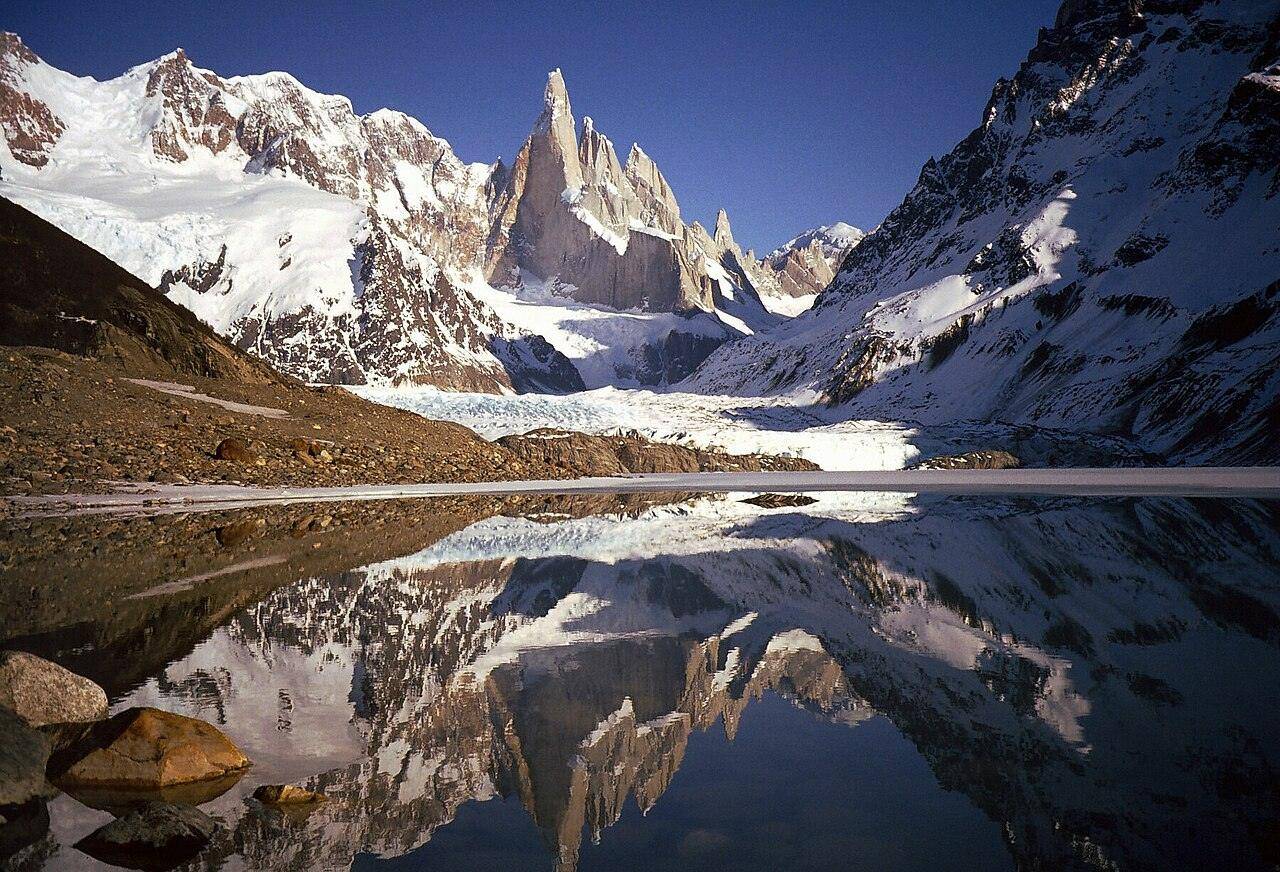
Glaciers and Fitz Roy
Argentine Patagonia in a week: the Perito Moreno, sailing among icebergs and the trails of El Chaltén.
 15 daysChallenging
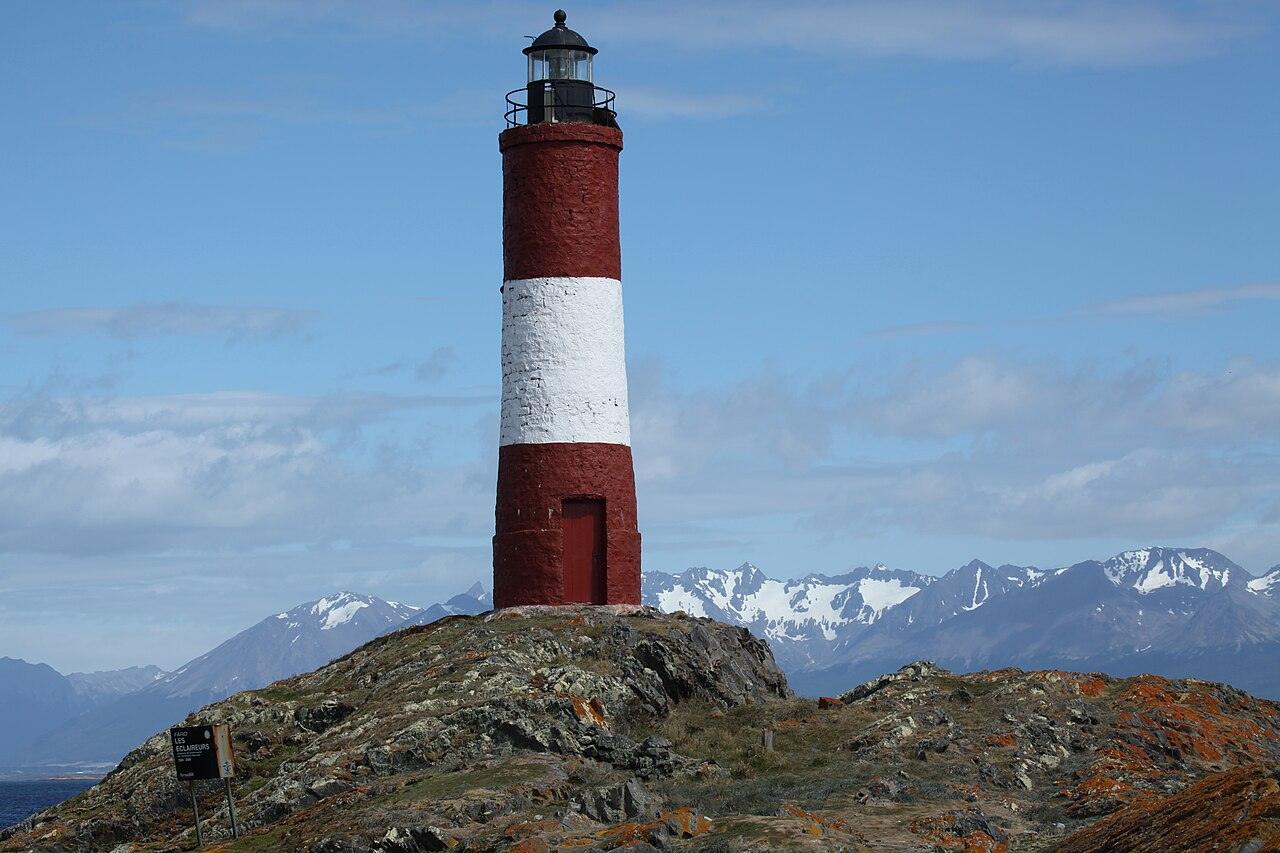
Argentine and Chilean Patagonia
From Ushuaia at the end of the world to the glaciers, Fitz Roy and the towers of Torres del Paine, with the W trek.
 17 daysModerate
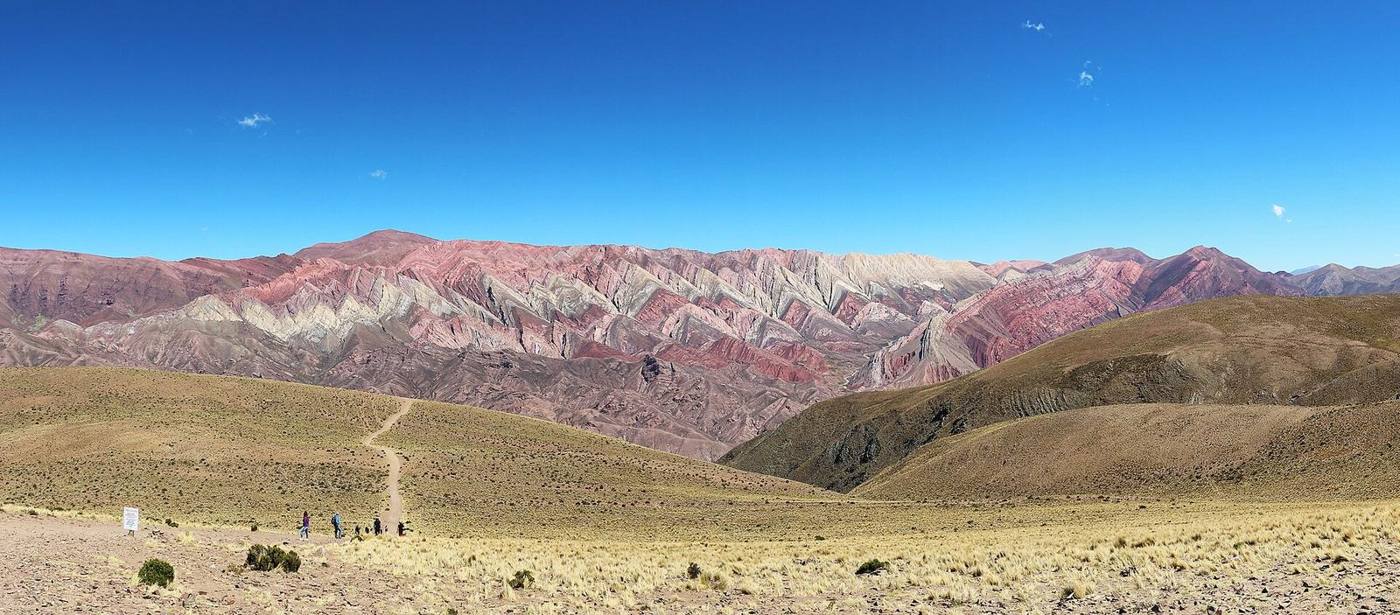
Northern Argentina: Iguazú, the Jesuit missions and Salta
The Iguazú falls, the ruins of the Jesuit missions in the forest, then the northern Andes: Salta, the Quebrada de Humahuaca and the Hill of Seven Colours.