Argentine and Chilean Patagonia
From Ushuaia at the end of the world to the glaciers, Fitz Roy and the towers of Torres del Paine, with the W trek.
- Buenos Aires
- Ushuaia
- El Calafate
- El Chaltén
- Puerto Natales
- Torres del Paine
Day by day
- Day 1
Arrival in Buenos Aires
This trip brings together the two Patagonias, Argentine and Chilean: Buenos Aires, Ushuaia and the Beagle Channel at the end of the world, the Perito Moreno Glacier, the Fitz Roy trails at El Chaltén and the W trek in Torres del Paine park, in Chile. You travel by domestic flights, by bus and on foot.
Before you go: to enter Argentina, Italian citizens need a valid passport; no visa is needed for up to 90 days and health insurance valid for the whole stay is required. For Chile a passport is enough, with no visa for tourism. Other nationalities should check their own rules.
You land at Ezeiza international airport, about an hour from the centre of Buenos Aires, the Argentine capital, a huge, lively city with great avenues, historic cafés and districts that each have their own character.
In the afternoon, rest, then walk to the Plaza de Mayo, the political heart of the country, with the Casa Rosada, the pink presidential palace, the cathedral and the Cabildo, the old colonial town hall. Then continue along the Avenida de Mayo to the Congress, passing the historic cafés.
In the evening, have asado, the Argentine barbecue, in a parrilla, a grill restaurant, with a glass of malbec. In Buenos Aires people eat late, often after nine.
Overnight in Buenos Aires, for two nights.
Practical tip: inflation in Argentina is high and prices change often. Ask your accommodation about the best way to pay, by card or in cash, because the exchange rate can be very different.
- Day 2
San Telmo, La Boca and tango
Today you discover the most famous districts of Buenos Aires.
In the morning, go to San Telmo, the oldest district in the city, with cobbled streets, colonial houses, antique shops and a covered market. On Sundays Defensa street fills with stalls and tango dancers in the street.
Then continue south to La Boca, the port district where many Italian emigrants arrived, especially from Genoa. The most famous street is the Caminito, with houses of corrugated iron painted in bright colours, born from paint left over from the boats. Nearby is the Boca Juniors stadium, known as La Bombonera. Visit La Boca by day, staying in the tourist streets.
In the afternoon, go to the elegant Recoleta district, with its French-style palaces. Visit the Recoleta Cemetery, a city of marble mausoleums, statues and chapels, where presidents, writers and Eva Perón, known as Evita, are buried. Check times and prices. Then, if you can, take a guided tour of the Teatro Colón, one of the most important opera houses in the world. Check times and prices.
In the evening, watch a tango show, the music and dance born in Buenos Aires at the end of the nineteenth century, or go to a milonga, a dance hall where local people dance tango.
Overnight in Buenos Aires.
Practical tip: in Buenos Aires keep your phone and camera safe, especially in crowded places and on public transport. In the evening, use taxis booked through an app.
- Day 3
Flight to Ushuaia
Today you fly to the end of the world.
In the morning, take the flight from Buenos Aires to Ushuaia, about three and a half hours. From the plane, if the sky is clear, you see the plains of Patagonia, then the mountains and glaciers of Tierra del Fuego.
Ushuaia, on the island of Tierra del Fuego, is considered the southernmost city in the world, on the shore of the Beagle Channel, between the sea and the snow-capped mountains of the cordillera. Many ships for Antarctica leave from here.
In the afternoon, walk along the seafront and through the centre, with its colourful houses of wood and corrugated iron. Visit the Presidio museum, in the town's old prison, built at the start of the twentieth century, where Argentina's most dangerous prisoners were sent. Today it houses a maritime museum and the history of Tierra del Fuego. Check times and prices.
If you have time, go up to the Martial Glacier, above the town, on a trail to a viewpoint over the channel and the mountains.
In the evening, have centolla, the king crab of Tierra del Fuego, one of the town's specialities, or Patagonian lamb roasted over the fire.
Overnight in Ushuaia, for two nights.
Practical tip: in Ushuaia the weather changes constantly, even in summer, with sun, rain, wind and sometimes snow on the same day. Dress in layers and bring a waterproof, windproof jacket.
In summer the days are very long, with darkness only around ten in the evening: make the most of it for walking.
- Day 4
The Beagle Channel and Tierra del Fuego
Today you sail on the Beagle Channel and visit the national park.
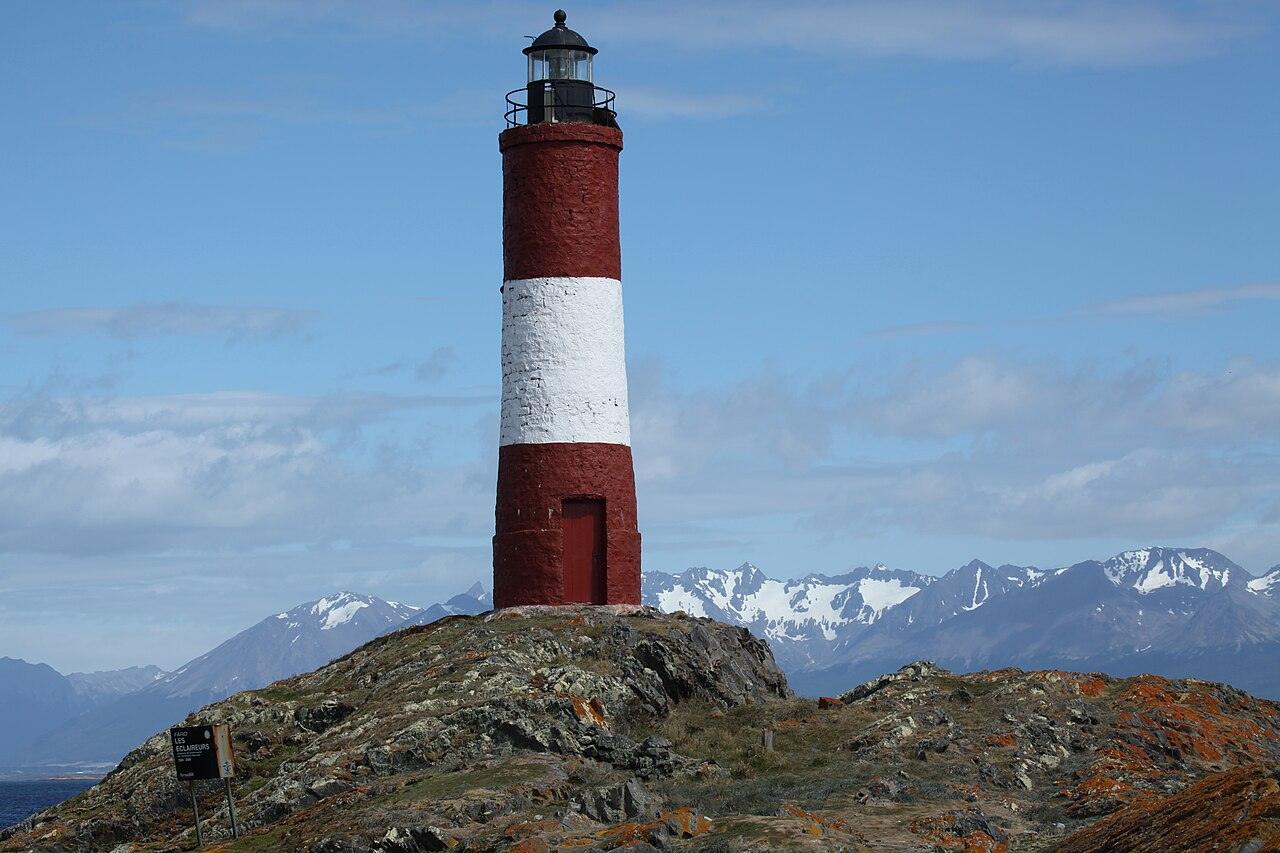
In the morning, set off by boat from the port of Ushuaia on the Beagle Channel, the sea passage between Argentina and Chile named after Charles Darwin's ship. The boat stops near Isla de los Lobos, with sea lions and fur seals, and Isla de los Pájaros, with cormorants, then reaches Les Eclaireurs lighthouse, the small red and white lighthouse on a rock, the symbol of the town.
Some trips, in the summer season, go as far as Martillo Island, home to a colony of Magellanic and gentoo penguins, and on some you can land with a guide. Places are limited. Check prices, season and what is included.
In the afternoon, visit Tierra del Fuego National Park, about twenty minutes from the town, with forests of southern beech, lakes, peat bogs and mountains. Walk the coastal trail along the channel and reach Lapataia Bay, where National Route 3, which starts in the north of the country, comes to an end. There is an entrance fee: check the current rates.
To reach the park you can also take the End of the World Train, a small steam train that follows the route of the old prisoners' railway. Check prices and times.
In the evening, have dinner in Ushuaia.
Overnight in Ushuaia.
Practical tip: the park has beavers, brought from Canada in the 1940s, which have destroyed many woods along the rivers. Their dams can be seen along the trails.
- Day 5
El Calafate
Today you reach the land of glaciers.
In the morning, take the flight from Ushuaia to El Calafate, about an hour and twenty minutes. From the plane, if the sky is clear, you see the mountains, the steppe and the great Lago Argentino.
El Calafate is a small town on the south shore of Lago Argentino, the largest lake in the country, with milky turquoise water coloured by the rock flour carried by the glaciers. The name comes from the calafate, a thorny Patagonian shrub with blue berries. According to a legend, whoever eats calafate berries will return to Patagonia.
In the afternoon, visit the ice interpretation centre, a modern museum that explains how glaciers form and how they are changing with the climate, then walk to Laguna Nimez, a nature reserve on the lake, with Chilean flamingos, black-necked swans and many other birds. Check times and prices.
In the evening, try a calafate ice cream or a craft beer made with calafate berries, and have Patagonian lamb, slowly cooked beside an open fire, one of the specialities of Patagonia.
Overnight in El Calafate, for two nights.
Practical tip: in Patagonia the wind is extremely strong, often with gusts over a hundred kilometres an hour, especially in spring and summer. Bring a hat that ties on and sunglasses, and hold car doors firmly when you open them.
In summer the places on glacier trips sell out early: book from Buenos Aires.
- Day 6
The Perito Moreno Glacier
Today you see one of the most famous glaciers in the world.
In the morning, leave El Calafate for Los Glaciares National Park, a UNESCO World Heritage Site, about an hour and a half by road along the lake. There is an entrance fee to the park: check the current rates.
The Perito Moreno Glacier is an enormous river of ice flowing down from the Southern Patagonian Ice Field and ending in Lago Argentino with a front that rises on average about sixty metres above the water and is several kilometres long. It is one of the few glaciers in the world that is not visibly retreating, and in the centre it advances by about two metres a day.
Walk along the wooden walkways of the viewpoint, with several routes facing the glacier, a few hundred metres from the front. Every so often large blocks of ice break off and fall into the lake with a tremendous noise, raising waves. Sometimes, after a few years, the ice closes off an arm of the lake and the water pressure forms an ice bridge that later collapses, a spectacle that draws people from all over the world.
In the afternoon, take the boat trip in front of the glacier wall to see it up close from the water, or a walk on the ice with crampons and a guide. Check prices, minimum age and physical requirements.
In the evening, return to El Calafate.
Overnight in El Calafate.
Practical tip: always stay behind the railings of the walkways. Falling blocks of ice can create dangerous waves on the shore, and there have been serious accidents in the past.
- Day 7
To El Chaltén
Today you reach the trekking capital of Argentina.
In the morning, leave El Calafate heading north, by bus or car, about three hours across the Patagonian steppe, among guanacos, rheas, birds similar to ostriches, and the great estancias, the sheep farms. The road runs along Lago Viedma and, when the sky is clear, the granite peaks of Fitz Roy and Cerro Torre appear on the horizon.
El Chaltén is a small village founded in 1985 at the foot of Fitz Roy, in the northern part of Los Glaciares National Park. It is called the national trekking capital, because the trails to the mountains, marked and well kept, start here on foot. The name Chaltén comes from the Tehuelche language and means smoking mountain, because the summit of Fitz Roy is often wrapped in clouds.
In the afternoon, take a short walk to warm up your legs: the trail to the Condors and Eagles viewpoints, about two hours there and back, with views of the village, Lago Viedma and the mountains. At sunset the light turns the granite walls red and orange.
In the evening, have dinner in one of the village's restaurants and try a Patagonian craft beer.
Overnight in El Chaltén, for three nights.
Practical tip: stop first at the park visitor centre, at the entrance to the village, to learn about trail conditions, the weather forecast and the park rules. In El Chaltén cash machines are few and sometimes empty: bring cash.
- Day 8
Laguna de los Tres and Fitz Roy
Today you do the most famous walk in Argentine Patagonia.
At dawn, leave the village on the trail to Laguna de los Tres, about 20 kilometres there and back, with about eight to ten hours of walking. The trail first climbs through southern beech woods to the Fitz Roy viewpoint, then crosses valleys and streams, with the Poincenot camp at the foot of the mountain.
The last stretch is the hardest: about an hour of steep climbing on stones and gravel, with about 400 metres of ascent. At the top you reach Laguna de los Tres, a turquoise glacial lake at the foot of the Fitz Roy wall, over 3,400 metres high, with granite spires around it. It is one of the finest mountain views in the world. A little further on, from the edge of the moraine, you also see Laguna Sucia, lower down, with a hanging glacier.
On the way back, if you have energy, you can make a detour to the Madre and Hija lakes, two quiet lakes among the woods.
In the afternoon, return to the village and rest.
In the evening, have a hot soup or a pizza, as in El Chaltén many places prepare generous dishes for walkers.
Overnight in El Chaltén.
Practical tip: leave early, to have a better chance of seeing Fitz Roy without clouds and to avoid the strong afternoon wind. On the last stretch, if the wind is too strong or there is ice, turn back. Bring water, food, sun cream, gloves and a jacket.
- Day 9
Laguna Torre
Today you walk towards Cerro Torre.
In the morning, set off on the trail to Laguna Torre, about 18 kilometres there and back, with about six or seven hours of walking and a gentler climb than yesterday. The trail follows the valley of the Fitz Roy River, through woods and meadows, with viewpoints over the mountain range.
At the end you reach Laguna Torre, a grey glacial lake with floating icebergs, in front of the Grande Glacier and Cerro Torre, a very slender granite spire over 3,100 metres high, considered one of the hardest mountains in the world to climb. If you have energy, follow the trail along the moraine to the Maestri viewpoint, with a closer view of the glacier.
In the afternoon, return to the village.
If you prefer a rest day, you can instead take the short walk to the Chorrillo del Salto, a waterfall about an hour's easy walk from the village, or a trip to Lago del Desierto, north of the village, with a boat trip towards the Vespignani Glacier. Check prices and times.
In the evening, have dinner and prepare for the crossing into Chile.
Overnight in El Chaltén.
Practical tip: in El Chaltén the weather can be bad for days. Keep your plans flexible and choose the clearest day for Laguna de los Tres. If the sky is overcast, do Laguna Torre first, as it is more sheltered.
The park asks you to take all your rubbish away and not to wash in lakes and rivers.
- Day 10
Into Chile and Puerto Natales
Today you cross the border and arrive in Chile.
Early in the morning, leave El Chaltén towards El Calafate and then the Chilean border, by bus or car. The journey takes about eight or nine hours in all, across the steppe and the hills. At the border there are checks to leave Argentina and enter Chile. Check bus times and prices, and if you rent a car, ask for permission to take it into Chile.
Chile has very strict rules on agricultural and food products: you cannot bring in fresh fruit, vegetables, meat, dairy products, honey or seeds. Always declare all the food you carry on the declaration form, or you risk heavy fines.
In the afternoon, you arrive in Puerto Natales, a small town on the Última Esperanza fjord, with colourful corrugated iron houses and views of the snow-capped mountains across the water. It is the base for Torres del Paine park.
Today, prepare for the coming days' trek: check your backpack, buy the food you need, and double-check your bookings for refugios, campsites and the park entrance ticket.
In the evening, have fish from the fjord, seafood or Magellanic lamb.
Overnight in Puerto Natales.
Practical tip: Chile's currency is the Chilean peso, different from the Argentine one. Withdraw some cash in Puerto Natales: many things in the park can be paid by card, but not all.
Leave your large suitcase in storage in Puerto Natales and set off on the trek with just your backpack.
- Day 11
Torres del Paine: Lago Grey
Today you begin the W trek in Torres del Paine park.
Torres del Paine National Park, a UNESCO biosphere reserve, is one of the most famous parks in South America, with the Towers of Paine, three granite spires, the Cuernos, mountains of pale granite with dark tops, turquoise lakes, glaciers and steppe with guanacos. The W trek takes its name from the shape of the route, which climbs into three valleys.
Park entry can only be bought online on pasesparques.cl, the official site of CONAF, the Chilean parks agency: from 1 May 2026 a foreign adult pays 25,000 Chilean pesos for one day and 50,000 pesos for two or more days. To sleep along the W you need refugio or campsite reservations, which are compulsory and should be made months ahead for the summer.
Early in the morning, take the bus from Puerto Natales to the park, about two hours, to Pudeto. From here the catamaran crosses Lago Pehoé, with views of the Cuernos, to the Paine Grande refugio. Check times and prices.
In the afternoon, walk towards Lago Grey, about three and a half hours one way, to the viewpoint over the Grey Glacier, with blue icebergs in the lake. Return to Paine Grande, or sleep at the Grey refugio if you booked there.
Overnight at the Paine Grande or Grey refugio.
Practical tip: lighting fires outside authorised areas is forbidden in the park, after serious fires caused by visitors. Always stay on the trails.
- Day 12
The French Valley
Today you walk into the central valley of the W.
In the morning, leave Paine Grande heading east, along Lago Skottsberg, with views of the Cuernos del Paine, to Campamento Italiano, at the foot of the French Valley, about two and a half hours.
From here the trail climbs into the French Valley, a valley enclosed by enormous granite walls, with the French Glacier hanging on the face of Paine Grande, the highest mountain of the massif, over 2,800 metres. You often hear and see ice avalanches falling from the face. Climb first to the French viewpoint, then, if the weather is good and you have energy, continue to the Británico viewpoint at the head of the valley, surrounded by granite spires. The whole climb to Británico and back from Campamento Italiano takes about five or six hours.
In the afternoon, return to Campamento Italiano and continue east, along Lago Nordenskjöld, to the Francés or Cuernos refugio, on the shore of the lake.
In the evening, have dinner at the refugio with other walkers from all over the world.
Overnight at the Francés or Cuernos refugio.
Practical tip: today is the longest stage of the W, about 25 kilometres if you go up to Británico. If you are tired or the weather is bad, stop at the French viewpoint.
In the refugios meals are booked together with the bed: check what is included in your booking.
- Day 13
To Chileno
Today you get closer to the Towers of Paine.
In the morning, leave the Cuernos or Francés refugio heading east along Lago Nordenskjöld, with its turquoise water and the Cuernos above you, on an up-and-down trail through woods and meadows.
After about four hours you reach the central sector of the park, where the Las Torres refugio stands. From here the trail climbs steeply into the Ascencio valley to the Paso de los Vientos, named for its very strong wind, then descends into the valley to the Chileno refugio, in the woods by the river, in about two hours.
In the afternoon, rest at Chileno, to be ready for tomorrow's climb at dawn. If you have energy and time, you could already climb to the Towers viewpoint today, but the best light is early in the morning.
In the evening, have dinner at the refugio and go to bed early.
Overnight at the Chileno refugio.
Practical tip: bookings in the east sector of the park, such as Chileno and Las Torres, and in the west sector, such as Paine Grande, Grey and Francés, are managed by different companies. Make sure all your nights are confirmed before you leave.
On the Paso de los Vientos the wind can knock people over: keep your backpack closed and your poles tied on when you are not using them.
- Day 14
The base of the Towers at dawn
Today you see the Towers of Paine at dawn.
In the middle of the night, around four or five in the morning depending on the season, leave the Chileno refugio with a head torch. The trail climbs through the woods along the river, then, in the last hour, up a steep, tiring moraine of large boulders, with about 400 metres of ascent.
At the top you reach the base of the Towers, a green glacial lake at the foot of the three Towers of Paine, granite spires between about 2,200 and 2,800 metres above sea level. At dawn, if the sky is clear, the sun turns the granite red and orange for a few minutes, one of the finest moments of the whole trip. Sit on a boulder, have something hot to drink and wait for the light.
Then go down to the Chileno refugio for breakfast, pick up your backpack and keep descending to the central sector and the Las Torres hotel, from where the bus leaves for the park entrance and Puerto Natales. Check times.
In the afternoon, you arrive in Puerto Natales. Take a hot shower, collect your suitcase and rest.
In the evening, celebrate the end of the trek with a good dinner and a glass of Chilean wine, such as carménère.
Overnight in Puerto Natales.
Practical tip: at the base of the Towers before dawn it is very cold, even in summer. Bring a fleece, a jacket, a hat, gloves and a thermos. If the Towers are covered by cloud, wait a while: sometimes the sky clears in a few minutes.
- Day 15
Flight from Punta Arenas
Today you leave Patagonia.
In the morning, leave Puerto Natales heading south by bus to Punta Arenas, about three hours across the steppe and sheep estancias, with guanacos and rheas along the road. Alternatively, check whether there is a flight from Puerto Natales airport, mainly in summer.
Punta Arenas is a city on the Strait of Magellan, the sea passage discovered in 1520 by the explorer Ferdinand Magellan during the first voyage around the world. If you have time before your flight, go up to the Cerro de la Cruz viewpoint, with views over the colourful roofs and the strait, and walk around the main square, where it is said that touching the foot of the statue of the native man means you will return to Patagonia.
Then take the flight from Punta Arenas to Santiago de Chile, about three and a half hours, and the international flight to Europe.
In these fifteen days you have seen the two Patagonias: the tango of Buenos Aires, the Beagle Channel and Tierra del Fuego, the front of the Perito Moreno, Laguna de los Tres below Fitz Roy, Cerro Torre and the W trek to the base of the Towers of Paine.
When to go: the best period is from November to March, the southern summer, with long days and open trails. January and February are the busiest months. In winter many services close and trails can be covered in snow.
Practical tip: allow plenty of time for your connection between Santiago and Europe, because flights from Patagonia are often delayed by the wind.
The most complete trekking trip in South America, for people happy to walk six to eight hours a day. The W trek in Torres del Paine must be booked months ahead, as the refuges fill up early. Many flights and bus legs: it is an expensive and tiring trip, but it pays off.
Before you go
- Documents and visa
- Valid passport; no visa for tourism up to 90 days for EU citizens.
- Health and vaccines
- No compulsory vaccines arriving from Europe; yellow fever is recommended for Misiones and Corrientes. In Patagonia beware of hantavirus in forests and closed huts. Emergencies: 911.
- Money and payments
- Argentine peso. Inflation changes prices often; foreign cards work almost everywhere and paying by card is usually best, keeping some cash.
- Power sockets
- Types I and C, 220 volts: you need an adapter for the angled flat-pin plugs.
- Time zone
- UTC-3 all year: Argentina does not use daylight saving time.
- Safety
- The United States rates Argentina level 1, with level 2 for Rosario. In Buenos Aires watch out for pickpockets; in the mountains and Patagonia the main risks are wind and weather. Official advice: GOV.UK.
Information checked in November 2026 for Italian and EU citizens. Rules change: always check before you travel.
Variations
In 10 days: Buenos Aires, El Calafate with the Perito Moreno, El Chaltén and Torres del Paine as a day trip or with two nights, without Ushuaia.
In 20 days: add the Valdés Peninsula, with whales and penguins, before Ushuaia, or the full O circuit of Torres del Paine instead of the W.
Frequently asked questions
What documents do I need for Argentina and Chile?
For Argentina, Italian citizens need a valid passport, with no visa for up to 90 days, and health insurance valid for the whole stay. For Chile a passport is enough, with no visa for tourism. Other nationalities should check their own rules.
How much is entry to Torres del Paine?
From 1 May 2026 a foreign adult pays 25,000 Chilean pesos for one day and 50,000 pesos for two or more days. Entry can only be bought online on the official site pasesparques.cl. Refugios and campsites are booked separately, months in advance.
Is the W trek difficult?
It requires good fitness: four days of walking, with stages of up to 25 kilometres and some steep climbs, such as the final one to the base of the Towers. No technical skills are needed, but the wind and weather can be very harsh.
Indicative itinerary written by World Atlas. Before booking, check timetables, seasonal openings, documents and safety.
 7 daysModerate
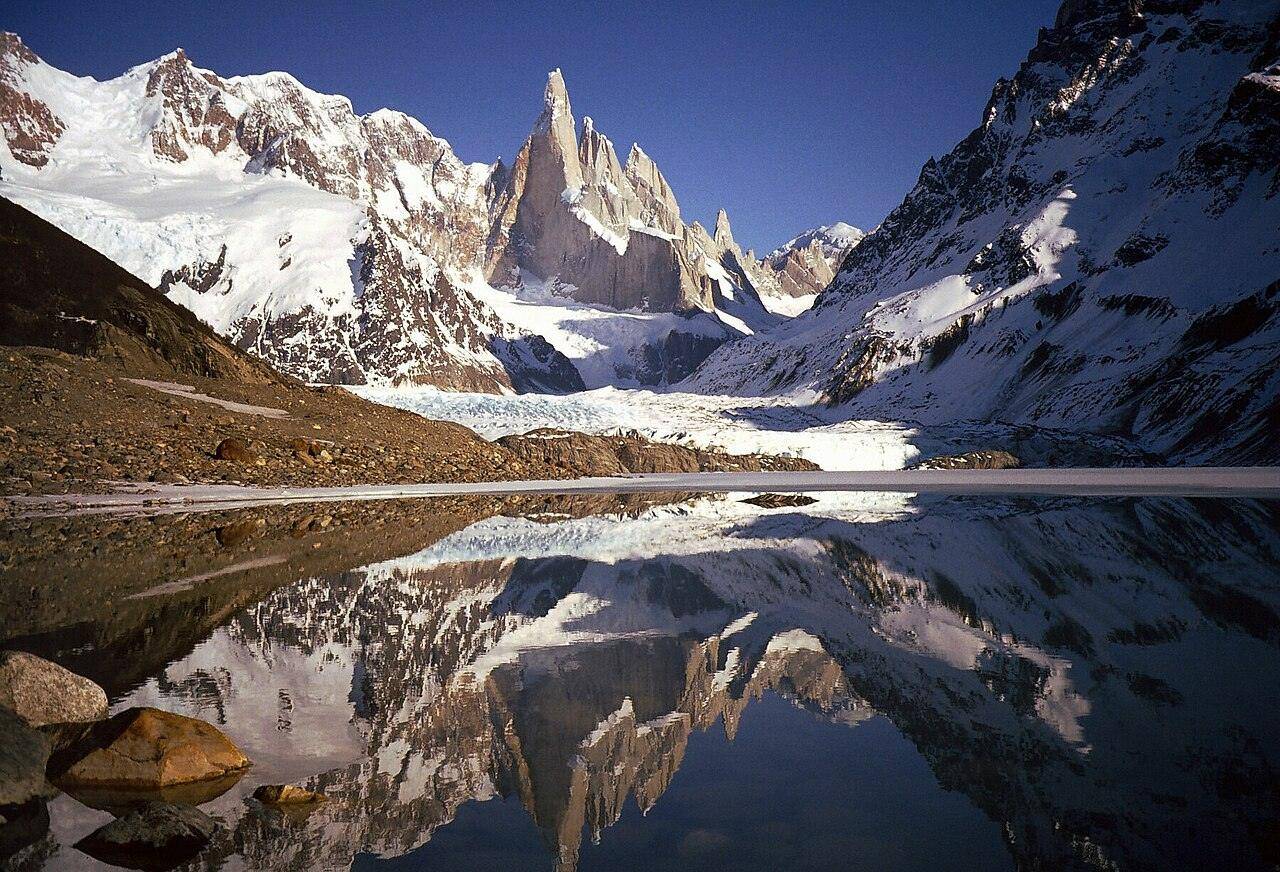
Glaciers and Fitz Roy
Argentine Patagonia in a week: the Perito Moreno, sailing among icebergs and the trails of El Chaltén.
 17 daysModerate
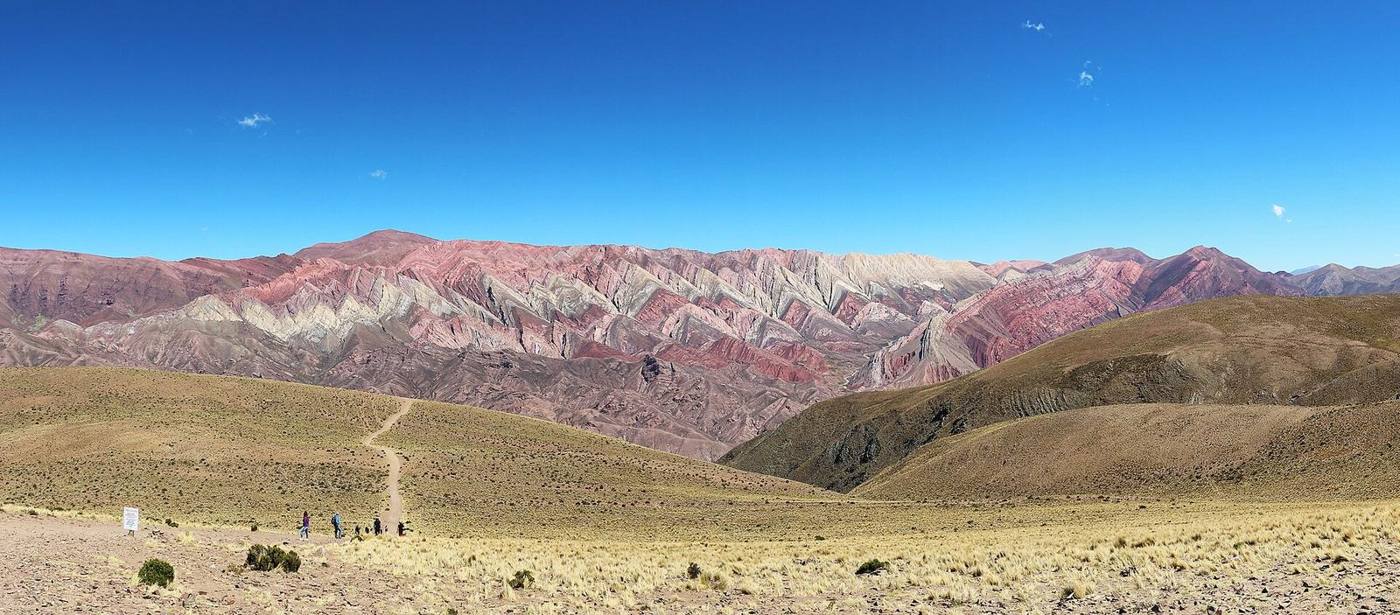
Northern Argentina: Iguazú, the Jesuit missions and Salta
The Iguazú falls, the ruins of the Jesuit missions in the forest, then the northern Andes: Salta, the Quebrada de Humahuaca and the Hill of Seven Colours.
 17 daysChallenging
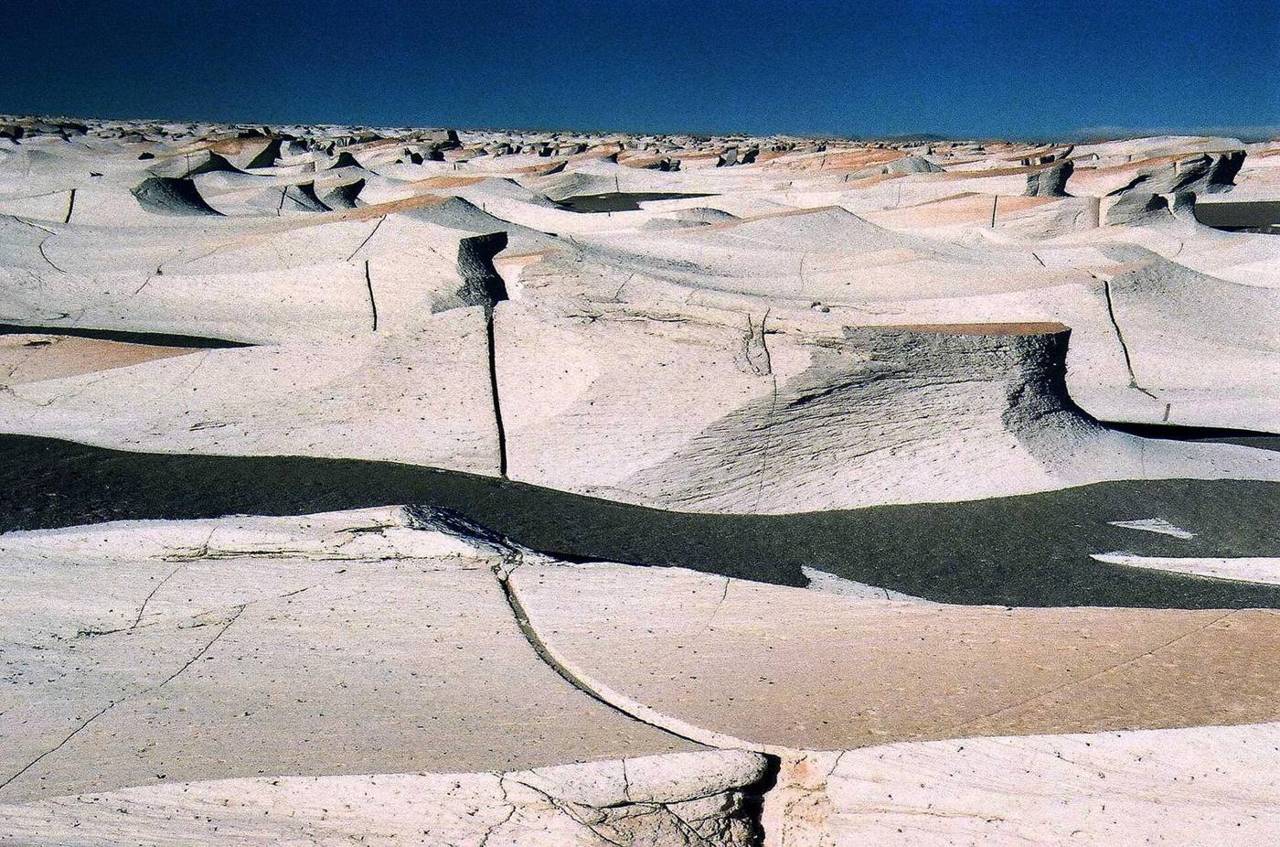
The enchanted Puna: lagoons, salt flats and high-altitude dunes
By 4x4 across the desert plateau of the north-west: the Campo de Piedra Pómez, the white dunes of Fiambalá, lagoons with flamingos and volcanoes over 6,000 metres.