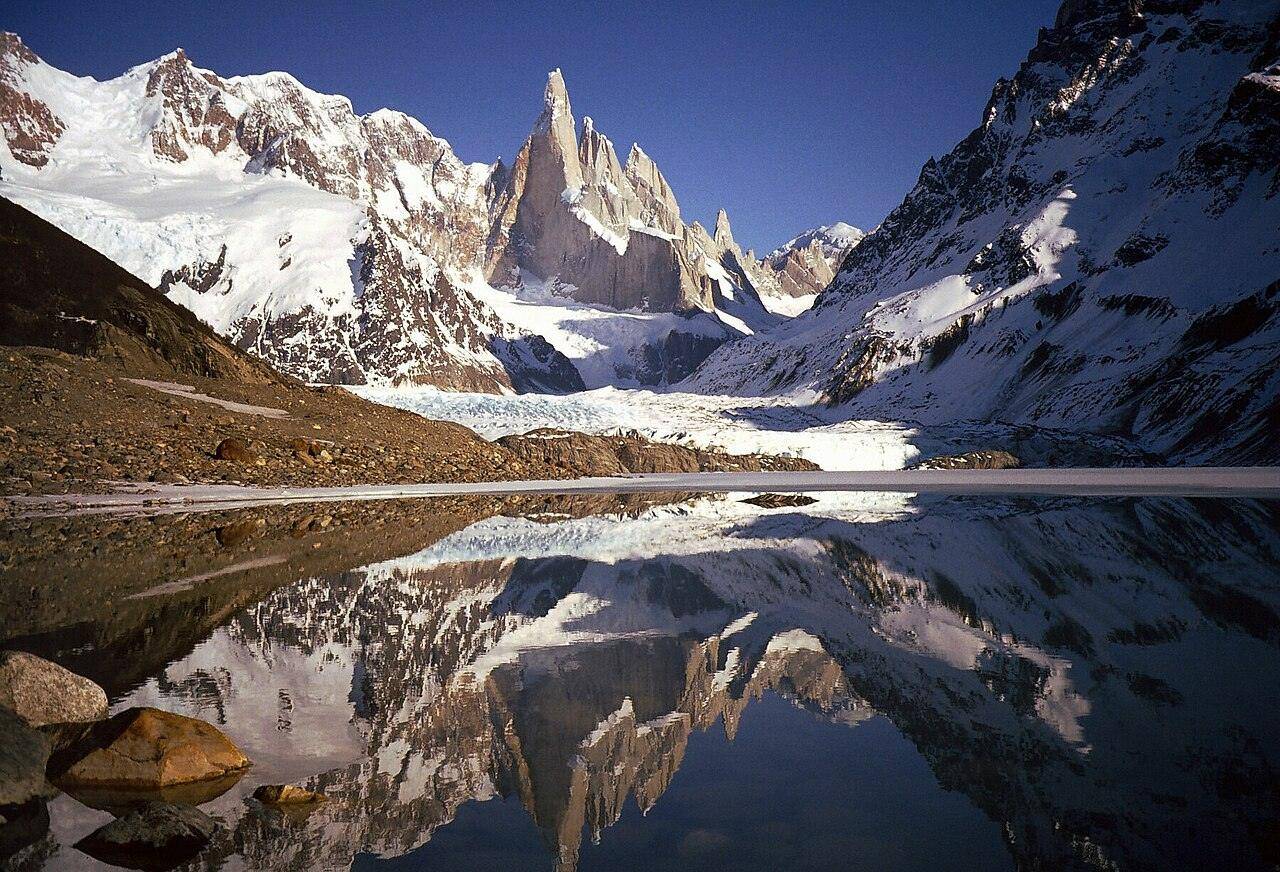
Glaciers and Fitz Roy
Argentine Patagonia in a week: the Perito Moreno, sailing among icebergs and the trails of El Chaltén.
- El Calafate
- Perito Moreno
- El Chaltén
- Laguna de los Tres
Day by day
- Day 1
The flight from Buenos Aires to El Calafate
EU citizens enter Argentina without a visa for tourist stays of up to 90 days, with a valid passport. From the capital you fly to El Calafate in about three and a half hours; flights leave from Aeroparque, Buenos Aires' city airport near the centre, and sometimes from Ezeiza, the international airport. Check carefully which airport your flight leaves from: it takes more than an hour to get between them.
El Calafate is a small Patagonian town on the shores of Lago Argentino, the country's largest lake, with milky turquoise water coloured by rock flour carried by the glaciers. It is the gateway to Los Glaciares National Park, a UNESCO World Heritage site, which protects part of the Southern Patagonian Ice Field, the third largest continental ice reserve in the world after Antarctica and Greenland.
The airport is about twenty minutes from town; there are shuttles and taxis. To stay, choose the centre along the main street, or the higher areas with lake views.
In the afternoon walk to the Laguna Nimez nature reserve on the edge of town, a protected wetland home to flamingos, black-necked swans and many other bird species. The glacier interpretation centre, called Glaciarium, clearly explains how glaciers form and move.
In the evening try Patagonian lamb, slow-cooked on a spit beside the embers. Practical tip: in Patagonia the wind is very strong and the weather changes within minutes; dress in layers even in summer.
- Day 2
Perito Moreno Glacier from the walkways and by boat
Today is Patagonia's most famous visit: Perito Moreno Glacier, about an hour and twenty minutes from El Calafate. The glacier descends from the mountains to the lake with a front of about five kilometres, on average seventy metres above the water. It is one of the few glaciers in the world that has stayed almost stable in recent decades, although studies in recent years show signs of retreat.
At the park entrance you pay the fee: from 1 June 2026, according to the official national parks tariff, foreign visitors pay 50,000 Argentine pesos, with 50% off the second day. You get there by rental car, regular buses or organised excursions.
Opposite the glacier, a network of walkways several kilometres long lets you see it close up and from different heights. The most thrilling moment is when huge blocks of ice break off the front and crash into the lake with a roar that echoes like thunder. Sit and wait: it happens several times a day.
In the afternoon take a boat that sails in front of the glacier wall to see its size from the water. Alternatively, with a licensed agency, you can do the minitrekking on the glacier, with crampons and a guide, followed by a drink with thousand-year-old ice. Practical tip: bring food and water, as services in the park are few and expensive.
- Day 3
A boat trip to the Upsala and Spegazzini glaciers
Today is a long cruise on Lago Argentino to see glaciers that cannot be reached by land. Boats leave from the port of Punta Bandera, about half an hour from El Calafate, and sail all day through the arms of the lake, among icebergs of incredible shapes and colours from white to deep blue, the colour of the densest, oldest ice.
Upsala Glacier, one of the largest in South America, has retreated a great deal in recent decades and is one of the places where the effect of climate warming is most visible. Its arm of the lake is often full of icebergs, which sometimes stop boats getting close. Spegazzini Glacier has the highest walls in the park, more than a hundred metres above the water, between steep mountains.
Some excursions stop in a bay such as Onelli, with a short walk through the woods to a lake full of icebergs. Excursions and routes change with the season and ice conditions.
In the evening return to El Calafate and prepare for the departure to El Chaltén. Practical tip: on deck the icy wind comes straight off the glacier; bring a windproof jacket, hat and gloves even in summer, and book the excursion a few days ahead in the high season months, December to February.
- Day 4
The transfer to El Chaltén and Laguna Capri
In the morning set off for El Chaltén, about three hours north by road across the Patagonian steppe, with guanacos, rheas and foxes along the way. Halfway is the historic La Leona inn on the river of the same name, where according to tradition the outlaws Butch Cassidy and the Sundance Kid stopped while fleeing the United States in the early twentieth century.
Suddenly, after a bend, the Fitz Roy massif appears on the horizon, called Chaltén, the smoking mountain, by the Tehuelche people, because of the clouds that often form on its summit. It is a granite spire 3,405 metres high, one of the most spectacular and hardest mountains to climb in the world.
El Chaltén is a small village founded in 1985, called the national trekking capital: trails leaving straight from the village lead to lakes, glaciers and viewpoints, with no need for a car. Before heading out, stop at the park visitor centre at the entrance to the village for information on the weather and trail conditions.
In the afternoon walk to Laguna Capri, about two hours of easy climbing through forests of lenga, a southern beech, to a lake with a view of Fitz Roy. Practical tip: El Chaltén has few cash machines; bring cash in pesos from your previous stop.
- Day 5
The trek to Laguna de los Tres
Today is the most famous trek in Argentine Patagonia: Laguna de los Tres, at the foot of the Fitz Roy wall. The route, there and back from El Chaltén, is about twenty kilometres long and takes eight or nine hours; you can shorten it by starting from Laguna Capri. It is an easy walk for most of the way, through forest and along rivers, with a last stretch of about an hour climbing very steeply over stones and gravel.
From the top, suddenly, the turquoise glacial lagoon appears, with the granite spires of Fitz Roy and the nearby peaks rising straight above the water: one of the finest views in South America. To see Fitz Roy glowing red at dawn, some set off at night with a torch, but it is more tiring.
On the way you pass the Poincenot camp at the foot of the final climb, and the viewpoint over the Piedras Blancas glacier, which descends into a side valley.
In Patagonia the weather is unpredictable: Fitz Roy can be covered in cloud for days. Check the forecast and choose the best day for this trek, moving the programme if necessary. Practical tip: on the last stretch in strong wind the climb can be dangerous; if the wind is too strong, stop at the viewpoint and turn back. Bring water, food, warm layers and a waterproof jacket.
- Day 6
Laguna Torre and the return to El Calafate
Early in the morning walk to Laguna Torre, El Chaltén's second great trek: about eighteen kilometres there and back, five or six hours, with gentler climbing than Laguna de los Tres. The trail follows the Fitz Roy river valley, through lenga forest and meadows, to a moraine overlooking the lagoon, dotted with small icebergs, at the foot of Grande Glacier and Cerro Torre.
Cerro Torre is one of the hardest mountains in the world to climb: a slender granite spire 3,128 metres high, often topped by a mushroom of ice and snow, which has made mountaineering history with much-debated ascents. In fine weather it is an incredible sight.
If the weather is bad or your legs are tired, there are shorter routes around the village: the Condors and Eagles viewpoints, about an hour's climb, overlooking the village, Fitz Roy and Lago Viedma; or the easy trail to the Chorrillo del Salto waterfall, suitable for everyone.
In the afternoon return to El Calafate, about three hours, for the night before departure. Practical tip: there are no bins on the park trails: take all your rubbish away, and drink stream water only where rangers say it is safe. Book a seat on the return bus a day ahead in high season.
- Day 7
Departure
The last day depends on your flight time. El Calafate airport has flights to Buenos Aires, Ushuaia and, in some seasons, Bariloche, from where you can continue your journey.
If you have a no-cost morning, you can visit an estancia, a large Patagonian sheep farm, with a demonstration of sheep shearing and gauchos working with their dogs, followed by a lunch of grilled lamb. Some estancias have been turned into lodgings and stand in isolated, spectacular spots on the lakeshores.
Alternatively, if you have more time, many travellers continue overland to Chile, to Torres del Paine National Park, about five or six hours by bus from El Calafate, with a border crossing. It is one of the most famous parks in the world and rounds off a Patagonian trip well.
Things to take home: jam and liqueur of calafate, the blue berry that gives the town its name, which legend says ensures whoever eats it will return to Patagonia; jumpers and items made of Patagonian sheep's wool; a mate cup and bombilla, the silver straw for drinking the traditional infusion; artisan chocolate.
Practical tip: domestic flights in Argentina can be delayed or rescheduled; leave at least a day's margin between returning to Buenos Aires and your international flight to Europe.
The most efficient way to see Argentine Patagonia in a few days: Perito Moreno and Fitz Roy are its two highlights. The catch is wind and weather, which can hide Fitz Roy completely, so keep a spare day in El Chaltén. With more time, the two-week version with Torres del Paine is better value.
Before you go
- Documents and visa
- Valid passport; no visa for tourism up to 90 days for EU citizens.
- Health and vaccines
- No compulsory vaccines arriving from Europe; yellow fever is recommended for Misiones and Corrientes. In Patagonia beware of hantavirus in forests and closed huts. Emergencies: 911.
- Money and payments
- Argentine peso. Inflation changes prices often; foreign cards work almost everywhere and paying by card is usually best, keeping some cash.
- Power sockets
- Types I and C, 220 volts: you need an adapter for the angled flat-pin plugs.
- Time zone
- UTC-3 all year: Argentina does not use daylight saving time.
- Safety
- The United States rates Argentina level 1, with level 2 for Rosario. In Buenos Aires watch out for pickpockets; in the mountains and Patagonia the main risks are wind and weather. Official advice: GOV.UK.
Information checked in November 2026 for Italian and EU citizens. Rules change: always check before you travel.
Variations
In 5 days: El Calafate with Perito Moreno, then two days in El Chaltén with Laguna de los Tres, skipping the lake cruise and Laguna Torre.
In 12 days: continue by bus to Chile and Torres del Paine, or fly to Ushuaia for Tierra del Fuego and the Beagle Channel.
Frequently asked questions
How much is Los Glaciares National Park?
From 1 June 2026, according to the official national parks tariff, foreign visitors pay 50,000 Argentine pesos a day, with 50% off the second day.
Do I need a guide for the El Chaltén treks?
No, the trails are well marked and start from the village. You do need good fitness, proper gear and an eye on the fast-changing weather. The Perito Moreno minitrekking requires a licensed agency.
When is the best time for Patagonia?
November to March, the southern summer, with long days and open trails. In winter many services close and temperatures drop below zero, although Perito Moreno can be visited all year.
Indicative itinerary written by World Atlas. Before booking, check timetables, seasonal openings, documents and safety.
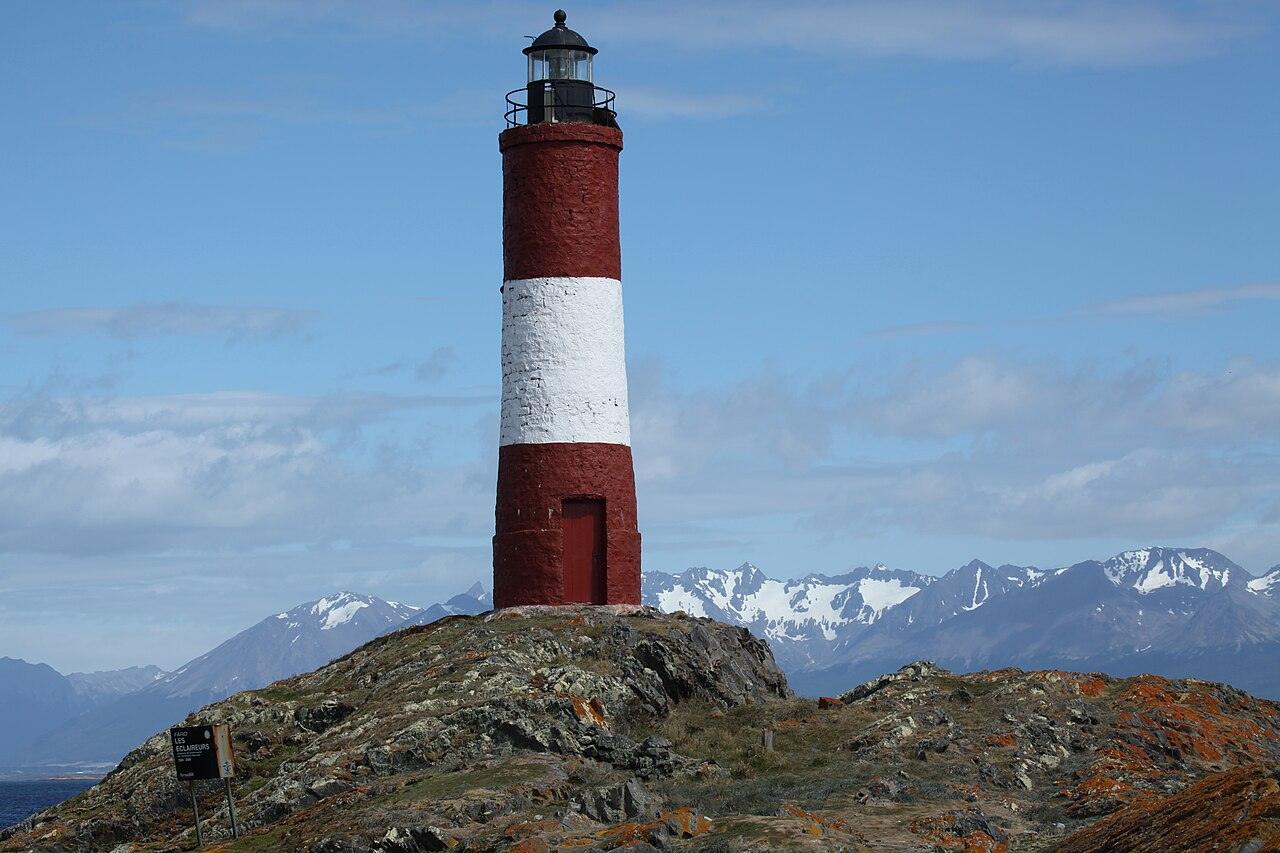 15 daysChallenging
Argentine and Chilean Patagonia
From Ushuaia at the end of the world to the glaciers, Fitz Roy and the towers of Torres del Paine, with the W trek.
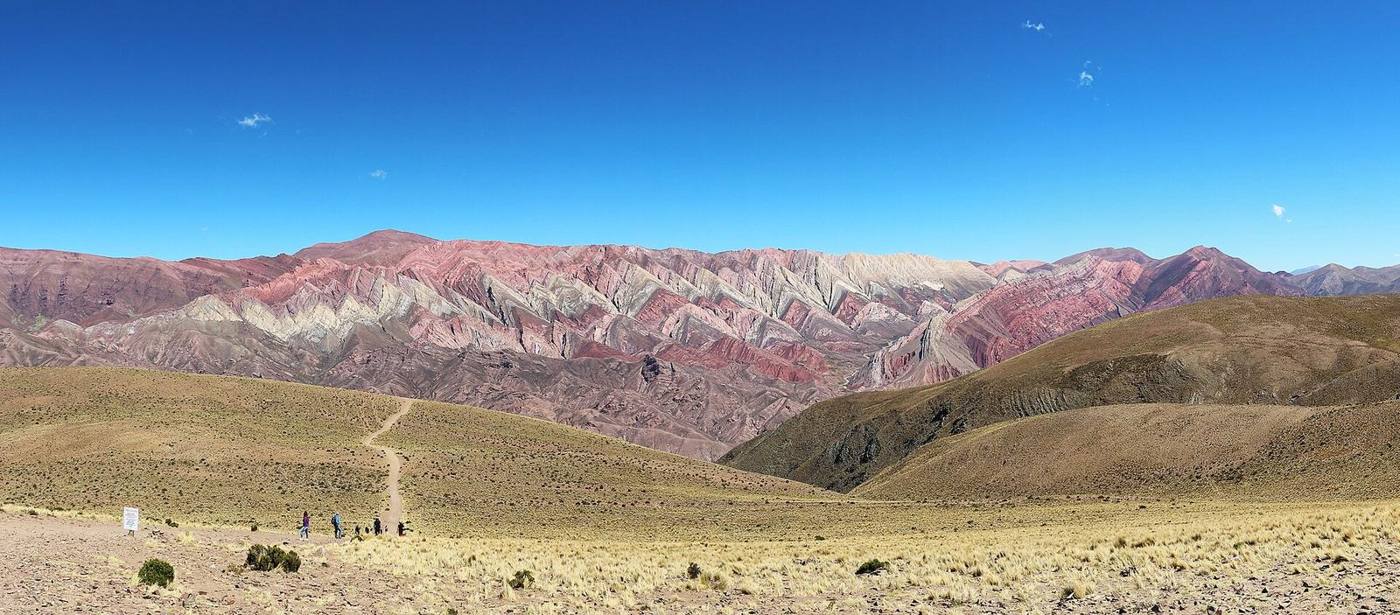 17 daysModerate
Northern Argentina: Iguazú, the Jesuit missions and Salta
The Iguazú falls, the ruins of the Jesuit missions in the forest, then the northern Andes: Salta, the Quebrada de Humahuaca and the Hill of Seven Colours.
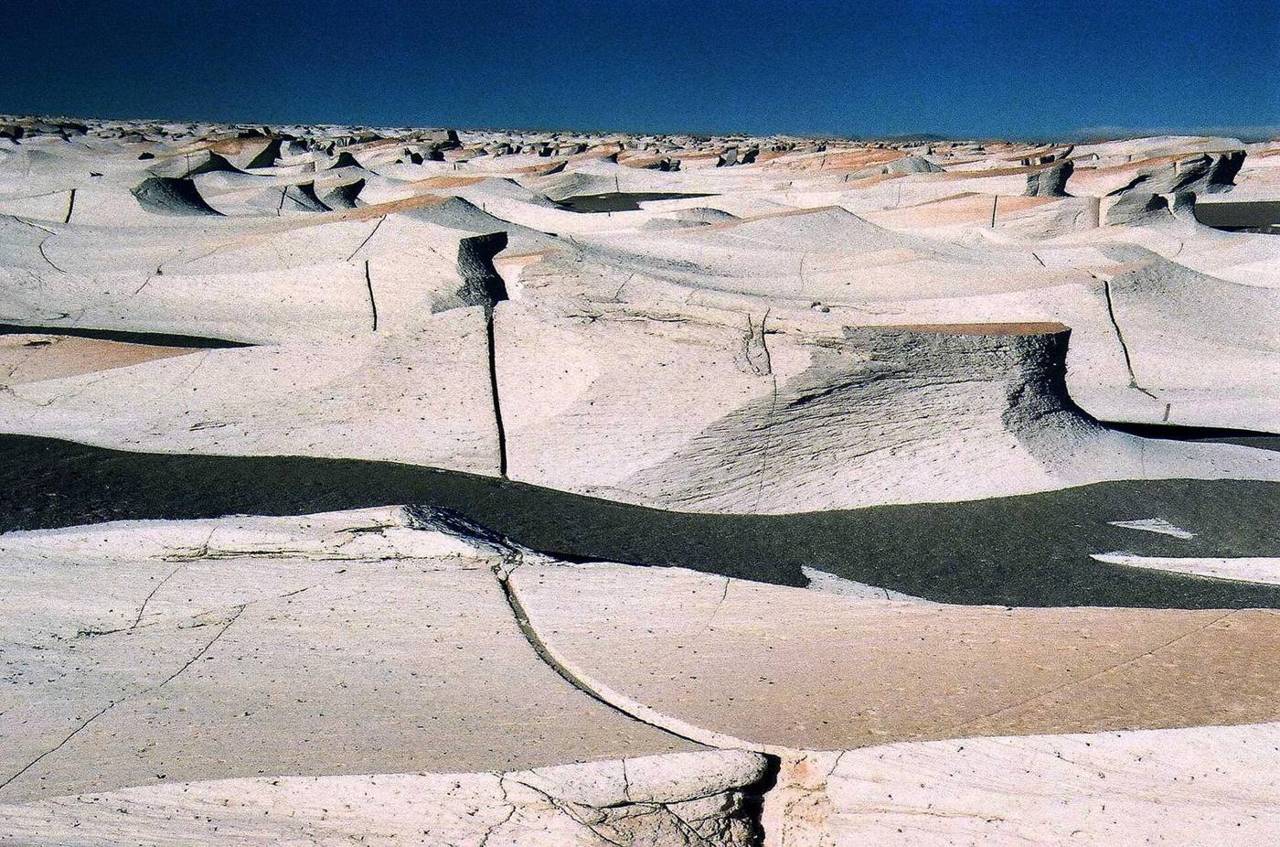 17 daysChallenging
The enchanted Puna: lagoons, salt flats and high-altitude dunes
By 4x4 across the desert plateau of the north-west: the Campo de Piedra Pómez, the white dunes of Fiambalá, lagoons with flamingos and volcanoes over 6,000 metres.