Uzbek food
A journey through plov: Tashkent's plov centre, Samarkand bread, somsa baked in the tandir, a cooking class in Bukhara and the dried-fruit markets.
- Tashkent
- Samarkand
- Bukhara
Day by day
- Day 1
Arrival in Tashkent and Chorsu bazaar
This five-day trip crosses Uzbekistan by following its food: Tashkent plov cooked in giant cauldrons, Chorsu bazaar, Samarkand bread and Siab bazaar, somsa baked in the tandir, a cooking class in Bukhara and dinner in a private home.
Before you go: Italian citizens enter Uzbekistan without a visa for short stays, currently up to 30 days: check the length before you leave. You need a passport with at least three months' remaining validity. Temporary registration is compulsory within three working days of arrival: hotels and guesthouses do it for you, and you keep the slips. Other nationalities should check their own rules.
You arrive in Tashkent and settle into your hotel. In the afternoon go to Chorsu bazaar, the great market under the blue dome.
On the ground floor are the stalls of meat, cheese and qurut, little balls of dried salted yoghurt. Upstairs you find the spices, black cumin, chilli, coriander seeds, and mountains of dried fruit: apricots, raisins of many colours, walnuts, almonds and pistachios. Outside, under the shelters, there are fruit and vegetables, with melons and pomegranates in autumn.
Taste everything you are offered and ask the names of the products: the traders are happy to explain.
In the evening have dinner with the most common dishes: lagman, hand-pulled noodles with meat and vegetables, and manty, steamed dumplings with meat and onion, with green tea.
Sleep in Tashkent, for two nights.
Practical tip: bring cash in som for the bazaar: at the smaller stalls cards are not used.
- Day 2
The plov centre and the flavours of Tashkent
Today is the day of plov, the national dish of Uzbekistan.
In the morning go early to one of the city's big plov centres, where it is cooked in enormous cauldrons, the kazan, over wood fires. If you arrive in the first hours, you see the cooks frying the mutton in fat, then adding onions and carrots cut into thin strips, chickpeas, raisins or whole garlic, and finally the rice, which cooks slowly in the steam.
At lunch taste the plov with bread, a tomato and onion salad and green tea. Remember that plov is eaten at midday: in the evening it has often run out.
In the afternoon visit the Khast Imam complex, with its madrasas and the library that keeps an ancient Koran. Check prices and times.
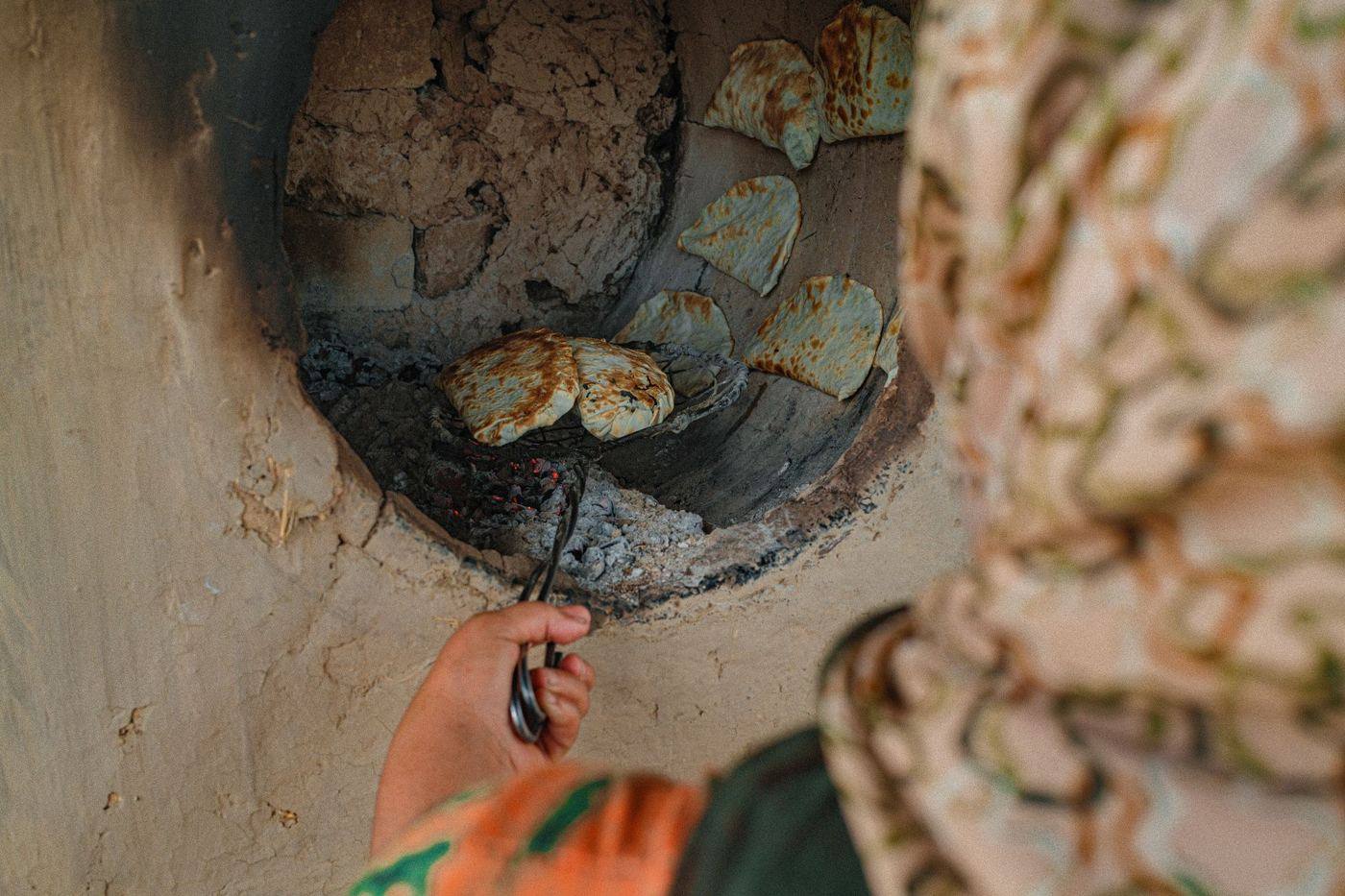
Then look for a neighbourhood bakery and watch somsa being baked in the tandir, the amphora-shaped clay oven: the baker sticks the pastry parcels filled with meat and onion to the hot wall of the oven and peels them off a few minutes later, golden and crisp.
In the evening try shashlik, meat skewers grilled over embers, with raw onions marinated in vinegar.
Sleep in Tashkent.
Practical tip: this evening buy your high-speed train tickets to Samarkand, if you have not done so already: they often sell out.
- Day 3
Samarkand, bread and Siab bazaar
Today you go to Samarkand, the city most famous for its bread.
In the morning take the Afrosiyob high-speed train, which crosses the plain to Samarkand in about two hours. Drop your luggage and go to Siab bazaar, next to the Bibi-Khanym mosque.
Here you see Samarkand bread, the non, round, thick and glossy, with the centre decorated by a stamp. People say it stays good for days, and Uzbeks take it as a gift when they travel. Bread in Uzbekistan is sacred: it is never placed upside down on the table and never thrown away.
If the visit includes it, go into a traditional bakery and watch the baker roll out the dough, decorate it and stick it to the wall of the tandir.
Then wander among the stalls of dried fruit, crystallised sugar sweets called navat and halva, and taste the walnuts and apricots.
In the afternoon visit the Registan, the great square with three madrasas covered in tiles. Check prices and times.
In the evening have dinner with Samarkand plov, where the meat and carrots are laid on top of the rice, without mixing.
Sleep in Samarkand.
Practical tip: if you want to take bread home, buy it the day before you leave and wrap it in a clean cloth.
- Day 4
Bukhara and the cooking class
Today you reach Bukhara and learn to cook an Uzbek dish.
In the morning take the train to Bukhara, about an hour and a half. Leave your luggage at a guesthouse in the old town and walk to Lyabi-Hauz, the square with the seventeenth-century pool and the mulberry trees.
In the afternoon join a cooking class with a family or a local cook. Usually you prepare plov or manty, together with a salad and bread. You learn how to cut carrots into thin strips, how to manage the fire under the kazan and how to close the dumplings with the right folds. At the end you eat together what you have made, sitting on cushions around the low table, and you receive the written recipes to cook again at home. Also ask which spices to use: in Uzbekistan cumin and coriander are almost always there, while chilli is added at the table.
After the class stroll under the trading domes, the covered markets of the sixteenth century, where spices and tea are also sold.
In the evening, if you still have an appetite, try shivit oshi, green dill noodles served with a stew, a typical dish of the Khorezm region that is sometimes found here too.
Sleep in Bukhara, for two nights.
Practical tip: ask in advance whether the class suits vegetarians: Uzbek cooking uses a lot of mutton and fat.
- Day 5
The Bukhara market and dinner in a private home
The last day is devoted to the market and Uzbek hospitality.
In the morning visit the city market, outside the historic centre, with stalls of fruit, meat, bread and spices, and try fresh yoghurt and village cheese. Buy dried fruit, spices and tea to take home.
Then walk in the historic centre of Bukhara, a UNESCO World Heritage Site, to the Kalon minaret, from the twelfth century, and Poi Kalon square. Check prices and times for the monuments.
In the evening you are a guest for dinner in a private home. The table, the dastarkhan, is covered with dishes before you even arrive: fruit, nuts, sweets, salads and bread. Then come the soup, the plov and green tea, poured several times into small bowls, a little at a time, so that it stays hot. It is the best moment to talk with the family and understand Uzbek life.
In five days you have seen Chorsu bazaar and a plov centre in Tashkent, somsa in the tandir, the bread and Siab bazaar of Samarkand, a cooking class and a family dinner in Bukhara.
When to go: September and October, with melons, grapes and pomegranates. April and May are also pleasant; in summer it is very hot.
Practical tip: when they pour your tea they never fill the bowl: it is a sign of care, because your host will pour you more.
A different key to a hospitable country. Plov is eaten at lunch and is often gone by evening. It is hard for vegetarians.
Before you go
- Documents and visa
- Passport with at least three months' remaining validity. British citizens should check their own entry rules; Italian citizens enter without a visa for up to 30 days. Temporary registration is compulsory within three working days of arrival: hotels and guesthouses do it for you, keep the slips until you leave. You must carry your passport at all times.
- Health and vaccines
- No compulsory vaccinations; ask your doctor about recommended ones. Drink only bottled water. Take insurance covering medical costs and repatriation. Emergencies: police 102, ambulance 103, fire 101.
- Money and payments
- Uzbek som (UZS). Visa and Mastercard cards and cash machines are common in big cities and hotels; in markets and rural areas you need cash. Bring dollars or euros in perfect notes and change money only at banks or licensed offices: street exchange is a crime.
- Power sockets
- Types C and F, 220 volts: you need an adapter for British plugs.
- Time zone
- UTC+5 all year: five hours ahead of the UK in winter, four in summer.
- Safety
- The country is generally calm for visitors. Governments advise against the areas along the Afghan border and urge caution near the borders with Kyrgyzstan and Tajikistan: cross only at official checkpoints. In the Fergana, Andijan, Namangan and Surkhandarya regions checks are more frequent. Check before taking photos near military or police sites and ask before photographing people. Official advice: GOV.UK.
Information checked in November 2026 for Italian and EU citizens. Rules change: always check before you travel.
Variations
In four days you skip the second day in Tashkent and see the plov and Chorsu bazaar on the same day.
In seven days you add Khiva, with Khorezm cooking, green dill noodles and a night in the walled city.
Frequently asked questions
Is Uzbek food suitable for vegetarians?
It is difficult, because many dishes contain mutton and fat. You can find salads, bread, vegetables, yoghurt and fruit, but always ask in advance for classes and dinners.
When do you eat plov?
At lunch. In the big plov centres it is cooked in the morning and by mid-afternoon it has often run out.
How do you travel between Tashkent, Samarkand and Bukhara?
By high-speed train, comfortable and punctual. Book tickets in advance on the official railway website, because they sell out.
Indicative itinerary written by World Atlas. Before booking, check timetables, seasonal openings, documents and safety.
 9 daysEasy
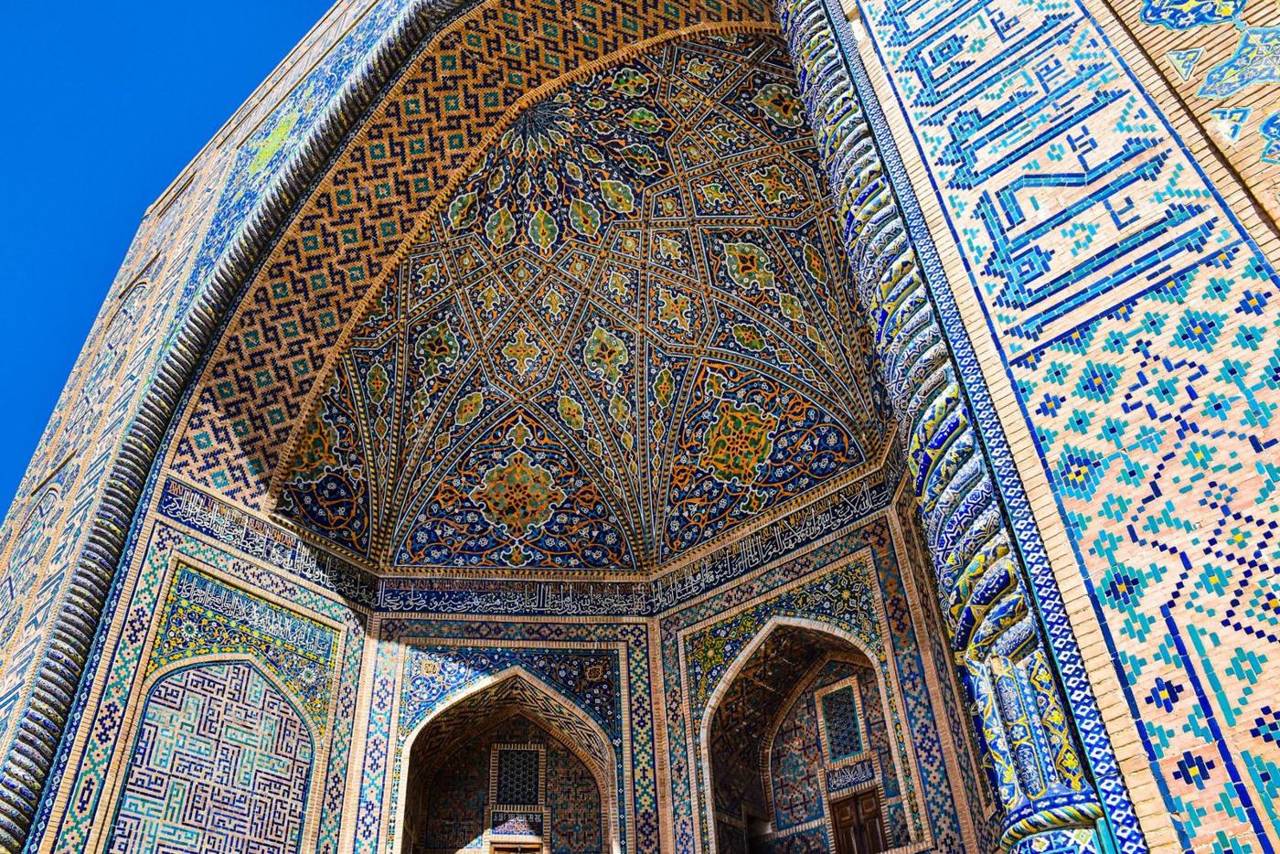
The Silk Road
Tashkent, the museum-city of Khiva, Bukhara and its madrasas and Samarkand's Registan, linked by fast train.
 5 daysEasy
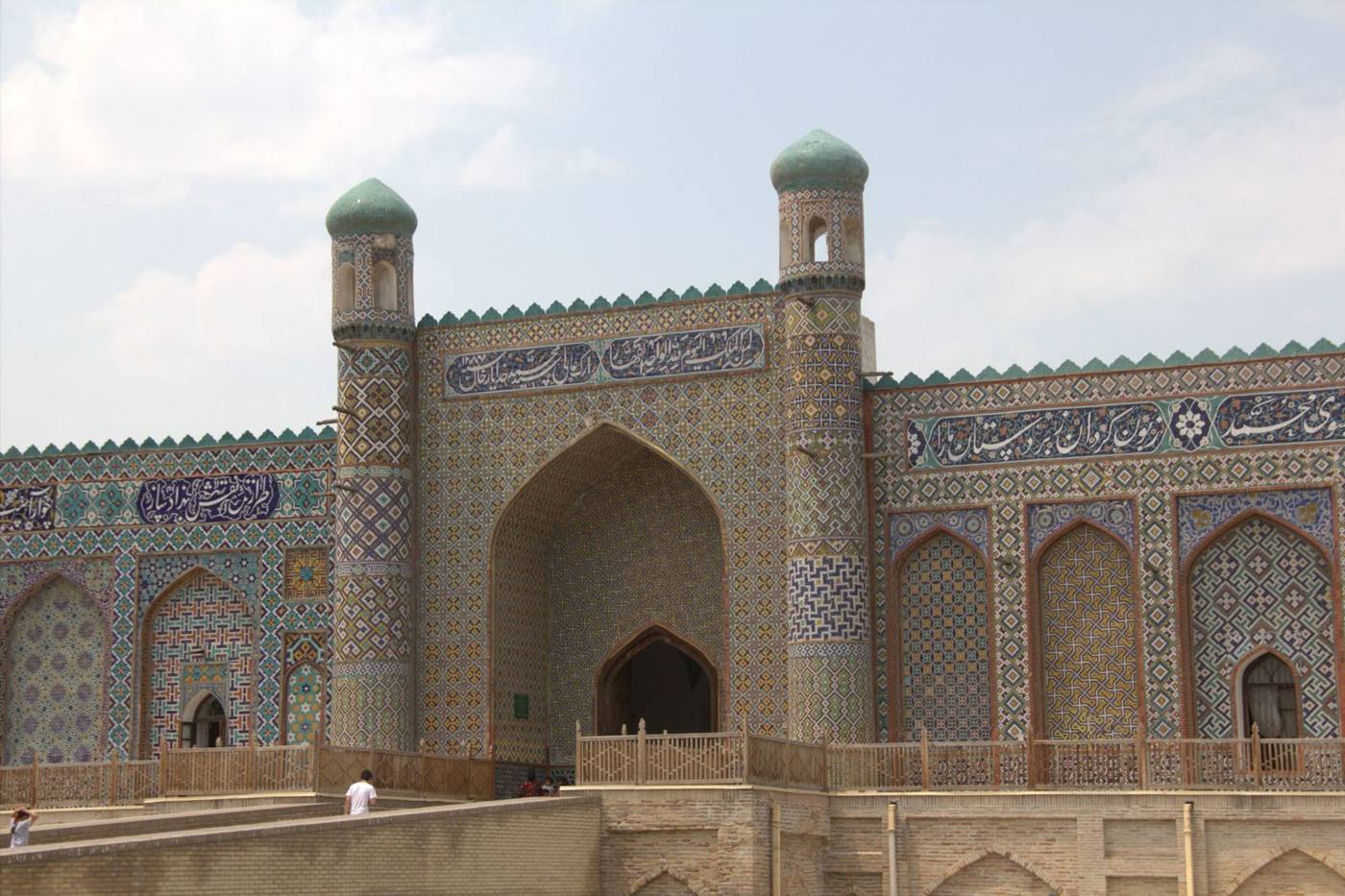
The Fergana Valley
The country's craft heartland: Rishton ceramics, Margilan silk, Khudayar Khan's palace in Kokand and the train over the Kamchik pass.
 6 daysModerate
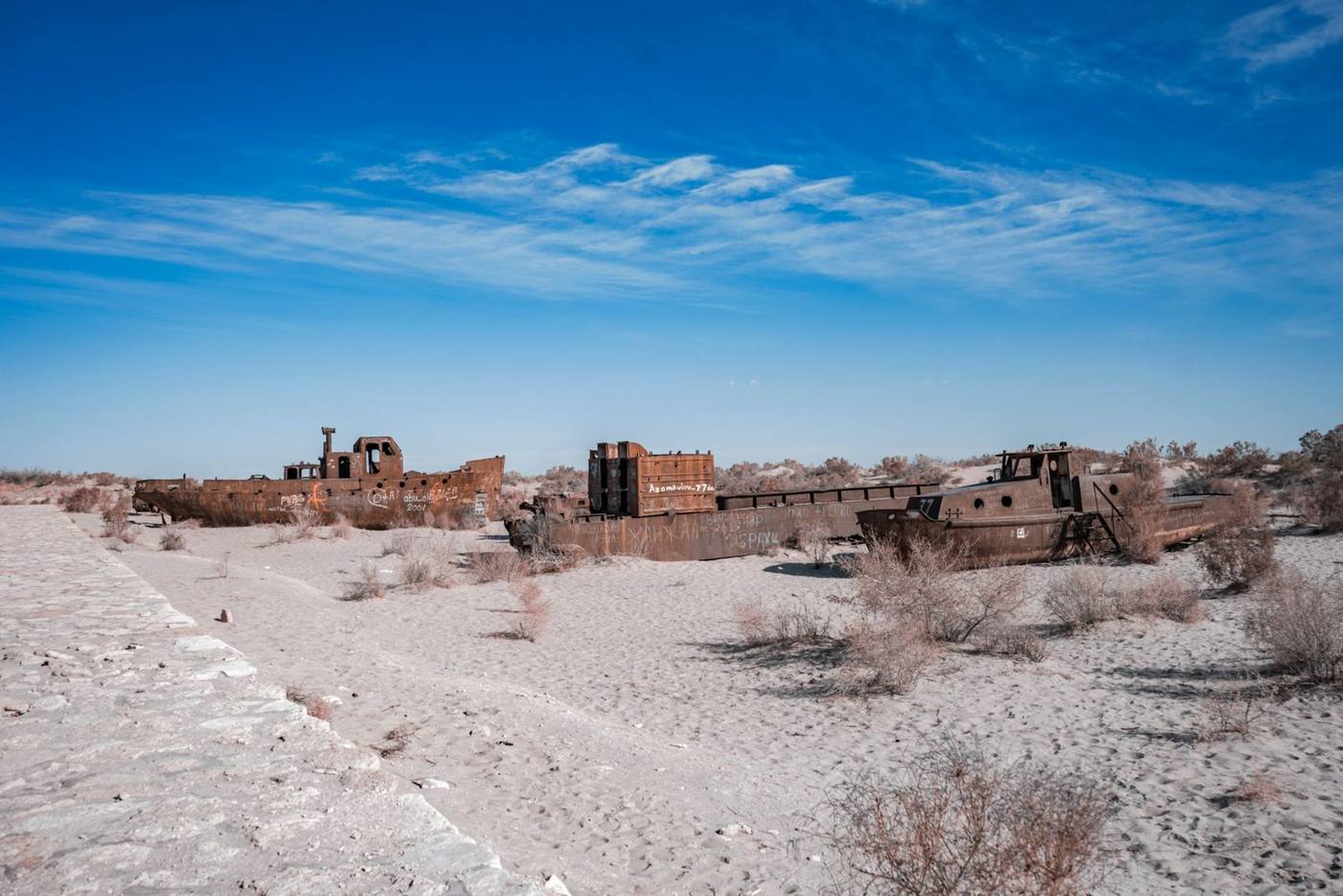
Desert and the Aral Sea
The Savitsky Museum in Nukus and its banned avant-garde art, the Khorezm fortresses, the ship graveyard of Moynaq and a night in a desert yurt.