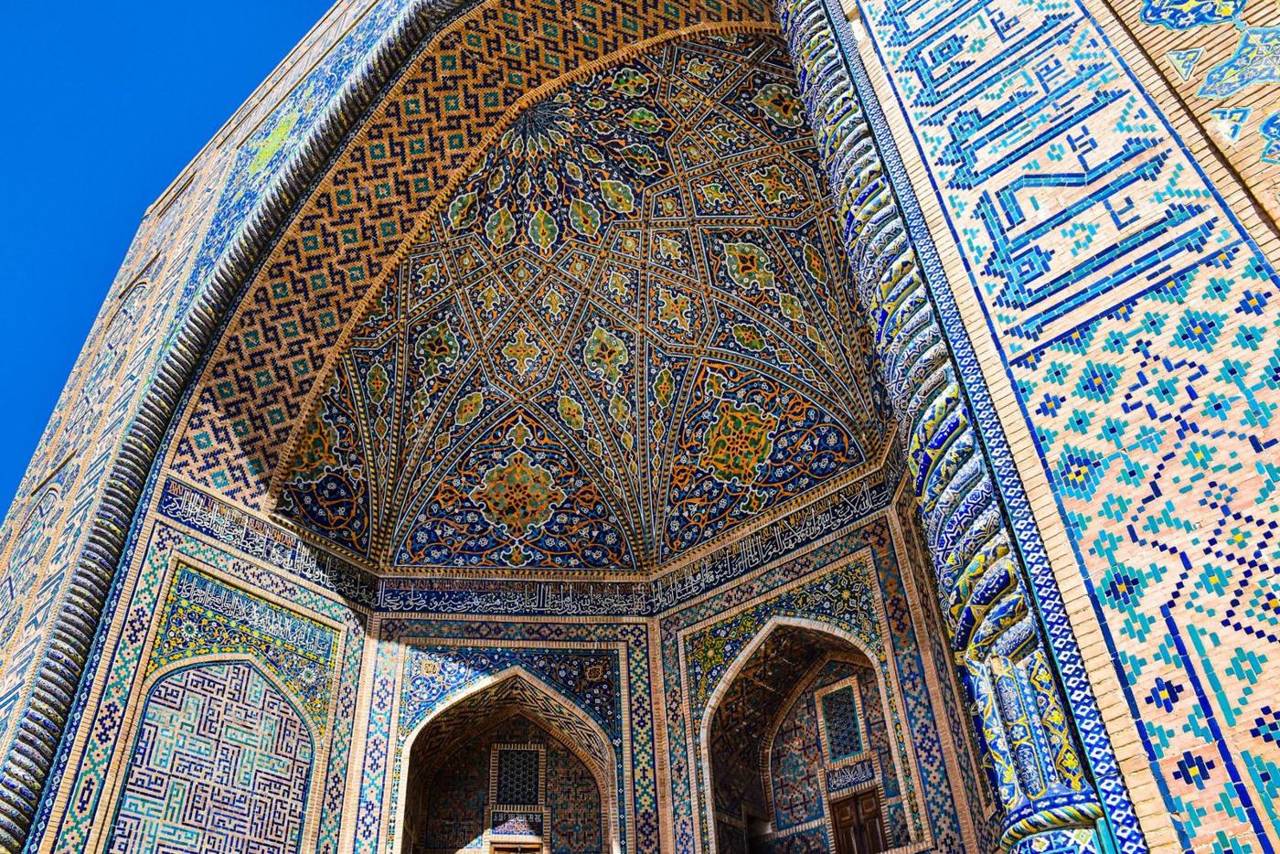
The Silk Road
Tashkent, the museum-city of Khiva, Bukhara and its madrasas and Samarkand's Registan, linked by fast train.
- Tashkent
- Urgench
- Khiva
- Bukhara
- Samarkand
- Shahrisabz
Day by day
- Day 1
Arrival in Tashkent, the metro and Chorsu bazaar
This nine-day trip follows the Silk Road through Uzbekistan: Tashkent, the walled city of Khiva, Bukhara with its madrasas, the Registan of Samarkand and Shahrisabz, Tamerlane's city, linked by domestic flights and high-speed trains.
Before you go: Italian citizens enter Uzbekistan without a visa for short stays, currently up to 30 days: check the length before you leave. You need a passport with at least three months' remaining validity. Temporary registration is compulsory within three working days of arrival: hotels do it for you, and you keep the slips until you leave. Other nationalities should check their own rules.
You arrive in Tashkent, the capital, rebuilt after the earthquake of 1966 with wide avenues and parks. After dropping your luggage go down into the metro, opened in 1977: every station has different chandeliers, marble and mosaics. Visit Kosmonavtlar and Alisher Navoi. Today you can take photos freely.
Then come out at Chorsu bazaar, under the great blue dome, with dried fruit, spices, bread and cheese.
In the afternoon visit the Khast Imam complex, with the library that keeps an ancient Koran. Check prices and times.
In the evening have dinner with plov, the national dish, or with lagman, hand-pulled noodles.
Sleep in Tashkent.
Practical tip: book the high-speed trains for the coming days straight away on the official railway website, because they sell out quickly.
- Day 2
The flight to Urgench and arrival in Khiva
Today you fly west, into ancient Khorezm.
In the morning take the domestic flight from Tashkent to Urgench, over the Kyzylkum desert. On arrival a car takes you in about half an hour to Khiva, through cotton fields, canals and villages of the Amu Darya oasis.
For centuries Khiva was a caravan stop and the capital of a khanate feared for its slave market. The old town, Itchan Kala, is enclosed by mud-brick walls and is a UNESCO World Heritage Site.
In the afternoon enter through the west gate and walk along the main street. In front of you is the Kalta Minor, a stout, short minaret covered in turquoise tiles, which was never finished. Next to it stands the Muhammad Amin Khan madrasa, one of the largest in the city.
Then visit the Kunya Ark fortress, the residence of the khans, with the throne room, the summer mosque covered in tiles and the watchtower. Check prices and times.
At sunset climb to the terrace of the Kunya Ark: the walls, domes and minarets turn pink and gold.
In the evening have dinner with shivit oshi, the green dill noodles typical of Khorezm.
Sleep in Khiva, for two nights.
Practical tip: buy the combined ticket at the entrance and ask which monuments it includes.
- Day 3
Khiva, the museum city
Today you have the whole day for the walled city.
Early in the morning, before the groups, climb the Islam Khodja minaret, the tallest in Khiva, if it is open: from the top you see the city inside its walls and the desert around it. Then visit the Juma mosque, with its hall full of carved wooden columns, some very old, holding up the flat ceiling. Light comes in only through two openings and creates a silent atmosphere.
Then go into the Tash Hauli palace, built in the nineteenth century, with the harem courtyards, wooden loggias and walls covered in blue and white tiles.
At midday visit the mausoleum of Pahlavan Mahmud, a medieval poet and wrestler, patron of the city, with its turquoise dome and decorated interior. It is a place of pilgrimage: dress modestly.
In the afternoon walk along the walls and in the lanes away from the main streets, where people still live in earth houses, with children playing and women baking bread.
If you like, leave Itchan Kala and visit the outer city, Dishan Kala, with its markets and less visited madrasas.
Sleep in Khiva.
Practical tip: buy textiles and woollen hats directly from the craftsmen in the madrasas turned into workshops.
- Day 4
From Khorezm to Bukhara across the desert
Today you cross the Kyzylkum desert to Bukhara.
In the morning take the train from Khiva to Bukhara, or set off by car with a driver. The journey takes several hours. The road and railway run in places beside the Amu Darya, the great river that marks the border with Turkmenistan, then enter the desert, with low dunes, saxaul bushes and the odd camel.
If you travel by car, stop at a teahouse along the way for a simple lunch of bread, soup and green tea.
In the afternoon you reach Bukhara, one of the oldest cities in Central Asia, for centuries a great centre of Islamic learning and trade. The historic centre is a UNESCO World Heritage Site.
Drop your luggage at a guesthouse in the old town and walk to Lyabi-Hauz, the square with the seventeenth-century pool, surrounded by old mulberry trees and two madrasas. Sit with a tea and watch the life of the city: old men playing games, families and young people.
In the evening, when it is cooler, stroll under the trading domes, the covered markets of the sixteenth century, with carpets, knives and silks.
Sleep in Bukhara, for two nights.
Practical tip: for the desert journey bring water, dried fruit and something to read: the hours on the road are many.
- Day 5
Bukhara: the Ark, the Kalon minaret and the covered bazaars
Today you visit the great monuments of Bukhara.
In the morning enter the Ark fortress, the residence of the emirs for many centuries, with high walls and a great sloping entrance. Inside there are courtyards, the throne room, a mosque and small museums. Check prices and times.
In front of the Ark is the Bolo Hauz pool, with the mosque whose slender, very tall wooden columns are reflected in the water.
Then go to the Kalon minaret, from the twelfth century, about forty-five metres high, decorated with bands of brick. It is said that even Genghis Khan, who destroyed the city, spared it. Around it is Poi Kalon square, with the great mosque and the Mir-i-Arab madrasa, still in use.
In the afternoon visit the Samanid mausoleum, from the tenth century, one of the oldest Islamic monuments in Central Asia, in a park: the bricks form patterns that change with the light.
Then head back towards the centre and walk among the trading domes, the covered markets, where craftsmen work metal, embroider suzani and paint miniatures.
In the evening, if you like, watch a show of traditional music and dance in a madrasa in the centre.
Sleep in Bukhara.
Practical tip: visit the Kalon minaret at sunset: the warm light brings out every detail of the brickwork.
- Day 6
By train to Samarkand and the Registan
Today you reach Samarkand, the most famous city on the Silk Road.
In the morning take the high-speed train from Bukhara to Samarkand, about an hour and a half. Drop your luggage and visit the Gur-e-Amir mausoleum, where Tamerlane is buried; at the end of the fourteenth century he made Samarkand the capital of his empire. The ribbed turquoise dome can be seen from afar, and inside the walls shine with gold. Check prices and times.
In the afternoon go to the Registan, the great square with three madrasas facing each other: that of Ulugh Beg, from the fifteenth century, and those of Sher-Dor and Tilya-Kori, from the seventeenth. Enter the courtyards, look at the tiles, the lions chasing deer on the facade of Sher-Dor and the gilded hall of the Tilya-Kori mosque. Check prices and times.
In the old students' cells there are now craft workshops: ceramics, textiles, musical instruments.
In the evening go back to the Registan to see it lit up, when the square fills with families and young people.
Dinner with Samarkand plov, with the meat and carrots laid on top of the rice.
Sleep in Samarkand, for three nights.
Practical tip: ask whether the Registan ticket is also valid in the evening, so you do not pay twice.
- Day 7
Shah-i-Zinda, Bibi-Khanym and the observatory
Today you see the other great monuments of Samarkand.
Early in the morning climb to the Shah-i-Zinda necropolis. A narrow lane with flights of steps runs between mausoleums built mostly in the fourteenth and fifteenth centuries, covered in blue and turquoise tiles with flowers and inscriptions. It is the most moving place in the city and a place of pilgrimage: move quietly and dress modestly.
Then go down to the Bibi-Khanym mosque, commissioned by Tamerlane at the beginning of the fifteenth century, one of the largest in the Islamic world, with its huge portal and courtyard. Next to it is Siab bazaar, the city's great market: buy the round Samarkand bread, famous throughout the country, and dried fruit.
In the afternoon visit the observatory of Ulugh Beg, the astronomer ruler and grandson of Tamerlane, with the underground part of a huge fifteenth-century sextant. The small museum describes his calculations of the stars. Check prices and times.
If you have time, go to the Afrasiyab museum, with seventh-century frescoes from the oldest city.
In the evening relax in a teahouse with green tea and sesame sweets.
Sleep in Samarkand.
Practical tip: arrive at Shah-i-Zinda at opening time: the light is better and there are fewer groups.
- Day 8
The trip to Shahrisabz
Today you go to Shahrisabz, the birthplace of Tamerlane.
In the morning drive south. The road climbs the Takhtakaracha pass, in the Zeravshan mountains, with hairpin bends, pastures and sellers of fruit and cheese along the way. In about an hour and a half you reach Shahrisabz, the green city, a UNESCO World Heritage Site.
Visit the remains of the Ak-Saray palace, the white palace that Tamerlane had built at the end of the fourteenth century. Two gigantic pillars of the portal survive, covered in blue, white and gold tiles. In front stands the great statue of Tamerlane.
Then visit the Dorut Tilovat complex, with the Kok Gumbaz mosque commissioned by Ulugh Beg, and the Dorus Siyadat complex, with the mausoleum of Jahangir, Tamerlane's favourite son, and the crypt prepared for Tamerlane himself, who was instead buried in Samarkand. Check prices and times.
At lunch eat in town: try the oven-baked meat dishes and warm bread.
In the afternoon return to Samarkand over the pass and take a last walk in the centre.
Sleep in Samarkand.
Practical tip: in snow or heavy rain the pass can be closed: in that case your driver takes the longer road around the mountains.
- Day 9
The Afrosiyob train to Tashkent and departure
On the last day you return to the capital.
In the morning, if you have time, make a last visit to the Registan in the morning light, when the square is still quiet, or to the Konigil paper mill, just outside the city, where mulberry paper is still made as in the Middle Ages. Check prices and times.
Then take the Afrosiyob high-speed train to Tashkent. In about two hours you cross the farmed plain, with cotton fields, orchards and villages.
In Tashkent, depending on your flight time, visit the Museum of Applied Arts, with ceramics, suzani and painted wooden ceilings, or do your last shopping at Chorsu bazaar. Then go to the airport, a short distance from the centre.
In nine days you have seen Tashkent with its metro and Chorsu bazaar, the walled city of Khiva, the Kyzylkum desert, Bukhara with the Ark, the Kalon minaret and the covered bazaars, Samarkand with the Registan, Gur-e-Amir and Shah-i-Zinda, and Shahrisabz. It is one of the finest cultural journeys in Asia, and easy to organise.
When to go: April and May or September and October. July and August are scorching, with temperatures above 40 degrees.
Practical tip: keep the registration slips for every night: they may ask for them at the airport when you leave.
One of Asia's finest cultural trips, easy and safe, with entry without a visa for many Europeans for up to 30 days. Fast trains must be booked ahead as they sell out. July and August are scorching, above 40 °C.
Before you go
- Documents and visa
- Passport with at least three months' remaining validity. British citizens should check their own entry rules; Italian citizens enter without a visa for up to 30 days. Temporary registration is compulsory within three working days of arrival: hotels and guesthouses do it for you, keep the slips until you leave. You must carry your passport at all times.
- Health and vaccines
- No compulsory vaccinations; ask your doctor about recommended ones. Drink only bottled water. Take insurance covering medical costs and repatriation. Emergencies: police 102, ambulance 103, fire 101.
- Money and payments
- Uzbek som (UZS). Visa and Mastercard cards and cash machines are common in big cities and hotels; in markets and rural areas you need cash. Bring dollars or euros in perfect notes and change money only at banks or licensed offices: street exchange is a crime.
- Power sockets
- Types C and F, 220 volts: you need an adapter for British plugs.
- Time zone
- UTC+5 all year: five hours ahead of the UK in winter, four in summer.
- Safety
- The country is generally calm for visitors. Governments advise against the areas along the Afghan border and urge caution near the borders with Kyrgyzstan and Tajikistan: cross only at official checkpoints. In the Fergana, Andijan, Namangan and Surkhandarya regions checks are more frequent. Check before taking photos near military or police sites and ask before photographing people. Official advice: GOV.UK.
Information checked in November 2026 for Italian and EU citizens. Rules change: always check before you travel.
Variations
In seven days you skip Shahrisabz and the second day in Khiva, and take the train from the walled city the morning after you arrive.
In twelve days you add a night in the yurt camp near Lake Aydarkul and two days in the Fergana Valley.
Frequently asked questions
How do you travel between the cities?
With a domestic flight from Tashkent to Urgench, then by train or car between Khiva and Bukhara, and by high-speed train between Bukhara, Samarkand and Tashkent. Book the trains in advance.
Do you need a guide?
It is not compulsory: the cities are easy to visit on your own. A local guide for half a day in Khiva, Bukhara and Samarkand does help you understand the history of the monuments.
Is it very hot in summer?
Yes, in July and August it often goes above 40 degrees. The best months are April, May, September and October.
Indicative itinerary written by World Atlas. Before booking, check timetables, seasonal openings, documents and safety.
 5 daysEasy
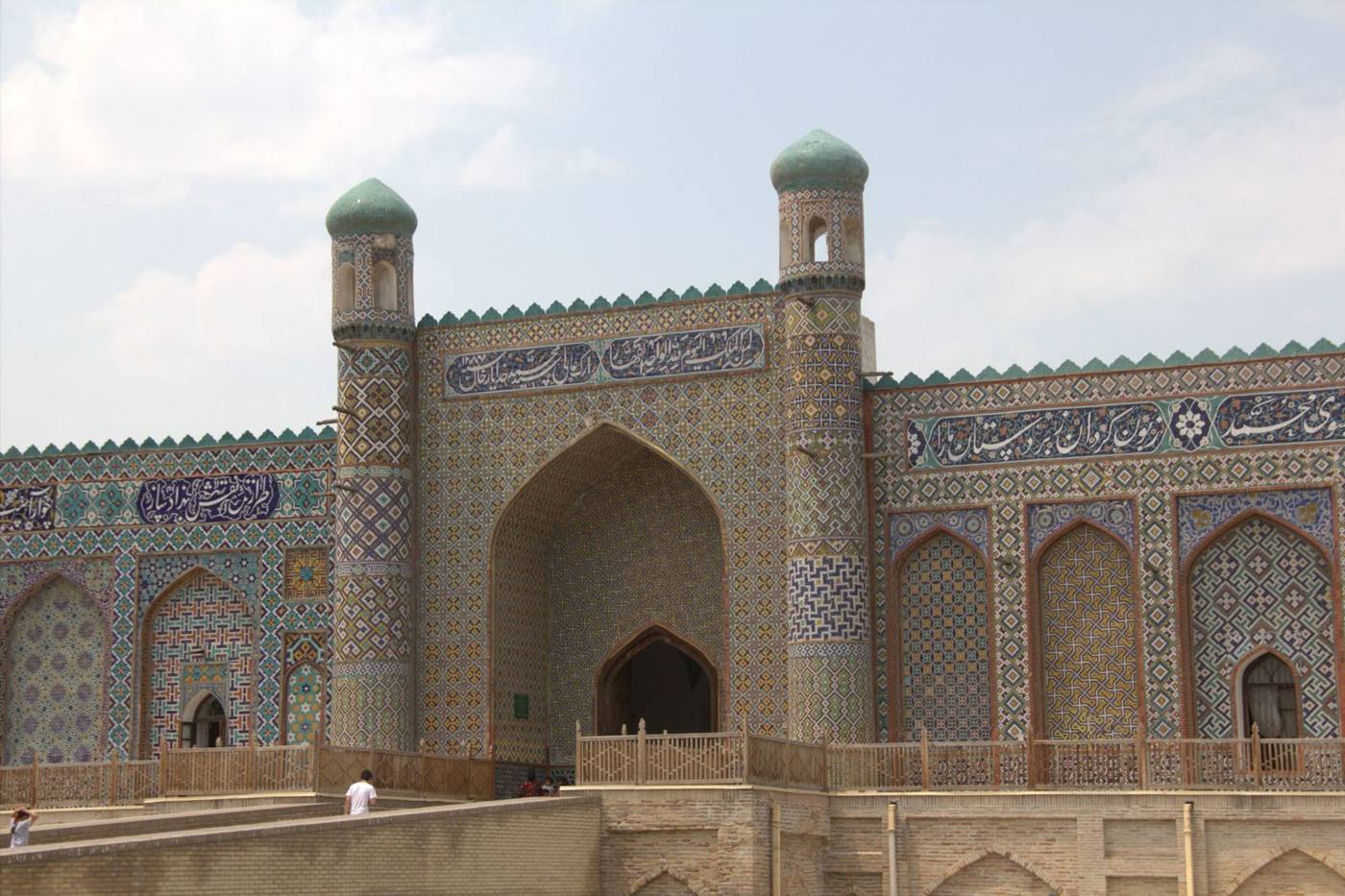
The Fergana Valley
The country's craft heartland: Rishton ceramics, Margilan silk, Khudayar Khan's palace in Kokand and the train over the Kamchik pass.
 6 daysModerate
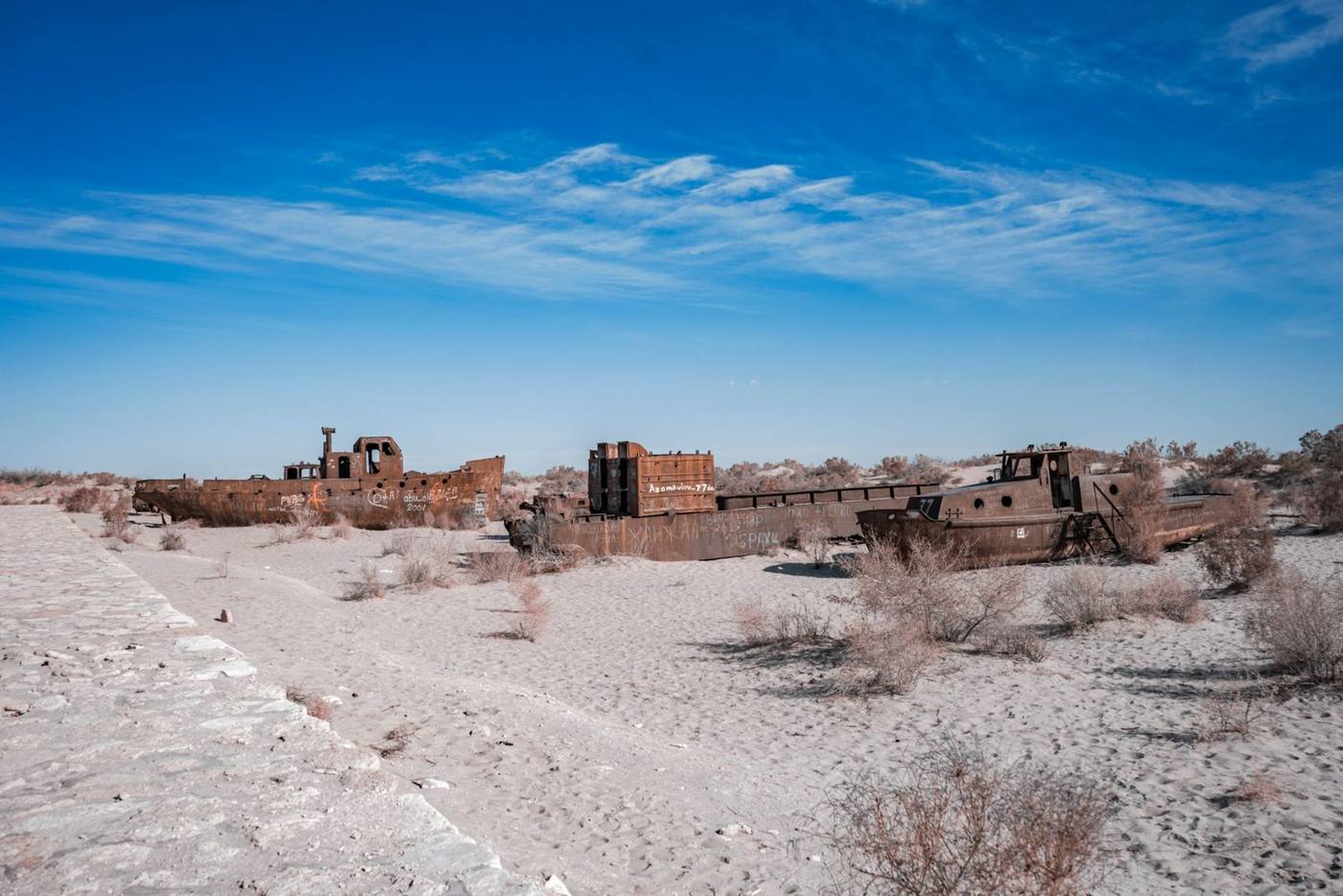
Desert and the Aral Sea
The Savitsky Museum in Nukus and its banned avant-garde art, the Khorezm fortresses, the ship graveyard of Moynaq and a night in a desert yurt.
 4 daysEasy
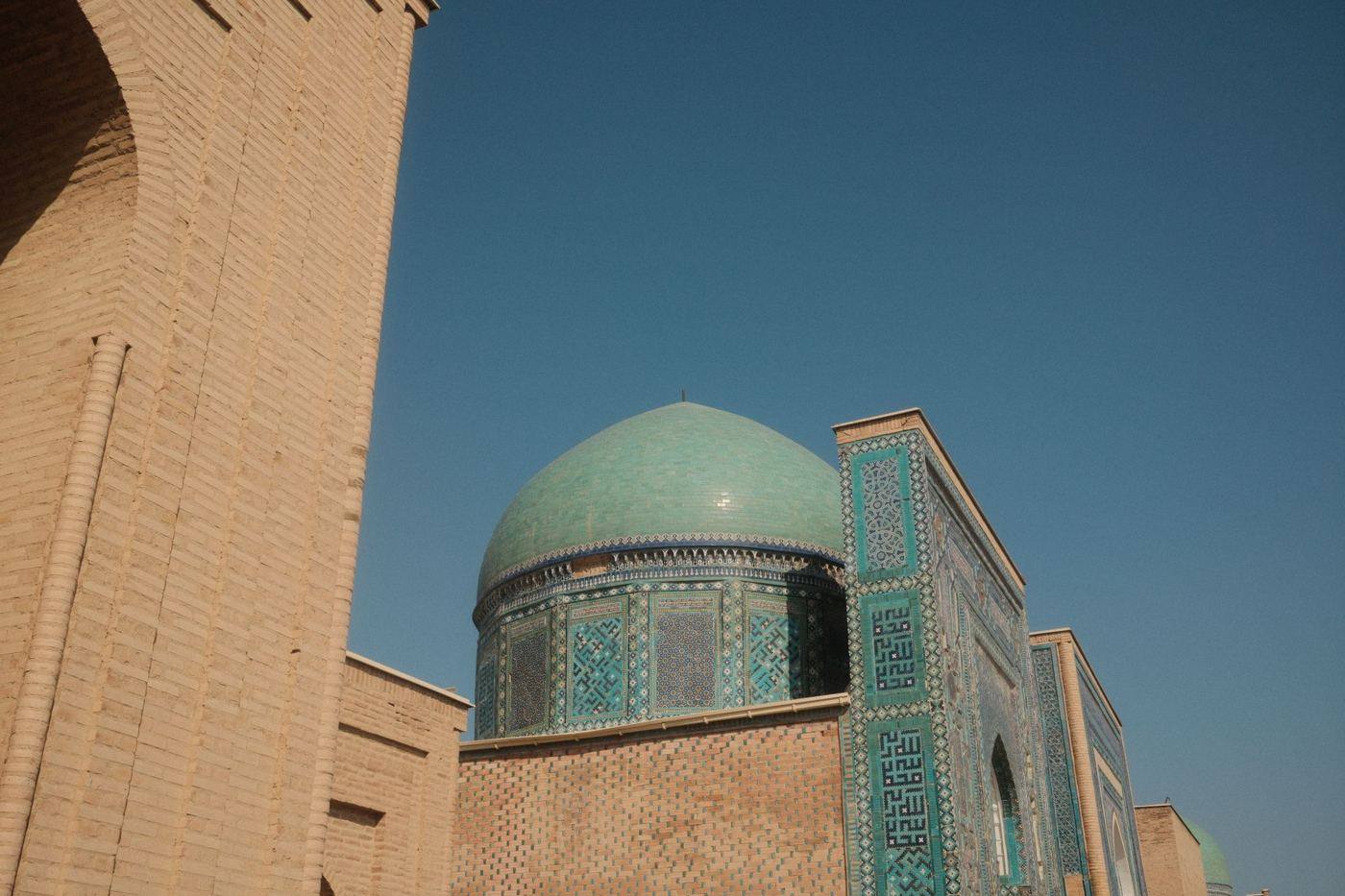
Samarkand and Shahrisabz
Samarkand at a slower pace: the Registan at night, the Shah-i-Zinda necropolis, Ulugh Beg's observatory, the Konigil paper mill, then Shahrisabz, Tamerlane's birthplace.