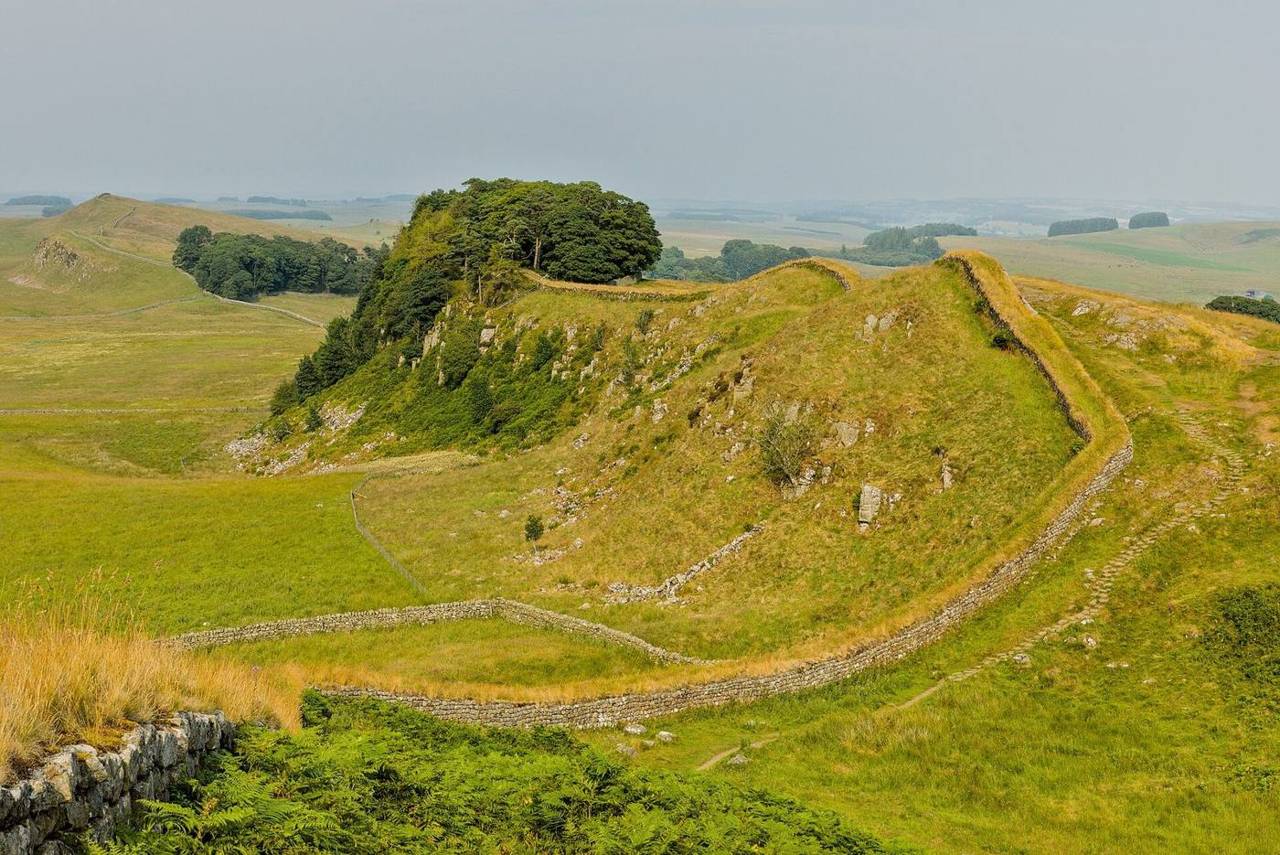
Northumberland and Hadrian's Wall
The border with Scotland: Hadrian's Wall, a UNESCO World Heritage site, with the Roman forts of Housesteads and Vindolanda, Durham Cathedral, the castles of Bamburgh and Alnwick by the sea and the holy island of Lindisfarne, reachable only at low tide.
- Durham
- Vindolanda
- Housesteads
- Alnwick
- Bamburgh
- Lindisfarne
Day by day
- Day 1
Durham: the cathedral and the castle
North-east England, between Durham, Newcastle and the Scottish border, is a region of green hills, moorland, clifftop castles and long empty beaches on the North Sea. Here the emperor Hadrian built the great wall that marked the northern frontier of the Roman Empire, and here northern English Christianity was born, on the holy island of Lindisfarne. Northumberland is one of the least populated counties in England, with dark skies and wide-open nature. In five days you see Durham, Hadrian's Wall, the coastal castles and Lindisfarne.
Durham can be reached by train from London in about three hours, or from Newcastle in a quarter of an hour. The old town sits on a rocky peninsula enclosed by a loop of the river Wear, with the cathedral and castle at the top, a UNESCO site since 1986.
Durham Cathedral, built between the late eleventh and early twelfth centuries, is considered one of the greatest Romanesque buildings in Europe, with huge columns carved in spirals and zigzags and the first large-scale ribbed vaults. It holds the tomb of Saint Cuthbert, the saint of Lindisfarne, and that of the Venerable Bede, the monk historian of the seventh and eighth centuries.
In the afternoon, visit the castle, now part of the university, with its great hall and Norman chapel, and walk the riverside path beneath the woods, with views of the cathedral.
In the evening, dine in town on northern food: stotties, the flat bread rolls typical of Newcastle, roast beef and stew.
Practical tip: to enter the United Kingdom, Italian citizens must use a passport and hold the ETA electronic authorisation, which costs 20 pounds and is requested online before departure.
- Day 2
Hadrian's Wall: Vindolanda and Housesteads
In the morning, head west by car or train to Hexham or Haltwhistle, in the heart of Hadrian's Wall country, in about an hour. The wall was built from AD 122 on the orders of the emperor Hadrian, from coast to coast across Britannia, for about one hundred and eighteen kilometres. It was made of stone, with a ditch, small forts every Roman mile, turrets and large forts for the garrisons. It has been a UNESCO site since 1987.
Start at Vindolanda, a Roman fort just south of the wall, where excavations continue every summer. The Vindolanda tablets were found here, thin wooden leaves with ink letters written by soldiers and their families, among the oldest written documents in Britain: requests for socks and beer, military reports, and even a birthday party invitation from one woman to a friend. The museum displays leather shoes, textiles, jewellery and everyday objects preserved in the damp soil.
In the afternoon, go to Housesteads, the best-preserved fort on the wall, on a ridge overlooking the hills. You see the foundations of the barracks, the commander's house, granaries, hospital and Roman latrines, with stone water channels.
In the evening, sleep in one of the villages along the wall and have dinner in an old country pub.
Practical tip: in summer a bus links the main sites along the wall. Check the timetable, as there are few services out of season.
- Day 3
The trail along the wall to Sycamore Gap
Today, walk the finest stretch of Hadrian's Wall, where it follows the crests of a long rock escarpment, the Whin Sill, with views over the moors and lakes to the north.
The Hadrian's Wall Path national trail follows the whole wall from coast to coast, for about one hundred and thirty-five kilometres. The central stretch, from Steel Rigg to Housesteads, is about six kilometres long, with many steep ups and downs along the crests, in about three hours. Here the wall stands up to two metres high, with the remains of milecastles and turrets.
Halfway along you pass Sycamore Gap, a dip between two crests where for about two hundred years a great sycamore stood, one of the most photographed trees in Britain. In September 2023 the tree was illegally felled during the night, an act that caused great sorrow across the country. Today the stump remains, and seedlings grown from the tree's seeds have been distributed all over the United Kingdom.
Along the trail you also see Crag Lough lake below the cliff, and shepherds' fields with dry-stone walls.
In the evening, return to the village and rest.
Practical tip: do not walk on top of the wall; it is forbidden in order to protect it. Stay on the path beside it and, in winter or after rain, walk on the drier side to avoid damaging the grass.
- Day 4
Alnwick and Bamburgh
In the morning, drive north-east to Alnwick, in about an hour and a half. Alnwick Castle has been the home of the Percy family, Dukes of Northumberland, for more than seven hundred years. It is one of the largest inhabited castles in England, with rooms full of paintings, furniture and porcelain, and a medieval courtyard. Next to the castle is the Alnwick Garden, with cascading fountains, a rose garden and the poison garden, with poisonous plants to see with a guide.
In the afternoon, continue to the coast and Bamburgh, about half an hour away. Bamburgh Castle rises on a basalt rock above a long sandy beach and dunes. It was the seat of the kings of Northumbria in the Middle Ages, and today it is one of the most beautiful sights on the English coast. You visit the halls, armoury, kitchens and aviation museum.
From Seahouses, just to the south, boats leave for the Farne Islands, small rocky islands where, from April to July, thousands of seabirds nest, including puffins, and where grey seals live. Check the timetables and sea conditions.
In the evening, dine in Seahouses or Craster on kippers, the smoked herrings typical of this coast.
Practical tip: between Craster and Dunstanburgh Castle there is a lovely coastal walk of about an hour and a half, to the castle ruins by the sea.
- Day 5
Lindisfarne at low tide and departure from Newcastle
On your last morning, go to Lindisfarne, the Holy Island, about half an hour north of Bamburgh. The island is linked to the mainland by a causeway that can only be crossed at low tide: twice a day the sea covers it completely. Before going, check the tide tables, displayed at the start of the causeway and published online.
In 635 the Irish monk Aidan founded a monastery here, from which Christianity spread through northern England. Saint Cuthbert lived here, and here monks wrote and decorated the Lindisfarne Gospels, one of the most beautiful medieval manuscripts in Europe, now kept in London. In 793 the island was raided by the Vikings, an attack considered the start of the Viking age in England.
On the island you visit the ruins of the priory, with its red stone arch, the small museum, the village and Lindisfarne Castle, on a rock above the harbour. From the village you can walk along the coast among dunes and beaches.
In the afternoon, before the tide comes in, return to the mainland and drive to Newcastle, in about an hour, for your flight or train. If you have time, walk along the Tyne quayside with its bridges.
Practical tip: never try to cross the Lindisfarne causeway when the tide is rising. Every year some cars get stranded and have to be rescued.
History and uncrowded landscapes. The causeway to Lindisfarne is covered by the sea twice a day: check the daily published tide times, many cars get stranded. Where the famous Sycamore Gap tree stood, felled in 2023, there is now only the stump. A passport is needed (identity cards are no longer accepted) and, for EU citizens, the Electronic Travel Authorisation (ETA), applied for online before travelling: since 8 April 2026 it costs £20 and is valid for two years.
Before you go
- Documents and visa
- You need a passport: identity cards are no longer accepted. Before leaving you apply online for an ETA, the electronic travel authorisation: it costs 20 pounds and is valid for two years.
- Health and vaccines
- No vaccines required. EU citizens should carry the European Health Insurance Card for necessary treatment. Emergencies: 999 or 112.
- Money and payments
- Pound sterling. Contactless cards are used everywhere, including on London public transport.
- Power sockets
- Type G, 230 volts: you need an adapter for British three-pin plugs.
- Time zone
- UTC in winter and UTC+1 in summer.
- Safety
- The United States rates the United Kingdom level 2 for terrorism. In big cities watch out for pickpockets; in Scotland and Wales the main risks are weather and mountains. Driving is on the left. ETA: GOV.UK.
Information checked in November 2026 for Italian and EU citizens. Rules change: always check before you travel.
Variations
In 3 days: Durham and two days on Hadrian's Wall.
In 8 days: continue north to Edinburgh and the hills of the Scottish Borders.
Frequently asked questions
When is the best time to go?
From May to September, with long days. From April to July the Farne Islands are full of seabirds. In winter the wind is strong and many sites have reduced hours.
Do I need a car?
It is very useful for the coast and Lindisfarne. Durham and Newcastle are linked by train, and in summer a bus serves Hadrian's Wall.
What documents do I need?
A passport and the ETA electronic authorisation, which costs 20 pounds and is requested online. You cannot enter with an identity card alone.
Indicative itinerary written by World Atlas. Before booking, check timetables, seasonal openings, documents and safety.
 4 daysEasy
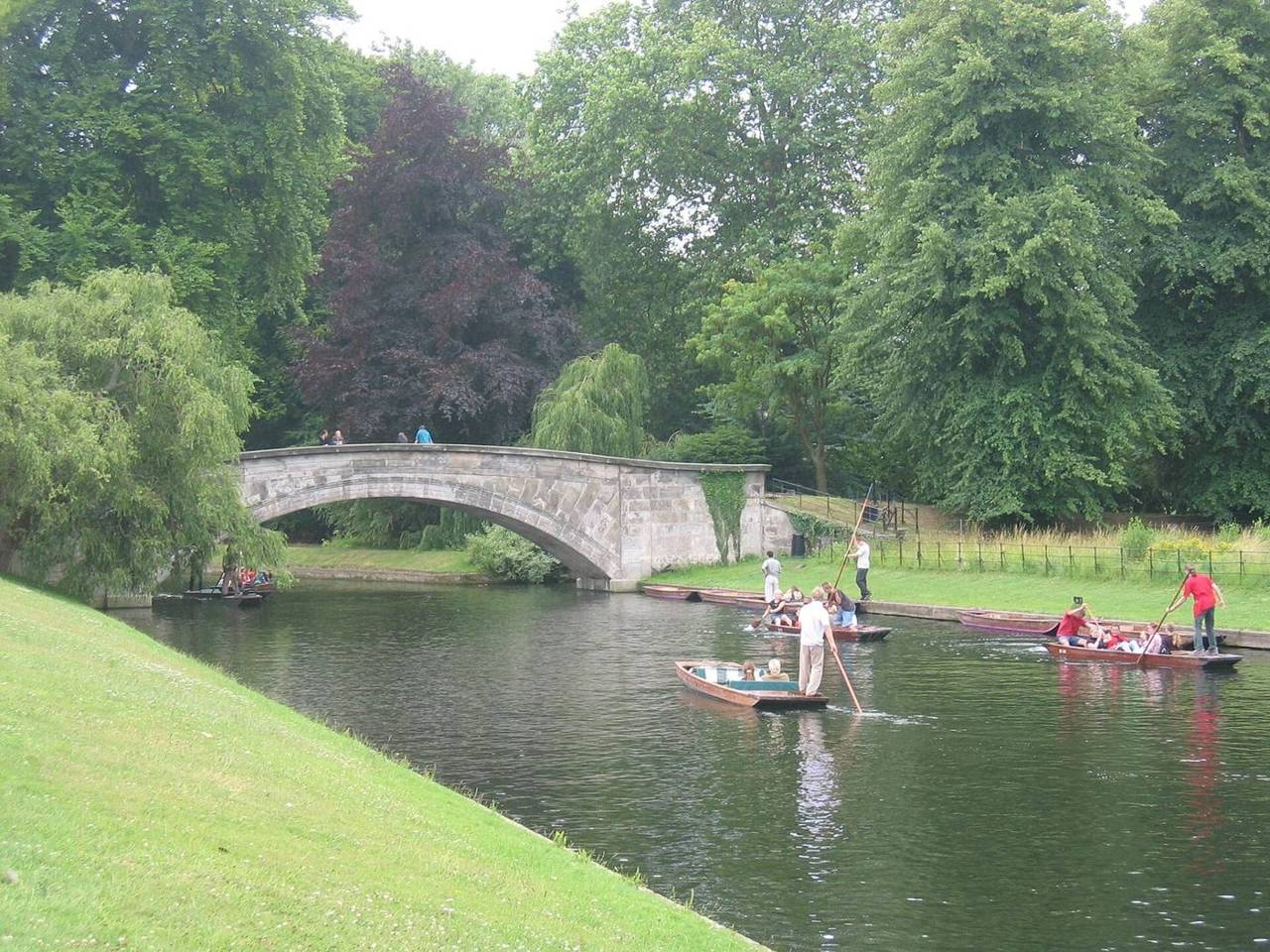
Cambridge and the Norfolk coast
Eastern England: the Cambridge colleges and punting on the River Cam, Ely Cathedral, medieval Norwich, the Broads with their waterways, and the Norfolk coast with the grey seals of Blakeney and the beaches of Holkham.
 5 daysEasy
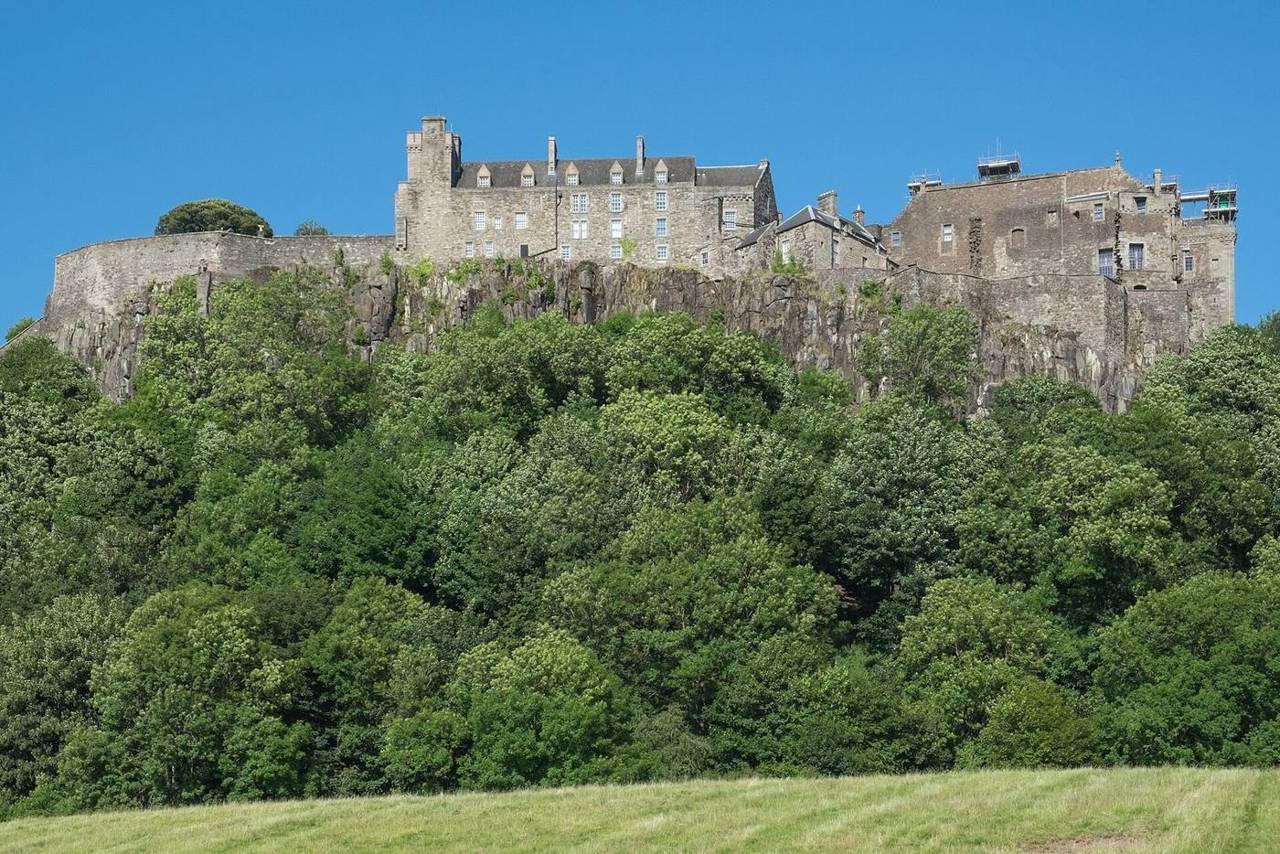
Glasgow, Stirling and St Andrews
Scotland of cities and history: Glasgow with Kelvingrove, Mackintosh's architecture and the cathedral, Stirling Castle and the Wallace Monument, Loch Lomond, Fife with the fishing villages of the East Neuk and St Andrews, the home of golf.
 8 daysModerate
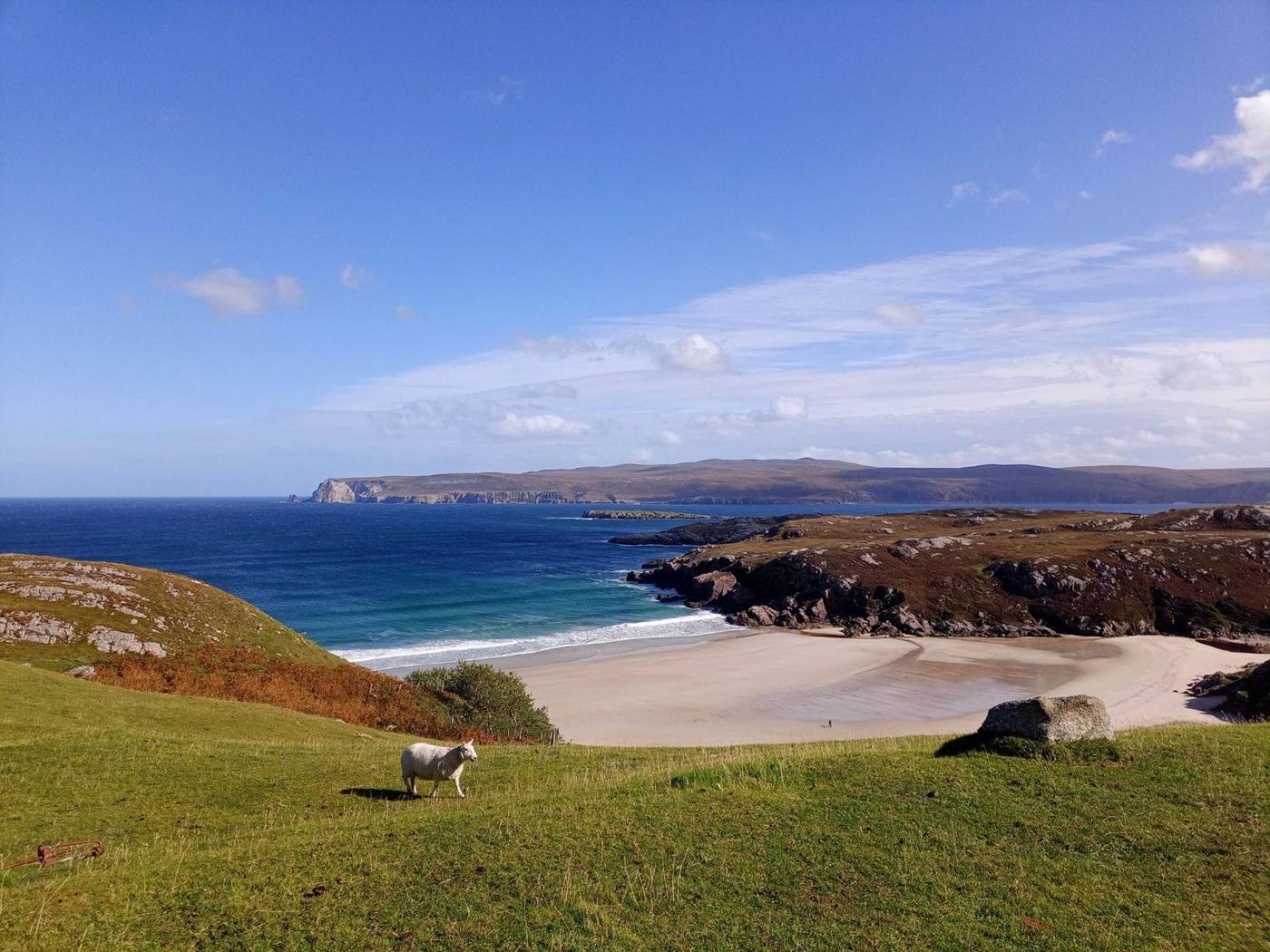
The North Coast 500
The great road loop of northern Scotland, about 800 km from Inverness: the Bealach na Bà pass to Applecross, the Torridon lochs, the white beaches of Durness and Smoo Cave, John o' Groats and the Duncansby cliffs, Dunrobin and Ardvreck castles.