Belfast and the Causeway Coast
Northern Ireland: the Titanic museum and the murals of Belfast, the Antrim coast with the Giant's Causeway and Dunluce Castle.
- Belfast
- Glens of Antrim
- Carrick-a-Rede
- Giant's Causeway
- Dunluce
- Belfast
Day by day
- Day 1
Belfast: City Hall and the Titanic Quarter
Belfast is the capital of Northern Ireland, an industrial city that built ships in the twentieth century, the Titanic among them, and that from the late 1960s until 1998 lived through the Troubles, the conflict between unionists, mostly Protestant and loyal to the United Kingdom, and republicans, mostly Catholic and in favour of union with Ireland. Since the Good Friday peace agreement the city has changed a great deal: today it is lively, safe for visitors and full of music. An hour and a half away is the Antrim coast, with the Giant's Causeway. In four days you see both.
You arrive by plane at one of the city's two airports, or by train or coach from Dublin, in just over two hours.
In the morning, start at City Hall, a large white building with a dome, built in the early twentieth century when Belfast was one of the richest cities in the empire. No-cost guided tours show the halls, the stained-glass windows and the history of the city. In the garden stands the Titanic memorial, with the names of the victims.
In the afternoon, go to the Titanic Quarter, on the banks of the river Lagan, where the Harland and Wolff shipyards stood, with the two huge yellow cranes named Samson and Goliath. The Titanic Belfast museum, a metal building shaped like a ship's bow, tells the story of the industrial city, the building of the ship, its voyage and the sinking of 1912. Next to it you can board the Nomadic, the small tender that carried passengers out to the Titanic at Cherbourg.
Practical tip: the Titanic museum is very popular, so book a timed ticket online, especially at weekends and in summer.
- Day 2
The murals, the peace walls and the centre
In the morning, join one of the mural tours in the west of the city, the areas most marked by the Troubles. The best way is with a local guide, often in a black cab, who takes you along the Falls Road, the republican and Catholic district, and the Shankill Road, the unionist and Protestant district. Some tours are run by former participants from both sides, who tell their story from different points of view: it is an intense experience that helps you understand a great deal.
The murals are large paintings on the walls of houses: they remember victims, prisoners, historical events and political figures, or speak of peace and international causes. Between the two districts the peace walls still run, high barriers of concrete and metal with gates that in some places are closed in the evening. You can leave a signature or a message on the wall, as many visitors do.
In the afternoon, return to the centre. If it is Friday, Saturday or Sunday, visit St George's covered market, in a Victorian building, with local produce, fish, cheese and live music. Otherwise, visit the old Crumlin Road prison, now a museum, or stroll around the Cathedral Quarter, with its artistic murals and lanes full of bars.
In the evening, listen to traditional Irish music in one of the pubs in the centre, where the musicians play together sitting around a table, often without a stage.
Practical tip: in the mural districts, respect the people and their homes, avoid photographing residents without permission and do not display political or sporting symbols linked to either community.
- Day 3
The Antrim coast: Carrick-a-Rede and the Giant's Causeway
Today you follow the Causeway Coastal Route, one of the most beautiful coast roads in Europe. Ideally rent a car; otherwise there are many day tours from Belfast.
The road heads north along the coast and passes the Glens of Antrim, nine green valleys running down from the hills to the sea. Stop at Glenariff forest park, with its waterfalls and woodland paths, or in small fishing villages such as Cushendall and Cushendun.
By mid-morning you reach the Carrick-a-Rede rope bridge, hanging about thirty metres above the sea between the cliff and a small island. It was built by salmon fishermen to reach their nets. You cross it with a timed ticket, and the bridge closes in strong winds.
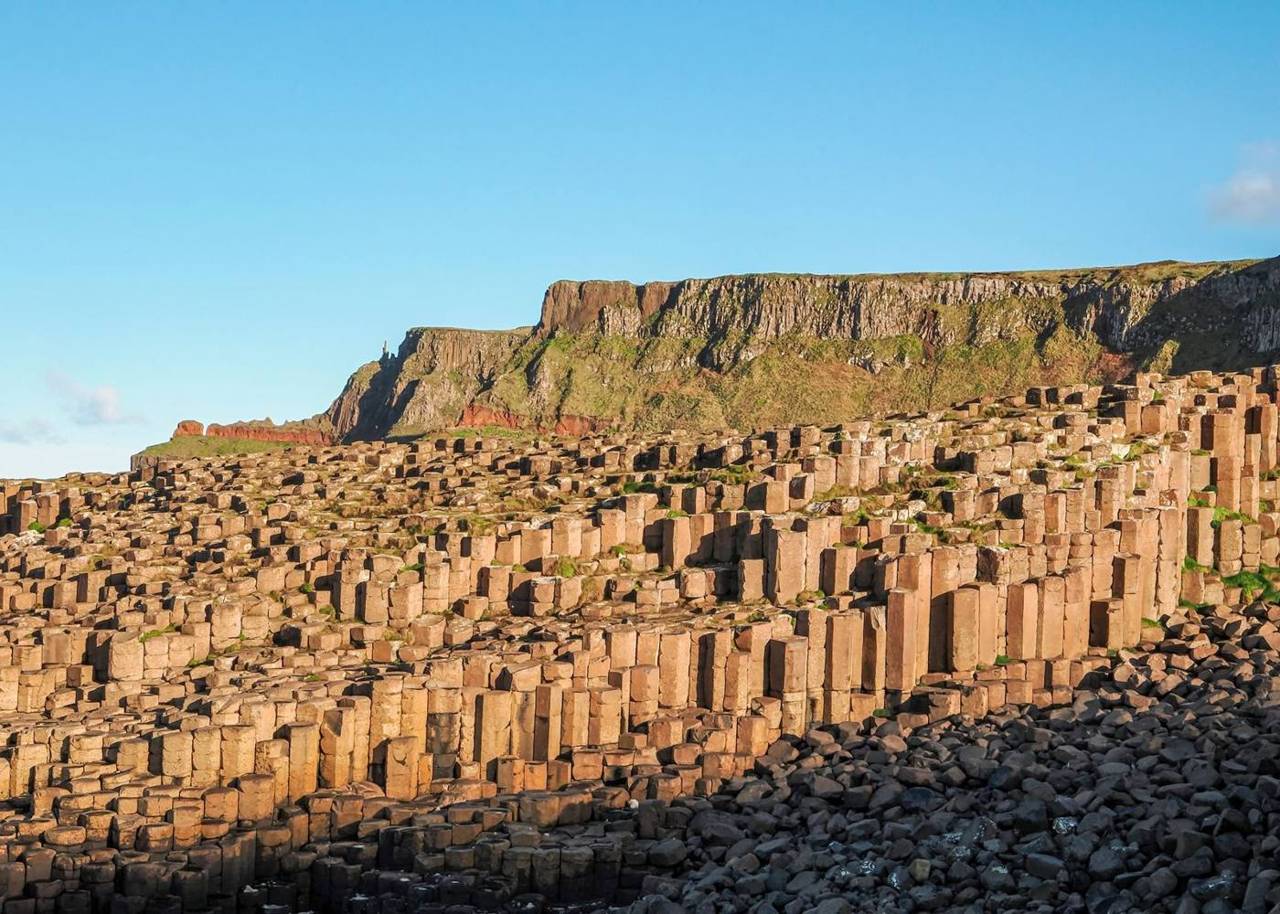
In the early afternoon you reach the Giant's Causeway, a UNESCO World Heritage Site: about forty thousand basalt columns, almost all hexagonal, formed by the cooling of a lava flow about sixty million years ago. They look as if they had been laid by a human hand. The legend says that the giant Finn McCool built this road to cross the sea to Scotland. You can walk down to the columns at no cost; you pay for the visitor centre and its car park instead. Also walk the upper path along the cliff to see the columns from above.
At sunset, stop at the ruins of Dunluce Castle, on the edge of a cliff dropping straight into the sea.
Practical tip: wet columns are very slippery, so wear shoes with good soles and stay away from the edge when the waves are high.
- Day 4
The Dark Hedges, Bushmills and the return
Your last morning on the north coast. If you have slept near Portrush or Ballycastle, start early with the Dark Hedges, an avenue of great beech trees planted in the eighteenth century by a local family to impress visitors arriving at their house. The branches intertwine above the road like a tunnel, and the place became famous around the world after appearing in a television series. The road beneath the trees is closed to cars: you park nearby and walk. At dawn and in the mist the atmosphere is magical, and there are fewer people.
Then go through the village of Bushmills, home to one of the oldest whiskey distilleries in the world, licensed since 1608, which can be visited with a guide. If you prefer the sea, go to Portrush, a seaside town with long beaches and waves for surfing, or to Whiterocks beach, below the white limestone cliffs.
In the early afternoon, head back towards Belfast, about an hour and a half by the direct road. If you have a flight from the international airport, which is outside the city, allow time to return the car.
Northern Ireland combines very well with a trip to Ireland: there are frequent trains and coaches between Belfast and Dublin, and the border between the two countries has no physical checks.
Practical tip: Northern Ireland is part of the United Kingdom, so you need a passport and the ETA electronic authorisation, which costs 20 pounds and is valid for two years. An identity card is not enough. Check the rules on the British government website even if you arrive overland from Ireland.
A short, intense trip between the history of the Troubles and one of Europe's most famous geological landscapes. A mural tour with a former participant from either side explains a great deal. The Giant's Causeway is at no cost on foot; you pay for the visitor centre. It combines easily with a trip to Ireland.
Before you go
- Documents and visa
- You need a passport: identity cards are no longer accepted. Before leaving you apply online for an ETA, the electronic travel authorisation: it costs 20 pounds and is valid for two years.
- Health and vaccines
- No vaccines required. EU citizens should carry the European Health Insurance Card for necessary treatment. Emergencies: 999 or 112.
- Money and payments
- Pound sterling. Contactless cards are used everywhere, including on London public transport.
- Power sockets
- Type G, 230 volts: you need an adapter for British three-pin plugs.
- Time zone
- UTC in winter and UTC+1 in summer.
- Safety
- The United States rates the United Kingdom level 2 for terrorism. In big cities watch out for pickpockets; in Scotland and Wales the main risks are weather and mountains. Driving is on the left. ETA: GOV.UK.
Information checked in November 2026 for Italian and EU citizens. Rules change: always check before you travel.
Variations
In 2 days: Belfast only, with the Titanic Quarter, the murals and City Hall.
In 7 days: after the Antrim coast, continue west to Derry, with its city walls, and then cross into Ireland in Donegal.
Frequently asked questions
When is the best time to go?
From May to September, with long days. The weather is changeable all year, so always bring a waterproof jacket. In July, around the 12th, there are unionist marches and some areas can be tense.
Is Belfast safe for visitors?
Yes, Belfast is a calm city for tourists today. As in any city, avoid isolated areas at night and behave respectfully in the mural districts.
What documents do I need?
A valid passport and the ETA electronic authorisation, required to enter the United Kingdom. Identity cards are not accepted.
Indicative itinerary written by World Atlas. Before booking, check timetables, seasonal openings, documents and safety.
 4 daysEasy
London beyond the classics
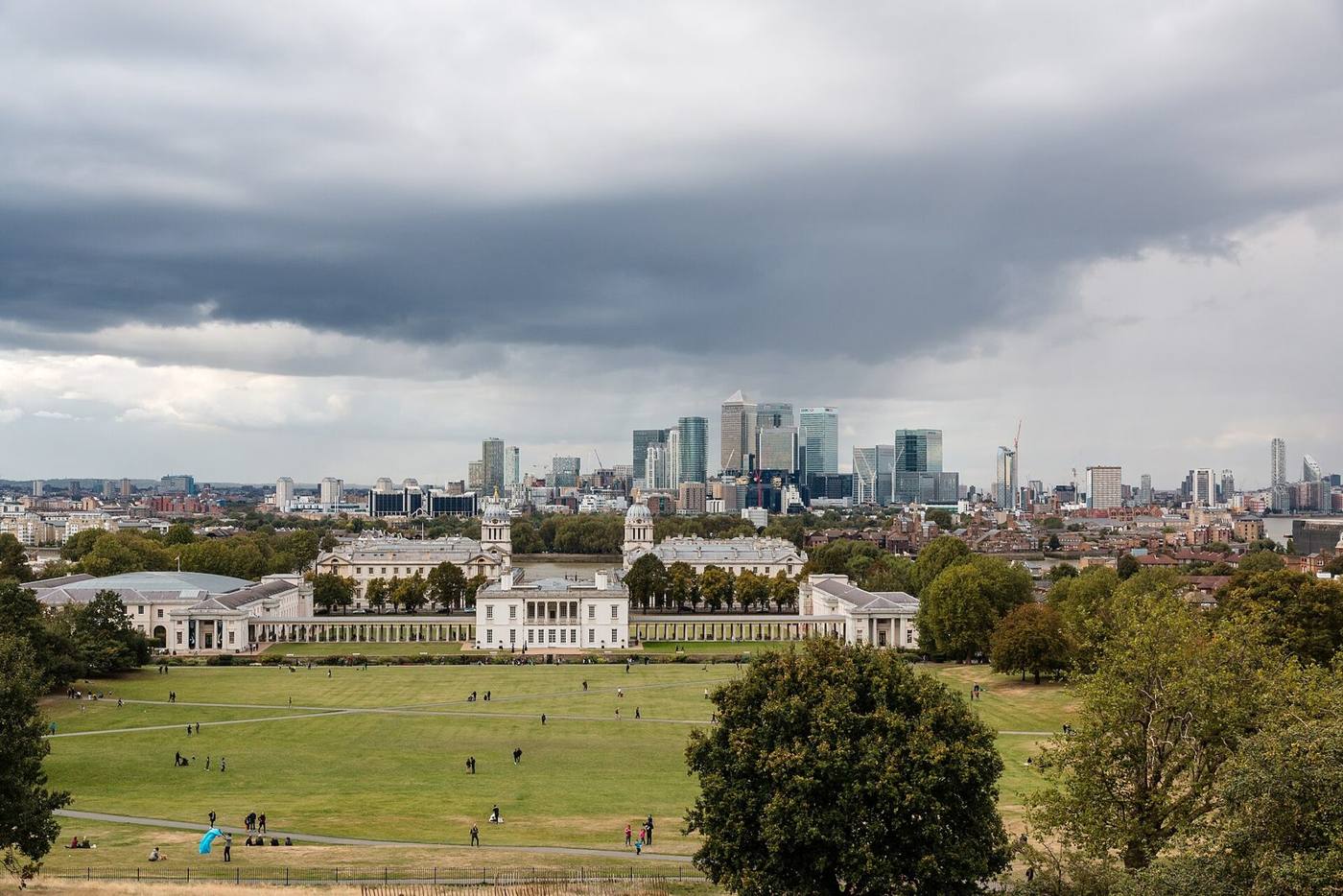
Londoners' London: Greenwich with the observatory and the meridian, Kew Gardens, Hampstead Heath and the view from Parliament Hill, the East End around Spitalfields, Shoreditch and Brick Lane, the canals of Little Venice and Camden and the weekend markets.
 4 daysEasy
Canterbury, Kent and the White Cliffs of Dover
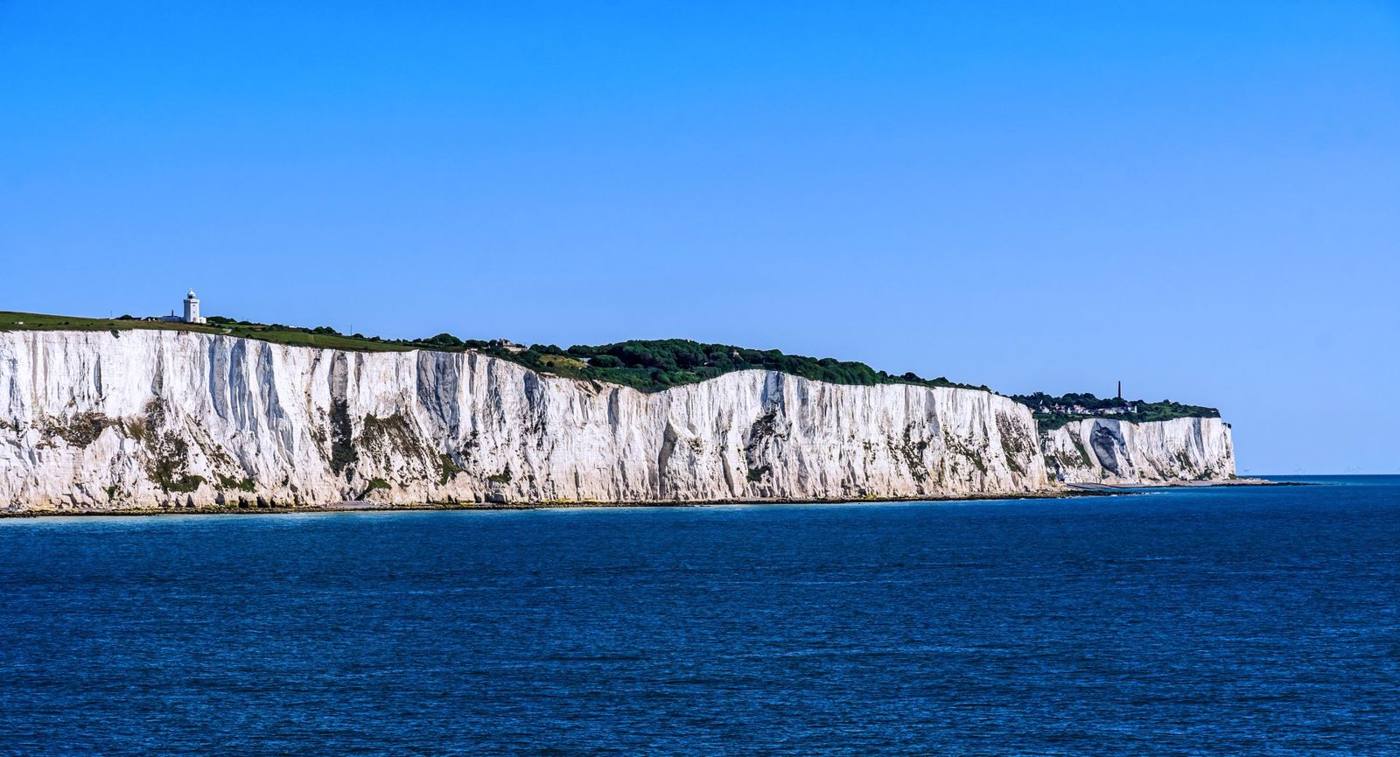
The Garden of England: Canterbury Cathedral, a UNESCO World Heritage site, Dover Castle and the White Cliffs above the Channel, the medieval town of Rye, Leeds Castle on its lake and the garden at Sissinghurst.
 4 daysEasy
Brighton and the South Downs
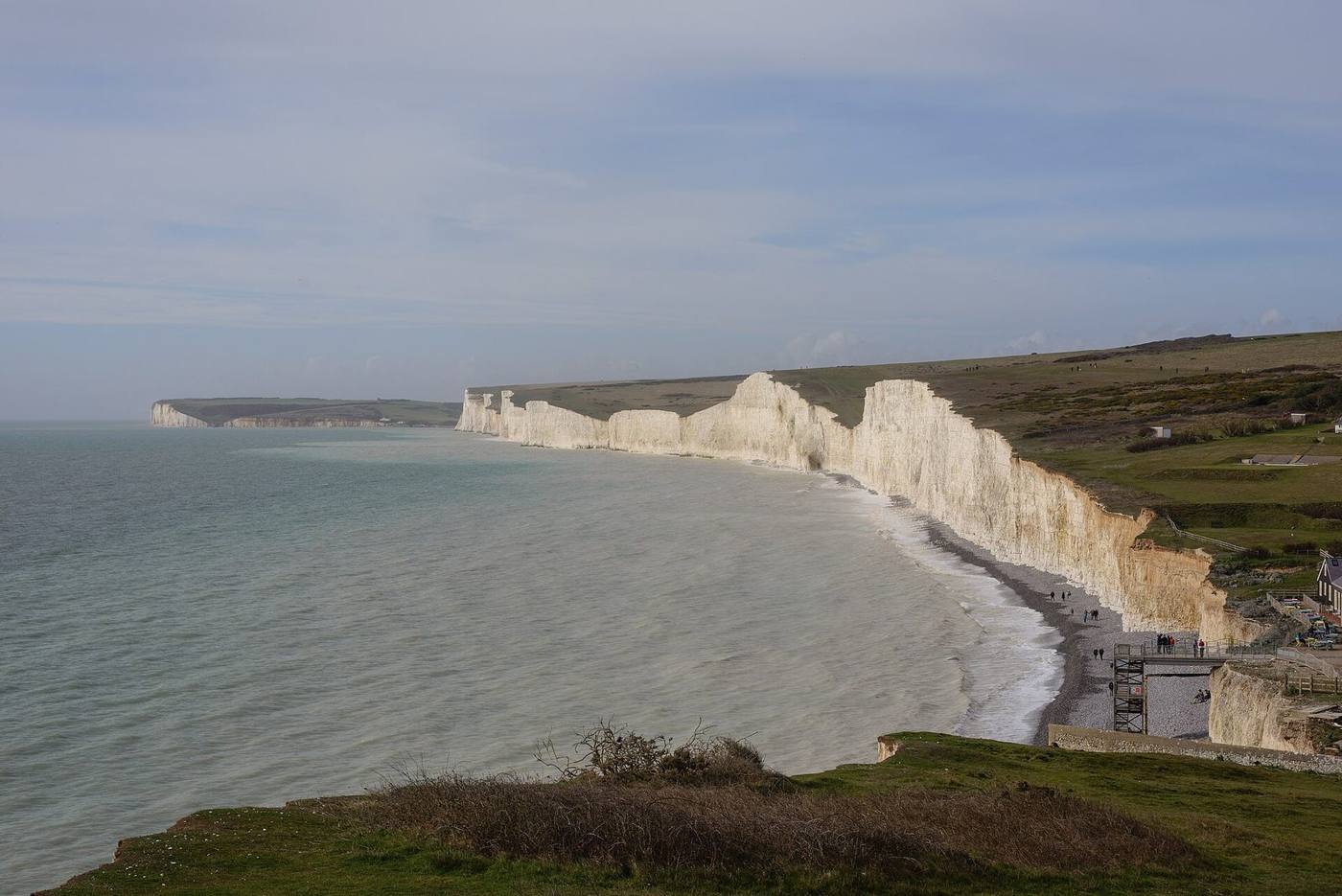
The Sussex coast: Brighton with the Royal Pavilion, the pier and the Lanes, the clifftop path over the Seven Sisters to Beachy Head lighthouse, the South Downs National Park and the town of Lewes.