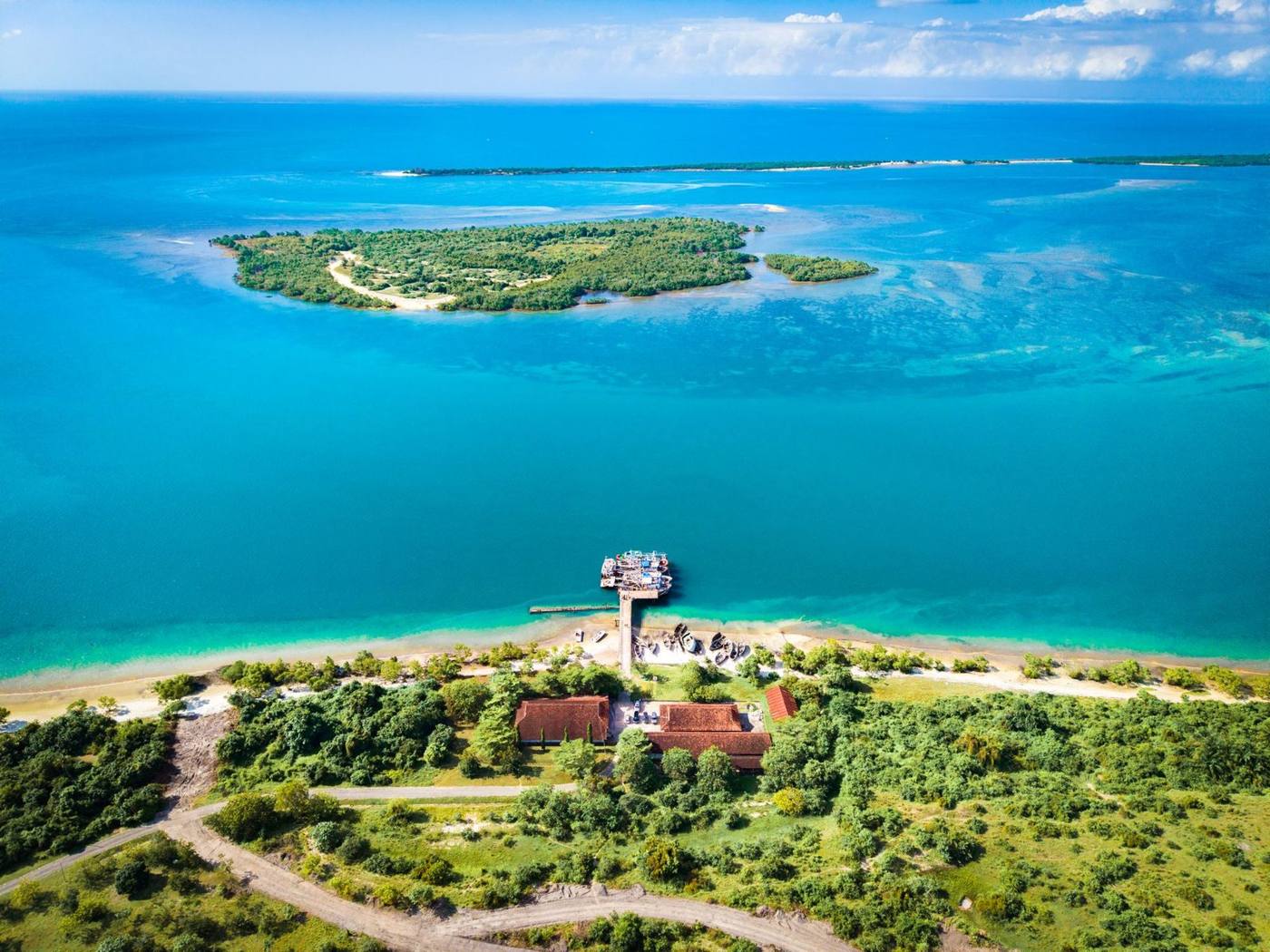
Dar es Salaam and Bagamoyo
The Swahili coast near the country's largest city: the National Museum and the fish market in Dar es Salaam, the Kariakoo district, then Bagamoyo, the old caravan port, with its fort, the Catholic mission and the medieval Kaole ruins by the sea.
- Dar es Salaam
- Kariakoo
- Bagamoyo
- Kaole
Day by day
- Day 1
Dar es Salaam: the National Museum and the fish market
To enter Tanzania EU citizens need a tourist visa, best applied for online before departure on the official Tanzanian immigration website, avoiding unofficial sites; you need a passport valid for at least six months. Check the rules for your nationality. Ask your doctor or a travel clinic about recommended vaccinations and malaria prevention: malaria is present along the whole coast.
Dar es Salaam, whose Arabic name means house of peace, is Tanzania's largest city and main port on the Indian Ocean. Founded in the nineteenth century by the Sultan of Zanzibar, then capital of German and British East Africa, it is a lively, chaotic metropolis with low-rise districts, skyscrapers, mosques, Hindu temples and churches, and a Swahili culture blending Africa, the Arab world and India. Many travellers use it only as a stopover for safaris or Zanzibar, but it deserves a couple of days.
In the morning visit the National Museum near the botanical gardens, with its section on human evolution displaying casts and finds from Olduvai Gorge, where some of the oldest remains of our ancestors were found, and rooms on colonial history and independence.
Then reach the Kivukoni fish market on the seafront, the liveliest in the city, where early in the morning fishermen arrive in wooden boats and fish is auctioned, cleaned and fried on the spot.
In the afternoon walk through Kariakoo, the city's huge, crowded popular market.
Practical tip: in Dar es Salaam use taxis or ride apps, do not walk alone in the evening and keep your phone and bag well protected.
- Day 2
Bagamoyo: the fort, the mission and the old town
In the morning leave for Bagamoyo, about seventy kilometres north of Dar es Salaam, about two hours by car because of traffic leaving the city.
In the nineteenth century Bagamoyo was one of the most important ports on the East African coast, the end point of caravans from the interior, from Lake Tanganyika, loaded with ivory and, tragically, with enslaved people, who were taken from here to Zanzibar and sold. The town's name is often explained as lay down your heart in Swahili, although its origin is debated. Today it is a quiet town with an old centre of crumbling coral stone houses, carved Swahili doors, palms and a fishermen's beach.
Visit the old fort, built by Arab merchants and later used by the Germans, and the old German customs house on the beach. Then reach the Catholic mission, founded in 1868 by the Holy Ghost Fathers, the first Catholic mission in East Africa, with its church, a museum on the history of the slave trade and exploration, and the small tower where, by tradition, the body of the explorer David Livingstone was laid in 1874, carried here by his African companions before the journey to London.
In the afternoon stroll through the old town and along the beach, where builders of dhows, the traditional wooden boats, work in the shade.
Practical tip: in Bagamoyo a licensed local guide is useful, found at the tourist office or the mission.
- Day 3
The Kaole ruins, the return and departure
In the morning visit the Kaole ruins, about five kilometres south of Bagamoyo, among palms and mangroves near the sea. They are the remains of a thirteenth-century Swahili settlement, much older than the colonial town, with two coral stone mosques, among the oldest in East Africa, and some twenty tombs with tall pillars once decorated with Chinese and Persian ceramic plates, evidence of this coast's trade with Asia across the Indian Ocean. A small museum next to the ruins tells the site's story. It is a quiet, little-visited place with a special atmosphere.
Then head back to Dar es Salaam. If you have time before departure, visit the Mwenge craft village, where you see woodcarvers at work and buy Makonde sculptures, carved in ebony by the Makonde people of the south, or stroll on the Msasani peninsula, with the artists' market and tingatinga paintings, brightly coloured pictures of animals and daily life that originated in Tanzania in the 1960s.
Julius Nyerere International Airport is about half an hour from the centre, but with traffic it can take more than an hour.
Things to take home: tingatinga paintings, Makonde sculptures, kanga and kitenge fabrics, Tanzanian coffee and tea, and Zanzibar spices.
Practical tip: do not take ivory, protected shells or objects made from protected animals out of the country: it is forbidden. Check your government's travel advice before leaving.
A start or end to a trip, handy before a flight. In Dar es Salaam use registered taxis or ride apps and avoid walking at night. Traffic towards Bagamoyo can be slow. A visa is required, applied for online before travelling. The UK advises against all but essential travel within 20 km of the border with Mozambique's Cabo Delgado province, in the Mtwara region: this itinerary stays well away from it.
Before you go
- Documents and visa
- Passport valid for at least six months and a visa, applied for online on the official immigration website. From 2026 compulsory travel insurance is also required, and Zanzibar has its own: dates and costs differ between sources, so check the official websites.
- Health and vaccines
- Malaria prevention is recommended; a yellow fever certificate is needed if you arrive from a country at risk. Drink only bottled water. Emergencies: 112.
- Money and payments
- Tanzanian shilling. Parks are paid by card and safaris often in US dollars; carry cash for tips.
- Power sockets
- Types G and D, 230 volts: you need an adapter for British plugs.
- Time zone
- UTC+3 all year.
- Safety
- The United States rates Tanzania level 2, with more caution in the Mtwara region; the United Kingdom advises against travel within 20 km of the border with Cabo Delgado in Mozambique. Official advice: GOV.UK.
Information checked in November 2026 for Italian and EU citizens. Rules change: always check before you travel.
Variations
In 2 days: Dar es Salaam with the National Museum and fish market, then Bagamoyo and Kaole on a day trip.
In 7 days: continue by ferry from Dar es Salaam to Zanzibar, with Stone Town and the beaches, or to Mikumi National Park for a short safari.
Frequently asked questions
Do I need a visa for Tanzania?
Yes: it is best to apply online before departure on the official Tanzanian immigration website. You need a passport valid for at least six months.
Do I need malaria prevention?
Malaria is present along the whole coast: ask your doctor or a travel clinic before leaving, and use repellent and a mosquito net.
When is the best time to go?
June to October and December to February, the drier seasons. The long rains usually fall between March and May.
Indicative itinerary written by World Atlas. Before booking, check timetables, seasonal openings, documents and safety.
 7 daysEasy
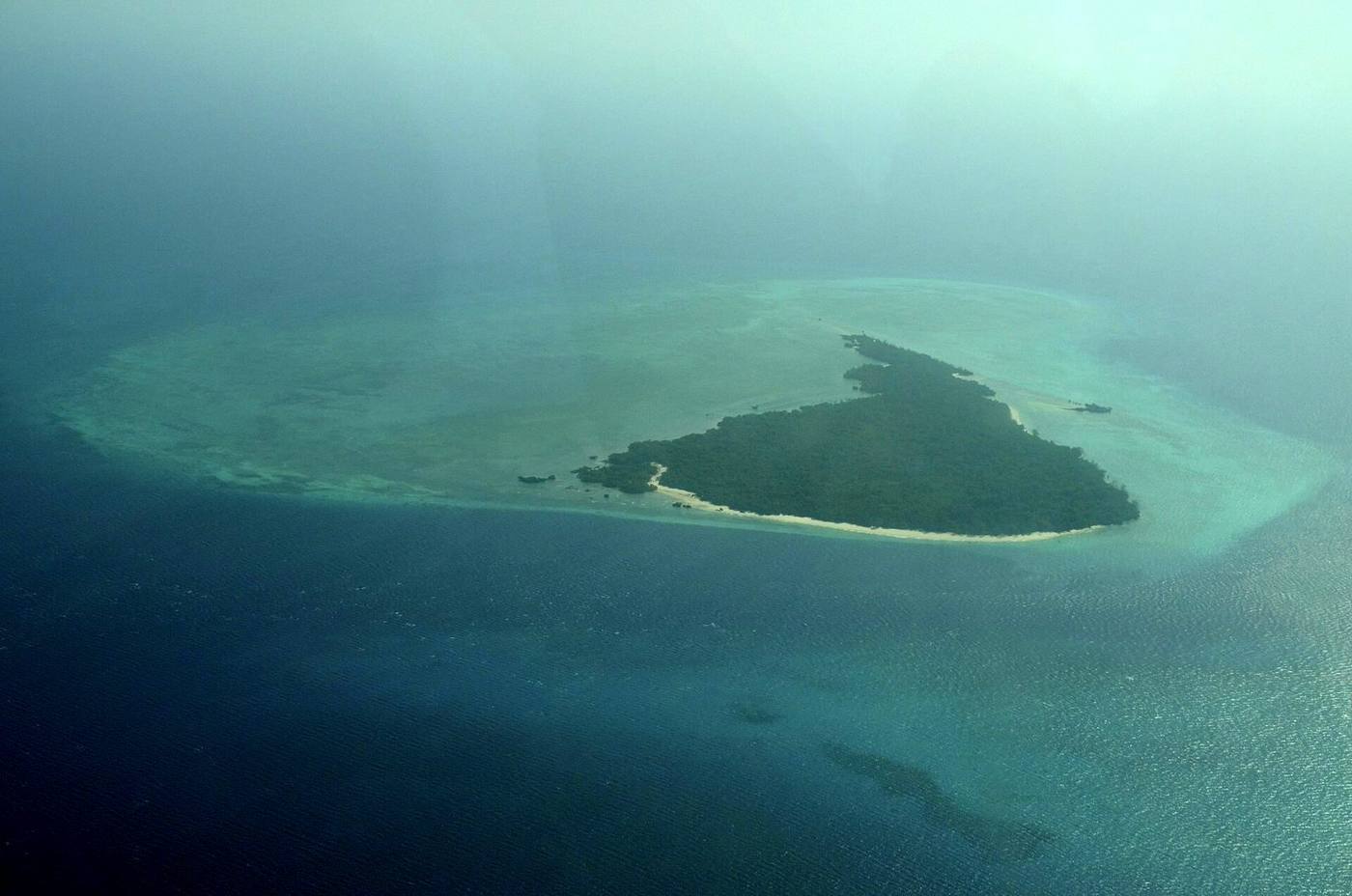
Pemba, the green island
Zanzibar's quiet sister: hills of clove trees, villages, mangroves and almost deserted beaches, the coral walls of Misali Island and the Pemba Channel for diving and snorkelling, Ngezi Forest with the Pemba flying fox and the Swahili ruins at Chwaka.
 6 daysEasy
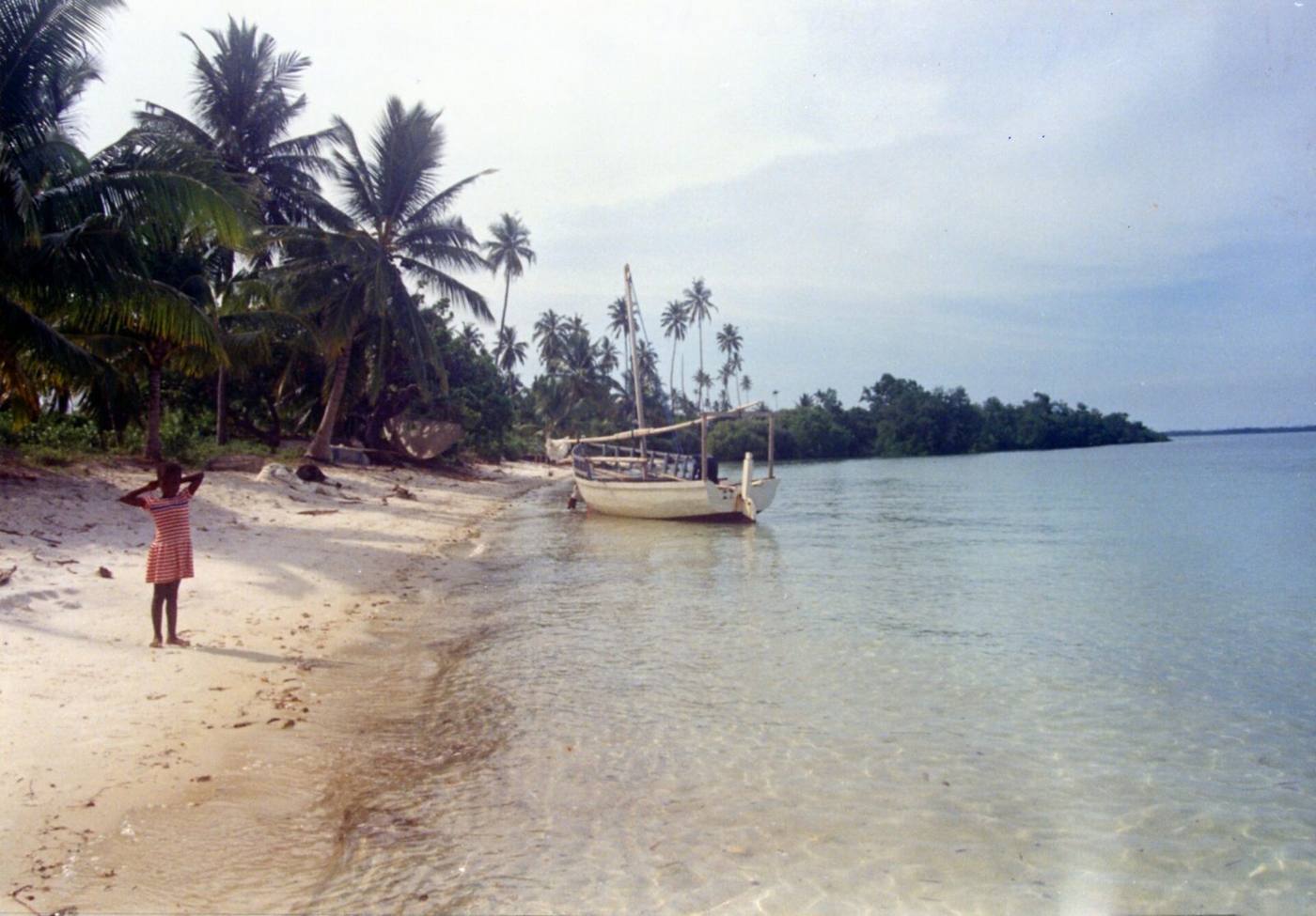
Mafia Island and the whale sharks
An island off the beaten track, inside Mafia Island Marine Park: from October to February you swim with whale sharks in Kilindoni bay, then untouched coral reefs, the Kua ruins on Juani Island, sandbanks and, in season, nesting turtles.
 5 daysChallenging
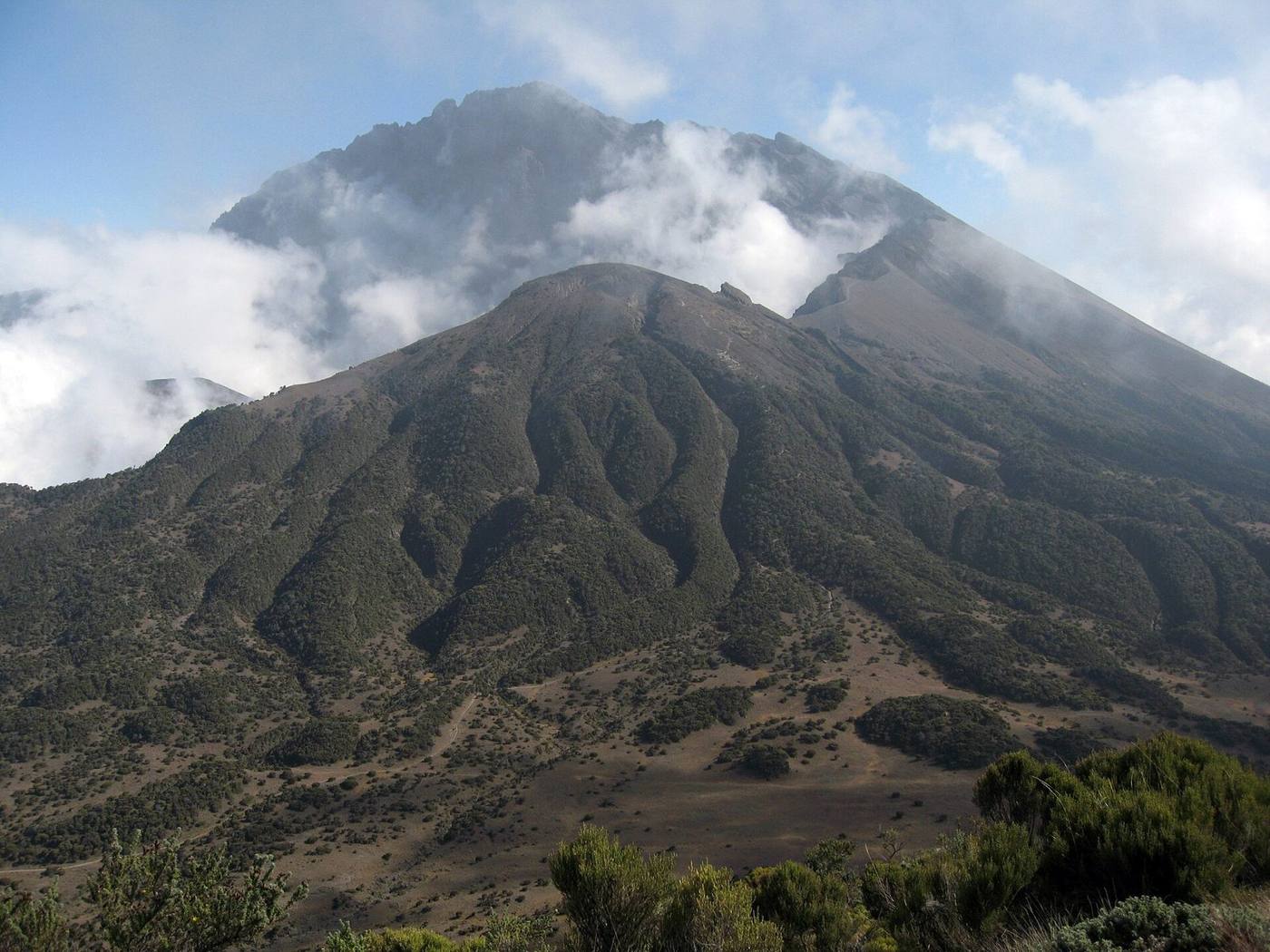
Mount Meru and Arusha National Park
Kilimanjaro's little brother, 4,562 metres: the climb starts inside Arusha National Park, with an armed ranger because you walk among giraffes and buffalo, up to the crater rim and Socialist Peak at dawn, facing Kilimanjaro. Before that, the Momella lakes by canoe.