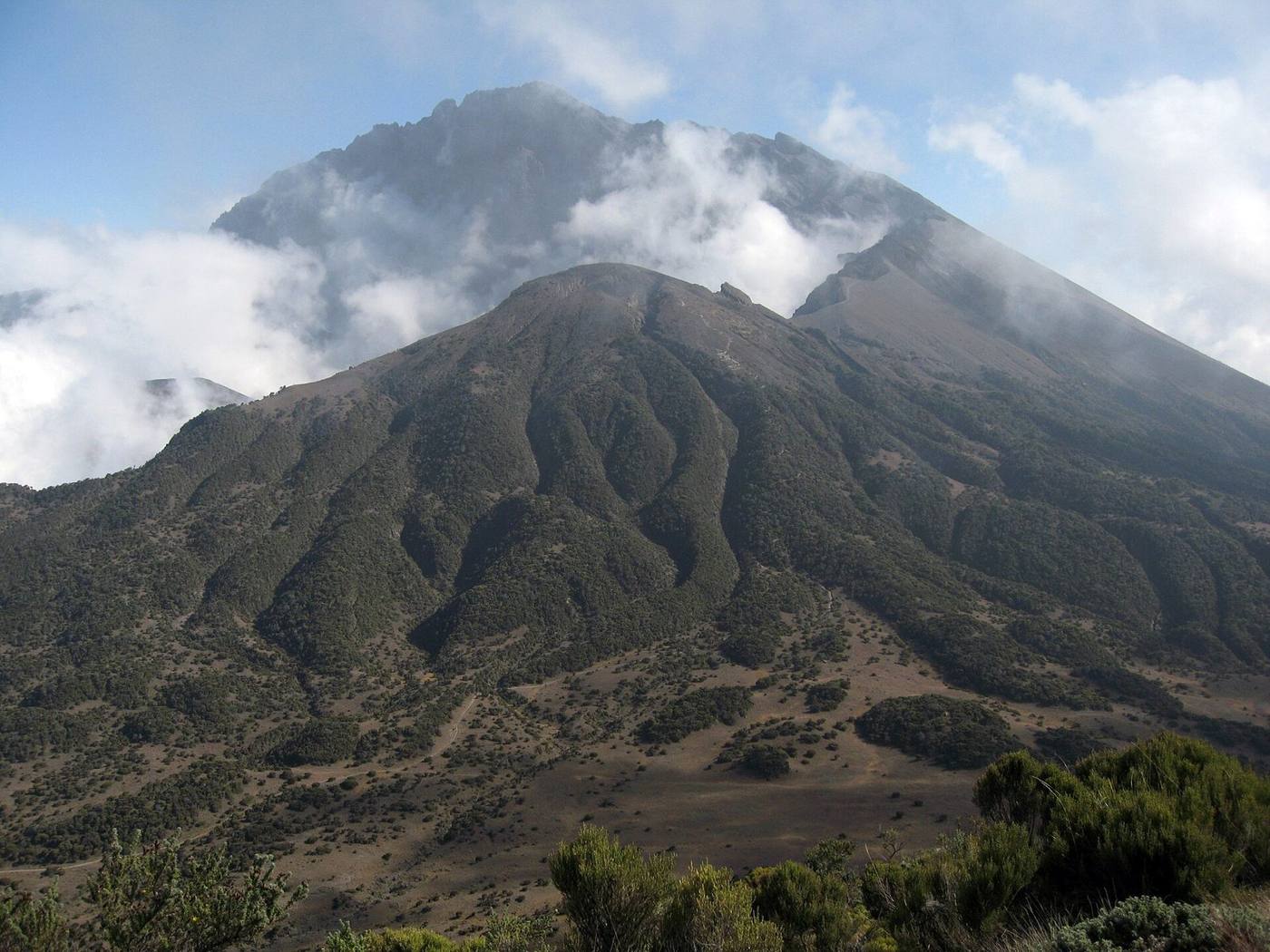
Mount Meru and Arusha National Park
Kilimanjaro's little brother, 4,562 metres: the climb starts inside Arusha National Park, with an armed ranger because you walk among giraffes and buffalo, up to the crater rim and Socialist Peak at dawn, facing Kilimanjaro. Before that, the Momella lakes by canoe.
- Arusha
- Momella
- Miriakamba
- Saddle Hut
- Socialist Peak
Day by day
- Day 1
Arusha National Park and the Momella lakes by canoe
Mount Meru, 4,566 metres high, is the second highest mountain in Tanzania and one of the most beautiful in East Africa: a volcano with a huge crater open to the east, a rock wall more than a thousand metres high and, in the middle, a younger ash cone. It lies inside Arusha National Park, a few kilometres from the city of Arusha, facing Kilimanjaro. It is much less crowded than Kilimanjaro, and it is perfect for acclimatising before climbing Africa's highest mountain, or as an adventure in its own right. In five days you spend a day in the park and then climb over four days, sleeping in huts.
In the morning, enter Arusha National Park, less than an hour from the city. It is a small but very varied park: mountain forest, grassland, lakes and the Ngurdoto crater, a green bowl where buffalo and elephants graze. From the four-wheel drive you see giraffes, zebras, warthogs, baboons and above all black and white colobus monkeys, with long mantles of fur, leaping through the trees.
In the afternoon, go to the Momella lakes, a group of shallow lakes, some salty and of different colours, where there are often flamingos. On one of the lakes you can take a guided canoe trip, gliding silently close to the shore, among water birds, hippos at a distance and giraffes coming down to drink. On clear days, Kilimanjaro can be seen on the horizon.
In the evening, sleep near the park, in a lodge or camp.
Practical tip: the Meru climb is only done with a licensed guide and an armed park ranger, compulsory because of the buffalo and elephants. It is arranged through a local agency.
- Day 2
From Momella Gate to Miriakamba Hut
In the morning, go to Momella Gate, at about 1,500 metres, where the climb begins. Here the group registers and meets the ranger, the guide and the porters, who carry the luggage up to the huts.
There are two paths up to the first hut. The longer and more scenic one crosses the savannah and then the forest, in about four or five hours: it is one of the few treks in Africa where you walk among wild animals. With the ranger in front, you see buffalo, giraffes, warthogs and antelopes at close range. On the way you pass under the fig tree arch, a huge strangler fig that has formed an arch so large a car can drive under it. Then you climb through the mountain forest, with trees covered in lichen and moss, to Miriakamba Hut, at about 2,500 metres.
The hut consists of wooden cabins with dormitories and bunk beds, a dining room and toilets. From the meadow in front of the hut you see the great inner wall of Meru's crater and the ash cone in the middle, and in the evening, when the sky clears, Kilimanjaro appears.
The group's cooks prepare dinner: soups, rice, pasta, vegetables, meat and fruit. Everyone goes to bed early.
Practical tip: during the climb, drink at least three litres of water a day, walk slowly, pole pole as the guides say, and tell your guide at once if you have a headache or nausea.
- Day 3
The climb to Saddle Hut and Little Meru
Today's climb is steep but short. From Miriakamba the path climbs up many wooden steps through the forest, then enters a moorland zone with giant heathers, lichens hanging from the branches like beards and mountain flowers. In about three or four hours you reach Saddle Hut, at about 3,570 metres, on the saddle between Meru's main summit and Little Meru.
On the way up there are several viewpoints from which you see the plain below, with the Momella lakes and Arusha National Park, and Kilimanjaro ever closer on the horizon.
In the afternoon, after lunch and a rest, make the short climb to Little Meru, at about 3,820 metres, in about an hour. From the top the view over the crater, Meru's summit and Kilimanjaro at sunset is beautiful. This short climb also helps you acclimatise better for the night, because the body adapts to altitude by going a little higher than where you will sleep.
In the evening, at Saddle Hut, the guide explains the plan for the night: the wake-up call is around one or two in the morning, to reach the top at dawn. Prepare everything before going to sleep: warm layered clothing, a padded jacket, gloves, a hat, a head torch with spare batteries, water and something to eat.
Practical tip: at night the hut is very cold, often below freezing. Sleep in a warm sleeping bag and keep your torch batteries and phone inside the bag, because the cold drains them.
- Day 4
The summit at dawn and the descent to Miriakamba
You set off in the middle of the night, with head torches, in single file behind the guide and the ranger. The path climbs onto the crater ridge, first to Rhino Point, then along a narrow, steep stretch on the crater rim, with one side dropping towards the inner wall and the other towards the plain. In places there are rocks to scramble over using your hands, and at dawn the ground can be icy. The darkness helps you not to see the drop, but you must walk carefully.
After about five or six hours you reach the summit, Socialist Peak, at 4,566 metres, marked by a Tanzanian flag and a sign. If you have timed it well, you see the sun rise right behind Kilimanjaro, silhouetted against an orange and pink sky above a sea of clouds. It is one of the most beautiful views in Africa.
On the way down, in daylight, you finally see the landscape you crossed in the dark: the thin ridge, the great inner wall of the crater, the ash cone, which had its last small eruption in the early twentieth century, and the distant plain.
You return to Saddle Hut for breakfast and a rest, then continue down to Miriakamba, where you sleep. It is a very long day, ten to twelve hours of walking in total.
Practical tip: if you feel very unwell at altitude, with a severe headache, vomiting, confusion or difficulty breathing, you must descend immediately. It is not a defeat; it is the most important rule of the mountains.
- Day 5
Descent to the gate and return to Arusha
On the last morning you walk down from Miriakamba to Momella Gate, in about two or three hours, on the shorter, more direct path through the forest. With a little luck you may still meet colobus monkeys, buffalo or giraffes in the meadows near the gate. Your legs will be tired, especially your knees: use poles and descend calmly.
At the gate you collect your climbing certificate, issued by the park, and say goodbye to the team. It is customary to leave a tip for the guide, ranger, cook and porters, who do very hard work: agencies usually suggest a reference amount. The final farewell is often made with songs and dances.
Then you return by car to Arusha, about an hour away. Arusha is a lively town, the starting point for safaris in northern Tanzania. In the afternoon, rest, have a hot shower and, if you feel like it, walk around the central market, with fruit, spices, colourful fabrics and Maasai handicrafts.
If you are planning Kilimanjaro, you are now well acclimatised: many climbers do Meru a few days before to improve their chances of reaching the top. Otherwise, safaris to Tarangire, Ngorongoro and the Serengeti leave from Arusha.
Practical tip: for Tanzania, check the visa requirements before you leave; the visa is usually applied for online. The United Kingdom advises against non-essential travel only within 20 km of the border with Mozambique's Cabo Delgado province, in the south: this itinerary stays very far from it.
Excellent for acclimatising before Kilimanjaro or as an alternative, with fewer people. The final stretch runs along a narrow, steep ridge, often icy at dawn. Nights are in huts and the climb is only with a guide and a ranger. A visa is required, applied for online before travelling. The UK advises against all but essential travel within 20 km of the border with Mozambique's Cabo Delgado province, in the Mtwara region: this itinerary stays well away from it.
Before you go
- Documents and visa
- Passport valid for at least six months and a visa, applied for online on the official immigration website. From 2026 compulsory travel insurance is also required, and Zanzibar has its own: dates and costs differ between sources, so check the official websites.
- Health and vaccines
- Malaria prevention is recommended; a yellow fever certificate is needed if you arrive from a country at risk. Drink only bottled water. Emergencies: 112.
- Money and payments
- Tanzanian shilling. Parks are paid by card and safaris often in US dollars; carry cash for tips.
- Power sockets
- Types G and D, 230 volts: you need an adapter for British plugs.
- Time zone
- UTC+3 all year.
- Safety
- The United States rates Tanzania level 2, with more caution in the Mtwara region; the United Kingdom advises against travel within 20 km of the border with Cabo Delgado in Mozambique. Official advice: GOV.UK.
Information checked in November 2026 for Italian and EU citizens. Rules change: always check before you travel.
Variations
In 4 days: the Meru climb without the day in the park, starting directly from Momella Gate.
In 12 days: after Meru, rest for two days and then climb Kilimanjaro by the Machame or Lemosho route, already acclimatised.
Frequently asked questions
When is the best time to go?
The dry seasons, from June to October and from December to February. From March to May it rains a lot and the paths are muddy; in November there are short rains.
Is the climb difficult?
More so than Kilimanjaro in the final section, because the ridge is narrow and steep, sometimes icy. No mountaineering skills are needed, but you need good fitness and no fear of heights.
What documents do I need?
A passport valid for at least six months and a visa, to be checked before you leave. The United States keeps Tanzania at level 2 for caution.
Indicative itinerary written by World Atlas. Before booking, check timetables, seasonal openings, documents and safety.
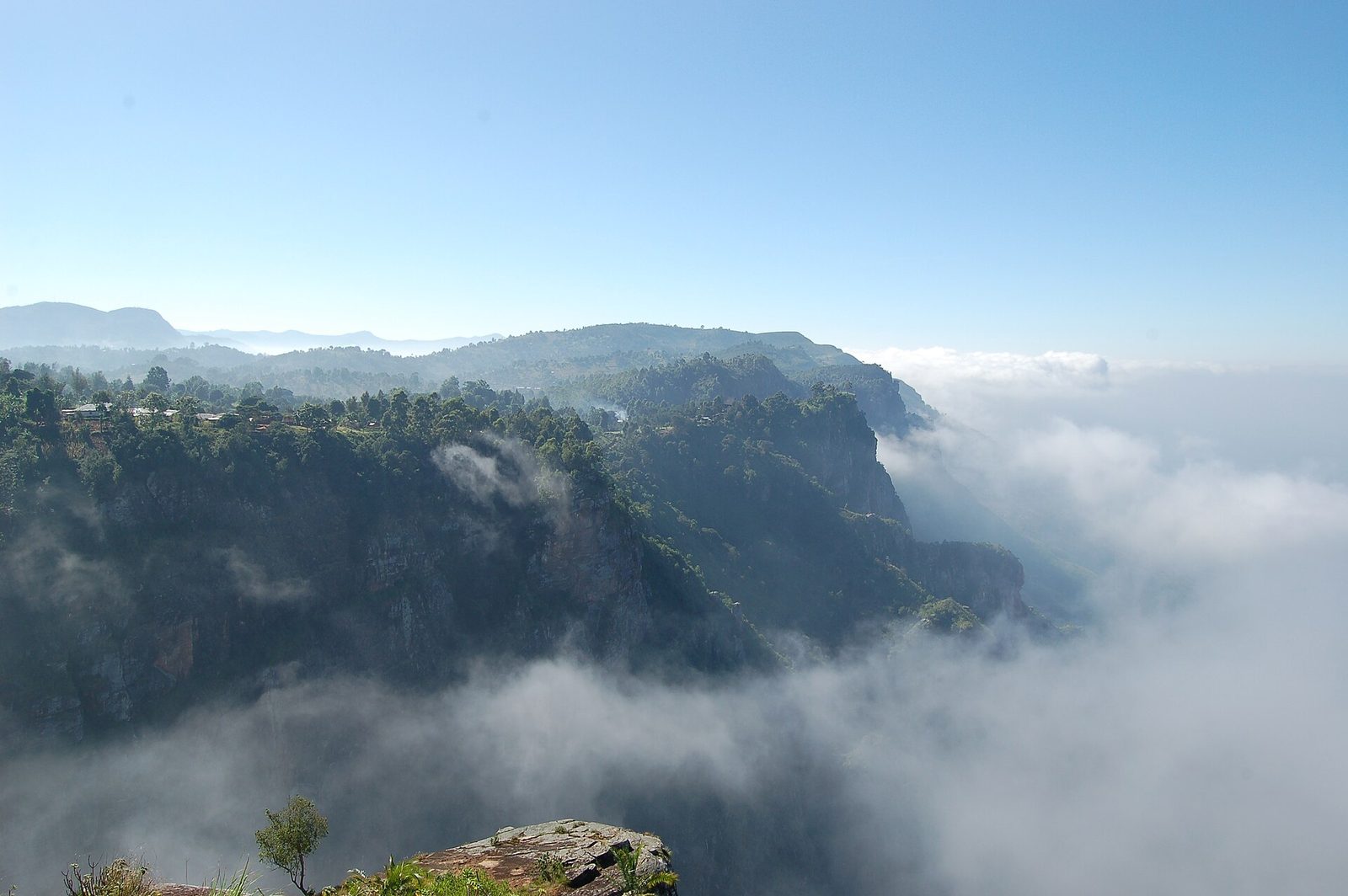 5 daysModerate
The Usambara Mountains on foot
Green, cool Tanzania, far from the safaris: Lushoto, a former colonial hill station, the Irente viewpoint over the plains, Shambaa villages among terraced fields, forests with chameleons and endemic birds, and village-to-village walks with local guides.
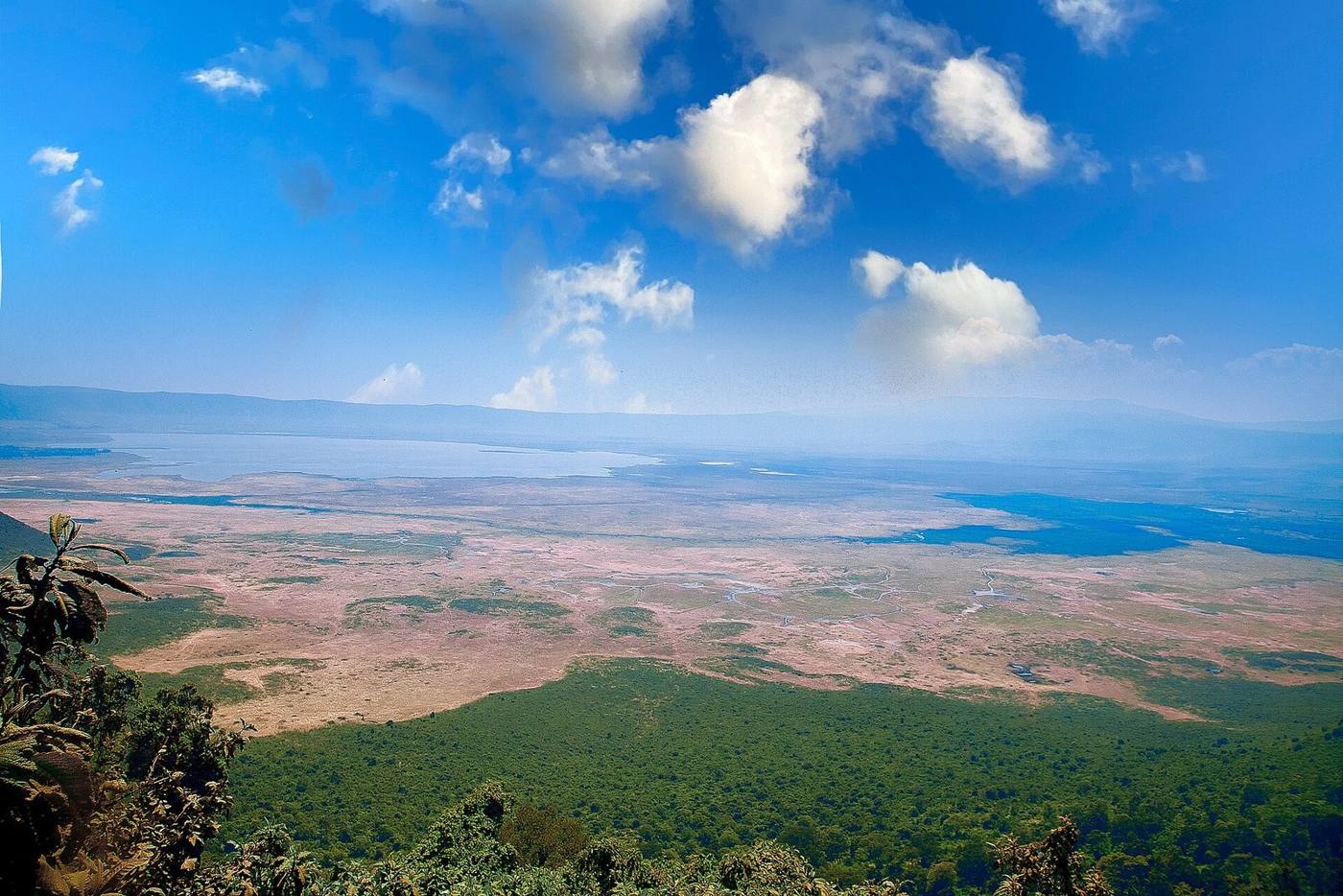 4 daysEasy
Lake Eyasi and the Karatu highlands
A cultural break between parks: the coffee farms around Karatu, the salt lake of Eyasi below the escarpment, a morning with the Hadzabe hunter-gatherers and a visit to the Datoga blacksmiths, then the forest on the rim of the Ngorongoro crater.
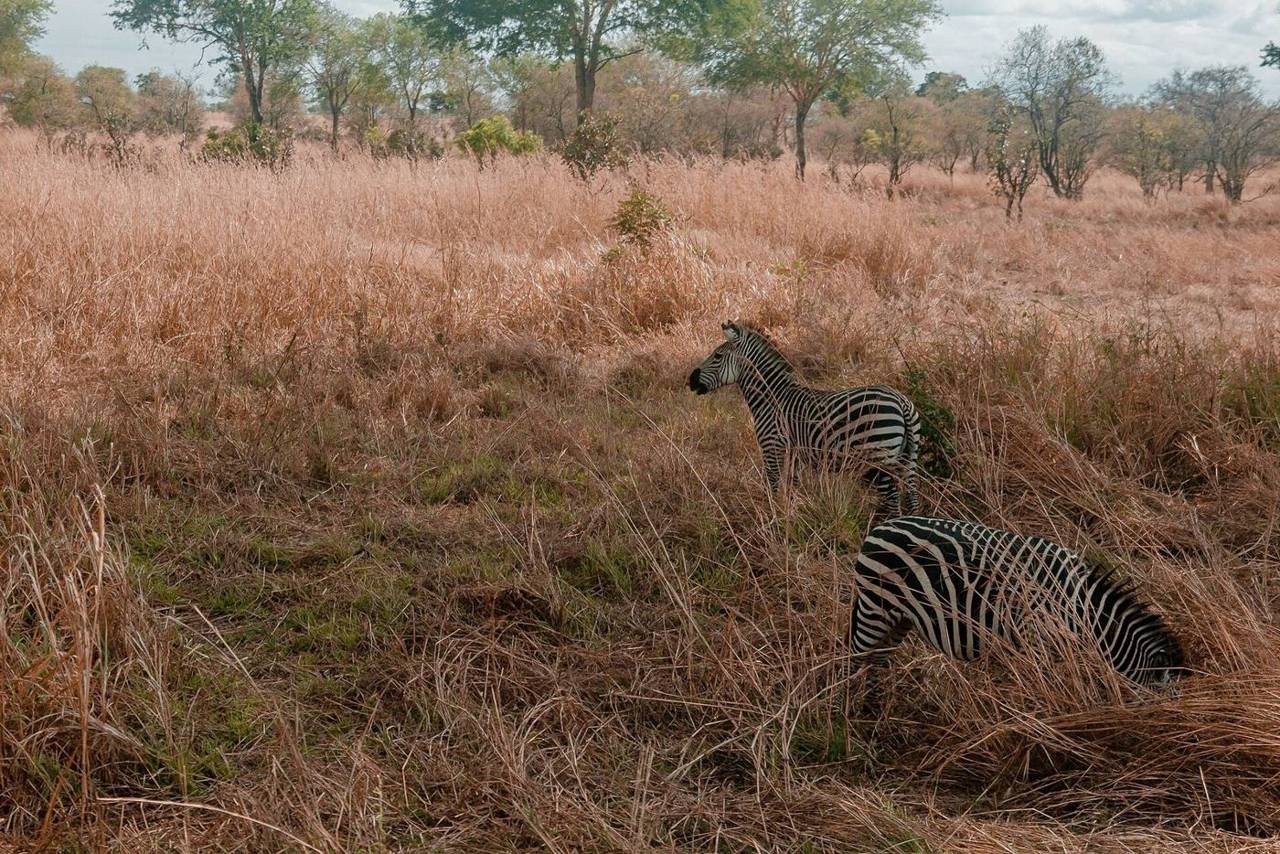 5 daysModerate
Mikumi and the Udzungwa Mountains
The easy south from Dar es Salaam: safari on the Mikumi plain, with elephants, lions, giraffes and buffalo, then the rainforest of the Udzungwa Mountains, walking to the 170-metre Sanje Falls among red colobus and endemic monkeys found nowhere else.