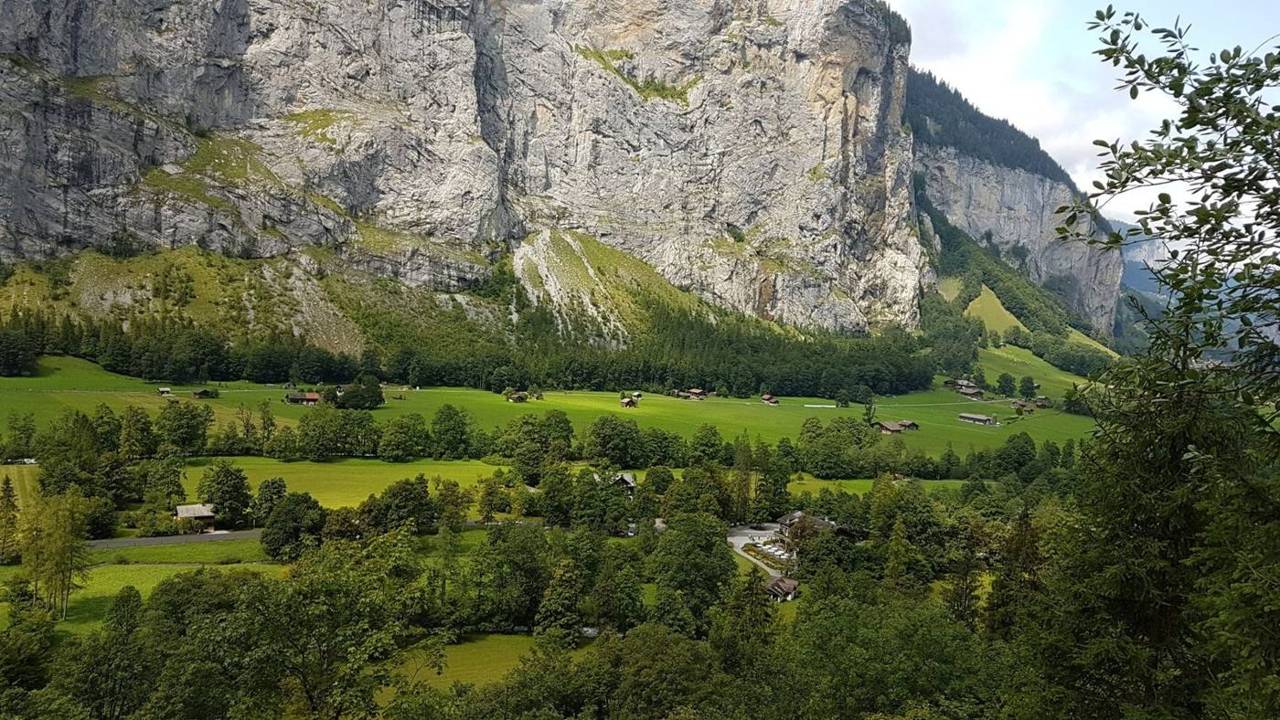
The Jungfrau and Lauterbrunnen
The valley of 72 waterfalls, the villages closed to cars of Wengen and Mürren, the Schilthorn, First with the Bachalpsee and the Jungfraujoch.
- Interlaken
- Lauterbrunnen
- Mürren
- Schilthorn
- Grindelwald
- First
- Jungfraujoch
Day by day
- Day 1
Interlaken and Harder Kulm
This trip explores the Jungfrau region, in the Bernese Oberland, in six days: Interlaken between two lakes, the Lauterbrunnen valley with its waterfalls, the villages of Mürren and Wengen with no cars, the Schilthorn, First above Grindelwald and the Jungfraujoch, below the walls of the Eiger, Mönch and Jungfrau. It is the most spectacular alpine region in Switzerland, with trains and cable cars everywhere.
Before you go: Italian citizens only need an electronic identity card valid for travel abroad or a passport, with no visa. Switzerland is not in the European Union but is in the Schengen area; you pay in Swiss francs, and driving on motorways requires the vignette. Other nationalities should check their own rules. The country is very safe; in the mountains wear proper shoes and take insurance that covers rescue.
You arrive in Interlaken by train from Bern or Lucerne. The town lies on the plain between Lake Thun and Lake Brienz, joined by the river Aare. In the afternoon walk along the Höhematte, the large meadow in the centre, with the white Jungfrau at the end of the valley.
Towards evening take the funicular that climbs to Harder Kulm, at about 1,300 metres, in a few minutes. From the viewing platform jutting out over the drop you see both lakes, the town below you and the line of great peaks: Eiger, Mönch and Jungfrau. Check prices and times.
Walk down through the woods, in about an hour and a half, or take the funicular.
Practical tip: the Berner Oberland Pass or the Swiss Travel Pass greatly reduce the cost of trains and lifts: compare the options on the official website and check prices and conditions before you leave.
- Day 2
Lauterbrunnen, the Staubbach and the Trümmelbach
Today you enter the Lauterbrunnen valley, one of the deepest glacial valleys in the Alps, with vertical rock walls and dozens of waterfalls.
In the morning take the train from Interlaken to Lauterbrunnen, in about twenty minutes. As soon as you leave the station you see the Staubbach Falls, which drop almost 300 metres and turn into spray before touching the ground. They inspired a famous poem by Goethe on the spirit of water. A path climbs to a gallery behind the falls, open only in summer.
At midday walk along the valley floor towards Stechelberg, on a level path among meadows and farms, with the rock walls rising on either side. There are about 72 waterfalls in the valley in all.
In the afternoon visit the Trümmelbach Falls, ten glacial waterfalls that run inside the mountain. A lift cut into the rock takes you up, then you walk down on lit steps and walkways, amid the roar of the water. The stream carries the water of the Eiger, Mönch and Jungfrau glaciers down the valley. The falls are open from spring to autumn. Check prices and times.
In the evening sleep in Lauterbrunnen, Wengen or Mürren: the villages higher up are more beautiful and quieter than Interlaken.
Practical tip: at the Trümmelbach bring a waterproof jacket: inside the mountain it is cool and the spray soaks everything.
- Day 3
Mürren, the via ferrata and the Schilthorn
Today you go up to Mürren, a village with no cars on a terrace at about 1,640 metres above the valley, and then to the Schilthorn.
In the morning take the cable car from Lauterbrunnen to Grütschalp and the little train that runs on the level along the edge of the terrace to Mürren, with views of the Eiger, Mönch and Jungfrau. The village has wooden chalets, barns and meadows, and the silence of a place with no cars.
If you have experience and equipment, follow the via ferrata from Mürren to Gimmelwald, with steel cables, ladders and a rope bridge above the cliff: you need a harness and a via ferrata set, which can be hired in the village. Otherwise take the easy panoramic path from Mürren to Gimmelwald, among meadows and farms.
At midday take the cable car from Mürren to the Schilthorn, at about 2,970 metres, with a stop at Birg, where a suspended walkway runs along the cliff. At the top is the revolving restaurant where a James Bond film was shot in 1969, with an exhibition on the film. From the terrace you see some two hundred peaks, from Mont Blanc to the Black Forest on the clearest days. Check prices and times.
In the afternoon go back down to Mürren and walk up to Allmendhubel, with its flowering meadows and views over the valley.
Practical tip: the via ferrata is exposed and not suitable for anyone with vertigo; if you have never done one, go with a mountain guide and check the weather, because it is dangerous in thunderstorms.
- Day 4
Grindelwald, First and the Bachalpsee
Today you move to the Grindelwald valley, at the foot of the Eiger north face, and go up to First for one of the finest walks in the region.
In the morning take the train from Interlaken or Lauterbrunnen to Grindelwald, a large village of chalets below the Eiger, the most famous north face in the Alps. From here the gondola climbs to First, at about 2,170 metres, in about twenty-five minutes.
At the top walk the First Cliff Walk, a metal walkway hooked onto the rock that wraps around the mountain above the void, with a viewing platform sticking out. Check prices and times.
At midday follow the path to the Bachalpsee, a mountain lake at about 2,265 metres, in about an hour of easy walking. On still mornings the lake reflects the Schreckhorn and the Finsteraarhorn, the highest peak in the Bernese Oberland. Stop on the shore for a picnic lunch.
In the afternoon, if your legs are strong, continue towards the Faulhorn, with another hour and a half of climbing, or return to First and go down to Grindelwald on foot or by gondola, stopping at Bort or Schreckfeld. On the way down there are also scooters and carts for riding down the tracks.
In the evening, in Grindelwald, watch the sunset light on the Eiger face.
Practical tip: set off early for the Bachalpsee: in summer after ten o'clock the path is very busy and clouds often build up over the peaks.
- Day 5
The Jungfraujoch and the Eiger Trail
Today you go up to the Jungfraujoch, the highest railway station in Europe, at 3,454 metres, and walk below the Eiger north face.
Early in the morning check the webcams: under a cloudy sky it is not worth going up, because the Jungfraujoch is very expensive. If it is clear, take the Eiger Express gondola from Grindelwald to Eigergletscher, then the Jungfrau Railway, opened in 1912, which runs in a tunnel through the Eiger and the Mönch to the Jungfraujoch. Alternatively, go up by train from Lauterbrunnen and Wengen to Kleine Scheidegg. Check prices and times: the Swiss Travel Pass and the Berner Oberland Pass give a discount.
At the top go up to the Sphinx terrace, at about 3,570 metres, to see the Aletsch glacier, the longest in the Alps, flowing south between the mountains. The glacier and the peaks around it have been a UNESCO World Heritage Site since 2001. Visit the Ice Palace, with tunnels carved into the glacier, and, if you have time and breath, walk along the packed snow track towards the Mönchsjoch saddle.
In the afternoon take the train down to Eigergletscher and walk the Eiger Trail to Alpiglen, in about two and a half hours, all downhill below the north face, about 1,800 metres high. From Alpiglen take the train back to Grindelwald.
Practical tip: at 3,454 metres you move slowly and may get a headache: go up after a few days at altitude, drink plenty and go down at once if you feel unwell.
- Day 6
Lake Brienz and departure
On your last day you go down to Interlaken and sail on Lake Brienz before leaving.
In the morning take the boat from Interlaken Ost along turquoise Lake Brienz, between wooded slopes and waterfalls. Stop at Iseltwald, a small village on a peninsula, with its jetty on the lake, or continue to the Giessbach Falls, which drop in fourteen cascades through the forest: a historic funicular climbs from the landing stage. Check prices and times.
At midday you reach Brienz, the village of woodcarving, with a carving school and craft workshops. If you have time, visit the Ballenberg open-air museum, near Brienz, with more than a hundred historic rural buildings brought here from all over Switzerland. Check prices and times.
In the afternoon return to Interlaken by train or boat and set off towards Bern, Lucerne or Zurich.
In six days you have seen the heart of the Bernese Oberland: Interlaken and its lakes, the waterfalls of Lauterbrunnen, Mürren and the Schilthorn, First and the Bachalpsee, the Jungfraujoch with the Aletsch glacier and the Eiger Trail. It is a moderate trip, with walks of two or three hours a day and many lifts.
When to go: from June to September, when all the lifts and high paths are open; July and August are the busiest months, and September is often the clearest. In winter the region is famous for skiing, but many paths are closed.
Practical tip: keep a spare day in your plan so you can move the Jungfraujoch or the Schilthorn to the first clear day.
Switzerland's most spectacular alpine region, with trains and cable cars everywhere. The Jungfraujoch is very expensive: in overcast weather it is not worth it, so check the webcams in the morning. Staying in Wengen or Mürren is nicer than Interlaken. The Berner Oberland Pass or Swiss Travel Pass cut costs a lot.
Before you go
- Documents and visa
- Switzerland is not in the EU but is in the Schengen area. British visitors can stay up to 90 days in any 180 days without a visa, and the EU Entry/Exit System applies. Motorways need the vignette, as a sticker or an e-vignette from the official website.
- Health and vaccines
- No vaccines required. Healthcare is excellent but very expensive: take travel insurance that covers repatriation and mountain rescue, because helicopter rescue costs a great deal. Watch out for ticks in woods. Emergencies: 112, police 117, fire 118, ambulance 144, Rega air rescue 1414.
- Money and payments
- Swiss franc. Cards are accepted almost everywhere, even for small amounts; euros are taken in many places, but change comes in francs at a poor rate.
- Power sockets
- Swiss type J, 230 volts: you need an adapter for British plugs.
- Time zone
- Central European Time (UTC+1, summer UTC+2).
- Safety
- A very safe country. In the mountains carry the right gear, check the MeteoSwiss forecast and, in winter, the avalanche bulletin. Traffic fines are severe, especially for speeding. Official advice: GOV.UK.
Information checked in November 2026 for Italian and EU citizens. Rules change: always check before you travel.
Variations
Shorter: four days, with Lauterbrunnen, Mürren, First and the Jungfraujoch.
Longer: add two days in Wengen, with the panoramic path from Männlichen to Kleine Scheidegg.
Frequently asked questions
Is the Jungfraujoch worth it?
Yes, but only under a clear sky, because it is very expensive. Check the webcams in the morning and keep a spare day; the Swiss Travel Pass and the Berner Oberland Pass give a discount.
Where is it best to stay?
Wengen and Mürren, villages with no cars high above the valley, are more beautiful and quieter than Interlaken. Lauterbrunnen and Grindelwald are handy for the trains.
Is the Mürren via ferrata difficult?
It is exposed and requires a harness, a via ferrata set and a head for heights. Without experience go with a mountain guide; do not set off in thunderstorms.
Indicative itinerary written by World Atlas. Before booking, check timetables, seasonal openings, documents and safety.
 5 daysEasy
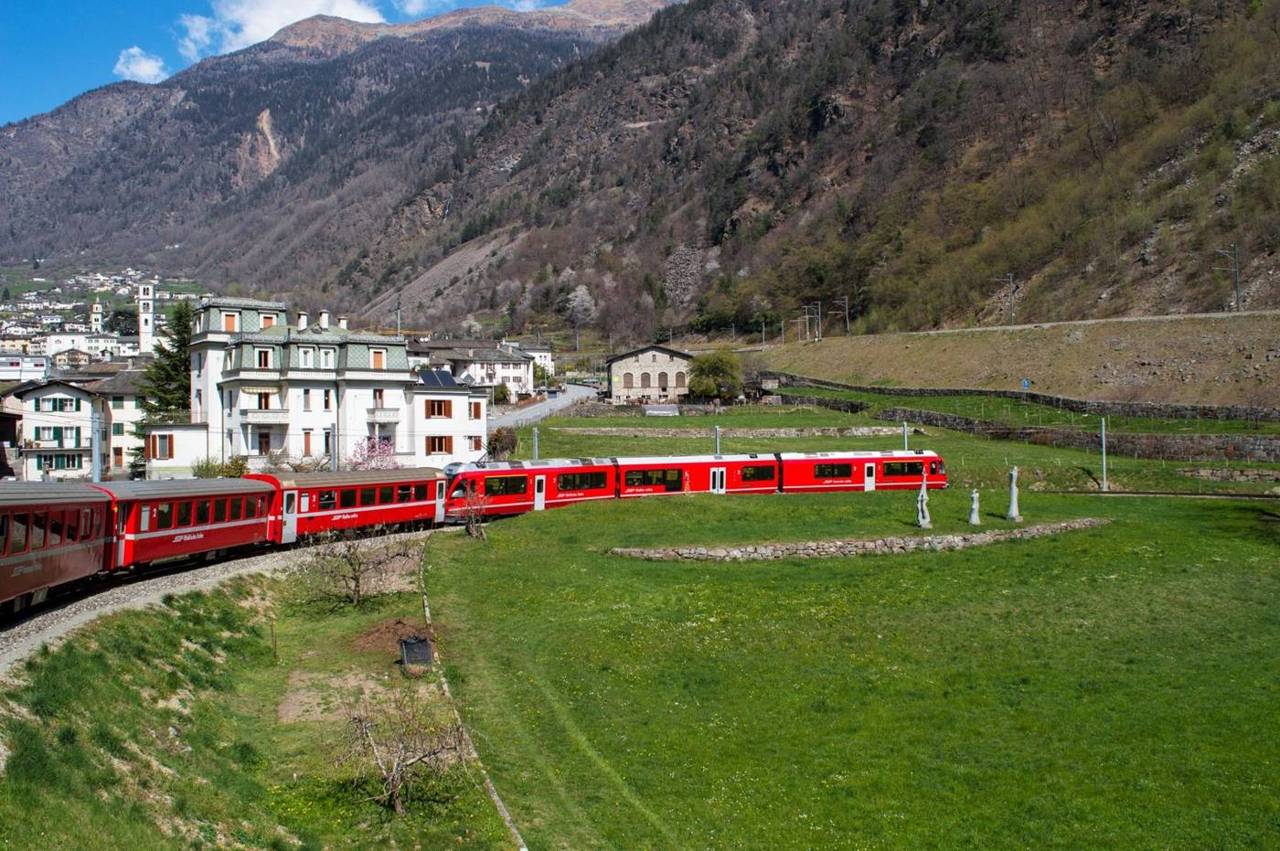
Glacier Express and Bernina Express
The two most famous panoramic trains in the Alps: from Zermatt to St. Moritz over the Oberalp, then down to Tirano over the Brusio viaduct.
 5 daysEasy
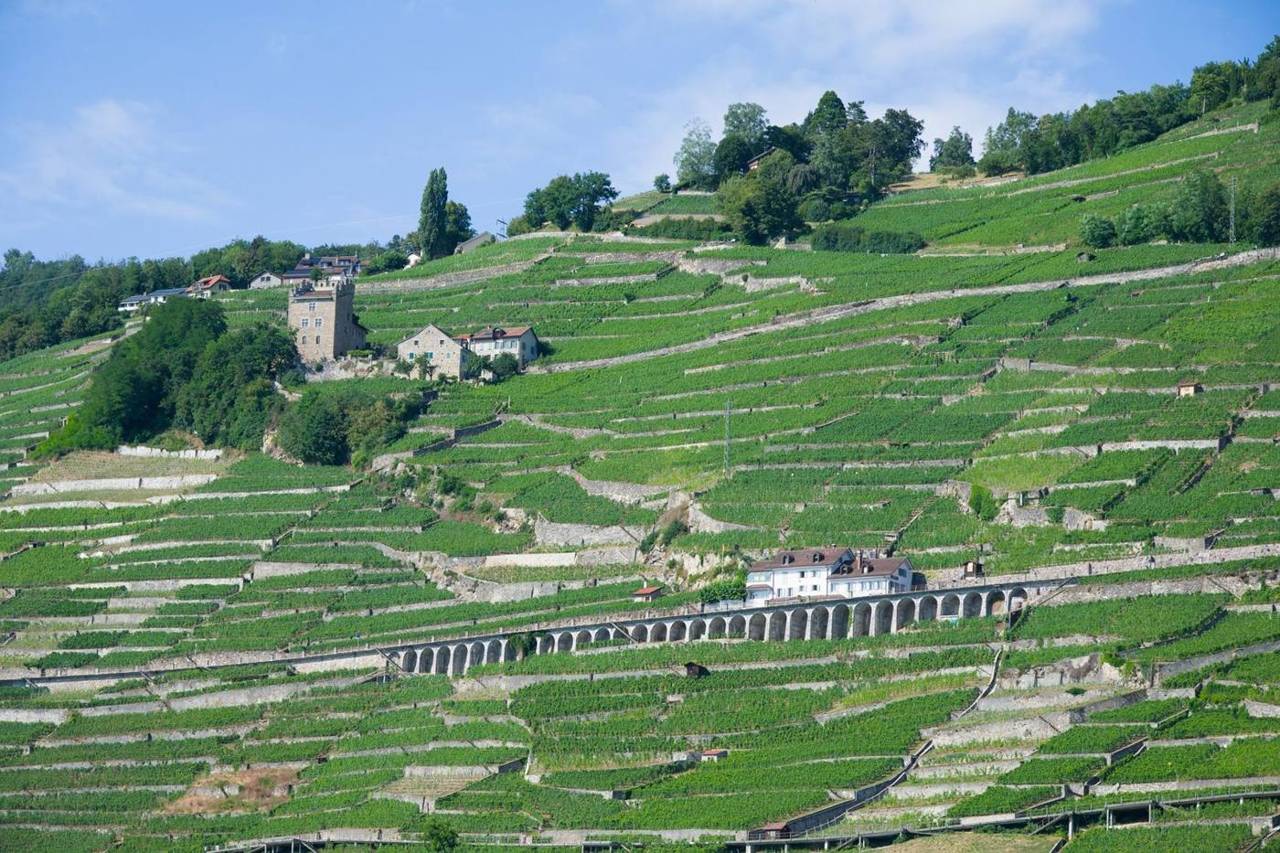
Lake Geneva and Lavaux
International Geneva, Lausanne and the Olympic Museum, the UNESCO-listed terraced vineyards of Lavaux, Vevey, Montreux and Chillon Castle.
 5 daysEasy
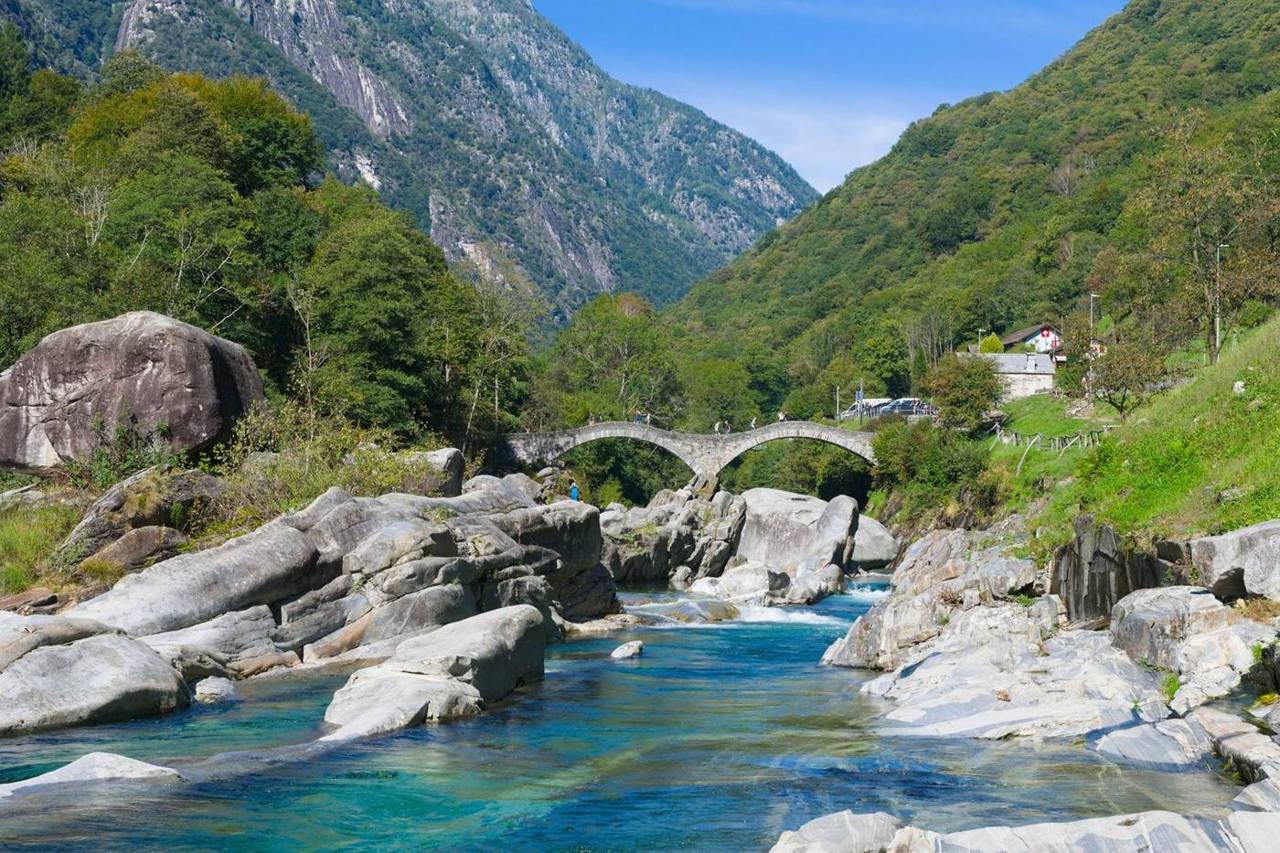
Ticino
Italian-speaking Switzerland: Lugano and Monte Brè, Locarno, the green waters of the Valle Verzasca and the Ponte dei Salti, the Valle Maggia and the grotti.