The Tamil north: Jaffna and Trincomalee
The part of the island tourists don't see: Jaffna's Tamil culture, the northern islands, the beaches of Nilaveli and colourful Hindu temples.
- Colombo
- Anuradhapura
- Jaffna
- Delft
- Trincomalee
- Nilaveli
Day by day
- Day 1
Arrival in Colombo
This trip takes you to the part of Sri Lanka that few tourists see: Anuradhapura, the first capital, then the Tamil north with Jaffna, its Hindu temples and its cuisine, the island of Delft with its wild horses, and finally the north-east coast of Trincomalee and Nilaveli, with a calm sea in summer.
Before you go: Italian citizens enter Sri Lanka with a passport valid for at least six months and with the ETA, the electronic travel authorisation to apply for before leaving on the official website eta.gov.lk. Since 25 May 2026 the tourist ETA for Italian passports costs nothing, is valid for 30 days and allows two entries. Other nationalities should check their own rules. Cyclone Ditwah, in November and December 2025, caused landslides and serious damage to roads and railways: check conditions before every journey. Viaggiare Sicuri advises against driving yourself, recommends a local driver and advises against travelling at night. In the north and in parts of the east mine clearance is not yet finished, above all on the Jaffna peninsula towards Elephant Pass and in the districts of Kilinochchi and Mullaitivu: the British government asks you to respect the signs, never to leave roads and well-used paths and to follow the instructions of the security forces. Do not show Buddha tattoos.
You arrive at the international airport, north of Colombo. In the afternoon rest and, at sunset, walk along the seafront of Galle Face Green, among the kites and the sellers of prawn fritters.
Sleep in Colombo, for one night.
Practical tip: buy your train tickets for the north in advance on the official railway website and always carry your passport, because there are checkpoints in the north.
- Day 2
The train to Anuradhapura, the first capital
Today you board the northern train and visit the oldest sacred city on the island.
In the morning go to Colombo Fort station and take the northern line train. After the cyclone damage, trains between Colombo and Kankesanthurai, on the Jaffna peninsula, restarted on 9 April 2026. The journey to Anuradhapura takes a few hours and crosses plains of rice fields and coconut plantations. Check the times on the official website.
In the afternoon tour the sacred city of Anuradhapura by bicycle or tuk tuk, a UNESCO site and capital of the Sinhalese kings for more than a thousand years. You see the Ruwanwelisaya, the great white stupa surrounded by a wall of carved elephants, the Jetavanaramaya, an enormous brick stupa, the Abhayagiri monastery with its moonstones, semicircular carved thresholds, and the great reservoirs built by the kings. Check prices and times.
At sunset visit the Sri Maha Bodhi, the sacred tree grown, according to tradition, from a branch of the tree under which the Buddha attained enlightenment, brought from India more than two thousand years ago. Pilgrims dressed in white bring flowers and oil lamps.
Sleep in Anuradhapura, for one night.
Practical tip: at the sacred sites dress in white or light colours and take off your shoes and hat; bring a pair of socks, because the stone gets hot in the sun, and plenty of water.
- Day 3
On to Jaffna and the Nallur temple
Today you reach the cultural capital of the Tamils of Sri Lanka.
In the morning take the northern line train again, towards Jaffna. From the window you watch the landscape change: the dry northern plain, the palmyra palms, the tree that symbolises this region, and the towns of Vavuniya and Kilinochchi, rebuilt after the civil war, which ended in 2009. Then the train crosses Elephant Pass, the narrow strip of land between the lagoons that links the Jaffna peninsula to the rest of the island. The journey takes a few hours. Check the times on the official website.
You arrive in Jaffna in the early afternoon. Here the language is Tamil, the most widespread religion is Hinduism, and the city feels closer to southern India than to Colombo.
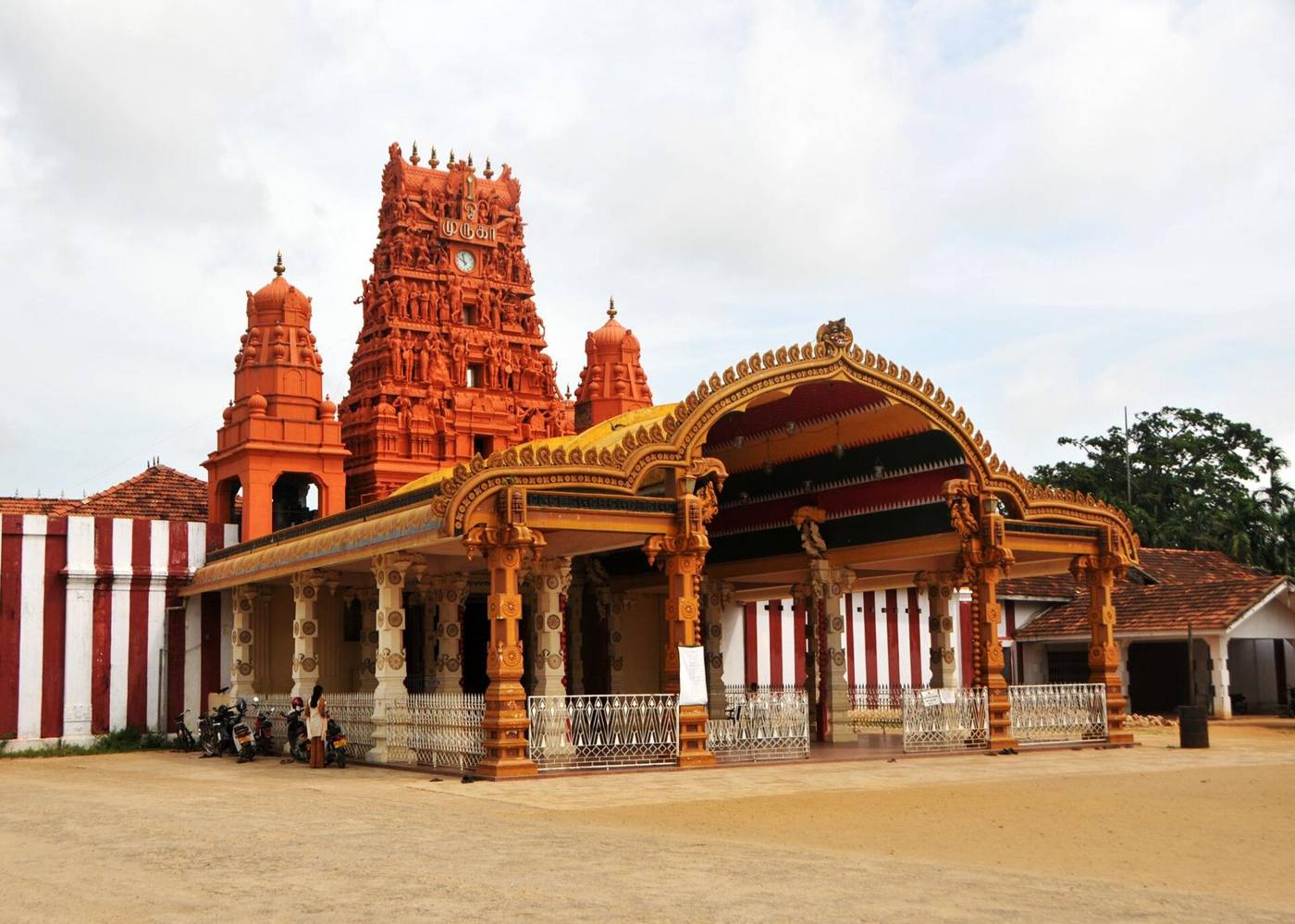
In the late afternoon go to the Nallur Kandaswamy temple, the most important Hindu temple in Jaffna, dedicated to the god Murugan. It has a large golden gateway tower, courtyards and corridors lined with columns. Attend the evening puja, with drums, bells, fire and priests. Men enter bare-chested, and everyone goes barefoot. Check times.
In the evening try the Tamil cooking of Jaffna, spicier than that of the south, with lagoon crab curry, dosa and idli.
Sleep in Jaffna, for three nights.
Practical tip: at the Nallur temple respect the dress rules and ask before taking photos; during the temple festivals, usually in summer, the crowds are huge.
- Day 4
Jaffna: the fort, the library and the market
Today you discover the history and daily life of Jaffna.
In the morning visit Jaffna fort, built by the Portuguese in the seventeenth century and then rebuilt by the Dutch in the shape of a star, with coral stone ramparts on the lagoon. It was badly damaged during the civil war and has been restored. Walk on the walls and look over the lagoon and the city. Check prices and times.
Then pass by the Jaffna Public Library, an elegant white building. In 1981 a fire destroyed the library and tens of thousands of Tamil books and manuscripts, a wound still felt in the city. Today it has been rebuilt and is open again. Check the times.
Late in the morning enter the central market, with stalls of fruit, vegetables, spices, dried fish and products of the palmyra palm: sugar, sweets and dried roots.
For lunch try Jaffna crab curry, with rice and bread, or odiyal kool, a thick, spicy fish and seafood soup made with palmyra flour.
In the afternoon go to the Keerimalai springs, on the north coast, freshwater pools by the sea considered sacred, next to a Hindu temple. There are separate pools for men and women.
At sunset return to the city.
Sleep in Jaffna.
Practical tip: outside the city always keep to tarmac roads and paths used by everyone, and if you see red signs with a skull, the landmine warning, do not go near them.
- Day 5
The island of Delft by ferry
Today you visit an island far from time, in the sea between Sri Lanka and India.
Leave at dawn with a driver. The road crosses the lagoon on long causeways linking the islands of Kayts and Punkudutivu, past salt pans, fishermen with nets and water birds. At Kurikadduwan jetty take the ferry to Delft. The sea crossing takes about an hour, and places are limited: arrive early and check the times, because they depend on the sea.
Delft is a flat and windy island, with a few fishing villages. On the island you get around by a local minibus or tuk tuk. You see the wild horses, descendants of animals left by the Portuguese and the Dutch, grazing freely among the bushes. Look at the dry-stone walls of coral stone that divide the fields and houses, and the great baobab, an African tree probably brought here by Arab traders centuries ago. Visit also the ruins of the Dutch fort, the old dovecote and the growing stone, a rock that, according to the locals, keeps getting bigger.
In the afternoon take the return ferry, without missing it, and go back to Jaffna.
If you have time, on the way back you can stop at the island of Nainativu, with a Hindu temple and a Buddhist temple, reached by boat from Kurikadduwan.
Sleep in Jaffna.
Practical tip: on Delft there are few shops and little shade: bring water, food, a hat and sun cream, and keep cash for the ferry and for transport on the island.
- Day 6
The road to Trincomalee
Today you leave the Tamil north and head down to the east coast.
Set off in the morning with a driver. The road leaves the Jaffna peninsula via Elephant Pass, then heads south across the plains, palmyra palms, fields and villages of the Vanni, the region that was at the centre of the civil war. The journey takes many hours: stop regularly and arrive before dark. Along the way you see monuments, cemeteries and rebuilt houses that recall those years.
In this area mine clearance is still going on in some places: always stay on the road and, when you stop, do not walk into fields or among bushes.
In the afternoon you arrive in Trincomalee, a city on the north-east coast built around one of the largest natural harbours in the world. Tamil, Sinhalese and Muslim communities live here together, with Hindu temples, Buddhist temples, mosques and churches.
Settle in north of the city, on the coast of Uppuveli or Nilaveli, where the beaches are long and white and, in summer, the sea is calm and clear.
At sunset walk on the beach and watch the fishing boats.
In the evening try the catch of the day or a prawn curry.
Sleep in Nilaveli, for four nights.
Practical tip: always carry your passport and keep your ETA ready, printed or on your phone, because checkpoints are frequent on the roads of the north and east; answer calmly and follow the instructions.
- Day 7
Trincomalee and the Koneswaram temple
Today you visit the city, its fort and the temple on the cliff.
In the morning go to Fort Frederick, the fort built by the Portuguese and then taken over by the Dutch and the British, on a peninsula that closes the harbour. It still houses a military base, but the main road is open to visitors. On the way up you see deer grazing freely among the trees and houses.
At the top of the peninsula, on Swami Rock, stands the Koneswaram temple, dedicated to the god Shiva, one of the holiest places for the Hindus of Sri Lanka. The ancient temple was destroyed by the Portuguese in the seventeenth century and rebuilt in the twentieth. From the edge of the cliff you see the ocean far below, and sometimes dolphins. Enter barefoot with shoulders and legs covered. Check times.
In the afternoon walk in the city centre, among the market, the fishing harbour and the beach of Dutch Bay.
If you have time, visit the Kanniya hot springs, just outside the city, seven wells of warm water linked to Hindu and Buddhist legends. Check prices and times.
At sunset return to Nilaveli and relax on the beach.
Sleep in Nilaveli.
Practical tip: at Fort Frederick do not photograph military installations or soldiers, and always respect the signs; at the temple leave your shoes at the entrance and bring a small offering.
- Day 8
Snorkelling at Pigeon Island
Today you explore one of the finest coral reefs in Sri Lanka.
Early in the morning, when the sea is calm, leave by boat from Nilaveli beach for Pigeon Island National Park, two small rocky islands a short distance from the coast. The name comes from the rock pigeons that nest on the island. The park is managed by the Department of Wildlife Conservation, which sells tickets at the boarding point. Check prices and times.
With mask and snorkel you see corals, parrotfish, butterflyfish, surgeonfish and shoals of colourful fish. You often see blacktip reef sharks too, small and harmless, and sea turtles. Swim only in the marked areas, with a life jacket if you are not a strong swimmer.
The park rules apply to everyone: do not touch or stand on the corals, do not feed the fish, do not collect shells and leave no rubbish. Turtles and sharks should be watched from a distance, without chasing them.
Return to shore late in the morning, before the wind and the crowds increase.
In the afternoon rest on Nilaveli beach, long and quiet.
In the evening try squid or grilled fish.
Sleep in Nilaveli.
Practical tip: use a sun cream that does not harm coral and a lycra top; wear reef shoes, because the rocks and dead coral cut, and never stand on the reef.
- Day 9
Whales and dolphins off Trincomalee
Today you go out to sea to look for the great animals of the ocean.
At dawn leave by boat from Trincomalee or Nilaveli. Off this coast the seabed drops quickly to great depths, near the Trincomalee submarine canyon: that is why cetaceans come close. The season usually runs from March to August, and you see dolphins, sperm whales and, sometimes, blue whales. Sightings are never guaranteed and depend on the sea.
In Sri Lanka whale watching is governed by the Sea Mammals Regulations of 2012, amended in 2019. Boats must stay at least 100 metres from whales, and you may not swim or dive with them without a permit from the Department of Wildlife Conservation. Choose an authorised boat and, if the captain gets too close or chases the animals, ask him to move away. Check prices and times.
Return to shore late in the morning.
In the afternoon relax on the beach, or take a last swim in the calm sea at Uppuveli.
In the evening, for your last dinner, try a kottu roti or a fish curry with rice and coconut sambol.
Sleep in Nilaveli.
Practical tip: take a seasickness tablet before leaving, bring a jacket for the wind, a hat and water, and ask the day before about sea conditions: if it is too windy, give it up.
- Day 10
Back to Colombo and departure
Today you leave the north-east coast and return towards the airport.
Set off at dawn with a driver. The road crosses the island to the south-west, through the plains of the Cultural Triangle, near Habarana and Dambulla, then continues towards Kurunegala and the airport. The journey takes many hours: allow a generous margin for traffic and road works, and arrange an evening flight. If your flight is the next day, sleep in Negombo, near the airport.
On the way stop at a fruit stall for a king coconut, the orange coconut you drink, or for curd, buffalo yoghurt with kithul palm syrup.
In ten days you have seen another Sri Lanka: the sacred city of Anuradhapura, the northern train and Elephant Pass, the Nallur temple, the fort, library and cuisine of Jaffna, the wild horses and coral walls of Delft, the Koneswaram temple on its cliff, the corals of Pigeon Island and the cetaceans off Trincomalee.
When to go: from May to September, when the monsoon hits the south-west coast and the north-east is dry and sunny, with a calm sea at Nilaveli. From November to January the north-east monsoon brings heavy rain to Jaffna and Trincomalee.
Practical tip: before you leave buy palmyra palm products in Jaffna, such as sugar and sweets, or spices from the market, and give a tip to the boatmen, guides and drivers.
A different Sri Lanka, more Indian than Sinhalese, still authentic. It's the right trip in summer, May to September, when the monsoon hits the south-west coast and the north-east is dry and sunny.
Before you go
- Documents and visa
- Passport valid for at least six months with two consecutive blank pages, plus the ETA, the electronic travel authorisation to apply for before leaving on the official website eta.gov.lk. Since 25 May 2026 the tourist ETA for Italian passports costs nothing: it is valid for 30 days and allows two entries; to stay longer you need a paid extension.
- Health and vaccines
- No vaccinations are compulsory for travellers from Italy. Malaria has been eliminated, but dengue and chikungunya are rising, especially during the monsoons: use insect repellent and if you have a fever see a doctor at once, without taking aspirin. After a bite from a stray animal you need rabies treatment. Drink bottled water. Outside the big cities hospitals are often basic: you need insurance covering medical costs and repatriation. Emergencies: 119.
- Money and payments
- Sri Lankan rupee (LKR). Cards work in hotels and larger shops; carry cash for tuk tuks, markets, temples and small places. Change money at banks or authorised exchange offices.
- Power sockets
- Types D and G, 230 volts: bring a universal adapter.
- Time zone
- UTC+5:30 all year.
- Safety
- Public order is generally stable. Cyclone Ditwah, in November and December 2025, caused landslides and serious damage to roads and railways: the train line from Colombo returned to Peradeniya, on the edge of Kandy, only in October 2026, and the section to Badulla has not yet been restored. During the monsoons further landslides and closures are possible: check the forecast on meteo.gov.lk; the Disaster Management Centre answers on 177. Driving yourself is not advised: use a local driver, and never travel at night. Buy train tickets only on the official railway website. Wild elephants can attack: in parks always follow authorised guides. Showing Buddha tattoos or disrespecting sacred images can lead to arrest or deportation; drug laws are very strict. In the north, around Jaffna, Kilinochchi and Mullaitivu, mine clearance is still under way. Official advice: GOV.UK.
Information checked in November 2026 for Italian and EU citizens. Rules change: always check before you travel.
Variations
In seven days: Colombo, the train to Jaffna with a stop in Anuradhapura, two days in Jaffna with Delft and the return by train, without Trincomalee.
In thirteen days: add Mannar with its baobabs and the lagoon of migratory birds, and a few days in Pasikudah after Trincomalee.
Frequently asked questions
Are there still landmines in the north?
Yes, mine clearance continues in some areas, above all on the Jaffna peninsula towards Elephant Pass and in the districts of Kilinochchi and Mullaitivu. Never leave roads and well-used paths, and respect the signs.
How do you get to Jaffna?
By train on the northern line, which restarted on 9 April 2026 between Colombo and Kankesanthurai, or by road with a driver. Buy tickets on the official railway website.
When can you snorkel at Pigeon Island?
In the dry season of the north-east coast, roughly from May to September, when the sea is calm. The park is managed by the Department of Wildlife Conservation: check prices and times.
Indicative itinerary written by World Atlas. Before booking, check timetables, seasonal openings, documents and safety.
 7 daysEasy
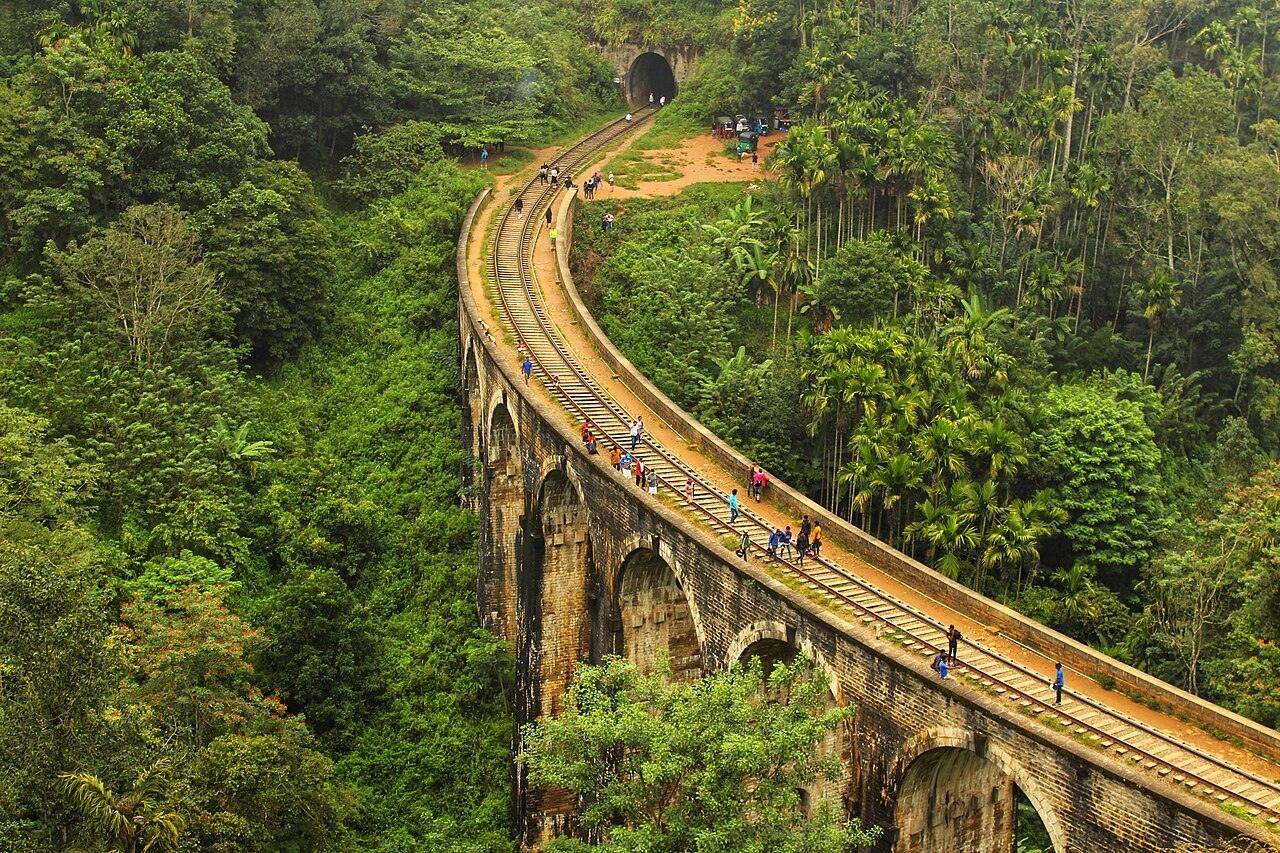
The Cultural Triangle and the tea country
Sigiriya, the elephants of Minneriya, Kandy and the scenic train to Ella in one full week.
 15 daysModerate
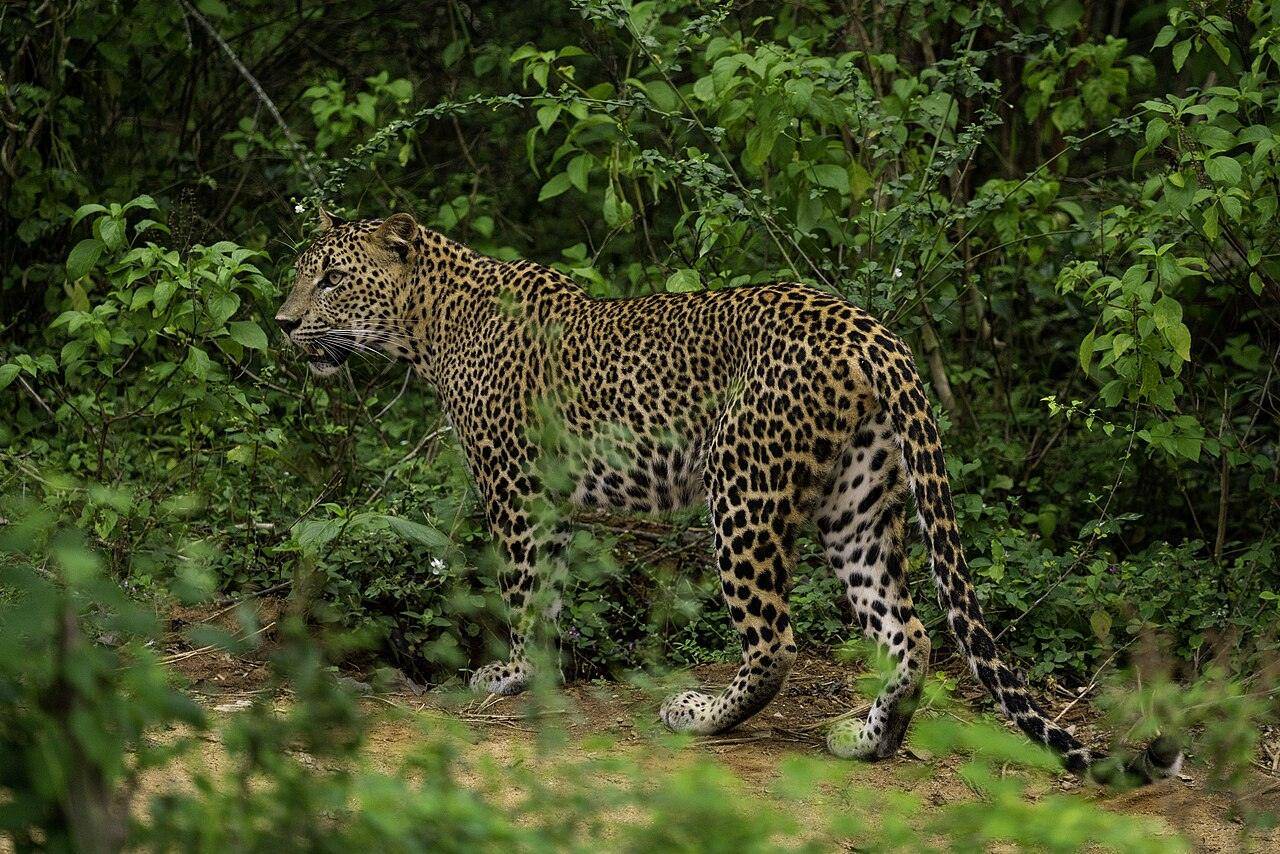
Complete Sri Lanka: temples, leopards, whales and the sea
The ancient cities, the tea train, Yala's leopards, the whales of Mirissa and a few days on the southern beaches.
 12 daysEasy
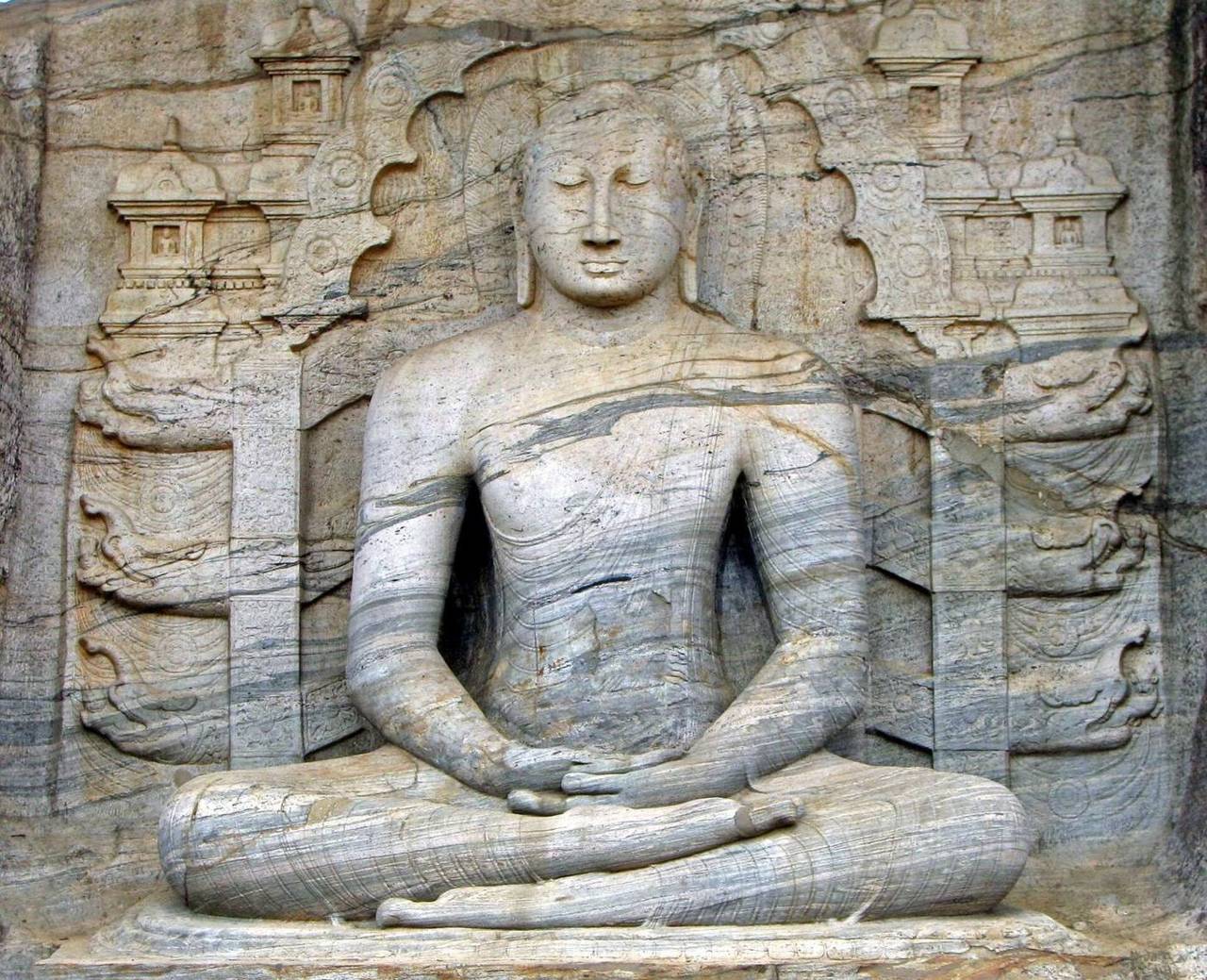
Sri Lanka in 12 days: sacred cities, mountains and the south coast
The classic loop at the right pace: Polonnaruwa and Sigiriya, the Temple of the Tooth in Kandy, the train through the plantations, the elephants of Udawalawe and Galle fort.