Sri Lanka in 12 days: sacred cities, mountains and the south coast
The classic loop at the right pace: Polonnaruwa and Sigiriya, the Temple of the Tooth in Kandy, the train through the plantations, the elephants of Udawalawe and Galle fort.
- Negombo
- Polonnaruwa
- Sigiriya
- Kandy
- Nuwara Eliya
- Ella
- Udawalawe
- Galle
Day by day
- Day 1
Arrival in Negombo
This trip follows the classic tour of Sri Lanka in twelve days, at the right pace: the ruins of Polonnaruwa by bicycle, Sigiriya's Lion Rock and the Dambulla caves, the Temple of the Tooth in Kandy, the tea highlands with Nuwara Eliya, Horton Plains and Ella, the elephants of Udawalawe and the south coast as far as Galle Fort. You travel with a local driver, by train on one highland section and by road where the railway is still interrupted.
Before you go: Italian citizens enter Sri Lanka with a passport valid for at least six months and with the ETA, the electronic travel authorisation to apply for before leaving on the official website eta.gov.lk. Since 25 May 2026 the tourist ETA for Italian passports costs nothing, is valid for 30 days and allows two entries. Other nationalities should check their own rules. Cyclone Ditwah, in November and December 2025, caused landslides and serious damage to roads and railways: the section from Nanu Oya to Ella and Badulla is running again, while the line between Kandy and Nanu Oya is still closed and the section between Colombo and Peradeniya is suspended because of a landslide, so there you travel by road. Viaggiare Sicuri advises against driving yourself, recommends a local driver and advises against travelling at night. Buy train tickets only on the official railway website. Do not show Buddha tattoos.
You land at Katunayake airport and reach Negombo, a few kilometres away. In the afternoon visit St Mary's Church, one of the great Catholic churches of the coast, with its painted ceiling. Then walk along the seafront to the fishermen's boats.
Sleep in Negombo, for one night.
Practical tip: on the first day drink plenty and stay in the shade in the middle of the day, because the humid heat of the coast tires you more than you expect.
- Day 2
Polonnaruwa by bicycle
Today you visit the medieval capital of Sri Lanka, cycling among the ruins.
Leave Negombo early with your driver heading north east. The road crosses the plain, with paddy fields, coconut plantations and reservoirs, and the drive takes several hours. You reach Polonnaruwa at the end of the morning and have lunch in town.
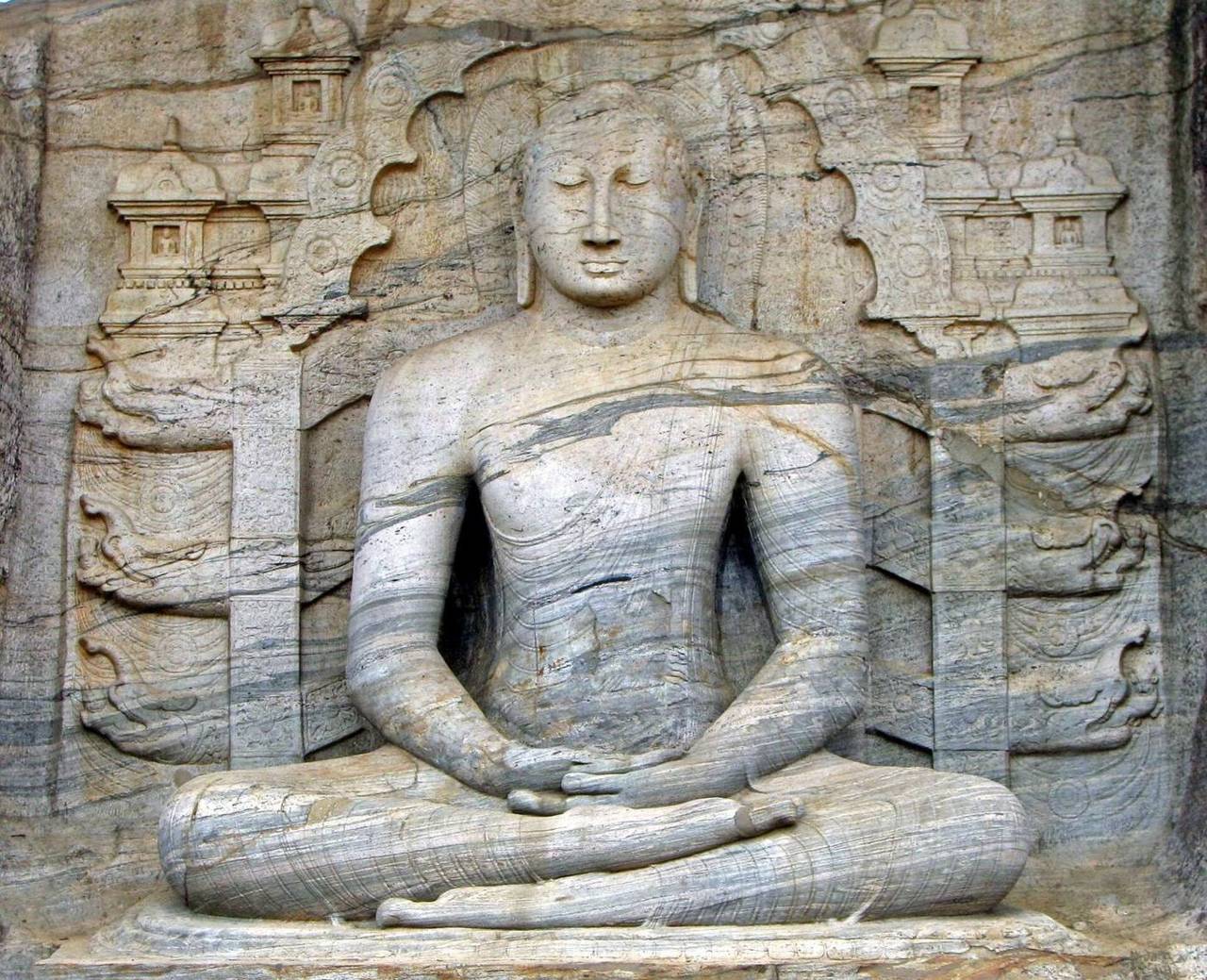
Polonnaruwa was the capital of the island between the 11th and 13th centuries, after Anuradhapura, and is a UNESCO World Heritage Site. The ruins are spread across a large park among the trees, so the best way to see them is by bicycle, hired near the entrance. Start at the archaeological museum, which helps you understand the city, then ride to the royal palace of King Parakramabahu I, with its thick brick walls. Continue to the Sacred Quadrangle, with the Vatadage, a circular shrine with seated Buddha statues facing its four entrances. Finally reach the Gal Vihara, four large Buddha images carved into the same granite face, including a seated Buddha, a standing one and a reclining one more than ten metres long. Check prices and times.
At sunset look out over the great Parakrama Samudra reservoir, built to irrigate the fields of the plain.
In the evening continue for about an hour to the Sigiriya area.
Sleep near Sigiriya, for two nights.
Practical tip: at Polonnaruwa you must take off your shoes and hat at many shrines; carry a light bag and socks for the hot stone.
- Day 3
Sigiriya at dawn and the Dambulla caves
Today you climb the Lion Rock and visit the cave temples.
Be at the Sigiriya entrance at opening time, when the light is soft and the climb is cooler. The Lion Rock, a UNESCO World Heritage Site, is a huge block of red rock rising above the forest. In the 5th century King Kashyapa built his fortified palace on it. You cross the water gardens and the boulder gardens, then climb the stairs. Along the rock face you see the frescoes of the maidens and the mirror wall, covered in verses scratched by visitors a thousand years ago. On the lion terrace two gigantic paws carved in the rock remain, then the last stairway leads to the summit, with the remains of the palace and views as far as the eye can see. Check prices and times.
Come down before the heat and rest at the hotel.
In the afternoon go to Dambulla and visit the Golden Temple, a UNESCO World Heritage Site, with five caves turned into shrines more than two thousand years ago. Inside you find dozens of Buddha statues and ceilings painted in warm reds and ochres. Go in barefoot, with shoulders and knees covered. Check prices and times.
If you still have energy, at sunset climb Pidurangala, the rock next to Sigiriya, with a temple at its base and a view of the Lion Rock.
Sleep near Sigiriya.
Practical tip: at Pidurangala the last stretch passes between large boulders: wear shoes with a good sole and bring a torch for the way down.
- Day 4
Kandy, spices and the evening puja
Today you head down to the hills of the centre, to the old royal city of Kandy.
In the morning set off south with your driver. The road leaves the dry plain and climbs through woods, villages and plantations. At Matale stop at a spice garden: a guide shows you cinnamon, pepper, nutmeg and cardamom plants and explains how they are used in cooking and traditional medicine. Think carefully before buying the creams and oils offered at the end.
At midday you reach Kandy, the last capital of the Sinhalese kings, who held out against the Europeans until 1815. The old town, around the lake, is a UNESCO World Heritage Site. In the afternoon walk around the lake, built by the last king of Kandy, then climb to the viewpoint above the city.
At sunset enter the Sri Dalada Maligawa, the Temple of the Tooth, the most sacred place on the island for Buddhists. It holds a tooth of the Buddha, kept in a golden casket shaped like a stupa. During the evening puja drums play in the courtyard, the faithful bring lotus and jasmine flowers and for a few moments the doors of the relic chamber open. Dress in white or light colours, with shoulders and knees covered. Check prices and times.
Sleep in Kandy, for one night.
Practical tip: in Kandy tuk tuks are handy for short trips: always agree the price before getting in or use the ones with a meter.
- Day 5
By road to Nuwara Eliya, through the estates
Today you climb into the heart of tea country.
The scenic train between Kandy and Nanu Oya is still interrupted after Cyclone Ditwah, so you cover this stretch with your driver. You will take the train in two days, from Nanu Oya to Ella, the finest section of the line. Before leaving, if you like, stop at the Royal Botanic Gardens of Peradeniya, on the edge of Kandy, with the avenue of royal palms and the orchid house. Check prices and times.
Then the road climbs in hairpin bends towards Nuwara Eliya. The landscape changes slowly: the hills become mountains, tea covers every slope and the air turns cool. Stop at the Ramboda falls, beside the road, then visit a tea factory. You see colonial machines still at work and taste Ceylon black tea from the highlands, light and fragrant. Check prices and times.
In the afternoon you reach Nuwara Eliya, at around 1,900 metres. The British called it Little England for its cool climate, houses with chimneys, gardens and golf course. Walk around Lake Gregory and pass the red brick post office and Victoria Park.
The evening is cold, especially from December to February: keep a jacket ready.
Sleep in Nuwara Eliya, for two nights.
Practical tip: before leaving Kandy buy something for travel sickness at a pharmacy, because the road to Nuwara Eliya has a great many bends.
- Day 6
Horton Plains and World's End
Today you walk on the highest plateau in Sri Lanka, to a balcony over the void.
Leave before dawn with your driver for Horton Plains National Park, about an hour from Nuwara Eliya. The park is part of the Central Highlands of Sri Lanka, a UNESCO World Heritage Site: it is a plateau above 2,000 metres, with grasslands, cloud forests full of lichen and streams. At the entrance bags are checked, because plastic is restricted in the park. Check prices and times.
Follow the loop trail of about 9 kilometres, which takes a few hours. After a stretch through the grass you reach Little World's End, then World's End, where the plateau ends suddenly in a cliff hundreds of metres high. On clear mornings you see the southern plain and, far away, the sea. After ten o'clock the clouds usually rise and the view disappears, so it pays to arrive early. The trail continues to Baker's Falls, among the ferns, and returns across the grasslands. Along the way you may see sambar, large deer, and many birds found only on the island.
In the afternoon go back to Nuwara Eliya and rest. Have a hot tea and a cake in the centre.
Sleep in Nuwara Eliya.
Practical tip: at Horton Plains it is cold at dawn and the sun is strong by mid morning: dress in layers, wear a hat and always stay on the marked trail.
- Day 7
The train to Ella, Little Adam's Peak and the Nine Arch Bridge
Today you take the most famous train journey in Sri Lanka, then explore Ella.
In the morning your driver drops you at Nanu Oya station and takes the luggage to Ella. Board the train to Ella: this section was repaired after the cyclone and is running again. The train climbs to Pattipola, the highest station on the island, then descends slowly through estates, tunnels, villages and waterfalls, with tea pickers waving from the rows. The journey takes a few hours. Book reserved seats on the official railway website well in advance.
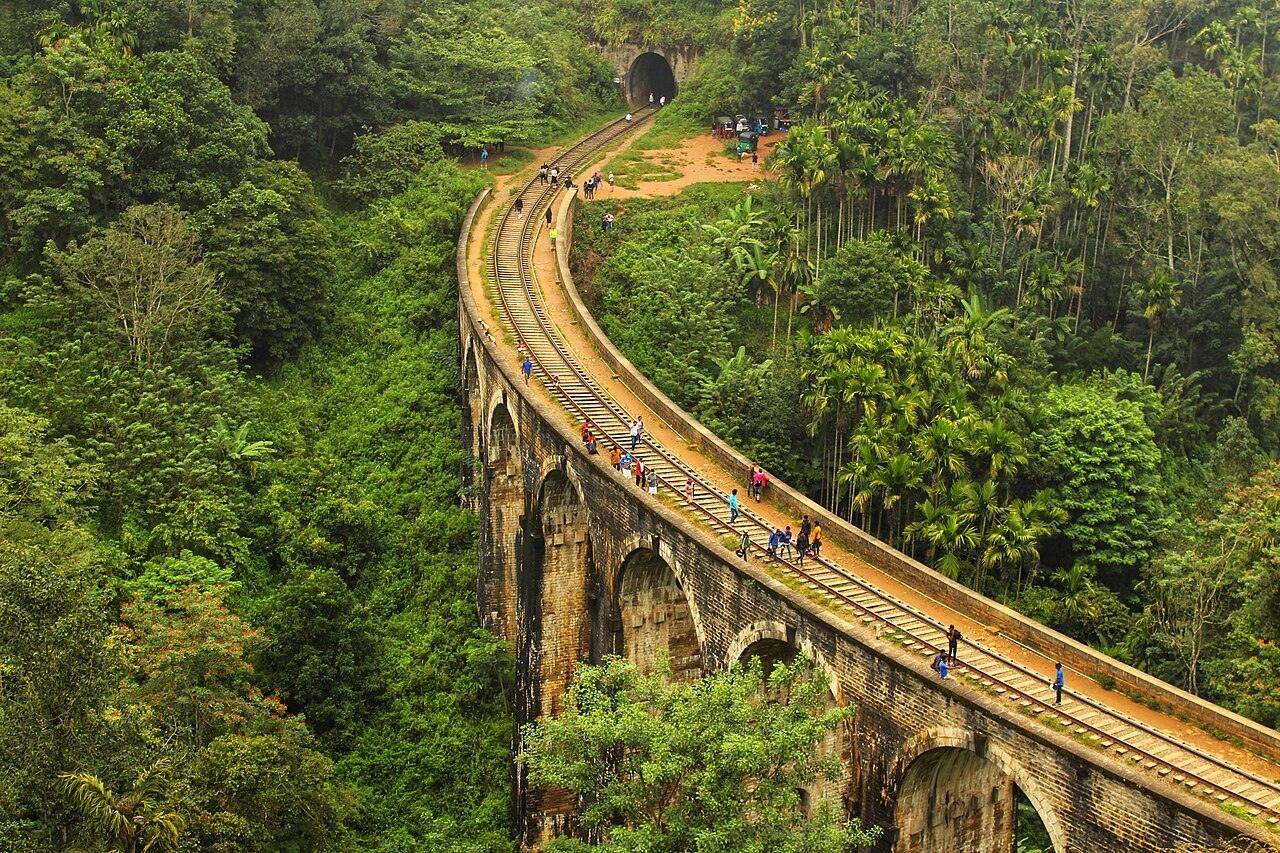
In Ella have lunch at one of the small places in the village, then walk to the Nine Arch Bridge, the stone and brick viaduct built in colonial times in the jungle. Arrive before a train is due to see it on the arches. Walk back to the village through the estates.
In the late afternoon climb Little Adam's Peak. The path is easy, runs between rows of tea and in a short time you are at the top. From up there you see the Ella gap, the great rock of Ella Rock opposite and the southern plain. At sunset the light turns warm and the mountains change colour.
In the evening try kottu, the island's favourite street dish, with roti bread chopped into pieces and stir fried on the griddle with vegetables, eggs and spices.
Sleep in Ella, for one night.
Practical tip: never walk on the tracks of the Nine Arch Bridge, not even for a photo: trains also come outside the timetable.
- Day 8
Udawalawe, the elephant park
Today you come down from the highlands to the southern plains, where the elephant herds live.
In the morning leave Ella with your driver. The road passes the Ravana falls, then descends through the valleys to the plain. The drive takes a few hours, past paddy fields, banana plantations and villages. You reach the Udawalawe area at the end of the morning, settle into a lodge and have lunch.
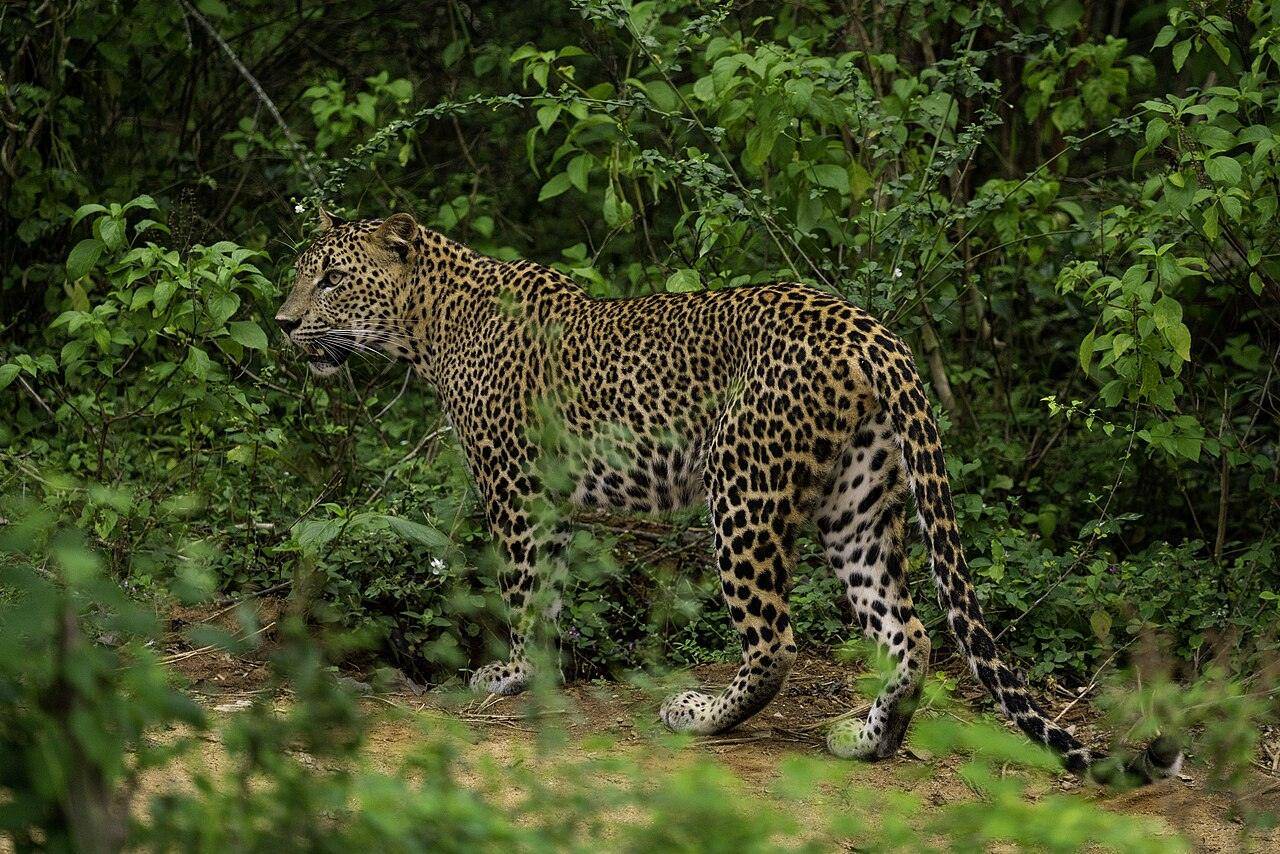
In the afternoon enter Udawalawe National Park on a jeep safari. The park surrounds a large reservoir and is made of open grassland and low scrub, so elephants are easy to see, often in herds with their young. It is one of the best places in Asia to see them in the wild, and far less crowded than Yala. You also see water buffalo, crocodiles, spotted deer, jackals, eagles and peacocks. The leopard lives here too, but is rarely seen. Use only jeeps and guides authorised by the Department of Wildlife Conservation (DWC), always stay on board and never feed the elephants. Check prices and times.
At sunset go back to the lodge and have dinner outdoors.
Sleep near Udawalawe, for one night.
Practical tip: along the road beside the Udawalawe reservoir there are sometimes elephants begging cars for food: do not stop and give them nothing, it is forbidden and dangerous.
- Day 9
The Elephant Transit Home and the Mirissa coast
Today you see the orphaned baby elephants, then reach the ocean.
In the morning visit the Elephant Transit Home, the Department of Wildlife Conservation centre near Udawalawe park. Here orphaned or injured baby elephants grow up and, after a few years, are released into the national parks. You do not touch them: you watch from a platform as they come running for milk at feeding times. It is very different from places where elephants are kept in chains or ridden. Check prices and times.
Then set off south with your driver. The road crosses the plain and reaches the coast near Matara. The drive takes a few hours.
In the afternoon you arrive in Mirissa, a bay with golden sand, palm trees and calm sea from December to April. Take your first swim in the Indian Ocean, then climb Coconut Tree Hill, a small green headland above the beach. At the end of the bay is a small rocky island, Parrot Rock, which you can reach on foot at low tide.
In the evening have dinner on the beach with the catch of the day, chosen straight from the ice and grilled.
Sleep in Mirissa, for two nights.
Practical tip: in Mirissa swim in the central part of the bay, where the sea is calmer, and keep away from the rocks when there are waves.
- Day 10
Whales at dawn and the beaches of the south
Today you can go out by boat to look for whales, then spend the rest of the day by the sea.
Off the south coast the seabed drops quickly to great depths, and that is why blue whales, the largest animals on Earth, pass close to the shore, especially from December to April. At dawn leave from Mirissa harbour: the trip lasts a few hours and sometimes you also see dolphins and sperm whales. Sightings are not guaranteed and the sea can be rough. In Sri Lanka watching marine mammals follows official rules: boats must be registered, keep their distance, go slowly near the animals and never chase or surround them, and swimming with whales is not allowed. Choose a boat that respects these rules, even if it costs a little more. Check prices and times.
Back on land, have a late breakfast.
In the afternoon take a drive along the coast with your driver. Stop at Weligama, a wide bay with gentle waves where many people learn to surf, then at Koggala, where you sometimes see the stilt fishermen. If you want to snorkel, Unawatuna bay has rocks with colourful fish.
At sunset go back to Mirissa and enjoy your last evening on the beach.
Sleep in Mirissa.
Practical tip: if you suffer from seasickness, take a tablet the evening before and one in the morning before leaving, and eat something light before boarding.
- Day 11
Galle Fort
Today you visit the best preserved colonial town in South Asia.
In the morning set off west with your driver. In less than an hour you reach Galle. The fort, a UNESCO World Heritage Site, occupies a headland on the sea and is enclosed by great stone bastions. The Portuguese arrived here in the 16th century; in the 17th century the Dutch built the walls you see today, then came British rule. Sinhalese, Muslim and Tamil families still live inside the fort.
Enter through the main gate and wander through the grid of streets, with low houses, verandas and wooden windows. Pass the Dutch Reformed Church, the old Dutch hospital and the great white mosque by the sea. Visit the National Maritime Museum, in the old warehouses in the walls. Check prices and times.
For lunch try street food dishes and a tropical fruit juice, then rest during the hottest hours.
In the late afternoon walk the whole circuit of the ramparts, from the Star Bastion to Flag Rock, as far as the white lighthouse. At sunset local people come out on the walls, boys play cricket and the sky over the ocean turns orange.
Sleep in Galle, for one night.
Practical tip: in the fort go on foot, it is small, but cover your shoulders and legs if you enter the churches and the mosque, and ask before photographing people.
- Day 12
Back to Colombo and departure
Today is departure day.
In the morning set off with your driver towards Colombo on the Southern Expressway, which runs inland from the coast. In a couple of hours you reach the city. If your flight is in the afternoon or evening, spend a few hours in Colombo: walk through Fort, the old colonial centre, then the Pettah district, with markets divided by trade and the red and white striped Jami Ul-Alfar mosque. If you want a quiet place, visit Gangaramaya temple, with its small museum full of objects donated by the faithful, or the little Seema Malaka temple on Beira Lake. Check prices and times. Then continue to Katunayake airport, allowing for traffic.
In twelve days you have seen classic Sri Lanka: the ruins of Polonnaruwa by bicycle, Sigiriya's Lion Rock and the Dambulla caves, the Temple of the Tooth in Kandy, the estates of Nuwara Eliya, the drop at World's End on Horton Plains, the train to Ella, the elephants of Udawalawe, the whales of Mirissa and Galle Fort.
When to go: the best time is from December to April, with calm sea in the south and west and clear mornings in the highlands. From May to September the monsoon brings rain to the south west coast and the highlands, while the east is dry. Blue whales are seen in the south mainly from December to April.
Practical tip: keep a few thousand rupees for the last day, for tolls, a meal and small expenses at the airport, and change the rest before security.
Asia's best balance of variety and length: culture, mountains, wildlife and sea in under two weeks. Udawalawe is a surer bet than Yala for elephants and far less crowded. Right months for this loop: December-April.
Before you go
- Documents and visa
- Passport valid for at least six months with two consecutive blank pages, plus the ETA, the electronic travel authorisation to apply for before leaving on the official website eta.gov.lk. Since 25 May 2026 the tourist ETA for Italian passports costs nothing: it is valid for 30 days and allows two entries; to stay longer you need a paid extension.
- Health and vaccines
- No vaccinations are compulsory for travellers from Italy. Malaria has been eliminated, but dengue and chikungunya are rising, especially during the monsoons: use insect repellent and if you have a fever see a doctor at once, without taking aspirin. After a bite from a stray animal you need rabies treatment. Drink bottled water. Outside the big cities hospitals are often basic: you need insurance covering medical costs and repatriation. Emergencies: 119.
- Money and payments
- Sri Lankan rupee (LKR). Cards work in hotels and larger shops; carry cash for tuk tuks, markets, temples and small places. Change money at banks or authorised exchange offices.
- Power sockets
- Types D and G, 230 volts: bring a universal adapter.
- Time zone
- UTC+5:30 all year.
- Safety
- Public order is generally stable. Cyclone Ditwah, in November and December 2025, caused landslides and serious damage to roads and railways: the train line from Colombo returned to Peradeniya, on the edge of Kandy, only in October 2026, and the section to Badulla has not yet been restored. During the monsoons further landslides and closures are possible: check the forecast on meteo.gov.lk; the Disaster Management Centre answers on 177. Driving yourself is not advised: use a local driver, and never travel at night. Buy train tickets only on the official railway website. Wild elephants can attack: in parks always follow authorised guides. Showing Buddha tattoos or disrespecting sacred images can lead to arrest or deportation; drug laws are very strict. In the north, around Jaffna, Kilinochchi and Mullaitivu, mine clearance is still under way. Official advice: GOV.UK.
Information checked in November 2026 for Italian and EU citizens. Rules change: always check before you travel.
Variations
Shorter version in 9 days: drop Polonnaruwa and one beach day, and go straight from Sigiriya to Kandy.
Longer version in 15 days: add Anuradhapura before Polonnaruwa and two extra nights on the beaches of Tangalle.
Frequently asked questions
Can I take the train from Kandy to Nuwara Eliya?
Not at the moment: after Cyclone Ditwah the section between Kandy and Nanu Oya is still closed and you travel by road with your driver. The section from Nanu Oya to Ella is running again. Check the status of the lines on the official railway website before you leave.
Udawalawe or Yala?
For elephants Udawalawe is more reliable and much less crowded. Yala is the right park if you want to try to see a leopard, but it has many more jeeps.
Are whales always seen?
No, sightings are never guaranteed. The chances are good from December to April, when the sea is calm. Choose registered boats that respect the official rules on distance from the animals.
Indicative itinerary written by World Atlas. Before booking, check timetables, seasonal openings, documents and safety.
 7 daysEasy
The Cultural Triangle and the tea country
Sigiriya, the elephants of Minneriya, Kandy and the scenic train to Ella in one full week.
 15 daysModerate
Complete Sri Lanka: temples, leopards, whales and the sea
The ancient cities, the tea train, Yala's leopards, the whales of Mirissa and a few days on the southern beaches.
 15 daysEasy
Sri Lanka and the Maldives by boat
Ten days on the island of temples and tea, then five days on a boat in the Maldives among atolls, snorkelling and fishing islands.