The east coast: Arugam Bay, surf and parks
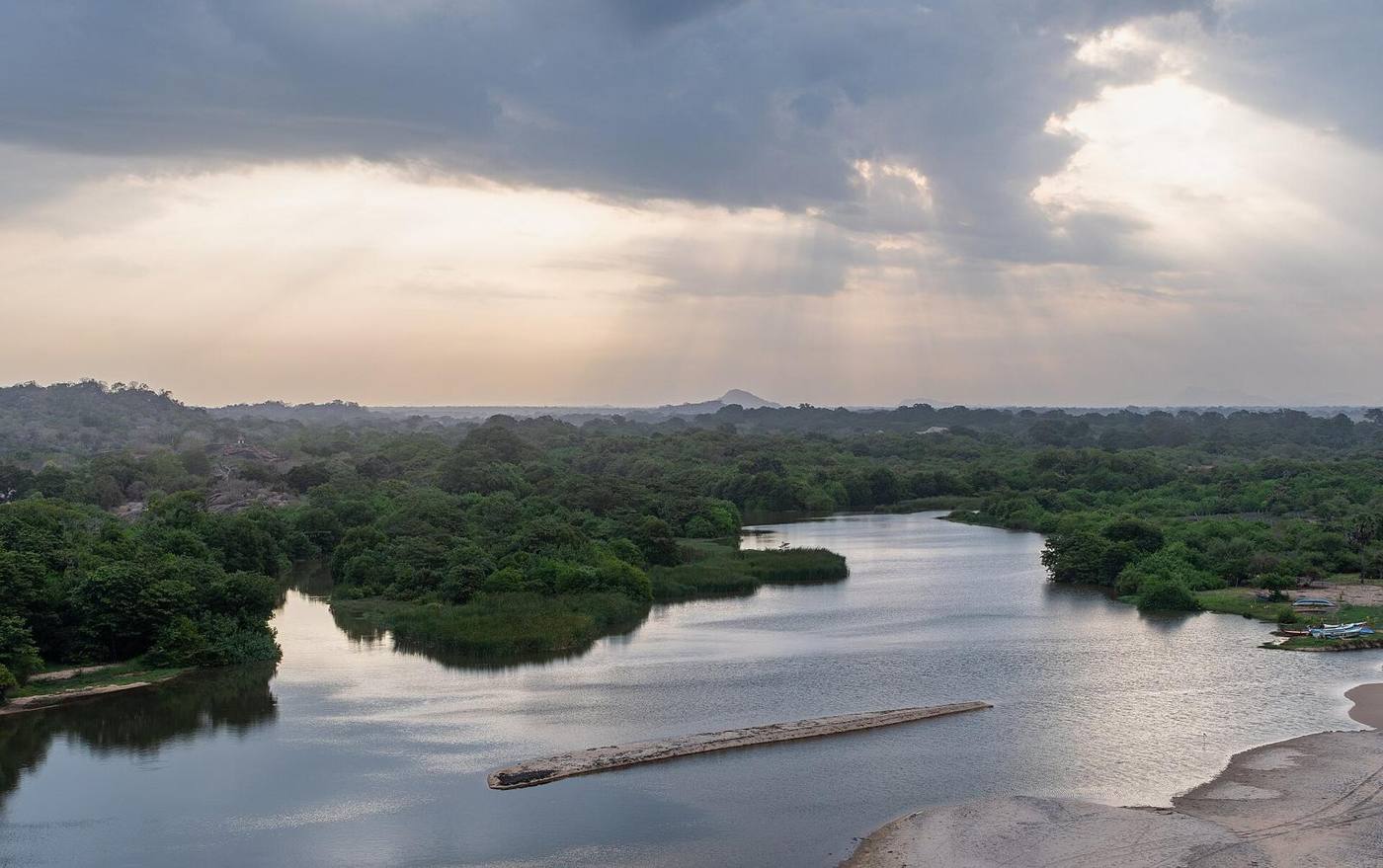
Sri Lanka's surf paradise, the Kumana lagoons with their waterbirds and the elephants of Gal Oya swimming between islands.
- Colombo
- Ella
- Arugam Bay
- Kumana
- Gal Oya
Day by day
- Day 1
Arrival in Colombo
This trip takes you to the east coast of Sri Lanka in its best season: the hills of Ella, the waves of Arugam Bay, the surfing paradise of the island, the lagoons of Kumana with their water birds and the lake of Gal Oya, where elephants swim between the islands.
Before you go: Italian citizens enter Sri Lanka with a passport valid for at least six months and with the ETA, the electronic travel authorisation to apply for before leaving on the official website eta.gov.lk. Since 25 May 2026 the tourist ETA for Italian passports costs nothing, is valid for 30 days and allows two entries. Other nationalities should check their own rules. Cyclone Ditwah, in November and December 2025, caused landslides and serious damage to roads and railways: check conditions before every journey. Viaggiare Sicuri advises against driving yourself, recommends a local driver and advises against travelling at night. The British government points out that terrorist attacks cannot be ruled out, including at tourist sites: in October 2024 the United States embassy reported a threat against Arugam Bay and the authorities stepped up security. Today no area on this route is advised against, but check the advice before leaving. In the east mine clearance is not finished: never leave roads and well-used paths. Do not show Buddha tattoos.
You arrive at the international airport, north of Colombo. In the afternoon, if you have the energy, walk along the seafront of Galle Face Green, where at sunset families fly kites and vendors fry prawn fritters.
Sleep in Colombo, for one night.
Practical tip: carry an identity document when travelling, because there are often checkpoints on the roads of the east.
- Day 2
The road to Ella through the hills
Today you leave the plain and climb towards tea country.
Set off early from Colombo with a driver. After Cyclone Ditwah the hill country railway has not yet been fully restored, and for this journey the road is the simplest option. You leave the suburbs and cross the plains with rubber and coconut plantations, then the road starts to climb with many bends, through hills covered in tea, waterfalls and villages. The journey takes most of the day: stop regularly.
On the way stop at a plantation to watch the pickers, often Tamil women, plucking the youngest leaves by hand and putting them in the basket on their backs. In a tea factory you can see how the leaves are withered, rolled, fermented and dried, and taste freshly made tea. Check prices and times.
For lunch try rice and curry, rice with many small curries of vegetables and lentils, or hoppers, bowl-shaped pancakes made with rice flour and coconut milk.
In the late afternoon you reach Ella, a hill village surrounded by mountains and plantations, with a cooler climate than the coast.
Sleep in Ella, for two nights.
Practical tip: car sickness is common on mountain roads: sit in the front, watch the road and ask the driver to go slowly; and always arrive before dark, when fog makes driving difficult.
- Day 3
Ella and the Ravana falls
Today you walk in the hills around Ella and discover its waterfalls.
At dawn climb Little Adam's Peak, a hill a short distance from the village. The path is easy and runs between rows of tea; at the top you see the valley dropping towards the plain and the mountains all around. It is one of the finest ways to start the day.
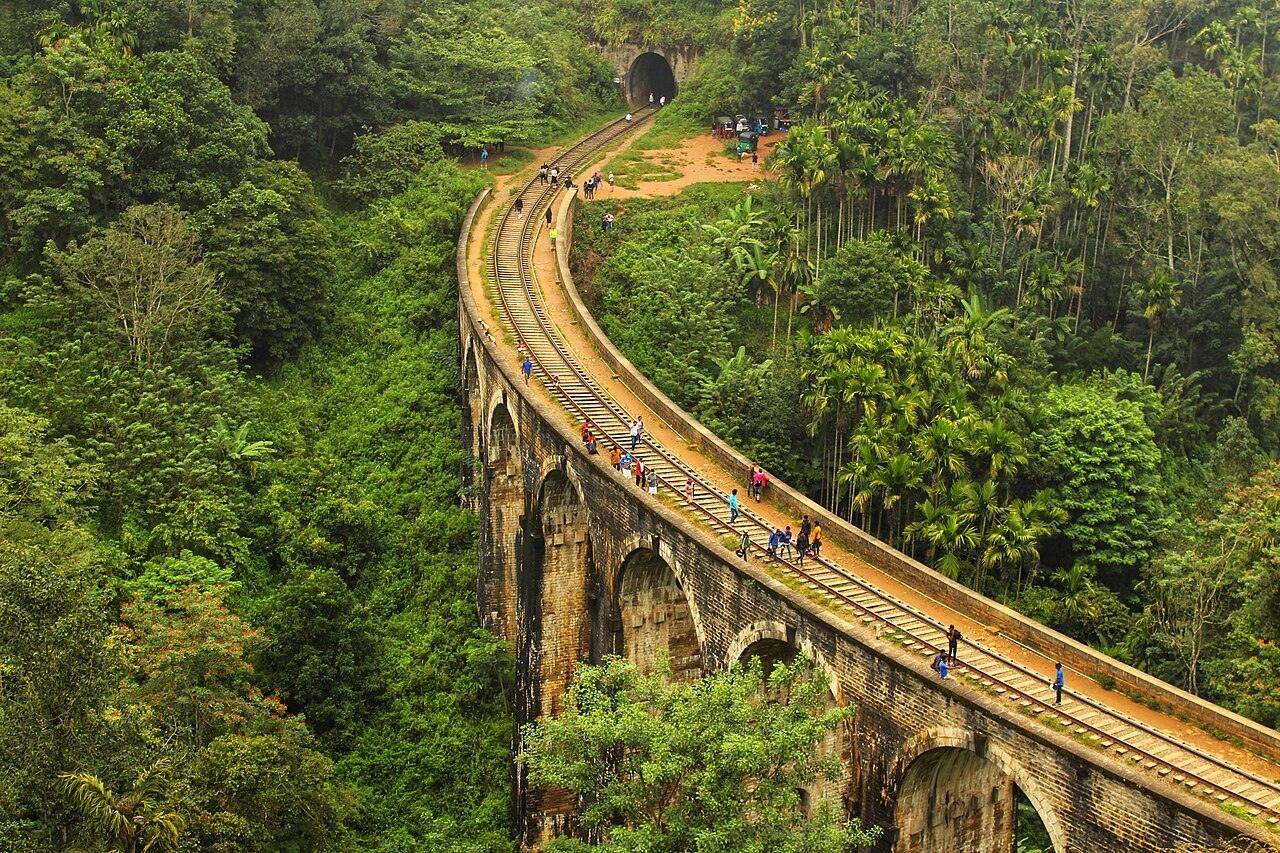
In the middle of the morning reach the Nine Arch Bridge, the railway bridge with nine arches of stone and brick built by the British in the middle of the jungle. Get there on foot along the paths or by tuk tuk. If you want to see a train crossing the bridge, ask for the times in the village.
In the afternoon go down by tuk tuk to the Ravana falls, on the road that leads to the plain. The water tumbles over the rocks, surrounded by forest. The name comes from King Ravana of the Indian epic Ramayana: according to legend, he hid Princess Sita in the caves of these hills. Near the falls you can also visit the Ravana cave, reached by a steep stairway. Check prices and times.
In the evening try kottu roti, chopped flatbread stir-fried on the griddle with vegetables, eggs and spices, the best-loved street dish on the island.
Sleep in Ella.
Practical tip: at the falls do not swim when the water is high or after heavy rain, and ask in the village whether the trails are open, because after the cyclone some areas around Ella had landslides.
- Day 4
Arrival in Arugam Bay
Today you come down from the hills to the ocean, on the east coast.
In the morning leave with your driver. The road descends from Ella towards Wellawaya, on the plain, then crosses a dry and sparsely populated area, with rice fields, sugar cane plantations and villages, as far as Pottuvil and the coast. The journey takes a few hours. Near Wellawaya make a detour to Buduruwagala, where seven large Buddhist figures, carved into a rock face about a thousand years ago, look out over a small lake in the forest. Check prices and times. Watch the sides of the road: wild elephants sometimes cross, especially towards evening.
You arrive in Arugam Bay, a fishing village that has become the surfing paradise of Sri Lanka. A long golden beach curves south to a rocky headland, with colourful boats pulled up on the sand and young people with boards under their arms. The atmosphere is relaxed and youthful.
In the afternoon walk to the headland of Main Point, the most famous spot in the bay, where the wave breaks long and regular to the right. Sit on the rocks and watch the experienced surfers.
At sunset return to the beach, where the fishermen sort their nets.
In the evening try fresh grilled fish or a crab curry.
Sleep in Arugam Bay, for three nights.
Practical tip: the wave season on the east coast runs roughly from May to September; out of season the sea can be flat or very rough, and many places close.
- Day 5
A surf lesson and Whiskey Point
Today you learn to stand on a board, or improve your level.
Early in the morning, when the wind is light and the waves are cleaner, take a surf lesson. In Arugam Bay there are many schools with instructors: choose those with equipment in good condition, soft boards for beginners, and a clear explanation of safety in the water. The first lesson takes place on the sand, then in shallow water, where you learn to paddle, catch the wave and stand up.
Beginners do not usually surf at Main Point, which is for the more experienced, but at easier spots. One of the best loved is Whiskey Point, to the north towards Pottuvil, with a sandy beach and gentle waves suited to those starting out. Get there by tuk tuk with your board.
In the afternoon rest in the shade of the palms, or walk along the beach at Whiskey Point, quieter than the one in the village.
At sunset return to Arugam Bay and watch the last waves.
In the evening try egg hoppers with coconut sambol, or a wattalappam, a coconut pudding made with palm sugar.
Sleep in Arugam Bay.
Practical tip: the equatorial sun burns quickly: use a water-resistant sun cream that does not harm coral, and a lycra top; always respect priority in the water: the wave belongs to the surfer closest to where it breaks.
- Day 6
The Pottuvil lagoon and the mangroves
Today you discover the nature around Arugam Bay, between the lagoon and the southern beaches.
Early in the morning, if you like, take another session on the board, when the water is calmer.
Then reach the Pottuvil lagoon, a few kilometres north, and board a small rowing boat guided by a local fisherman. You glide silently among the mangroves, trees that grow with their roots in salt water, and look for animals: herons, kingfishers, fish eagles, monitor lizards on the banks, monkeys and, sometimes, crocodiles. Check prices and times.
Near the lagoon, on Pottuvil beach, are the ruins of Muhudu Maha Viharaya, an ancient Buddhist temple with statues among the sand dunes. Check times.
In the afternoon go by tuk tuk south of Arugam Bay, towards the wilder beaches of Peanut Farm and Elephant Rock. Climb the large rock of Elephant Rock to see the coast from above. Come back before dark, because elephants use the area.
In the evening relax in the village.
Sleep in Arugam Bay.
Practical tip: in the countryside around Arugam Bay, if you meet an elephant on the road, stop at a distance, do not get out of the tuk tuk and wait for it to move away; never leave well-used paths, because in some parts of the east mine clearance operations are not yet finished.
- Day 7
Kumana National Park
Today you visit the bird park of the east coast.
At dawn set off with a driver southwards, beyond the village of Panama, to the entrance of Kumana National Park, which borders the eastern part of Yala. The journey takes about an hour.
Kumana is famous for the Kumana villu, a large freshwater swamp ringed by mangroves, where thousands of water birds nest, above all from April to July. You see storks, herons, spoonbills, ibises, pelicans and cormorants. The park is also home to elephants, mugger crocodiles, buffalo, deer, wild boar and, harder to see, leopards and sloth bears. Kumana receives far fewer jeeps than Yala, and the safari is calmer.
Use only jeeps registered with the Department of Wildlife Conservation, with an authorised driver and the park tracker. Always stay in the vehicle, speak quietly and do not feed the animals. Check prices and times.
In the afternoon return to Arugam Bay and stop at Okanda beach, near the park, with a small Hindu temple on the rock, the starting point of the pilgrimage on foot to Kataragama.
Sleep in Arugam Bay, for one more night.
Practical tip: enter the park at opening time, when the animals are most active; bring binoculars, a hat and plenty of water, because the heat is strong in the middle of the day.
- Day 8
Gal Oya and the swimming elephants
Today you take a safari unlike any other: by boat.
In the morning leave with your driver towards the north-west, to Gal Oya National Park, around the Senanayake Samudraya, the largest reservoir in Sri Lanka. The journey takes a couple of hours and crosses the rice fields of the Ampara plain.
Gal Oya is the only park in the country where safaris are done by boat. Board an authorised boat and sail among the forested islands of the lake. In the dry season the elephants swim from one island to another looking for fresh grass: you see only the head and the trunk sticking out of the water like a snorkel. It is a rare sight, and never guaranteed. You also see crocodiles, cormorants, fish eagles and kingfishers. Check prices and times.
In the afternoon you can also take a jeep safari in the land section of the park, with its grasslands and dry forests, again with jeeps registered with the Department of Wildlife Conservation. Check prices and times.
In the evening, around the park, listen to the sounds of the forest and look at the starry sky, far from the lights of the towns.
Sleep near Gal Oya, for one night.
Practical tip: the best time to see the elephants swimming is early morning; on the boat wear your life jacket and protect your camera from the spray.
- Day 9
Back to Colombo and departure
Today you leave the east coast and return towards the airport.
Set off at dawn with a driver. The road to Colombo crosses the island from east to west, climbs into the hills and then descends towards the coast. The journey is long and takes many hours: allow a generous margin for traffic and for road works after the cyclone, and arrange an evening flight. If your flight is the next day, sleep in Negombo, near the airport.
On the way stop at a fruit stall for a king coconut, the orange coconut you drink.
In nine days you have seen the Sri Lanka of the east: the road through the tea plantations, the hills of Ella with the Nine Arch Bridge and the Ravana falls, the waves of Arugam Bay and Whiskey Point, the mangroves of Pottuvil, the birds of Kumana and the elephants swimming in the lake of Gal Oya.
When to go: from May to September, the east coast season, when the sea is right for surfing and the weather is dry, while the south-west coast is under the monsoon. From November to February the north-east monsoon brings heavy rain to the east coast and many places in Arugam Bay close.
Practical tip: before you leave give a tip to the instructors, boatmen and drivers, and take home some Uva tea, from the region of Ella, with its strong flavour.
The right coast from May to September, when the south-west is under the monsoon. Arugam Bay is laid-back and full of young travellers; the waves suit beginners too. Gal Oya is the only park in the country with boat safaris.
Before you go
- Documents and visa
- Passport valid for at least six months with two consecutive blank pages, plus the ETA, the electronic travel authorisation to apply for before leaving on the official website eta.gov.lk. Since 25 May 2026 the tourist ETA for Italian passports costs nothing: it is valid for 30 days and allows two entries; to stay longer you need a paid extension.
- Health and vaccines
- No vaccinations are compulsory for travellers from Italy. Malaria has been eliminated, but dengue and chikungunya are rising, especially during the monsoons: use insect repellent and if you have a fever see a doctor at once, without taking aspirin. After a bite from a stray animal you need rabies treatment. Drink bottled water. Outside the big cities hospitals are often basic: you need insurance covering medical costs and repatriation. Emergencies: 119.
- Money and payments
- Sri Lankan rupee (LKR). Cards work in hotels and larger shops; carry cash for tuk tuks, markets, temples and small places. Change money at banks or authorised exchange offices.
- Power sockets
- Types D and G, 230 volts: bring a universal adapter.
- Time zone
- UTC+5:30 all year.
- Safety
- Public order is generally stable. Cyclone Ditwah, in November and December 2025, caused landslides and serious damage to roads and railways: the train line from Colombo returned to Peradeniya, on the edge of Kandy, only in October 2026, and the section to Badulla has not yet been restored. During the monsoons further landslides and closures are possible: check the forecast on meteo.gov.lk; the Disaster Management Centre answers on 177. Driving yourself is not advised: use a local driver, and never travel at night. Buy train tickets only on the official railway website. Wild elephants can attack: in parks always follow authorised guides. Showing Buddha tattoos or disrespecting sacred images can lead to arrest or deportation; drug laws are very strict. In the north, around Jaffna, Kilinochchi and Mullaitivu, mine clearance is still under way. Official advice: GOV.UK.
Information checked in November 2026 for Italian and EU citizens. Rules change: always check before you travel.
Variations
In six days: a direct road to Arugam Bay, three days of surfing and the Kumana safari, without Ella and Gal Oya.
In twelve days: add two days in Ella with the train to Nanu Oya and a safari in Yala, or a few days further north, at Pasikudah.
Frequently asked questions
Is Arugam Bay safe?
In October 2024 the United States embassy reported a threat against tourist sites in Arugam Bay and the authorities stepped up security. Today the British government advises against no area, but points out that attacks cannot be ruled out: check Viaggiare Sicuri before leaving.
When are there waves in Arugam Bay?
The season runs roughly from May to September. There are waves for experienced surfers at Main Point and easier spots for beginners, such as Whiskey Point.
How can you see the swimming elephants at Gal Oya?
On an authorised boat safari on the Senanayake Samudraya lake, best early in the morning in the dry season. Sightings are never guaranteed.
Indicative itinerary written by World Atlas. Before booking, check timetables, seasonal openings, documents and safety.
 7 daysEasy
The Cultural Triangle and the tea country
Sigiriya, the elephants of Minneriya, Kandy and the scenic train to Ella in one full week.
 15 daysModerate
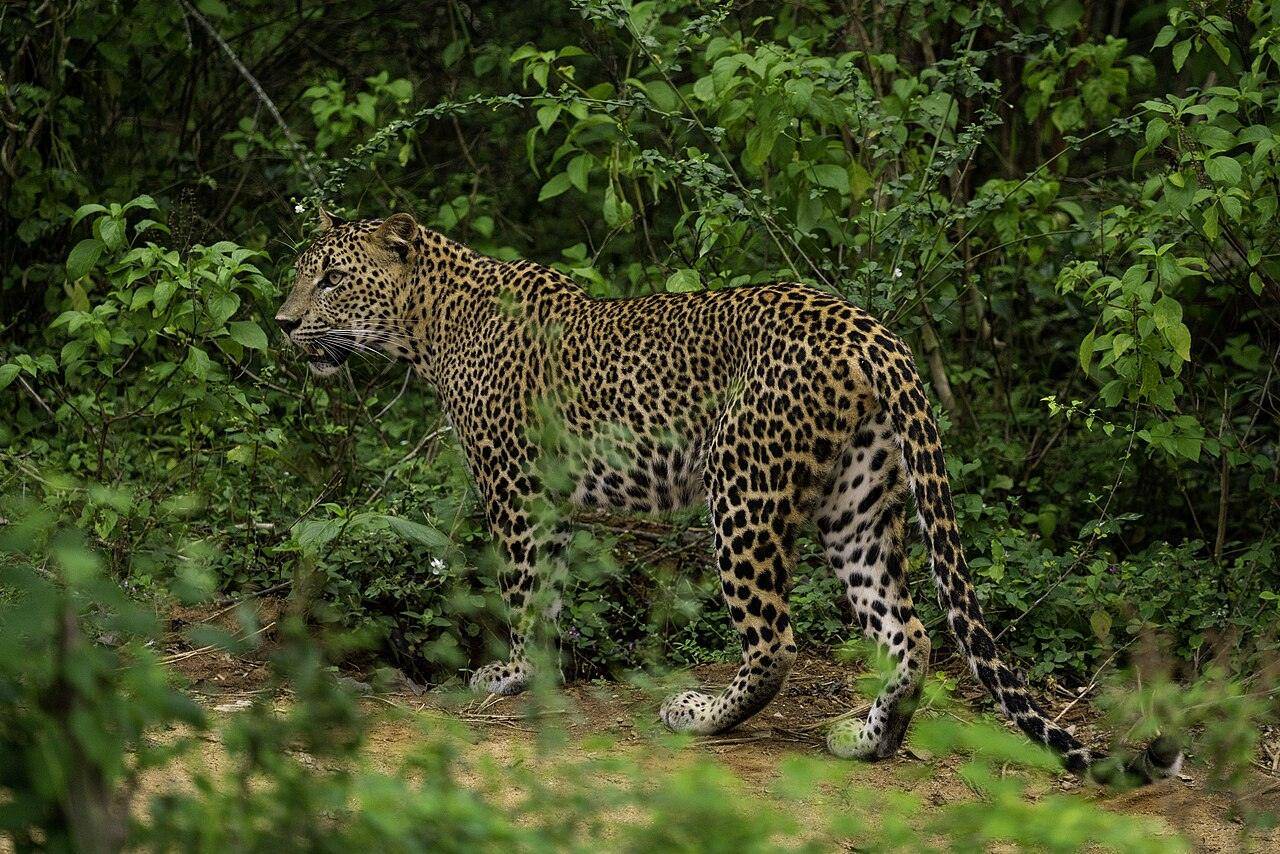
Complete Sri Lanka: temples, leopards, whales and the sea
The ancient cities, the tea train, Yala's leopards, the whales of Mirissa and a few days on the southern beaches.
 12 daysEasy
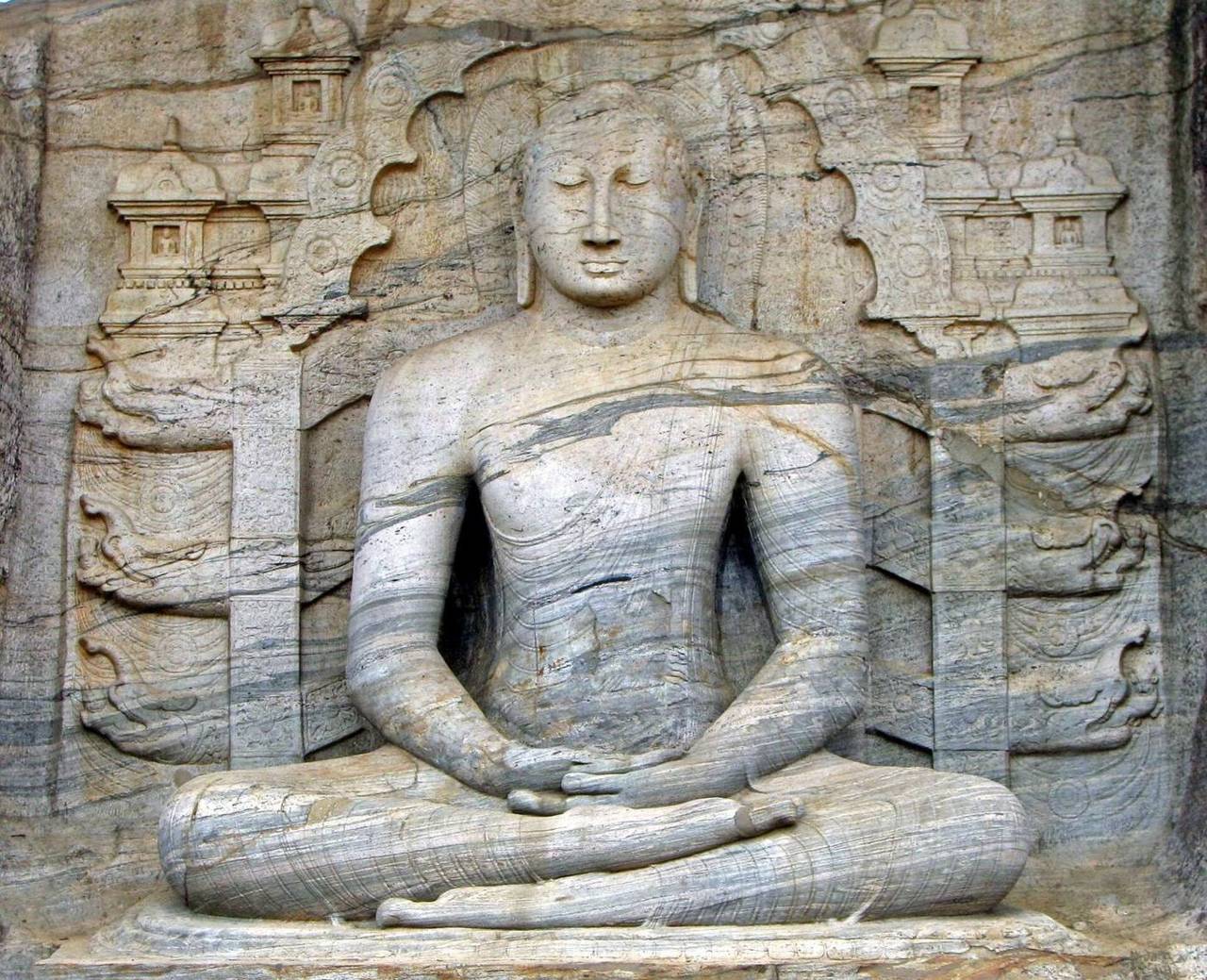
Sri Lanka in 12 days: sacred cities, mountains and the south coast
The classic loop at the right pace: Polonnaruwa and Sigiriya, the Temple of the Tooth in Kandy, the train through the plantations, the elephants of Udawalawe and Galle fort.