Sri Lanka by train
The island's finest railway lines: the coastal line to Galle, the hill-country train from Kandy to Ella and the northern line to Anuradhapura.
- Colombo
- Galle
- Kandy
- Nanu Oya
- Ella
- Anuradhapura
Day by day
- Day 1
Arrival in Colombo, Fort and Pettah
This trip travels across Sri Lanka on its finest railways: the coastal line to Galle, the highland section through the tea plantations to Ella and Badulla, and the northern line from Anuradhapura to Colombo. Where the tracks are still interrupted after the cyclone, you travel by road.
Before you go: Italian citizens enter Sri Lanka with a passport valid for at least six months and with the ETA, the electronic travel authorisation to apply for before leaving on the official website eta.gov.lk. Since 25 May 2026 the tourist ETA for Italian passports costs nothing, is valid for 30 days and allows two entries. Other nationalities should check their own rules. Cyclone Ditwah, in November and December 2025, caused landslides and serious damage to roads and railways: the hill country line is still interrupted at several points between Colombo and Nanu Oya, while the section from Nanu Oya to Ella and Badulla is running. Viaggiare Sicuri advises against driving yourself, recommends a local driver and advises against travelling at night. Buy train tickets only on the official railway website. Do not show Buddha tattoos.
You arrive at the international airport and reach Colombo. In the afternoon walk through Fort, the old colonial centre, to Colombo Fort station, the heart of the rail network. Then enter Pettah, the market district, with streets divided by trade, spices, fabrics and handcarts. Look at the Jami Ul-Alfar mosque, striped red and white.
At sunset go to the seafront of Galle Face Green.
Sleep in Colombo, for one night.
Practical tip: in Pettah carry your backpack on your front and your wallet in a closed pocket, because there are pickpockets in the crowds.
- Day 2
The coastal train to Galle
Today you take one of the finest trains on the island, a few metres from the waves.
In the morning go to Colombo Fort station and board the coastal line train heading south. As soon as you leave the city, the tracks run along the ocean: on one side you see beaches, fishing boats and waves breaking on the rocks, on the other houses, temples and palms. You pass the stations of Moratuwa, Kalutara, with its large white stupa by the river bridge, and Aluthgama, then enter the Hikkaduwa area. The journey takes a few hours and stops at many small stations.
Before Hikkaduwa, at Peraliya, is the memorial to the 2004 tsunami, which swept away a train on this line. If you like, get off and visit it before continuing.
In the early afternoon you arrive at Galle station, opposite the walls of the fort. Settle in inside the fort or nearby.
In the late afternoon take a first stroll through the streets of the fort, with low houses with wooden verandas, churches and mosques.
In the evening try the catch of the day with coconut curry.
Sleep in Galle, for two nights.
Practical tip: sit on the right-hand side of the train, facing the sea, but always stay inside the carriage: leaning out of the open doors is dangerous and there have been fatal accidents; trains are often late, and that is part of the journey.
- Day 3
Galle, the fort and sunset on the ramparts
Today you explore on foot one of the best-preserved European fortified towns in Asia.
Galle fort was built by the Portuguese at the end of the sixteenth century and then enlarged by the Dutch in the seventeenth, with stone ramparts that still surround the peninsula on the sea. It is a UNESCO site, and still a living town, with houses, schools, offices and families who live there.
Early in the morning, before the heat, walk along the walls, from the clock tower to the white lighthouse, the symbol of Galle. Enter the Dutch Reformed Church, from the eighteenth century, with tombstones in the floor, and look at the old Dutch warehouses, now home to the National Maritime Museum. Check prices and times.
At midday rest in the shade or try a rice and curry.
In the afternoon wander the inner streets, Church Street, Leyn Baan Street and Pedlar Street, with restored colonial houses, craft workshops and the Meeran mosque, white against the sea.
At sunset return to the ramparts, near Flag Rock, when locals come out for a stroll, young people play cricket on the lawns and divers jump from the walls for a few coins. Watch the sun go down over the ocean.
Sleep in Galle.
Practical tip: do not climb onto the higher parapets of the ramparts and do not pay the divers to jump: it is dangerous; and to enter churches and mosques cover your shoulders and knees.
- Day 4
Back to Colombo and on towards Kandy
Today you return to Colombo on the coastal line and head up into the hills.
In the morning take the train from Galle to Colombo Fort and watch the coast from the other side. In the city find out the status of the main line to the hills. After the cyclone damage, trains had restarted on 2 October 2026 as far as Peradeniya, on the edge of Kandy, but on 25 October 2026 a landslide near Kadigamuwa station led to the service between Rambukkana and Peradeniya being suspended again, with no reopening date. Kandy station itself is not connected at the moment either. Before leaving check on the official railway website whether the line has reopened.
If the trains are not running, continue by road. You can book a driver from Colombo to Kandy, the most comfortable option, or take one of the buses that link the two cities. The road crosses plains of rice fields and coconut plantations, then climbs into the hills. The journey takes a few hours, and traffic leaving Colombo can be heavy.
You arrive in Kandy in the afternoon. At sunset walk around Kandy Lake, built at the start of the nineteenth century by the last king.
Sleep in Kandy, for two nights.
Practical tip: if the line has reopened, take the train at least as far as Peradeniya: after Rambukkana it climbs through tunnels and past precipices, with some of the finest views on the line; book seats in advance.
- Day 5
Kandy, the Temple of the Tooth and the Peradeniya garden
Today you visit the last capital of the Sinhalese kings, in the central hills.
Early in the morning enter the Sri Dalada Maligawa, the Temple of the Tooth, which keeps the most revered relic in Sri Lanka, a tooth of the Buddha. For centuries whoever held the relic had the right to rule, which is why the temple stands next to the royal palace. The sacred city of Kandy is a UNESCO site. Attend a puja, the ceremony with drums and offerings of lotus and jasmine flowers. The relic stays closed in a golden casket and cannot be seen. Enter with shoulders and knees covered, ideally dressed in white. Check prices and times.
Late in the morning go by tuk tuk to Peradeniya, a few kilometres away, to the Royal Botanic Garden, on a bend of the Mahaweli, the longest river on the island. Walk along the avenues of royal palms, visit the orchid house and the spice garden, and stop under the great Java fig, whose branches cover a whole lawn. Check prices and times.
In the late afternoon return to Kandy and walk through the central market, with fruit, spices and coconut sweets.
In the evening watch a show of Kandyan dance, with drums, silver costumes and fire walking on hot coals. Check prices and times.
Sleep in Kandy.
Practical tip: at the temple leave your shoes at the deposit and bring a pair of socks, because the floor gets hot in the sun; never turn your back on a statue of the Buddha for a photo.
- Day 6
From Kandy to Ella: by road to Nanu Oya, then the highland train
Today you make the most famous journey in Sri Lanka, partly by road and partly by train.
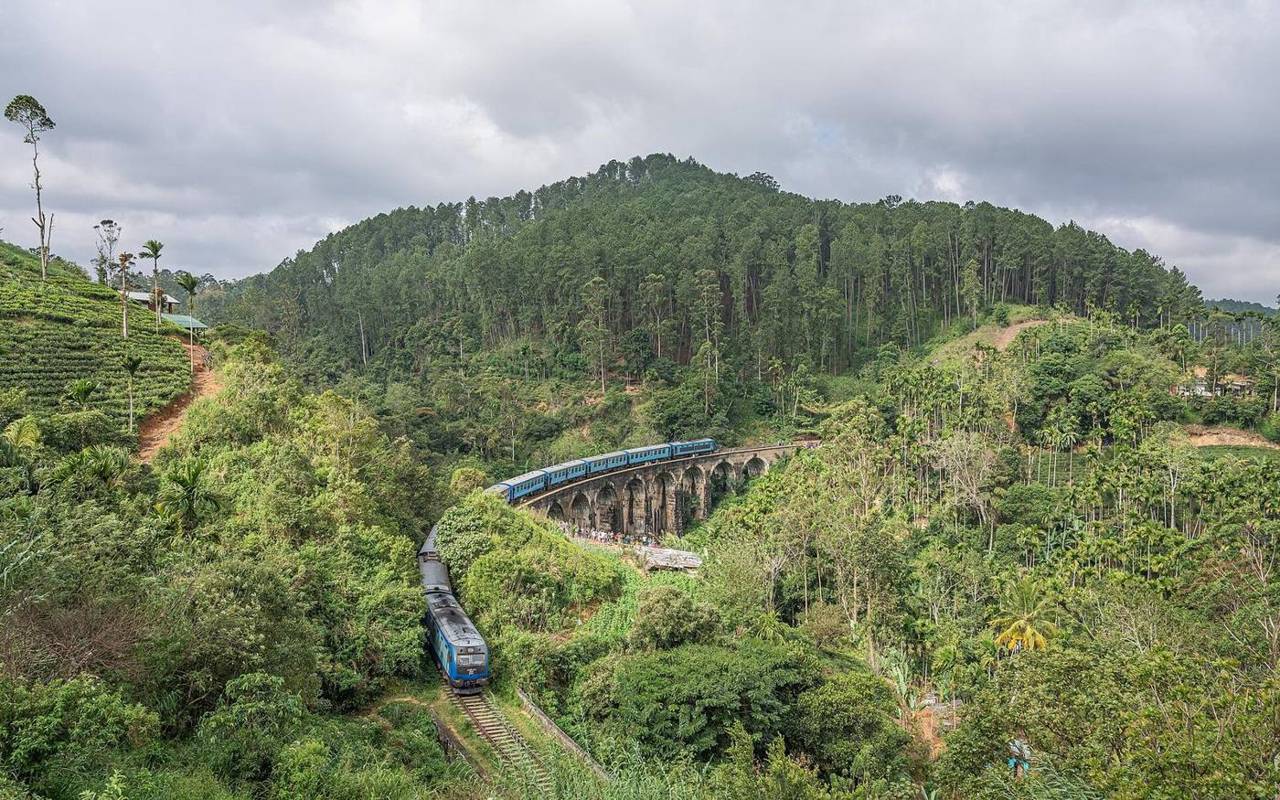
The stretch from Kandy to Ella is often described as the most beautiful train journey in Asia. After Cyclone Ditwah, however, the railway between Kandy and Nanu Oya has not yet been restored, while from Nanu Oya to Ella and Badulla trains returned on 20 June 2026. So early in the morning leave Kandy with a driver for Nanu Oya. The road climbs with many bends through tea plantations, passes the Ramboda falls and reaches the area of Nuwara Eliya, the highest town on the island, founded by the British. On the way stop at a tea factory to see how the leaves are processed and taste freshly made tea.
At Nanu Oya station board the train for Ella. This is the most spectacular section of the line: it passes Pattipola, the highest station in Sri Lanka, crosses the upland grasslands near Horton Plains, then descends towards Haputale and Bandarawela through plantations, tunnels, waterfalls and villages.
For this stretch choose reserved second-class seats, with windows that open, better than air-conditioned first class, with closed windows. Buy tickets only on the official railway website and check the day's times, because they can change.
You arrive in Ella in the afternoon.
Sleep in Ella, for two nights.
Practical tip: do not lean out of the doors and windows for photos, and if the train is very late your driver can meet you in Ella by road.
- Day 7
Ella, the Nine Arch Bridge and Little Adam's Peak
Today you walk in the hills around Ella and see the most famous railway bridge on the island.
At dawn climb Little Adam's Peak, a hill a short distance from the village. The path is easy and runs between rows of tea; at the top you see the valley dropping towards the plain and the mountains around.
In the middle of the morning reach the Nine Arch Bridge, the stone and brick bridge with nine arches built by the British between Ella and Demodara, in the middle of jungle and plantations. Wait for a train to pass, watching from the hill opposite: it is one of the most photographed images of Sri Lanka. Ask for the times in the village, because they change often.
In the afternoon, if you still have energy, climb towards Ella Rock with a local guide, a longer and harder hike, or go down by tuk tuk to the Ravana falls, linked to the legend of King Ravana from the Indian epic Ramayana.
In the evening try kottu roti, chopped flatbread stir-fried on the griddle with vegetables, eggs and spices, or rice and curry.
Sleep in Ella.
Practical tip: do not walk on the bridge tracks or along the railway when a train is coming; before taking a trail ask in the village whether it is open, because after the cyclone some areas around Ella had landslides, and for Ella Rock always take a guide, because the paths are confusing.
- Day 8
The train to Badulla and the road to Anuradhapura
Today you leave the hills to reach the first capital of the island, on the northern plain.
In the morning take the train from Ella towards Badulla, the last section of the hill country line. Shortly after Ella you cross the Nine Arch Bridge, then the train descends towards Demodara, where the line circles a hill and passes beneath itself in a tunnel, a famous work of British engineers. The ride is short. Check the times on the official railway website.
In Badulla your driver is waiting. From the eastern hills there is no direct train to Anuradhapura, and the road is the simplest way. The route descends towards Mahiyangana, on the plain, then crosses the dry zones of the centre and north, with rice fields, great ancient reservoirs and villages. It is a long day: leave early, stop regularly and arrive before dark, because in these areas wild elephants often cross the road.
You arrive in Anuradhapura in the late afternoon. At sunset visit the Sri Maha Bodhi, the sacred tree grown, according to tradition, from a branch of the tree under which the Buddha attained enlightenment, brought from India more than two thousand years ago. It is one of the oldest human-planted trees in the world with a recorded date. Check prices and times.
Sleep in Anuradhapura, for one night.
Practical tip: if the train to Badulla is late or cancelled, your driver can leave directly from Ella; at the sacred sites of Anuradhapura dress in white and take off your shoes.
- Day 9
Anuradhapura and the northern line to Colombo
Today you visit the ancient city in the morning and return to Colombo by train.
At dawn tour the sacred city of Anuradhapura by bicycle or tuk tuk, a UNESCO site and capital of the Sinhalese kings for more than a thousand years. You see the Ruwanwelisaya, the great white stupa surrounded by a wall of carved elephants, the Jetavanaramaya, an enormous brick stupa, and the Abhayagiri monastery with its moonstones, semicircular carved thresholds. Check prices and times.
Then take the northern line train to Colombo Fort. After the cyclone, trains between Colombo and Kankesanthurai, on the Jaffna peninsula, restarted on 9 April 2026. The journey takes a few hours and crosses plains, rice fields and coconut plantations. Buy tickets on the official railway website and check the times.
From Colombo reach the airport with a driver. Arrange an evening flight and allow a generous margin.
In nine days you have seen Sri Lanka from the train window: the coastal line to Galle and its fort, Kandy and the Temple of the Tooth, the highland train between Nanu Oya and Ella, the Nine Arch Bridge, the descent to Badulla and the northern line from Anuradhapura.
When to go: from December to April, when the weather is driest on the west coast and in the hills. October and November bring heavy rain and landslides.
Practical tip: trains are slow and often late: bring water, fruit and something to read, and always keep a margin before your flight.
The cheapest and finest way to get around Sri Lanka. Trains are slow and often late: that's part of the experience. For Kandy-Ella choose reserved second-class seats with opening windows, better than air-conditioned first class.
Before you go
- Documents and visa
- Passport valid for at least six months with two consecutive blank pages, plus the ETA, the electronic travel authorisation to apply for before leaving on the official website eta.gov.lk. Since 25 May 2026 the tourist ETA for Italian passports costs nothing: it is valid for 30 days and allows two entries; to stay longer you need a paid extension.
- Health and vaccines
- No vaccinations are compulsory for travellers from Italy. Malaria has been eliminated, but dengue and chikungunya are rising, especially during the monsoons: use insect repellent and if you have a fever see a doctor at once, without taking aspirin. After a bite from a stray animal you need rabies treatment. Drink bottled water. Outside the big cities hospitals are often basic: you need insurance covering medical costs and repatriation. Emergencies: 119.
- Money and payments
- Sri Lankan rupee (LKR). Cards work in hotels and larger shops; carry cash for tuk tuks, markets, temples and small places. Change money at banks or authorised exchange offices.
- Power sockets
- Types D and G, 230 volts: bring a universal adapter.
- Time zone
- UTC+5:30 all year.
- Safety
- Public order is generally stable. Cyclone Ditwah, in November and December 2025, caused landslides and serious damage to roads and railways: the train line from Colombo returned to Peradeniya, on the edge of Kandy, only in October 2026, and the section to Badulla has not yet been restored. During the monsoons further landslides and closures are possible: check the forecast on meteo.gov.lk; the Disaster Management Centre answers on 177. Driving yourself is not advised: use a local driver, and never travel at night. Buy train tickets only on the official railway website. Wild elephants can attack: in parks always follow authorised guides. Showing Buddha tattoos or disrespecting sacred images can lead to arrest or deportation; drug laws are very strict. In the north, around Jaffna, Kilinochchi and Mullaitivu, mine clearance is still under way. Official advice: GOV.UK.
Information checked in November 2026 for Italian and EU citizens. Rules change: always check before you travel.
Variations
In six days: Colombo, the coastal train to Galle, then Kandy by road and the train from Nanu Oya to Ella, returning by road.
In twelve days: after Anuradhapura continue by train on the northern line to Jaffna, and return to Colombo on the same train.
Frequently asked questions
Does the train from Kandy to Ella run?
After Cyclone Ditwah the section between Kandy and Nanu Oya has not yet been restored; from Nanu Oya to Ella and Badulla trains returned on 20 June 2026. Do the first part by road and check the times on the official railway website.
Can you go from Colombo to Kandy by train?
Trains had restarted on 2 October 2026 as far as Peradeniya, but since 25 October 2026 the section between Rambukkana and Peradeniya has been suspended again because of a landslide. Check the official railway website; otherwise go by road.
First or second class?
On the stretch between Nanu Oya and Ella choose reserved second-class seats, with windows that open. Air-conditioned first class has closed windows.
Indicative itinerary written by World Atlas. Before booking, check timetables, seasonal openings, documents and safety.
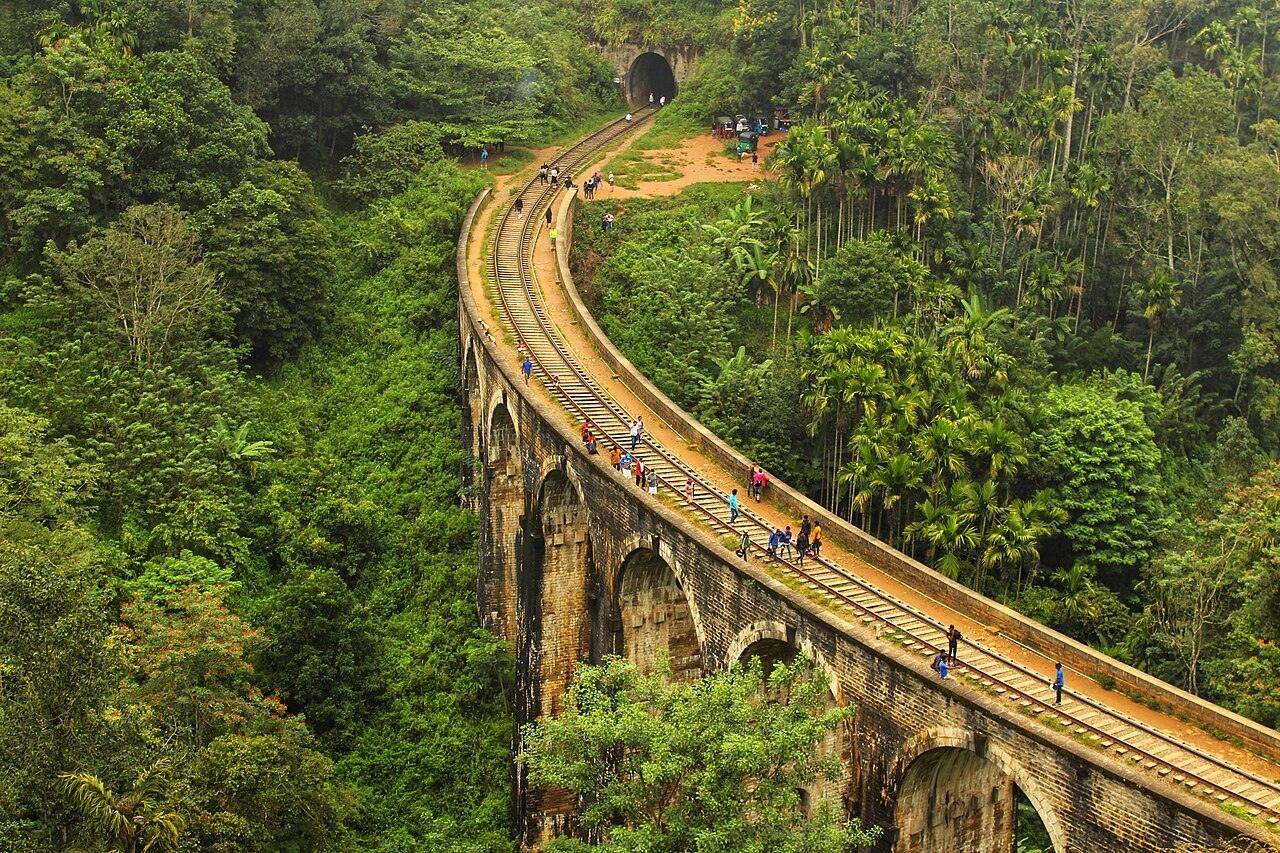 7 daysEasy
The Cultural Triangle and the tea country
Sigiriya, the elephants of Minneriya, Kandy and the scenic train to Ella in one full week.
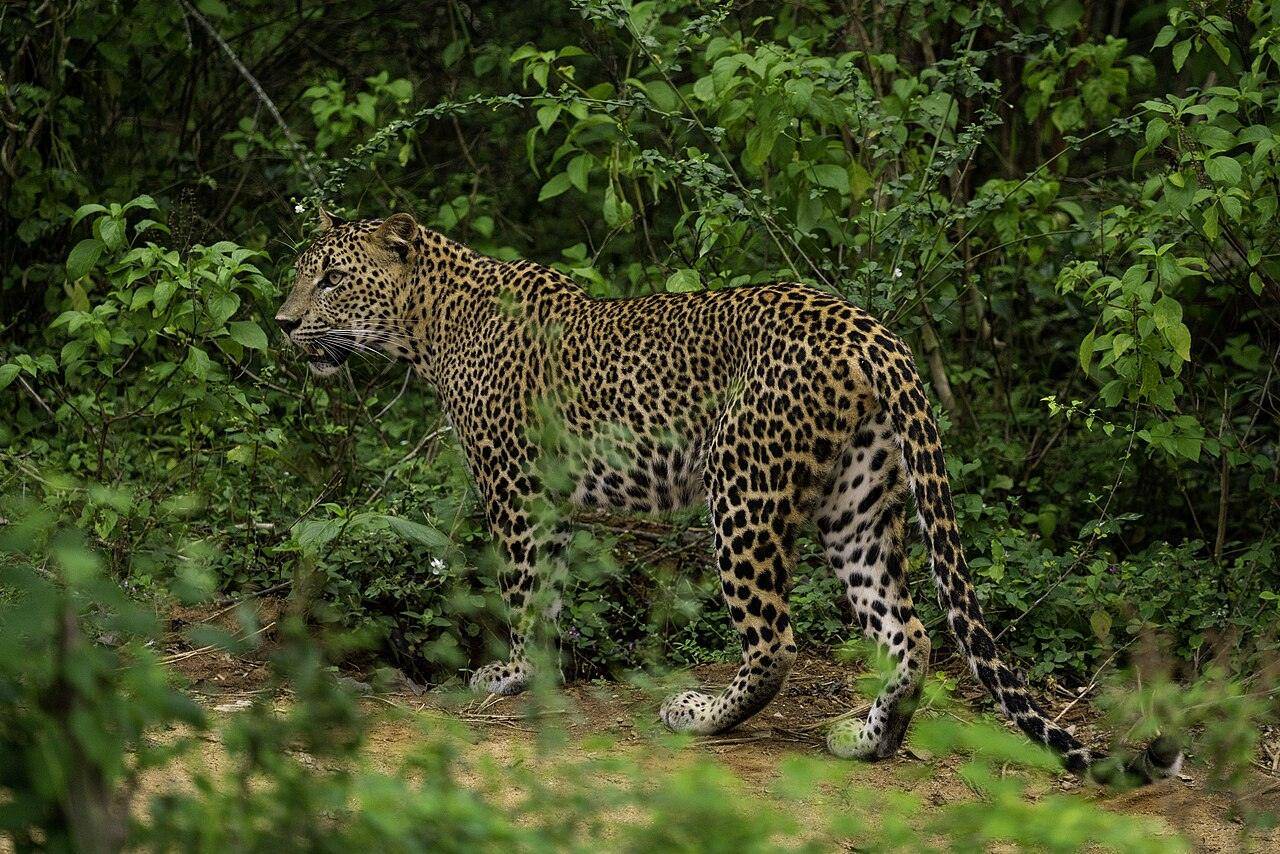 15 daysModerate
Complete Sri Lanka: temples, leopards, whales and the sea
The ancient cities, the tea train, Yala's leopards, the whales of Mirissa and a few days on the southern beaches.
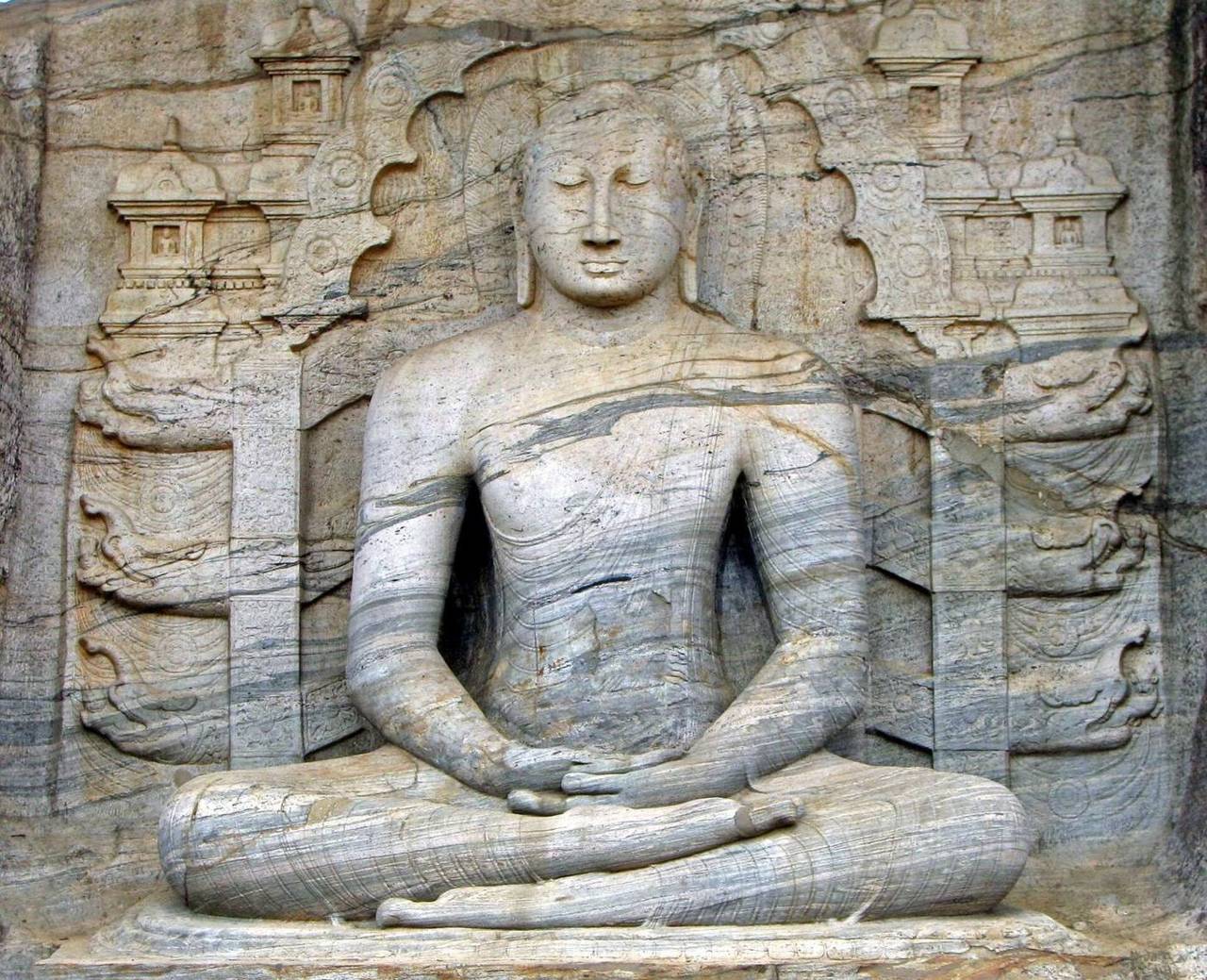 12 daysEasy
Sri Lanka in 12 days: sacred cities, mountains and the south coast
The classic loop at the right pace: Polonnaruwa and Sigiriya, the Temple of the Tooth in Kandy, the train through the plantations, the elephants of Udawalawe and Galle fort.