Galicia: the Rías Baixas and the Cíes Islands
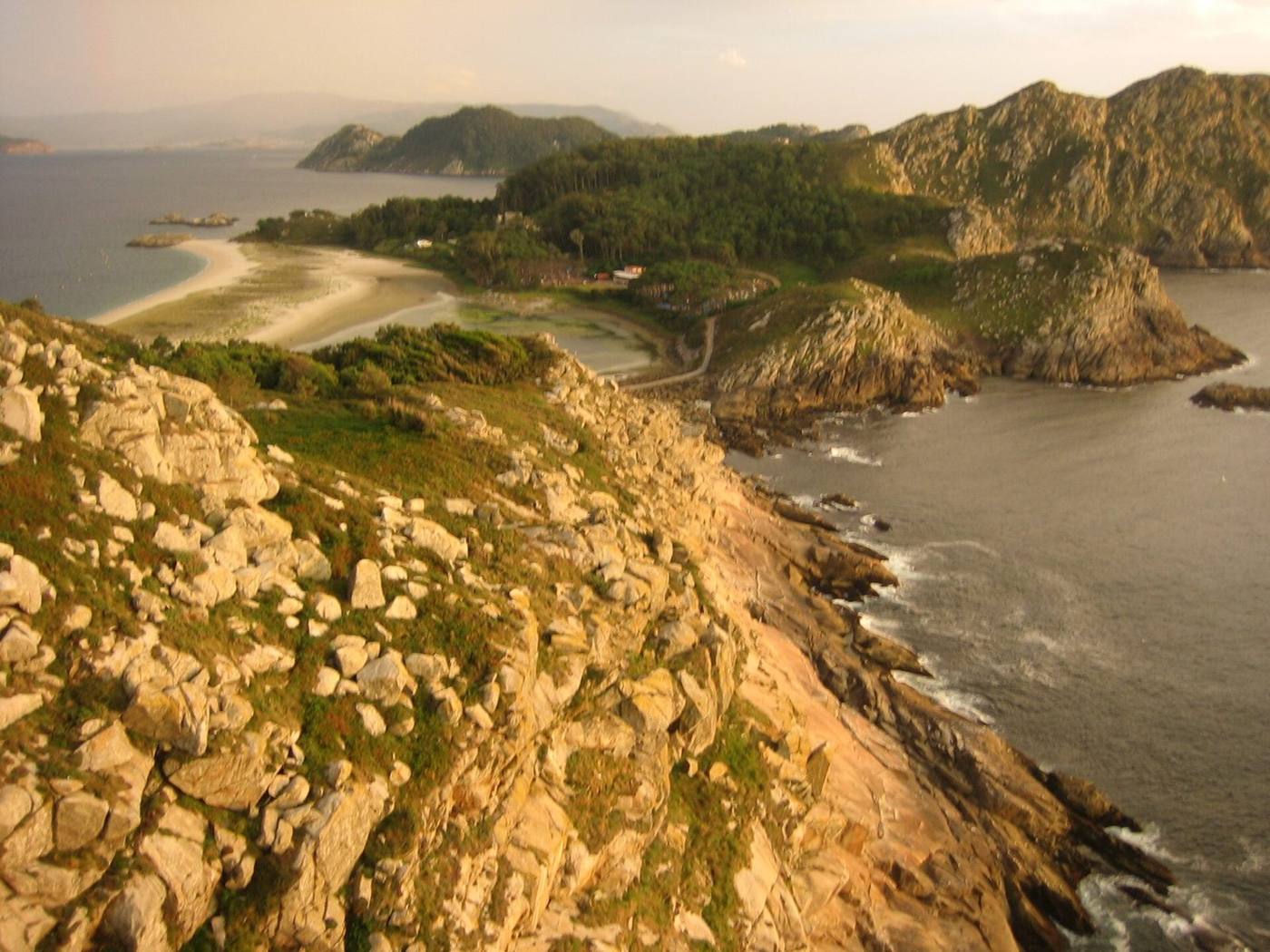
Ocean Galicia: the Cíes Islands with Rodas beach, a national park, the Albariño wines of the Salnés valley, Pontevedra, the fishing village of Combarro with its granaries by the sea, seafood and Monte Santa Tegra above the Miño river.
- Vigo
- Cíes Islands
- Combarro
- Pontevedra
- Cambados
- A Guarda
Day by day
- Day 1
Vigo and its port
The Rías Baixas are the inlets of southern Galicia, in north-west Spain: long arms of sea reaching inland between green hills, with white sandy beaches, fishing villages, albariño vineyards and mussel and oyster farms on wooden rafts. At the mouth of the Vigo ria lie the Cíes islands, part of the Atlantic Islands national park, with some of the most beautiful beaches in Spain. In six days you see the islands, the ria villages, the wineries and the coast as far as the Portuguese border.
Vigo can be reached by air, or by train from Madrid or Santiago de Compostela. It is Galicia's largest city and one of the most important fishing ports in Europe.
In the afternoon, walk through the casco vello, the old town, which slopes down to the port with its granite streets, and through the Berbés, the old fishermen's quarter, with its stone arcades. On the oyster street near the port, women open oysters on the spot, to eat standing with a glass of white wine.
Towards evening, climb Castro hill, with the remains of a fortress and a Celtic village, from which you see the whole ria, the Rande bridge and, on the horizon, the Cíes islands.
In the evening, try Galician octopus, pulpo á feira, boiled and served on a wooden plate with olive oil, coarse salt and paprika, and zamburiñas, small grilled scallops.
Practical tip: it often rains in Galicia, even in summer. Always carry a waterproof jacket.
- Day 2
The Cíes islands: Rodas beach, the lighthouse and the trails
In the morning, take the ferry from Vigo port to the Cíes islands, in about forty minutes. The Cíes are three granite islands at the mouth of the ria, uninhabited, protected by the Atlantic Islands of Galicia national park. Two of them, Monteagudo and do Faro, are joined by a long sand spit and a lagoon.
The ferry lands on Rodas beach, a crescent of brilliant white sand more than a kilometre long, with clear green water, often named among the most beautiful beaches in the world. The Atlantic water here is cold even in August, but crystal clear.
Several marked trails start from the beach. The finest climbs to the Cíes lighthouse, at the top of do Faro island, in about an hour and a half one way, with views of the sheer cliffs on the west side, the ocean and the whole Galician coast. Another leads to the Porta lighthouse and Nosa Señora beach. Colonies of gulls and shags live along the trails, nesting on the cliffs.
In the afternoon, rest on the beach or swim, then take the ferry back to Vigo. There is also a campsite on the islands, the only place to stay overnight.
Practical tip: in the summer months the number of visitors to the Cíes is limited. Before buying a ferry ticket you need a no-cost authorisation from the Xunta de Galicia, requested online: check the rules and dates before you go. There are no bins on the islands: take your rubbish back with you.
- Day 3
Pontevedra and Combarro
In the morning, drive north to Pontevedra, about half an hour away. Pontevedra has one of the most beautiful old towns in Galicia, almost entirely pedestrianised, with granite squares, houses with white glazed galleries and churches. The city has become a model in Europe for removing cars from its centre.
Walk through the squares of la Leña, la Verdura and la Ferrería, and visit the church of the Peregrina, shaped like a scallop shell, the symbol of the Way of Saint James: Pontevedra is a stage on the Portuguese Way. The Museum of Pontevedra, spread over several buildings, has a good collection of Galician art and Celtic goldwork.
In the afternoon, continue to Combarro, about a quarter of an hour away, on the shore of the Pontevedra ria. It is one of the most characteristic villages in Galicia, with fishermen's houses built straight onto the rock, cruceiros, carved stone crosses at street corners, and above all hórreos, stone granaries on pillars, lined up along the shore. The hórreos were used to store maize and potatoes away from damp and mice.
At sunset the light on the ria and the hórreos is beautiful.
In the evening, in one of the ria villages, try empanada gallega, a savoury pie filled with tuna, meat or seafood, and steamed ria mussels.
Practical tip: Combarro is very busy at midday in summer. Arrive in the late afternoon to see it more peacefully.
- Day 4
Cambados and the albariño wineries
In the morning, drive to Cambados, on the Arousa ria, in about forty minutes. Cambados is the capital of albariño, the fresh, aromatic white wine of the Rías Baixas, made from the grape of the same name grown on high pergolas supported by granite posts, to keep the bunches away from the damp ground.
Walk through the centre of Cambados, with the large Fefiñáns square, closed by a noble family's palace with its historic winery and church, and the fishermen's quarter of Santo Tomé, with the roofless ruins of the church of Santa Mariña de Dozo, now used as a cemetery.
In the afternoon, visit one or two wineries in the area, where you see the pergola vineyards, learn how the wine is made and taste albariños from different vintages. Many wineries are small family businesses: book your visit in advance. In early August Cambados hosts the albariño festival, with tastings and music all over town.
Towards evening, if you have time, visit the wine museum or walk along the seafront to the tower of San Sadurniño, on an islet linked to the shore.
In the evening, try vieiras, scallops gratinated in their shell, and grilled fish with potatoes.
Practical tip: if you taste many wines at the wineries, plan the day with a driver or a guided tour, and do not drive after tastings.
- Day 5
Arousa island or O Grove and the seafood
Today, stay on the Arousa ria, the largest of the Rías Baixas, and choose between two different days.
The first is Arousa island, linked to the mainland by a long bridge, a fishing island with a small harbour and a natural park in the south, Carreirón, with white sandy beaches, dunes, pine woods and quiet little coves. A flat, easy trail follows the whole coast of the park.
The second is O Grove, a peninsula south of Arousa, with its fishing town and the island of A Toxa, linked by a bridge, with its little church covered in scallop shells. From O Grove, glass-bottomed boats cross the ria to the mussel farms, the bateas, wooden rafts from which ropes of mussels hang. On board you often taste freshly cooked mussels with a glass of wine.
O Grove is famous for seafood: in October it holds the seafood festival, with thousands of visitors. The peninsula also has La Lanzada beach, more than two kilometres long and open to the ocean, loved by surfers.
In the evening, in one of the ria villages, try a mariscada, the great seafood platter with crabs, prawns, goose barnacles, razor clams, mussels and oysters.
Practical tip: percebes, the goose barnacles gathered from wave-battered rocks, are highly prized but expensive. Always ask the price by weight before ordering.
- Day 6
A Guarda and Mount Santa Tegra
On your last morning, drive south past Vigo along the Atlantic coast to A Guarda, at the mouth of the Miño river, where Galicia borders Portugal, in about an hour. The coast road passes Baiona, with the Monterreal fortress on its headland and the replica of the caravel Pinta, the ship that in 1493 brought Europe the news of the discovery of America, and continues among cliffs, small harbours and wild beaches.
A Guarda is a fishing town famous for its lobsters. Above the town rises Mount Santa Tegra, about three hundred and forty metres high, with the remains of a large castro, an Iron Age fortified village inhabited by the Gallaeci and then by the Romans. You see the foundations of hundreds of round stone houses, some rebuilt with thatched roofs, and a small museum with objects found in the excavations.
The view from the top is among the finest in Galicia: the mouth of the Miño, the Portuguese coast, the ocean and the hills.
In the afternoon, return to Vigo for your flight or train, or cross the river and continue into Portugal towards Viana do Castelo and Porto, about an hour and a half away.
This trip combines well with Santiago de Compostela, about an hour and a half north of Vigo, or with the Costa da Morte and Cape Finisterre.
Practical tip: Italian citizens only need an identity card valid for travel. In Galicia both Spanish and Galician are spoken, and many signs are in both languages.
Beautiful but cold sea, excellent food. To visit the Cíes in high season you need a no-cost authorisation from the Xunta de Galicia, requested online before buying the ferry ticket; daily places are limited. It combines with Santiago de Compostela.
Before you go
- Documents and visa
- EU citizens need a valid identity card or passport. Other nationalities should check the Schengen rules.
- Health and vaccines
- No vaccines required. EU citizens should bring their EHIC; in summer the south often goes above 40 °C. Emergencies: 112.
- Money and payments
- Euro. Cards are accepted almost everywhere. Catalonia, the Balearics and some other areas charge a tourist tax per person per night.
- Power sockets
- Types C and F, 230 volts.
- Time zone
- Central European Time (UTC+1, summer UTC+2); the Canary Islands are one hour behind.
- Safety
- A safe country. In Barcelona and Madrid pickpocketing is common on the metro, on the Ramblas and in crowded places. Official advice: GOV.UK.
Information checked in November 2026 for Italian and EU citizens. Rules change: always check before you travel.
Variations
In 3 days: Vigo, the Cíes islands and Combarro with Pontevedra.
In 9 days: add Santiago de Compostela and the Costa da Morte to Finisterre.
Frequently asked questions
When is the best time to go?
From June to September for the sea and the Cíes islands, with a regular ferry. In spring and autumn the rias are quieter but wetter.
How do I get to the Cíes islands?
By ferry from Vigo, Cangas or Baiona, usually from Easter to October. In high season you first need a no-cost authorisation from the Xunta de Galicia: check the rules.
What documents do I need?
Italian citizens only need an identity card valid for travel. Spain is in the Schengen area and uses the euro.
Indicative itinerary written by World Atlas. Before booking, check timetables, seasonal openings, documents and safety.
 5 daysEasy
La Rioja and Navarre
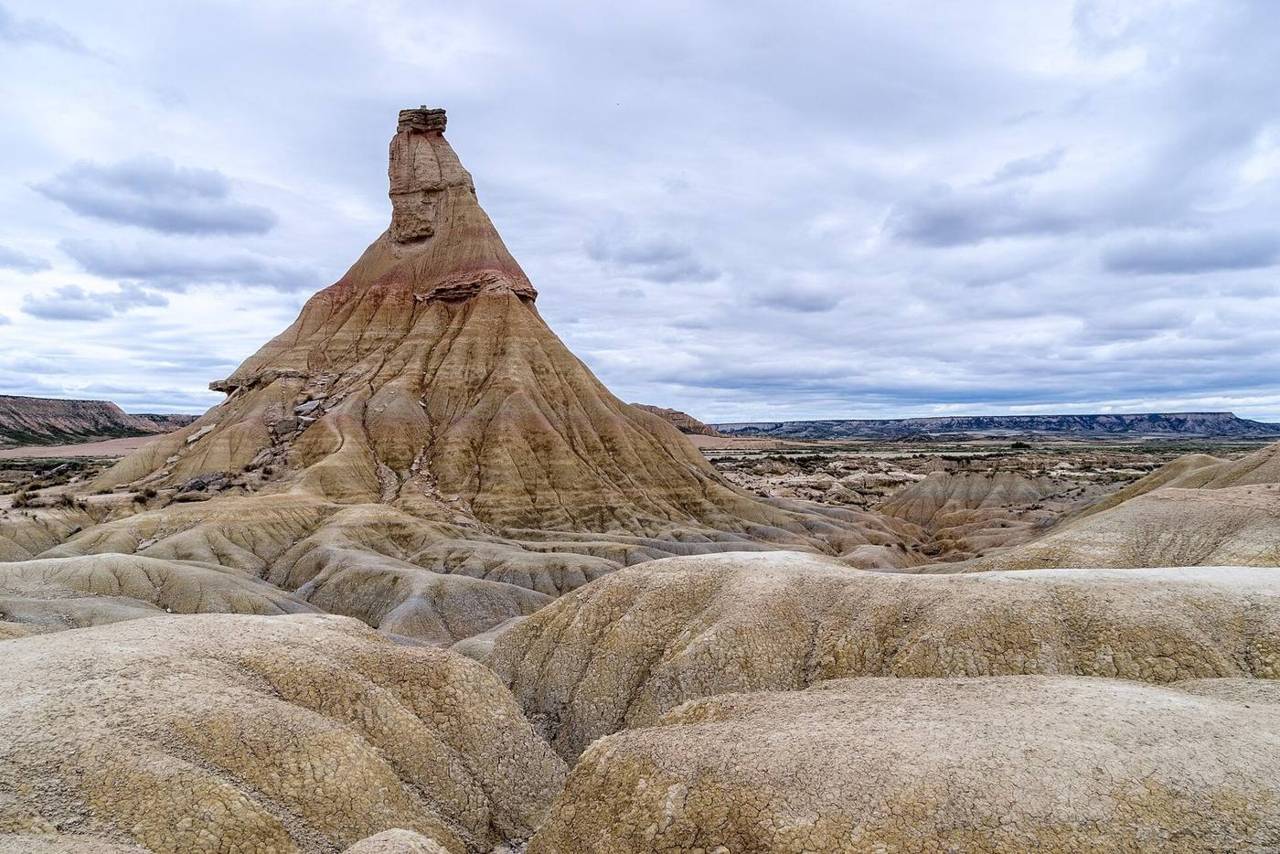
The north of wine and landscapes: Logroño and the pintxos of Calle Laurel, the wineries of Rioja Alta and Rioja Alavesa with modern architecture, the monasteries of San Millán, a UNESCO World Heritage site, the castle of Olite and the Bardenas Reales desert.
 5 daysEasy
Aragon: Zaragoza, Teruel and Albarracín
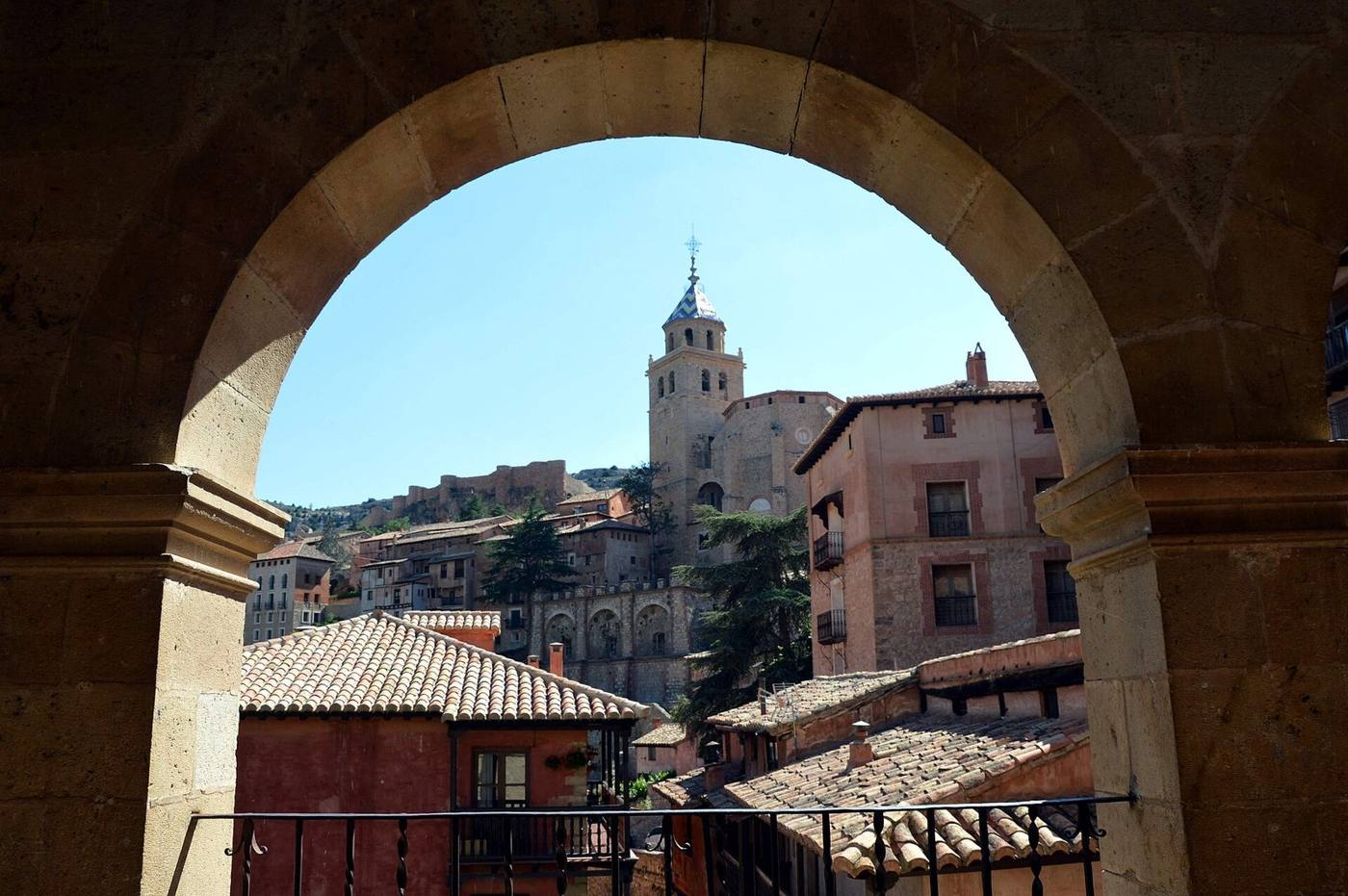
Aragon of Mudéjar art, a UNESCO World Heritage site: Zaragoza with the Basilica del Pilar and the Aljafería palace, Teruel with its ceramic-decorated towers and the legend of the lovers, and the pink village of Albarracín perched above the Guadalaviar river.
 4 daysEasy
Cuenca and the Ciudad Encantada
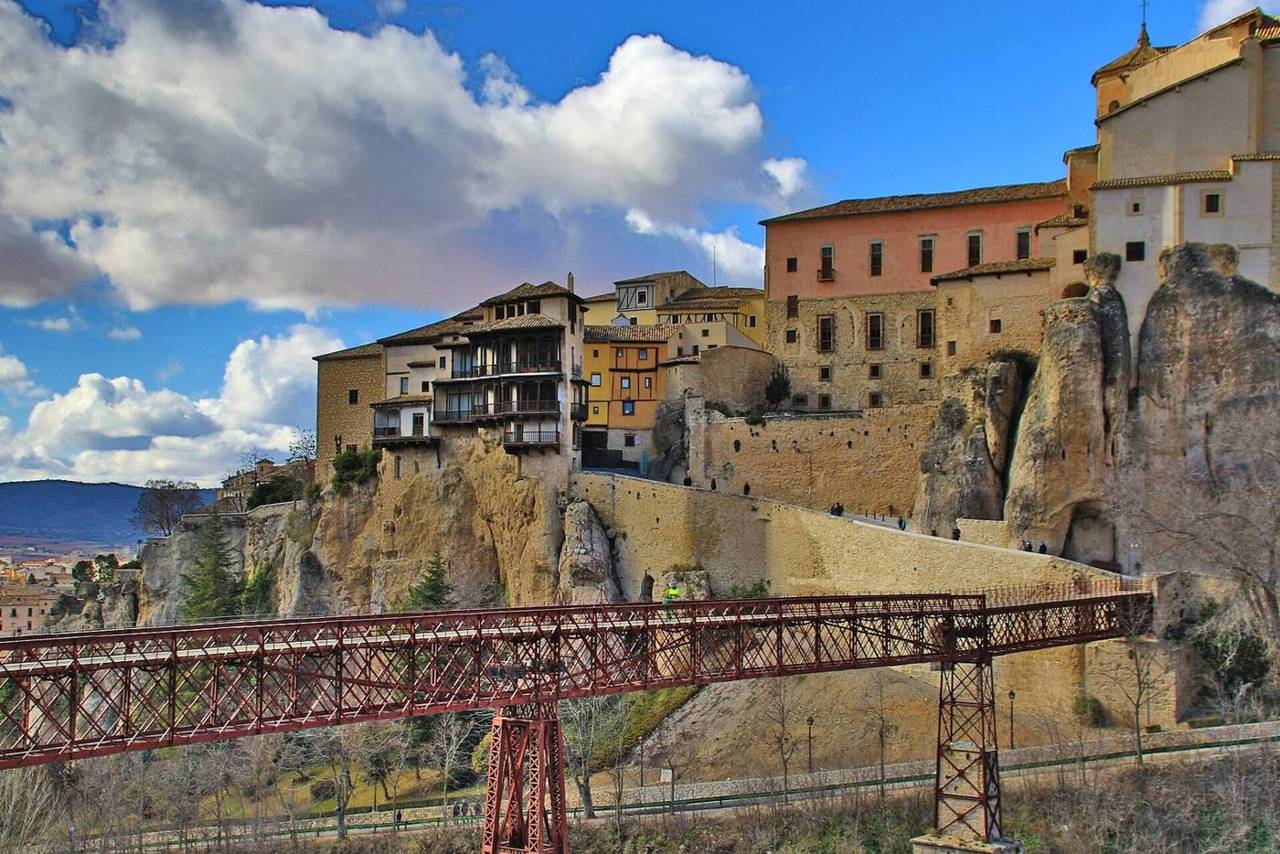
The city of hanging houses above the Huécar gorge, a UNESCO World Heritage site, with its abstract art museum, then the water-sculpted rocks of the Ciudad Encantada, the source of the Cuervo river and the village of Alcalá del Júcar carved into the rock.