Aragon: Zaragoza, Teruel and Albarracín
Aragon of Mudéjar art, a UNESCO World Heritage site: Zaragoza with the Basilica del Pilar and the Aljafería palace, Teruel with its ceramic-decorated towers and the legend of the lovers, and the pink village of Albarracín perched above the Guadalaviar river.
- Zaragoza
- Teruel
- Albarracín
Day by day
- Day 1
Zaragoza: the Basilica of the Pilar and La Seo Cathedral
Aragon, in north-eastern Spain between Madrid and Barcelona, is a region little known to tourists, with an elegant capital on the Ebro, Zaragoza, and a south of plateaus, red stone mountains and medieval towns such as Teruel, with its Mudéjar towers, and Albarracín, one of the most beautiful villages in Spain. Spain is in the Schengen area; EU citizens can enter with a valid identity card or passport.
Zaragoza is about an hour and a half by high-speed train from Madrid or Barcelona. In the morning visit the Basilica of Our Lady of the Pillar, on the Ebro, a huge Baroque church with eleven domes covered in coloured tiles and four towers. Inside, a small statue of the Virgin on a column, the pilar, is venerated; tradition says she appeared to the apostle James. One of the domes was frescoed by the young Francisco Goya, born in a nearby village. A lift climbs one of the towers for views over the city and the river.
In the afternoon, a few steps away, visit the Cathedral of the Saviour, called La Seo, which combines styles from Romanesque to Baroque, with an outer wall decorated in Mudéjar style, brick and green and white tiles designed by Muslim craftsmen. Inside is a museum of Flemish tapestries. Then visit the museum of the Roman theatre of Caesaraugusta, the city's Roman name.
In the evening walk across the Stone Bridge over the Ebro to see the Pilar lit up.
Practical tip: the Pilar is a busy place of worship; dress appropriately and respect services.
- Day 2
Zaragoza: the Aljafería, the Goya museum and tapas in El Tubo
In the morning visit the Aljafería Palace, one of the most important Islamic buildings in Spain, built in the eleventh century by the Muslim kings of Zaragoza as a pleasure palace. Inside the walls and towers is a courtyard with orange trees and interlaced arches decorated like plaster lace, and a small private mosque with its mihrab. After the Christian reconquest the palace became a residence of the kings of Aragon and then of the Catholic Monarchs Ferdinand and Isabella, who added halls with gilded coffered wooden ceilings. Today it also houses the regional parliament.
In the afternoon visit the Goya Museum, in a Renaissance palace in the centre, with paintings by the artist and the complete series of his prints, such as the Caprichos and the Disasters of War, which show his bitter view of society and war.
Then stroll through the old town, with the iron and glass central market and the Plaza de España.
In the evening go into El Tubo, a small tangle of narrow lanes in the centre full of tapas bars, where locals move from one bar to the next, eating standing up. Try Aragonese specialities: borrajas, a local vegetable with potatoes, ternasco, young roast lamb, Teruel ham and griddled mushrooms.
Practical tip: Zaragoza is often swept by the cierzo, a cold north-west wind; bring a jacket even in spring and autumn.
- Day 3
Teruel: the Mudéjar towers and the Mausoleum of the Lovers
In the morning drive or take the train south to Teruel, about two and a half hours from Zaragoza, a small town on a rise surrounded by hills of red earth. Teruel is famous for its Mudéjar architecture, the style born from Muslim craftsmen who lived under Christian kings after the reconquest: towers and churches built of brick decorated with geometric patterns and green and white tiles. Together with that of other places in Aragon, it is a UNESCO World Heritage site.
Visit the towers of San Martín and El Salvador, tall and slender, decorated on all sides: El Salvador can be climbed from inside, with a small museum on Mudéjar art and a view of the town. Then enter the cathedral, with its Mudéjar tower and a painted wooden ceiling from the thirteenth and fourteenth centuries showing scenes of court life, knights, musicians and animals: a rare example of non-religious medieval painting.
In the afternoon visit the Mausoleum of the Lovers of Teruel, dedicated to the legend of Isabel and Diego, two thirteenth-century young people who could not marry and died of grief. In the church of San Pedro you see their mummified bodies and two modern alabaster tombs with statues of the lovers lying side by side, their hands reaching towards each other without touching.
In the evening walk down the neo-Mudéjar staircase, a theatrical stairway decorated with brick and tiles linking the station to the centre.
Practical tip: buy Teruel ham, with protected designation of origin, at delicatessens in the centre.
- Day 4
Albarracín: the walls, the pink houses and the rock paintings
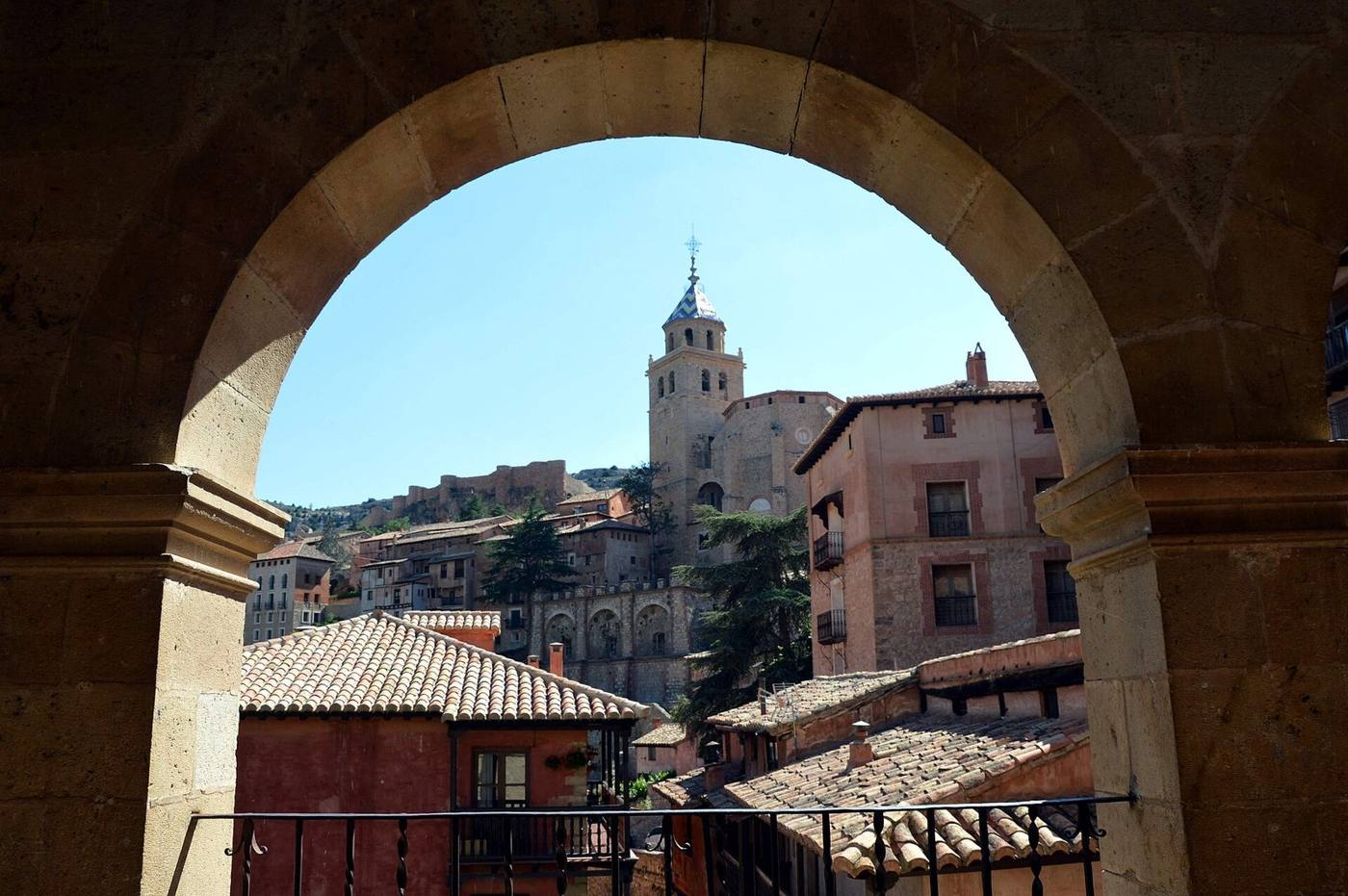
In the morning drive to Albarracín, about forty minutes from Teruel, in the sierra of the same name. Albarracín is one of the most beautiful villages in Spain: a medieval town perched on a rocky spur, almost encircled by a bend of the Guadalaviar river, with pink and dark red plaster houses leaning against each other, wooden balconies, exposed beams and narrow lanes climbing up and down. The long crenellated walls with towers climb the hill above the village.
Walk the lanes, visit the cathedral with its diocesan museum and tapestries, and climb along the walls to the highest tower: from here you see the village from above, with its red tile roofs, the river valley and the surrounding sierra.
In the afternoon explore the protected landscape of the Pinares de Rodeno, a few kilometres away, a pine forest on red sandstone rocks sculpted by erosion into strange shapes. Among the rocks are shelters with prehistoric Levantine rock paintings, figures of deer, bulls, hunters and archers painted in red and white thousands of years ago, part of the UNESCO-listed rock art of the Mediterranean Basin. Marked paths lead to the shelters.
In the evening stay in Albarracín, when the village empties of day visitors and lights illuminate the walls.
Practical tip: the village streets are steep and stone-paved; park outside the centre and wear comfortable shoes.
- Day 5
Back to Zaragoza or on to Valencia
In the morning take a last walk in Albarracín along the path following the river below the village, with views of the houses clinging to the rock, or visit the small town museum, which tells the history of the Muslim kingdom of Albarracín and the independent lordship that followed.
Then head off. You have two options. The first is to return to Zaragoza, about two and a half hours, passing, if you have time, through Daroca, a medieval town with well-preserved walls and towers. From Zaragoza fast trains run to Madrid and Barcelona.
The second is to go south-east to Valencia, about two hours, on the Mediterranean coast, to continue your trip by the sea, with the City of Arts and Sciences and the Albufera lagoon.
If you like dinosaurs, near Teruel is Dinópolis, a large palaeontology park with fossils found in the region, popular with families.
Things to take home: Teruel ham, Bajo Aragón olive oil, Cariñena or Calatayud wine, Zaragoza candied fruit and Mudéjar ceramics from Teruel.
Practical tip: in winter the Teruel and Albarracín plateau is very cold and can have snow; check the roads before setting off. Before getting in the car, stop at a bakery for some local pastries for the road.
An authentic, little-touristed Spain between Madrid, Barcelona and Valencia, easy by high-speed train to Zaragoza and then by car. In winter Teruel and Albarracín are cold; in summer evenings are cool.
Before you go
- Documents and visa
- EU citizens need a valid identity card or passport. Other nationalities should check the Schengen rules.
- Health and vaccines
- No vaccines required. EU citizens should bring their EHIC; in summer the south often goes above 40 °C. Emergencies: 112.
- Money and payments
- Euro. Cards are accepted almost everywhere. Catalonia, the Balearics and some other areas charge a tourist tax per person per night.
- Power sockets
- Types C and F, 230 volts.
- Time zone
- Central European Time (UTC+1, summer UTC+2); the Canary Islands are one hour behind.
- Safety
- A safe country. In Barcelona and Madrid pickpocketing is common on the metro, on the Ramblas and in crowded places. Official advice: GOV.UK.
Information checked in November 2026 for Italian and EU citizens. Rules change: always check before you travel.
Variations
In 3 days: Zaragoza in one day, Teruel on day two, Albarracín on day three with the way back.
In 8 days: add the Aragonese Pyrenees, with Ordesa and Monte Perdido National Park, or Valencia by the sea.
Frequently asked questions
Do I need a car?
It is useful for Albarracín and the Pinares de Rodeno; Zaragoza and Teruel are also linked by train and bus.
When is the best time to go?
April to June and September to October: summer is hot, and in winter the Teruel plateau is very cold.
What documents do I need?
For EU citizens a valid identity card or passport is enough.
Indicative itinerary written by World Atlas. Before booking, check timetables, seasonal openings, documents and safety.
 4 daysEasy
Cuenca and the Ciudad Encantada
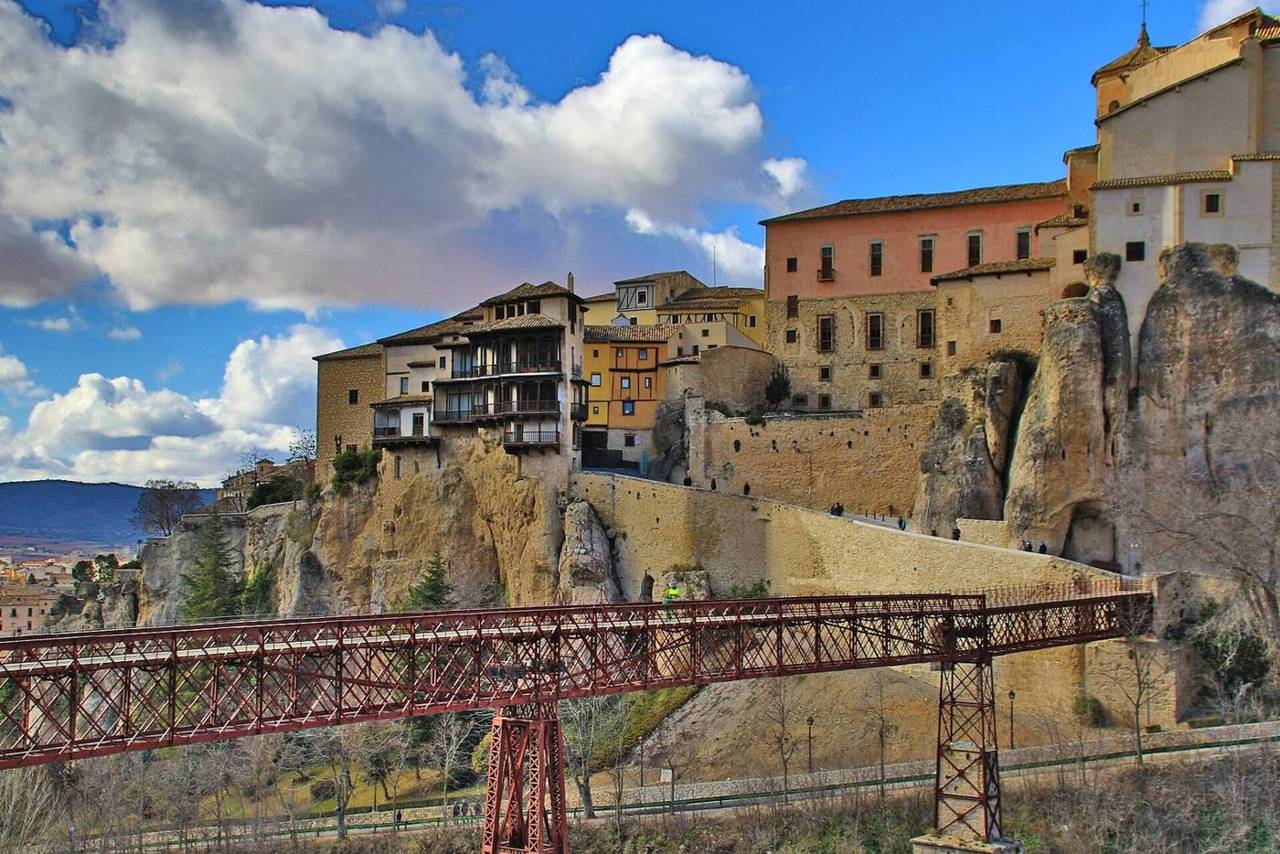
The city of hanging houses above the Huécar gorge, a UNESCO World Heritage site, with its abstract art museum, then the water-sculpted rocks of the Ciudad Encantada, the source of the Cuervo river and the village of Alcalá del Júcar carved into the rock.
 6 daysModerate
Sierra Nevada and the Alpujarras
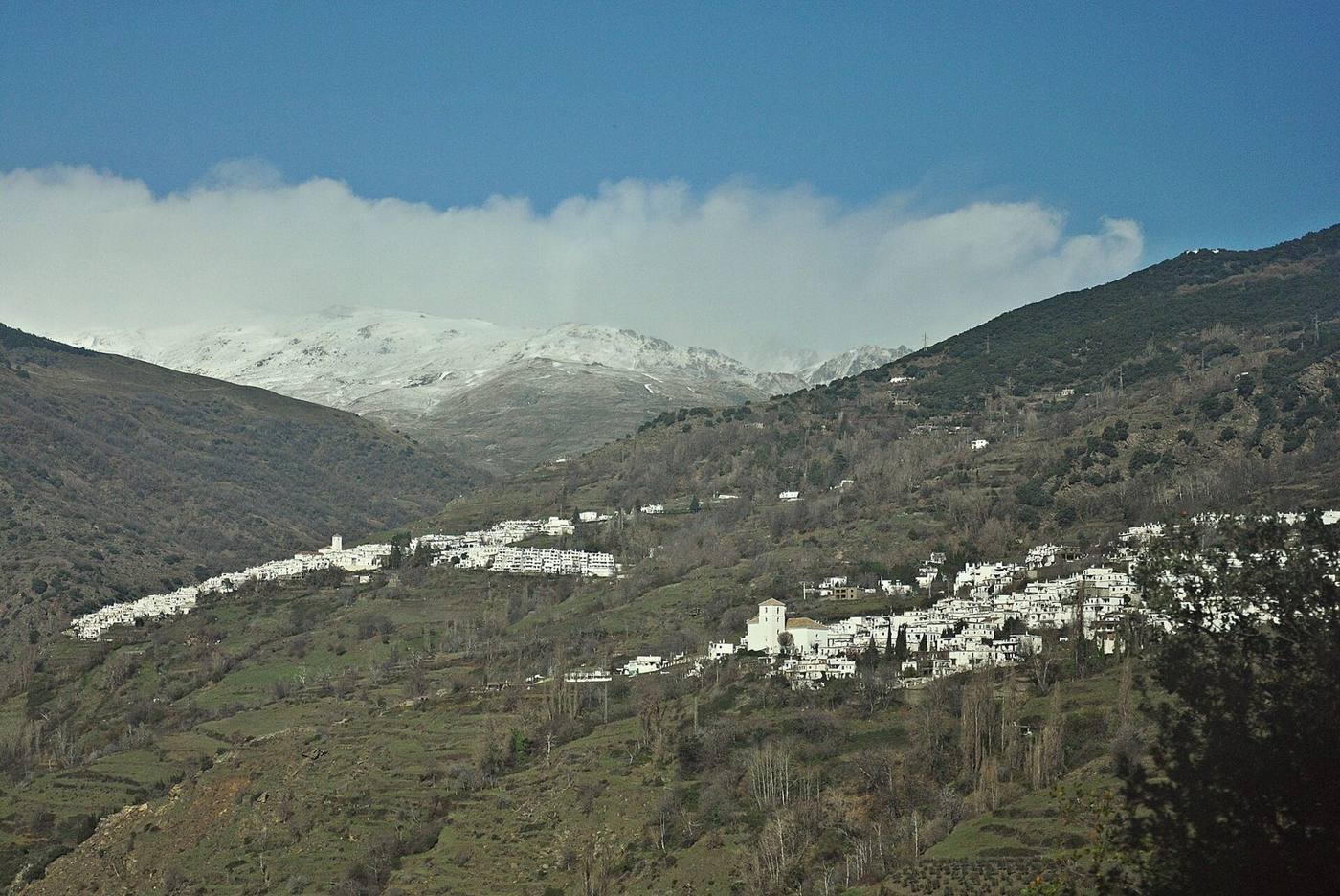
Granada and the mountains behind it: the Alhambra and the Albaicín, then the white Berber-style villages of the Alpujarras with their flat roofs, Pampaneira, Bubión and Capileira above the Poqueira gorge, trails among chestnuts and irrigation channels and the hams of Trevélez.
 8 daysModerate
The English Way: Ferrol to Santiago
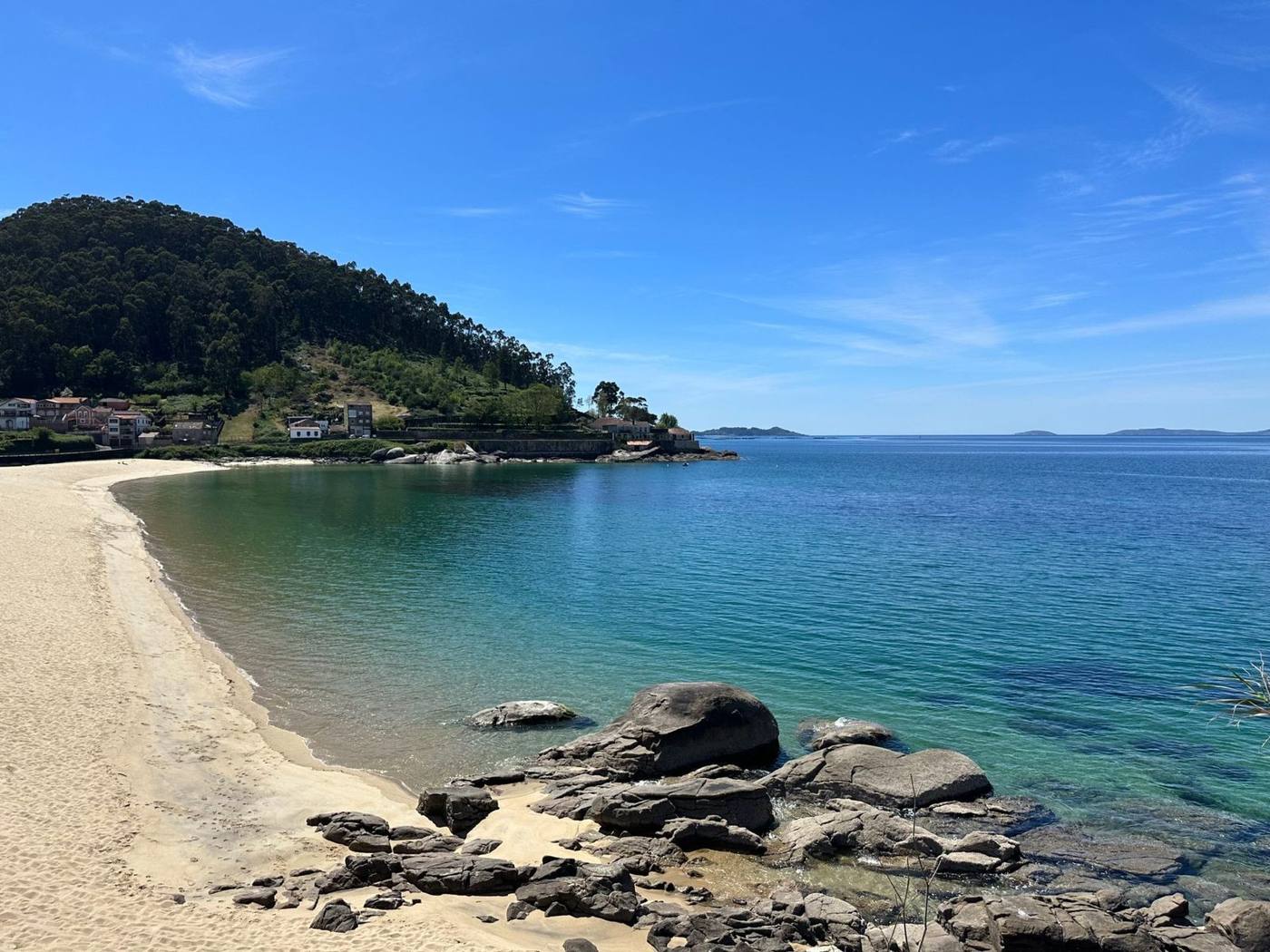
Six days on foot past estuaries, eucalyptus woods and medieval towns, along the route taken by pilgrims who landed from northern Europe.