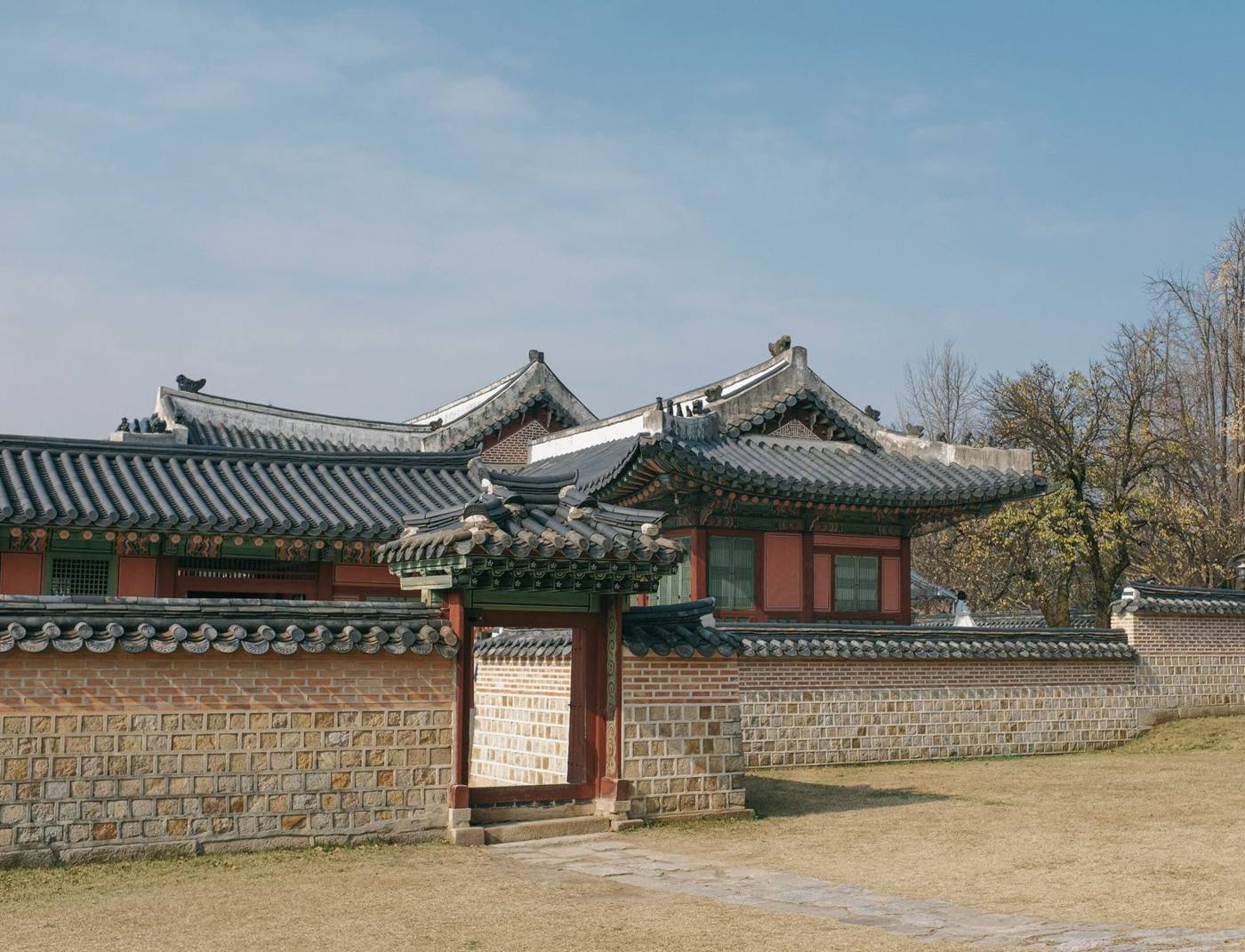
Seoul and the DMZ
Royal palaces and Bukchon village, Gwangjang and Myeongdong markets, the modern districts and a day at the border with North Korea.
- Seoul
- Gyeongbokgung
- Bukchon
- Namsan
- DMZ
- Seoul
Day by day
- Day 1
Gyeongbokgung, the changing of the guard and Insadong
This trip takes you to Seoul, one of the liveliest and safest cities in Asia: the royal palaces and hanok houses of Bukchon, the markets of Gwangjang and Myeongdong, Namsan tower, the modern districts of Hongdae and Seongsu and a day in the demilitarised zone on the border with North Korea, the DMZ.
Before you go: Italian citizens enter South Korea without a visa for up to 90 days with a passport; the electronic identity card is not enough. The temporary K-ETA exemption is confirmed until 31 December 2026: for trips from 2027, check k-eta.go.kr for any extension. Without an approved K-ETA, fill in the e-Arrival card online within 72 hours before arrival. Other nationalities should check their own rules. The United States rates the country level 1. The UK notes that tension with the North can change with little notice: near the DMZ always follow the advice of the authorities.
You arrive at Incheon and take the train to the centre.
In the afternoon visit Gyeongbokgung, the great royal palace built in 1395 at the start of the Joseon dynasty, with its throne hall and the Gyeonghoeru pavilion on the pond. In front of Gwanghwamun gate watch the changing of the royal guard, with guards in colourful costume, drums and banners. Check prices and times: the palace closes on Tuesdays.
Then visit the National Palace Museum next door, with thrones, seals and royal objects. Check times.
In the evening walk around Insadong, among galleries, paper and ceramics shops and tea houses, and try a jujube or ginger tea.
Sleep in Seoul for five nights.
Practical tip: international map apps work poorly in Korea. Download a Korean maps app and buy a T-money card for the metro, which you can top up at any station or convenience store.
- Day 2
Bukchon and the Secret Garden of Changdeokgung
Today you visit Seoul's best-loved palace and the district of traditional houses.
In the morning enter Changdeokgung, a UNESCO World Heritage Site, the palace where the Joseon kings lived longest. Unlike Gyeongbokgung, it does not follow a rigid plan but fits the hills, with its halls scattered among the trees.
Then take the guided tour of the Secret Garden, called Huwon, the kings' private park, with the square Buyongji pond, wooden pavilions over the water and woods of centuries-old trees. Places are limited and English tours run at fixed times: book ahead. Check prices and times: the palace closes on Mondays.
In the afternoon climb to Bukchon, the hanok village on the hill between the two palaces, with its steep lanes and tiled roofs, and views of the skyscrapers in the centre. People live in these houses and in part of the district tourist access is limited to daytime hours: respect the signs, speak quietly and do not enter the courtyards.
Towards evening go down to Samcheong-dong, with its art galleries and small workshops, and have naengmyeon, cold buckwheat noodles, or bulgogi, marinated grilled beef, for dinner.
Sleep in Seoul.
Practical tip: if you wear a hanbok, the traditional dress, entry to the royal palaces usually comes with a concession. In the surrounding districts there are many places to hire one for a few hours, and the photos in the palace courtyards are lovely, especially in the soft light of late afternoon.
- Day 3
Gwangjang, Cheonggyecheon and Namsan tower
Today you taste Seoul's markets and see the city from above.
In the morning go to Gwangjang market, one of the oldest in the city, founded at the start of the twentieth century. In the covered section, among stalls of fabric and silk, there are dozens of food stalls: sit at the counter and try bindaetteok, a mung bean pancake, mayak gimbap, small rice rolls, and yukhoe, raw beef seasoned with pear and sesame oil.
Then walk along Cheonggyecheon, a stream in the city centre, covered for decades by an elevated road and reopened in 2005 as a long green walkway below street level, with bridges, waterfalls and stepping stones.
In the afternoon explore Myeongdong, the district of Korean cosmetics shops and street food stalls, very lively in the evening.
At sunset climb Namsan hill, on foot along the park paths or by cable car, to Namsan tower, the telecommunications tower that is the symbol of Seoul. From the terrace and the observation deck you watch the city light up, with the Han River and the mountains around it. Check prices and times.
In the evening return to the centre and have a Korean barbecue, meat you cook yourself on the grill in the middle of the table.
Sleep in Seoul.
Practical tip: cards are widely accepted in markets and at street stalls, but keep a few thousand won notes for small purchases and the simplest stalls. Go to Gwangjang late in the morning, when all the food stalls are open.
- Day 4
The DMZ with an authorised tour
Today you go to the most heavily guarded border in the world.
The DMZ, the demilitarised zone, is a strip about four kilometres wide that has divided the two Koreas since the end of the Korean War in 1953. Only an armistice was signed, not a peace treaty. You can visit the area only on an authorised tour and with your original passport: photocopies, photos on your phone and expired passports are not accepted. The official Paju DMZ website says visits are closed on Mondays, on weekday public holidays, on New Year's Day and at Chuseok, and may be cancelled for security reasons or bad weather.
In the morning the tour leaves Seoul heading north to Imjingak, about an hour, with the Freedom Bridge, the bullet-riddled steam locomotive and the coloured ribbons left by divided families.
Then you enter the Third Infiltration Tunnel, dug by North Korea under the border and discovered in 1978. You walk down a steep, low tunnel wearing a helmet. People with mobility problems may not be admitted.
From Dora Observatory you look towards North Korea, with its fields, villages and hills. Finally you pass Dorasan station, the last one before the border.
Tourist visits to the Joint Security Area at Panmunjom, the JSA, have been suspended since 2023 and no stable reopening for tourists has been announced: this day does not include it. Check the official news from the Ministry of Unification.
In the evening you return to Seoul. Sleep in Seoul.
Practical tip: take photos only where allowed, always follow the guide and the soldiers, and book the tour well ahead.
- Day 5
The National Museum, Seongsu and Hongdae
Today you move from ancient Korea to its most modern side.
In the morning visit the National Museum of Korea, in Yongsan, one of the largest museums in Asia, in a great stone building in a park with a lake. Look at the gold crowns of the Silla kingdom, Goryeo celadon ceramics, Joseon paintings and the Room of Quiet Contemplation, with two statues of the pensive bodhisattva in soft light. Check times.
In the afternoon take the metro to Seongsu, an old district of factories and shoe workshops, now full of cafés in brick warehouses, design shops and small galleries. Then walk in Seoul Forest park nearby, with its tree-lined avenues and deer.
Towards evening go to Hongdae, the district around the arts university, with street musicians and dancers, clothes shops, live music venues and cafés open until late. It is the heart of Seoul's youth culture.
In the evening try Korean fried chicken with beer, called chimaek, or hot and spicy tofu stews.
Sleep in Seoul.
Practical tip: the Seoul metro is clean, safe and signed in English, but it closes around midnight. If you stay out later, take a taxi or a night bus, and at rush hour avoid the most crowded carriages if you have luggage. Allow at least three hours for the museum, which is very large.
- Day 6
A jjimjilbang sauna and departure
Today you relax the Korean way and leave Seoul.
In the morning go to a jjimjilbang, the Korean public sauna. At the entrance you receive a T-shirt, shorts and a locker key. You enter the hot and cold baths, separated for men and women, naked after a full shower. Then you sit in the shared heated rooms, with clay, salt or wooden chambers, and eat oven-baked eggs and a bowl of sikhye, the sweet rice drink.
If you still have time, take a walk along the Han River, in the riverside parks, or visit Namdaemun market, the largest traditional market in the city.
Then take the train to Incheon airport, about an hour from the centre.
In these six days you have seen Seoul: the Gyeongbokgung and Changdeokgung palaces with the Secret Garden, the changing of the guard, Bukchon and Insadong, Gwangjang market, the Cheonggyecheon stream and Namsan tower, the DMZ with its tunnel and Dora Observatory, the National Museum and the districts of Seongsu and Hongdae.
When to go: the best months are April and May, with cherry blossom and mild weather, and September to November, with clear skies and autumn colours in the palaces. Summer is hot and humid, with the monsoon between late June and July; winter is cold and dry, but quiet.
Practical tip: in jjimjilbang you usually cannot use phones or cameras in the bath areas. Leave everything in the locker and bring a small towel. Allow plenty of time for the airport, as check-in queues at Incheon can be long.
One of Asia's liveliest and safest cities, with excellent transport and food. Before travelling you need a K-ETA or the exemption that applies to your country, so check it. DMZ visits change often depending on the political situation, and the Panmunjom area may be closed. Google Maps works poorly: use Naver Map or KakaoMap.
Before you go
- Documents and visa
- Passport valid for the whole stay; you can enter without a visa for up to 90 days for tourism. British visitors are temporarily exempt from the K-ETA until 31 December 2026: for trips from 2027, check the official site k-eta.go.kr for any extension, otherwise apply for the K-ETA online at least 72 hours before boarding. Anyone without an approved K-ETA fills in the e-Arrival card on the official site e-arrivalcard.go.kr within 72 hours before arrival.
- Health and vaccines
- No compulsory vaccinations. Healthcare is excellent but expensive for foreigners: take insurance with high medical cover. Emergencies: police 112, ambulance and fire 119; English tourist line 1330.
- Money and payments
- South Korean won. Cards work almost everywhere, even for small amounts; for metro and buses buy a rechargeable T-money card. Keep some cash for markets.
- Power sockets
- Types C and F, 220 volts: you need an adapter for British plugs.
- Time zone
- UTC+9 all year, nine hours ahead of the UK in winter, eight in summer.
- Safety
- South Korea is a very safe country and the United States rates it level 1, the lowest. The UK does not advise against any area, but notes that tension with North Korea can change with little notice: near the DMZ follow the advice of the local authorities. Drug laws are very strict, even for small amounts. Typhoons are possible from June to November. Official advice: GOV.UK.
Information checked in November 2026 for Italian and EU citizens. Rules change: always check before you travel.
Variations
In 4 days: the palaces, Bukchon, Gwangjang market and the DMZ, without the modern districts.
In 8 days: add a day in Suwon, with Hwaseong fortress, a UNESCO World Heritage Site, and a night in a temple on the templestay programme.
Frequently asked questions
Can I visit the DMZ on my own?
No. The DMZ can be visited only on authorised tours, with your original passport. Visits are closed on Mondays and may be cancelled for security reasons or weather.
Can I visit Panmunjom, the JSA?
Tourist visits to the JSA have been suspended since 2023 and no stable reopening for tourists has been announced. Check the official news from the Ministry of Unification before you go.
Is Seoul safe?
Yes, it is one of the safest big cities in the world and the United States rates South Korea level 1. Watch out for petty theft in nightlife areas and use only official taxis.
Indicative itinerary written by World Atlas. Before booking, check timetables, seasonal openings, documents and safety.
 10 daysEasy
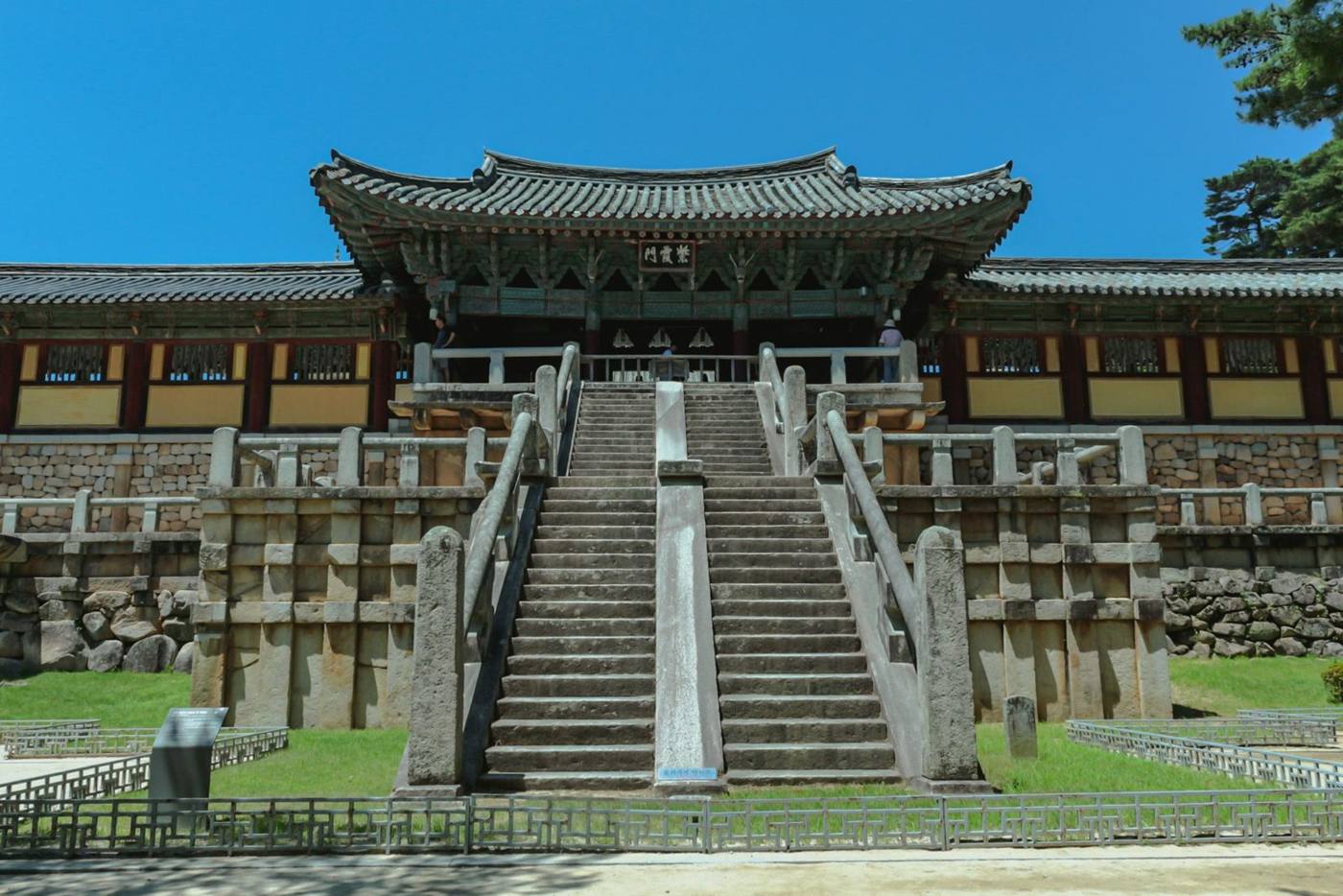
Classic Korea: Seoul, Gyeongju and Busan
Seoul, the ancient Silla capital of Gyeongju with Bulguksa Temple, the village of Andong and the seaside city of Busan, by KTX fast train.
 5 daysEasy
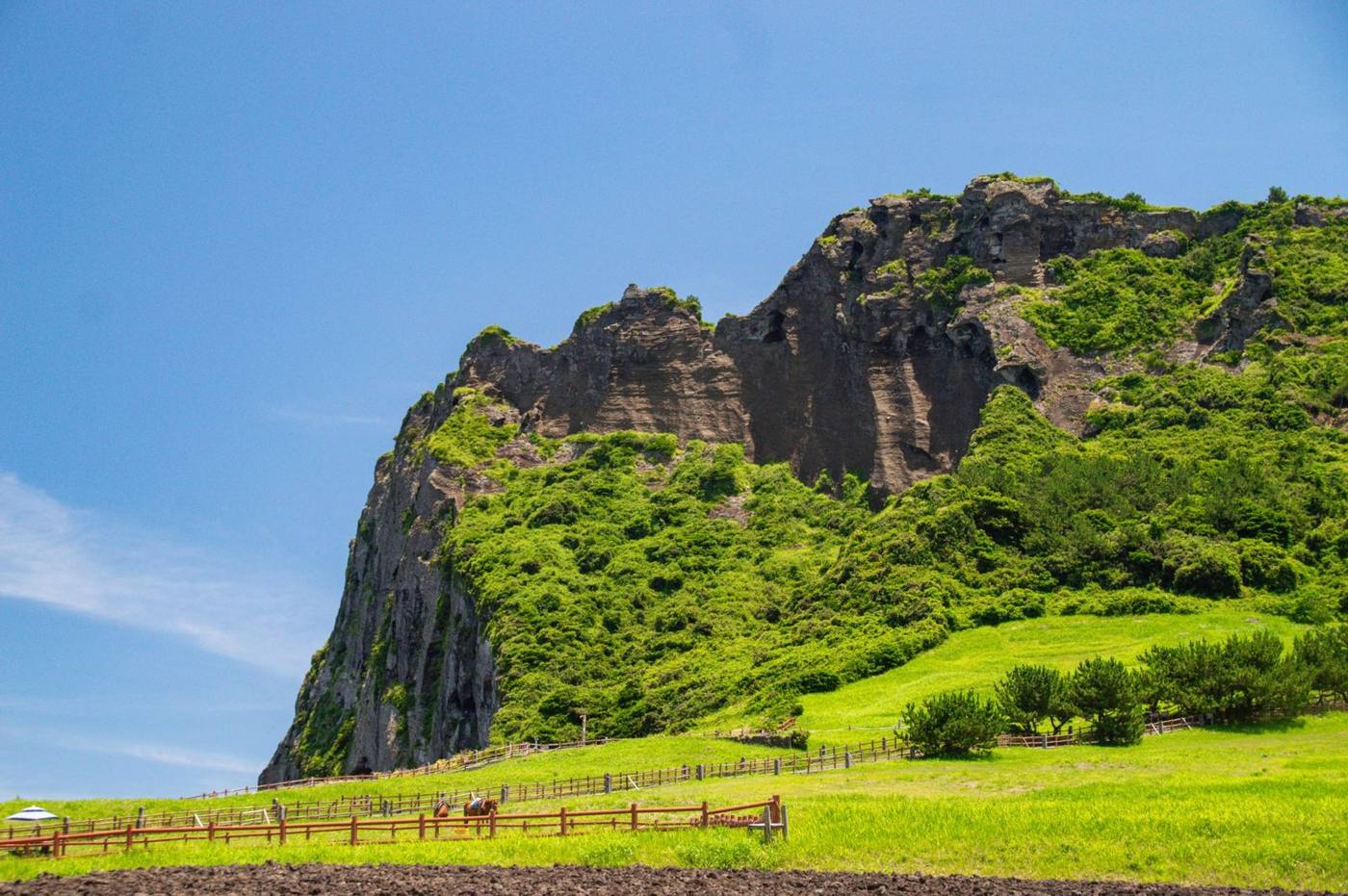
Jeju Island
Korea's volcanic island: sunrise on the Seongsan crater, the climb up Hallasan, lava tubes, the haenyeo women divers and the Olle trails.
 5 daysEasy
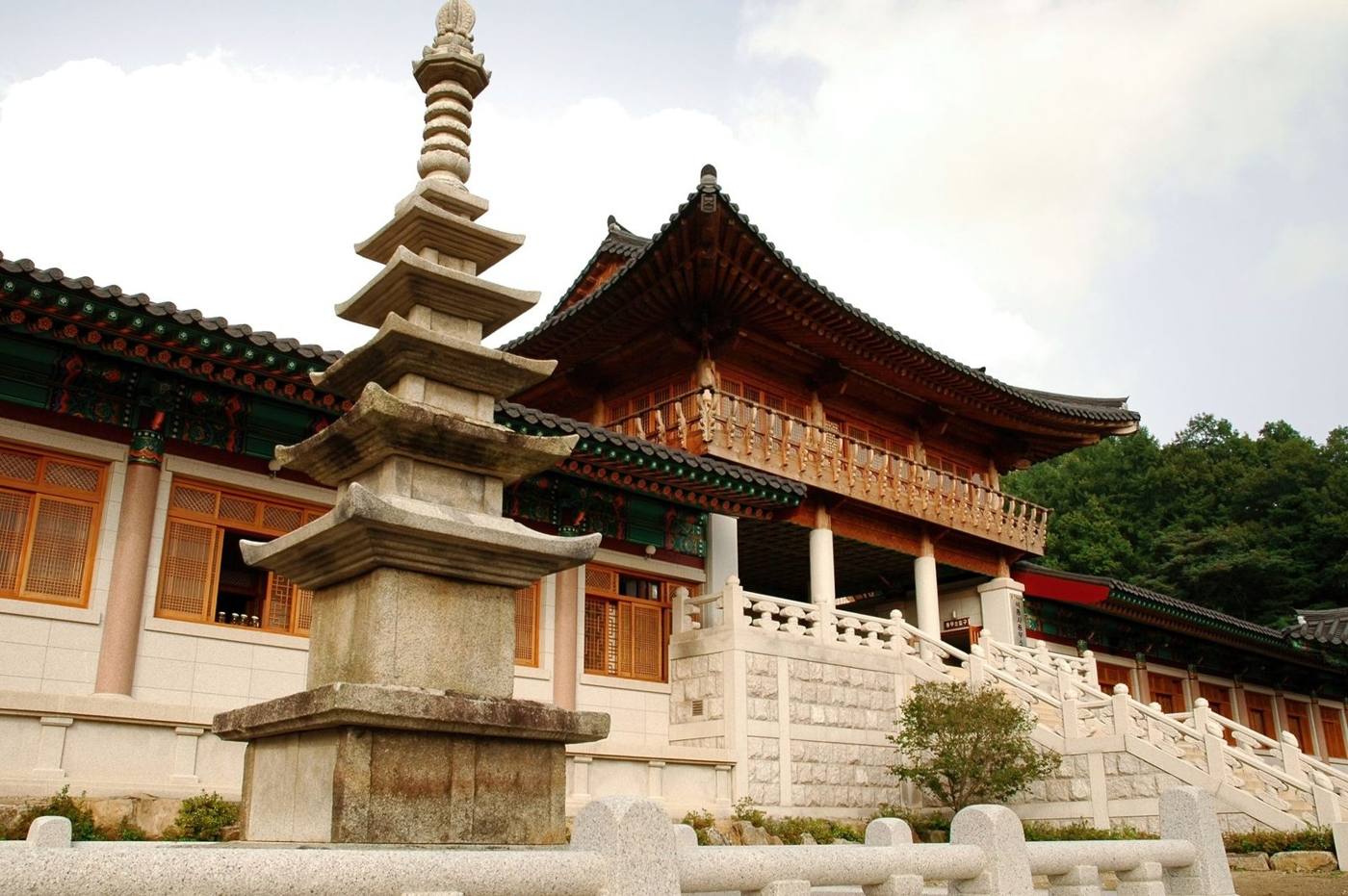
Temples and templestay
Two nights in Buddhist monasteries with the monks, dawn meditation and vegetarian meals, at Haeinsa with its Tripitaka woodblocks and at Tongdosa.