Classic Slovenia
Ljubljana, Lakes Bled and Bohinj, the Soča valley, the Postojna caves and Predjama Castle, and the sea at Piran.
- Ljubljana
- Bled
- Bohinj
- Vršič
- Bovec
- Kobarid
- Postojna
- Piran
Day by day
- Day 1
Arrival in Ljubljana: the Triple Bridge and the Ljubljanica
This trip is the classic tour of Slovenia in eight days: the capital Ljubljana, the alpine lakes of Bled and Bohinj, the Vršič pass and the Soča valley, the Postojna caves with Predjama Castle and finally the sea at Piran. You travel by rental car, with short stages: the country is small.
Before you leave: Slovenia is part of the European Union and the Schengen area and uses the euro. Italian citizens need a valid electronic identity card for travel abroad or a passport; the paper identity card has no longer been valid for travel abroad since 3 August 2026. There may be temporary checks at the borders, so always carry your document. Other nationalities should check their own rules. Motorways and expressways require an electronic vignette, which you buy on the official DARS website before driving.
You arrive at Ljubljana airport, about half an hour from the centre, or by car from Italy. Leave the car in a car park outside the old town, which is pedestrianised.
In the afternoon start from Prešeren Square, with the pink Franciscan church and the statue of the national poet France Prešeren. In front of it is the Triple Bridge, three bridges side by side over the Ljubljanica designed by the architect Jože Plečnik, who gave the city its modern face. His works in Ljubljana are a UNESCO World Heritage Site.
Then walk along the river banks, with willows, café terraces and one bridge after another, as far as the Cobblers' Bridge.
In the evening dine on Carniolan sausage and štruklji, rolled dumplings with a filling.
Sleep in Ljubljana, for two nights.
Practical tip: in Ljubljana you can see the whole centre on foot; do not use the car until the third day.
- Day 2
The castle, the market and the Dragon Bridge
In the morning go to the central market, on the river bank, with open air stalls of fruit, vegetables, flowers and cheese, and Plečnik's long colonnade following the water, with the fish market on the lower level. It is the best place to see the life of the city.
Next to it stands the Baroque Cathedral of St Nicholas, with bronze doors made to mark the visit of Pope John Paul II, and a little further on the Dragon Bridge, from 1901, with its four dragon statues, the symbol of Ljubljana.
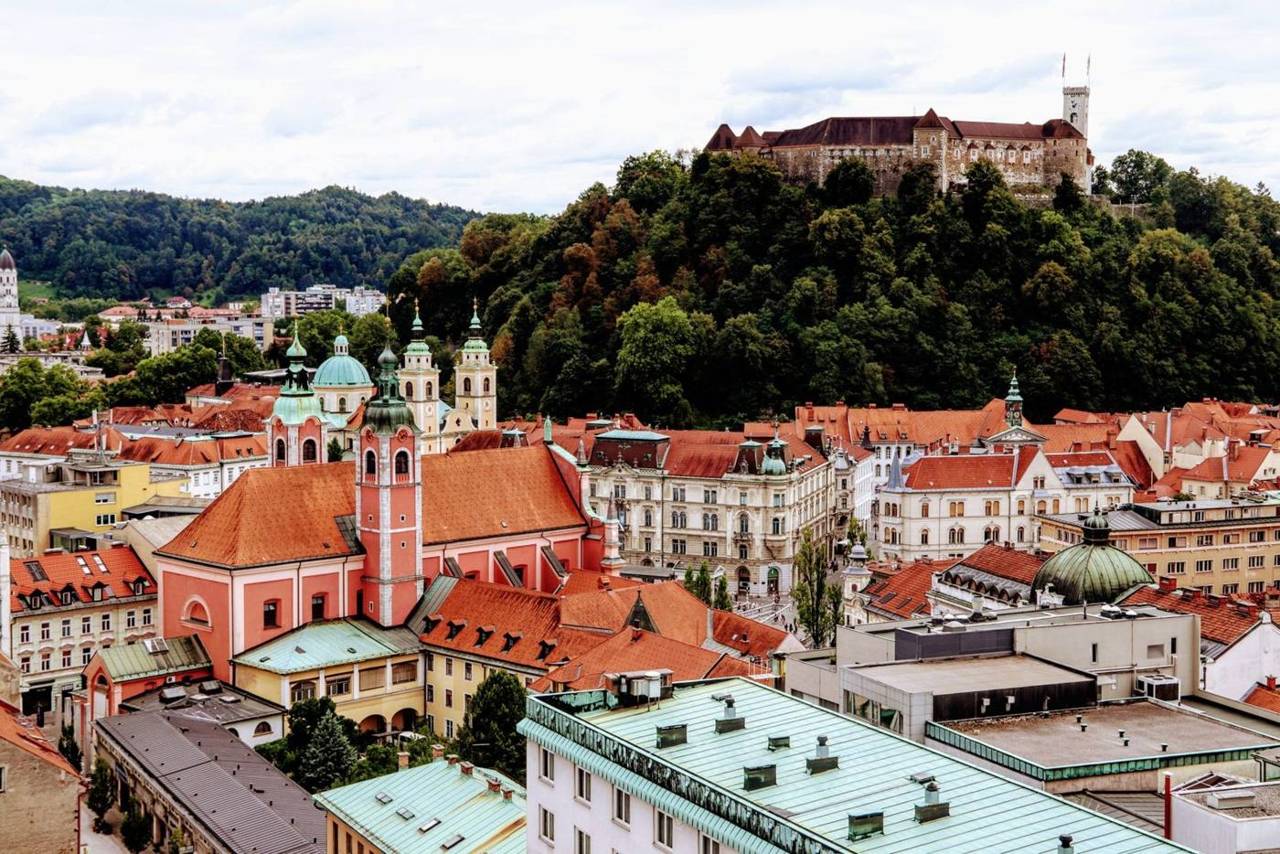
Then go up to the castle, on the hill above the centre, on foot in a quarter of an hour or by funicular. From the viewing tower you see the red roofs, the river and, on clear days, the Julian Alps and the Kamnik Alps on the horizon. Inside there is an exhibition on the history of Slovenia and the Chapel of St George. Check prices and times.
In the afternoon walk to Tivoli Park, the city's large park, by way of Congress Square. The main avenue often hosts open air photography exhibitions.
In the evening go back along the Ljubljanica, where the bars are full of students, and try potica, the rolled cake with walnuts.
Practical tip: if you arrive on a Friday between spring and autumn, the street food market fills the square near the central market, with cooks from all over the country.
- Day 3
Bled: the lake, the island and the Vintgar gorge
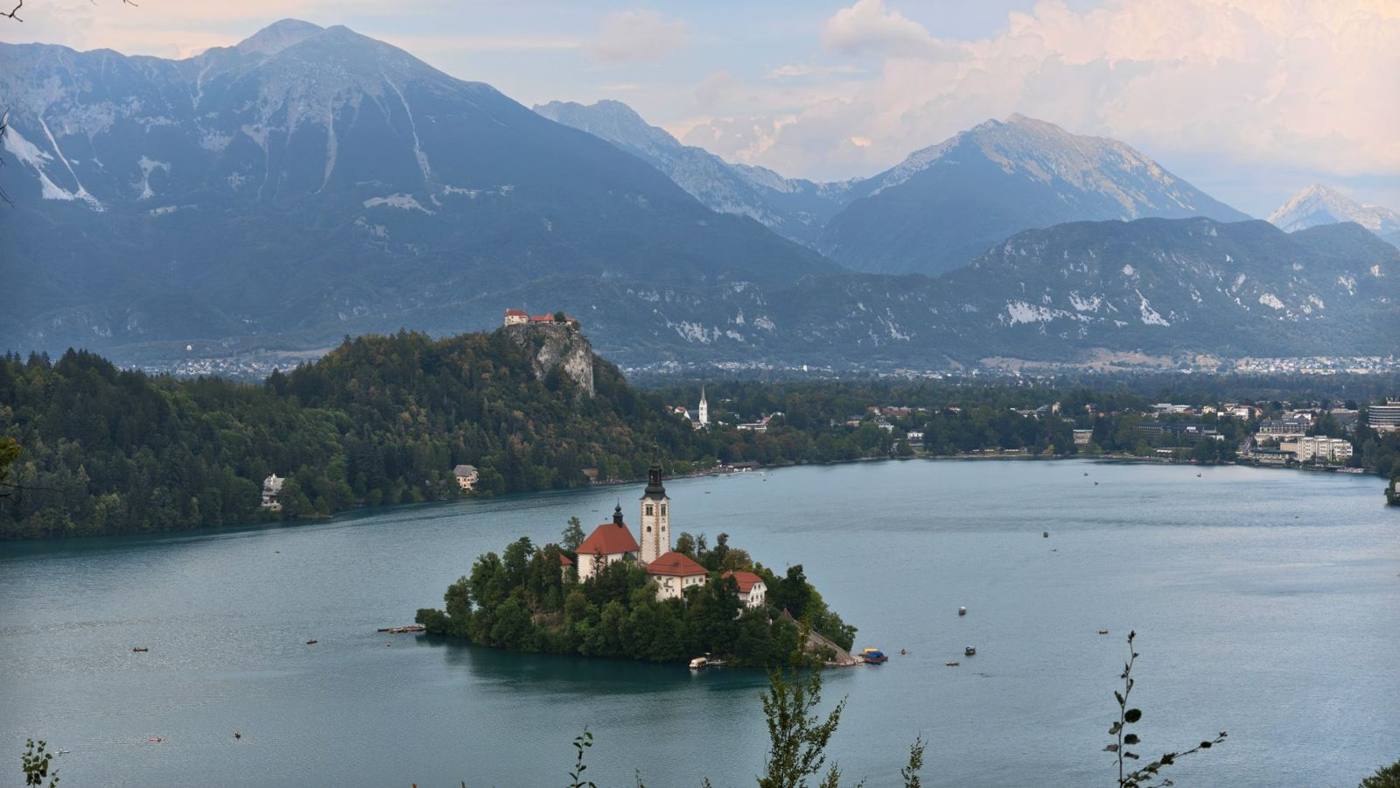
In the morning collect the car and drive to Bled, about an hour from Ljubljana, below the Julian Alps. Lake Bled is the most famous landscape in Slovenia: green water, a small island with a church and a castle on a cliff.
Start with the Vintgar gorge, a few kilometres from the lake, before the groups arrive. A path of wooden walkways follows the Radovna stream for about a kilometre and a half between high, narrow rock walls, with turquoise water, rapids and a waterfall at the end. The route is one way and you return across the meadows. Check prices and times, because the gorge is closed in winter.
Back at the lake, take a pletna, the traditional wooden rowing boat of Bled, steered by a standing oarsman, to the island. Here climb the stone steps to the Church of the Assumption and ring the wishing bell. Check prices and times.
In the afternoon go up to Bled Castle, the oldest in Slovenia, built on a cliff dropping straight into the water, with a small museum, an old printing workshop and a terrace above the lake. At sunset walk the path around the lake, which is easy and flat.
In the evening try kremšnita, the cream cake that is Bled's speciality.
Sleep in Bled or Bohinj, for two nights.
Practical tip: in summer Bled is very crowded; head out early in the morning and leave the car in the signposted car parks around the town.
- Day 4
Lake Bohinj and the Savica waterfall
Today drive for about half an hour to Lake Bohinj, the largest permanent natural lake in Slovenia, in Triglav National Park. It is larger, wilder and much quieter than Bled, with no grand buildings on its shores.
In the morning stop at the bridge at Ribčev Laz, at the eastern end of the lake, with the small Church of St John the Baptist, decorated with medieval frescoes, reflected in the water. Here too is the statue of the four men who, according to tradition, first climbed Triglav in 1778.
Then follow the road along the south shore to the western end of the lake. From here a lane climbs to the car park for the Savica waterfall, about 80 metres high, the source of the Sava Bohinjka. You reach it in about twenty minutes on foot, up a stairway through the woods. Check prices and times.
In the afternoon take the Vogel cable car, which rises from the lake shore to more than 1,500 metres: from the top you see the whole lake, the valley and, on clear days, Triglav. Alternatively hire a kayak or a paddleboard, or swim in the cool, clear water.
In the evening taste Bohinj cheese and trout from the lake.
Practical tip: at Bohinj the car parks are paid in summer; there is also a summer bus along the lake, which saves you hunting for a space.
- Day 5
The Vršič pass, Bovec and Kobarid
Today is the most spectacular drive of the trip. From Bohinj drive to Kranjska Gora, then climb to the Vršič pass, at 1,611 metres, the highest road pass in Slovenia, with dozens of numbered hairpin bends, many of them cobbled. The road was built during the First World War by Russian prisoners; on the northern side stands the wooden Russian Chapel, dedicated to those who died under an avalanche.
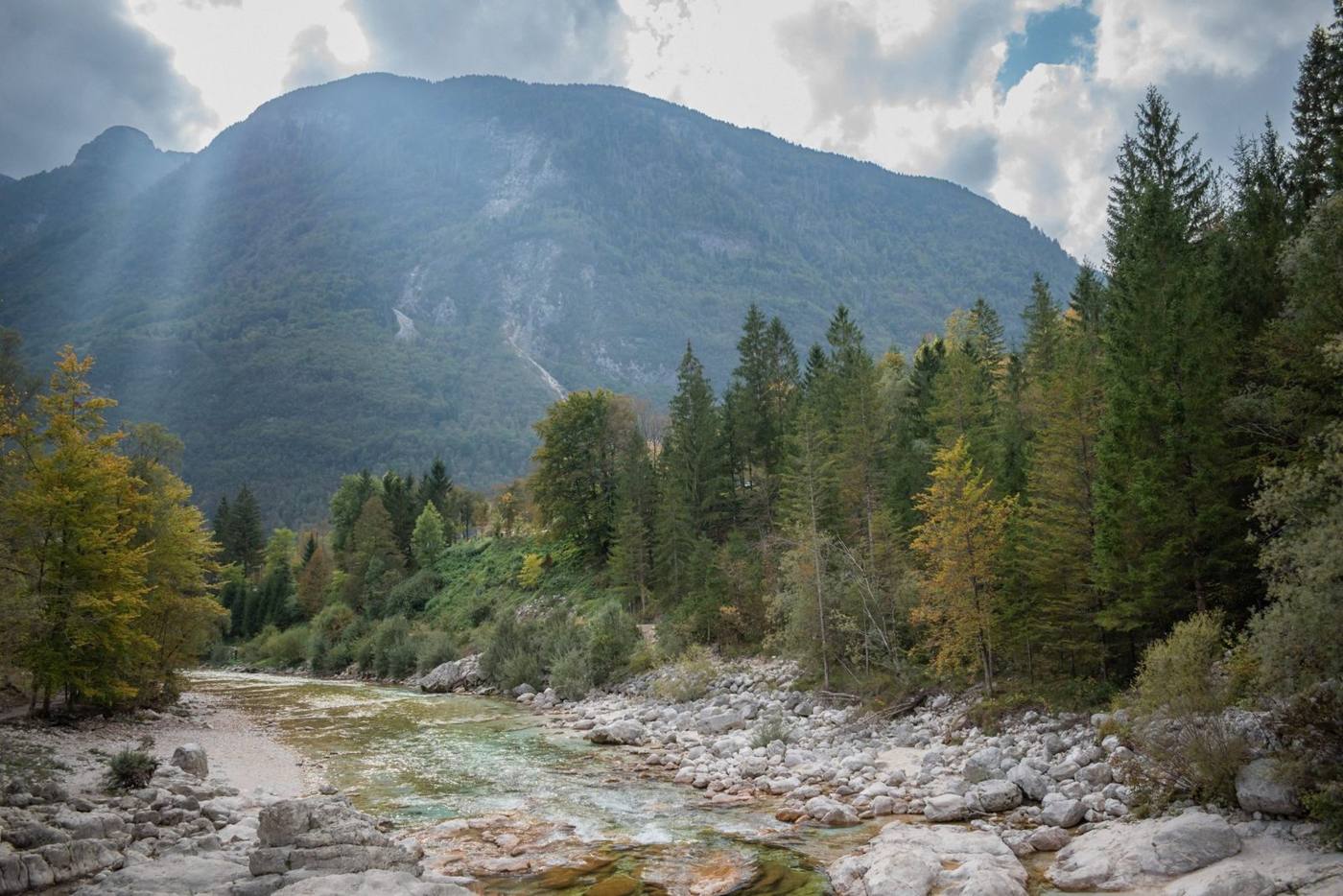
From the pass drop down into the Trenta valley, in the Soča valley. Stop at the path to the source of the river, where the water flows out of a cave, and a little further down at the Velika korita gorge, where the Soča runs emerald green in a narrow channel. The water is icy even in summer.
In the early afternoon you reach Bovec, the water sports village, with rafting and kayaking on the Soča. Then carry on to Kobarid, Caporetto in Italian, and visit the museum of the Great War, which tells the story of the Isonzo front and of the rout of October 1917 from the point of view of soldiers of every army. Check prices and times.
If you have time, walk to the Kozjak waterfall, about half an hour from the town, hidden in a rocky cave.
Sleep in Kobarid or Bovec.
Practical tip: the Vršič pass is usually open from May to October and closed in winter; in snow or bad weather take the longer road via Tarvisio and the Predil pass.
- Day 6
The Postojna caves and Predjama Castle
In the morning follow the Soča south, through Tolmin and Nova Gorica, and drive to Postojna, on the Karst plateau, in about two hours.
The Postojna caves are among the most visited in Europe: a system of passages more than twenty kilometres long, carved by the river Pivka. The visit starts with an electric train that runs several kilometres into the mountain, among stalactites and stalagmites, then continues on foot with a guide through the finest halls, such as the Spaghetti Hall, with thousands of thin stalactites, and the hall of the Brilliant, with a very white stalagmite. At the end you see the olm, the blind, pink amphibian that lives only in the underground waters of the Karst. Check prices and times.
In the afternoon drive about ten kilometres to Predjama Castle, built into the mouth of a cave, halfway up a rock face more than a hundred metres high. According to legend, in the fifteenth century the knight Erasmus of Predjama held out here for a long time against a siege, supplied through the cave's secret passages. Inside you visit the halls, the chapel and the passage in the rock. Check prices and times.
Then head down to the coast, about an hour away.
Sleep in Piran, for two nights.
Practical tip: in the caves the temperature is around ten degrees all year; bring a jacket even in high summer.
- Day 7
Piran and the Slovenian coast
Today is devoted to the sea, on the roughly 47 kilometres of the Slovenian coast.
In the morning walk around Piran, the Venetian town on the tip of a peninsula. Its centre is the oval Tartini Square, with the statue of the violinist Giuseppe Tartini, who was born here, and colourful palaces around it. Climb the lanes to the Church of St George, with a bell tower like St Mark's in Venice, and then up to the medieval walls, which look over the red roofs and the Gulf of Trieste. Check prices and times for the walls.
Then walk down to the point with the lighthouse and swim from the rocks or the concrete piers: there are no sandy beaches here.
In the afternoon choose between the Sečovlje salt pans, to the south, where salt is still harvested by hand using old methods, and Koper, to the north, with Tito Square, the Venetian Praetorian Palace and the cathedral bell tower. Check prices and times for the salt pans.
In the evening go back to Piran for the sunset over the sea and dine on Adriatic fish, such as grilled squid or scampi alla buzara, with a glass of malvasia or refošk.
Practical tip: cars cannot enter Piran; leave the car in the car park at the entrance to the town and take the shuttle to the centre.
- Day 8
Strunjan and departure
On the last morning take a walk in the Strunjan Landscape Park, between Piran and Izola, along the path on the highest cliff on the coast, with views of the green sea and the small salt pans. Alternatively stop in Izola, an old fishing town with a small harbour and colourful boats.
Then leave. From Piran, Trieste airport is about an hour away and Ljubljana about an hour and a half; if you arrive by car from Italy you cross the border near Koper.
In eight days you have seen almost all of Slovenia: the green, pedestrian capital with Plečnik's bridges, the castle and the market, the lakes of Bled and Bohinj below the Julian Alps, the Vintgar gorge, the Vršič pass and the emerald water of the Soča, the places of the Great War in Kobarid, the Postojna caves with the olm, the castle in the rock at Predjama and the Venetian coast at Piran. It is an easy trip, with a few hours of driving a day, suitable for families too.
When to go: from May to September. June and September are the best months, with the Vršič pass open, a mild climate and fewer crowds. In July and August Bled, Vintgar and the coast are very busy and it is worth booking everything in advance. The Vršič is only open from May to October.
Practical tip: if you return the car in another country or another city, check the one way rental surcharge beforehand.
A small country with mountains, lakes, caves and sea within a few hours' drive, ideal even for a road trip from Luxembourg or Italy. Motorways require the electronic vignette. Bled is crowded in summer; Bohinj is quieter. The Vršič Pass is open only from May to October.
Before you go
- Documents and visa
- EU citizens need a valid identity card or passport: Slovenia is in the EU and the Schengen area. A driving licence is not accepted as identification. There may be temporary checks and queues on the borders with Italy, Croatia and Hungary: always carry your document. Other nationalities should check the Schengen rules.
- Health and vaccines
- No vaccines required. Tick-borne encephalitis is present: if you hike in summer, ask your doctor about the vaccine. EU citizens should bring their EHIC, plus insurance covering mountain rescue. Emergencies and mountain rescue: 112, police 113.
- Money and payments
- Euro. Cards are accepted almost everywhere, but carry some cash for mountain huts and small taverns. Motorways and expressways require an electronic vignette from the official DARS website; fines without one are high.
- Power sockets
- Types C and F, 230 volts.
- Time zone
- Central European Time (UTC+1, summer UTC+2).
- Safety
- A calm country with no particular areas to avoid. Watch for pickpockets in central Ljubljana and at tourist sites. In the mountains the weather changes quickly and summer storms are dangerous on ridges. Many bears live in the forests of the inner Karst and Notranjska: avoid the woods at dawn, dusk and night. Wild camping is banned. Official advice: GOV.UK.
Information checked in November 2026 for Italian and EU citizens. Rules change: always check before you travel.
Variations
Short version: in five days see Ljubljana, Bled, Bohinj and the Postojna caves, without the Soča valley and the coast.
Long version: add two days for the Škocjan caves and the Karst, or for the Logarska dolina.
Frequently asked questions
Do I need a vignette?
Yes, for all Slovenian motorways and expressways. It is electronic and sold on the official DARS website; fines without one are high.
Is it better to sleep in Bled or Bohinj?
Bled is more convenient and has more services; Bohinj is quieter and more natural. With a car you can sleep in one and visit the other on a day trip.
Can I do the trip without a car?
Partly: trains and buses link Ljubljana, Bled, Postojna and the coast. For the Vršič pass and the Soča valley there are connections only in summer, and few of them.
Indicative itinerary written by World Atlas. Before booking, check timetables, seasonal openings, documents and safety.
 5 daysModerate
The Soča valley
The emerald river, rafting at Bovec, the Kozjak waterfall, the First World War museum at Kobarid and the Vršič Pass.
 3 daysEasy
Ljubljana in a weekend
A small green capital: Plečnik's architecture, the castle, the central market, the Friday Odprta kuhna food market and the alternative culture of Metelkova.
 4 daysChallenging
Climbing Triglav
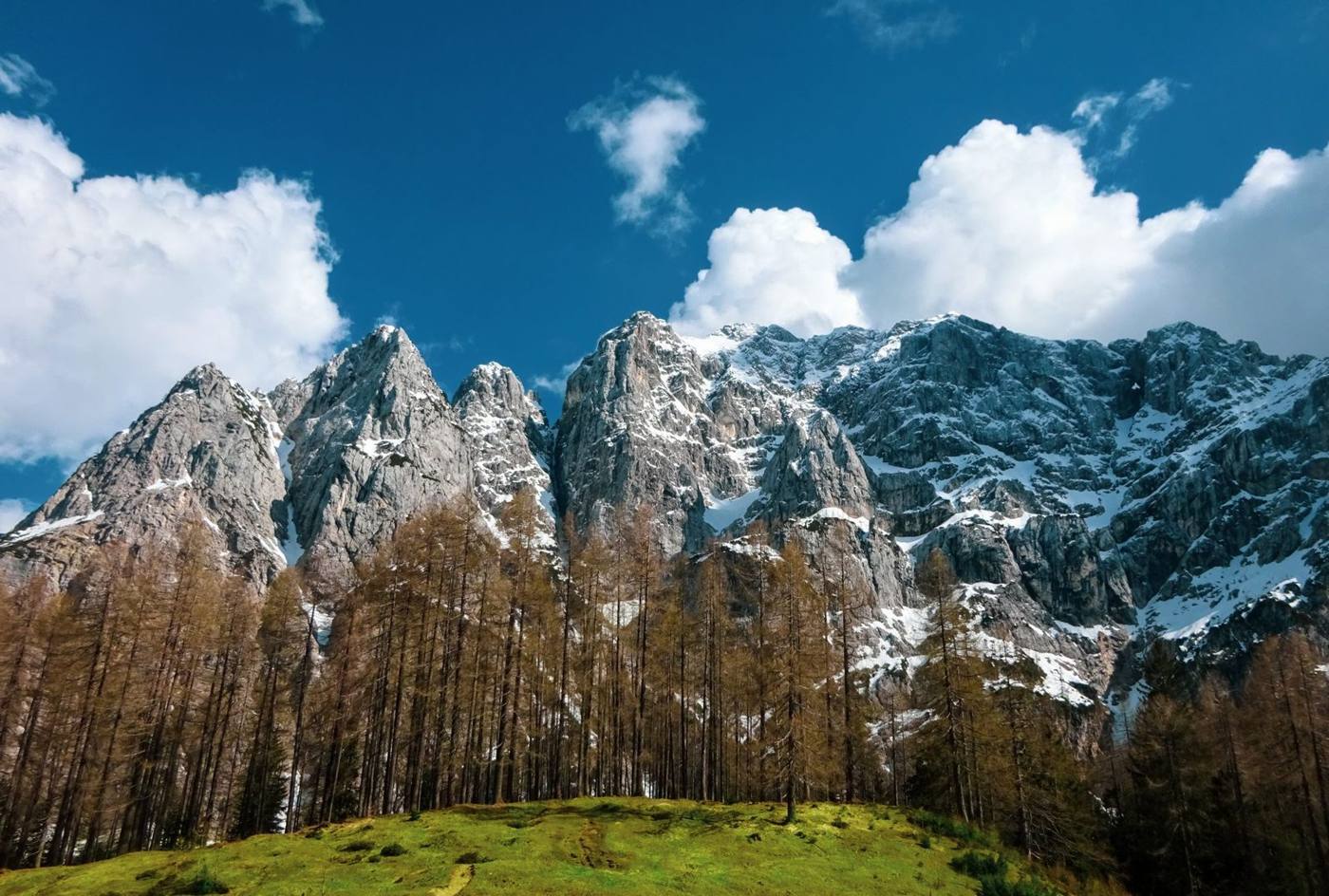
Slovenia's symbolic summit, 2,864 metres, via the Seven Triglav Lakes valley with nights in huts and a protected final ridge.