Lisbon, Sintra and Porto
Portugal's two best-loved cities and the romantic palaces of Sintra, by train.
- Lisbon
- Sintra
- Cascais
- Coimbra
- Porto
Day by day
- Day 1
Arrival in Lisbon, the Alfama and fado
From Lisbon airport to the centre takes about twenty minutes on the red metro line, changing to the green or blue line depending on the area. Buy the rechargeable transport card at the first station: it works on metro, trams, buses and funiculars. For three nights choose accommodation in the Baixa, the Chiado or near the Alfama, so the centre can be explored on foot. Lisbon charges a tourist tax of 4 euros per person per night, from age 13, for up to seven nights.
In the afternoon climb into the Alfama, the oldest quarter, which survived the 1755 earthquake: stairways, lanes that end suddenly, washing lines, azulejos on the facades. Visit the Romanesque cathedral, the Sé, then go up to the Santa Luzia and Portas do Sol viewpoints for views over the rooftops and the Tagus. Higher up is São Jorge castle, with its walls and peacocks in the gardens: entry is paid and late afternoon gives the best light over the city.
In the evening stay in the Alfama or go to Mouraria for fado, Lisbon's melancholy song, listed as world heritage. In fado houses you dine while musicians play a few metres away: keep silent during the performances. Choose small venues, where people from the neighbourhood sing too.
For dinner try grilled sardines, bacalhau in one of its many recipes and ginjinha, the sour cherry liqueur served in a small glass. Practical tip: tram 28 is packed and full of pickpockets, so ride it early in the morning or walk up.
- Day 2
Belém, the Jerónimos and LX Factory
In the morning take tram 15 or the train from Cais do Sodré to Belém, about twenty minutes along the river. The ships of the great voyages of discovery sailed from here. The Jerónimos Monastery, in Manueline style, has the finest cloister in Portugal, with columns carved with ropes, shells and exotic plants; Vasco da Gama's tomb is in the church. Buy your ticket online and arrive at opening time: the queue can last an hour. The monastery and Belém Tower are closed on Mondays.
After the monastery walk to the Padrão dos Descobrimentos, the explorers' monument on the riverbank, and to Belém Tower, the white fortress that seems to rise from the water. Nearby, the MAAT, the wave-shaped museum of art and architecture, has a walkable roof with views of the 25 de Abril bridge. Do not leave Belém without tasting pastéis de nata, custard tarts in puff pastry, at the historic bakery next to the Jerónimos, where they have been made since 1837: the queue moves fast.
In the afternoon head back towards the centre and stop at LX Factory, an old textile factory under the bridge, now full of bookshops, workshops, design stores and cafés. In the evening go up to the Bairro Alto, the bar district, and the São Pedro de Alcântara viewpoint, also reached by the Glória funicular.
Practical tip: combined tickets for the Belém monuments save money if you want to see both the Jerónimos and the tower.
- Day 3
Sintra: Pena Palace and Quinta da Regaleira; sunset at Cabo da Roca
Sintra is about forty minutes by train from Rossio station, with frequent departures. It is the busiest day trip around Lisbon: take one of the first trains. The Pena National Palace, yellow and red on a hilltop among the clouds, is visited with a dated, timed ticket: the time applies to entry to the palace and latecomers are not admitted. Book online before you go. From the station the road climbs steeply: take the local bus, as walking takes almost three quarters of an hour uphill.
Around the palace is a two-hundred-hectare park, with trees from all over the world and the Countess of Edla's chalet. Just below, the Moorish Castle, a medieval fortress running along the ridge, has a separate ticket and a spectacular view of Pena.
In the early afternoon go down to the village and visit the Quinta da Regaleira, an early 20th-century villa with a garden full of symbols, grottoes and secret passages. Its most famous feature is the initiation well, a spiral staircase descending nine levels into the rock. Booking is wise here too.
Around six take the bus to Cabo da Roca, the westernmost point of continental Europe: a cliff over the Atlantic with a lighthouse, the place to watch the sunset. Then return to Lisbon by bus to Cascais and from there by train along the coast. Practical tip: Sintra is cooler and often misty even in summer, so bring a jacket.
- Day 4
By train to Porto with a stop in Coimbra
In the morning leave Lisbon on the Alfa Pendular or Intercidades train from Santa Apolónia or Oriente station. In just under two hours you are in Coimbra, where you stop until the afternoon: leave your luggage at the station. Coimbra is Portugal's oldest university town, built on a hill above the Mondego river.
Walk or take the public lift up to the university, in the Paço das Escolas courtyard, the former royal palace. The 18th-century Joanina Library, with gilded shelves and a colony of bats that protects the books from insects at night, is visited with a timed ticket: book it or buy it as soon as you arrive, as places per group are few. Then walk down the lanes of the Alta, where students still wear black capes on feast days, to the Sé Velha, the Romanesque cathedral.
In the lower town, the Baixa, is the Santa Cruz monastery, with the tombs of Portugal's first kings. For lunch try chanfana, goat slow-cooked in red wine, or leitão, roast suckling pig from the nearby Bairrada.
In the afternoon take the train on: Coimbra to Porto takes about an hour. For three nights stay in Porto near the Ribeira or São Bento station, or in Vila Nova de Gaia across the river. Practical tip: Alfa Pendular tickets are cheaper bought online a few days ahead, and seats are assigned.
- Day 5
Porto: the Ribeira, the Dom Luís bridge and the Gaia cellars
Start at São Bento station, whose hall is covered with twenty thousand blue and white azulejos telling the history of Portugal. Then climb to the cathedral, on the highest hill in the centre, with its tiled cloister and views over the rooftops. On the way down, the Clérigos Tower, the Baroque tower that symbolises the city, is climbed by a narrow staircase of over two hundred steps to the panoramic terrace: timed ticket.
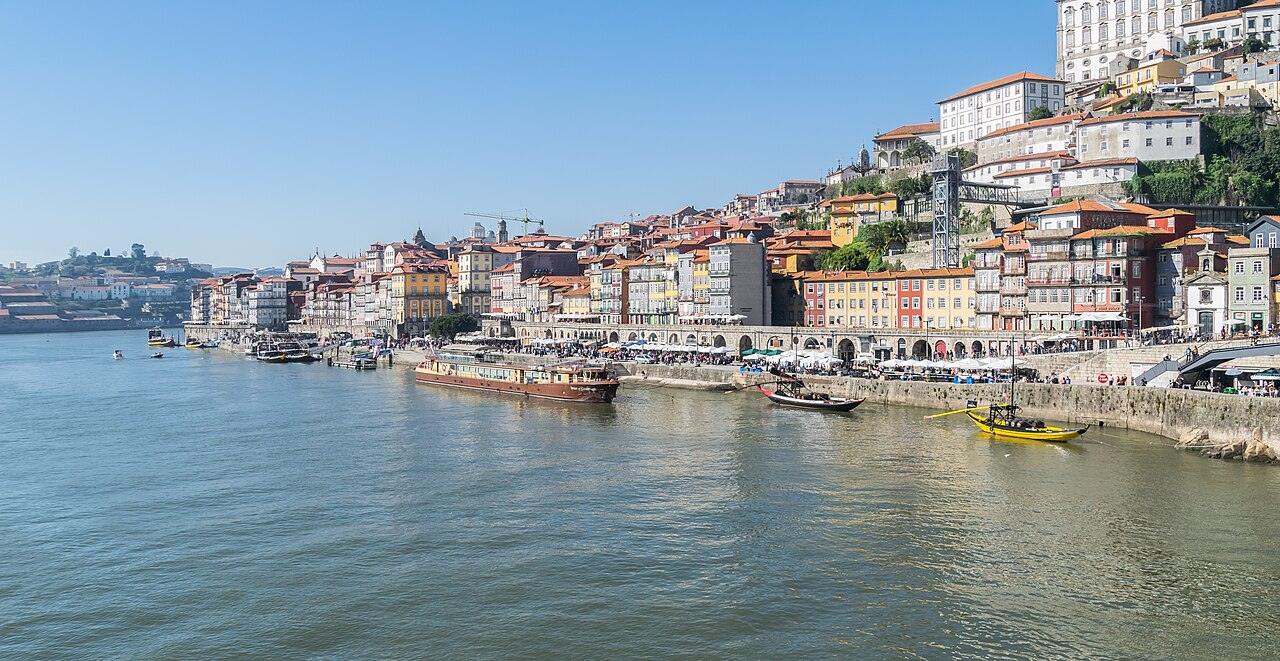
At midday go down to the Ribeira, the quarter on the Douro river, with narrow colourful houses and iron balconies. Here people eat tripas, tripe with beans that earned Porto's people the nickname tripeiros, and francesinha, a meat and cheese sandwich covered in a beer sauce.
In the afternoon walk across the two-level Dom Luís I bridge, built by a pupil of Gustave Eiffel. On the other side, in Vila Nova de Gaia, are the cellars where port wine is aged: almost all offer guided tours with tastings, to be booked. You learn the difference between ruby ports, young and fruity, and tawnies, aged in wood.
At sunset climb to the viewpoint of the Serra do Pilar monastery above the bridge: it is the finest view of Porto. Return across the upper deck of the bridge, where the metro runs. Porto's tourist tax is 3 euros per person per night, for up to seven nights. Practical tip: Porto is all slopes and stairways, so wear comfortable shoes.
- Day 6
The Douro valley by train or boat
Give the day to the Douro valley, the port wine region, with terraced vineyards carved into the hillsides along the river, a World Heritage site. There are two ways to go without a car. The regional train from São Bento to Pinhão takes about two and a half hours, and from Régua onwards runs right beside the river: sit on the right-hand side in the direction of travel for the best view.
The alternative is a boat cruise from Porto, which travels upriver through the dams and their locks and returns by train: a long day with breakfast and lunch on board, to be booked. If you prefer freedom, at Pinhão or Régua small boats offer one-hour trips among the vineyards.
In Pinhão look at the little station, decorated with azulejos showing the grape harvest and work in the vineyards. Around it are the quintas, the wine estates: many open for visits and tastings, almost always by appointment. In Peso da Régua the Douro museum tells the story of the region, the first wine area in the world with boundaries set by law, in 1756.
The harvest runs from mid-September to early October, the most beautiful and busiest time. Return to Porto in the evening on the last train: check the times, there are not many. Practical tip: to visit several quintas and the viewpoints above Pinhão, such as São Leonardo de Galafura, you need a car or an organised excursion.
- Day 7
Departure from Porto
Porto airport is linked to the centre by the purple metro line, line E, in about half an hour from Trindade station. If your flight is in the afternoon, you have the morning no-cost.
Use it for what is left: the Bolhão market, reopened after restoration, with stalls of fish, fruit, flowers and preserves; the church of Santo Ildefonso and the Chapel of Souls, with facades entirely covered in blue azulejos; rua das Flores, one of the finest streets in the centre. If you prefer contemporary art, the Serralves foundation, with its museum designed by Álvaro Siza and a large park, is half an hour away by bus.
Alternatively take historic tram 1 along the river to Foz, where the Douro meets the Atlantic: a walk along the seafront, the lighthouse and the São João Baptista fort, and a last breakfast with an ocean view. The tram is slow and picturesque; for a quicker return there is a bus.
For shopping, from Porto people take home a bottle of port or Minho vinho verde, sardines in decorated tins, or a hand-painted azulejo. Practical tip: allow at least two and a half hours before your flight, and remember that the airport metro, line E, runs direct only from certain stations: check your route.
The ideal first trip to Portugal, all by train with no car. Visit Sintra on a weekday with tickets booked online, or the queues are long. Porto deserves at least two nights, and the Douro valley a full day.
Before you go
- Documents and visa
- EU citizens need a valid identity card or passport. Other nationalities should check the Schengen rules.
- Health and vaccines
- No vaccines required. EU citizens should bring their EHIC. Emergencies: 112.
- Money and payments
- Euro. Cards are accepted almost everywhere. Lisbon, Porto and several municipalities, including in the Algarve, charge a tourist tax per person per night.
- Power sockets
- Types C and F, 230 volts.
- Time zone
- Western European Time (UTC+0, summer UTC+1); the Azores are one hour behind the mainland.
- Safety
- A very safe country. In Lisbon watch for pickpockets on tram 28 and in the busiest areas; in summer, wildfire risk inland. Official advice: GOV.UK.
Information checked in November 2026 for Italian and EU citizens. Rules change: always check before you travel.
Variations
In 5 days: two days in Lisbon with Belém, a day in Sintra, then a direct train to Porto and a full day there. You give up Coimbra and the Douro valley.
In 10 days: add Óbidos, Nazaré and the monasteries of Batalha and Alcobaça between Lisbon and Coimbra, a day in Aveiro and Costa Nova, and two days in Guimarães and Braga, in the Minho.
Frequently asked questions
Do I need to book Sintra?
Yes, at least Pena Palace: the ticket has a date and time, which applies to entry to the palace, and latecomers are not admitted. The Quinta da Regaleira and the Moorish Castle are also calmer with a booking. From June to September same-day places run out quickly.
How much is the tourist tax?
In Lisbon 4 euros per person per night from age 13, for up to seven nights. In Porto 3 euros per night, also for up to seven nights; the city has begun a review that could raise it to 4 euros. It is paid at your accommodation.
Do I need a car?
No. Lisbon, Sintra, Coimbra and Porto are linked by train, and the Douro valley is reached by train or boat. In the old towns a car is a burden: narrow streets and expensive parking. You only need one to explore the Douro estates freely.
Indicative itinerary written by World Atlas. Before booking, check timetables, seasonal openings, documents and safety.
 7 daysEasy
The Algarve and the Vicentine coast
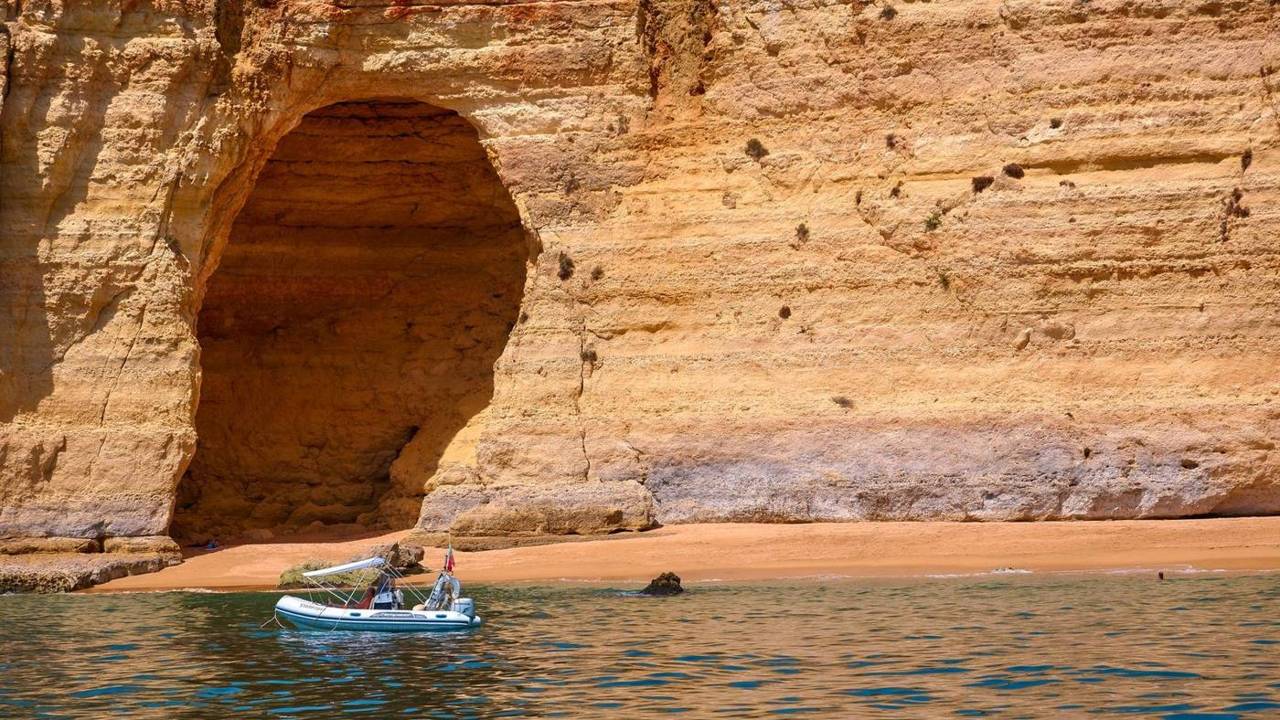
Golden cliffs, the Benagil cave and the wild beaches of the Alentejo.
 7 daysModerate
Azores: São Miguel
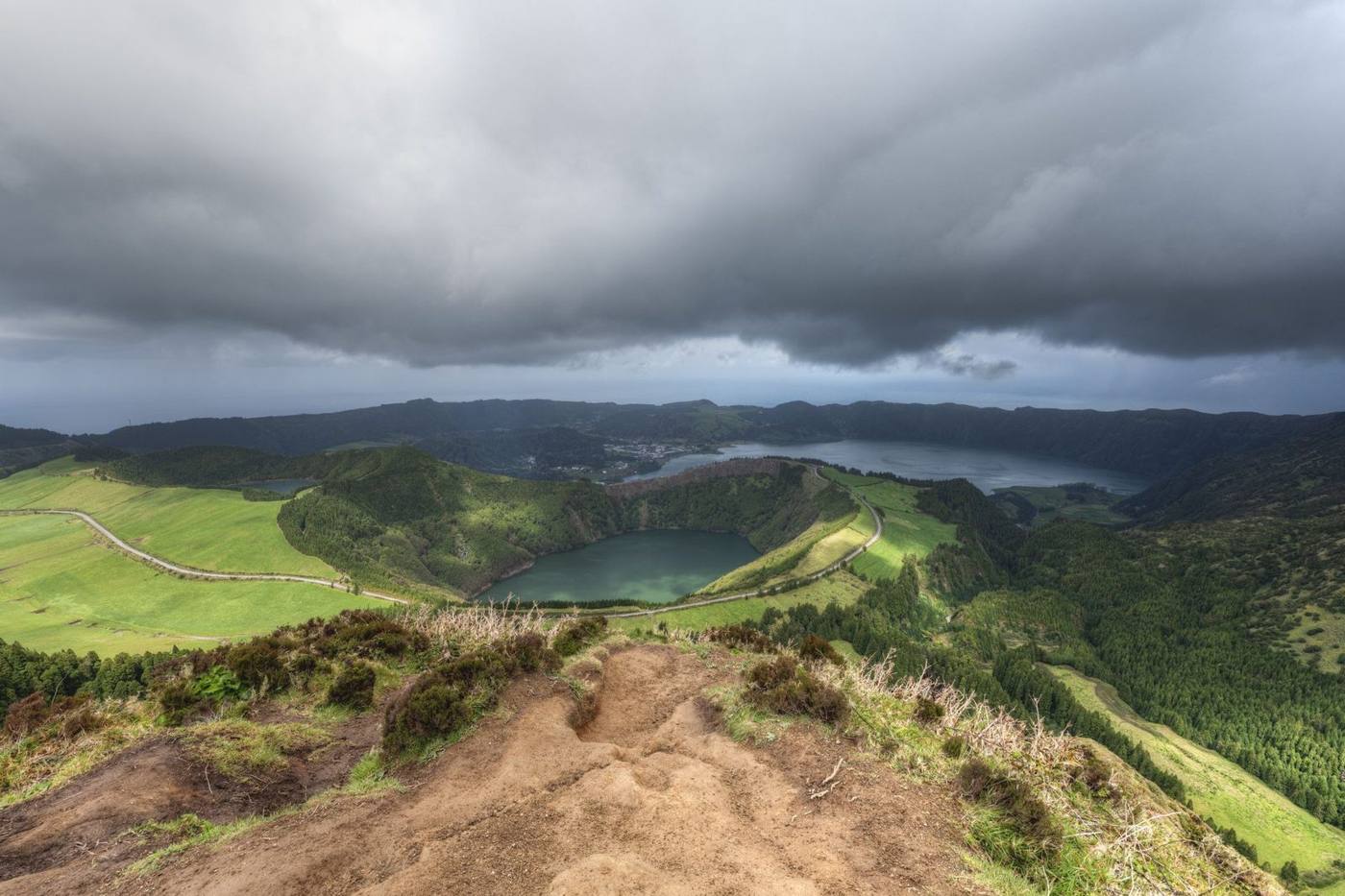
Crater lakes, hot springs, tea plantations and boat trips for whales and dolphins.
 7 daysEasy
The Golden Triangle: Delhi, Agra and Jaipur
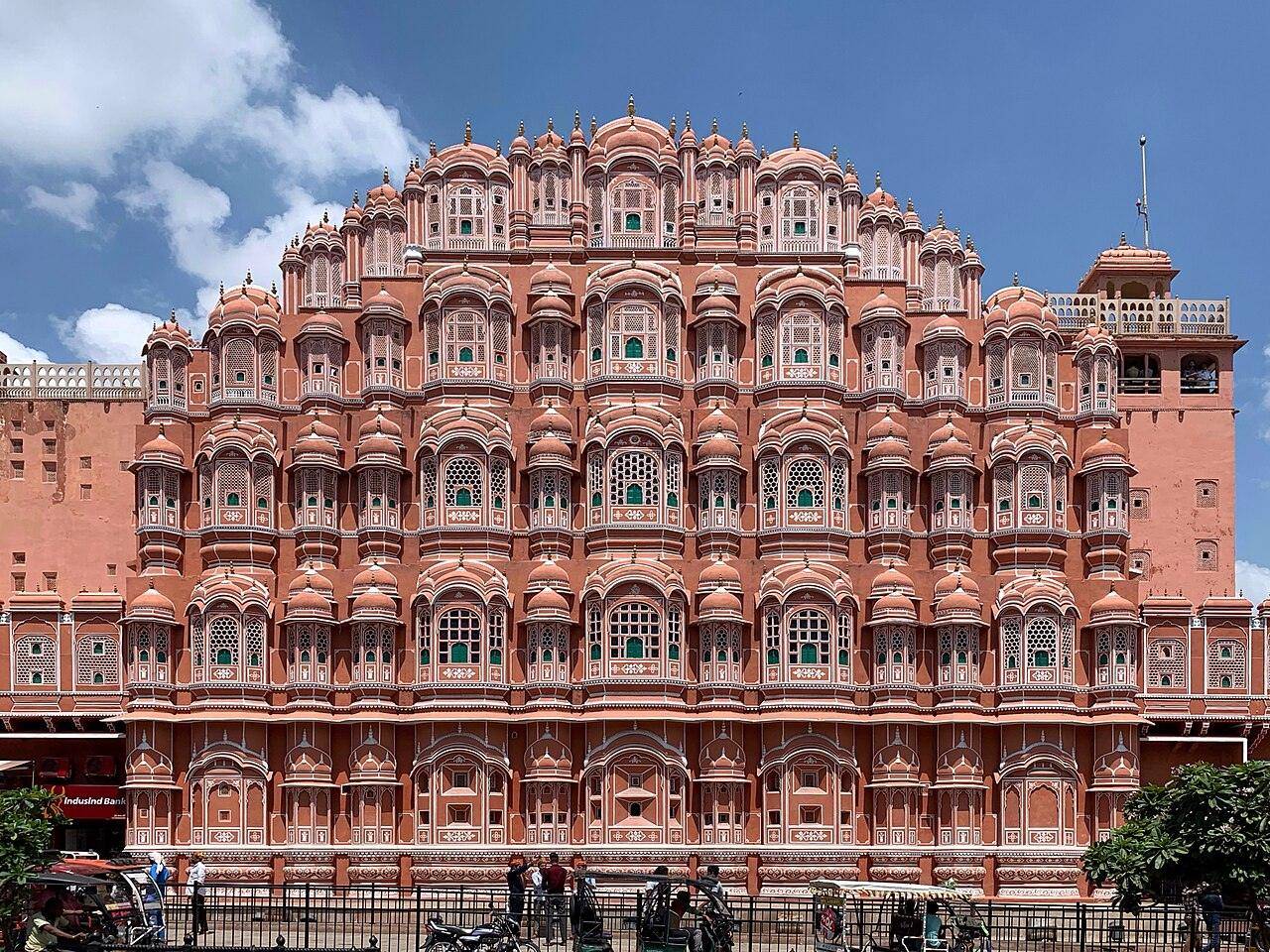
A first time in India: the Taj Mahal at dawn, the forts of Rajasthan and the life of Old Delhi, in one week.