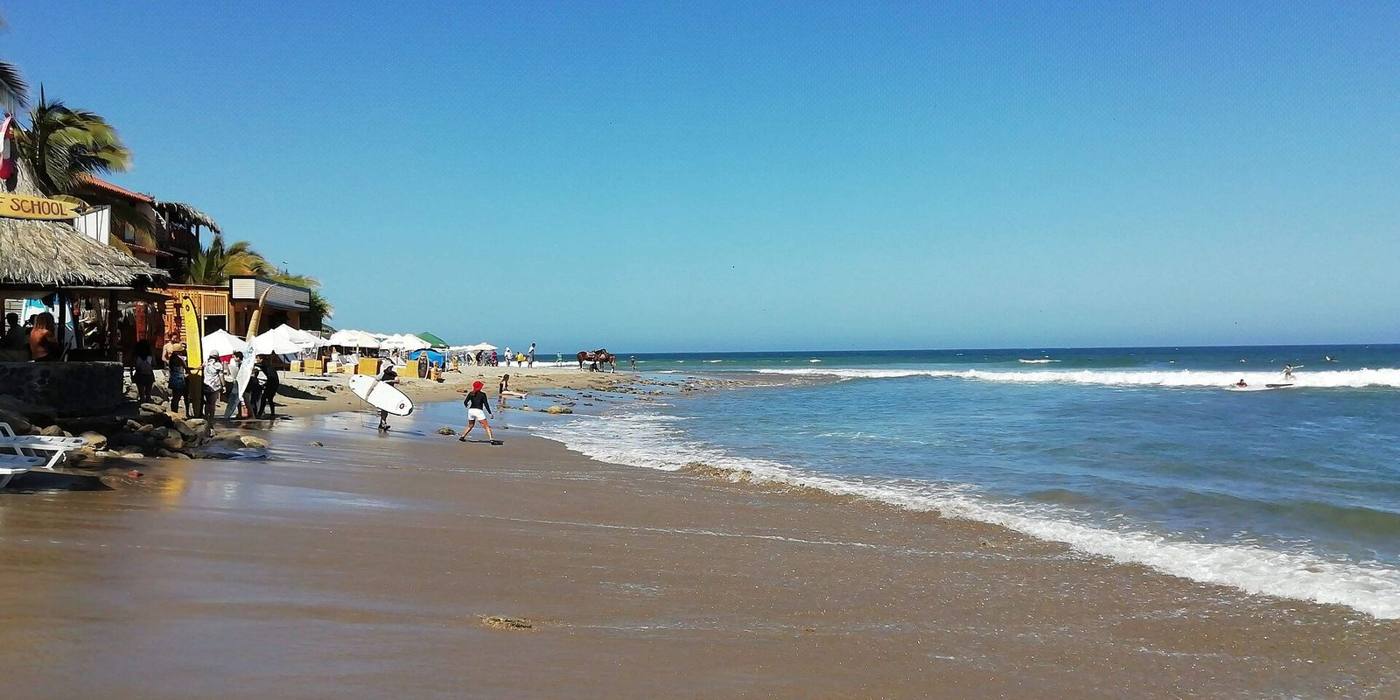
Máncora and the north coast
Peru's year-round sunshine: the beaches of Máncora, Vichayito and Punta Sal, surfing and the long waves of Lobitos and Chicama, humpback whales offshore from July to October, the turtles of El Ñuro and the mangroves of Tumbes.
- Piura
- Lobitos
- Máncora
- El Ñuro
- Punta Sal
- Tumbes
Day by day
- Day 1
Flying to Piura or Talara and arriving in Lobitos
Peru's north coast, between Piura and Tumbes, is very different from the central and southern coast. Here the cold Humboldt current moves away from the shore and the sea turns warm, the sun shines almost all year and the beaches are long, with waves famous among surfers worldwide. The desert reaches the sea, with sandy hills and dry shrubs, and further north the mangroves begin. In six days you see the surf villages, the beaches, turtles, whales and the Tumbes mangroves.
In the morning, take the flight from Lima to Piura or Talara, in under two hours. From Talara, Lobitos is about half an hour by car.
Lobitos is a small seaside village that grew up in the early twentieth century around the oil wells of a British company. The old wooden houses of the engineers remain, along with the wooden church, the wells with pumps still nodding on the hills, and a frontier-village feel. Today it is a favourite with surfers, with several long, regular waves breaking to the left.
In the afternoon, walk on the beach and the rocks watching the surfers, and climb the hill near the old lighthouse for sunset over the Pacific.
In the evening, try north-coast ceviche, freshly caught fish marinated in lime, red onion and chilli, served with sweet potato and corn.
Practical tip: Italian citizens can enter Peru without a visa for tourism for up to 183 days, with a passport. The length of stay is set at the border: ask for the number of days you need.
- Day 2
A surf lesson in Lobitos
Today is a surf day. Lobitos has waves for every level: some long and fast for experienced surfers, others gentler in the bays, suitable for beginners.
In the morning, take a surf lesson with an instructor from one of the village schools. After an explanation on the beach, you go into the water with a large soft board, learn to paddle, wait for the wave and stand up. The water here is warmer than in southern Peru, but for many months of the year a light wetsuit is advisable.
In the afternoon, if you are tired, rest on the beach or walk along the coast to the further points, where surfers ride the long waves. Many travellers stay in Lobitos for weeks to learn and improve. The village also has local projects that teach surfing to children and clean the beaches, which visitors can support.
Towards evening, on the beach, watch fishermen return in small sailing boats and wooden rafts.
In the evening, try seco de cabrito, a goat stew with coriander and beer, typical of the north, or grilled fish.
Practical tip: on the north coast the sun is extremely strong, especially in the water. Use high-factor water-resistant sunscreen and a surf shirt.
- Day 3
Máncora and Vichayito
In the morning, continue north to Máncora, in about an hour and a half along the Pan-American Highway, which runs between the desert and the sea.
Máncora is the best-known beach town in northern Peru, with a long beach, surf waves, small hotels, bars and lively evenings. It is popular with Peruvians from Lima, especially from December to March, and with travellers touring South America.
In the afternoon, go to Vichayito, a few kilometres south, a much quieter beach with pale sand, palms, low houses by the sea and few visitors. The sea here is often calm and good for swimming. You can walk for kilometres along the beach, watching pelicans and frigatebirds in flight. Small restaurants on the sand serve fresh fish at lunchtime.
Towards evening, if the wind is right, watch the kitesurfers making the most of the coast's steady winds.
In the evening, in Máncora, walk along the main street, full of stalls and restaurants, and try tiradito, raw fish cut in thin strips with a yellow chilli sauce, or conchas a la parmesana, scallops baked with cheese.
Practical tip: in Máncora in the evening, use trusted taxis or mototaxis arranged by your accommodation, and do not take valuables to the beach.
- Day 4
El Ñuro and a whale-watching trip
In the morning, go to El Ñuro, a small fishing village about half an hour south of Máncora. Around the fishermen's pier, in clear water, green turtles swim, coming to feed on fishing scraps. With the village fishermen, organised in an association, you can get into the water and swim with the turtles, following their rules: do not touch them and do not feed them.
From July to October, humpback whales come along this coast from Antarctica to give birth and raise their calves in warm water. Boat trips to see them leave from El Ñuro, Los Órganos and Máncora. You often see them leap from the water, slap their tails or fins on the surface, and the males sing underwater.
Out of season, the boats go to see dolphins, turtles and seabirds. Along the coast you also see offshore oil platforms, witnesses to the area's industrial history. Some fishermen also take visitors out on their boats to show how they fish with lines and nets.
In the afternoon, rest on the beach at Los Órganos, near El Ñuro, with its fishing harbour and colourful boats.
In the evening, return to Máncora.
Practical tip: choose an operator that follows whale-watching rules: low speed, distance from the animals and no boats surrounding the group.
- Day 5
Punta Sal
In the morning, continue north to Punta Sal, about half an hour away, already in the Tumbes region. Punta Sal has one of the most beautiful beaches in Peru, several kilometres long, with pale sand and calm, warm sea, sheltered by rocky points. It is quieter than Máncora, with holiday homes and small lodgings.
The day is for the sea: swimming, walks along the shore, snorkelling near the rocks, where you see colourful fish, or a kayak or paddleboard trip. Crabs, starfish and small octopuses live in the rock pools.
In the afternoon, if you want something different, visit the fishing areas around Cancas or Zorritos, further north, fishing villages where families work the nets and the catch on the beach. Zorritos also has a spring of hot water and mud in the hills near the sea, used for healing baths.
At sunset the sun sinks into the sea behind the rocky points, one of the finest sunsets on the coast.
In the evening, try Tumbes cooking: ceviche of conchas negras, the black clams of the mangroves, and chupe de cangrejo, a crab soup.
Practical tip: it is very hot from December to March, and in those months it can rain because of the El Niño phenomenon in the years when it occurs. Check the forecasts.
- Day 6
The Tumbes mangroves and the flight home
On your last morning, head north to the Tumbes Mangroves National Sanctuary, near the border with Ecuador, about an hour and a half from Punta Sal. It is the only large mangrove area in Peru, a forest of trees with roots in brackish water where the river meets the sea, crossed by channels.
With a local guide and a small boat, you sail through the mangrove channels among the trees' aerial roots. You see red crabs, herons, roseate spoonbills, cormorants and sometimes American crocodiles, protected at a nearby breeding centre. Local families gather conchas negras, the black clams that grow in the mud between the roots, under rules to protect them.
In the afternoon, go to Tumbes airport for the flight to Lima, in about two hours, or return to Talara or Piura.
This trip combines well with Peru's Andean and archaeological north: Chiclayo and the Royal Tombs of Sipán museum, Trujillo with the mud city of Chan Chan, or Chachapoyas and the Kuélap fortress.
Practical tip: the US government rates Peru level 2 of 4, exercise increased caution, with some areas inland to avoid, not visited on this trip. Near Tumbes, stay on the Peruvian side: crossing into Ecuador requires the official border checks. In towns, use official taxis and watch your valuables.
A beach finale to a Peru trip. Do not touch or feed the turtles when swimming with them. Theft is common on the beaches: leave nothing unattended. El Niño years bring heavy rain and flooding. The United States keeps Peru at level 2 (caution) and advises against all travel to the VRAEM, the Colombian border area of Loreto and the Abancay, Ayacucho, Huancavelica and Huancayo areas: this itinerary does not go there. Italians need no tourist visa for up to 90 days.
Before you go
- Documents and visa
- Passport with at least six months' validity on arrival; no visa is needed for tourism, up to a maximum of 183 days.
- Health and vaccines
- No compulsory vaccines for Lima and the Andes; yellow fever vaccination is recommended for the Amazon. Beware of altitude sickness in Cusco and the Andes. Emergencies: 105 police, 116 fire.
- Money and payments
- Peruvian sol. Cards work in cities and hotels; in markets, villages and for tips you need cash.
- Power sockets
- Types A and C, 220 volts: you may need an adapter for flat-pin sockets.
- Time zone
- UTC-5 all year: Peru does not use daylight saving time.
- Safety
- The United States rates Peru level 2. Avoid the Apurímac, Ene and Mantaro valley (VRAEM), the Colombian border in Loreto and some rural areas named by governments. Official advice: GOV.UK.
Information checked in November 2026 for Italian and EU citizens. Rules change: always check before you travel.
Variations
In 3 days: Máncora, Vichayito and El Ñuro with the turtles.
In 10 days: add Chiclayo, Sipán and Trujillo with Chan Chan.
Frequently asked questions
When is the best time to go?
There is sun almost all year. From December to March it is very hot and high season. From July to October you can see whales.
Do I need a car?
It is not necessary. There are buses, colectivos and mototaxis between the villages, and accommodation arranges transfers.
What documents do I need?
A passport. Italian citizens can enter Peru without a visa for tourism for up to 183 days.
Indicative itinerary written by World Atlas. Before booking, check timetables, seasonal openings, documents and safety.
 5 daysModerate
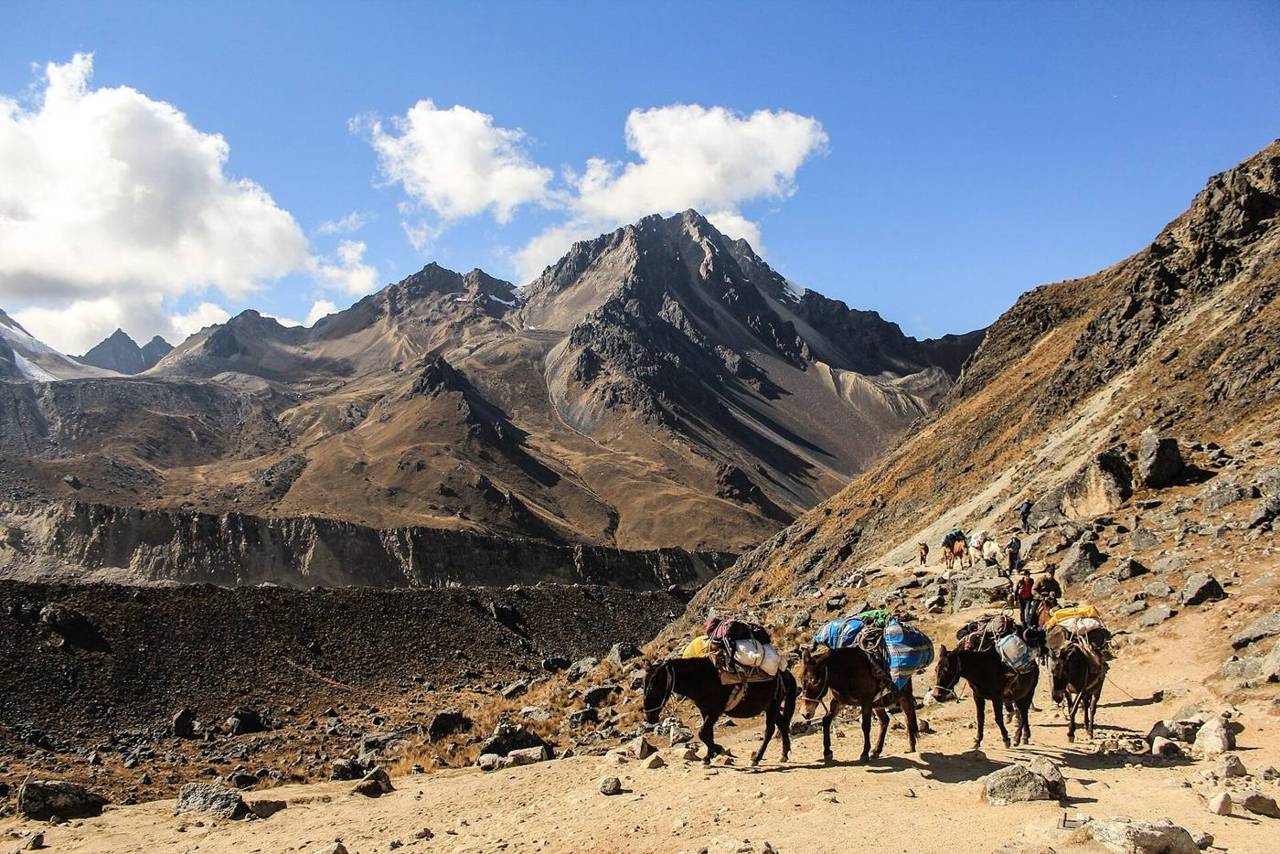
Lares trek and weaving villages
A quiet alternative to the Inca Trail: three days among high lakes, llamas and alpacas and Quechua villages where women weave as they did centuries ago, with the Lares hot springs, then the train from Ollantaytambo and a visit to Machu Picchu.
 5 daysModerate
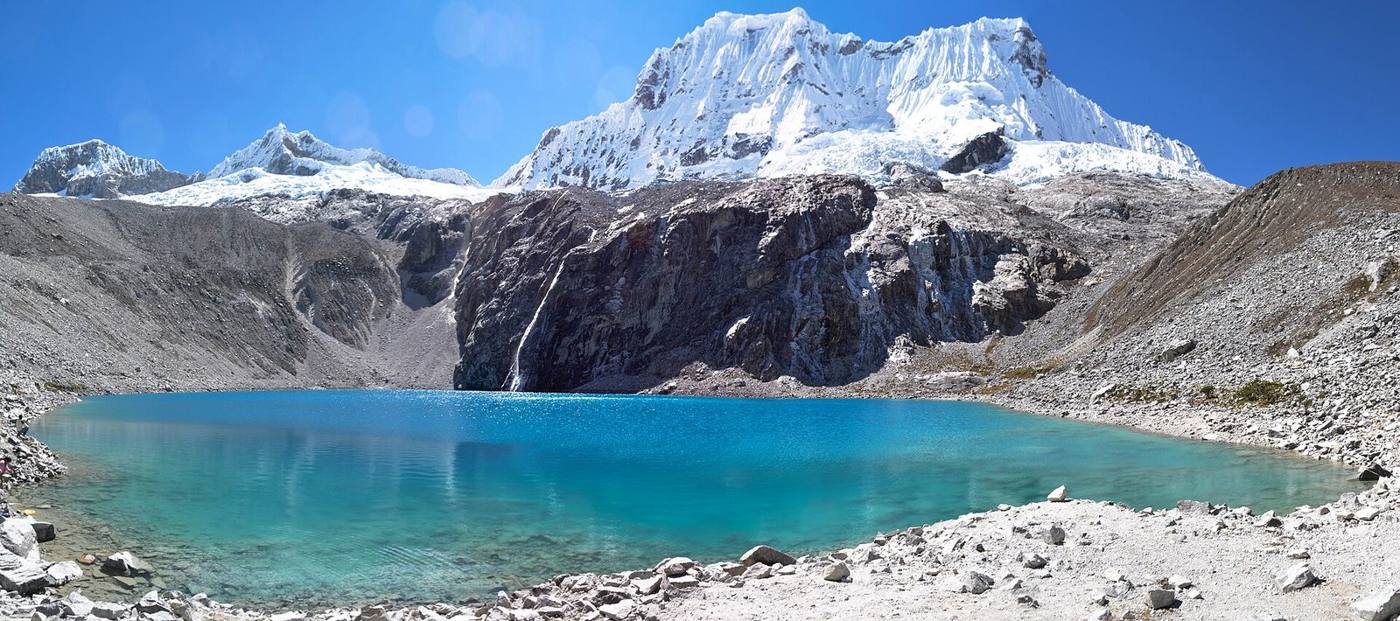
Huaraz without long treks: Laguna 69 and Chavín
The Cordillera Blanca in day trips, for those who do not want to camp: the turquoise Llanganuco lakes and Laguna 69 under the glaciers, the Pastoruri glacier and the Puya raimondii plants, and the temple of Chavín de Huántar with its underground galleries, a UNESCO World Heritage site.
 22 daysChallenging
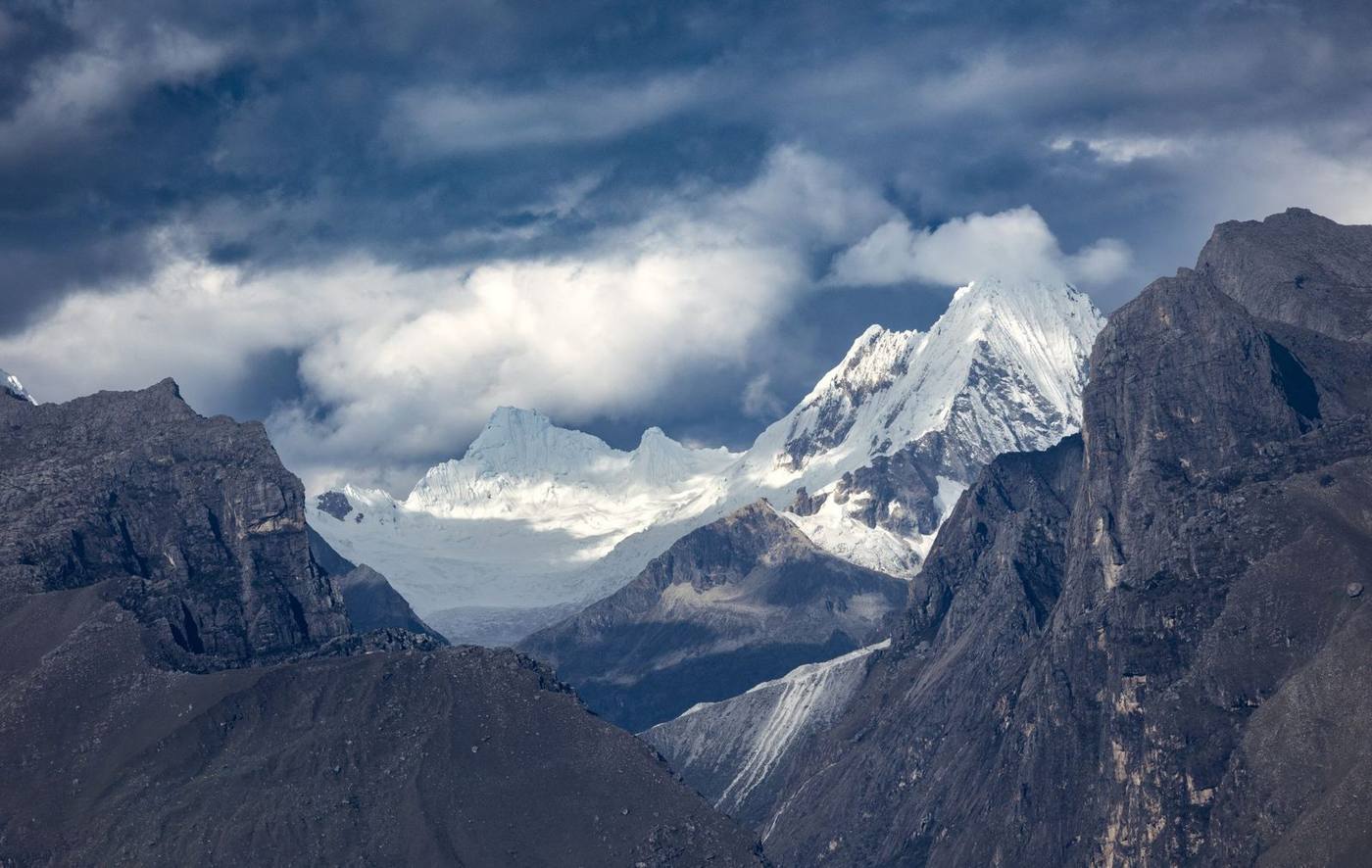
Cordillera Blanca: the Alpamayo circuit and Nevado Pisco
Twelve days under canvas between 4,000 and 4,800 metres beneath the finest peaks of the Andes, with a summit attempt at about 5,750 metres.