Lares trek and weaving villages
A quiet alternative to the Inca Trail: three days among high lakes, llamas and alpacas and Quechua villages where women weave as they did centuries ago, with the Lares hot springs, then the train from Ollantaytambo and a visit to Machu Picchu.
- Cusco
- Lares
- Huacahuasi
- Patacancha
- Ollantaytambo
- Machu Picchu
Day by day
- Day 1
From Cusco to Lares and the hot springs
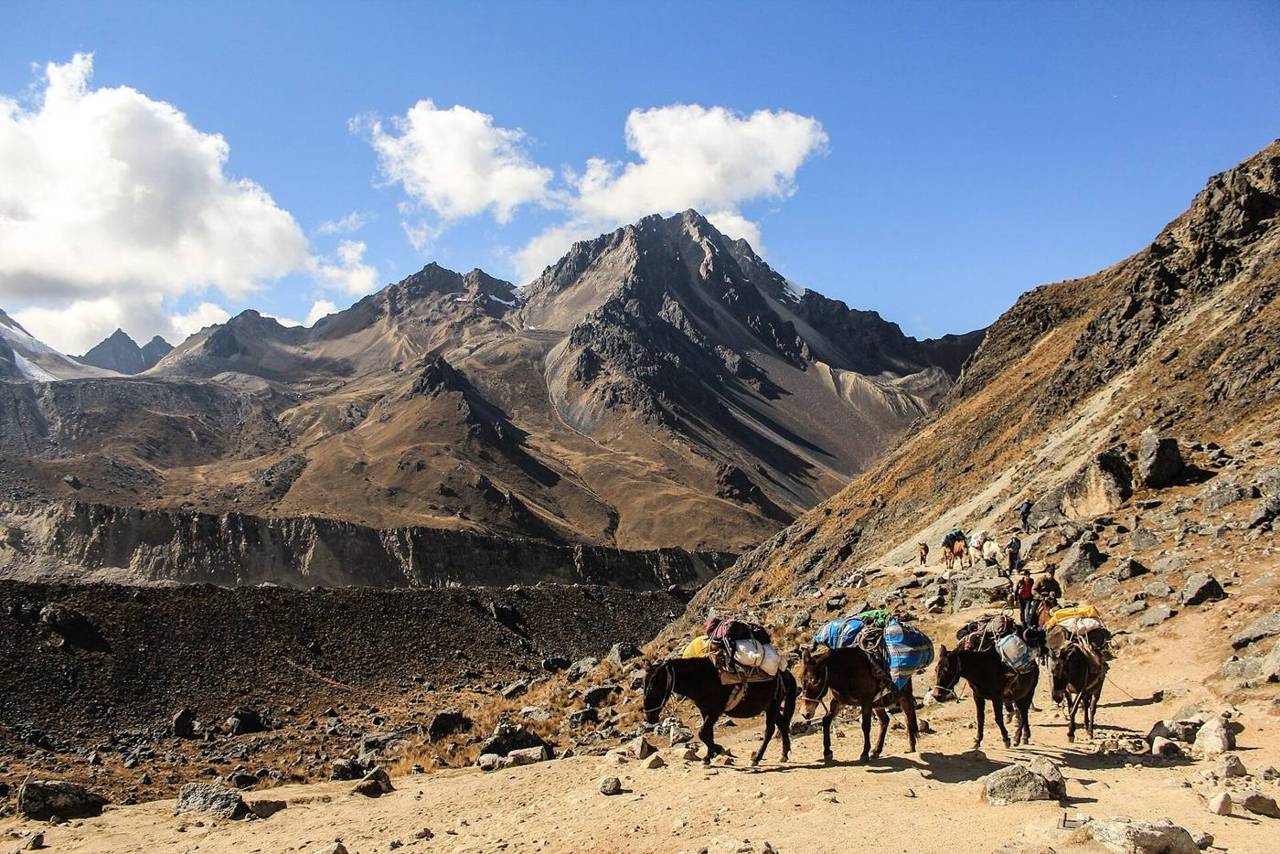
The Lares trek is an alternative to the classic Inca Trail for reaching Machu Picchu. It does not follow Inca roads or lead on foot to the site, but crosses the valleys of the Urubamba range, among snowy mountains, glacial lakes and villages of Quechua herders and weavers who still live as they always have, raising llamas and alpacas and weaving colourful clothes. It is quieter, less crowded and does not require the limited Inca Trail permits. In five days you walk for three days and reach Machu Picchu by train.
In the morning, leave Cusco by minibus heading north, crossing the Inca Sacred Valley and climbing to the Abra de Lares pass, at about 4,400 metres, with views of the glaciers. In about three or four hours you reach the village of Lares, in a green valley at about 3,100 metres.
In the afternoon, relax in the Lares hot springs, pools of natural hot water flowing from the mountain, much loved by local people. After the journey and before the trek, the hot bath helps rest your muscles.
Then visit the village, with its square, church and market, where women sell textiles, potatoes and corn.
In the evening, sleep in a tent at the campsite near the springs or in a simple village guesthouse. Mountain nights are cold, even though the sun is strong by day.
Practical tip: arrive in Cusco at least two or three days before the trek to get used to the altitude. Drink plenty of water, eat lightly and try mate de coca, the traditional infusion.
- Day 2
The pass and the village of Huacahuasi
Early in the morning the walk begins. From Lares the path climbs along a valley, among potato fields, pastures and small houses of stone and straw. You meet children walking to school, women spinning wool as they walk, and shepherds with herds of llamas and alpacas.
The path climbs to a pass above 4,000 metres, with views of the snowy peaks of the range and turquoise glacial lakes. The climb is slow and tiring because of the altitude: you walk slowly, with frequent stops to breathe and look at the scenery.
After the pass the path descends to the village of Huacahuasi, one of the weaving communities of the area. Here families live from farming and herding, and the women weave by hand on traditional looms, making colourful textiles with ancient designs, using wool from their alpacas and natural dyes from plants, roots and insects.
In the afternoon, at the camp near the village, visit a family of weavers, watch how wool is spun, dyed and woven and, if you like, buy a textile directly from the person who made it. The day's walk takes about six or seven hours.
In the evening, at camp, the expedition team, with cooks and muleteers, prepares a hot dinner.
Practical tip: bring small useful gifts for the village schools, such as notebooks and pencils, not sweets. Always ask permission before photographing people.
- Day 3
The lakes and the descent to Patacancha and Ollantaytambo
In the morning, from Huacahuasi, the path climbs to the highest pass of the trek, at about 4,400 metres, among rocks and high meadows, with views of the glaciers and small blue and green glacial lakes reflecting the mountains. It is the most spectacular point of the walk. On the rocks you sometimes see viscachas, rodents that look like rabbits, and condors in the sky.
After the pass the path descends a valley with lakes and pastures to the village of Patacancha, another weaving community, at about 3,800 metres. The trek ends here. The day is about six or seven hours of walking.
From Patacancha you take the minibus down the valley to Ollantaytambo, in the Sacred Valley, in about an hour. Ollantaytambo is a still-inhabited Inca village, with streets and water channels built by the Incas and a great fortress with terraces on the hill.
In the afternoon, if you still have energy, climb the fortress terraces, with the temple of the sun and the huge blocks of pink stone brought from the mountain opposite.
In the evening, sleep in Ollantaytambo.
Practical tip: the highest pass is above 4,400 metres. If you have a strong headache, nausea or shortness of breath even at rest, tell the guide at once and go down: these are signs of altitude sickness.
- Day 4
The train to Aguas Calientes and Machu Picchu
Early in the morning, take the train from Ollantaytambo to Aguas Calientes, the town at the foot of Machu Picchu, in about an hour and a half. The train follows the Urubamba river through an ever narrower valley, where the dry mountains give way to cloud forest.
From Aguas Calientes, take the bus up the hairpin road to the entrance of Machu Picchu, in about half an hour. Machu Picchu is the Inca city built in the mid-fifteenth century on a saddle between two mountains above the river valley, and has been a UNESCO World Heritage Site since 1983. It was abandoned soon after the Spanish arrived and remained unknown to the world until 1911.
The visit is made with a guide, following one of the circuits set by the Ministry of Culture, with a timed ticket. You see the farming terraces, the Temple of the Sun, the Intihuatana stone, the main square, the Temple of the Three Windows, the houses and storehouses, with the mountains all around and Huayna Picchu towering over the city. The ticket to climb Huayna Picchu or Machu Picchu mountain must be bought separately, well in advance.
In the afternoon, go down to Aguas Calientes and rest in the town's hot springs.
In the evening, sleep in Aguas Calientes or take the train back to Ollantaytambo and Cusco.
Practical tip: Machu Picchu tickets are limited in number, timed and sold by circuit. Buy them well ahead only on the official Ministry of Culture website, and bring your passport.
- Day 5
Back to Cusco
On your last morning, if you slept in Aguas Calientes, you can go back to Machu Picchu for a second visit at dawn, with a new ticket, when the mist rises from the valley and the ruins slowly light up. Or take a walk along the river to the site museum, with objects found in the excavations and an explanation of how the city was built.
Then take the train to Ollantaytambo and from there the minibus to Cusco, or the train to the station near Cusco. The journey takes about three or four hours in total.
Once in Cusco, in the evening, rest and stroll around the Plaza de Armas, with the illuminated cathedral and the Church of the Society of Jesus, and through the San Blas district, with its steep lanes and craft workshops.
If you have a few more days, Cusco offers a great deal: the Qorikancha, the Inca temple of the sun on which the Spanish built a convent, the fortress of Sacsayhuamán, with its giant stone blocks, and the Sacred Valley, with Pisac, Moray and the Maras salt pans.
This trek combines well with other parts of Peru: Lima, Lake Titicaca, the Colca canyon and Arequipa.
Practical tip: Italian citizens can enter Peru without a visa for tourism for up to 183 days. The United States keeps Peru at level 2 for caution and advises against the VRAEM, the Colombian border area in Loreto and some central areas altogether: this itinerary does not pass through them.
No Inca Trail permits are needed, but Machu Picchu tickets, timed and by circuit, must be bought in good time on the Ministry of Culture's official website. Passes above 4,400 metres: arrive acclimatised. Bring small useful gifts for schools, not sweets. The United States keeps Peru at level 2 (caution) and advises against all travel to the VRAEM, the Colombian border area of Loreto and the Abancay, Ayacucho, Huancavelica and Huancayo areas: this itinerary does not go there. Italians need no tourist visa for up to 90 days.
Before you go
- Documents and visa
- Passport with at least six months' validity on arrival; no visa is needed for tourism, up to a maximum of 183 days.
- Health and vaccines
- No compulsory vaccines for Lima and the Andes; yellow fever vaccination is recommended for the Amazon. Beware of altitude sickness in Cusco and the Andes. Emergencies: 105 police, 116 fire.
- Money and payments
- Peruvian sol. Cards work in cities and hotels; in markets, villages and for tips you need cash.
- Power sockets
- Types A and C, 220 volts: you may need an adapter for flat-pin sockets.
- Time zone
- UTC-5 all year: Peru does not use daylight saving time.
- Safety
- The United States rates Peru level 2. Avoid the Apurímac, Ene and Mantaro valley (VRAEM), the Colombian border in Loreto and some rural areas named by governments. Official advice: GOV.UK.
Information checked in November 2026 for Italian and EU citizens. Rules change: always check before you travel.
Variations
In 3 days: Lares with the hot springs and a night in Huacahuasi, then Ollantaytambo.
In 10 days: add Cusco, the Sacred Valley with Pisac, Moray and Maras, and Lake Titicaca.
Frequently asked questions
When is the best time to go?
The dry season, from May to September, with clear skies but very cold nights. From December to March there is heavy rain and the paths are muddy.
Do I need permits as for the Inca Trail?
No: the Lares trek does not need the limited Inca Trail permits. But you do need Machu Picchu tickets, timed and by circuit, bought in good time.
How hard is it?
It is a moderate trek, with days of six or seven hours and passes above 4,400 metres. The main difficulty is altitude: arrive in Cusco acclimatised.
Indicative itinerary written by World Atlas. Before booking, check timetables, seasonal openings, documents and safety.
 5 daysModerate
Huaraz without long treks: Laguna 69 and Chavín
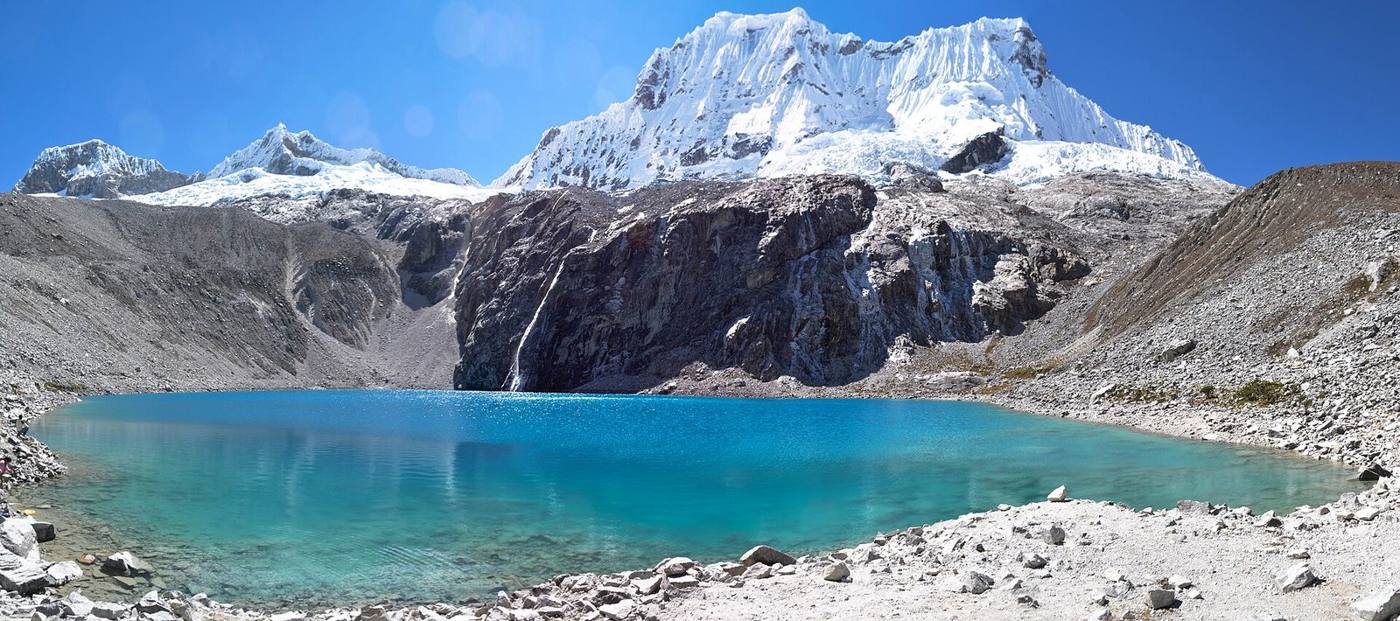
The Cordillera Blanca in day trips, for those who do not want to camp: the turquoise Llanganuco lakes and Laguna 69 under the glaciers, the Pastoruri glacier and the Puya raimondii plants, and the temple of Chavín de Huántar with its underground galleries, a UNESCO World Heritage site.
 22 daysChallenging
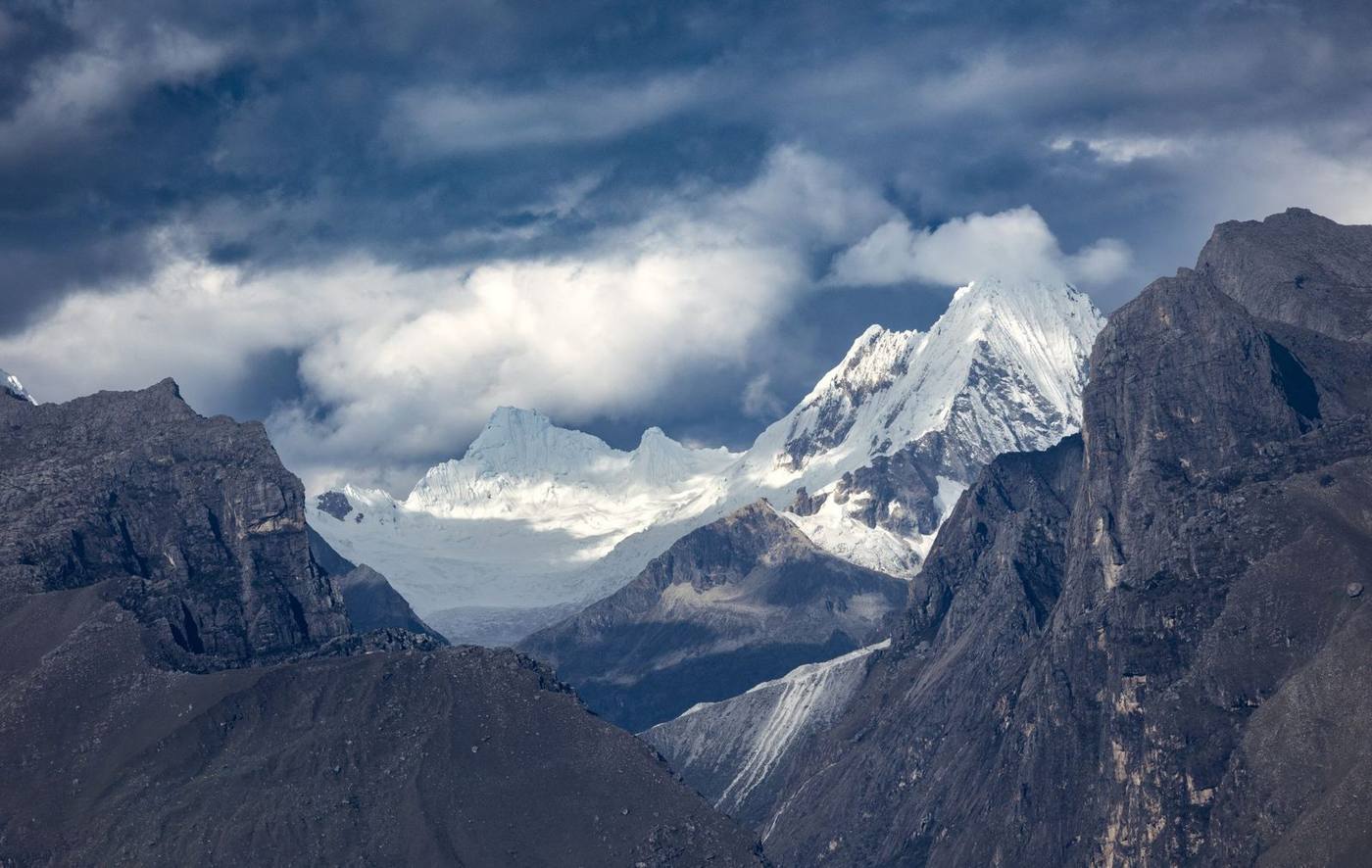
Cordillera Blanca: the Alpamayo circuit and Nevado Pisco
Twelve days under canvas between 4,000 and 4,800 metres beneath the finest peaks of the Andes, with a summit attempt at about 5,750 metres.
 23 daysChallenging
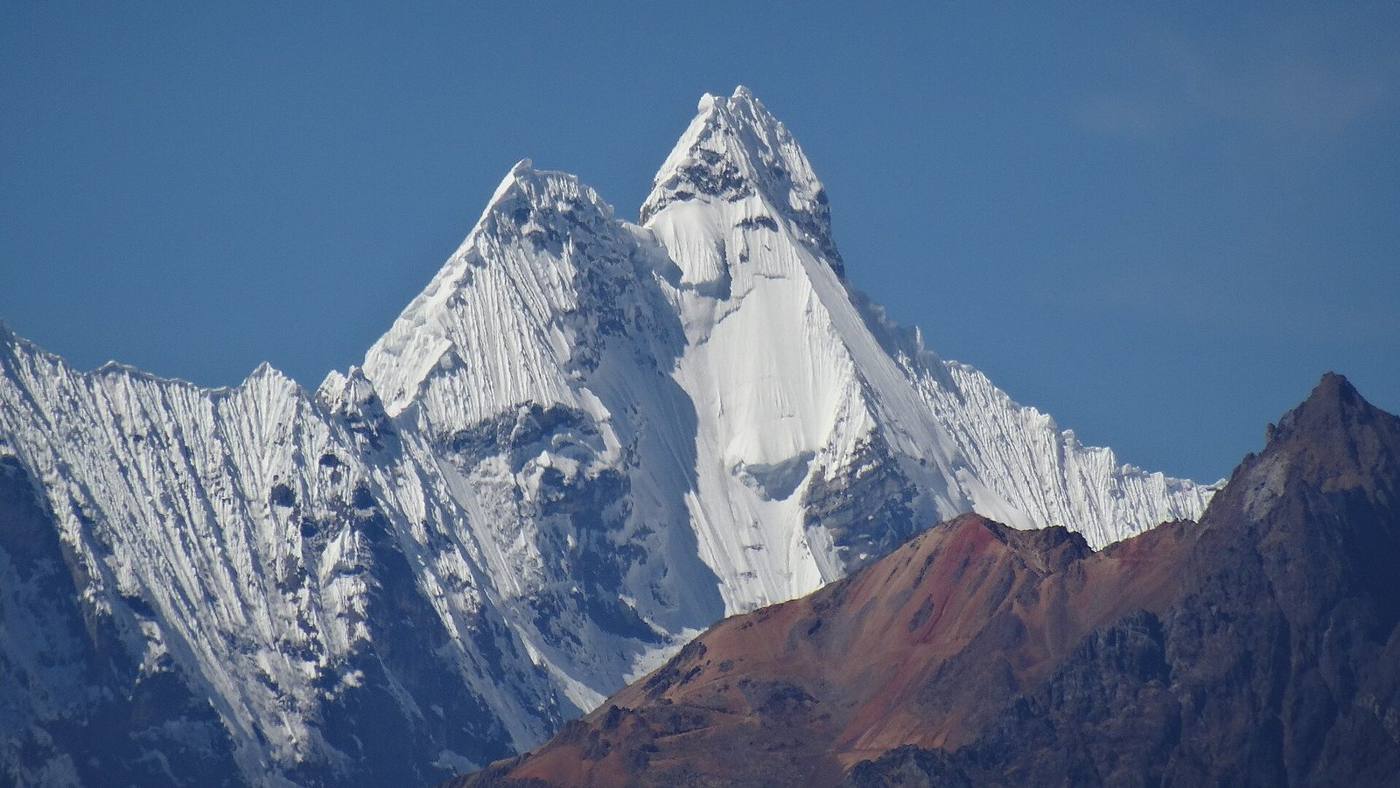
The Cordillera Huayhuash circuit
The full loop of a compact, wild range, with eight passes between 4,600 and 5,000 metres and a glacial lake at almost every camp.