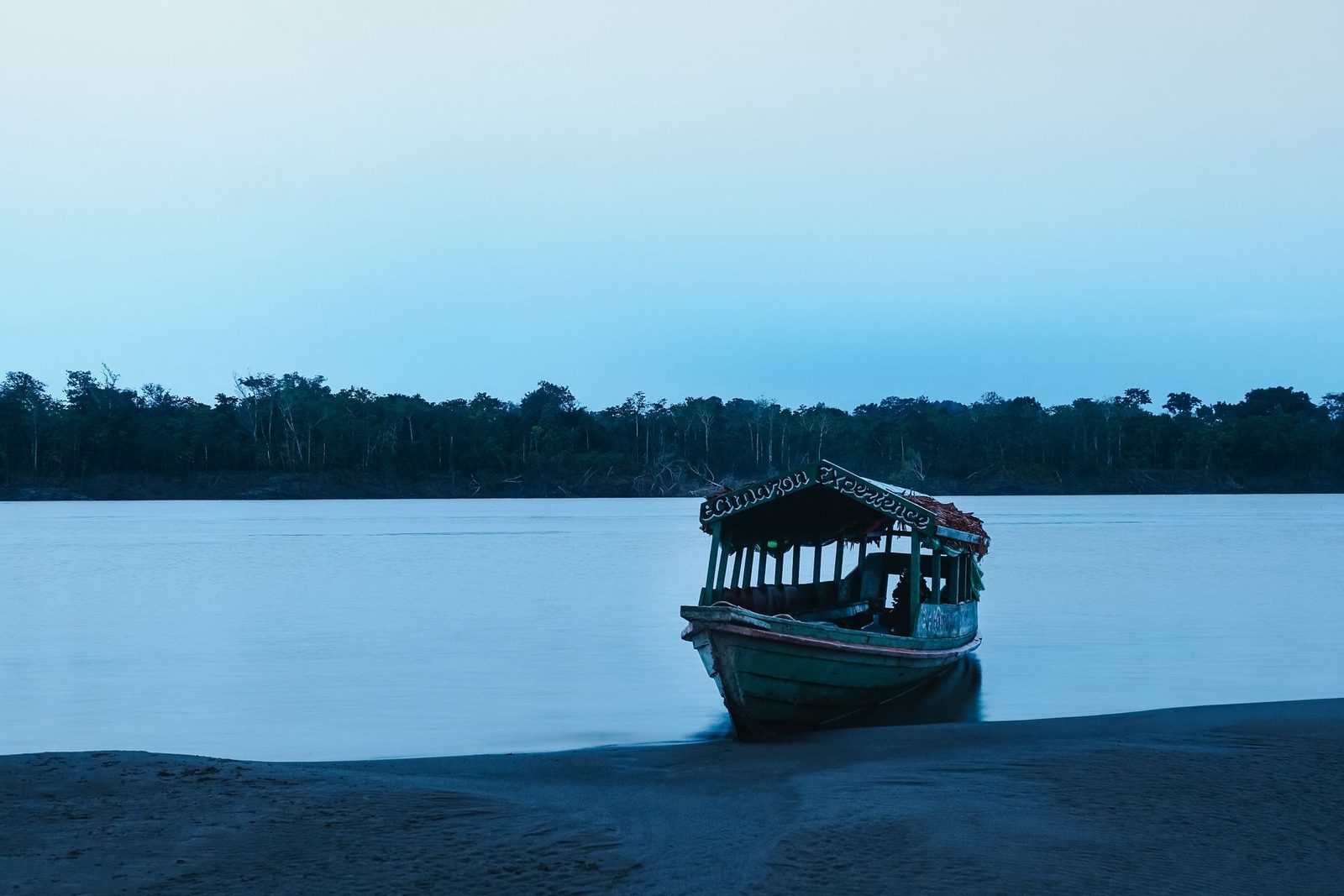
By boat from the Napo to Iquitos: the Amazon between Ecuador and Peru
Three weeks on the river from the Yasuní forest to the Amazon itself, with stays in Huaorani, Secoya and Matsés communities.
- Quito
- Coca
- Rio Shiripuno
- Bameno
- Nueva Rocafuerte
- Pantoja
- Santa Clotilde
- Iquitos
- Jenaro Herrera
- Comunità Mayoruna
Day by day
- Day 1
Arrival in Quito
This twenty-three-day trip follows the water: it starts in the Andes of Ecuador, drops into the Yasuní forest, spends several days with a Huaorani community and then follows the Napo river to the Amazon and Iquitos, in Peru. It is a slow expedition, with boats, villages and plans that change with the level of the water.
Before you go: Italian citizens can enter Ecuador without a visa for tourism for up to 90 days, with a passport valid for at least six months from arrival, and Peru without a visa for tourism, with a passport valid for at least six months; the length of stay, up to 183 days, is decided at the border. Other nationalities should check their own rules. Some areas on this trip are close to borders or places where the situation changes often: check your government's travel advice before booking and again before you leave. The river crossing between Ecuador and Peru can be closed: check before you leave and, if necessary, take a flight. The yellow fever vaccine is recommended for the Amazon; ask your doctor about malaria prevention.
You land in Quito, at about 2,850 metres. The airport is far from the city, about an hour by road: book your transfer before you arrive.
Do nothing tiring today. Eat light, drink plenty and walk slowly: you feel the altitude in the first few days, with shortness of breath and headaches.
Sleep in Quito, for three nights.
Practical tip: in the city use taxis booked through an app or by your accommodation, and do not hail them in the street, especially in the evening.
- Day 2
Colonial Quito
Spend the morning in the historic centre of Quito, one of the best preserved in South America and among the first places added by UNESCO to the World Heritage list.
Start at Plaza Grande, with the cathedral, the government palace and the archbishop's palace around a garden full of local people. From here climb to the church of the Compañía de Jesús, its interior covered in gilded wood, and then to the convent of San Francisco, with its large stone square. Check prices and times.
The streets are steep and the altitude makes every climb slower: stop often, step into the colonial courtyards and look at the wooden balconies.
For lunch try locro de papa, potato soup with cheese and avocado, or a plate of hornado, the roast pork of the Andes.
In the afternoon, if the sky is clear, go up the Panecillo hill to see the city spread out in the valley between the volcanoes. Go by taxi, not on foot.
If you have time left, visit the Centro Cultural Metropolitano or walk along Calle La Ronda, one of the oldest streets in the city, with low houses, balconies full of flowers and small craft workshops.
Go back early in the evening: tomorrow you prepare for the hardest part of the trip.
Sleep in Quito.
Practical tip: in the historic centre keep your phone in your pocket and your backpack in front of you, especially in crowded squares.
- Day 3
Getting ready in Quito
Today is a day of preparation, which also helps you get used to the altitude before you go down into the forest.
Check your kit for the coming weeks: tall rubber boots, which can often be hired locally, a light rain jacket, quick-drying long-sleeved clothes, a head torch with spare batteries, a dry bag for documents and phone, and a strong repellent. Also bring your personal medicines for the whole trip: there are no pharmacies in the forest.
Withdraw the cash you need. In Ecuador the currency is the US dollar, and in the communities you pay only in cash, in small notes. In Peru you will use the sol: you will change money in Iquitos.
If you have time, visit one of the city's museums or take the TelefériQo cable car up the slopes of the Pichincha volcano, to about 4,000 metres, but only if you feel well. Check prices and times.
Rest in the afternoon too: the coming weeks will be tiring, with long days in boats, humid heat and nights in huts. Arriving in the forest already tired makes everything harder.
In the evening go over the plan with whoever organises the boat section: dates, expected water levels and alternative plans.
Sleep in Quito.
Practical tip: take photos of your passport and vaccination certificate and save them offline on your phone as well.
- Day 4
Down to Coca
Today you leave the Andes and go down to the Ecuadorian Amazon. The easiest way is the short flight from Quito to Coca, officially called Puerto Francisco de Orellana, which in less than an hour takes you from 2,850 metres to the forest. The alternative is the road, much longer, which winds down past waterfalls and cloud forest: travel only by day.
As soon as you step off the plane you feel the humid heat and the smell of the vegetation. Coca is a frontier town born with oil, where the Coca and Napo rivers meet. It is not pretty, but it is the gateway to Yasuní and the place where the boats leave downstream.
In the afternoon walk along the riverfront, the malecón, and watch the motor canoes loading people, jerrycans and boxes for the villages.
Meet the guide who will be with you over the next few days and check the boots, life jackets and drinking water together.
Before dinner go into a household shop and buy a couple of extra strong plastic bags: in the forest they are useful for keeping wet clothes apart from dry ones.
For dinner try maito, river fish wrapped in leaves and cooked over embers.
Sleep in Coca.
Practical tip: in the evening stay in the central, well-lit areas and go back by taxi, without walking around.
- Day 5
On the Shiripuno river
Today the real forest begins. From Coca you drive along the Vía Auca, the road opened by the oil companies, to the point where it crosses the Shiripuno river. Here you get into a long, narrow motor canoe, together with the guide and the Huaorani boatmen.
The river is narrow and dark, full of bends, with trees leaning over the water. Depending on the level, the trip can take many hours, and sometimes you have to get out and push the canoe over a log or a sandbank.
Watch the banks: toucans and parrots flying, herons, monkeys in the treetops, sometimes a caiman lying still in the mud. The guide points out the animals long before you see them.
In the evening you stop at a simple camp on the bank, with tents or open huts and mosquito nets. Darkness comes early and the forest fills with the sounds of frogs and insects.
Before going to sleep check your feet and ankles: wet boots can cause blisters. Dry your skin well, change your socks and hang your boots upside down, so that no insect gets into them during the night.
Sleep in a camp by the river, under a mosquito net.
Practical tip: in the canoe always wear your life jacket and keep your backpack closed inside the dry bag.
- Day 6
Arriving in Bameno
Continue along the river to Bameno, a Huaorani community in the Yasuní area, in the southern part of Huaorani territory. The Huaorani are a forest people who had their first lasting contact with the outside world only in the twentieth century.
Near their territory lies the Tagaeri-Taromenane Intangible Zone, where peoples in voluntary isolation live: entry is forbidden. Before booking, get written confirmation that the route stays outside the intangible zone and its buffer zone. Visit the community only at its invitation and with an organisation recognised by the community itself.
On arrival follow the guide: there is usually a moment of greeting with the families. Listen, smile, do not hand out gifts or sweets to children and always ask before taking photos.
Settle into the guest huts, raised off the ground, and take a first walk around the village: the houses, the cassava and banana gardens, the canoes on the bank.
Remember that here you are a guest in someone else's home: follow the community's rhythm, accept the food you are offered and do not wander away from the village alone, not even for a few minutes.
At sunset go down to the river with the guide and watch the bats come out over the water.
Sleep in Bameno, for four nights.
Practical tip: ask the guide which rules apply in the community, for example where you may bathe and where you may not.
- Day 7
Forest walks with the Huaorani
Today you walk in the forest with a Huaorani guide. For them the forest is larder, pharmacy and home all at once, and you understand this at every step.
The guide shows you the plants used to treat wounds and fevers, the vines you can drink from when there is no water, the giant trees with buttress roots and the animal tracks in the mud: tapirs, peccaries, sometimes a jaguar.
The path is muddy, with roots, logs to climb over and streams to wade. Walk slowly, watch where you put your hands and do not touch trees or vines without asking: some plants have thorns and some ants sting hard.
In the middle of the day you stop to eat fruit and boiled cassava, then walk back towards the village.
In the afternoon, if the villagers agree, try making a small spear or weaving a palm fibre: these are skills learnt in childhood.
When you get back, wash your boots in the river only where you are told to, and check your skin: ticks and small insects often attach themselves behind the knees and around the waist.
In the evening, if the sky is clear, look at the stars from the river: there is no artificial light here for tens of kilometres.
Sleep in Bameno.
Practical tip: bring a water bottle with a filter or purification tablets, and fill it only where the guide tells you.
- Day 8
Fishing and life on the river
Today the day follows the river. Early in the morning you go out by canoe with the villagers, when the water is calm and the animals are most active.
Watch how they fish: with nets, with simple lines or with traditional methods that depend on the season and the level of the water. If they invite you, have a go yourself. The fish are taken back to the village and shared between the families.
Along the banks look for otters, kingfishers and hoatzins, strange crested birds that live near the water and make a loud noise when you get close.
Back in the village, help prepare lunch: fish cooked in leaves over the embers, and cassava. Taste the cassava chicha if you are offered it, at least a sip: refusing completely can seem rude.
In the afternoon it is very hot: rest in the shade or in a hammock and write your travel diary. If the river is low, the sandy beaches become the place where families spend the afternoon and where birds come to rest. Sit and watch without hurrying.
In the evening the guide may organise a short night walk with a torch, to see spiders, colourful frogs and stick insects.
Sleep in Bameno.
Practical tip: do not swim in the river unless the guide says so: in the Amazon the water can hide currents and animals.
- Day 9
Daily life in the village
Today you stay in the village and live an ordinary day with the families. It is the simplest day and often the one you will remember most.
In the morning go with the women to the gardens, the chacras, where cassava, bananas and forest fruit are grown. The work is done by hand, with a machete, and changes with the seasons.
Then listen to the elders' stories, with the guide translating: life before contact, migrations through the forest, the changes brought by roads and oil. Ask questions respectfully and accept silences too.
In the afternoon the children play in the river and the men prepare the canoes. If you like, learn a few words of Wao Tededo, the Huaorani language: a greeting said well opens many doors.
Days in the community are slow, and that is fine. You do not need to fill every hour: sometimes the most useful thing is to sit with the families and let them lead the conversation.
In the evening there is often a farewell moment, with traditional songs. Thank the community: the fee you pay for the visit directly supports the families and the protection of their territory.
Pack your bag: tomorrow you leave early.
Sleep in Bameno.
Practical tip: if you want to leave something, ask the guide what the community really needs, instead of bringing random gifts.
- Day 10
Back to Coca
Today you leave Bameno and head back to Coca. It is a long journey: first by canoe up the Shiripuno, then by car along the Vía Auca to the town.
Going upriver is slower than coming down, and the day depends a lot on the level of the water. Use it to look at the forest again: after a few days with the Huaorani you will notice details you missed on the way in, such as marks on trees or movements among the leaves.
Along the road you also see the other face of the Ecuadorian Amazon: pipelines, oil wells, fields where the forest used to be. The contrast helps you understand why the communities defend their territory so strongly.
In Coca you return to comfort: a hot shower, a bed, your phone. Do your washing, charge everything and check for bites that need treating.
If you feel very tired, or have a fever or pain in the days after the forest, tell the guide at once: there are doctors in Coca, far fewer downstream.
In the evening go over the plan for the next days on the Napo with the guide: boat times, documents for the border and alternatives if the crossing between Ecuador and Peru is not open.
Sleep in Coca.
Practical tip: buy your stock of cash, water and snacks for the Napo section in Coca, because there is very little further downstream.
- Day 11
Down the Napo to Nueva Rocafuerte
Today you go down the Napo, one of the great tributaries of the Amazon, from Coca to Nueva Rocafuerte, the last Ecuadorian town before Peru. Public motor boats cover this stretch in many hours, with times that change: check them the day before in Coca.
The river here is wide and the colour of milky coffee, with sand islands and forested banks. The boat stops in the villages to load and unload people, bananas, chickens and goods: this is the real public transport of the Amazon.
Along the way you pass Yasuní National Park, a UNESCO biosphere reserve and one of the places with the most animal and plant species on the planet. Watch the birds on the banks and the logs drifting down with the current.
Bring water, food, sun cream and a hat: the boat has a roof, but the sun reflected off the water is strong. Keep your rain jacket to hand, because downpours arrive suddenly.
During the stops get off only if the boatman says there is time: the boat leaves again quickly and does not wait for anyone who wanders off.
Nueva Rocafuerte is a small, quiet border town, with a few streets and a wide view over the river.
Sleep in Nueva Rocafuerte, for two nights.
Practical tip: sit in one of the front rows of the boat, where there is less spray and engine noise.
- Day 12
The Atun Cocha lagoon
Today you explore the forest around Nueva Rocafuerte. With a local guide you take a canoe up a tributary of the Napo to the Atun Cocha lagoon, in Yasuní territory, a black lake surrounded by flooded forest.
The dark water reflects the trees like a mirror. Paddling slowly you can see caimans, water birds, monkeys and, if you are lucky, giant otters, which live in groups and make loud calls when they feel disturbed.
A short path leads to an observation tower or a walkway in the forest, depending on conditions in the area. From here you see the forest from above: a green sea that seems never to end.
Have a packed lunch on the bank or in the canoe, then wait for the afternoon, when the animals become active again.
If the weather is bad or the lagoon is hard to reach, the guide may suggest another outing: accept, because his knowledge of the river is worth more than the written plan.
Back in Nueva Rocafuerte, go to the Ecuadorian immigration office to ask about the exit stamp and the times of the boat to Peru.
In the evening get ready for the border: passport to hand, vaccination certificate, cash in dollars and, if you can change some, a few soles.
Sleep in Nueva Rocafuerte.
Practical tip: in the canoe do not lean out and do not put your hands in the water, not even to touch a plant.
- Day 13
The Pantoja border and the pink dolphins
Today you cross the border on the river. After the exit stamp in Nueva Rocafuerte, a boat takes you downstream to Pantoja, the first Peruvian village, where you report to the immigration office for entry into Peru. The rules and times of this crossing can change: check before you leave and, if necessary, take a flight.
Do not expect a big border post: it is a small office near the bank, with a soldier and an official. Have your passport, vaccination certificate and your Peru travel booking ready.
Once you have your stamp, go out by canoe on the river. Here the Napo is wide and slow, and it is the realm of the pink river dolphins. They appear suddenly, breathe with a puff and dive again. Smaller grey dolphins often swim near them too.
Do not chase them with the boat and ask the boatman to turn off the engine: they come close on their own, if they are relaxed.
Remember that from here you are in Peru: the currency becomes the sol, and the time is the same as in mainland Ecuador. In small villages dollars are often accepted too, but at a poor rate.
In the evening Pantoja is silent: a few lights, wooden houses and the music of a radio or two.
Sleep in Pantoja.
Practical tip: electricity is limited in Pantoja, so charge everything whenever you can and bring a power bank.
- Day 14
The Secoya of the Napo
Today you visit a Secoya community on the Napo, a little downstream from Pantoja. The Secoya are a people who live between Ecuador and Peru, along the rivers of this border area, and keep their own language and a strong tradition linked to the forest and the river.
The visit is arranged in advance, through the community or someone who knows the families: arriving without warning is not right. Pay the agreed fee, which stays with the community.
The villagers may show you the communal house, canoes carved from a single trunk, and work with forest fibres and seeds. If they sell handmade objects, buy them directly from the people who made them.
Listen to how life has changed here: fishing, hunting, school, links with distant towns that can be reached only by boat.
Before saying goodbye, ask whether you can leave something useful for the school, such as exercise books or pencils, but only if the community agrees and through the teacher.
In the afternoon continue downstream and watch the forest become lower and flooded, a sign that you are getting closer to the Amazon.
Sleep in the community or in a simple house by the river, depending on the plan.
Practical tip: carry a small notebook with greetings in the local language, written down for you by the guide.
- Day 15
Santa Clotilde
Today you continue down the Napo to Santa Clotilde, one of the larger villages on this stretch of the river, with a mission and a small hospital that serves the surrounding villages.
The boat trip takes several hours. The river widens further, the islands grow bigger and along the banks you see houses on stilts, banana fields and canoes moored under the trees.
In Santa Clotilde get off and stretch your legs. Walk along the dirt streets, look at the port with the boats arriving from the villages and try fried fish with plantain, the everyday dish.
It is also the right place to stock up: water, fruit, batteries and some cash in soles if you can find it.
If you feel tired, this is a good place to rest: choose somewhere with a fan, sleep for a few hours in the afternoon and drink plenty of water.
In the late afternoon ask about the night boat to Mazán, which leaves tomorrow: ask the time more than once, because it changes often, and book your place.
In the evening, if there is electricity, children watch television in open houses and the older ones play football until dark.
Sleep in Santa Clotilde.
Practical tip: buy a hammock and two ropes, you will need them on the night boat and they cost little.
- Day 16
The night boat to Iquitos
Today you do the longest stretch by slow boat, from Santa Clotilde to Mazán, where the Napo gets close to the Amazon. You travel by night, like the local people.
Board early and hang your hammock on the deck, next to the others. Keep your backpack close, with a chain or a padlock, and the small bag with your documents always on you.
The boat moves slowly downstream in the dark, with the noise of the engine and the low voices of the passengers. At every stop torches come on and someone gets off with their boxes. It is uncomfortable, but it is also one of the most genuine moments of the trip.
If you would rather avoid the night on the boat, ask in Santa Clotilde whether there are fast boats by day: they cost more, but the journey is much shorter.
At dawn you reach Mazán. From here it is a short trip to Iquitos: the most common plan combines a brief stretch by land and a boat on the Amazon. Follow your guide or ask at the port.
Iquitos is the largest city in the world with no road linking it to the rest of the country: you can reach it only by plane or boat. Settle in, have a shower and sleep for a few hours.
Sleep in Iquitos.
Practical tip: on the boat bring earplugs and a light sheet, because nights on the river are cool.
- Day 17
Up the Ucayali to Jenaro Herrera
Today you set off south again, on the Ucayali, one of the two great rivers that form the Amazon. Usually you drive from Iquitos to Nauta, on the only long road in the area, and then take a boat on the river to Jenaro Herrera.
Near Nauta the Ucayali and the Marañón meet: from here on the river takes the name of the Amazon. If the boatman agrees, stop to look at the point where they join.
Jenaro Herrera is a quiet village on the bank of the Ucayali, surrounded by forest and lakes. It is home to a research station on the Amazon forest, and around the village there are trails and lagoons that are easy to reach.
In the afternoon walk with a local guide in the nearby forest: fruit trees, palms, colourful birds and, towards evening, monkeys moving through the treetops.
Remember that the river changes with every season: some lagoons can be reached only at high water, others only on foot when the water drops. Trust what the local guides tell you.
At sunset look at the river from the bank: boats coming home, fishermen with their nets and the sky turning orange over the water.
Sleep in Jenaro Herrera.
Practical tip: phone signal is weak in this area, so let people at home know before you leave Iquitos.
- Day 18
By slow boat to the Matsés
Today you leave by slow boat for the Matsés communities, also called Mayoruna, a people who live between Peru and Brazil, in the forests along the Gálvez river and its tributaries.
The journey is long and the plan depends on the level of the water: at high water you get further by boat, at low water you walk more in the forest. Accept the changes: they are part of the trip.
The Matsés are known for their facial tattoos and for the thin fibre whiskers that some older people still wear near the mouth. Today many traditions live alongside school, phones and trade with the river towns.
Along the way listen to the guide telling the story of the Matsés and the long defence of their territory. Understanding where they come from makes the meeting more respectful and richer.
The visit is organised only with the agreement of the community and with a guide whom the families know and accept. Arrive respectfully, introduce yourself and follow the guide's directions.
In the evening you settle into a simple house, with a mosquito net. Dinner is the family's own: fish, cassava, bananas.
Sleep in the community, for two nights.
Practical tip: do not photograph people without asking, and accept a no without insisting.
- Day 19
A day with the Matsés
Today you spend the day in the Matsés community. It starts early, when the families wake with the light and the cool of the morning.
If you are invited, go with the men into the forest: the Matsés are skilled hunters and know every sign left by animals. The women may show you how cassava is prepared, how bags are woven from palm fibre and how fruit is gathered.
Listen to their knowledge of medicinal plants, which is very wide and passed on by word of mouth. Some traditional remedies are used only by people of the community: do not ask to try them.
In the afternoon, in the hottest hours, rest in a hammock and watch village life: children playing, canoes, animals between the houses.
If the community organises a football match in the afternoon, join in: it is the easiest way to break the ice, even without a shared language.
In the evening, if the moment is right, the community may tell stories or sing. Thank them and leave the agreed fee with whoever represents the community, not with individuals.
Before going to sleep pack your bag: tomorrow you head back to Iquitos and you leave early.
Sleep in the community.
Practical tip: always keep repellent in your pocket, even indoors: mosquitoes increase a lot at sunset.
- Day 20
Back to Iquitos via Nauta
Today you leave the Matsés and return to Iquitos. The journey is long: first a boat to the main river, then a fast boat to Nauta and finally the road to Iquitos.
The fast boat is much quicker than the slow boat, but it is noisy and the spray soaks you: keep everything in the dry bag and your life jacket fastened. On the way you see the banks of the Ucayali again and the point where the Amazon begins.
In Nauta make a short stop at the square and the port, then continue by car towards Iquitos, past fields, villages and small lagoons.
Once in the city, enjoy the comforts: a long shower, clean clothes, a restaurant meal. Have your clothes washed at a laundry: after days of mud, they will need it.
In the evening take a walk along the Iquitos riverfront, the malecón, with houses from the rubber era decorated with tiles brought from Europe.
If you still have energy, go past the Casa de Fierro, the iron building on the Plaza de Armas linked to the rubber era, and look at the other historic houses around the square.
Sleep in Iquitos, for two nights.
Practical tip: in Iquitos get around by motocarro, the small motor tricycles, but agree the price before you get in.
- Day 21
Belén market
Today is your last day in the Amazon. Early in the morning go to Belén market, the biggest and liveliest in Iquitos, in the district that runs down to the river.
Among the stalls you find everything the forest produces: fruit you have never seen, such as camu camu and aguaje, huge fish like paiche, palm grubs, medicinal herbs, bark and bottles of root liqueurs. It is noisy, crowded and full of strong smells.
The market is also a place for theft: bring only the money you need, keep your phone in your pocket and leave jewellery and original documents behind. Better still, go with a local guide.
Below the market lies the lower part of Belén, with houses on stilts and floating houses that rise and fall with the river. Visit it only with a guide, by canoe.
In the afternoon visit the historic centre of Iquitos and the Plaza de Armas, with houses built during the rubber boom at the end of the nineteenth century.
In the evening taste tacacho con cecina, mashed plantain with smoked meat, and a forest fruit juice.
Sleep in Iquitos.
Practical tip: do not buy animals, skins, feathers or products of protected species, even if they are on sale.
- Day 22
Flight to Lima
Today you leave the Amazon on the flight from Iquitos to Lima, a little under two hours over the forest and the Andes. Look out of the window: you see rivers winding through the green and, further on, the mountains.
In Lima the climate changes completely: from the hot, humid forest you move to the Pacific coast, often grey and cool.
If you have time, spend the afternoon in a district by the sea. Miraflores has a seafront on the cliffs, parks and cafés; Barranco, a little further south, is the artists' district, with colourful houses, murals and the Puente de los Suspiros.
If you arrive early, you can also see the historic centre of Lima, a UNESCO World Heritage site, with the Plaza Mayor and the convent of San Francisco. Check prices and times.
In the evening treat yourself to a Peruvian dinner: ceviche, raw fish marinated in lime with onion and chilli, or lomo saltado, beef stir-fried with vegetables and potatoes. Lima is considered one of the food capitals of South America.
Check your documents, tomorrow's flight and your luggage: some objects from the forest may not be allowed into Europe.
Sleep in Lima.
Practical tip: in Lima use taxis booked through an app or by your accommodation, and do not travel at night outside the central districts.
- Day 23
Going home
Today is the day you go home. Get to Lima airport well in advance: traffic in the city is unpredictable and the checks can be long.
Trip summary: in twenty-three days you have gone from Quito, at 2,850 metres, to the Yasuní forest, spent four days with the Huaorani of Bameno, followed the Napo to Nueva Rocafuerte and the Atun Cocha lagoon, crossed the river border at Pantoja, seen the pink dolphins, met the Secoya and the Matsés and reached Iquitos and the Amazon. It is an expedition, slow and uncomfortable, that rewards those who accept the rhythm of the river.
When to go: from March to December. At high water, roughly from March to June, navigation is easier and boats get further; at low water, in the second half of the year, the rivers are narrower and you walk more in the forest. It rains in every season: always bring a waterproof jacket.
Before you fly home, keep your yellow fever certificate to hand and keep an eye on your health in the following weeks: if you get a fever, tell your doctor you have been in the Amazon.
Practical tip: keep the contacts of the guides and communities, so you can recommend them to other travellers.
This is an expedition more than a tour, for anyone who wants to experience the rainforest from the river and spend real days in indigenous communities. The drawbacks are that the Peruvian part only covers the final week, and the high group kitty, estimated in dollars, for boats and logistics in roadless areas. The plan often changes with the water level. Bring patience, serious repellent and a yellow fever vaccination.
Before you go
- Documents and visa
- Passport with at least six months' validity on arrival; no visa is needed for tourism, up to a maximum of 183 days.
- Health and vaccines
- No compulsory vaccines for Lima and the Andes; yellow fever vaccination is recommended for the Amazon. Beware of altitude sickness in Cusco and the Andes. Emergencies: 105 police, 116 fire.
- Money and payments
- Peruvian sol. Cards work in cities and hotels; in markets, villages and for tips you need cash.
- Power sockets
- Types A and C, 220 volts: you may need an adapter for flat-pin sockets.
- Time zone
- UTC-5 all year: Peru does not use daylight saving time.
- Safety
- The United States rates Peru level 2. Avoid the Apurímac, Ene and Mantaro valley (VRAEM), the Colombian border in Loreto and some rural areas named by governments. Official advice: GOV.UK.
Information checked in November 2026 for Italian and EU citizens. Rules change: always check before you travel.
Variations
Shorter version: only the Ecuadorian part, from Quito to Bameno and Nueva Rocafuerte, in about twelve days.
Longer version: add a few days in the Pacaya Samiria National Reserve, reached by boat from Nauta.
Frequently asked questions
Do I need the yellow fever vaccine?
It is recommended for the Amazon in both Ecuador and Peru. Have it at least ten days before you leave and bring the certificate. Ask your doctor about malaria prevention.
Is the river crossing between Ecuador and Peru always open?
No, the rules and times of the crossing between Nueva Rocafuerte and Pantoja can change. Check before you leave and, if necessary, take a flight from Quito to Iquitos via Lima.
Can I do this trip on my own?
The part with the Huaorani, Secoya and Matsés communities can only be done with guides and organisations accepted by the communities. The public boats on the Napo can be used independently, but you need Spanish, patience and spare days.
Indicative itinerary written by World Atlas. Before booking, check timetables, seasonal openings, documents and safety.
 9 daysModerate
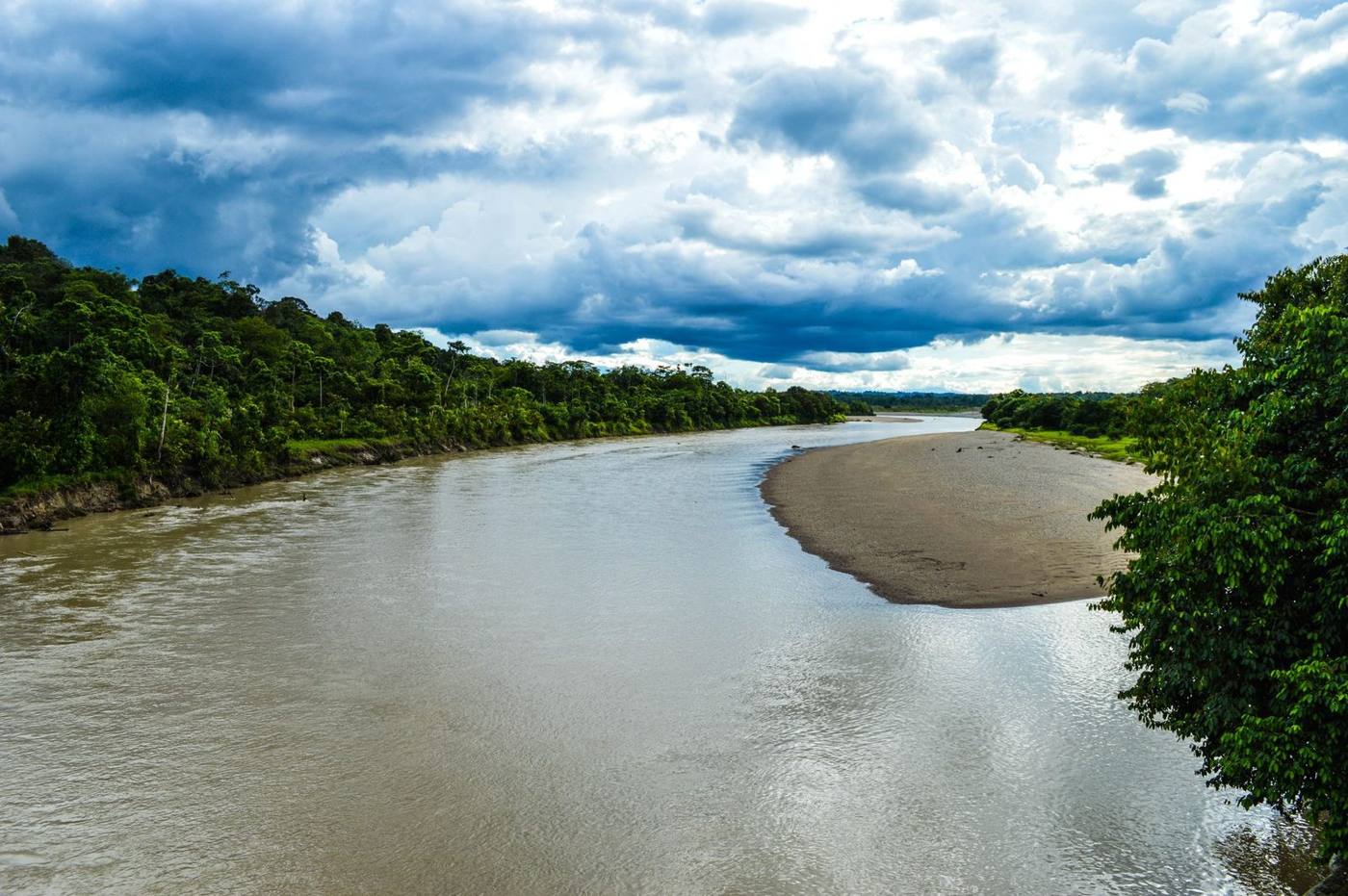
Manu, from the Andes to the Amazon rainforest
From Cusco you descend more than three thousand metres by road and river, from the puna through cloud forest to the giant otter lakes.
 4 daysEasy
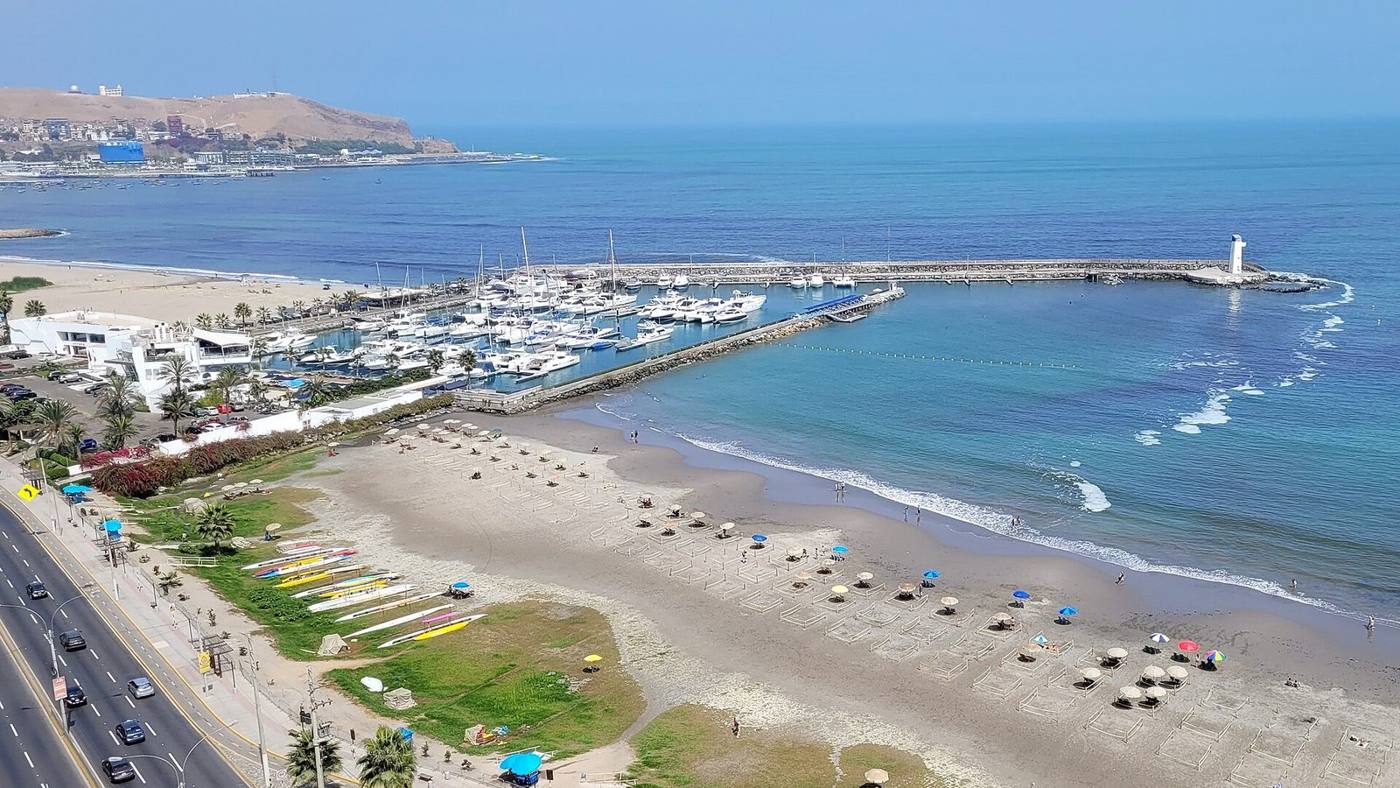
Lima in depth and Caral
South America's food capital: the UNESCO-listed colonial centre with the catacombs of San Francisco, the Pacific districts of Miraflores and Barranco, the Larco Museum, markets and cevicherías, the sanctuary of Pachacámac and Caral, the oldest city in the Americas.
 6 daysChallenging
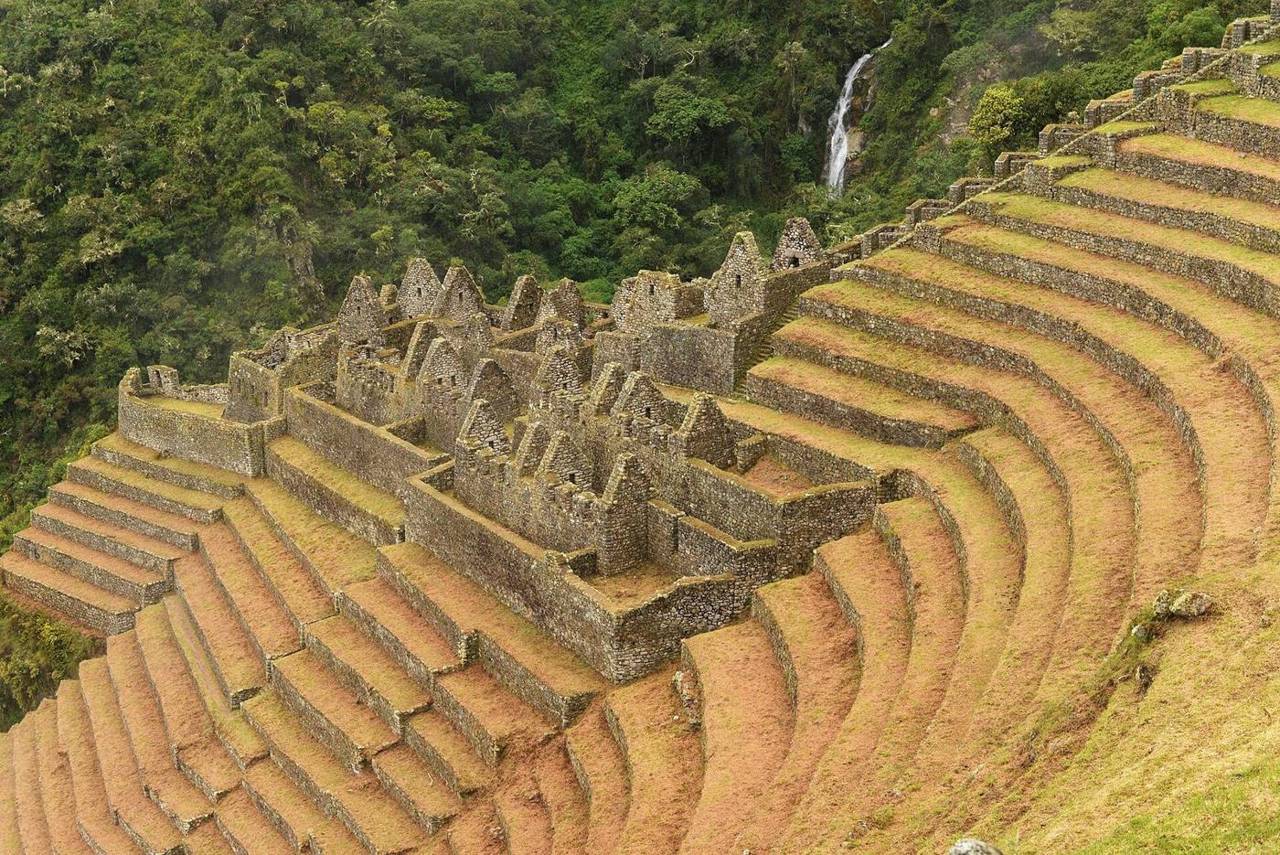
The classic Inca Trail
Four days on foot along the Incas' paved trail to Machu Picchu: sites such as Llactapata, Runkurakay, Sayacmarca and Wiñay Wayna, Dead Woman's Pass at 4,200 metres, cloud forest and arrival through the Sun Gate at dawn.