Asunción and the Jesuit missions
The riverside capital, then the UNESCO ruins of the Trinidad and Jesús de Tavarangue missions and the Itaipú dam.
- Asunción
- Encarnación
- Trinidad
- Jesús de Tavarangue
- Ciudad del Este
Day by day
- Day 1
Asunción: the Panteón de los Héroes and the Palacio de López
This trip shows you in five days the least touristy country in South America: the capital Asunción on the Paraguay river, the ruins of the Jesuit missions of Trinidad and Jesús de Tavarangue, a UNESCO World Heritage Site, and the Itaipú dam, with a possible crossing to the Iguazú falls. You travel by rental car or bus.
Before you go: Italian citizens enter Paraguay with a passport, with at least six months' validity recommended, without a visa for a tourist stay of up to 90 days. Other nationalities should check their own rules. The United States rates Paraguay at level 1, with level 2 in the departments along the Brazilian border, including Alto Paraná, where Ciudad del Este lies. Official advice asks for particular care in Ciudad del Este and in the historic centre of Asunción, even by day, and recommends not driving at night.
In the morning, visit the Panteón Nacional de los Héroes, the white domed building in the centre of Asunción, where some of the leading figures in the country's history rest, including Marshal Francisco Solano López. Then visit the Casa de la Independencia, the museum in the colonial house where independence from Spain was prepared in 1811. Check prices and times.
In the afternoon, walk to the Palacio de López, the nineteenth-century presidential palace overlooking the bay, and then along the costanera, the riverfront with views of the Paraguay river and the Chaco on the other side.
In the evening, when the palace is lit up, have sopa paraguaya, the maize and cheese bread, and grilled meat.
Overnight in Asunción.
Practical tip: in the historic centre, do not show your phone and camera more than necessary, and in the evening get around by taxi or with an app.
- Day 2
The road to Encarnación
Today you cross eastern Paraguay heading south, to Encarnación, on the Paraná river.
Early in the morning, leave Asunción on the main road south. The journey to Encarnación takes about six hours without stops, through pastures, palm groves, rice and soya fields, and small towns with low houses and colonial churches.
Halfway, stop at San Ignacio, one of the first Jesuit missions in the region, now a small town. Visit the museum of Jesuit art, with polychrome wooden statues carved by the Guaraní in the missions, saints, angels and Madonnas whose colours are still bright. Check prices and times.
For lunch, stop in a town along the road for a plate of bori bori, the chicken soup with little balls of maize and cheese, or vorí vorí, its simpler version.
In the afternoon, continue south. The landscape becomes hillier and greener, with red earth appearing along the roadside.
You reach Encarnación before sunset. Walk along the costanera, the long riverfront on the Paraná, with views of the Argentine city of Posadas and the bridge that links the two countries.
In the evening, have river fish, such as surubí, and drink tereré, the cold infusion of yerba mate.
Overnight in Encarnación, for two nights.
Practical tip: fill up with fuel at every opportunity and travel only by day, because the roads often have animals, slow lorries and stretches in poor condition.
- Day 3
The missions of Trinidad and Jesús
Today you visit the two most beautiful Jesuit missions in Paraguay, a UNESCO World Heritage Site, and in the evening, if it is on, the light show among the ruins.
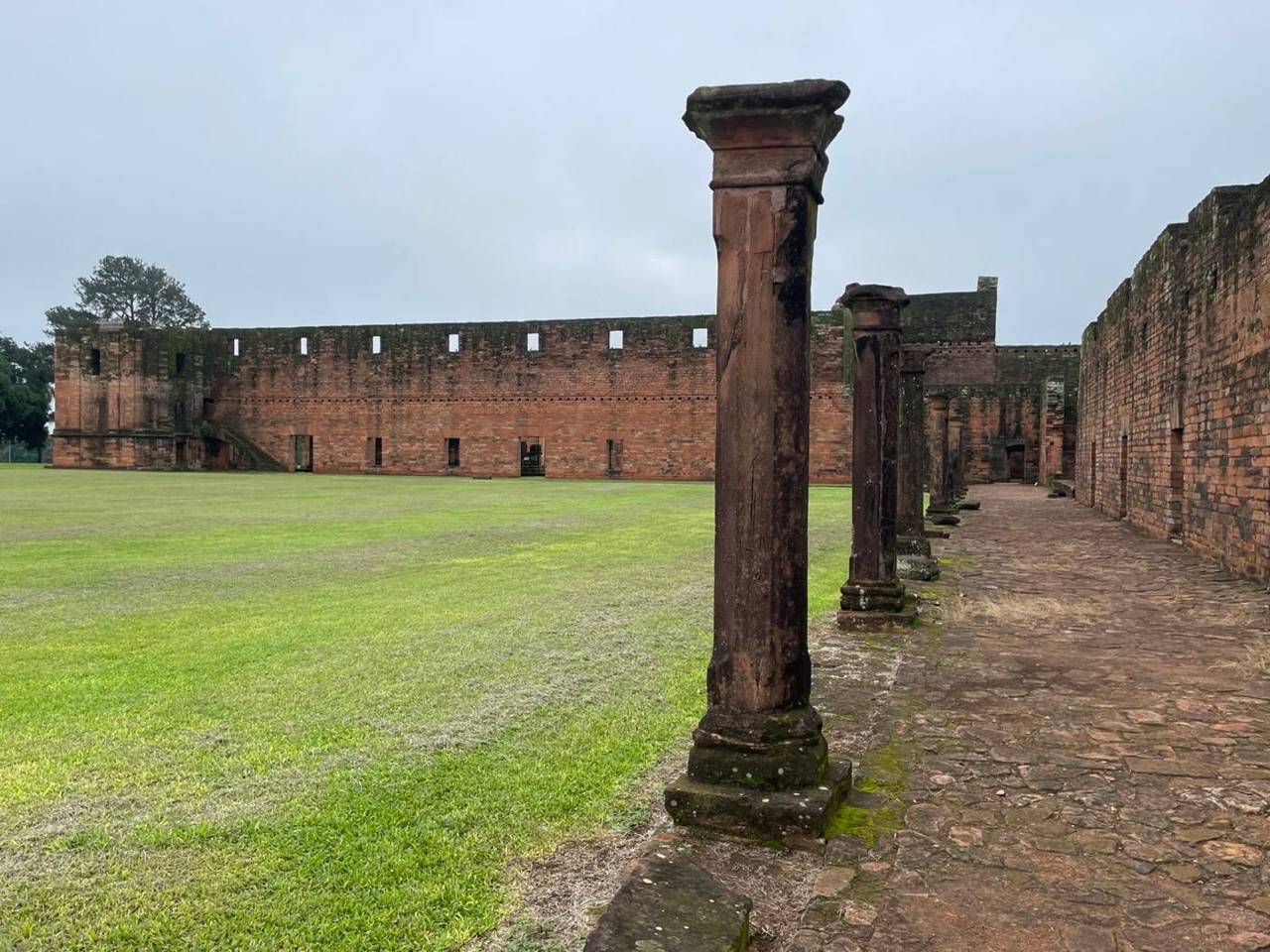
In the morning, drive north-east to Trinidad, about half an hour. The mission of Santísima Trinidad del Paraná was founded by the Jesuits at the beginning of the eighteenth century. Walk among the red stone ruins: the large square, the houses of Guaraní families, the college, the workshops and the main church, with its frieze of musician angels, the carved pulpit and the baptismal font. Check prices and times.
In the missions the Guaraní lived in communities organised by the Jesuits, with schools, music and shared work, until the Jesuits were expelled in the second half of the eighteenth century.
At midday, continue to Jesús de Tavarangue, a few kilometres away. Here the great church was never finished, with three-lobed arches over the doors and high walls standing out against the sky. The mission is smaller and quieter than Trinidad.
In the afternoon, rest in the shade or go back to Encarnación.
At sunset, return to Trinidad for the evening light and sound show, when the ruins are lit up and a voice tells the story of the missions. Check prices and times, because it is not on every evening.
In the evening, have grilled meat with cassava.
Overnight in Encarnación.
Practical tip: bring a hat, water and sun cream, because there is little shade in the missions and in summer the sun is very strong.
- Day 4
Ciudad del Este and the Itaipú dam
Today you head north, along the Paraná river, to Ciudad del Este and the Itaipú dam.
Early in the morning, leave Encarnación on the road north. The journey takes about four hours, through fields farmed on red earth and towns founded by settlers from Europe and Brazil.
You reach the Ciudad del Este area, a chaotic trading city near the Friendship Bridge to Brazil. This is Alto Paraná department, rated level 2 by the United States because of smuggling gangs: do not stop in the shopping centre with luggage in the car and do not show valuables.
Continue to Hernandarias, about half an hour north, to the visitor centre of the Itaipú dam, one of the largest hydroelectric plants in the world, built jointly by Paraguay and Brazil. A bus takes you beside and over the enormous concrete wall, with views of the large reservoir. Visits must be booked and you need your passport. Check prices and times.
In the late afternoon, if you have time, visit the museum of the Guaraní land in Hernandarias.
In the evening, have asado, the grilled meat, and chipa.
Overnight in a quiet area, away from the shopping centre of Ciudad del Este.
Practical tip: get around by taxi called by your accommodation and do not stay out in Ciudad del Este in the evening, as official advice recommends.
- Day 5
The Iguazú falls or the return
Today you choose: cross the border to see the Iguazú falls or return to Asunción.
If you choose the falls, leave early and cross the Friendship Bridge to Foz do Iguaçu, in Brazil. At the border, have your passport stamped on leaving Paraguay and on entering Brazil. Then go to Iguaçu National Park, on the Brazilian side, where a path along the canyon takes you in front of dozens of waterfalls in the forest, up to the walkways near the Garganta del Diablo, the Devil's Throat. Check prices and times. The Argentine side, with walkways above the falls, needs another day.
If you choose to return, in the morning visit the Salto del Monday, in Presidente Franco, just south of Ciudad del Este, where the Monday river drops into a rocky gorge in the forest. Then take the bus or plane to Asunción.
In these five days you have seen the most authentic Paraguay: the Panteón de los Héroes and the Palacio de López in Asunción, the Jesuit art of San Ignacio, the missions of Trinidad and Jesús, the costanera of Encarnación and the Itaipú dam.
When to go: the best period is April to September, with a cooler, drier climate. In summer it is extremely hot, often above 35 degrees. The country combines well with the Iguazú falls.
Practical tip: if you want to see the falls from both sides, add a day and sleep in Foz do Iguaçu or in Puerto Iguazú, in Argentina.
South America's least touristy country, with fascinating Jesuit missions. It pairs well with the Iguazú falls. Summer is very hot, often above 35 °C.
Before you go
- Documents and visa
- Passport, with at least six months' validity recommended; no visa is needed for tourism for up to 90 days. A yellow fever vaccination certificate is compulsory from the age of one if you arrive from Bolivia, Brazil, Peru or Venezuela, including stopovers of more than 24 hours.
- Health and vaccines
- Dengue is endemic and chikungunya is rising, with no vaccine: use repellent and long sleeves in the evening. The WHO certified in 2018 that Paraguay had eliminated malaria. Drink bottled water, without ice. Public healthcare is poor, but Asunción has reliable private clinics: you need insurance covering medical costs and repatriation. Emergencies: 911.
- Money and payments
- Guaraní. Cards work in Asunción, Encarnación and the larger towns; carry cash for small villages and the Chaco, and use cash machines inside banks or shopping centres.
- Power sockets
- Type C, with two round pins, 220 volts: you need an adapter for British plugs.
- Time zone
- UTC-3 all year since 2024.
- Safety
- The United States rates Paraguay at level 1, with level 2 in the departments of Alto Paraná, Amambay, Canindeyú, Concepción and San Pedro, along the border with Brazil, because of criminal groups smuggling drugs and goods. Take particular care in Ciudad del Este and in the historic centre of Asunción, even by day. An armed group operates in northern San Pedro and southern Concepción. Protests and road blockades are common, and it is best not to drive at night. Official advice: GOV.UK.
Information checked in November 2026 for Italian and EU citizens. Rules change: always check before you travel.
Variations
In 3 days: Asunción on the first day, then the road to Encarnación and the missions of Trinidad and Jesús, returning by plane.
In 7 days: add two days at the Iguazú falls, on the Brazilian and the Argentine sides, after Itaipú.
Frequently asked questions
Are Paraguay's Jesuit missions a UNESCO World Heritage Site?
Yes, Trinidad and Jesús de Tavarangue are a UNESCO World Heritage Site. You can visit both in a day from Encarnación.
Is it safe to pass through Ciudad del Este?
Alto Paraná is rated level 2 by the United States and official advice asks for particular care in Ciudad del Este. Visit by day, use taxis called by your accommodation and do not stay out in the evening.
What document do I need for Paraguay?
Italian citizens enter with a passport, with at least six months' validity recommended, without a visa for up to 90 days. Other nationalities should check their own rules.
Indicative itinerary written by World Atlas. Before booking, check timetables, seasonal openings, documents and safety.
 5 daysModerate
The Chaco and the Mennonite colonies
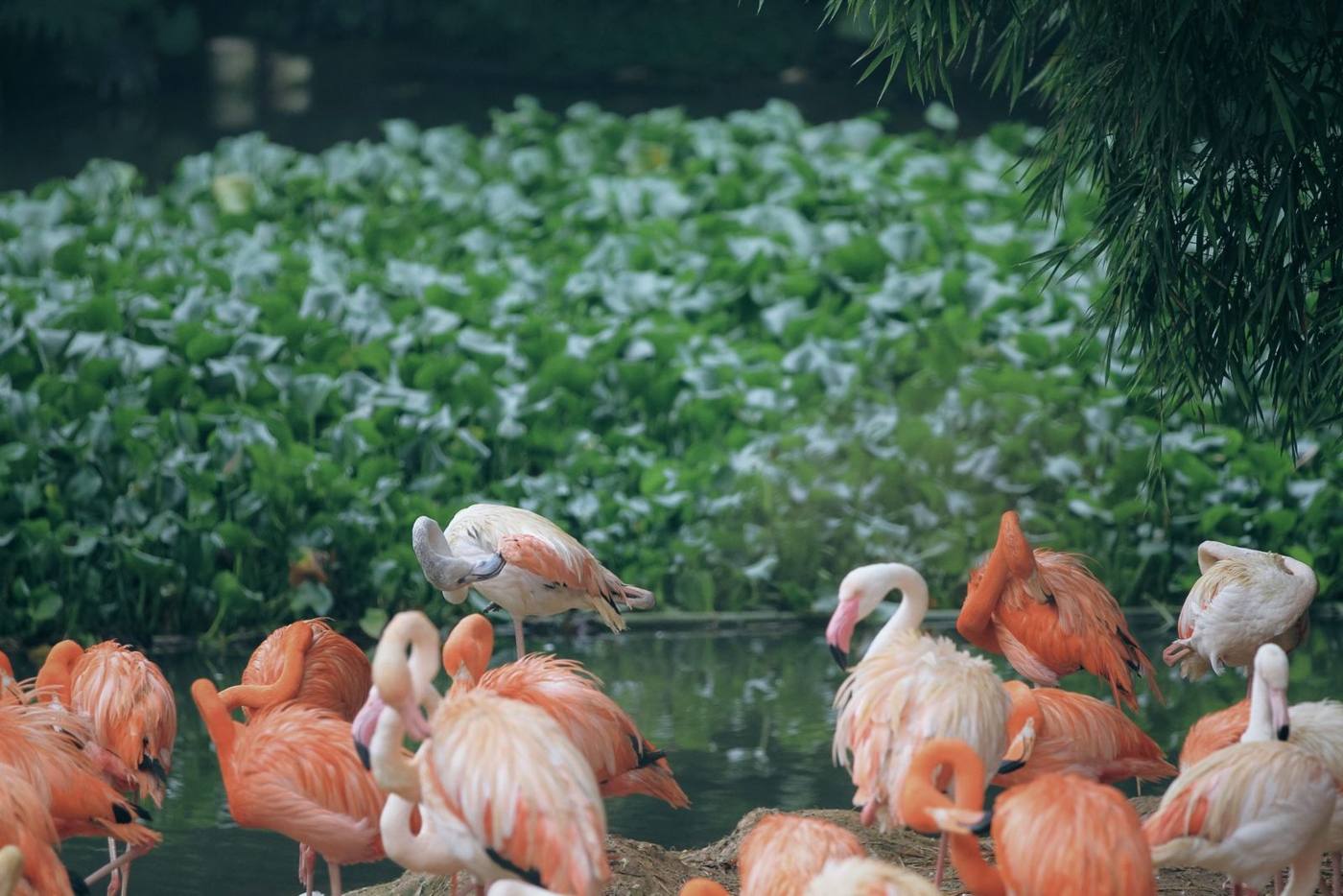
The wild Chaco plain, the Mennonite colonies of Filadelfia and Loma Plata and the salt lagoons with flamingos.
 3 daysEasy
Encarnación and its carnival
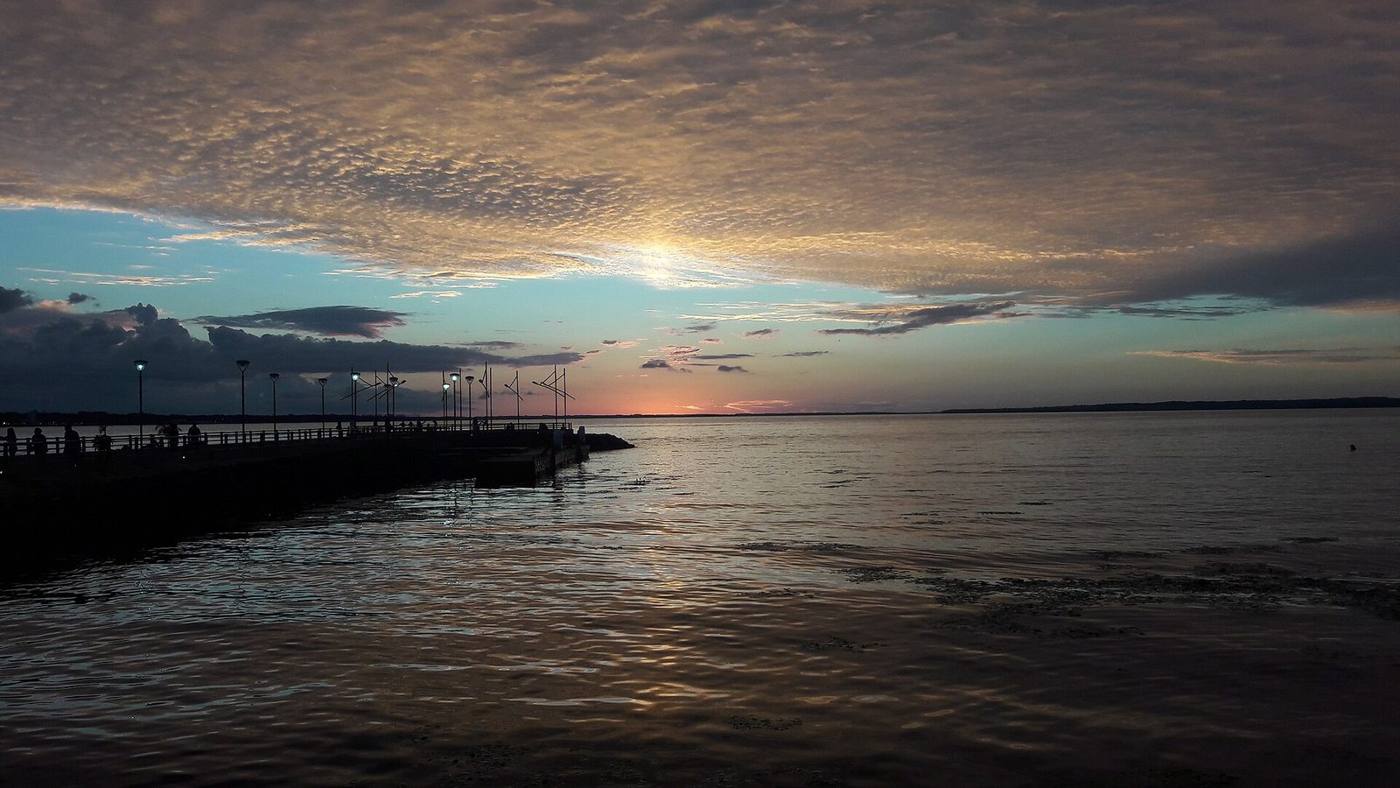
The city on the Paraná river with its long costanera and river beaches, the country's best-known carnival in February and the bridge to Posadas in Argentina.
 2 daysEasy
La Cordillera: San Bernardino and Areguá
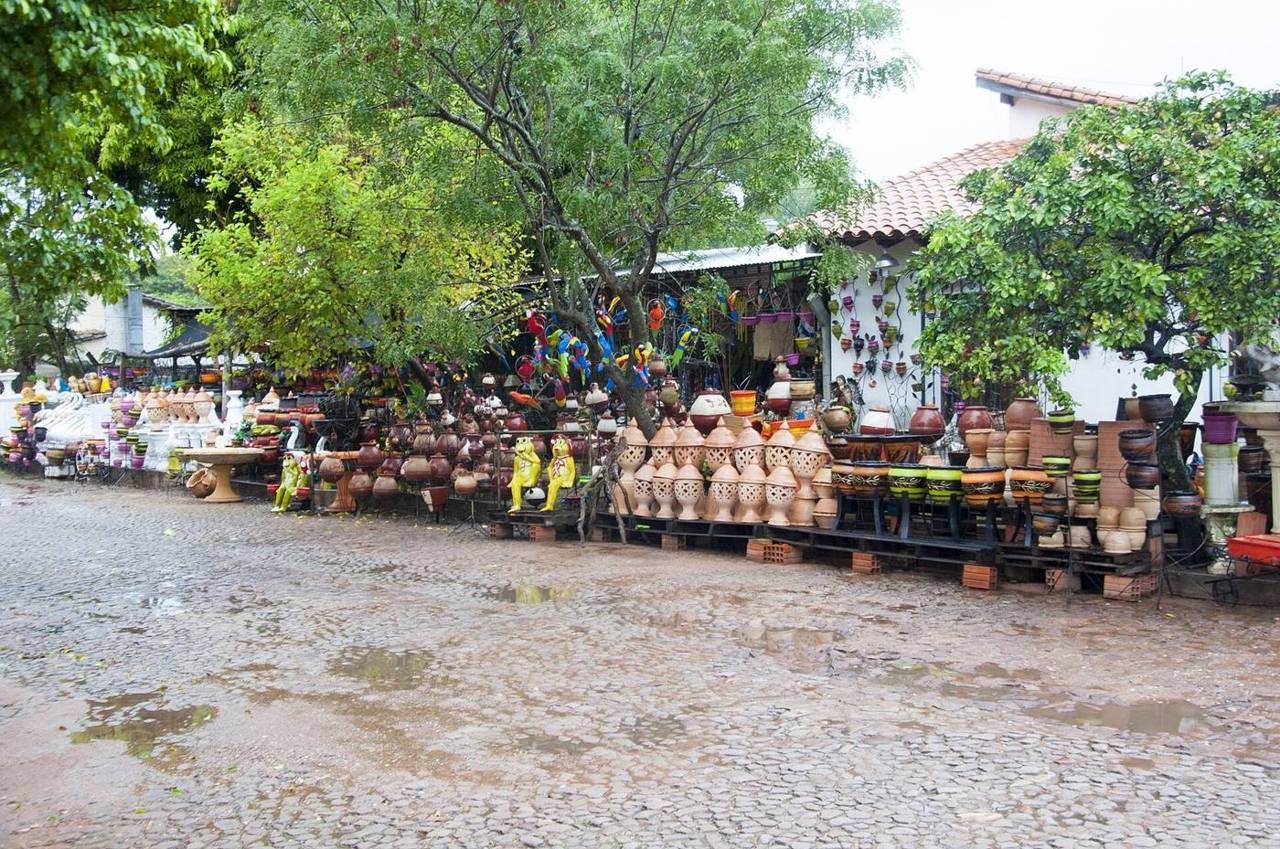
Lake Ypacaraí and the towns around it: San Bernardino, founded by German settlers, Areguá with its pottery and strawberries, Caacupé with its basilica.