The Lyngen Alps
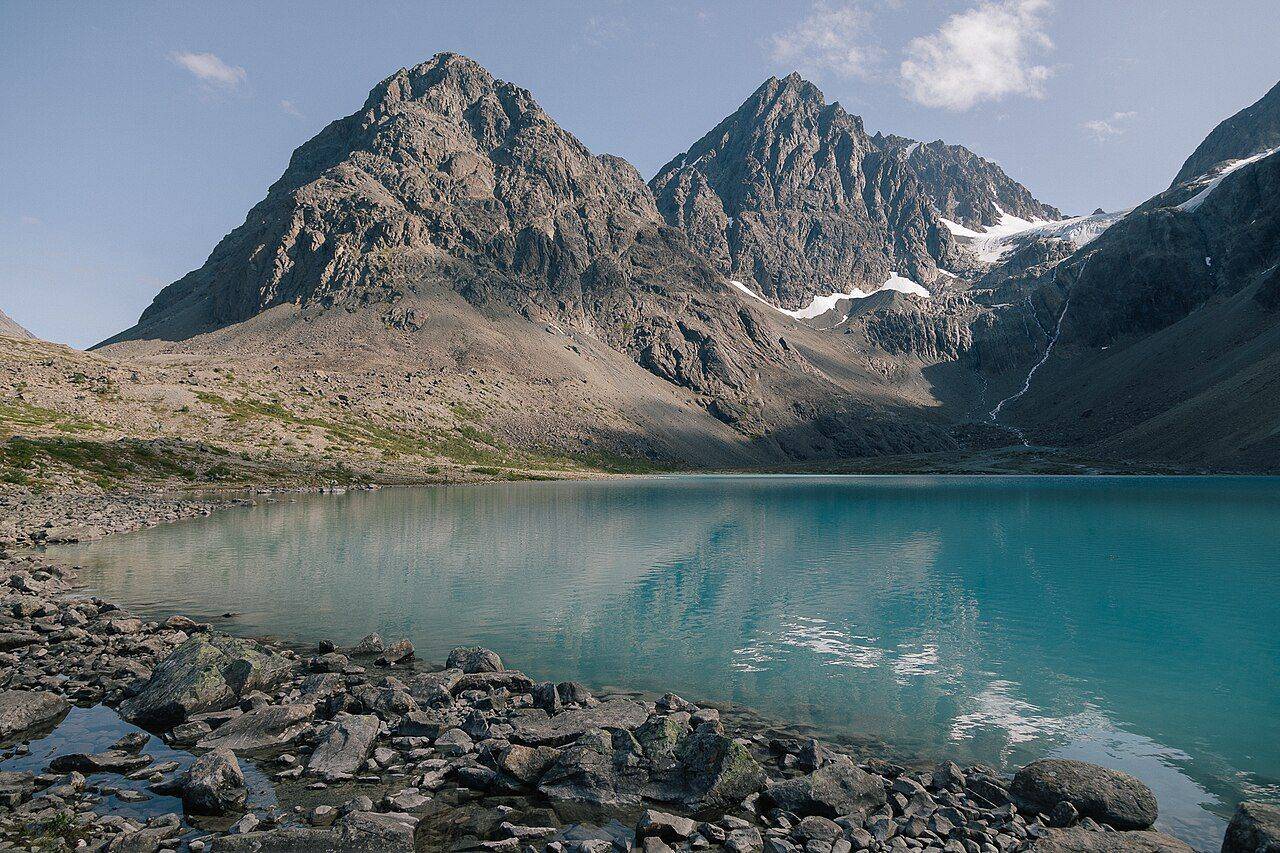
Pointed mountains dropping into the sea east of Tromsø: in summer, hikes to the glacial lake of Blåisvatnet and kayaking in the fjord under the midnight sun; in winter, ski touring down to the sea and northern lights far from city lights.
- Tromsø
- Lyngseidet
- Blåisvatnet
- Lyngenfjord
Day by day
- Day 1
From Tromsø to Lyngseidet by ferry
The Lyngen Alps are a range of steep, jagged mountains rising straight from the sea on a peninsula east of Tromsø, in northern Norway, well above the Arctic Circle. They have glaciers, blue lakes, peaks over one thousand eight hundred metres and deep fjords. In summer there is the midnight sun, in winter the northern lights and ski touring. In five days you walk to a glacial lake, kayak on the fjord and climb a summit with a guide.
You arrive at Tromsø airport, with flights from Oslo and, at some times of year, direct flights from Europe. Hire a car and drive east, across Tromsø island and through the valleys, to the small port of Breivikeidet, in about half an hour.
Here, take the ferry to Svensby, on the Lyngen peninsula, in about twenty minutes, across the Ullsfjord. From the ferry you see the peninsula's mountains rising from the water, snow-covered even in early summer.
From Svensby, drive along the coast to Lyngseidet, the main village on the peninsula, in about twenty minutes, with its small white wooden church, harbour and views of the Lyngenfjord.
In the afternoon, walk along the shore and climb a small hill near the village for the view over the fjord.
In the evening, sleep in or near Lyngseidet.
Practical tip: Italian citizens need only an identity card to enter Norway. Ferries have limited timetables, especially in winter: check them before setting off so you are not stranded.
- Day 2
The hike to Blåisvatnet glacial lake
Today you take one of the finest hikes on the peninsula, to Blåisvatnet, the lake of blue ice. It is a small glacial lake at the foot of the mountains, with water of an intense, almost unreal blue, caused by the fine rock flour carried down by the glacier.
In the morning, drive to the trailhead in one of the peninsula's valleys. The path climbs first through birch thickets, then across scree and alpine meadows, following the stream flowing down from the lake. The route usually takes a few hours there and back and is marked, but in places you walk over rocks.
At the lake, sit on the rocks by the shore and gaze at the blue water, surrounded by mountain walls and tongues of ice. In summer, on sunny days, the colours are strongest. Listen to the stream and the silence of the valley.
Along the path, look for reindeer, which graze on the peninsula in summer with the herds of the Sámi, the Indigenous people of the north, and birds such as golden plovers and ptarmigan.
In the afternoon, walk calmly back down the valley.
In the evening, sleep in or near Lyngseidet.
Practical tip: the weather changes quickly, and in early summer there may still be snow on the path. Wear walking boots, bring a waterproof jacket and check conditions before setting out.
- Day 3
Kayaking on the Lyngenfjord
Today you see the Lyngen Alps from the water. In the morning, set off on a sea kayaking trip on the Lyngenfjord with a local guide. You paddle along the coast, near rocks and small beaches, with the mountains rising steeply above you to the glaciers.
The water of the fjord is calm and clear on windless days. With luck you see seals raising their heads from the water, white-tailed eagles, the largest birds of prey in northern Europe, flying over the fjord, and sea ducks. At certain times whales and orcas also enter the fjord, though this is not the most likely season to see them.
The guide talks about the lives of local fishermen and Sámi, the history of the Second World War, when the region was occupied and partly burned at the end of the conflict, and how glaciers carved the fjords.
At midday, stop on a beach for an outdoor lunch, perhaps with hot coffee made over the fire.
In the afternoon, if you still have energy, take a short walk near the village, or rest.
In the evening, sleep in or near Lyngseidet.
Practical tip: the water of the fjord is very cold even in summer. Kayak only with a guide and the right equipment, and wear warm clothes even when the sun is out.
- Day 4
A panoramic summit with a guide, then the midnight sun or the aurora
Today you climb a summit in the Lyngen Alps with a mountain guide. The highest peaks, such as Jiehkkevárri, the highest point in the county, require mountaineering experience, crampons and ropes to cross the glaciers. There are, however, easier and panoramic summits that can be reached on foot without technical skills, which the guide chooses according to your level and the conditions.
In the morning, set off early and climb through meadows, scree and ridges, with the fjord widening below you. From the top the view is spectacular: the glaciers and peaks of the peninsula on one side, the fjords and islands on the other, out to the open sea.
The guide knows the terrain, checks the weather and snow, and chooses the safest route.
The evening depends on the season. In summer, from about late May to late July, the sun does not set: go out walking or watch the fjord under the golden light of the midnight sun. In winter, from September to March, if the sky is clear, go out looking for the northern lights away from any lights, with the snowy mountains beneath the green glow.
In the evening, sleep in or near Lyngseidet.
Practical tip: in the Lyngen Alps, steep slopes and snow can cause avalanches, even in spring. In winter and spring, go out only with experienced guides and safety equipment.
- Day 5
Return to Tromsø
In the morning, take a last walk along the fjord, with the northern light and the mountains reflected in the water.
Then head back to Tromsø. You can return on the same ferry between Svensby and Breivikeidet, or take a longer loop, catching the ferry between Lyngseidet and Olderdalen, then the road along the fjord south and through the valleys to Tromsø, with different views of the peninsula.
In Tromsø, if you have time before your flight, visit the Arctic Cathedral, a white modern church made of triangles, with a large stained-glass window, across the bridge. Take the cable car up Mount Storsteinen for the view over the city, the islands and the mountains, or visit Polaria, an Arctic centre with seals, and the Polar Museum, devoted to exploration and hunting in the Arctic.
Then take your flight from Tromsø.
This trip combines well with the Lofoten and Vesterålen islands to the south, or with Svalbard, reachable by air from Tromsø, or with the island of Senja, with its mountains dropping sheer into the sea.
Practical tip: prices in Norway are high, especially for food, alcohol and transport. Shop in supermarkets and carry a water bottle, as tap water is excellent.
Ski touring in Lyngen is only for experienced skiers with a guide: avalanche risk is serious. Lyngen is among the municipalities that have applied to introduce an accommodation tax of up to 3%. Roads and ferries can close in winter storms. A valid identity card is enough for EU citizens. Norway is expensive: a credit card is accepted almost everywhere, even for small amounts.
Before you go
- Documents and visa
- EU citizens need only a valid identity card or passport: Norway is not in the European Union but is in the Schengen area.
- Health and vaccines
- No vaccines required. The European Health Insurance Card is valid in Norway; insurance covering mountain rescue is useful. Emergencies: 112 police, 113 ambulance, 110 fire.
- Money and payments
- Norwegian krone. Cards are accepted almost everywhere, even for small sums and on public transport; cash is hardly needed. Prices are among the highest in Europe.
- Power sockets
- Types C and F, 230 volts.
- Time zone
- UTC+1 in winter, UTC+2 in summer.
- Safety
- One of the safest countries in the world. Risks are natural: bad weather in the mountains, rockfalls, roads closed in winter. Official advice: GOV.UK.
Information checked in November 2026 for Italian and EU citizens. Rules change: always check before you travel.
Variations
In 3 days: Lyngseidet, Blåisvatnet lake and kayaking.
In 9 days: add the Lofoten islands or the island of Senja.
Frequently asked questions
When is the best time to go?
From June to August for hiking and the midnight sun. From September to March for the aurora; from March to May for ski touring with guides.
Do I need mountain experience?
For the trails and kayaking you just need to be fit. For the high peaks and glaciers you need guides and equipment.
Do I need a car?
It is the easiest way, as buses are few. Many guides also offer transport from Tromsø.
Indicative itinerary written by World Atlas. Before booking, check timetables, seasonal openings, documents and safety.
 3 daysEasy
Bergen in depth and its mountains
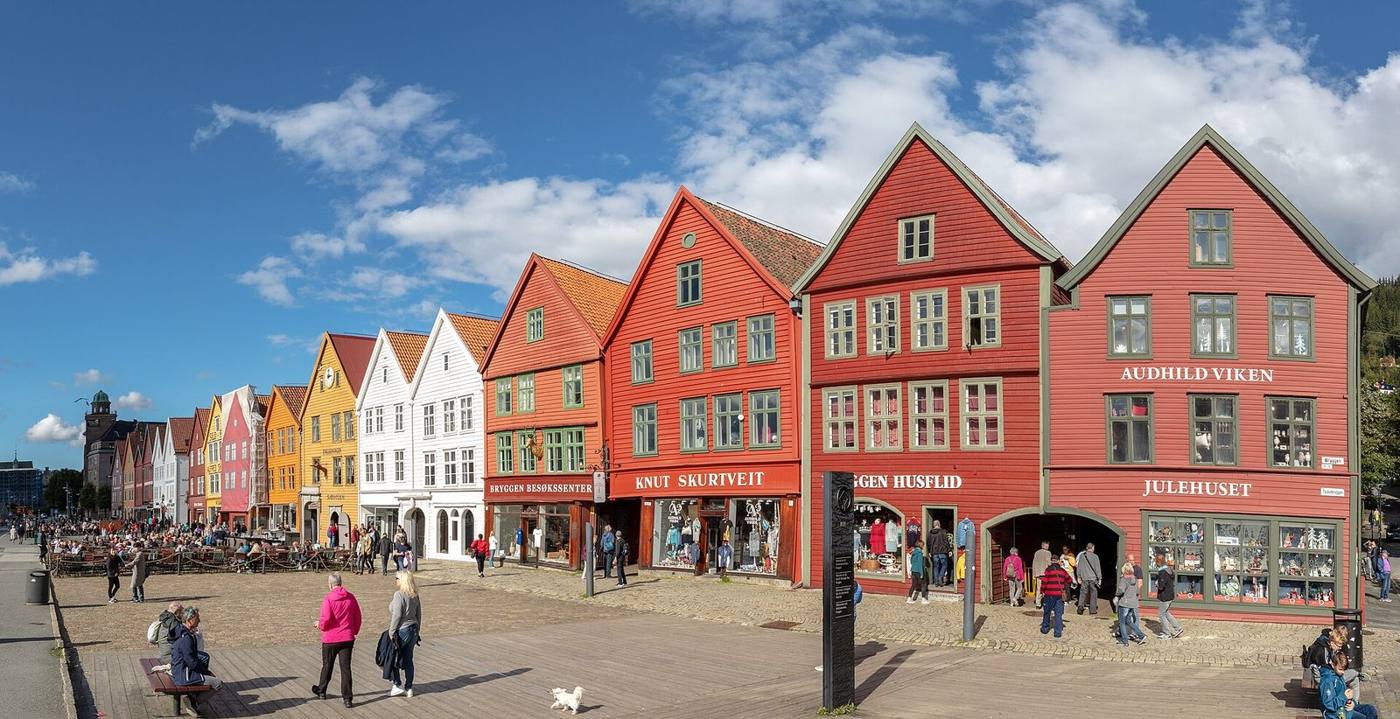
The city between seven mountains: the Hanseatic houses of Bryggen (UNESCO), the fish market, the Fløyen funicular and the ridge walk to Ulriken, the KODE museums with works by Munch and Edvard Grieg's home at Troldhaugen.
 10 daysEasy
The fjords: Bergen to Geiranger
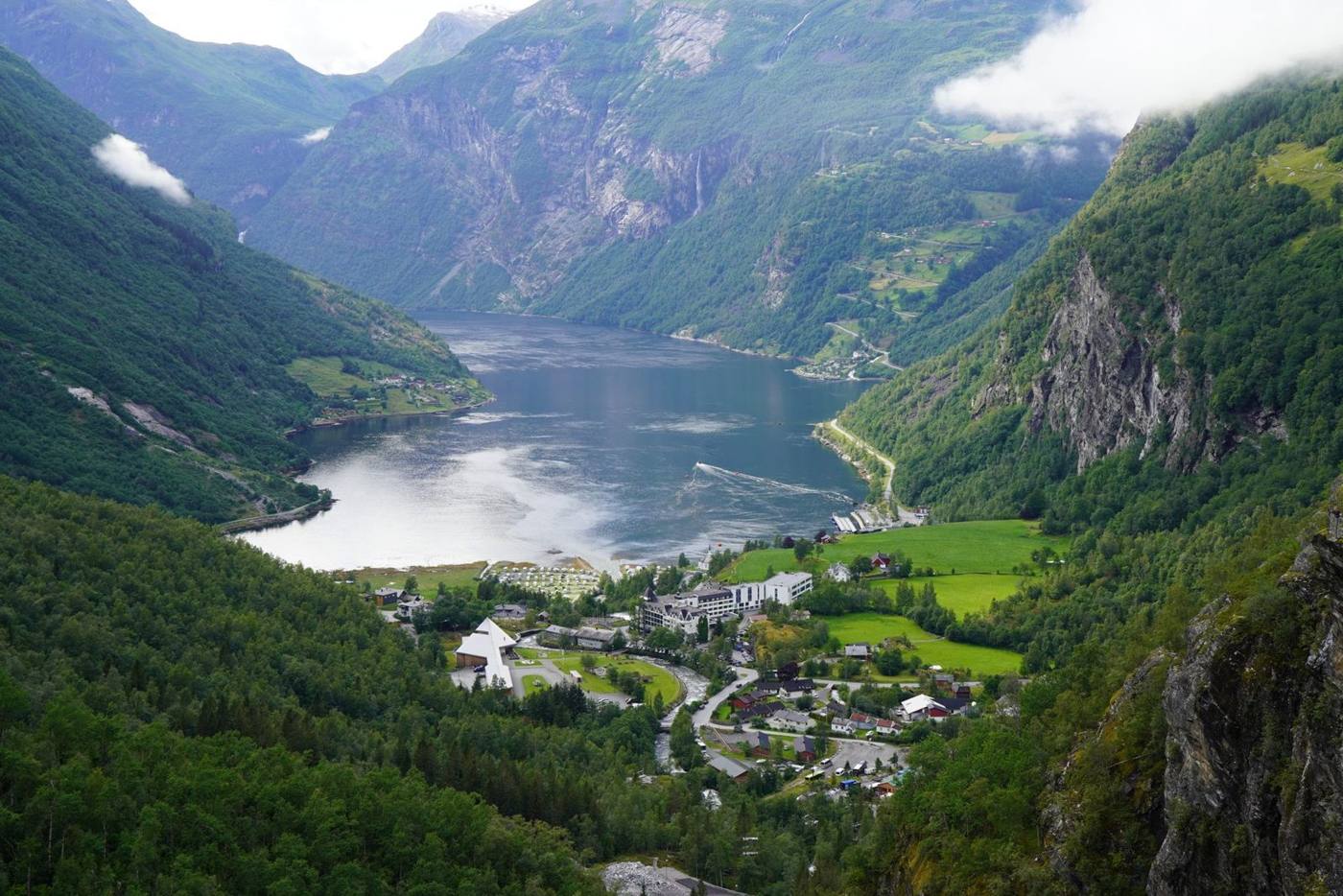
Bergen and Bryggen, the Sognefjord and the Flåm railway, Briksdal glacier, the Geirangerfjord and the Trollstigen road.
 7 daysModerate
The Lofoten Islands
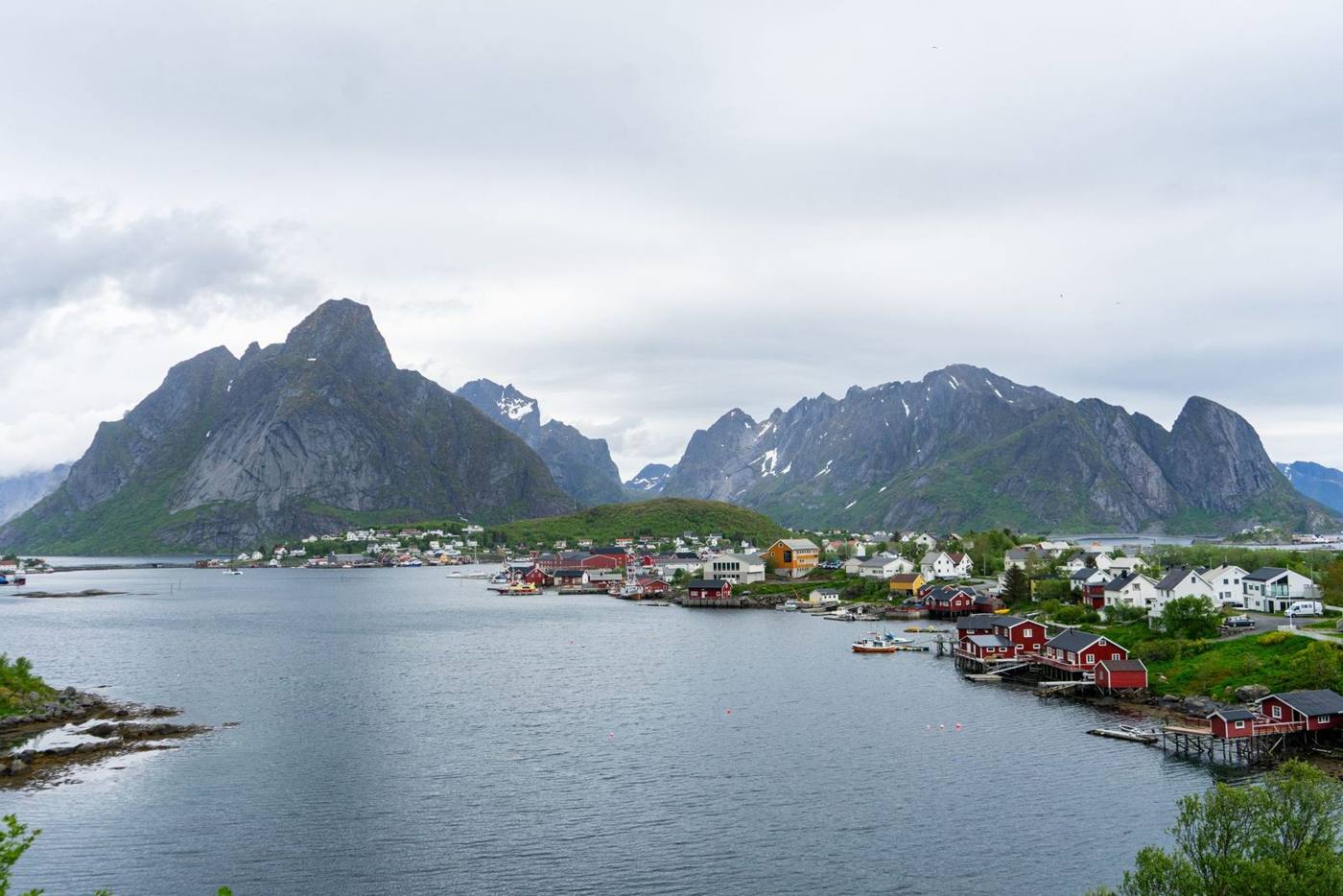
Fishing villages with red rorbu cabins, peaks plunging into the sea, white beaches and trails such as Reinebringen and Ryten.