Bergen in depth and its mountains
The city between seven mountains: the Hanseatic houses of Bryggen (UNESCO), the fish market, the Fløyen funicular and the ridge walk to Ulriken, the KODE museums with works by Munch and Edvard Grieg's home at Troldhaugen.
- Bergen
- Fløyen
- Ulriken
- Troldhaugen
Day by day
- Day 1
Bryggen, the fish market and Bergenhus fortress
Norway is not in the European Union but is in the Schengen area: EU citizens need only a valid identity card or passport. The currency is the Norwegian krone, but cards are accepted almost everywhere. From Flesland airport you reach the centre on the light rail, Bybanen, in about forty minutes.
Bergen is Norway's second city, on the west coast, ringed by seven mountains and facing a fjord, the gateway to the country's great fjords. It is also famous for rain: on average it rains more than two hundred days a year, and locals say there is no such thing as bad weather, only the wrong clothes.
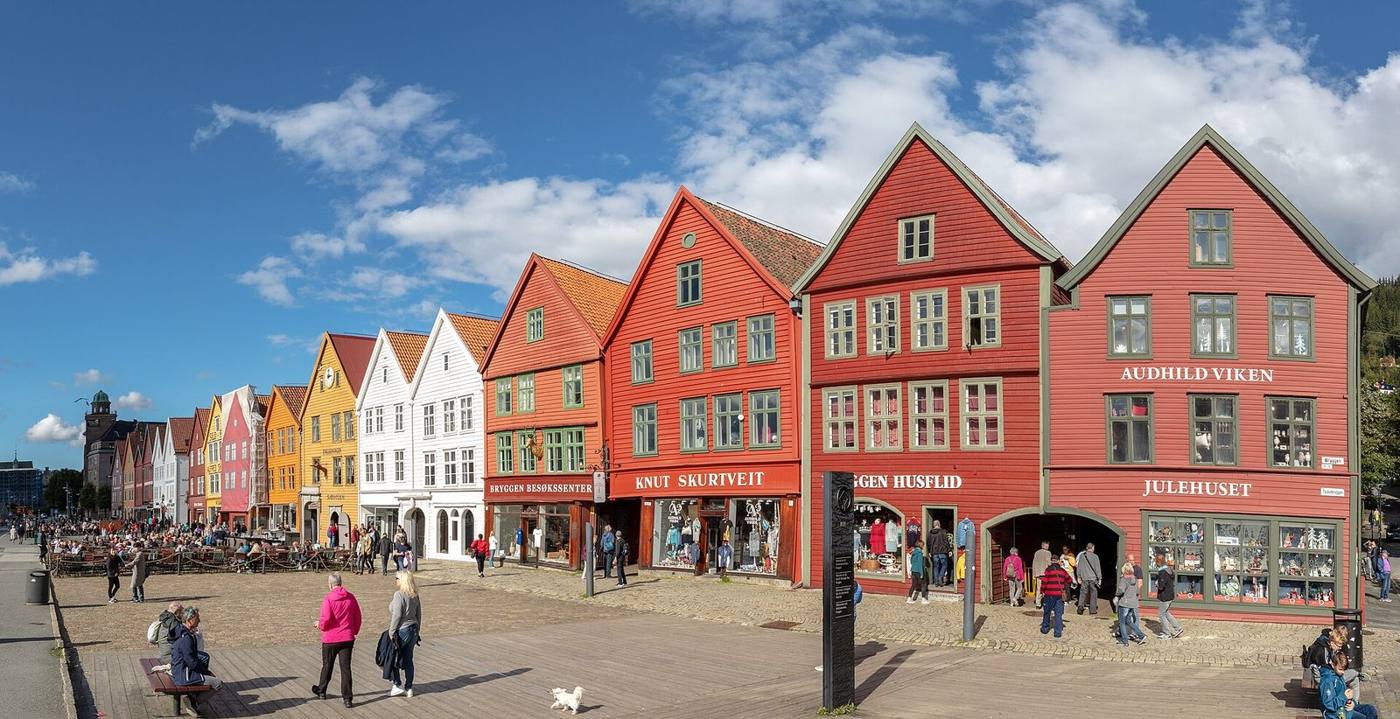
In the morning stroll along Bryggen, the old Hanseatic wharf, a UNESCO World Heritage site: a row of colourful red, yellow and white wooden houses with pointed roofs, built by German merchants of the Hanseatic League, who controlled the trade in dried cod from the north from the fourteenth to the eighteenth century. Behind the façades you enter narrow wooden passages with leaning warehouses and workshops. The Hanseatic Museum tells the merchants' story.
Then visit the fish market on the harbour, with stalls of salmon, prawns, king crab and whale, where you can eat outside or indoors.
In the afternoon walk to Bergenhus fortress at the harbour entrance, with Haakon's Hall, a large thirteenth-century stone medieval hall, and the Rosenkrantz Tower.
Practical tip: always carry a waterproof jacket and shoes that can cope with water, even in summer.
- Day 2
The Fløyen funicular and the ridge to Ulriken
Today is a day in the mountains, a few minutes from the centre. The mountains around Bergen are crossed by well-marked trails used by locals all year.
In the morning go up Mount Fløyen on the Fløibanen, the funicular that leaves a short walk from the fish market and climbs in about six minutes to around 320 metres. From the platform at the top you see the whole city, the harbour, the islands and the sea. Around it are woods, small lakes, a children's playground and grazing goats.
Experienced walkers can follow the Vidden from here, Bergen's most famous ridge trail, linking Fløyen with Ulriken, the highest of the seven mountains at about 640 metres, across an open treeless plateau with small lakes and rocks, with views of the sea and fjords on one side and mountains on the other. The route is about fifteen kilometres long and takes five to six hours. From Ulriken you descend by cable car or on foot down a long stone staircase.
Those preferring a shorter walk can loop round the lakes on Fløyen, such as Skomakerdiket, and walk down into town through the forest in about forty minutes.
In the evening return to town and have fish for dinner, such as Bergen fish soup, creamy, with vegetables and cream.
Practical tip: on the Vidden the weather changes quickly and fog can cover the trail; set off only with a good forecast, hiking shoes, water and a warm jacket.
- Day 3
KODE and Troldhaugen, then departure
In the morning visit KODE, one of the largest art museums in the Nordic countries, spread across four buildings along Lille Lungegårdsvann lake in the city centre. It holds a rich collection of works by Edvard Munch, the Norwegian painter of The Scream, and J. C. Dahl, father of Norwegian romantic painting, with landscapes of fjords and mountains, as well as contemporary art, design and silverware. One room is devoted to Nikolai Astrup, with the vivid colours of western Norway.
In the afternoon reach Troldhaugen, about twenty minutes from the centre by light rail and a short walk, the villa where the composer Edvard Grieg, author of Peer Gynt and the Piano Concerto and Norway's greatest musician, lived for over twenty years. The white wooden villa with its turret and veranda overlooks Lake Nordås. You visit the rooms with Grieg's piano, the small lakeside hut where he composed and the tomb of Grieg and his wife, carved into the rock above the water. In summer piano concerts are held in the modern concert hall built into the hillside.
Nearby stands Fantoft stave church, a rebuilt stavkirke with tiered roofs and dragon heads, a copy of a medieval church destroyed by fire.
In the late afternoon take the light rail to the airport.
Things to take home: Norwegian wool sweaters, brunost brown cheese, packaged smoked salmon and Scandinavian design objects.
Practical tip: prices in Norway are high; supermarkets are the cheapest option for lunch. Check your government's travel advice before leaving.
It rains a lot in Bergen: always carry a waterproof jacket. The ridge from Fløyen to Ulriken is about 13 km, 5-6 hours, often in fog. A great base for the fjords or an end point after the train from Oslo. A valid identity card is enough for EU citizens. Norway is expensive: a credit card is accepted almost everywhere, even for small amounts.
Before you go
- Documents and visa
- EU citizens need only a valid identity card or passport: Norway is not in the European Union but is in the Schengen area.
- Health and vaccines
- No vaccines required. The European Health Insurance Card is valid in Norway; insurance covering mountain rescue is useful. Emergencies: 112 police, 113 ambulance, 110 fire.
- Money and payments
- Norwegian krone. Cards are accepted almost everywhere, even for small sums and on public transport; cash is hardly needed. Prices are among the highest in Europe.
- Power sockets
- Types C and F, 230 volts.
- Time zone
- UTC+1 in winter, UTC+2 in summer.
- Safety
- One of the safest countries in the world. Risks are natural: bad weather in the mountains, rockfalls, roads closed in winter. Official advice: GOV.UK.
Information checked in November 2026 for Italian and EU citizens. Rules change: always check before you travel.
Variations
In 1 day: Bryggen, the fish market and the Fløyen funicular at sunset.
In 6 days: add a trip to the Sognefjord or the Norway in a Nutshell route with the Flåm railway, or the Hardangerfjord with its waterfalls and orchards.
Frequently asked questions
Do I need a passport for Norway?
No: Norway is in the Schengen area and EU citizens need only a valid identity card.
Does it always rain in Bergen?
Often: it is one of the rainiest cities in Europe. Always bring a waterproof jacket, even in summer.
Is the Vidden difficult?
It is a walk of about fifteen kilometres, five or six hours, across an open plateau. You need some fitness and a good weather forecast.
Indicative itinerary written by World Atlas. Before booking, check timetables, seasonal openings, documents and safety.
 10 daysEasy
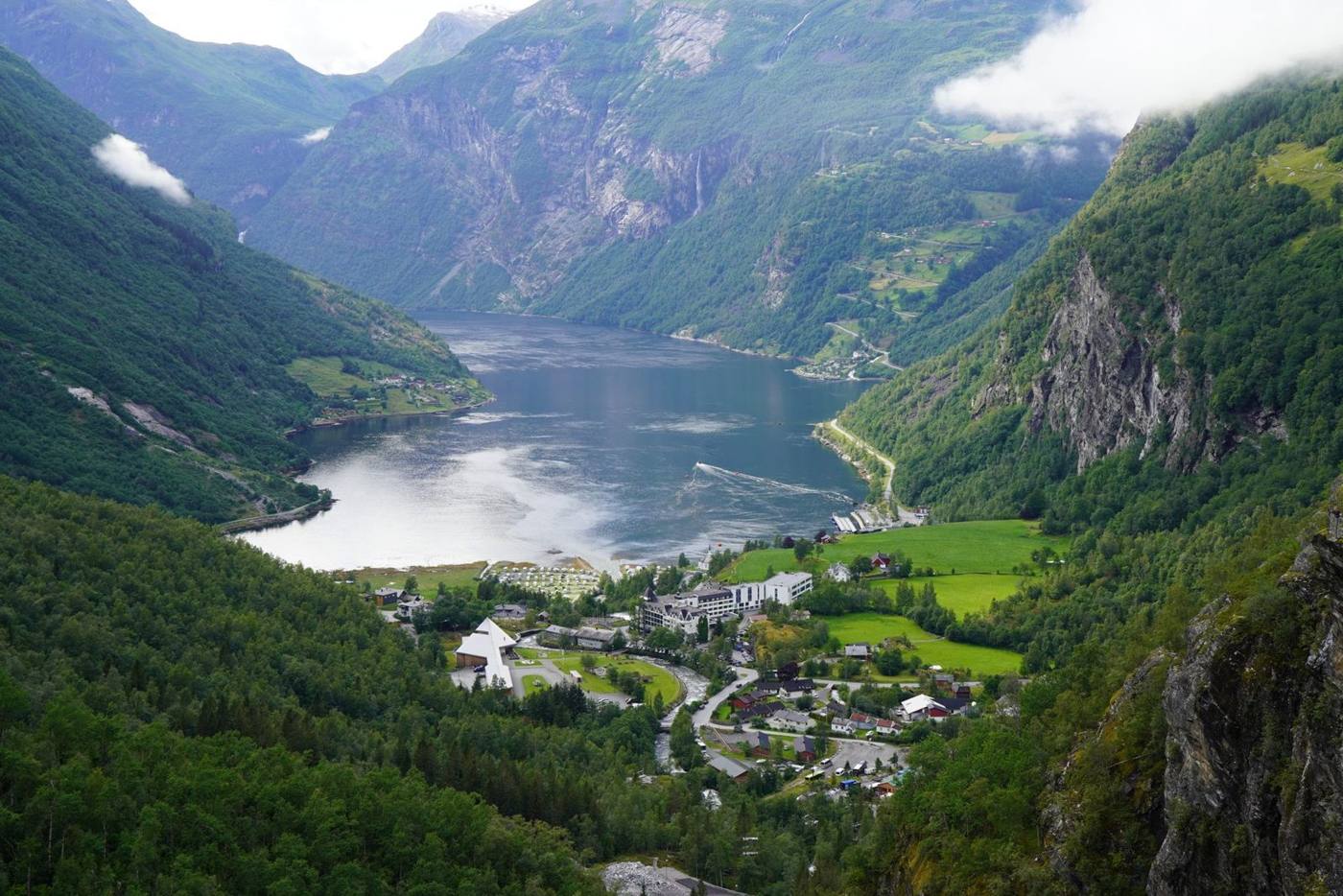
The fjords: Bergen to Geiranger
Bergen and Bryggen, the Sognefjord and the Flåm railway, Briksdal glacier, the Geirangerfjord and the Trollstigen road.
 7 daysModerate
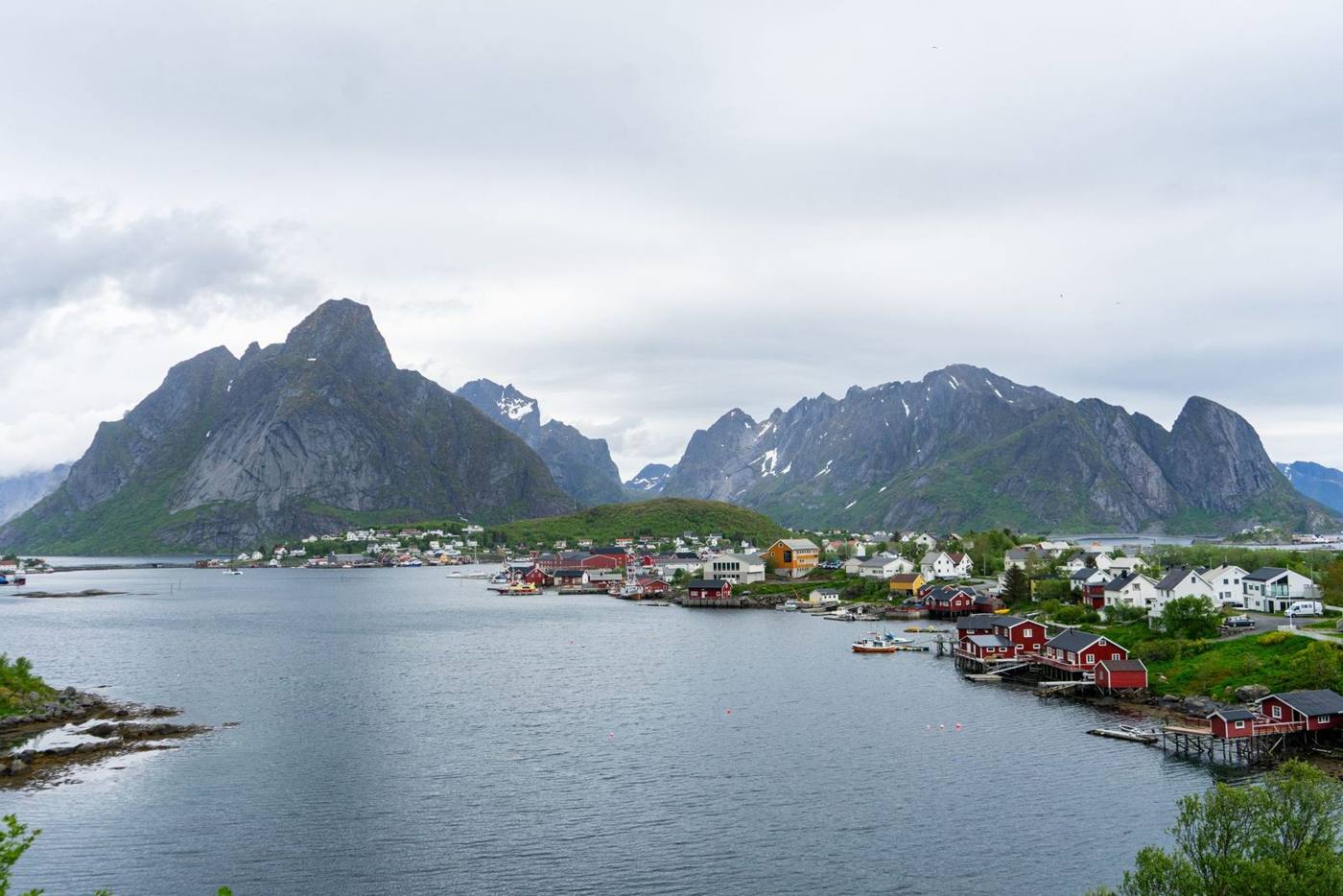
The Lofoten Islands
Fishing villages with red rorbu cabins, peaks plunging into the sea, white beaches and trails such as Reinebringen and Ryten.
 7 daysEasy
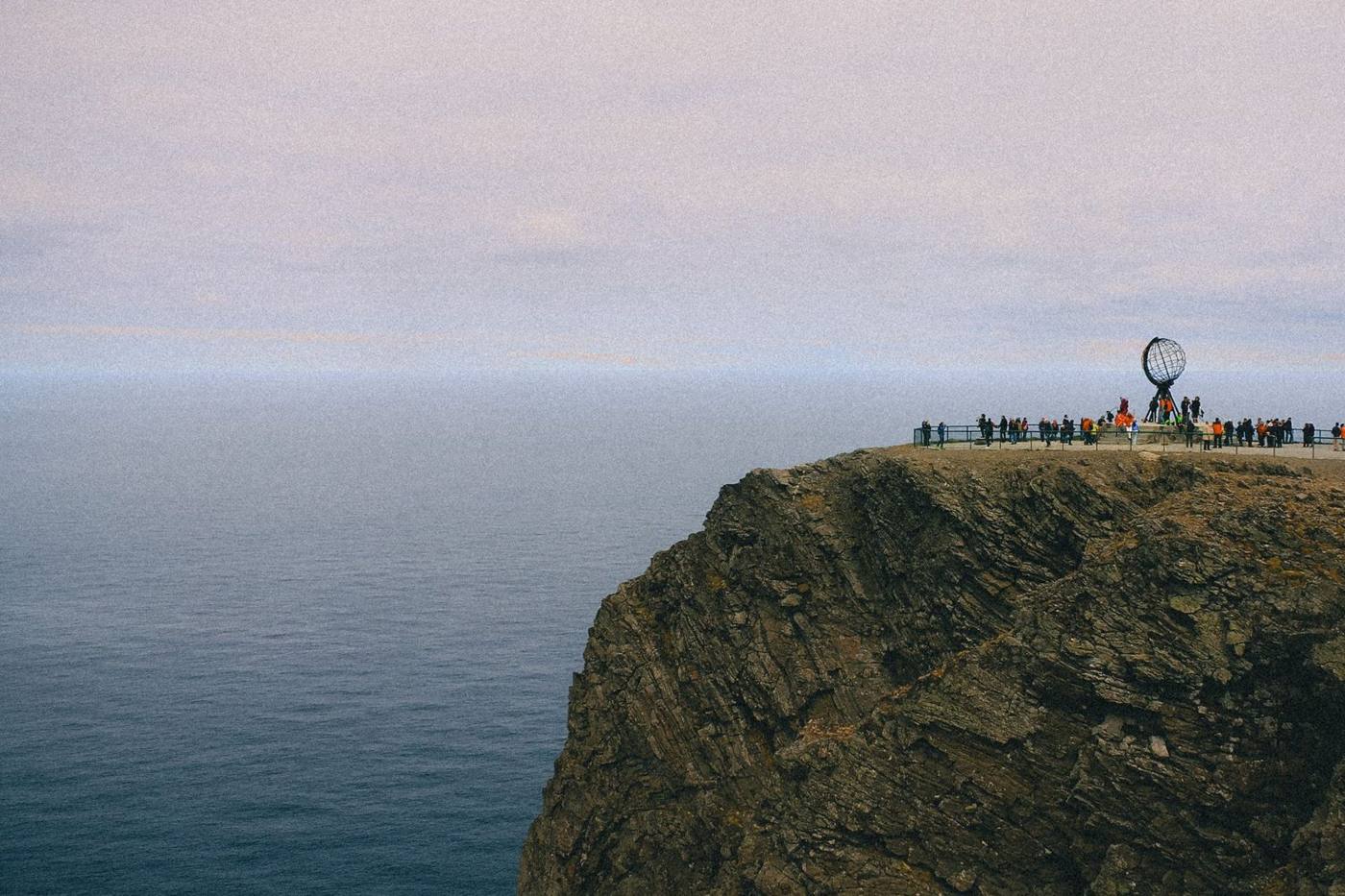
North Cape and Finnmark
The midnight sun at North Cape, the rock carvings of Alta, Sami culture in Karasjok and fishing villages on the Barents Sea.