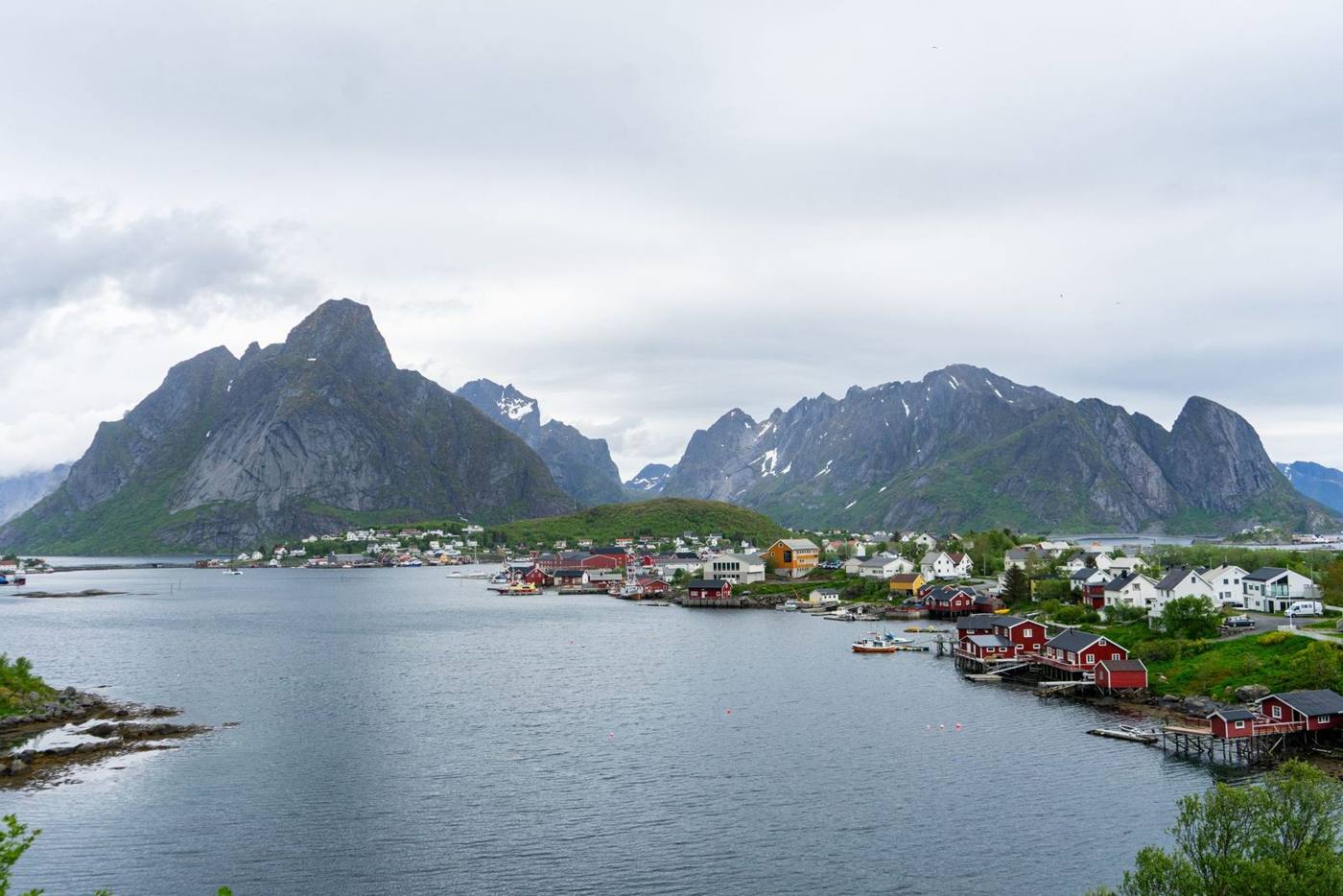
The Lofoten Islands
Fishing villages with red rorbu cabins, peaks plunging into the sea, white beaches and trails such as Reinebringen and Ryten.
- Bodø
- Moskenes
- Reine
- Hamnøy
- Ramberg
- Henningsvær
- Svolvær
Day by day
- Day 1
Flight to Bodø and ferry to Moskenes
Norway is not in the European Union but is in the Schengen area: EU citizens need only a valid identity card. Almost everything is paid by card, even in the villages.
The Lofoten Islands are an archipelago above the Arctic Circle in northern Norway: pointed granite mountains rising straight from the sea, fishing villages with red houses on stilts, white beaches and turquoise water. From Oslo you fly to Bodø on the mainland in about an hour and a half.
From Bodø the ferry leaves for Moskenes, in the southern Lofoten, a crossing of about three and a half hours over the open sea of the Vestfjorden. In summer the car ferry must be booked ahead, because places sell out. The sea can be very rough.
From Moskenes you reach Reine in a few minutes, the most famous village, where it is best to stay for the first days, in a rorbu, an old fisherman's cabin by the sea now converted into accommodation.
In the evening, if you are here between late May and mid-July, the sun never sets: this is the midnight sun. In winter, from December to March, you can see the northern lights instead.
Practical tip: in Lofoten the weather changes quickly even in summer, with wind, rain and cool temperatures; bring a waterproof jacket and warm layers.
- Day 2
Reine, Hamnøy and the village of Å
In the morning stroll around Reine and across the bridge to Hamnøy, from which you see the most famous view in Lofoten: red houses on the water with pointed mountains behind, reflected in the fjord in calm weather. On the wooden racks, from February to June, cod hang drying into stockfish, the same product that has reached Italy for centuries.
In the afternoon drive to Å, the village at the end of the E10 road at the southern tip of Lofoten. Its name is one of the shortest words in the world. The fishing village museum shows the houses, the cod liver oil factory and the historic bakery, where you can buy cinnamon buns. From the car park you walk to the point, with views of the island of Værøy and the Moskstraumen, one of the strongest tidal currents in the world, which inspired the Maelstrom of Edgar Allan Poe and Jules Verne.
On the way stop at Sakrisøy, with its yellow cabins, and at Moskenes.
In the evening, if the sky is clear, stay in Reine for the evening light on the mountains.
Practical tip: in Lofoten park only in authorised spaces; do not stop on bridges or in passing places for photos, which is dangerous and forbidden.
- Day 3
The climb up Reinebringen
In the morning climb Reinebringen, the mountain above Reine, for the most spectacular view in Lofoten: from the top you see Reine, the fjords, the islands and the surrounding mountains. The old path was steep and dangerous, with rockfalls and accidents; today a stone staircase of almost two thousand steps, built by Nepalese Sherpas, climbs to about 450 metres. The climb takes about an hour up and an hour down, and is hard on the legs. Check first that the staircase is open: it is sometimes closed for works or bad weather, and in winter with ice the climb is dangerous.
In the afternoon relax in Reine or take a boat or kayak trip in the Reinefjorden among the mountains with local guides. In summer a small boat from Reine harbour goes to Vindstad, from where you walk in about an hour to Bunes beach, one of the finest and most isolated beaches in Lofoten, with white sand and rock walls all around.
In the evening, in the village restaurants, try local food: fresh cod in winter, stockfish, salmon, king crab, and bacalao, stockfish cooked with tomato and potatoes.
Practical tip: wear hiking shoes with good soles; in the rain the stone steps are slippery. Keep away from the edge at the top, and carry water.
- Day 4
Ramberg and Haukland beaches and the Ryten trail
In the morning drive north on the E10 to Ramberg, about half an hour from Reine, with a long white sand beach and turquoise water that looks tropical; the water, however, is cold even in summer. Nearby, Flakstad has a red eighteenth-century wooden church.
Continue to Fredvang across two bridges and walk the Ryten trail, about three hours there and back: it climbs over bogs and rocks to a cliff more than 500 metres high, with a view down onto Kvalvika beach, enclosed by mountains and reachable only on foot. If you have time, descend to the beach, where some people camp.
In the afternoon continue to Haukland and Uttakleiv beaches on Vestvågøy island, two of the finest in Lofoten, linked by a coastal path or a tunnel. Under the midnight sun, Uttakleiv beach is one of the most photographed spots.
In the evening stay near Leknes or Haukland.
Practical tip: in Lofoten wild camping is regulated in many areas to protect nature and the villages; follow the signs. Do not leave rubbish and use public toilets, as facilities are few. The beaches are lovely for a walk, but swim only on calm days: the water rarely goes above fourteen degrees. Fill up with fuel in Leknes, because petrol stations are few on the islands.
- Day 5
The Borg Viking museum and Henningsvær
In the morning visit the Lofotr Viking Museum at Borg on Vestvågøy, where archaeologists found the remains of a Viking chieftain's house, the longest ever found in Scandinavia, more than eighty metres long. The house has been rebuilt full size, and inside guides in costume show Viking life, with the fire lit, the feasting hall, craftspeople and animals. In summer you can take a trip on a reconstructed Viking ship.
In the afternoon drive to Henningsvær, about an hour away, a fishing village built on small islands linked by bridges, called the Venice of Lofoten. The village has art galleries, workshops, stockfish racks and the famous football pitch built on the rocks, surrounded by sea and mountains, one of the most famous images of Norway.
Henningsvær is also a base for climbing on the granite of the nearby mountains, with schools and guides.
In the evening stay in Henningsvær or Svolvær.
Practical tip: the road to Henningsvær is narrow with single-lane bridges; give way and drive calmly. In the villages many shops close early in the evening and on Sundays. In summer the museum also holds Viking festivals and markets, with craftspeople and food cooked over the fire. Allow at least two hours for the visit and the walk around the grounds.
- Day 6
Svolvær and the Trollfjord
Today is Svolvær, the main town of Lofoten, a small harbour town with mountains behind. Above the town you see the Svolværgeita, the Svolvær goat, a two-pronged rock on which climbers jump from one horn to the other: it can only be climbed with a guide.
In the morning take a boat trip into the Trollfjord, a narrow fjord about two kilometres long and in places only a hundred metres wide, with rock walls up to a thousand metres high. Large Hurtigruten ships enter the fjord and turn around inside it. On the trip you often see white-tailed eagles, with a wingspan of more than two metres, diving to catch fish.
In the afternoon visit the Lofoten war museum or the art gallery, or walk to Kabelvåg, a few kilometres away, with the great wooden church called the Lofoten Cathedral, built in 1898 for the fishermen who came in their thousands during the cod season.
In the evening dine by Svolvær harbour.
Practical tip: boat trips are cold even in summer because of the wind; bring a jacket, hat and gloves. Book eagle trips with operators who do not disturb the birds. From Svolvær harbour you can also watch the fishing boats unload their catch in the late afternoon.
- Day 7
Flight from Svolvær or Evenes and departure
The last day is for the journey back. From Svolvær you can fly to Bodø on small planes, or drive to Harstad/Narvik airport at Evenes, about two and a half hours away, through the Vesterålen islands, with direct flights to Oslo. Alternatively the express boat links Svolvær and Bodø.
If you have time before leaving, in the morning you can walk up Tjeldbergtind, a hill above Svolvær, about an hour and a half there and back, with a fine view of the town and islands.
On the road to Evenes you cross the Vesterålen, islands less famous than Lofoten but just as beautiful, with mountains and fishing villages. From Andenes in the Vesterålen whale-watching trips leave to see mainly sperm whales, which feed in the deep water close to the coast.
Things to take home: stockfish, sold dried and whole in Norway, cod liver oil, Norwegian wool jumpers, and wood and reindeer leather crafts.
Practical tip: in Lofoten flights and ferries can be cancelled because of strong wind; allow a day's margin before your international flight. Norway is one of the safest countries in the world: the main risks are weather, sea and mountains. Check your government's travel advice before leaving.
One of the most spectacular archipelagos in the world, but very busy in summer, with little parking and strict rules on wild camping. The weather changes hour by hour, so keep hikes flexible. Rorbu cabins must be booked months ahead. Winter is beautiful but roads can be icy.
Before you go
- Documents and visa
- EU citizens need only a valid identity card or passport: Norway is not in the European Union but is in the Schengen area.
- Health and vaccines
- No vaccines required. The European Health Insurance Card is valid in Norway; insurance covering mountain rescue is useful. Emergencies: 112 police, 113 ambulance, 110 fire.
- Money and payments
- Norwegian krone. Cards are accepted almost everywhere, even for small sums and on public transport; cash is hardly needed. Prices are among the highest in Europe.
- Power sockets
- Types C and F, 230 volts.
- Time zone
- UTC+1 in winter, UTC+2 in summer.
- Safety
- One of the safest countries in the world. Risks are natural: bad weather in the mountains, rockfalls, roads closed in winter. Official advice: GOV.UK.
Information checked in November 2026 for Italian and EU citizens. Rules change: always check before you travel.
Variations
In 5 days: Reine and Hamnøy, Reinebringen, Ramberg and Haukland beaches and the Henningsvær football pitch, skipping the Viking museum and the Trollfjord.
In 10 days: add the Vesterålen islands with the Andenes whales, or Tromsø and the Lyngen Alps.
Frequently asked questions
When is the best time for Lofoten?
From late May to mid-July for the midnight sun and hiking; from December to March for the northern lights and the cod fishing season, with very short days and sometimes snowy roads.
Do I need a car in Lofoten?
It is the best way to get around: buses are few. In summer the car ferry from Bodø must be booked in advance.
Is the Reinebringen climb hard?
It is almost two thousand stone steps to about 450 metres: about an hour up, tiring but not technical. In rain or ice it becomes dangerous; check that the staircase is open.
Indicative itinerary written by World Atlas. Before booking, check timetables, seasonal openings, documents and safety.
 7 daysEasy
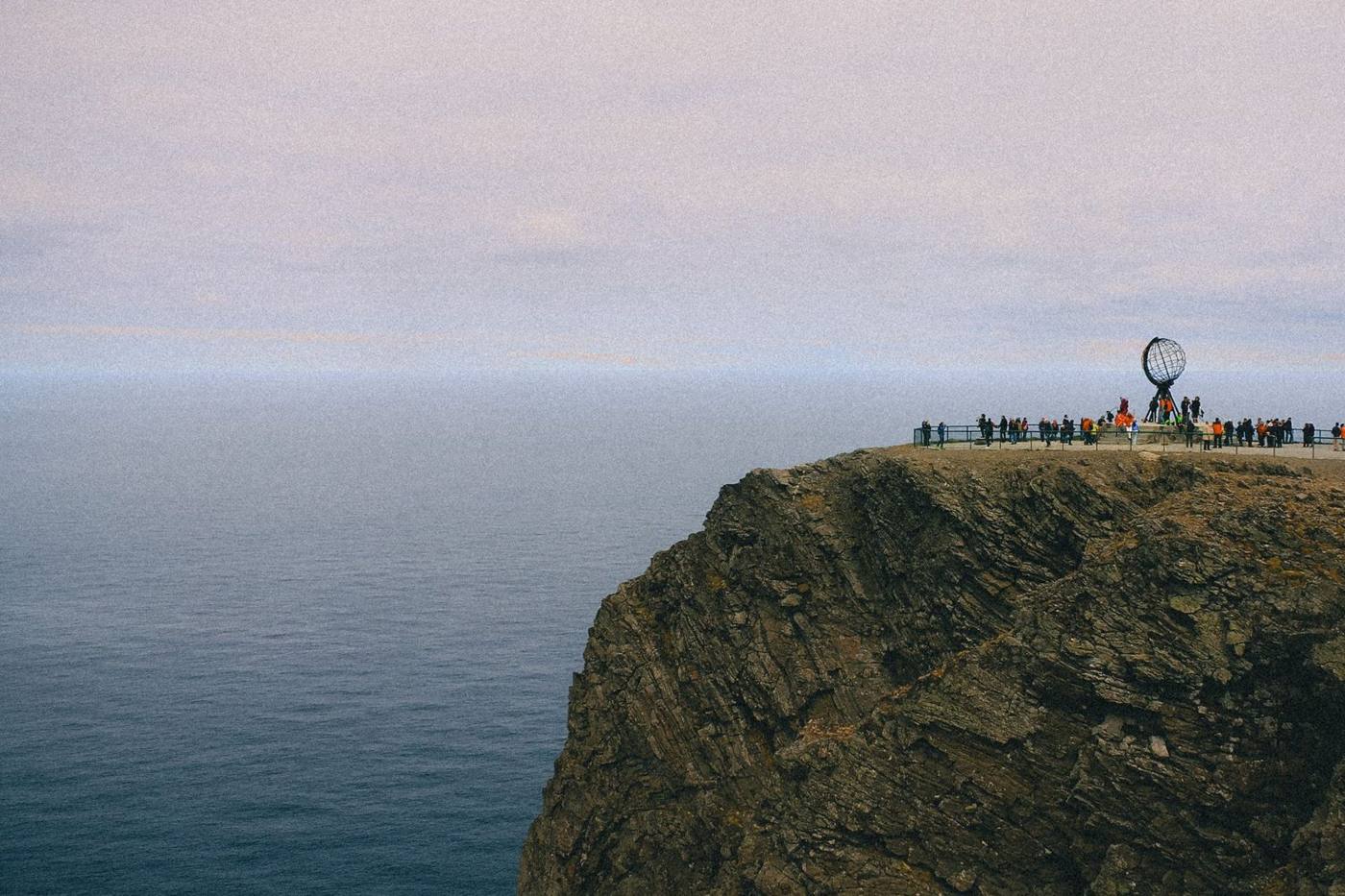
North Cape and Finnmark
The midnight sun at North Cape, the rock carvings of Alta, Sami culture in Karasjok and fishing villages on the Barents Sea.
 5 daysEasy
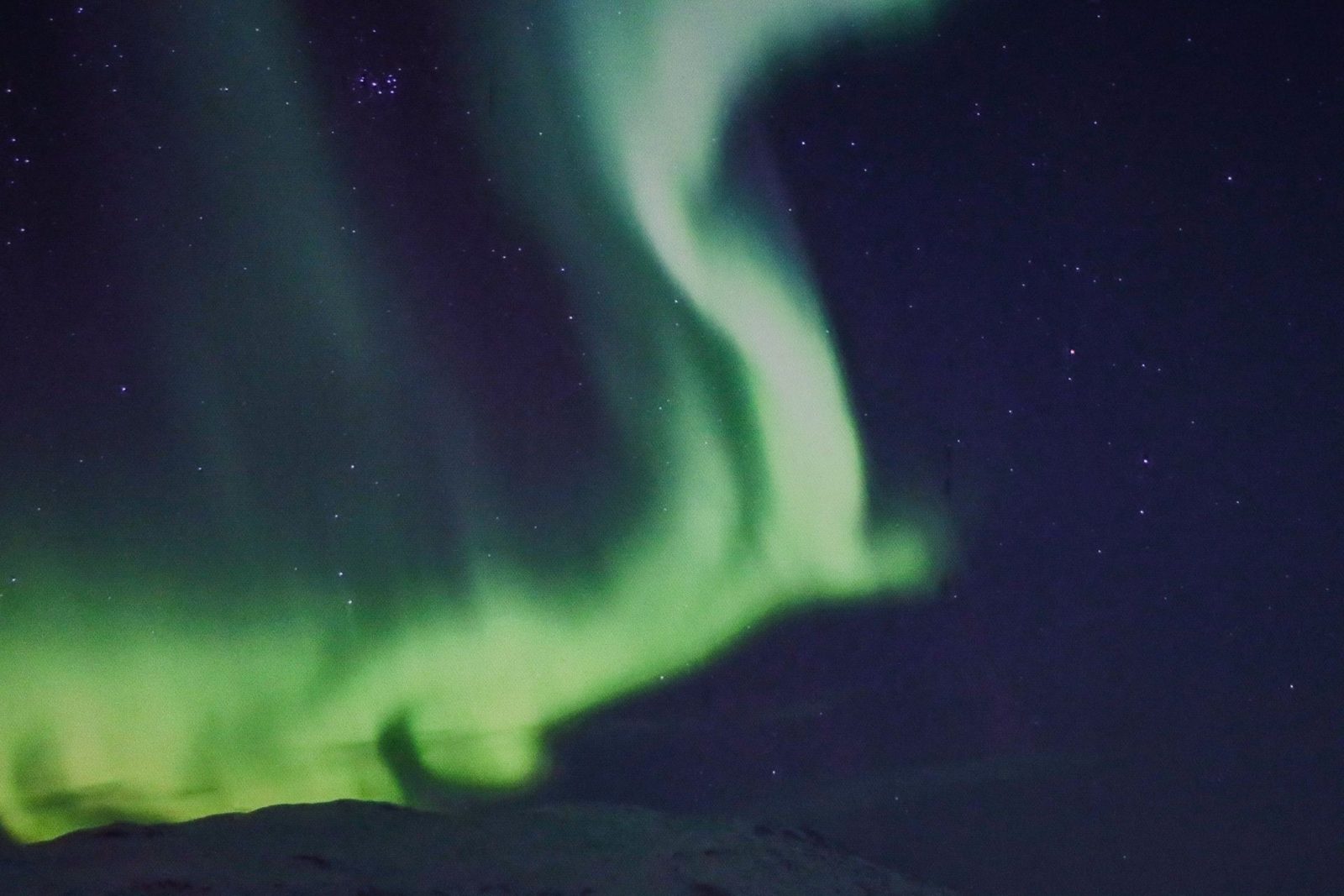
Tromsø and the northern lights
The Arctic capital in winter: aurora chasing by minibus, husky and reindeer sledding, and orcas in the fjords from November to January.
 12 daysEasy
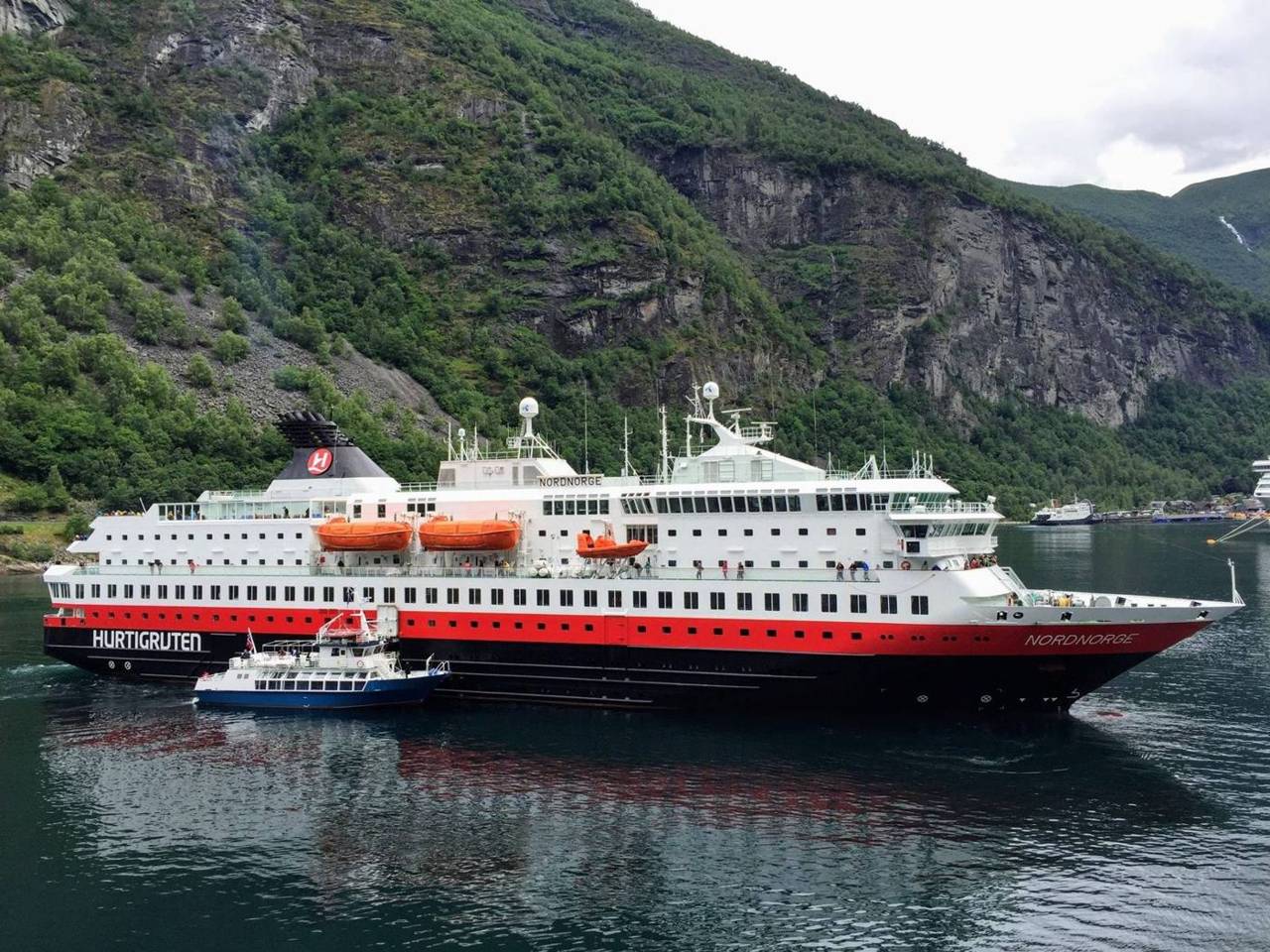
The Hurtigruten from Bergen to Kirkenes
Six days on the coastal ship along the whole coast, with 34 ports, the Trollfjord, Lofoten and North Cape, then three days in Kirkenes and Tromsø.