Telemark: the canal and the stave churches
Rural inland Norway: a cruise on the Telemark Canal through its 19th-century locks to Dalen, Heddal stave church, the largest in the country, the Rjukan hydroelectric site (UNESCO) and the cable car built to bring winter sun to the valley.
- Oslo
- Skien
- Dalen
- Heddal
- Rjukan
Day by day
- Day 1
From Oslo to Skien, Ibsen's town, and the first stretch of the Telemark Canal
Telemark is a region of southern Norway, west of Oslo, of long narrow lakes, spruce forests, red wooden farms and gentle mountains. Through it runs the Telemark Canal, a waterway of about 105 kilometres from Skien to Dalen with eighteen locks, opened in 1892 to carry timber and people. Today it is one of Norway's most peaceful cruises. Norway is in the Schengen area but not the European Union; EU citizens can enter with a valid identity card or passport. The currency is the Norwegian krone.
In the morning leave Oslo for Skien, about two hours by train or car. Skien is the birthplace of the playwright Henrik Ibsen: at Venstøp farm, where he lived as a child, a small museum tells of his childhood, and in town there is a centre devoted to his works, such as A Doll's House and Peer Gynt.
In the afternoon, in the summer season, take the boat along the first stretch of the canal to Akkerhaugen or Lunde, or drive to the Vrangfoss locks, the most spectacular point: five locks one after another that lift boats about twenty-three metres beside a waterfall. The lock gates are still opened by hand by the lock keepers, with cranks.
In the evening stay along the canal, in one of the villages between the lakes.
Practical tip: the canal's historic boats sail only in summer, usually from May or June to early September; book ahead and check times, which change every year.
- Day 2
A slow voyage to Dalen through lakes, locks and forests
In the morning board one of the canal's historic boats, such as the Victoria, launched in 1882, or the Henrik Ibsen of 1907, with wooden decks and period saloons. The full voyage from Skien to Dalen takes a whole day, about ten hours, but you can also do just part of it, getting on or off at one of the villages along the way and returning by bus.
The boat crosses a series of long narrow lakes, the Norsjø, Flåvatn, Kviteseidvatn and Bandak, linked by locks. At each lock the boat enters a stone chamber, the keepers close the gates and the water rises slowly, lifting the boat to the next lake. The narrowest locks leave only a few centimetres on each side. Between locks you pass forests, farms, small harbours and rock walls dropping into the water, especially on the final stretch along Lake Bandak, where the mountains grow higher.
In the late afternoon you reach Dalen, a small village at the end of the canal, surrounded by steep mountains. Here stands a large historic wooden hotel in dragon style, built in 1894 for the first tourists, with towers and carvings.
In the evening visit, a few kilometres away, the Eidsborg stave church, a small medieval church with shingle-covered walls, and the West Telemark Museum next to it.
Practical tip: there is a bar on board, but bring water, a jacket and something to eat; on the lakes the wind can be cool even in summer.
- Day 3
Heddal stave church, Rjukan and the Vemork sabotage museum
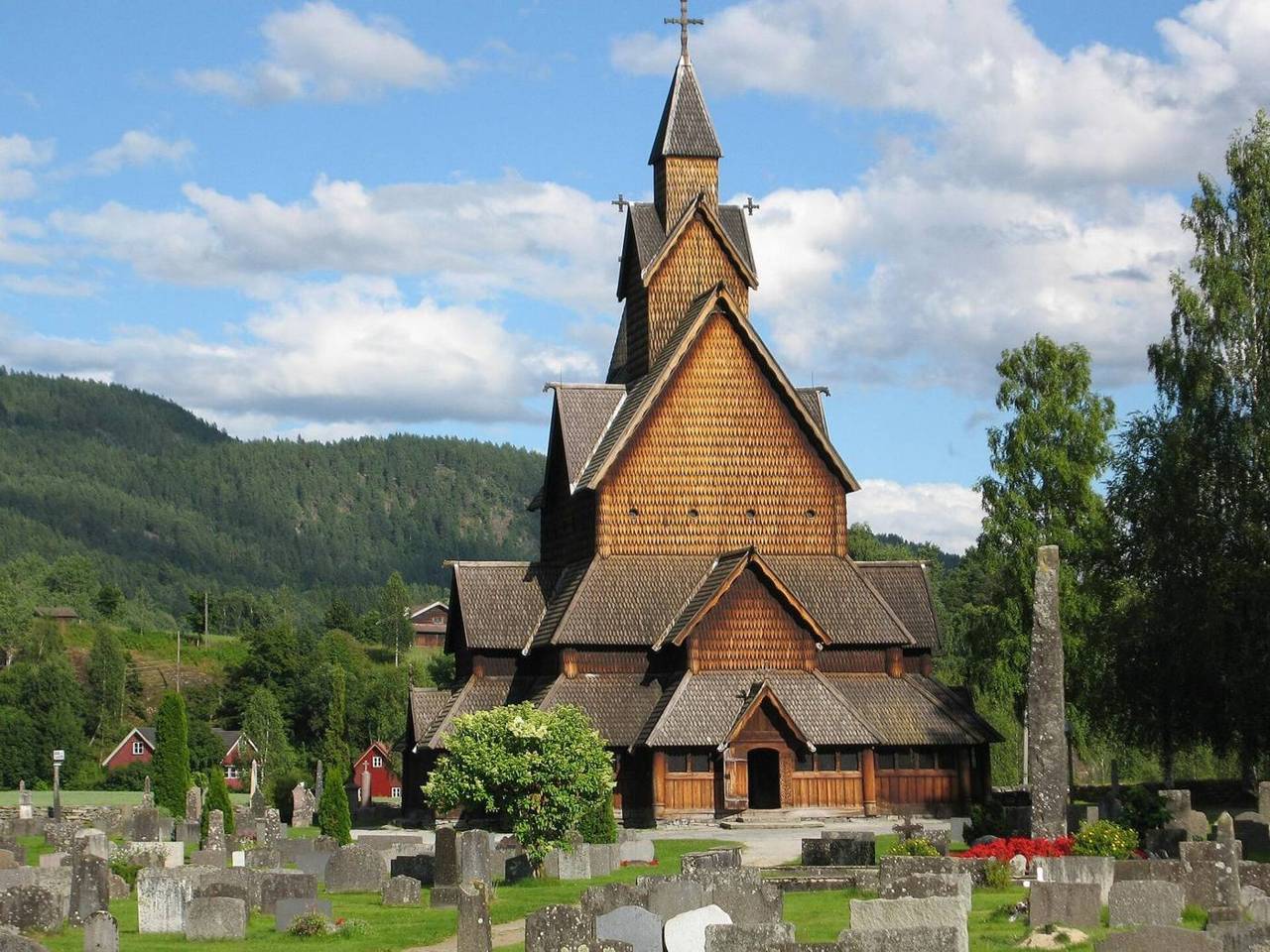
In the morning drive east to Heddal, about an hour and a half from Dalen, near Notodden, to see Heddal stave church, the largest of Norway's medieval wooden churches, built around 1250. It is a very tall church with roofs stacked on several levels covered in dark shingles, dragon heads, portals carved with vines and animals and a gallery around it. Inside are seventeenth-century paintings and a carved bishop's chair.
In the afternoon continue to Rjukan, about an hour away, an industrial town built in the early twentieth century at the bottom of a deep narrow valley around a hydroelectric plant. Rjukan and Notodden are a UNESCO World Heritage site as an example of an industrial town born from water power.
Visit the old Vemork power station, now the Norwegian Industrial Workers Museum. During the Second World War heavy water was produced here, which the Nazis wanted for atomic bomb research. In February 1943 a small group of Norwegian saboteurs went down into the gorge at night, climbed the cliff and blew up the plant without firing a shot: a famous operation told in the museum with documents and reconstructions. You reach the museum on foot over a suspension bridge above the gorge.
In the evening stay in Rjukan.
Practical tip: check the Vemork museum's opening times, which are reduced out of season.
- Day 4
The Krossobanen cable car, the sun mirror and back to Oslo
In the morning ride the Krossobanen, the cable car built in 1928 by the power company for the workers of Rjukan. At the bottom of the valley, from October to March, the sun never arrives, hidden by the mountains: the cable car let residents ride up to the light. In a few minutes it reaches a plateau at about eight hundred metres, with views over the valley and the Gaustatoppen mountain.
In town, above the square, is also the sun mirror, a set of large mirrors installed on the mountainside in 2013 that track the sun and reflect light onto the square in winter.
If the weather is fine and you have time, take a closer look at Gaustatoppen, at 1,883 metres the highest mountain in Telemark, from which on clear days you can see a sixth of Norway. You can climb it on foot in about two hours from a car park on the road, or take a rack railway running inside the mountain, dug for a military base.
In the afternoon head back towards Oslo, about two and a half to three hours by car, via Kongsberg, the silver-mining town, where you can visit the mining museum if you have time.
Things to take home: wooden objects painted with rosemaling, the floral decoration typical of Telemark, wool sweaters and brunost cheese.
Practical tip: the weather changes quickly in the mountains; even in summer bring a warm jacket and hiking shoes.
Canal boats only run in summer and the full crossing takes a whole day. Vemork tells the story of the heavy-water sabotage in the Second World War. A car is useful for Heddal and Rjukan. A valid identity card is enough for EU citizens. Norway is expensive: a credit card is accepted almost everywhere, even for small amounts.
Before you go
- Documents and visa
- EU citizens need only a valid identity card or passport: Norway is not in the European Union but is in the Schengen area.
- Health and vaccines
- No vaccines required. The European Health Insurance Card is valid in Norway; insurance covering mountain rescue is useful. Emergencies: 112 police, 113 ambulance, 110 fire.
- Money and payments
- Norwegian krone. Cards are accepted almost everywhere, even for small sums and on public transport; cash is hardly needed. Prices are among the highest in Europe.
- Power sockets
- Types C and F, 230 volts.
- Time zone
- UTC+1 in winter, UTC+2 in summer.
- Safety
- One of the safest countries in the world. Risks are natural: bad weather in the mountains, rockfalls, roads closed in winter. Official advice: GOV.UK.
Information checked in November 2026 for Italian and EU citizens. Rules change: always check before you travel.
Variations
In 2 days from Oslo: Heddal church and Rjukan with Vemork and the Krossobanen, without the canal.
In 6 days: add the climb of Gaustatoppen and two nights between Kongsberg and the Sørlandet coast.
Frequently asked questions
Can the canal be cruised all year?
No: the historic boats sail only in summer, usually from May or June to early September.
Do I need a car?
It is handy for Heddal, Rjukan and the return to Oslo; the canal itself can be done by boat and bus.
How long is the full voyage?
Skien to Dalen takes about ten hours; many people do just one stretch and return by bus.
Indicative itinerary written by World Atlas. Before booking, check timetables, seasonal openings, documents and safety.
 5 daysModerate
The Lyngen Alps
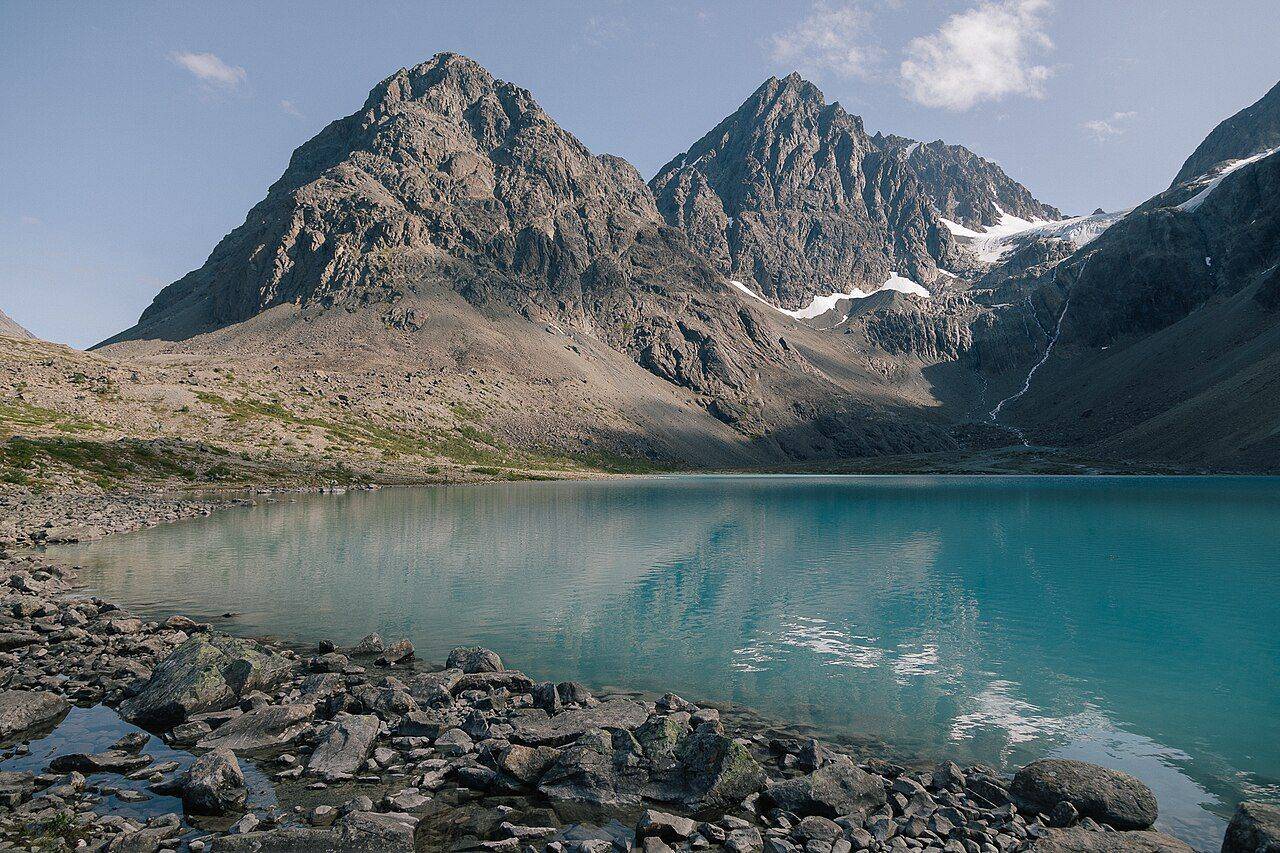
Pointed mountains dropping into the sea east of Tromsø: in summer, hikes to the glacial lake of Blåisvatnet and kayaking in the fjord under the midnight sun; in winter, ski touring down to the sea and northern lights far from city lights.
 3 daysEasy
Bergen in depth and its mountains
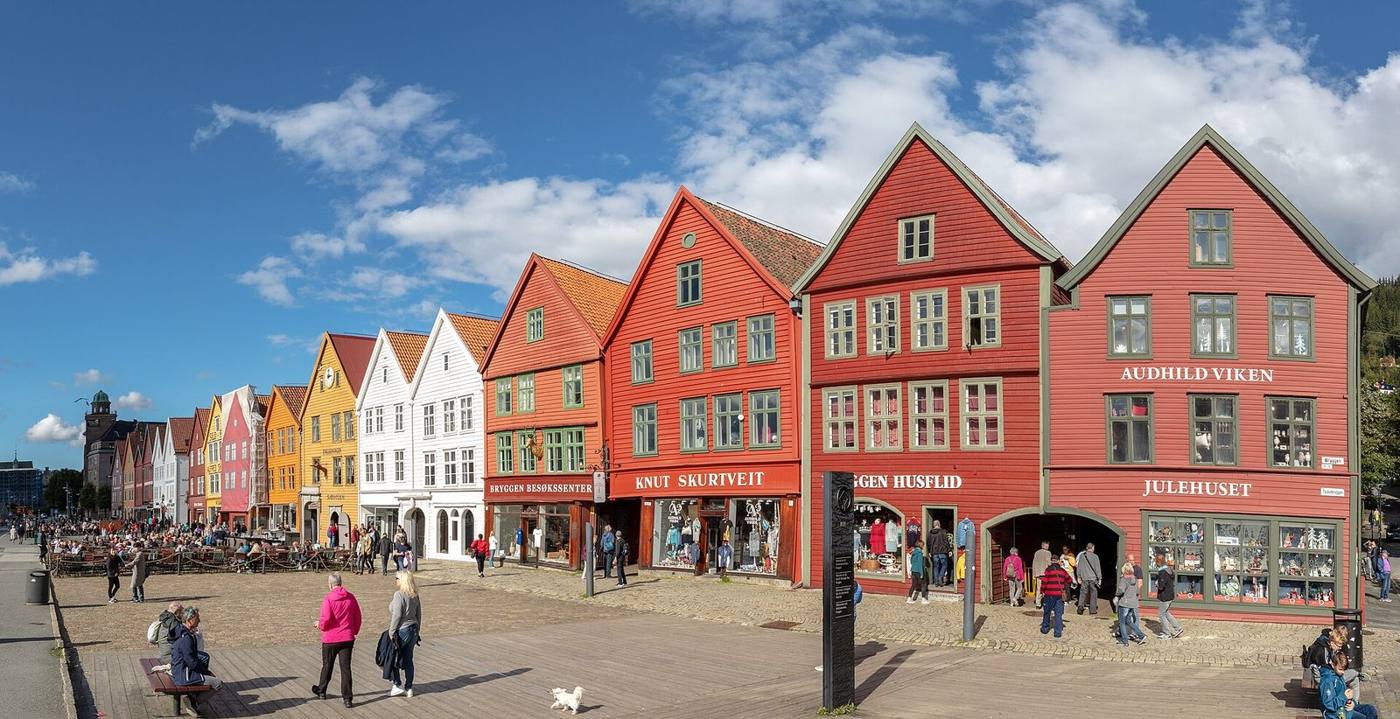
The city between seven mountains: the Hanseatic houses of Bryggen (UNESCO), the fish market, the Fløyen funicular and the ridge walk to Ulriken, the KODE museums with works by Munch and Edvard Grieg's home at Troldhaugen.
 10 daysEasy
The fjords: Bergen to Geiranger
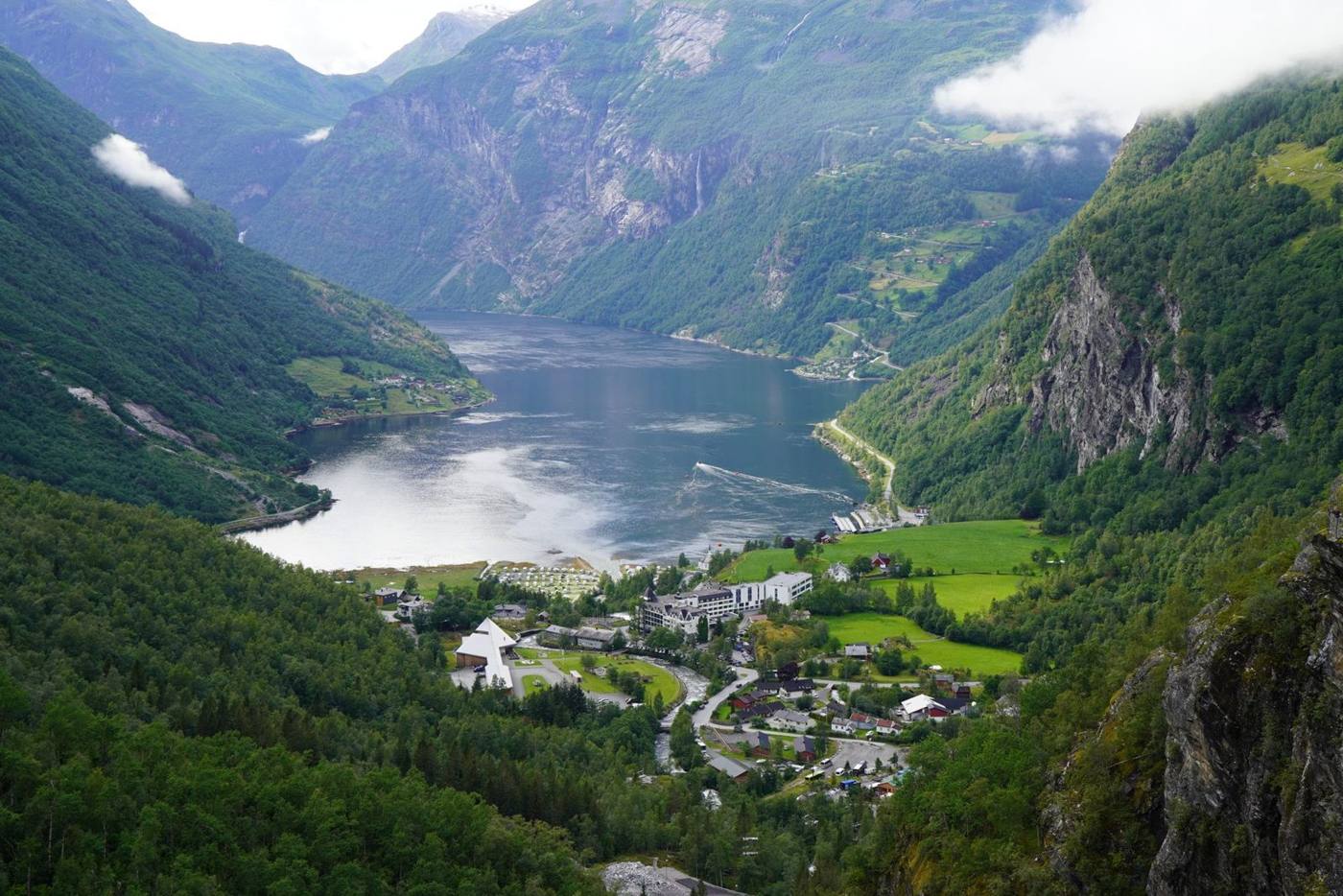
Bergen and Bryggen, the Sognefjord and the Flåm railway, Briksdal glacier, the Geirangerfjord and the Trollstigen road.