Ohrid and its lake
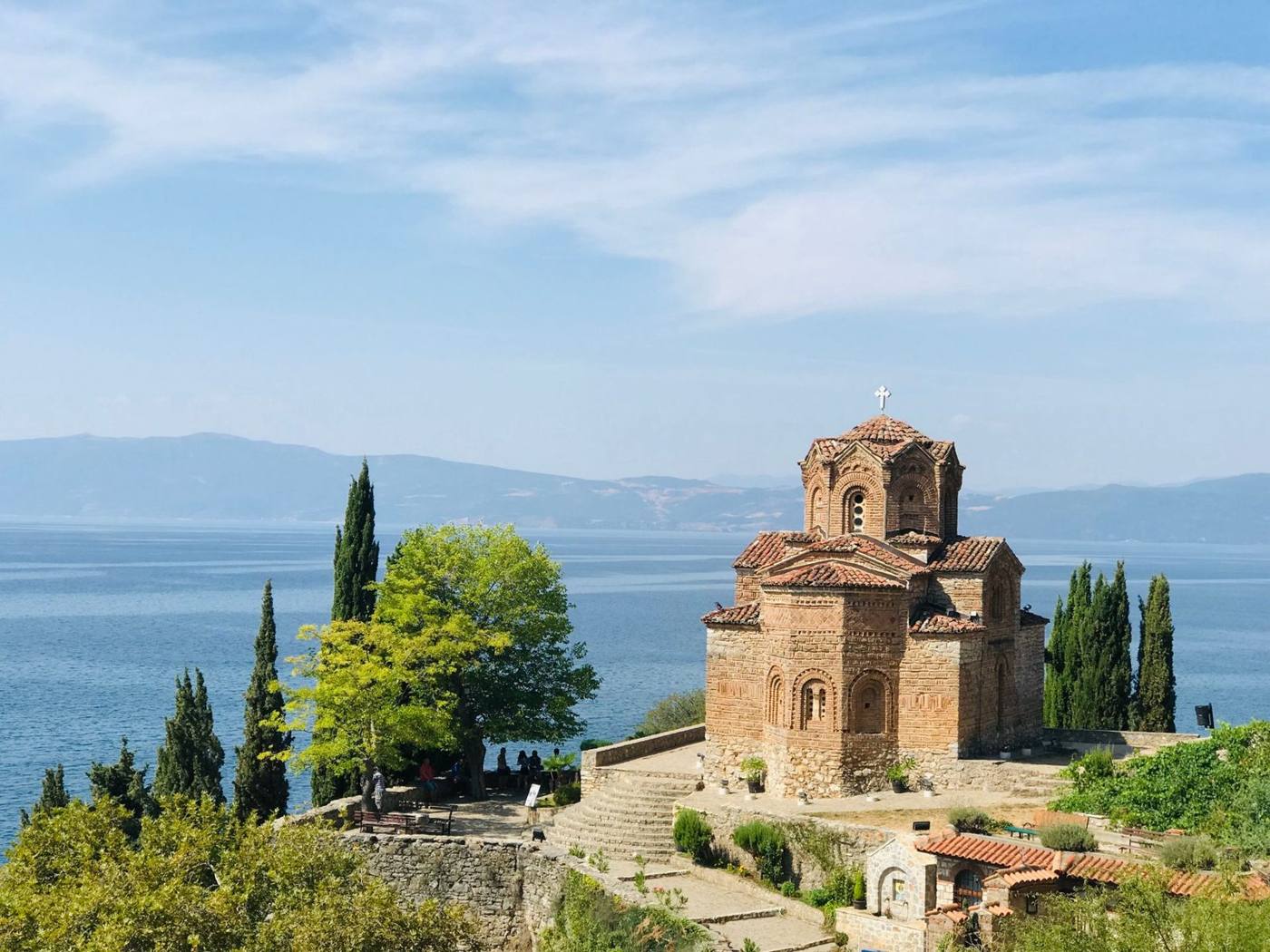
The UNESCO town of churches, St John at Kaneo on its cliff, the monastery of St Naum and the springs feeding the lake.
- Ocrida
- Kaneo
- Samuel's Fortress
- Bay of Bones
- St Naum
- Vevčani
Day by day
- Day 1
The Old Town, Saint Sophia and the ancient theatre
This trip takes you to Ohrid, the city of churches on Europe's oldest lake, a UNESCO World Heritage Site: the Old Town, Saint John at Kaneo on its cliff, the Bay of Bones, the monastery of Saint Naum with its springs and the village of Vevčani.
Before you go: Italian citizens can enter North Macedonia with an electronic identity card or a passport, with no visa needed, for stays of up to 90 days; bring a document with at least three months' remaining validity. The paper identity card has no longer been valid for foreign travel since 3 August 2026. Other nationalities should check their own rules. North Macedonia is not in the European Union: the EHIC is not valid, and for hiking you need insurance that also covers mountain rescue. The currency is the denar. The country is calm for travellers; from April to October there are wildfires.
You arrive at Ohrid airport, about twenty minutes from the town, or by bus from Skopje. Stay in the Old Town or near the waterfront.
In the afternoon climb the narrow streets of the Old Town, with white nineteenth century houses whose wooden upper floors jut out over the street. Go into the Church of Saint Sophia, from the eleventh century, with Byzantine frescoes among the most important in the Balkans. Check prices and times.
Then walk up to the ancient theatre, from the Hellenistic period, with stone tiers and a view over the roofs and the lake. In summer it hosts concerts and shows.
At sunset go down to the small harbour and stroll along the waterfront.
Practical tip: the Old Town is all uphill, with steps and slippery cobbles; wear comfortable shoes and climb slowly in the cooler hours.
- Day 2
Plaošnik, Samuel's Fortress and Kaneo at sunset
Today you visit the spiritual heart of the town and end the day on the most photographed cliff in the country.
In the morning climb to Samuel's Fortress, at the top of the hill, with its restored walls and towers. It was the capital of Tsar Samuel at the end of the tenth century. From the walls you see the whole lake, the mountains and, on the opposite shore, Albania. Check prices and times.
Then walk down to Plaošnik, in the pine wood below the fortress. Here, at the end of the ninth century, Saint Clement founded one of the first schools of Slavic culture, where people learned to read and write in the Slavic language. The Church of Saints Clement and Panteleimon has been rebuilt on its ancient foundations; around it you see the floor mosaics of an early Christian basilica.
At midday have lunch in town and rest during the hottest hours.
In the afternoon walk along the lakeside path, over the wooden boardwalks and to the little beach of Kaneo, the old fishermen's quarter.
At sunset climb to the Church of Saint John at Kaneo, from the thirteenth century, on a rock high above the lake. With the sun low, the church, the water and the mountains of Albania create the most famous view in North Macedonia.
Practical tip: at Kaneo there are many people at sunset; arrive half an hour early to find a good spot and bring a torch for the walk back through the wood.
- Day 3
The Bay of Bones and the monastery of Saint Naum
Today you follow the coast southwards, between a prehistoric village on the water and a monastery near the springs that feed the lake.
In the morning drive south for about half an hour to the Bay of Bones. Here archaeologists found the remains of a Bronze Age pile dwelling village, with thousands of wooden posts under the water. Today part of it has been rebuilt: you walk on a wooden platform among huts with thatched roofs and see the small museum. Check prices and times.
Then carry on to the monastery of Saint Naum, at the southern end of the lake, near the border with Albania. It was founded at the beginning of the tenth century by Saint Naum, companion of Saint Clement. The church is surrounded by gardens with peacocks and a terrace over the lake.
At midday board one of the rowing boats that take you onto the springs below the monastery. You glide over green, transparent water, among reeds and willows, where the water rises from the bottom and feeds the lake. Check prices and times.
In the afternoon swim at one of the pebble beaches along the road back, such as those near Peštani or Trpejca, a small fishing village.
In the evening return to Ohrid.
Practical tip: Saint Naum is close to the Albanian border, but you do not need to cross it to get back to Ohrid; if you want to enter Albania, bring your document and check the rules for hire cars beforehand.
- Day 4
Vevčani and a day on the lake
Today you visit a mountain village famous for its springs and its rebellious character, then enjoy the lake.
In the morning drive north-west, past Struga, to Vevčani, about half an hour from Ohrid, on the slopes of Mount Jablanica. The village has stone houses, steep streets and a park with springs, where cold water flows out of the rock and runs among little wooden bridges and small waterfalls.
In 1991 the villagers declared, as a joke, the independence of the village, with a flag and a souvenir passport. Vevčani is also famous for its January carnival, with ironic and satirical masks.
At midday have lunch with mountain dishes: baked beans, cheeses and grilled meat.
In the afternoon head back towards the lake and pass through Struga, where the River Black Drin flows out of the lake and through the town.
Then choose a beach for a day on the lake: swim in clear water, hire a pedalo or take a boat trip along the coast to the churches on the shore.
In the evening, in Ohrid, buy Ohrid pearls, artificial pearls made according to a local tradition.
Practical tip: in Vevčani the springs are at their best in spring and early summer, when the water is plentiful; at the end of summer, in dry years, the flow can be low.
- Day 5
Departure from Ohrid airport
On the last day you enjoy a final morning by the lake before leaving.
In the morning get up early and walk along the waterfront while the town is still quiet and the fishermen come back with their boats. The morning light on the churches and the water is beautiful.
Then visit the Church of the Virgin Peribleptos, near the theatre, with frescoes from the end of the thirteenth century, and the icon gallery next to it, with some of the finest Byzantine icons in the Balkans. Check prices and times.
At midday eat something in the old bazaar, around the great plane tree, and buy a last jar of ajvar or some mountain herbal tea.
In the early afternoon head to the airport, about twenty minutes away.
Trip summary: in five days you have seen the Old Town of Ohrid with Saint Sophia, the ancient theatre, Plaošnik and Samuel's Fortress, the Church of Saint John at Kaneo at sunset, the Bay of Bones with its pile dwellings, the monastery of Saint Naum with its springs and the village of Vevčani. It is one of the most beautiful places in the Balkans, with prices that are still low.
When to go: from May to September. In July and August it is very busy: June and September are the best months, with warm water and fewer crowds.
Practical tip: combine this trip with Albania, on the opposite shore of the lake; before you go, check the border rules and the cover of your car insurance.
One of the most beautiful places in the Balkans, with prices still low. July and August are full of regional tourists: June and September are the best months. It pairs well with Albania on the opposite shore.
Before you go
- Documents and visa
- EU citizens can enter with a valid identity card or passport, without a visa, for stays of up to 90 days in any 180. North Macedonia is not in the EU or the Schengen area. Other nationalities should check their own rules; British passports need at least three months' validity beyond the date you leave.
- Health and vaccines
- No vaccines required. The EHIC is not valid: take insurance covering medical costs and repatriation, and helicopter rescue if you hike in the mountains. Summers in the valleys are very hot: drink plenty of water. Emergencies: 112.
- Money and payments
- Macedonian denar. Cards work in cities and tourist areas; villages, markets and mountain guesthouses need cash. There are cash machines in every town.
- Power sockets
- Types C and F, 230 volts: you need an adapter for British plugs.
- Time zone
- Central European Time (UTC+1, summer UTC+2).
- Safety
- Attacks on foreign nationals are extremely rare, but there is pickpocketing and bag snatching in Skopje's shopping and nightlife areas, especially late at night. The UK says terrorist attacks cannot be ruled out and that organised crime groups are active in northern areas near the border with Kosovo. Wildfires are possible from April to October and the authorities often close forests in summer. Avoid driving after dark on unfamiliar rural roads. In the mountains the weather changes quickly and trails are not always marked: do not hike alone. Official advice: GOV.UK.
Information checked in November 2026 for Italian and EU citizens. Rules change: always check before you travel.
Variations
Shorter: three days, with the Old Town and Kaneo, then Saint Naum.
Longer: add two days in Bitola and Pelister National Park.
Frequently asked questions
Can you swim in Lake Ohrid?
Yes, the water is clear and pleasant in summer. The beaches are pebble or shingle: bring water shoes.
Do you need a car?
Not for the Old Town. For the Bay of Bones, Saint Naum and Vevčani a car is handy; in summer there are also buses and boats.
How much time do you need for Ohrid?
Two days are enough for the town, but with three or four days you also see the lake, Saint Naum and the villages.
Indicative itinerary written by World Atlas. Before booking, check timetables, seasonal openings, documents and safety.
 4 daysEasy
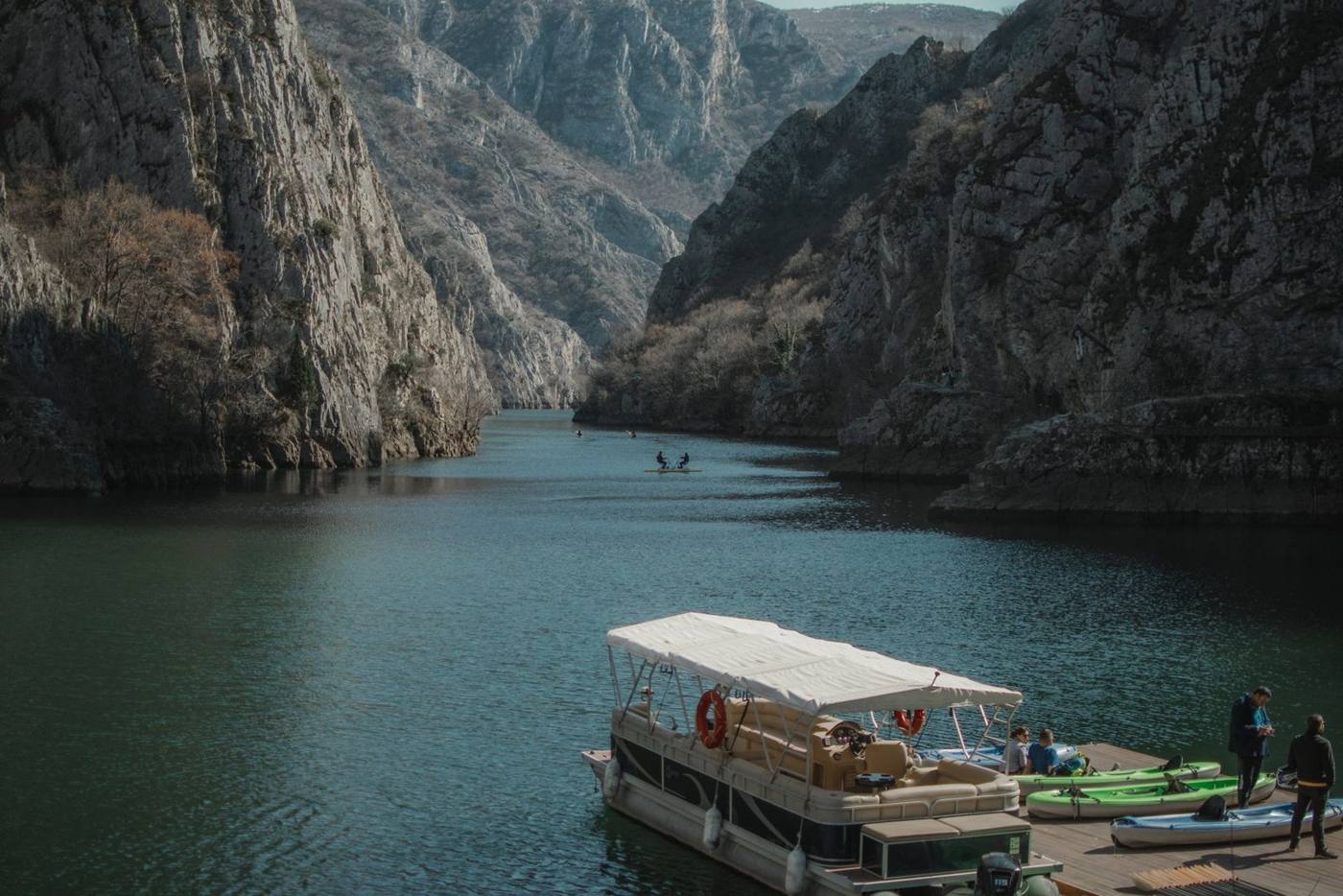
Skopje and Matka Canyon
The capital between the old Ottoman bazaar and the new statues, Matka Canyon by kayak and Kale fortress.
 6 daysModerate
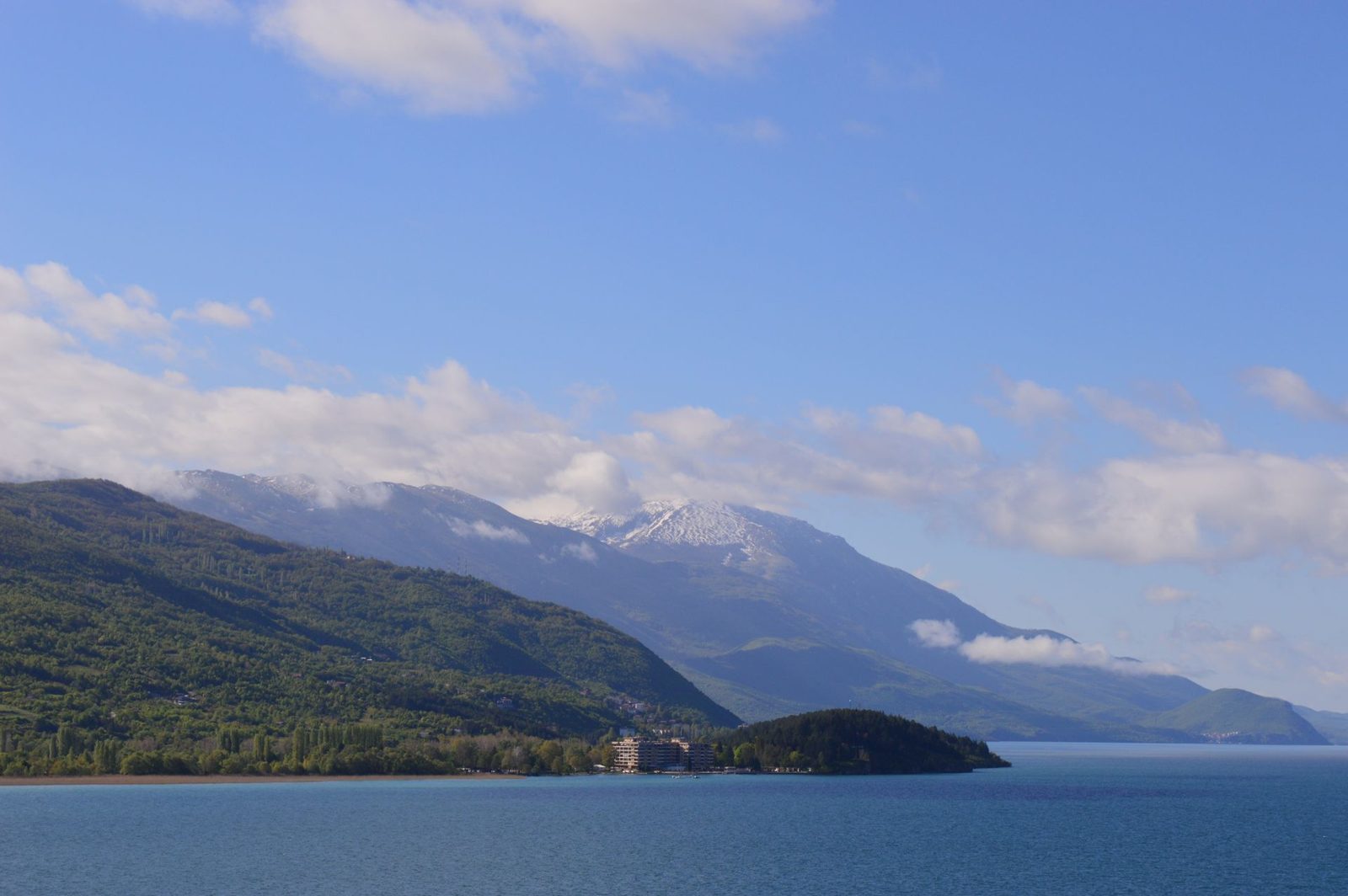
Mavrovo and the Prespa lakes
St John Bigorski monastery, Mavrovo National Park with its submerged church, Galičica National Park between two lakes, and Bitola.
 4 daysEasy
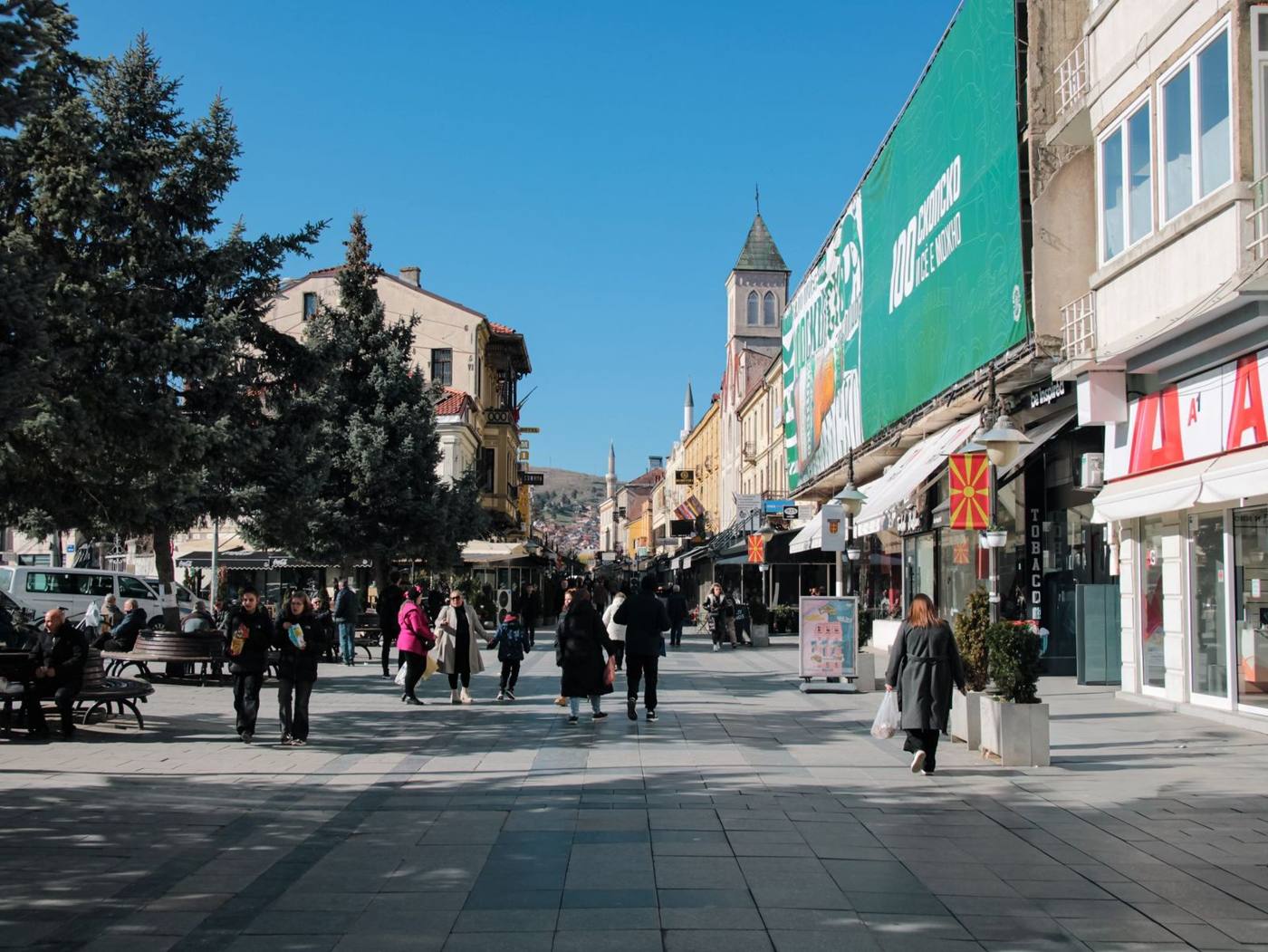
Bitola and Pelister
Bitola with its Širok Sokak street and cafés, the Roman mosaics of Heraclea Lyncestis, Pelister park with its molika pines and the Pelister Eyes lakes.