The Wadden Islands
The UNESCO-listed Wadden Sea: Texel and Terschelling by bike, seals, dunes, lighthouses and wadlopen, mudflat walking at low tide.
- Den Helder
- Texel
- Harlingen
- Terschelling
Day by day
- Day 1
Den Helder and the ferry to Texel
This five-day trip takes you to the Wadden Sea, a UNESCO World Heritage Site since 2009: a stretch of shallow water, sandbanks and islands along the northern coast of the Netherlands. You visit Texel and Terschelling by bike, see seals, lighthouses and dunes, and finish with wadlopen, walking on the seabed at low tide.
Before you go: the Netherlands is part of the European Union and the Schengen area and uses the euro. Italian citizens only need an electronic identity card valid for travel abroad or a passport; the paper identity card has not been valid for travel abroad since 3 August 2026. Other nationalities should check their own rules. Everyone aged 14 and over must be able to show ID to the police. On the islands the main danger is the sea: never go out onto the tidal flats alone.
From Amsterdam take the train to Den Helder, at the tip of North Holland, in just over an hour, then the bus to the port. The ferry to Texel leaves often and crosses the strait in about twenty minutes. Check prices and times.
Texel is the largest of the Wadden islands, with villages, sheep fields, woods and a western side made only of dunes and beach. In the afternoon hire a bike in Den Burg, the main village, and cycle to the dunes national park. Stop at De Slufter, a valley in the dunes where the sea flows in at high tide and creates a salt marsh full of birds.
In the evening try Texel lamb and the island's sheep's cheese.
Sleep on Texel, for two nights.
Practical tip: you do not need a car on the islands; leave it on the mainland and bring only your bike, or hire one there.
- Day 2
Texel: Ecomare, the dunes and the lighthouse
Today you discover the natural side of Texel, with its seals and its great red lighthouse.
In the morning visit Ecomare, in De Koog, a centre devoted to the nature of the Wadden and the North Sea. Here sick or orphaned seals are cared for and then released into the sea. You can watch them in the pools, especially at feeding time, and visit the museum with whale skeletons and aquariums. Check prices and times.
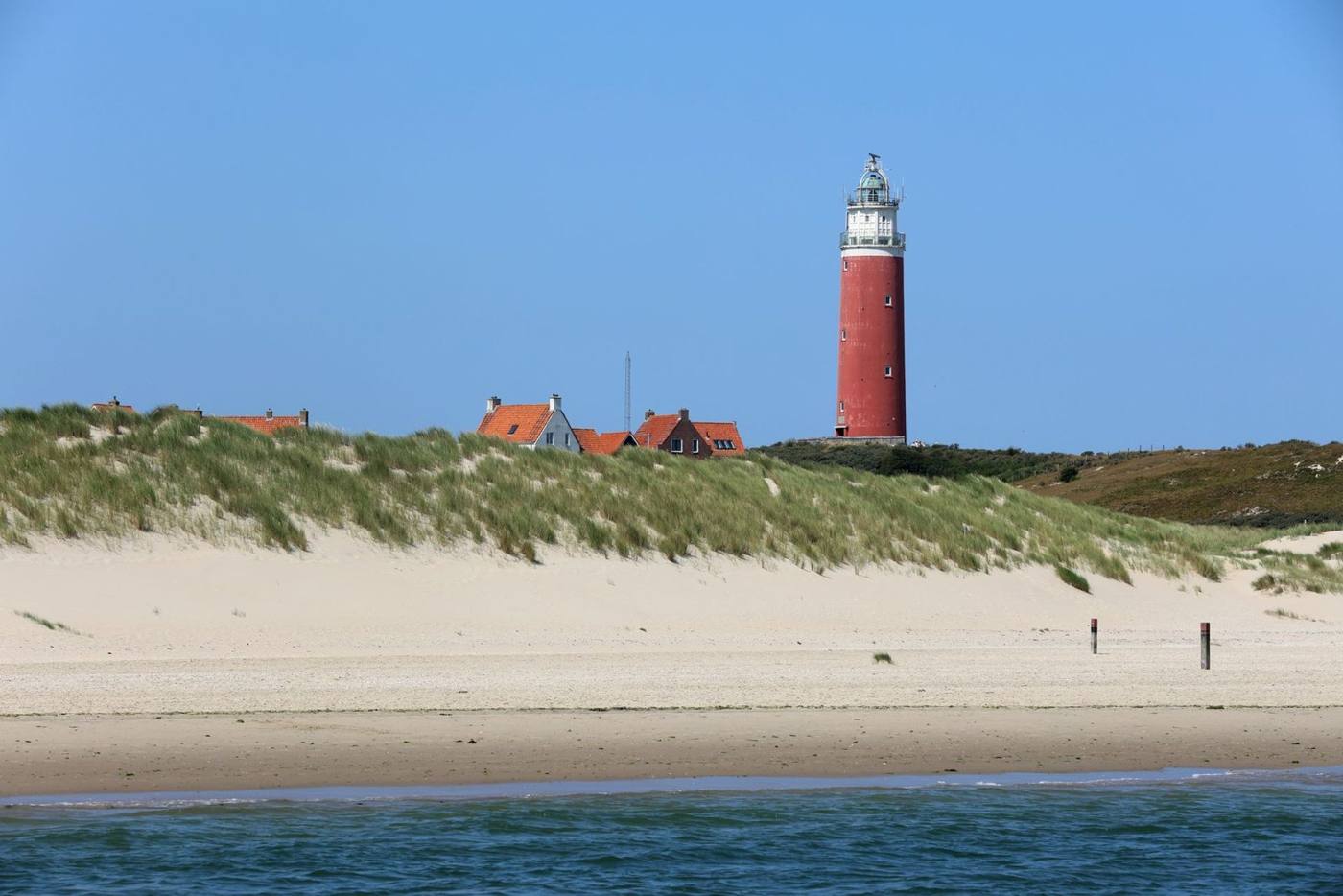
Then cycle along the fine sandy beach that runs along almost the whole west coast. From the dunes you see the open sea, the wooden posts and the old lifeguard huts.
In the afternoon continue north to the Texel lighthouse, near De Cocksdorp, a red nineteenth century tower at the tip of the island. You can climb to the top: from up there you see the sea, the dunes and, on clear days, the island of Vlieland. Check prices and times.
On the way back pass through the villages of Oosterend and Den Hoorn, with their low houses and white churches, and look at the turf walls that shelter the sheep from the wind.
In the evening walk on the dyke facing the Wadden Sea, when the tide goes out and the birds search for food in the mud.
Sleep on Texel.
Practical tip: the weather on the islands changes fast; always bring a windproof and waterproof jacket, even in summer.
- Day 3
To Harlingen and the ferry to Terschelling
Today you change islands, passing through the mainland.
In the morning take the ferry back to Den Helder. By car, across the Afsluitdijk, you reach Harlingen in about an hour and a half; by public transport, between train and bus, allow half a day. Harlingen is an old Frisian port with canals, merchants' houses and historic sailing boats. Walk along the quays before leaving.
In the early afternoon take the ferry to Terschelling: the slow one takes about two hours, the fast one much less. During the crossing watch the sandbanks that appear at low tide: there are often seals lying in the sun. In summer book ahead, especially if you are travelling by car, which you do not need on the island. Check prices and times.
You arrive in West-Terschelling, the harbour village, dominated by the Brandaris, one of the oldest lighthouses in the Netherlands, a square brick tower that has guided ships for centuries.
In the late afternoon hire a bike and ride to the dunes of West aan Zee to watch the sunset over the North Sea.
In the evening try dishes made with cranberries, the island's typical fruit: according to tradition, the first seeds arrived in the mid nineteenth century in a barrel washed ashore from a shipwreck.
Sleep on Terschelling, for two nights.
Practical tip: check the tide times on an official website; you need them for boat trips and for wadlopen.
- Day 4
Terschelling by bike and seals on the sandbanks
Today you explore Terschelling, a long, narrow island that is almost entirely protected.
In the morning cycle east along the paths through pine woods, dunes and meadows. The island has dozens of kilometres of cycle paths and very few cars. Ride through the small villages of Midsland, Hoorn and Oosterend, with their captains' houses and country churches.
At midday reach the edge of the Boschplaat, the nature reserve at the eastern tip of the island: a wide plain of sand, salt marsh and dunes where gulls, terns and oystercatchers nest. In spring some areas are closed for nesting; respect the signs and stay on the paths.
In the afternoon take a boat trip to see the seals on the sandbanks. The boats slowly approach the banks where common and grey seals rest at low tide. Times change every day with the tides. Check prices and times.
On the way back stop at the north beach, hundreds of metres wide, and walk across the sand to the sea.
In the evening return to West-Terschelling and watch the lighthouse light up above the harbour.
Sleep on Terschelling.
Practical tip: on the beach or near the banks keep your distance from the seals and never approach the pups: the mother is almost always nearby.
- Day 5
Wadlopen with a guide and departure
On the last day you walk where the sea was a few hours earlier.
Wadlopen is walking on the bed of the Wadden Sea at low tide. It is done only with licensed guides, because the tides rise quickly, the channels are deep and the mud can be soft and dangerous. On the island shorter walks on the tidal flats are organised, while the great crossings to the islands start from the coast of Friesland and Groningen. Times depend on the tide and the guide may cancel the walk in bad weather. Book ahead and check prices and times.
Wear old high-top shoes laced tightly, shorts and a jacket, and bring a change of clothes. As you walk you see worms, crabs, shells and bird tracks, and you hear the silence of the empty sea.
In the afternoon take the ferry to Harlingen and from there the train to Amsterdam, and leave.
In short: in five days you have seen Texel with its dunes, lighthouse and seal centre, the port of Harlingen, Terschelling by bike with the Boschplaat, seals on the sandbanks and the seabed on foot.
When to go: from May to September, with long days and wadlopen walks on the programme. In July and August ferries and accommodation are full: book early. Wind and rain are common in every season.
Practical tip: never try to walk on the seabed alone, not even a few metres beyond the shore: the rising tide can cut off your way back.
The natural side of the Netherlands, with almost islands closed to cars and vast beaches. Wadlopen is only allowed with licensed guides: the tides are dangerous and the mud deep. Summer ferries must be booked, especially with a car, which you do not need on the islands. Wind and rain are frequent even in summer.
Before you go
- Documents and visa
- EU citizens need a valid identity card or passport: the Netherlands is in the EU and the Schengen area. Everyone aged 14 and over must be able to show ID to the police, so always carry your document. Other nationalities should check the Schengen rules.
- Health and vaccines
- No vaccines required and healthcare is efficient. EU citizens should bring their EHIC; take insurance covering medical costs and repatriation. Emergencies: 112.
- Money and payments
- Euro. Cards are accepted almost everywhere, and some places and museums do not take cash.
- Power sockets
- Types C and F, 230 volts.
- Time zone
- Central European Time (UTC+1, summer UTC+2).
- Safety
- A safe country, but pickpocketing is common in Amsterdam, especially around Central Station, on trains and trams to Schiphol and in crowded places; bicycle theft is very common too. The terrorist threat is considered substantial and security checks are tighter at airports, stations and museums. Hard drugs are illegal and smoking cannabis in public places is not allowed. Watch out for cycle lanes when crossing the road. Official advice: GOV.UK.
Information checked in November 2026 for Italian and EU citizens. Rules change: always check before you travel.
Variations
In 3 days: Texel only, with the dunes, Ecomare and the lighthouse.
In 7 days: add Vlieland or Ameland, two more Wadden islands.
Frequently asked questions
Can you do wadlopen on your own?
No. It is done only with licensed guides, because the tides rise quickly and the mud can be dangerous. Book ahead and always follow the guide.
Do you need to book ferries to the islands?
In summer yes, especially if you bring a car, which you do not need on the islands. On foot or by bike it is easier, but check prices and times.
What document do I need for the Netherlands?
Italian citizens only need an electronic identity card valid for travel abroad or a passport. Other nationalities should check their own rules.
Indicative itinerary written by World Atlas. Before booking, check timetables, seasonal openings, documents and safety.
 3 daysEasy
Maastricht and Limburg
The most southern and Burgundian city in the Netherlands: the bookshop in the Dominican church, the Sint-Pietersberg caves, the vineyards and hills of Limburg.
 3 daysEasy
Hoge Veluwe and the Kröller-Müller
A national park of heath, woods and dunes explored on no-cost white bikes, and inside it the Kröller-Müller Museum with the world's second-largest Van Gogh collection.
 7 daysEasy
The Netherlands by bike
A week by bike from Amsterdam via the windmills, Utrecht, the rivers and dikes to Rotterdam, on paths separated from traffic.