Marrakech to Fès by way of the Sahara
The classic crossing: the High Atlas, the kasbahs of Ouarzazate, the Dades gorges and a night in the Merzouga dunes, ending in the medina of Fès.
- Marrakech
- Aït Ben Haddou
- Ouarzazate
- Dades
- Merzouga
- Fez
- Meknes
Day by day
- Day 1
Arrival in Marrakech and a first evening in Jemaa el-Fna
EU visitors need a passport valid for the whole stay; an identity card is not accepted. No visa is needed for tourist stays of up to 90 days. Marrakech Menara airport is about twenty minutes from the medina: take a taxi after agreeing the fare before you get in, or arrange a pick-up through your accommodation, since cars cannot enter the alleys and someone will need to walk you there with your bags.
Stay in the medina, the old city inside the red walls, in a traditional house with an inner courtyard. In the afternoon walk to the Koutoubia, the mosque with its twelfth-century minaret, about 77 metres tall, the landmark everyone uses to get their bearings: the interior is reserved for Muslims, but the surrounding gardens are open.
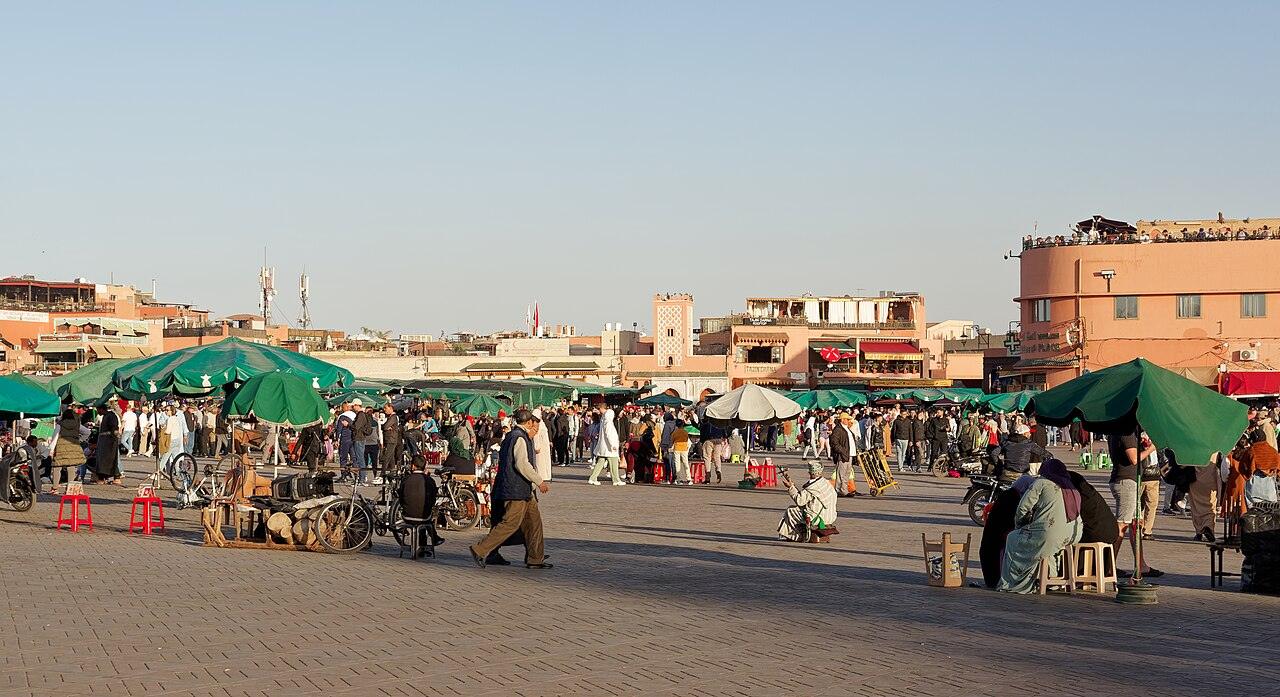
At sunset step into Jemaa el-Fna square, listed by UNESCO as intangible heritage: musicians, storytellers, orange-juice sellers, and towards evening dozens of stalls cooking in the open air. Look at the posted prices before sitting down and always ask how much a dish costs before ordering. For a view from above, climb to one of the café terraces around the square.
Beware of monkey handlers and snake charmers: if you take a photo they expect payment, and animal welfare groups ask visitors not to encourage this practice. Practical tip: change a few dirhams at the airport for the first taxis; dirhams cannot be taken out of the country beyond a small sum, so change little at a time.
- Day 2
The Tizi n'Tichka pass and Aït Ben Haddou
In the morning head south-east on the road across the High Atlas. You travel with a private driver, on a group tour or by rental car: the road is paved but winding, with slow lorries and hairpin bends. It climbs to the Tizi n'Tichka pass at about 2,260 metres, with views of bare mountains and earthen villages the same colour as the rock. In winter the pass can close for a few hours because of snow.
After the pass, a detour leads to Telouet and the kasbah of the Glaoui, the lords of the Atlas in the early twentieth century: outside it looks like a ruin, inside some rooms keep painted wooden ceilings and beautiful tilework.
In the afternoon you reach Aït Ben Haddou, a ksar, a fortified village of rammed earth on a hill, listed by UNESCO. It was a stop for caravans crossing the Sahara; today only a few families live there, and countless films and series have used it as a set. Cross the river on the footbridge and climb between the houses and granaries to the fortified granary at the top, overlooking the Ounila valley.
Stay in or near Aït Ben Haddou: at sunset, once the coaches have left, the village turns red and silent. Practical tip: in homes open to visitors, leave a small contribution; always ask before photographing people.
- Day 3
Ouarzazate, the Valley of Roses and the Dadès gorges
In the morning pass through Ouarzazate, the desert film town. Visit the Taourirt kasbah, another former Glaoui residence, a maze of rooms, courtyards and plaster decoration. The film studios are visited with a guide and show sets used in famous films.
Continue east along the road of a thousand kasbahs. The Skoura palm grove, with earthen kasbahs among the palms, is worth a walk. Then Kelaat M'Gouna in the Valley of Roses, where the damask rose is grown, flowering along the fields in May and celebrated with a local festival. Shops sell rose water and skin products; buy where the ingredients are clearly listed.
In the afternoon enter the Dadès valley. The road climbs between red walls and odd rounded rock formations that locals call monkey fingers, and reaches the famous stretch of stacked hairpins at Tissadrine, one of Morocco's most photographed roads. Stop at the viewpoint at the top to see it from above.
Stay in the Dadès valley, at one of the lodgings along the river. Evenings are cool even in spring, as you are at about 1,500 metres. Practical tip: along this road many young men offer guided walks; if you want to hike the side gorges, agree the route and the price clearly before setting off.
- Day 4
Walking the Todra gorge and a night in Erg Chebbi
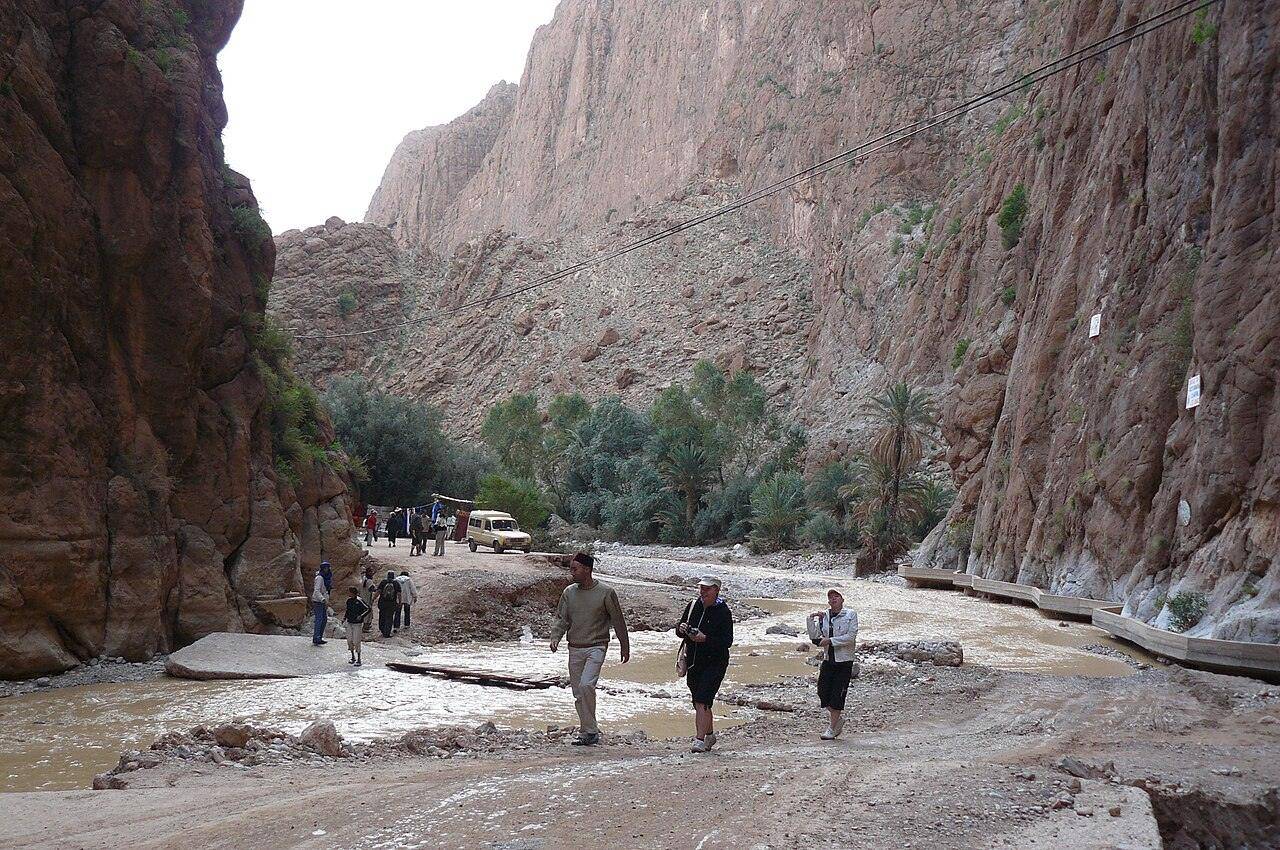
In the morning go to Tinghir, a large palm grove, and then into the Todra gorge: the canyon narrows to about ten metres, with sheer walls some 300 metres high. Walk along the stream at the bottom through the narrowest stretch, then follow a path looping up above the gorge to a shepherds' village: about two or three hours, best with a local guide. The walls also attract climbers.
In the early afternoon continue east across plains of black stones to Erfoud, famous for fossils: polished stones with ammonites and trilobites are on show in the workshops, but many pieces sold as original are reconstructed. Then you reach Merzouga, the village at the foot of Erg Chebbi, a sea of orange sand dunes up to about 150 metres high.
Towards sunset the dromedary caravan sets off: an hour to an hour and a half through the dunes, with guides walking ahead, to the tented camp where you sleep. In the evening dinner is served around the fire to the sound of drums, and the sky, far from any lights, is full of stars.
Pack a small bag for the night and leave the rest in the car: there is little space on a dromedary. Practical tip: desert temperatures swing widely; on winter nights they drop close to freezing, on summer days they exceed 40 °C. Spring and autumn are the best seasons.
- Day 5
Sunrise on the dunes and the long road to Fès
Wake before dawn and climb a dune near the camp: the sun rising over the desert turns the sand from orange to red. After breakfast you return to Merzouga by dromedary or 4x4.
Today is the longest transfer: Merzouga to Fès is about 470 kilometres, seven or eight hours' driving with stops. The road climbs the Ziz valley, a long green ribbon of palms in the desert, with a fine viewpoint over the canyon and earthen villages. You pass Errachidia and Midelt, the apple capital, at the foot of Jbel Ayachi, a mountain over 3,700 metres high and often snow-capped.
In the afternoon you cross the Middle Atlas, a green region of hills and Atlas cedar forests, some trees centuries old. Near Azrou live Barbary macaques, wild monkeys that approach cars: do not feed them, as they become aggressive and tourists' food makes them ill. A little further on is Ifrane, a town built in the 1930s with steep-roofed houses that looks like a European mountain resort.
You reach Fès in the evening. Stay two nights in the medina of Fès el-Bali. Practical tip: stop for lunch halfway, in Midelt or Azrou, as there are long stretches without services between towns.
- Day 6
Fès el-Bali: madrasas, tanneries and the great medina
Fès el-Bali, the old city founded between the eighth and ninth centuries, is a UNESCO World Heritage site and one of the largest urban closed to cars areas in the world, with thousands of alleys. For the first day an official guide with a badge, booked through your accommodation, is worth it: it saves time and shields you from the fake guides who approach you in the street.
Enter through Bab Bou Jeloud, with blue tiles on the outside and green on the inside. Visit the Bou Inania madrasa, a fourteenth-century Koranic school with carved wood, stucco and tile mosaics, and the small, exquisite Al-Attarine madrasa. The University of Al-Qarawiyyin, founded in 859 by Fatima al-Fihri, is considered among the oldest still-active universities in the world: the mosque is reserved for Muslims, but you can see the courtyard from the door.
In the afternoon go to the Chouara tanneries, where hides are still dyed in open-air stone vats as they were centuries ago. You watch from the terraces of the surrounding leather shops: entry is at no cost, but you will be invited to buy. The smell is strong, and at the entrance you will be handed a sprig of mint to hold under your nose.
At sunset climb to the Merinid tombs on the hill to the north to see the whole medina light up with the call to prayer. Practical tip: phones often lose GPS in the medina; follow the small coloured arrows of the tourist circuits painted on the walls.
- Day 7
Meknès, Volubilis and Moulay Idriss
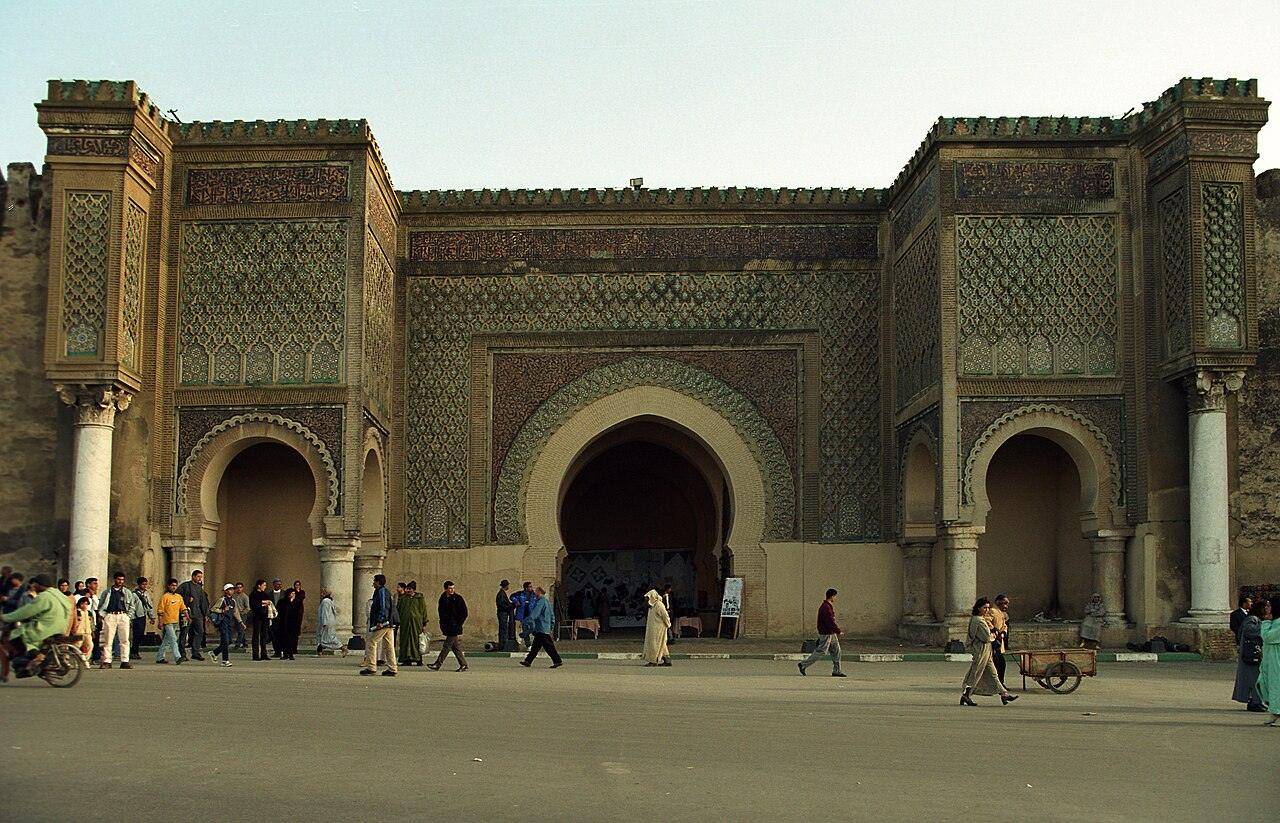
In the morning go to Meknès, about an hour from Fès, the imperial city built by Sultan Moulay Ismail in the seventeenth and eighteenth centuries. Bab Mansour, decorated with green tile mosaics and marble columns, is one of Morocco's most beautiful gates. You can also visit the mausoleum of Moulay Ismail, one of the few holy places open to non-Muslims, with dress rules, and the huge royal granaries and stables of Heri es-Souani, built for thousands of horses.
Continue north to Volubilis, a Roman city among wheat fields and olive groves, a UNESCO World Heritage site. You walk past the Arch of Caracalla, the basilica, the Capitol and houses whose mosaic floors are still in place, such as those showing the labours of Hercules and Orpheus. A guide at the entrance helps make sense of the houses. There is almost no shade: bring a hat and water.
A few kilometres away is Moulay Idriss, a white town on two hills where the founder of Morocco's first dynasty is buried: an important place of pilgrimage whose shrine is closed to non-Muslims, but from the terraces at the top you see the whole town and the plain of Volubilis.
In the evening return to Fès. Practical tip: Volubilis has no cafés or shops inside the site: eat first in Moulay Idriss, where small places serve skewers and tagines.
- Day 8
A last morning in Fès and departure
The last day depends on your flight time. If you have the morning no-cost, visit Fès el-Jdid, the thirteenth-century new town, with the great golden gates of the Royal Palace, seen only from outside, and the Mellah, the old Jewish quarter, with houses whose wooden balconies overlook the street, a restored synagogue and the white cemetery.
Alternatively, go back into the medina to shop at leisure: Fès is famous for blue-and-white pottery, carpets, brassware and leather. Bargaining is normal and part of the game: start low, stay polite and you are welcome to walk away if the price does not convince you. In the pottery workshops outside the walls, where mosaics are cut by hand, you can watch the whole process.
Fès-Saïss airport is about 15 kilometres from the medina, half an hour by taxi. Alternatively, trains leave Fès for Casablanca, Rabat and Tangier: for Tangier you change at Kénitra onto the Al Boraq high-speed train, handy if you continue your trip or fly from there. Timetables are on the Moroccan railways website.
Things to take home: saffron from Taliouine, culinary argan oil, ras el hanout, Fès pottery well wrapped. Practical tip: keep your receipts and change any leftover dirhams at the airport before security, because afterwards you can no longer do so.
The best first trip to Morocco if you only have a week: cities, mountains and desert with no backtracking. The price is two long days on the road, especially day 5. Fly into Marrakech and out of Fès, not the other way round.
Before you go
- Documents and visa
- EU visitors need a passport valid for the whole stay; identity cards are not accepted. No visa is needed for tourist stays of up to 90 days.
- Health and vaccines
- No vaccines required. Drink bottled water and take out travel health insurance: public healthcare is limited and private clinics charge. Emergencies: 19 police, 15 ambulance.
- Money and payments
- Moroccan dirham, which cannot be exported beyond a small sum: change a little at a time and keep the receipts. Cash is needed everywhere in medinas and villages.
- Power sockets
- Types C and E, 220 volts.
- Time zone
- UTC+1 for most of the year; Morocco changes its clocks during Ramadan, so check before travelling.
- Safety
- The main risk named by governments is terrorism; avoid the 20 km strip along the closed Algerian border and the frontier areas of Western Sahara. Official advice: GOV.UK.
Information checked in November 2026 for Italian and EU citizens. Rules change: always check before you travel.
Variations
In 6 days: Marrakech, Aït Ben Haddou, the Dadès and Todra gorges, one night in Erg Chebbi and back to Marrakech the same way, skipping Fès. Easier to organise if you fly in and out of Marrakech.
In 11 days: after Fès add Chefchaouen, the blue town in the Rif mountains, then Tangier, with the high-speed train to Casablanca for your flight home.
Frequently asked questions
Do I need a passport?
Yes: EU citizens need a passport valid for the whole stay, and many airlines and agencies recommend at least six months' remaining validity. No visa is needed for tourist stays of up to 90 days.
Should I rent a car or hire a driver?
The main roads are good, but distances between Marrakech, the desert and Fès are long, the Atlas hairpins are demanding and city driving is chaotic. For many travellers a private driver or a small group tour is more relaxing; a rental car gives more freedom to those used to driving abroad.
When is the best time to go?
From March to May and from late September to November: mild temperatures in Marrakech and Fès and bearable nights in the desert. In summer the south often exceeds 40 °C; in winter nights in the desert and the Atlas are close to freezing.
Indicative itinerary written by World Atlas. Before booking, check timetables, seasonal openings, documents and safety.
 7 daysEasy
Marrakech and the Sahara
From Jemaa el-Fna square to the Erg Chebbi dunes, across the Atlas, past kasbahs and gorges.
 15 daysModerate
Imperial cities, Chefchaouen and the desert
The full circuit: Fez and Meknes, the blue town in the Rif, the Sahara, the gorges and a finale between Marrakech and Essaouira.
 8 daysEasy
Marrakech and Essaouira
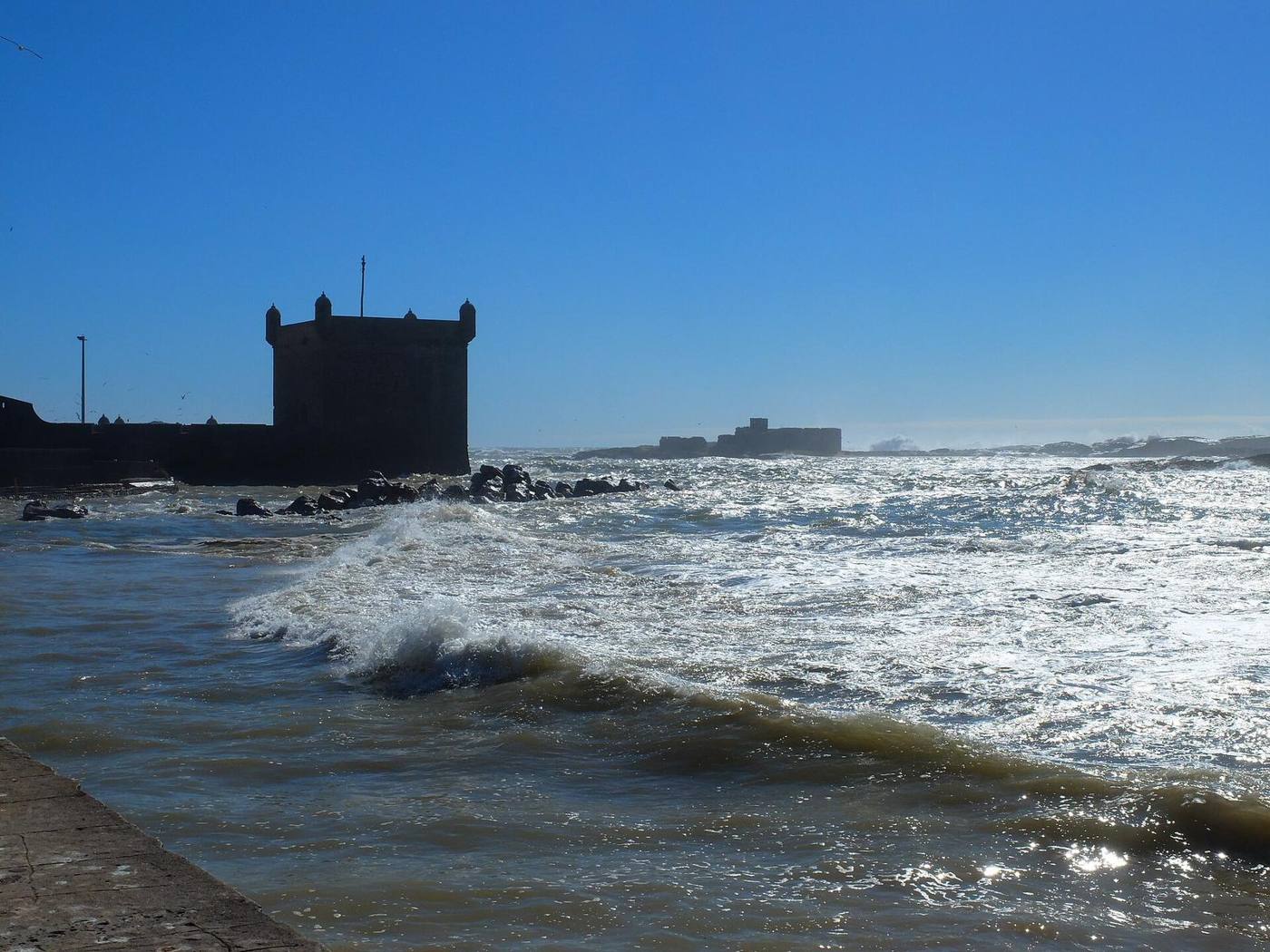
The red city and the white city on the Atlantic: souks, gardens, a fishing port and wind for kitesurfing. Morocco at its most relaxed.