Imperial cities, Chefchaouen and the desert
The full circuit: Fez and Meknes, the blue town in the Rif, the Sahara, the gorges and a finale between Marrakech and Essaouira.
- Casablanca
- Rabat
- Chefchaouen
- Volubilis
- Meknes
- Fez
- Merzouga
- Dadès
- Aït Ben Haddou
- Marrakech
- Essaouira
Day by day
- Day 1
Arrival in Casablanca
This trip is the complete tour of Morocco in two weeks: the imperial cities of Rabat, Meknes, Fes and Marrakech, the blue town of Chefchaouen in the Rif mountains, the Roman ruins of Volubilis, the Sahara dunes at Merzouga, the gorges of the Atlas, the kasbah of Aït Ben Haddou and the Atlantic port of Essaouira. You travel by train in the north and by car with a driver or by minibus in the south.
Before you go: Italian citizens enter Morocco without a visa for tourism for up to 90 days, with a valid passport. An identity card is not enough. Other nationalities should check their own rules.
You land at Mohammed V airport in Casablanca, the largest city in the country and its economic centre, on the Atlantic Ocean.
In the afternoon, visit the Hassan II Mosque, built on the sea and inaugurated in 1993, one of the largest mosques in the world, with a minaret over 200 metres high and a prayer hall partly above the water. It is one of the few mosques in Morocco open to non-Muslims, with guided tours at set times. Check times and prices, and cover your shoulders and legs.
At sunset, walk along the Corniche, Casablanca's seafront, with the view of the mosque lit up.
In the evening, have Moroccan food: harira, the soup of tomato, lentils and chickpeas, and a chicken tagine with preserved lemon and olives.
Overnight in Casablanca.
Practical tip: in Morocco you pay almost always in cash, in dirhams. Withdraw from bank cash machines and always keep some coins for tips, parking and small purchases.
- Day 2
Rabat, the capital
Today you visit Rabat, the capital of Morocco.
In the morning, take the train from Casablanca to Rabat, about an hour. Rabat is a calm, orderly city, with tree-lined avenues, gardens and a medina by the sea, a UNESCO World Heritage Site.
Start with the Kasbah of the Udayas, the old fortress at the mouth of the Bou Regreg river, with its walls, its monumental gate and its lanes painted white and blue. At the end of the kasbah there is a terrace over the sea, with views of the beach and of the town of Salé across the river. Below the kasbah are the Andalusian gardens, with orange trees and fountains.
Then visit the Hassan Tower, the unfinished minaret of a great mosque begun at the end of the twelfth century and never completed, with the columns of the prayer hall still standing on the esplanade. Next to it is the mausoleum of Mohammed V, the king of independence, with uniformed guards and a ceiling decorated in wood and gold. Check the opening times.
In the afternoon, walk through the medina of Rabat, calmer than those of Fes and Marrakech, with its markets of spices, fabrics and slippers.
In the evening, go back to Casablanca or stay in Rabat.
Overnight in Rabat.
Practical tip: for the train north, Rabat is a convenient base. Moroccan trains are punctual and comfortable: book first-class seats on public holidays and at weekends, when trains are full.
- Day 3
To Chefchaouen
Today you reach the blue town in the Rif mountains.
In the morning, leave Rabat heading north-east by car or bus to Chefchaouen, about four or five hours. Alternatively, you can take the high-speed train to Tangier and then the bus, but the direct journey is simpler. Check times and prices.
Chefchaouen, also called Chaouen, is a small town founded in 1471 at the foot of the Rif mountains. It is famous around the world for its houses painted blue and light blue, from the walls to the steps, the doors and the flower pots. For many centuries the town was closed to foreigners, and it keeps a calm mountain atmosphere.
In the afternoon, walk through the medina, up and down the blue lanes, with their stairs, fountains and the workshops of weavers and craftsmen. At the centre is Outa el-Hammam square, with the great mosque and its octagonal minaret, and the kasbah, a red earth fortress with a garden and a small museum. Check the opening times.
At sunset, walk up to the Spanish Mosque, a small white mosque on a hill east of the town, about half an hour on foot. From up there you see the whole blue town with the mountains behind.
In the evening, have dinner with goat's cheese from the mountains and a tagine.
Overnight in Chefchaouen, for two nights.
Practical tip: in the Rif area you may be offered hashish. Always refuse firmly: in Morocco it is illegal and the penalties are severe.
- Day 4
The blue town and Ras el-Ma
Today you explore Chefchaouen at a slow pace.
Early in the morning, walk through the lanes of the medina before the visitors arrive, when the light is soft and the streets are almost empty. It is the best time for photos, but always ask permission before photographing people, and do not go into private courtyards.
Then go to Ras el-Ma, the spring at the eastern gate of the town, where water from the mountains flows down in small falls and channels. Local women still wash clothes in the stone wash houses. Nearby is a small bridge, the starting point for the walk along the stream.
In the afternoon, if you like walking, follow a trail in Talassemtane National Park, with forests of fir and cedar, limestone mountains and Berber villages. The best-known walk leads to God's Bridge, a natural rock arch over a river, about an hour's drive from Chefchaouen, or to the Akchour waterfalls. Go with a local guide. Check prices and conditions.
In the evening, from one of the town's terraces, watch the sunset over the blue houses and the mountains.
Overnight in Chefchaouen.
Practical tip: in Chefchaouen the slopes are steep and the steps slippery. Wear comfortable shoes with a good sole.
Evenings in the Rif are cool, even in spring and autumn. Bring a fleece for the evening.
- Day 5
Volubilis and Meknes
Today you visit the Roman ruins and the first imperial city.
In the morning, leave Chefchaouen heading south, about three and a half hours, to Volubilis, the most important Roman archaeological site in Morocco, a UNESCO World Heritage Site. It was a city of the Roman province of Mauretania Tingitana, on a fertile plain of olives and wheat. You see the triumphal arch of Caracalla, the basilica, the Capitol, the paved streets and above all the mosaics of the wealthy houses, still in place, with scenes of Bacchus, Diana and the labours of Hercules. Check prices and times.
Then pass through Moulay Idriss, a holy town built on two hills near Volubilis, where the founder of Morocco's first Islamic dynasty is buried. From the viewpoint you see the whole white town.
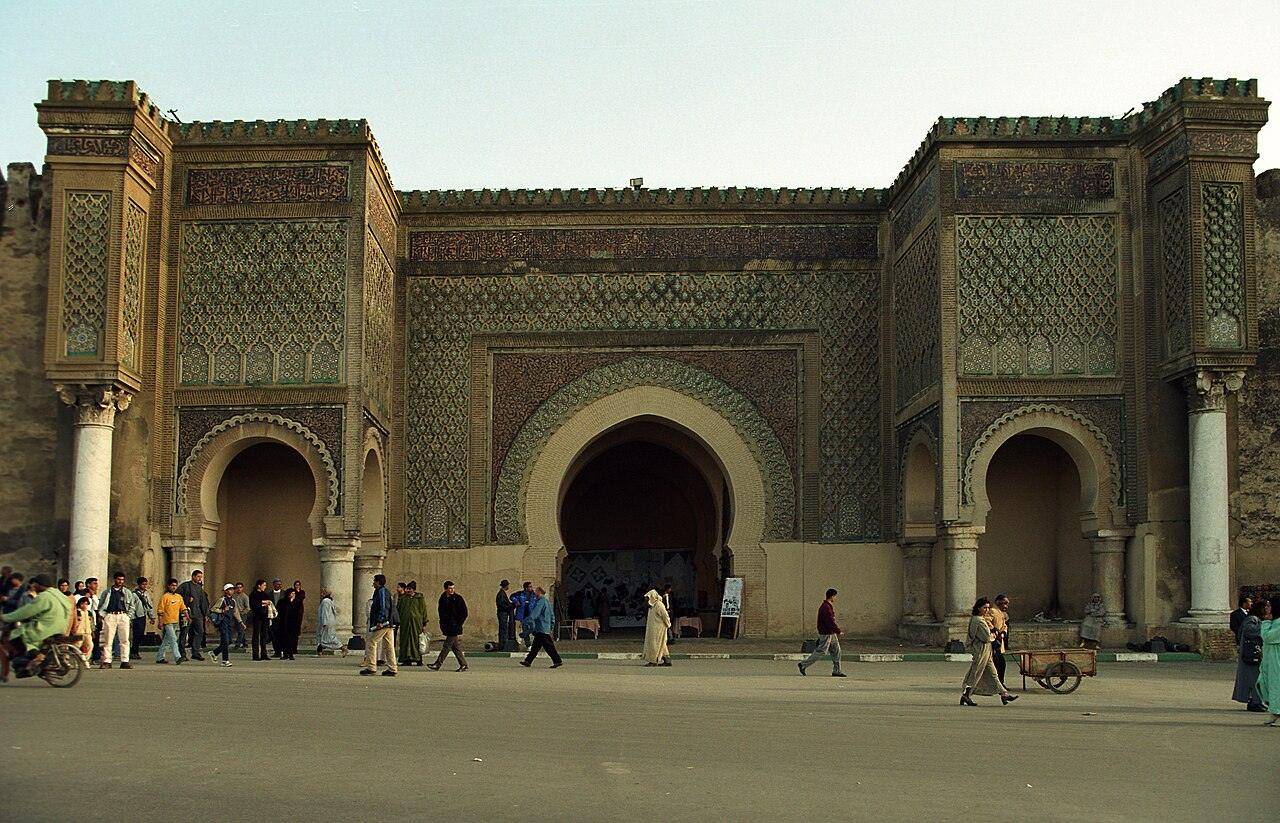
In the afternoon, reach Meknes, the imperial city created by Sultan Moulay Ismail between the seventeenth and eighteenth centuries, a UNESCO World Heritage Site. Admire the Bab Mansour gate, one of the finest gates in Morocco, decorated with green tiles, and el-Hedim square in front of it. Visit the mausoleum of Moulay Ismail and the great royal stables and granaries. Check the opening times.
In the evening, continue to Fes, about an hour.
Overnight in Fes, for two nights.
Practical tip: there is little shade at Volubilis. Go in the morning or late afternoon, and bring water and a hat. A site guide helps a great deal in understanding the ruins.
- Day 6
The medina of Fes
Today you explore the medina of Fes, one of the largest medieval cities in the world.
Fes el-Bali, the old city, was founded at the beginning of the ninth century and is a UNESCO World Heritage Site. It is a maze of thousands of narrow lanes, where cars cannot pass and goods still travel by donkey and mule. Tens of thousands of people live here, among workshops, mosques, Koranic schools, fountains and caravanserais.
In the morning, enter through Bab Boujloud, the blue gate, decorated with blue tiles on the outside and green on the inside. Then walk down the main street, Talaa Kebira, to the Bou Inania madrasa, a fourteenth-century Koranic school, with a marble courtyard, mosaics, carved cedar wood and stucco. Check times and prices.
Continue to the mosque and university of al-Qarawiyyin, founded in 859, considered one of the oldest universities in the world still in operation; the inside is reserved for Muslims, but from the doorway you can see the courtyard. Then visit the al-Attarine madrasa, small and finely decorated.
In the afternoon, go to the Chouara tannery, where hides are still worked and dyed by hand in stone vats of different colours, as centuries ago. You watch from the terraces of the leather shops around it.
In the evening, try pastilla, a savoury-sweet pie of flaky pastry, pigeon or chicken, almonds, cinnamon and sugar.
Overnight in Fes.
Practical tip: it is easy to get lost in the medina of Fes. Take an official licensed guide for your first visit, and politely refuse false guides.
- Day 7
Fes, craftsmen and viewpoints
Today you discover the crafts of Fes and see the city from above.
In the morning, visit the craftsmen's quarters of the medina. Each trade has its own area: the coppersmiths hammering copper plates and trays, the weavers, the carpenters working cedar wood, the potters. Fes is famous for its blue ceramics, known as Fes blue. Outside the medina you can visit one of the pottery workshops where zellige mosaics are made by hand, small ceramic pieces cut one by one.
Then visit the Nejjarine museum of wooden arts and crafts, in a restored old caravanserai, with a terrace over the rooftops of the medina. Check times and prices.
In the afternoon, leave the medina and visit Fes el-Jdid, the new city built in the thirteenth century, with the royal palace, closed to the public but famous for its great golden doors, and the mellah, the old Jewish quarter, with houses with wooden balconies and the old synagogue.
At sunset, climb to the Merenid tombs, ruins on a hill north of the city. From up there you see the whole medina of Fes, with its rooftops, minarets and the hills around, while you hear the call to prayer.
In the evening, have dinner in a riad, a traditional house with an inner courtyard.
Overnight in Fes.
Practical tip: prices in the medina shops are not fixed. Bargain calmly and with a smile, and only buy if you really like the object.
- Day 8
The Middle Atlas and the road to the desert
Today you cross the mountains to the gates of the Sahara.
In the morning, leave Fes heading south, for a long journey of about eight hours. The first stop is Ifrane, a mountain town at about 1,650 metres, with steep-roofed houses and gardens, called the little Switzerland of Morocco.
Then you cross the Atlas cedar forest near Azrou, with very tall, centuries-old trees. Here live Barbary macaques, the only wild macaques in Africa, which come close to the road. Do not feed them.
After the pass, the landscape changes: the mountains become bare, red and brown, and the road descends along the Ziz valley, with rocky gorges and a long green strip of date palms along the river, dotted with ksour, fortified earth villages.
In the afternoon, you pass through Erfoud and Rissani, desert towns famous for fossils and dates, and arrive in Merzouga, on the edge of Erg Chebbi, the great sea of orange sand dunes.
In the evening, have dinner and sleep in a place at the foot of the dunes.
Overnight in Merzouga.
Practical tip: today is a long day in the car. Stop often, drink plenty of water and keep sunglasses and a scarf to hand for the wind and sand.
In winter, in the Middle Atlas, it can snow and be very cold: check the weather and the roads before leaving.
- Day 9
A night in the Sahara
Today you experience the desert.
In the morning, if you wish, take a 4x4 tour around Erg Chebbi, with stops at the village of Khamlia, home of the Gnawa, descendants of slaves from sub-Saharan Africa, famous for their music with drums and metal castanets, and at the seasonal lakes, where flamingos sometimes arrive. Check prices and what is included.
In the afternoon, rest in the shade during the hottest hours.
In the late afternoon, set off by dromedary towards the heart of the dunes, with a guide, for about one or two hours. The dunes of Erg Chebbi are among the highest in Morocco, up to about 150 metres. At sunset, climb to the top of a dune to watch the sun go down over the sea of sand, which changes colour from yellow to orange to red.
In the evening, you arrive at a tented camp among the dunes, with Berber tents, dinner and music around the fire. After dinner, walk away from the camp lights and look at the sky: far from the cities you see thousands of stars and the Milky Way.
Overnight in the tented camp in the desert.
Practical tip: in the desert the night is cold, especially from November to March, when it can drop close to zero. Bring a fleece, a jacket and a hat. Keep your luggage small and leave the rest at your accommodation in Merzouga.
- Day 10
The Todra and Dades gorges
Today you follow the road of the kasbahs to the gorges.
At dawn, if you wish, climb a dune to watch the sun rise over the desert. Then return to Merzouga by dromedary or 4x4 for a shower and breakfast.
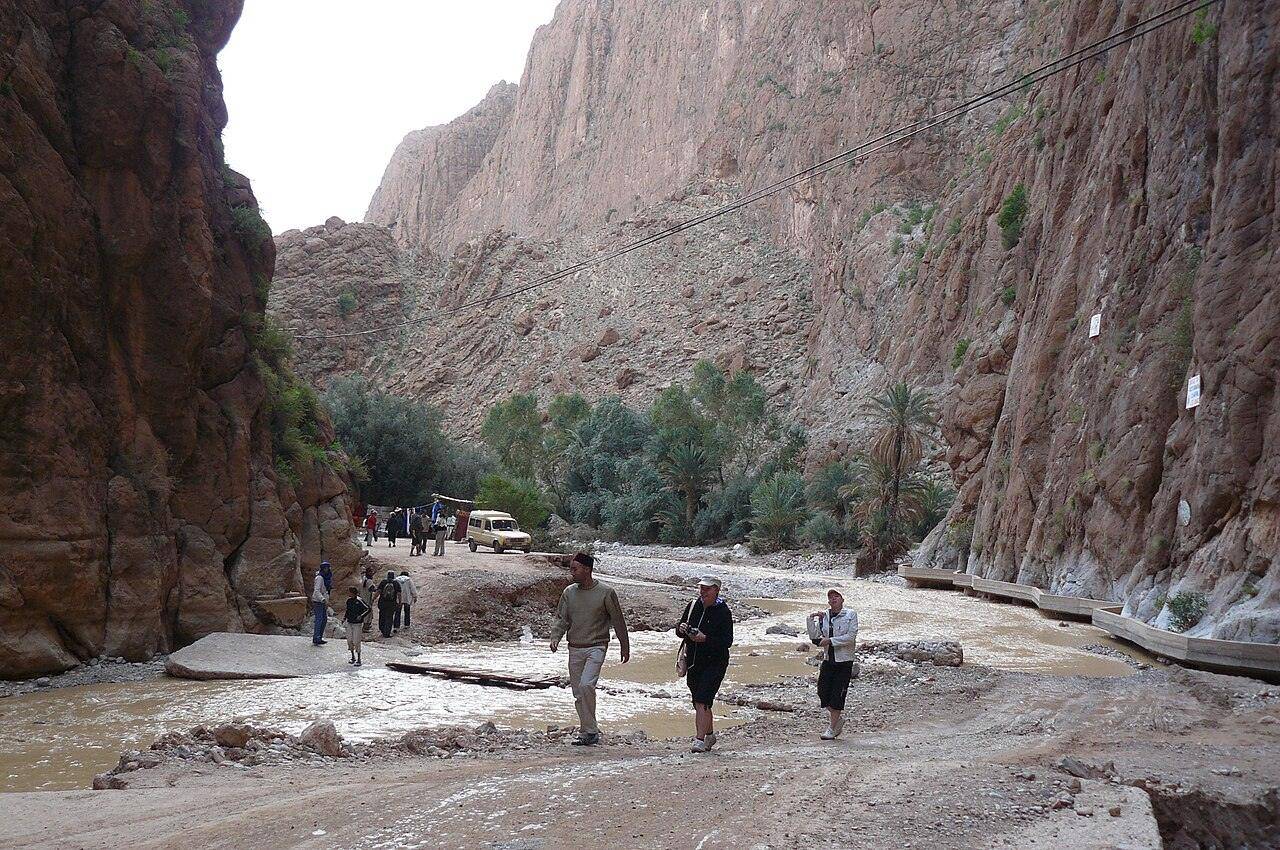
In the morning, head west across the stony desert and the oases to Tinghir, about three and a half hours. From here the road climbs into the Todra Gorge, a narrow canyon with red rock walls hundreds of metres high, in places only about ten metres apart, with a clear river at the bottom. Walk for a while inside the gorge, in the shade. It is also a famous place for rock climbing.
In the afternoon, continue towards Boumalne Dades and climb into the Dades valley, with its earth villages, green fields and kasbahs. Further on, the road climbs into the Dades Gorge with a series of tight hairpin bends, one of the most photographed stretches of road in Morocco. Along the way you see the rocks called monkey fingers, rounded rock formations.
In the evening, have a tagine and sleep in the valley.
Overnight in the Dades valley.
Practical tip: it is cool in the Todra Gorge even in summer, but the floor is stony and sometimes wet. Wear closed shoes and do not enter the gorge in heavy rain, when the river can rise suddenly.
- Day 11
Aït Ben Haddou and Ouarzazate
Today you visit the most famous kasbah in Morocco.
In the morning, leave the Dades valley heading west along the road of a thousand kasbahs, through the Valley of Roses, famous for growing Damask roses, from which rose water is made. The harvest and the rose festival are in spring.
You pass through Ouarzazate, called the door of the desert, with the Taourirt kasbah, the former residence of a great family of the south, with decorated rooms and earth towers. Ouarzazate is also famous for its film studios, where many films have been shot. Check times and prices.
In the afternoon, arrive in Aït Ben Haddou, a ksar, a fortified village of mud brick, built on a hill above the river, with its houses, towers and granaries all the same red colour as the earth. It is a UNESCO World Heritage Site and one of the most photographed places in Morocco, seen in many films and series. You cross the river on a bridge or on stepping stones and climb through the lanes to the granary at the top, with views over the valley and the Atlas mountains.
In the evening, stay in Aït Ben Haddou, after the day visitors have left, and watch the sunset over the ksar.
Overnight in Aït Ben Haddou.
Practical tip: some houses inside the ksar are lived in, and the owners ask a small fee to enter or go up to the terraces. Ask the price first.
- Day 12
The Tichka pass and Marrakech
Today you cross the High Atlas to Marrakech.
In the morning, leave Aït Ben Haddou heading north on the road over the Tizi n'Tichka pass, at about 2,260 metres, the main road between the south and Marrakech. The road climbs through hairpin bends among the High Atlas mountains, earth Berber villages, green valleys and views of the peaks, snow-capped in winter. Make a few stops at the viewpoints and at the argan oil cooperatives along the road.
You reach Marrakech around midday, after about four hours.
Marrakech, the red city, founded in the eleventh century, is the most famous imperial city in Morocco, with its medina a UNESCO World Heritage Site, surrounded by red earth walls.
In the afternoon, visit the Majorelle Garden, a botanical garden with desert plants, bamboo and fountains, and a villa painted an intense blue, now a museum of Berber art. Check times and prices, and book in advance.
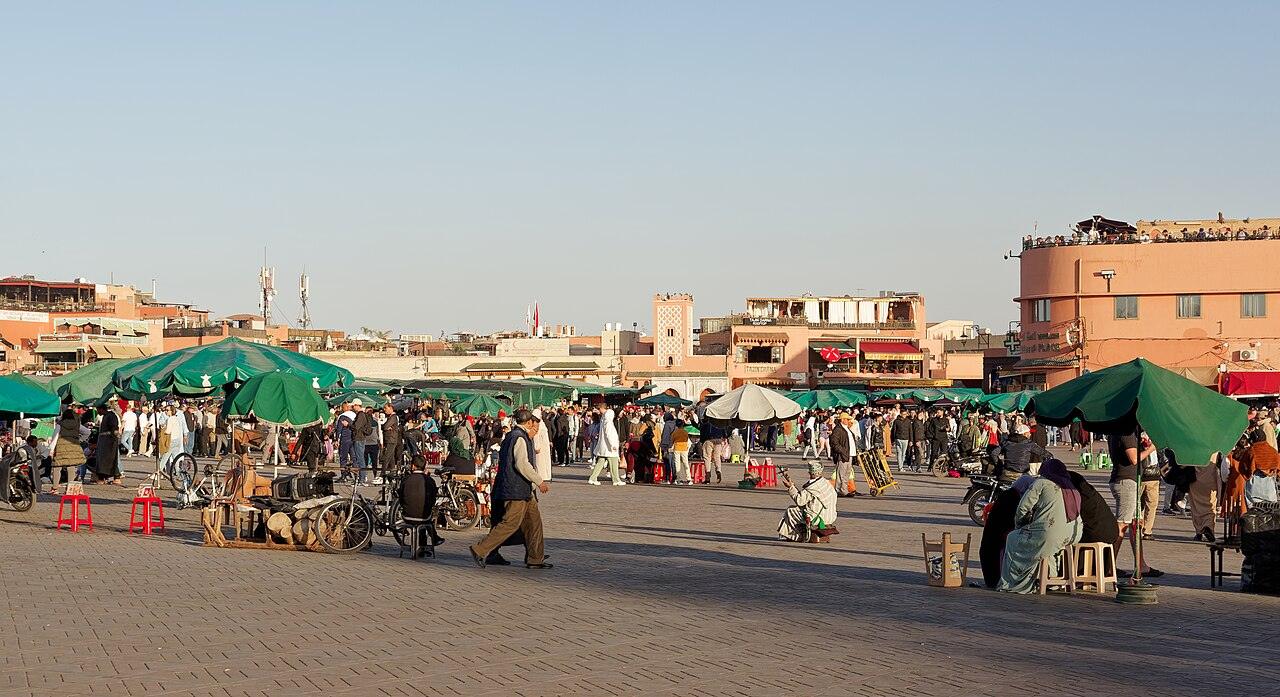
At sunset, go to Jemaa el-Fna square, the heart of the city, listed by UNESCO as intangible heritage of humanity, with musicians, storytellers, orange juice sellers and, in the evening, dozens of stalls where people eat outdoors. Watch the square from above, from one of the terraces around it.
In the evening, have dinner on the square or in a riad in the medina.
Overnight in Marrakech, for two nights.
Practical tip: in Jemaa el-Fna, do not photograph the snake charmers and monkey handlers unless you want to pay. Avoid shows with animals kept on chains.
- Day 13
The palaces and souks of Marrakech
Today you explore the medina of Marrakech.
Early in the morning, visit the Koutoubia Mosque, the symbol of the city, with its twelfth-century minaret about 77 metres high, visible from all over the city. The inside is reserved for Muslims, but the gardens around it are open.
Then visit the Saadian Tombs, sixteenth-century mausoleums rediscovered in 1917, with rooms of marble, cedar wood and stucco. Check times and prices.
Continue with the Bahia Palace, built at the end of the nineteenth century for a grand vizier, with courtyards, gardens and rooms decorated with zellige, stucco and painted wooden ceilings. Check times and prices.
In the afternoon, visit the Ben Youssef madrasa, the largest Koranic school in Morocco, with its marble courtyard and central pool, and then lose yourself in the souks, the covered markets of the medina, divided by trade: spices, metal lanterns, carpets, leather, fabrics and the dyed wool hanging above the dyers' souk.
In the evening, try a hammam, the traditional steam bath, with black soap and the scrubbing glove. Check prices and times.
Overnight in Marrakech.
Practical tip: in the medina of Marrakech, scooters ride even through the narrow lanes. Walk to the side and pay attention.
If someone tells you a street is closed or offers to take you somewhere, smile and carry on: often they want to lead you to a shop.
- Day 14
Essaouira
Today you reach the Atlantic coast.
In the morning, leave Marrakech heading west to Essaouira, about three hours, across the plains and the argan woods. Along the road you sometimes see goats climbing argan trees to eat the fruit; some are placed there on purpose for tourists' photos.
Essaouira is a fortified seaside town, rebuilt in the eighteenth century by European architects for the sultan, a UNESCO World Heritage Site. It has an orderly medina with white houses and blue doors, sea bastions with cannons and a harbour full of the fishermen's blue boats.
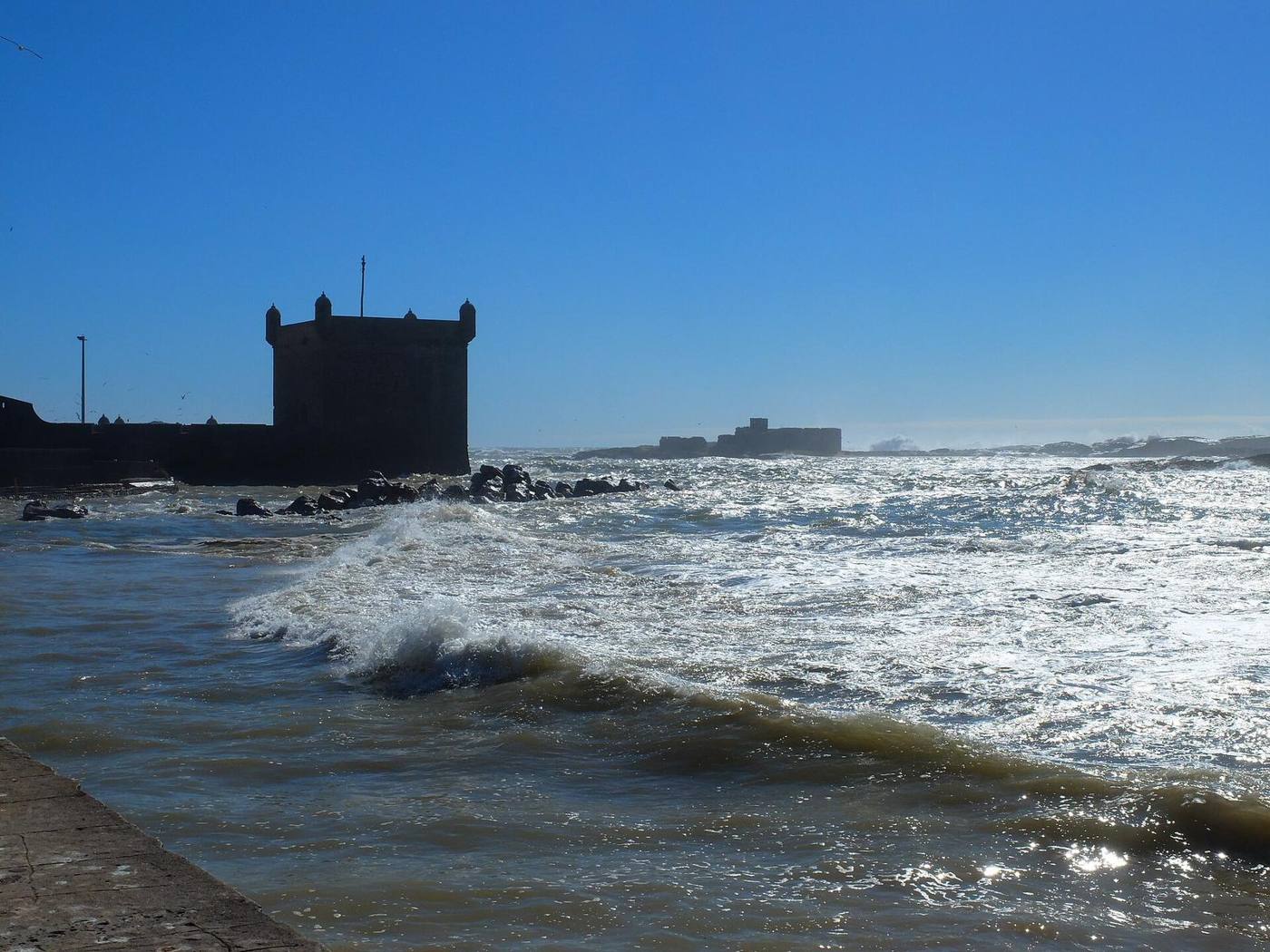
Walk along the Skala de la Ville, the sea bastions with the waves breaking on the rocks, and then the Skala du Port, with views over the harbour and the Purpuraires islands offshore, now a nature reserve for birds such as Eleonora's falcon.
In the afternoon, at the harbour, watch the fishermen selling the fresh catch and the gulls above the boats. You can choose your fish and have it grilled at the stalls nearby.
Then walk along the town's long beach, which is windy and much loved by kitesurfers and windsurfers.
In the evening, have dinner with fish and seafood.
Overnight in Essaouira.
Practical tip: in Essaouira the wind almost always blows, the trade wind called alizé, which keeps the air cool even in summer. Bring a light windproof jacket.
- Day 15
Home from Marrakech
Today you leave Morocco.
In the morning, take a last walk in the medina of Essaouira as the shops open. The town is famous for objects of thuya wood, from a local tree, carved and inlaid, and for argan oil products, made by the women's cooperatives of the area.
Then leave for Marrakech airport, about three hours. Alternatively, check whether there is a direct flight from Essaouira's smaller airport.
In these fifteen days you have seen the complete Morocco: the mosque on the sea in Casablanca, the Kasbah of the Udayas in Rabat, the blue town of Chefchaouen, the mosaics of Volubilis, the medina and tanneries of Fes, the cedar forest of the Atlas, the Sahara dunes, the Todra and Dades gorges, the ksar of Aït Ben Haddou, the great square of Marrakech and the bastions of Essaouira.
When to go: the best months are from March to May and from September to November, with pleasant temperatures. In summer the south and Marrakech are very hot, often over 40 degrees. In winter the desert and the mountains are cold at night, and it can snow in the Atlas.
Practical tip: during Ramadan many restaurants are closed during the day and the rhythm of life changes. Check the dates before you leave, and eat and drink discreetly in public during the day.
Before you leave, change any leftover dirhams at the airport: you cannot take them out of the country above a certain amount.
The complete Morocco tour, for those with two weeks who want to see everything. Fès and the Sahara are the two highlights. Road distances are considerable: at least two days are almost entirely transfers.
Before you go
- Documents and visa
- EU visitors need a passport valid for the whole stay; identity cards are not accepted. No visa is needed for tourist stays of up to 90 days.
- Health and vaccines
- No vaccines required. Drink bottled water and take out travel health insurance: public healthcare is limited and private clinics charge. Emergencies: 19 police, 15 ambulance.
- Money and payments
- Moroccan dirham, which cannot be exported beyond a small sum: change a little at a time and keep the receipts. Cash is needed everywhere in medinas and villages.
- Power sockets
- Types C and E, 220 volts.
- Time zone
- UTC+1 for most of the year; Morocco changes its clocks during Ramadan, so check before travelling.
- Safety
- The main risk named by governments is terrorism; avoid the 20 km strip along the closed Algerian border and the frontier areas of Western Sahara. Official advice: GOV.UK.
Information checked in November 2026 for Italian and EU citizens. Rules change: always check before you travel.
Variations
In 10 days: Marrakech, Aït Ben Haddou, the Dades gorges, one night in Merzouga and Fes, flying home from Fes.
In 18 days: add Tangier and the northern coast after Rabat, and the Ourika valley or the village of Imlil, in the High Atlas, after Marrakech.
Frequently asked questions
What document do I need for Morocco?
For Italian citizens a valid passport is enough, without a visa, for tourism for up to 90 days. An identity card is not sufficient. Other nationalities should check their own rules.
Can I do the tour by public transport?
In the north, yes: trains link Casablanca, Rabat, Meknes and Fes well, and buses reach Chefchaouen. For the desert and the gorges, a car with a driver or a tour is much more convenient.
How cold is it in the desert?
By day it is hot, but at night it can be very cool, especially from November to March, when it gets close to zero. Bring a fleece and a jacket.
Indicative itinerary written by World Atlas. Before booking, check timetables, seasonal openings, documents and safety.
 7 daysEasy
Marrakech and the Sahara
From Jemaa el-Fna square to the Erg Chebbi dunes, across the Atlas, past kasbahs and gorges.
 8 daysEasy
Marrakech to Fès by way of the Sahara
The classic crossing: the High Atlas, the kasbahs of Ouarzazate, the Dades gorges and a night in the Merzouga dunes, ending in the medina of Fès.
 8 daysEasy
Marrakech and Essaouira
The red city and the white city on the Atlantic: souks, gardens, a fishing port and wind for kitesurfing. Morocco at its most relaxed.