Montenegro and Albania
From the Bay of Kotor to Shkodër, then Tirana, Berat and the Albanian Riviera down to Saranda and Butrint.
- Kotor
- Budva
- Shkodër
- Tirana
- Berat
- Himarë
- Sarandë
- Butrint
Day by day
- Day 1
Kotor, the walled town at the end of the fjord
This trip joins two neighbouring but very different countries: the Bay of Kotor and the coast of Montenegro, then Shkodër, Tirana, Berat and the Albanian Riviera down to Sarandë and the ruins of Butrint. You travel by rental car and finish with a flight from Tirana or the ferry to Corfu.
Before you go: Italian citizens can enter Montenegro without a visa with an electronic identity card, for stays of up to 30 days, or with a passport, for up to 90 days; Albania accepts the electronic identity card or the passport, valid for at least three months after leaving the country. Other nationalities should check their own rules. In Montenegro you must be registered and pay the tourist tax within 48 hours of arrival: hotels do it for you, in private accommodation ask the owner. For the car you need a green card valid in both countries: many Italian insurers do not cover Albania, and then you buy temporary insurance at the border. With a rental car, ask for written permission to leave Montenegro.
Arrive in Kotor and leave the car outside the walls. Go in through the Sea Gate and walk across the paved squares to the Cathedral of Saint Tryphon, Romanesque, consecrated in the twelfth century. In the late afternoon, climb the walls towards the Fortress of Saint John: the stairway is long and steep, but from the top you see the whole bay. Check prices and times.
In the evening, eat grilled fish or a plate of mussels from the bay.
Practical tip: climb the walls at sunset or early in the morning, with water and closed shoes, because the steps are smooth and summer is very hot.
- Day 2
Perast and Our Lady of the Rocks
Today you stay in the Bay of Kotor and follow the narrow road that runs along the water, past stone villages, churches and small jetties.
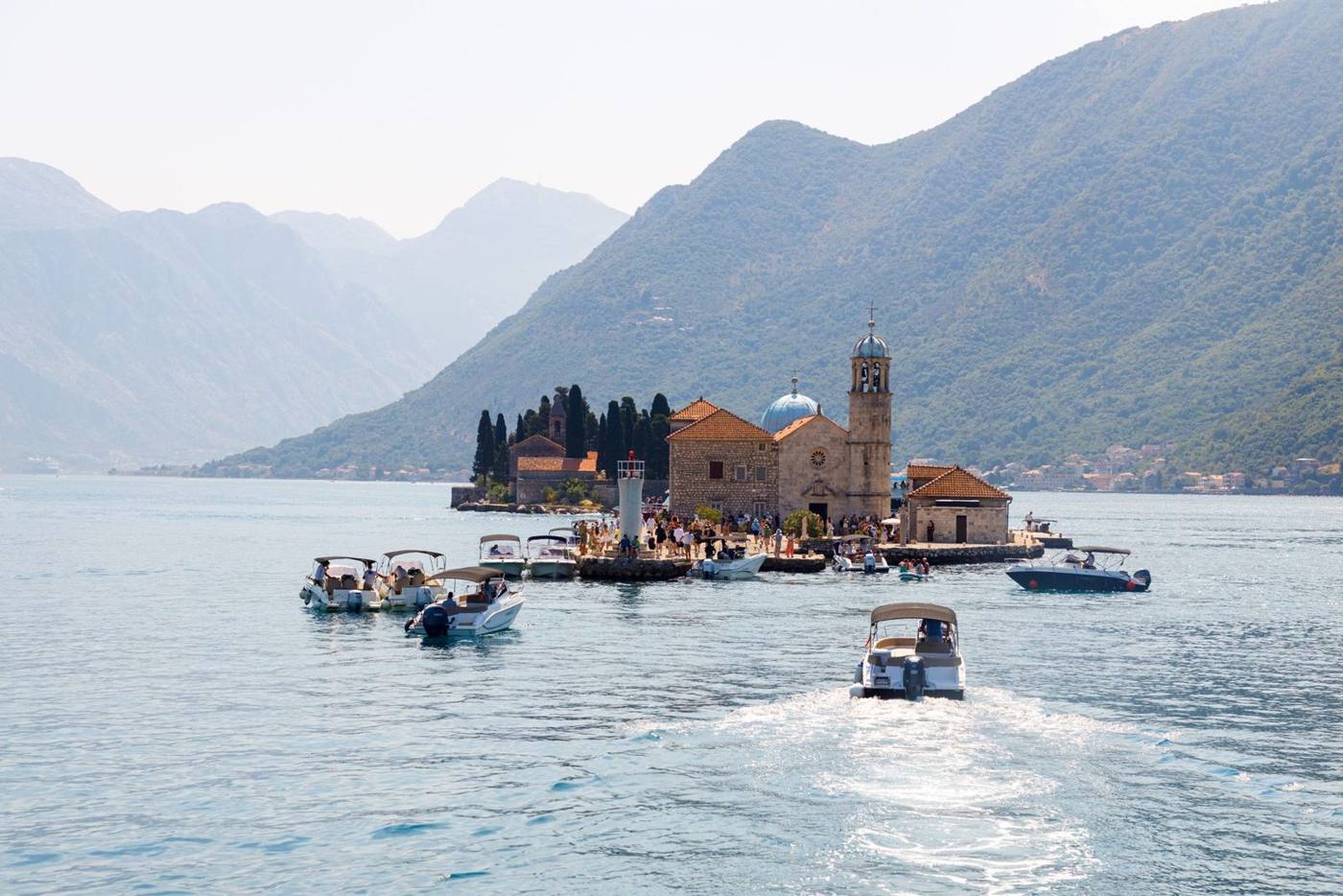
In the morning, go to Perast, about twenty minutes from Kotor. It is a Baroque village of sea captains and shipowners, with noble palaces and a tall bell tower on the waterfront. In front of the village there are two islets. Saint George is natural, with a monastery among cypress trees. Our Lady of the Rocks, Gospa od Škrpjela, is artificial: according to tradition, sailors built it by throwing stones into the sea for centuries. Boats leave from the waterfront and the crossing takes a few minutes. In the church you see the sailors' votive offerings, hundreds of small silver plaques, and the painted walls. Check prices and times.
In the afternoon, continue along the bay to Risan, where Roman mosaics survive in an ancient villa, then head back towards Kotor through Dobrota and Prčanj, with churches that look very large for such small villages.
If you still have energy, walk along the Kotor waterfront in the evening, when the walls are lit up.
Overnight in Kotor or Perast, second night.
Practical tip: in Perast park at the entrance to the village, because the waterfront is pedestrian for most of the day and the spaces near the centre fill up early in summer.
- Day 3
Budva and the road to the border
Today you leave the bay, drive down the coast and cross into Albania in the afternoon.
In the morning, stop in Budva, the best known resort in Montenegro. The old town is small and walled, on a peninsula: stone lanes, churches, the citadel by the sea and the walls from which you see the beaches. Come early, because in summer the centre fills up by mid morning. Much of the old town was carefully rebuilt after the 1979 earthquake. A little further south, from the coast road, look down on the islet of Sveti Stefan, a fishing village joined to the mainland by a strip of sand.
Carry on south through Bar or through Podgorica, depending on the crossing you choose. There are border crossings towards Shkodër both from the Ulcinj area and from the road along the lake. At the border you show your document, the car registration papers and the green card. If your insurance does not cover Albania, you buy temporary insurance there.
You reach Shkodër in the late afternoon. The city is flat and full of bicycles, between the lake and the rivers. Drop your bags, take a short walk in the centre and have an early dinner.
Overnight in Shkodër.
Practical tip: in summer the queues at the border can be long in the afternoon; carry water and a few euros in cash, then withdraw lek at the first bank cash machine, because in small towns cards do not work everywhere.
- Day 4
Shkodër and Rozafa Castle
Shkodër is one of the oldest cities in Albania and the cultural centre of the north. Today you explore it at an easy pace, on foot or by bicycle.
In the morning, climb up to Rozafa Castle, on a rocky hill above the meeting of the rivers, close to the lake. The walls were rebuilt by Illyrians, Venetians and Ottomans. The legend tells of a young woman, Rozafa, walled up alive in the foundations so that the castle would stop collapsing: she asked them to leave out one breast, one arm and one foot so she could feed and stroke her baby. From the top you see Lake Shkodër, the mountains of Montenegro and the plain. Inside the castle there is a small museum. Check prices and times.
On the way down, stop at the Lead Mosque, at the foot of the hill, built in the eighteenth century and named after the domes that were once covered in lead.
In the afternoon, walk along the pedestrian street in the centre, with its low restored houses and cafés. Visit the Marubi photography museum, with the pictures taken by the family of photographers who recorded Albania between the nineteenth and twentieth centuries. Check prices and times.
In the evening, try carp from the lake or tavë kosi, lamb baked with yoghurt.
Practical tip: in Shkodër a bicycle is the easiest way around; if you hire one, take care at junctions, where nobody likes to stop.
- Day 5
Tirana, the colourful capital
Today you drive south to Tirana, in about two hours. The Albanian capital has changed a great deal in a few years: buildings painted in bright colours, new tower blocks, cafés everywhere and traces of the communist regime.
Leave the car in a guarded car park and get around on foot. Start at Skanderbeg Square, huge and pedestrian, with the equestrian statue of the national hero. On one side of the square stands the Et'hem Bey Mosque, small and decorated with frescoes of landscapes, next to the clock tower. Opposite, you see the large mosaic of the National History Museum. Check prices and times.
In the afternoon, visit one of the two Bunk'Art museums, set in the nuclear bunkers built during the dictatorship of Enver Hoxha: Bunk'Art 2 is in the centre, Bunk'Art 1 on the hill towards Mount Dajti. Then visit the House of Leaves, the museum of surveillance, where the secret police spied on ordinary people. Check prices and times.
In the evening, stroll through the Blloku, the district once reserved for party leaders and closed to ordinary citizens, now full of bars and restaurants. Nearby is the villa where Hoxha lived, which you can see from outside.
Overnight in Tirana.
Practical tip: traffic in Tirana is chaotic and parking is scarce; choose a place to stay with a parking space and leave the car where it is all day.
- Day 6
Berat, the town of a thousand windows
Today you reach Berat, about two and a half hours from Tirana, one of the most beautiful towns in the Balkans and a UNESCO World Heritage Site.
Berat is built on the side of a hill, above the River Osum. The white Ottoman houses, with many windows one above the other, give it the nickname of the town of a thousand windows. The Mangalem quarter lies below the castle; on the other bank, joined by a stone bridge, is the Gorica quarter.
In the morning, walk up to the Kala, the citadel on the hill. It is not an empty museum: people still live inside the walls, among houses, lanes and Byzantine churches. Visit the Onufri Museum, in the Cathedral of the Dormition, with icons by the painter who in the sixteenth century used a special red, known as Onufri red. Check prices and times.
In the afternoon, go down into the Mangalem quarter, step inside one of the mosques and cross the bridge to Gorica. At sunset, look at the windows of Mangalem from the opposite bank, when the light colours them.
In the evening, try the local food: stuffed vegetables, byrek and wine from the surrounding hills.
Overnight in Berat, in one of the restored traditional houses of the old town.
Practical tip: the streets up to the citadel are steep and paved with smooth stones; leave the car below and walk up in shoes with soles that grip.
- Day 7
The Llogara Pass and Himarë
Today is the day of the most spectacular road on the trip: from the plain of Vlorë you climb to the Llogara Pass and drop down to the Albanian Riviera.
Leave Berat early and drive towards Vlorë. From there the road follows the bay and then starts climbing into Llogara National Park, among black pines and firs. At the pass, at about a thousand metres, stop at the viewpoint: below you lie the Ionian Sea, the coast running south and, on clear days, the island of Corfu. There are often paragliders and strong winds here. Even in summer the air is cool up here: keep a sweatshirt handy.
The descent is a series of tight hairpin bends down to Dhërmi. Continue to Himarë, a small seaside town with its old castle on the hill, where houses and churches are still lived in. Walk up to the castle in the late afternoon, when it is cooler, and look down on the bay.
In the evening, eat on the seafront: fish, grilled octopus and Greek salad, because a Greek speaking community lives in the area and many signs are in two languages.
Overnight in Himarë, for two nights.
Practical tip: on the Llogara road there are lorries and cars overtaking on bends; drive slowly, use low gears on the way down and never stop where there is no lay-by.
- Day 8
The beaches of the Riviera
Today is a beach day, with no long drives. The Riviera between Dhërmi and Himarë has clear water, white pebbles and coves below the mountains.
In the morning, go to Gjipe beach, at the end of a small canyon between the rocks. You leave the car up above and walk down a path for about half an hour. The beach is enclosed by high cliffs and the water is bright blue. Bring water and shade, because facilities are few and change from one season to the next. The way back is uphill: return before the hottest hours.
In the afternoon, if you want something different, drive south to the castle of Porto Palermo, a fortress on a peninsula inside a sheltered bay, linked to Ali Pasha of Tepelenë, the ruler who governed this part of the Balkans in the early nineteenth century. Check prices and times.
On the way back to Himarë, stop at Livadhi beach, wide and quieter than the main bay.
In the evening, walk along the seafront and stop for a dessert or a Turkish coffee, while the fishing boats come back into the little harbour.
Overnight in Himarë, second night.
Practical tip: these beaches are made of pebbles and the water gets deep quickly; water shoes and a mask make the day much more enjoyable.
- Day 9
Sarandë and the ruins of Butrint
Today you head south along the coast to Sarandë, the largest town on the Riviera, facing Corfu.
The road from Himarë runs through olive groves, villages and bends above the sea. Once in Sarandë, carry on for about twenty kilometres to Butrint National Park, a UNESCO World Heritage Site, on a peninsula between a lake and a channel.
Butrint was inhabited for more than two thousand years: a Greek colony, a Roman town, the seat of Byzantine bishops and then a Venetian fortress. The path through the woods takes you to the ancient theatre, the sanctuary, the baptistery with its mosaic floor, the great basilica and the Lion Gate, with a relief carved above the lintel. Up in the castle there is a small museum with a view over the channel. Check prices and times, and allow at least three hours.
In the afternoon, stop at Ksamil, with its islets in front of the beach and shallow water, for a last swim. You can reach some of the islets by swimming or by pedalo, if the sea is calm.
In the evening, stroll along the Sarandë seafront and eat mussels from Lake Butrint.
Overnight in Sarandë.
Practical tip: at Butrint go in as soon as it opens, before the cruise groups and the heat; there are mosquitoes in the woods, so bring repellent.
- Day 10
The Blue Eye and departure
Last day: one more stop in nature and then departure, by plane from Tirana or by ferry from Sarandë to Corfu.
Early in the morning, go to the Blue Eye, Syri i Kaltër, a karst spring inland from Sarandë. The water rises from a deep shaft and is an intense blue in the middle and green at the edges. It is cold all year round: you look, you do not swim. You reach it in about twenty minutes on foot from the car park, through the woods. Check prices and times.
If you are leaving from Tirana, the drive is long: allow more than four hours, passing Gjirokastër. If you choose the ferry to Corfu, the crossing is short; check the timetable and remember that with a rental car picked up in Montenegro you usually cannot enter Greece or leave the car in Albania without a clear agreement.
To sum up, in ten days you have seen the Bay of Kotor with Kotor and Perast, the coast at Budva, Shkodër and Rozafa, Tirana and its bunkers, Berat, the Llogara Pass, the beaches of the Riviera and Butrint.
When to go: May, June and September. July and August are very hot and the coast is crowded; in winter many places on the Riviera close.
Practical tip: before you leave home, agree with the rental company where you will return the car, because dropping it off in another country can be very expensive.
Two countries with growing tourism, close but with different atmospheres, at low prices. The border crossing is simple but your car needs a Green Card. Albania's roads have improved a lot, but the driving style is lively. You can return by ferry from Saranda to Corfu.
Before you go
- Documents and visa
- EU citizens can enter with an identity card for stays of up to 30 days or a passport for up to 90 days, with no visa. British visitors need a passport. You must be registered within 48 hours of arrival and pay the tourist tax: hotels and campsites do it for you, in private accommodation ask the owner.
- Health and vaccines
- No compulsory vaccinations. Healthcare is poorly equipped and often asks for payment in cash: bring your own medicines and take insurance covering medical costs and repatriation. Tap water is generally safe to drink. Emergencies: 112, police 122, ambulance 124.
- Money and payments
- Euro, even though Montenegro is not in the European Union. Cards work in towns and on the coast; in mountain villages you need cash.
- Power sockets
- Types C and F, 230 volts: you need an adapter for British plugs.
- Time zone
- UTC+1, UTC+2 in summer, one hour ahead of the UK.
- Safety
- No particular risks overall; watch for theft on the coast in summer. Mountain roads are narrow and can freeze in winter; there are wildfires in summer. In the mountains stay on marked paths, carry your passport if you walk near the Albanian or Kosovo border, and check the weather. Official advice: GOV.UK.
Information checked in November 2026 for Italian and EU citizens. Rules change: always check before you travel.
Variations
In seven days you can stick to Kotor, Perast, Shkodër, Tirana and Berat, without going down to the Riviera.
With three more days, add Gjirokastër, a stone Ottoman town on the UNESCO list, and Lake Skadar on the Montenegrin side.
Frequently asked questions
Can I cross the border in a car rented in Montenegro?
Often yes, but only with written permission from the rental company and insurance valid in Albania. Ask when you book, together with the cost of returning the car in another country.
Can I pay in euros in Albania?
The currency is the lek. On the coast and in the cities some places accept euros, but at a poor rate: it is better to withdraw lek from bank cash machines and keep cash for the villages.
Are Albanian roads difficult?
The main roads have improved a lot, but local driving is lively and there are tight hairpin bends in the mountains. Avoid driving at night inland and always keep to a careful speed.
Indicative itinerary written by World Atlas. Before booking, check timetables, seasonal openings, documents and safety.
 3 daysEasy
Cetinje and Lovćen
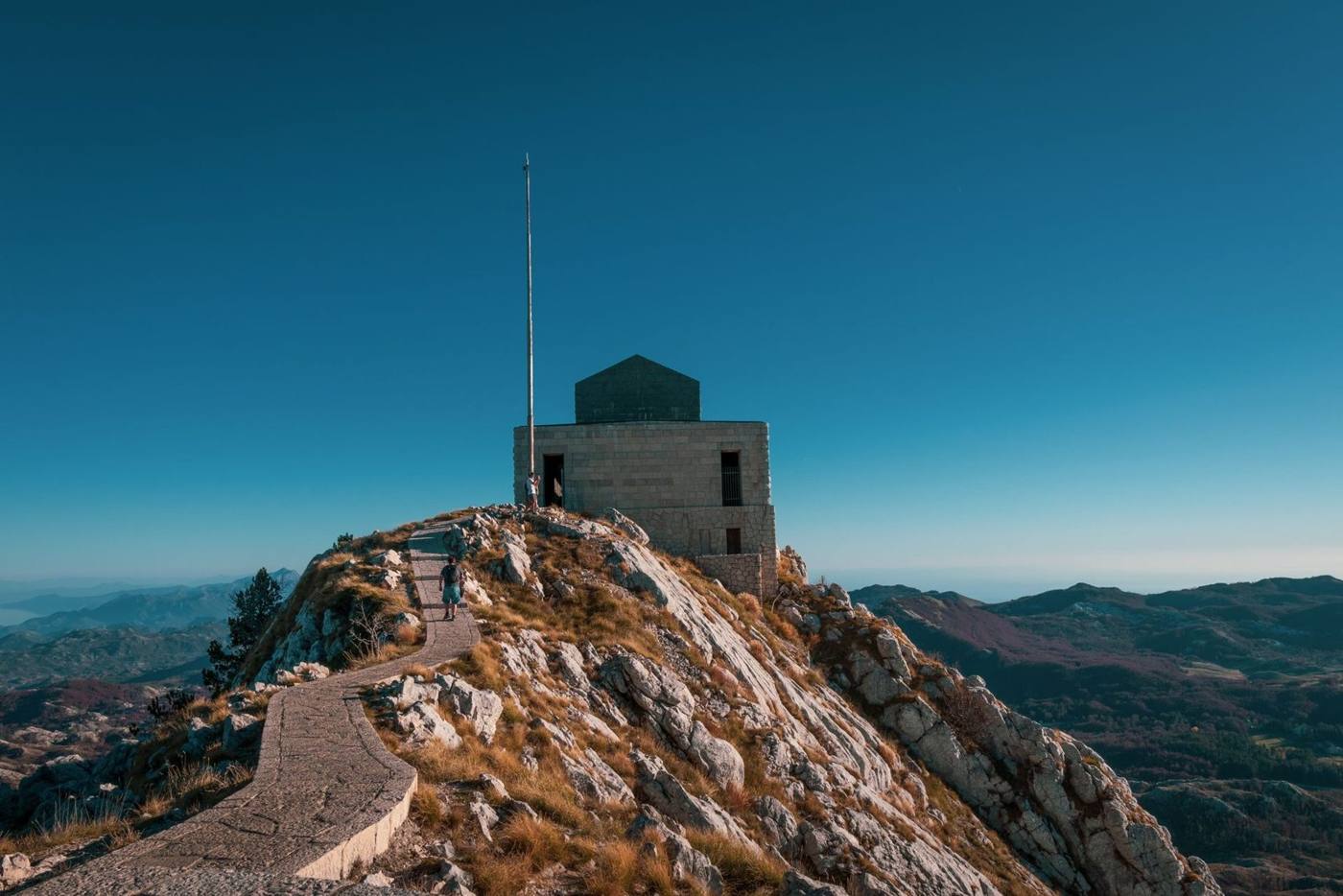
The Kotor serpentine, the ham villages of Njeguši, Njegoš's mausoleum on the summit of Lovćen and the old royal capital of Cetinje.
 10 daysChallenging
Peaks of the Balkans
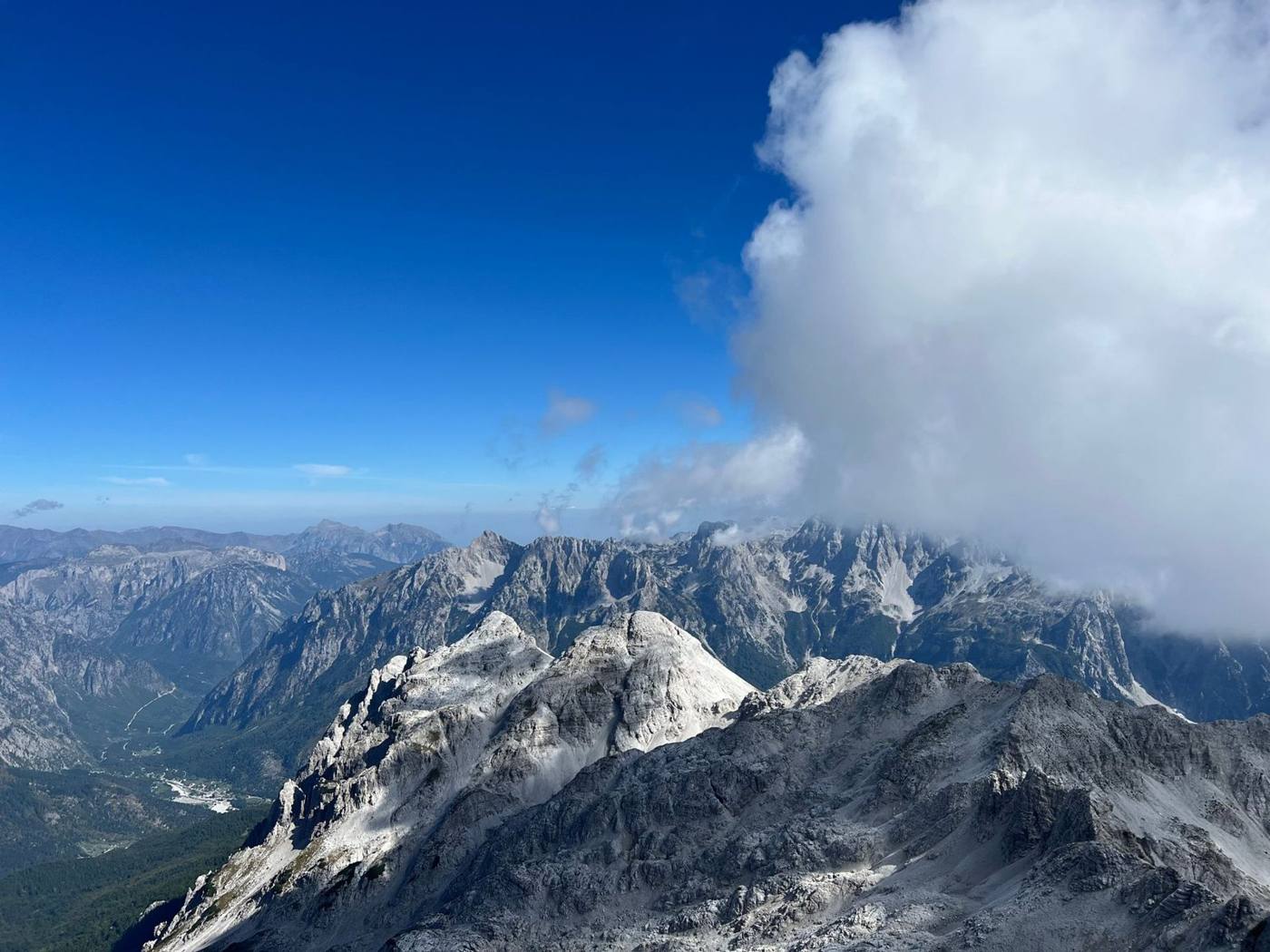
The cross-border trek through Montenegro, Albania and Kosovo: ten stages in the Accursed Mountains, between Theth, Valbona and herders' villages.
 4 daysEasy
Ostrog and the Piva canyon
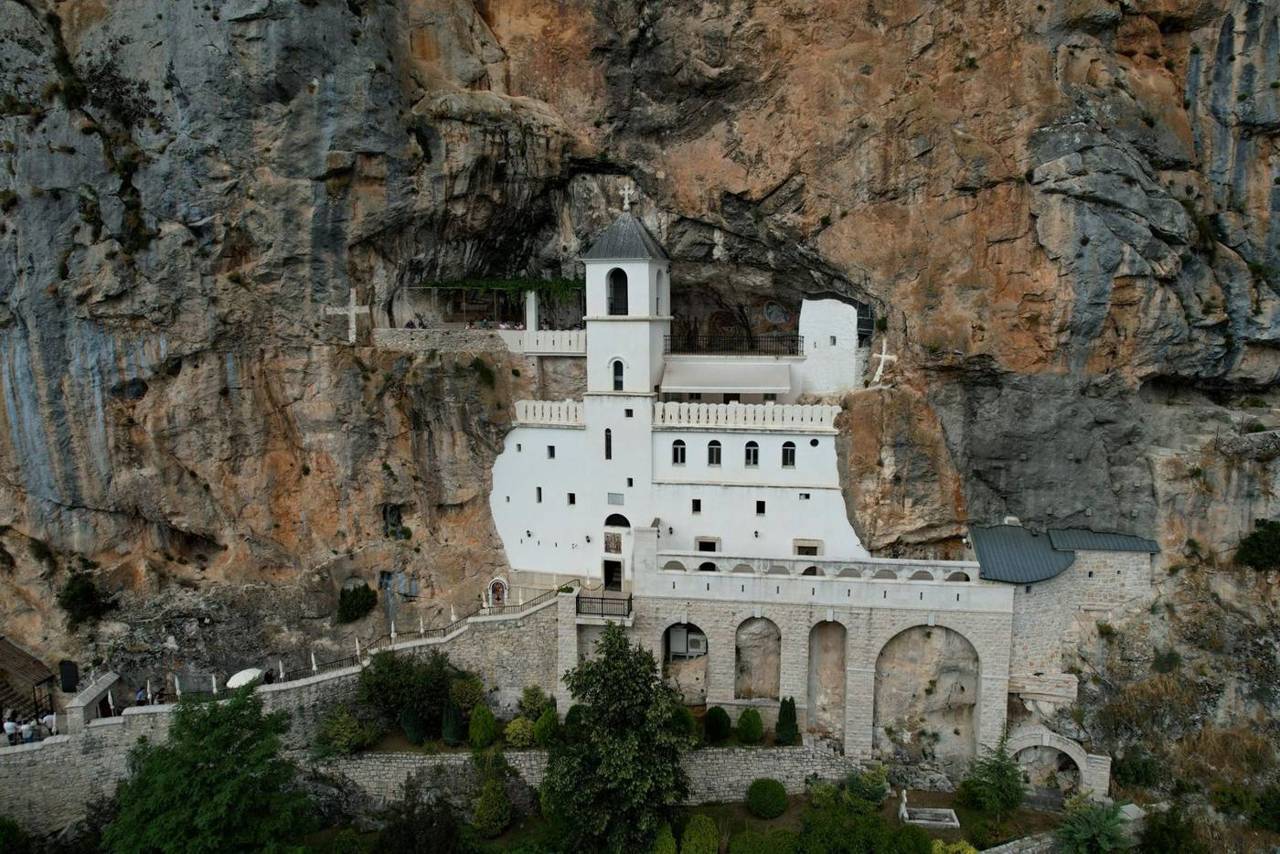
Ostrog Monastery set into the cliff face, Piva Monastery, the lake and canyon with tunnels carved into the rock, up to the Bosnian border.