The three Baltic capitals
Vilnius, Riga and Tallinn in one trip by bus, with stops at the Hill of Crosses, Rundāle Palace and Sigulda.
- Vilnius
- Trakai
- Hill of Crosses
- Rundāle
- Riga
- Sigulda
- Tallinn
Day by day
- Day 1
Vilnius, the Baroque old town
This trip links the three Baltic capitals in nine days: Vilnius, Riga and Tallinn, with the island castle of Trakai, the Hill of Crosses, Rundāle Palace, the beach at Jūrmala, the Gauja valley at Sigulda and Lahemaa National Park. You travel mainly by bus and train, with one day by car or on an organised transfer.
Before you go: Italian citizens can enter Lithuania, Latvia and Estonia with an electronic identity card or a passport, with no visa needed. All three countries are in the European Union and the Schengen area and use the euro; there are no fixed checks between them, but always carry your document. Other nationalities should check their own rules. They are safe countries, with pickpockets in the old towns. The borders with Belarus and Russia, including the Kaliningrad region, are closed or heavily restricted: do not try to cross them. Vilnius is about 30 km from Belarus; balloons from there have closed the airport several times, so check your flight before you leave. In Latvia the zone within 2 km of the Belarusian border requires a permit; this route stays far from it.
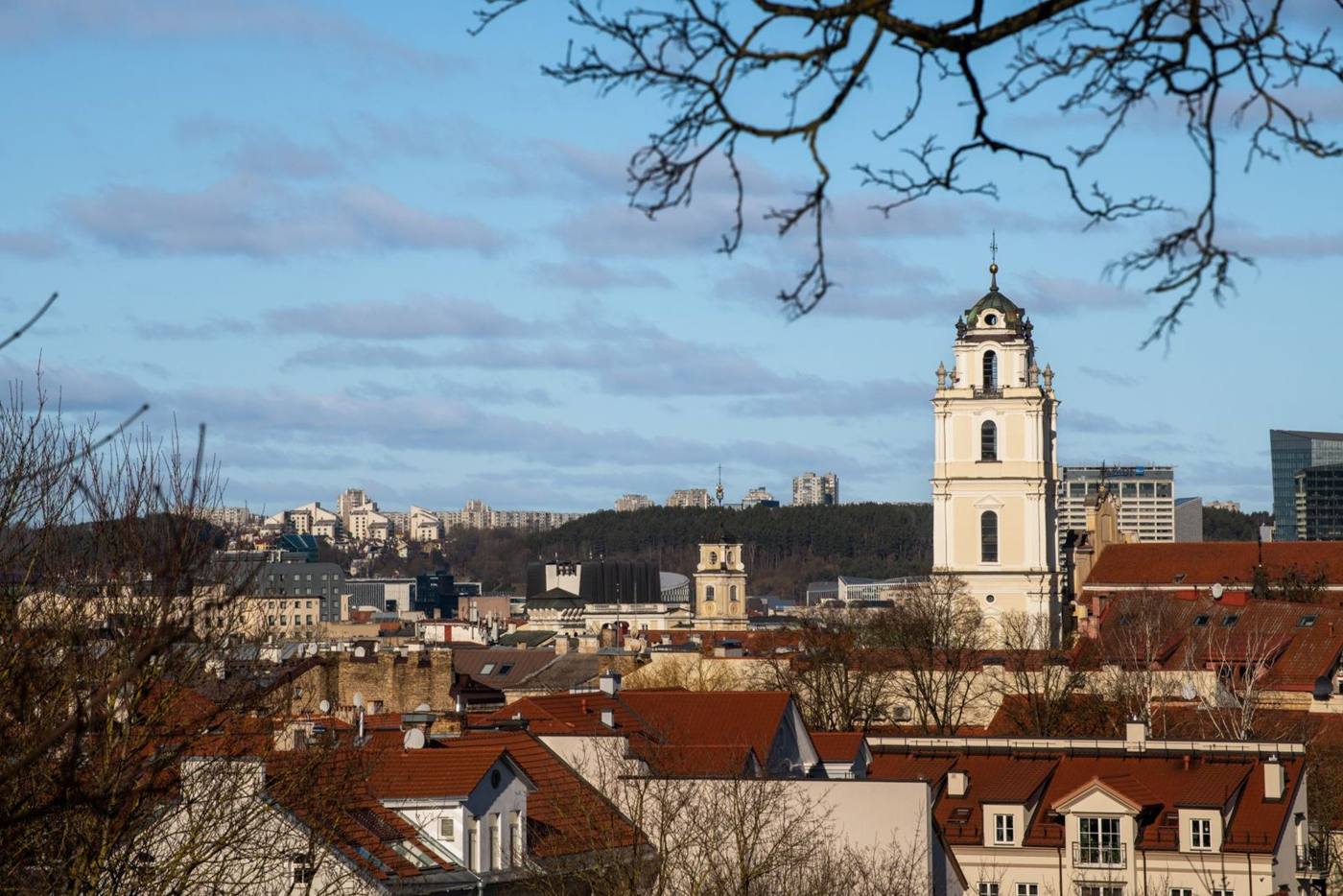
You land in Vilnius and reach the centre by bus, train or taxi. Start at the Gate of Dawn, the only gate left from the walls, with the chapel of the icon of the Virgin. Walk down through the streets of the old town, a UNESCO World Heritage Site, among Baroque churches, courtyards and pastel coloured palaces, to St Anne's Church, in Gothic red brick, and to Cathedral Square, with its white bell tower.
Practical tip: in Vilnius the streets of the old town are cobbled and hilly: wear comfortable shoes.
- Day 2
Užupis, Gediminas Hill and Trakai Castle
On the second day you see the playful soul of Vilnius and the most famous castle in Lithuania.
In the morning cross the little Vilnia river into Užupis, an artists' district that declared itself a republic as a joke in 1997. On a wall in Paupio Street read its constitution, translated into many languages, with articles such as the right to be happy and the right to be unhappy. Then climb Castle Hill to the Gediminas Tower, from which you see the red roofs and domes of the old town. Check prices and times.
Also visit the university courtyards; the university is one of the oldest in Eastern Europe, founded in the sixteenth century, with arcaded courtyards.
In the early afternoon take the train or the bus to Trakai, about half an hour away. Here the red brick castle stands on an island in Lake Galvė, joined to the shore by a wooden bridge. Visit the halls and the museum, then walk along the lake or hire a boat. Check prices and times.
Trakai has been home for centuries to the small Karaim community, who came from Crimea in the Middle Ages. Look at their wooden houses with three windows facing the street and taste kibinai, pastry parcels filled with meat.
In the evening go back to Vilnius.
Practical tip: reach Trakai Castle by mid afternoon, because on sunny summer days the queue to get in grows long.
- Day 3
The Hill of Crosses and Rundāle Palace
Today you cross from Lithuania into Latvia with two stops along the way.
For this day it is easier to hire a car or choose a transfer with organised stops between Vilnius and Riga, which many companies offer. With regular buses alone you need several changes.
In the morning drive north west for about two and a half hours to the Hill of Crosses, near Šiauliai. On a small rise in the middle of the countryside stand tens of thousands of crosses of every kind: wooden, iron, large, small, hung one on another, with rosaries and holy pictures. In the Soviet era the authorities bulldozed the hill several times, but Lithuanians came back each time to plant new crosses. In 1993 Pope John Paul II came here. Walk the paths and, if you wish, leave a small cross yourself.
Then cross into Latvia with no fixed checks and continue to Rundāle, about an hour and a half away. The Baroque palace was designed by Bartolomeo Rastrelli for the Duke of Courland. Visit the Gold Hall, the White Hall and the Duke's apartments, then the French garden with its rose garden. Check prices and times.
In the late afternoon continue to Riga, about an hour and a half by road.
Practical tip: buy a small cross at the stalls near the car park of the hill if you want to leave one: never remove other people's crosses.
- Day 4
Riga, the old town and the Art Nouveau district
On the fourth day you discover Riga, the largest of the three capitals.
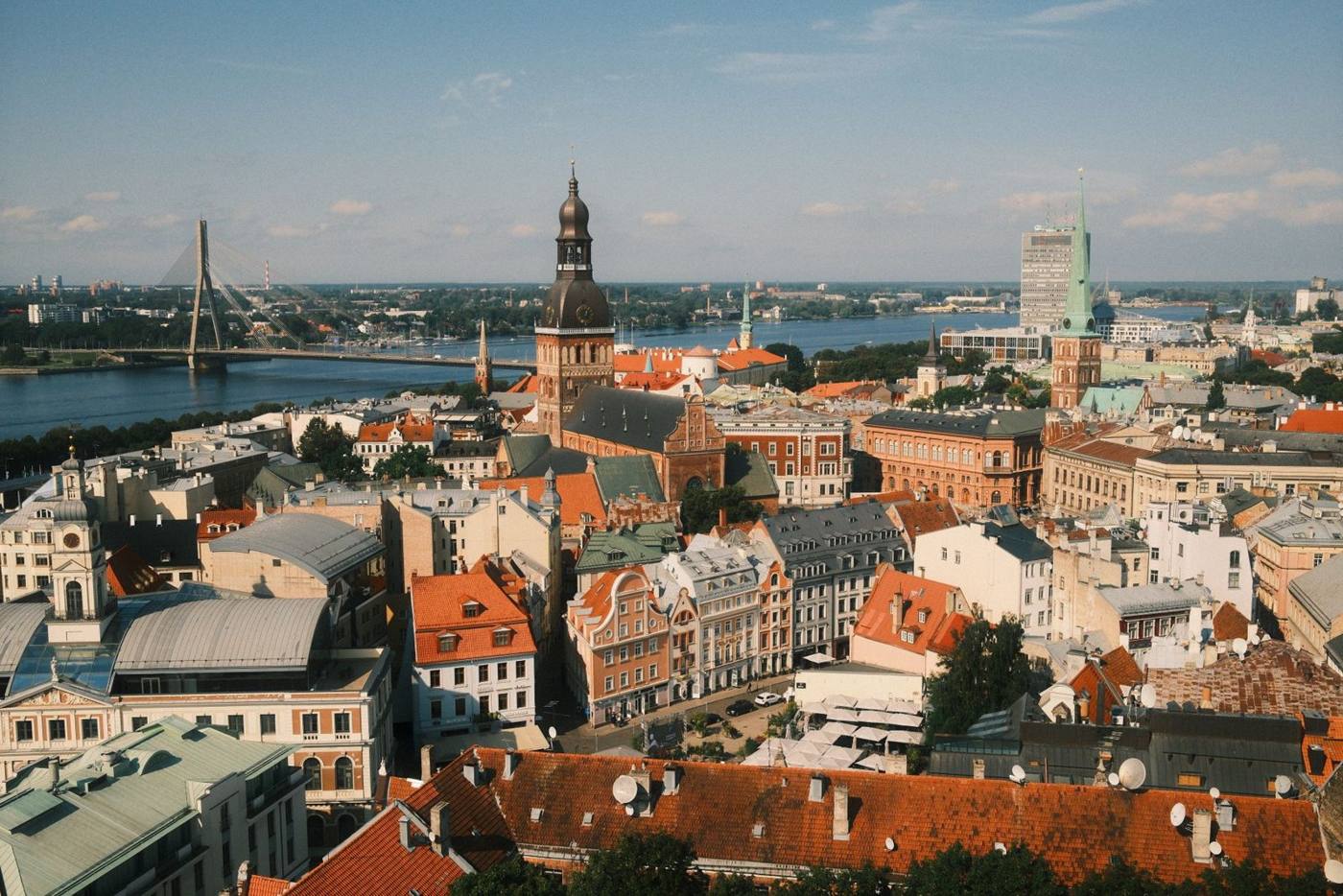
In the morning walk through the old town, a UNESCO World Heritage Site. Start from Town Hall Square, with the House of the Blackheads, destroyed in the Second World War and rebuilt in the 1990s. Then go to the Cathedral, with its monumental organ, to the Three Brothers, three medieval houses side by side, and to the Swedish Gate. Take the lift up the tower of St Peter's Church to see the roofs and the Daugava river. Check prices and times.
At midday go to the Central Market, in the great pavilions made from old airship hangars. Wander among the stalls of smoked fish, cheeses, honey and dark bread, and have a simple lunch.
In the afternoon walk past the Freedom Monument to the Art Nouveau district. Riga has the largest concentration of Art Nouveau buildings in Europe. In Alberta Street look at the façades with women's faces, masks, dragons and floral patterns, and visit the Art Nouveau museum, in a period flat. Check prices and times.
In the evening try Latvian food: grey pea soup with bacon, herring with potatoes and black balsam, the herbal liqueur typical of Riga.
Practical tip: buy public transport tickets from the machines or with the app, because on board they cost more.
- Day 5
Jūrmala, Riga's seaside
Today you leave the city for the best known beach in the Baltic states.
In the morning take the train to Jūrmala, about half an hour from Riga. It is a long strip of town between the Gulf of Riga and the Lielupe river, with pine forests and dunes. Get off at Majori, the centre, and walk along Jomas Street, the pedestrian street.
Then go to the beach: it is very long, with pale, fine sand, and the sea is shallow and often cool. You can walk a long way into the water before it gets deep. It is more a beach for walking than for swimming, but on hot days a swim is pleasant.
In the afternoon walk between Majori, Dubulti and Dzintari, where you see hundreds of wooden villas built between the nineteenth and early twentieth centuries, with verandas, turrets and carvings. Some are restored, others are still waiting for work. In Dzintari forest park climb the wooden viewing tower to see the sea from above.
In the late afternoon go back to Riga and cross the Daugava to the Kalnciems quarter, on the left bank, with its restored wooden houses. On Saturdays there is a market of country produce and crafts. Then go back to the bridge to see the old town at sunset.
Practical tip: in Jūrmala bring a light jacket even in summer, because in the evening the sea wind cools things down quickly.
- Day 6
Sigulda and the Gauja valley
On the sixth day you take a trip into the green Gauja valley, an hour by train from Riga.
In the morning take the train to Sigulda. In town visit the ruins of the medieval castle of the Livonian Order, next to the new castle. Then take the cable car across the valley to Krimulda, above the river and the forests. Check prices and times, because it only runs in some seasons.
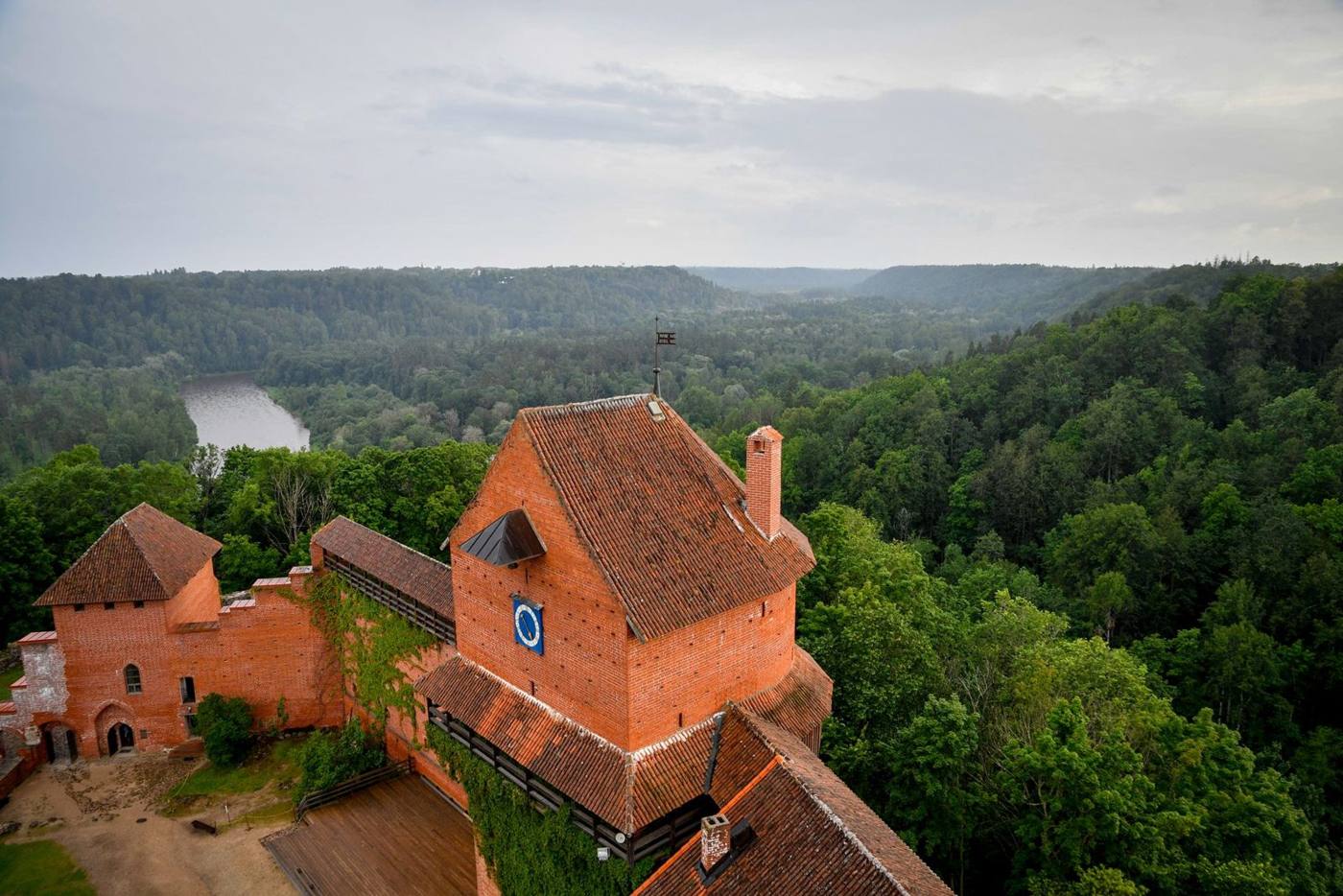
From Krimulda walk down to the river and up to Turaida Castle, in red brick, founded in 1214 by the Archbishop of Riga. Climb the tower, then walk through the grounds to the grave of the Rose of Turaida, under a lime tree, and to the Folk Song Hill, with its stone sculptures. Check prices and times.
In the afternoon go down to Gutmanis Cave, the largest in the Baltic states, carved into the red sandstone, with visitors' inscriptions on the walls and a spring that legend says heals. If you still have energy, walk the trails along the Gauja, between the red cliffs and the forests.
The valley is at its best in autumn, when the birches and maples turn yellow and red. The name Latvian Switzerland, however, is an exaggeration: the hills are low.
In the evening go back to Riga by train.
Practical tip: there is also a local bus between Sigulda and Turaida: use it for the return if you are tired after the cave.
- Day 7
By bus to Tallinn
On the seventh day you reach the third capital, Tallinn.
In the morning take the bus from Riga to Tallinn: the journey takes about four and a half hours, on modern buses with power sockets and wifi. The road crosses the forests and countryside of northern Latvia, then enters Estonia with no fixed checks and passes near Pärnu.
Before you arrive in Estonia remember one rule: when it is dark, pedestrians must wear a reflector on their clothes. In the forests, from spring to autumn, there are ticks. The border with Russia, at Narva, is far from the capital.
In the early afternoon you arrive in Tallinn and enter the old town, a UNESCO World Heritage Site, one of the best preserved in Northern Europe, with its walls and towers still standing. Reach Town Hall Square, with the Gothic town hall and the Old Thomas weather vane. Then climb to Toompea, the upper town, by the Long Leg street, enclosed between walls. At the top you see the Orthodox Alexander Nevsky Cathedral, with its onion domes, the Lutheran St Mary's Cathedral and the castle. From the viewing terraces you see the red roofs down to the port.
In the evening walk along the walls and through the streets of the lower town, when the cruise ship groups have left.
Practical tip: buy your bus ticket to Tallinn a few days ahead, especially in summer, because the morning services fill up.
- Day 8
Lahemaa National Park
On the eighth day you leave Tallinn for the nature of northern Estonia.
Lahemaa, about an hour east of the capital, is Estonia's oldest national park, with forests, bogs, rocky coasts and fishing villages. To see it properly you need a hire car or an organised excursion, because public transport is limited.
In the morning walk the wooden boardwalk across Viru bog, which crosses moss, dwarf pines and dark pools. Climb the observation tower to see the bog stretching to the horizon. The trail is easy and flat, and takes about an hour and a half.
Then visit Palmse manor, a Baroque residence of the Baltic German nobility, with its park, ponds and stables. Check prices and times.
In the afternoon go to the coast, to the village of Käsmu, called the captains' village because in the nineteenth century many sea captains lived here. Walk among the wooden houses and along the shore, scattered with large granite boulders left by the glaciers. If you have time, stop also at Altja, a fishing village with nets and wooden huts.
In the evening go back to Tallinn and have dinner in the old town or in the Kalamaja district, with its colourful wooden houses.
Practical tip: bring mosquito repellent and check yourself for ticks after walks in the forest.
- Day 9
A last morning in Tallinn and departure
On the last day you have a morning in Tallinn before your flight.
In the morning visit the Kalamaja district, just outside the walls, with its wooden houses, cafés and the old industrial area of Telliskivi, now full of galleries and design shops. Then walk to Lennusadam, the Seaplane Harbour, where the maritime museum fills the great concrete hangars by the sea, with a submarine you can go inside. Check prices and times.
In the early afternoon take the tram or the bus to the airport, a few kilometres from the centre.
Trip summary: in nine days you have seen the old town of Vilnius, Užupis and Trakai Castle, the Hill of Crosses, Rundāle Palace, the old town and Art Nouveau district of Riga, the beach at Jūrmala, Sigulda and Turaida, the old town of Tallinn and Lahemaa National Park. It is the classic Baltic tour, easy with modern, frequent buses. Each capital has a different character: Vilnius Baroque and Catholic, Riga large and Art Nouveau, Tallinn medieval and Nordic.
When to go: from May to September. In June and July the days are very long and in late June there is the Midsummer festival, very important in all three countries. In spring and early autumn there are fewer tourists.
Practical tip: if your return flight leaves from another capital, book carefully, because flights between the Baltic capitals are few and expensive compared with the bus.
The classic Baltic loop, easy with modern, frequent buses. Each capital has its own character. Countryside stops are easier by car.
Before you go
- Documents and visa
- EU citizens need a valid identity card or passport: Latvia is in the EU and the Schengen area. Other nationalities should check the Schengen rules and the Entry/Exit System.
- Health and vaccines
- No vaccines required. EU citizens should bring their EHIC, plus insurance covering medical costs and repatriation. Throughout the country, from spring to autumn, forests and meadows have ticks that can carry encephalitis: if you camp, canoe or hike, ask your doctor about the vaccine. Emergencies: 112.
- Money and payments
- Euro. Cards and phone payments are accepted almost everywhere; carry some cash for markets and small rest areas in the countryside.
- Power sockets
- Types C and F, 230 volts: you need an adapter for British plugs.
- Time zone
- Eastern European Time (UTC+2, summer UTC+3).
- Safety
- A safe country, with pickpocketing and bag snatching in Riga's Old Town, at the Central Market and at stations; watch your drinks and beware of card fraud. The border with Belarus is closed or heavily restricted, with closures at short notice, and the area within 2 km of it requires a special licence from the State Border Guard; crossings into Russia are also reduced. Do not try to cross these borders. Some Ukrainian drones aimed at Russia have crossed into Latvian airspace: follow official guidance. Official advice: GOV.UK.
Information checked in November 2026 for Italian and EU citizens. Rules change: always check before you travel.
Variations
Shorter version: in six days you see only the three capitals, with two nights in each and the journeys by bus.
Longer version: add two days for the island of Saaremaa in Estonia or for the Courland coast in Latvia.
Frequently asked questions
Can you tour the three capitals by bus only?
Yes, Vilnius, Riga and Tallinn are linked by modern, frequent buses. For the Hill of Crosses, Rundāle and Lahemaa a car or an organised excursion is easier.
Are there border checks between the three countries?
No, they are all in the Schengen area and there are no fixed checks. Always carry your electronic identity card or passport anyway.
Which capital deserves the most time?
Riga is the largest and has the most to see, but Tallinn has the best preserved old town and Vilnius the richest Baroque. Two days each is the minimum.
Indicative itinerary written by World Atlas. Before booking, check timetables, seasonal openings, documents and safety.
 4 daysEasy
Riga and Jūrmala
The UNESCO old town, the Art Nouveau buildings of Alberta street, the central market in the zeppelin hangars and Jūrmala's beach with its wooden villas.
 4 daysEasy
The Gauja and Sigulda
The 'Latvian Switzerland': Gauja National Park, Turaida castle, sandstone caves and the medieval town of Cēsis.
 5 daysEasy
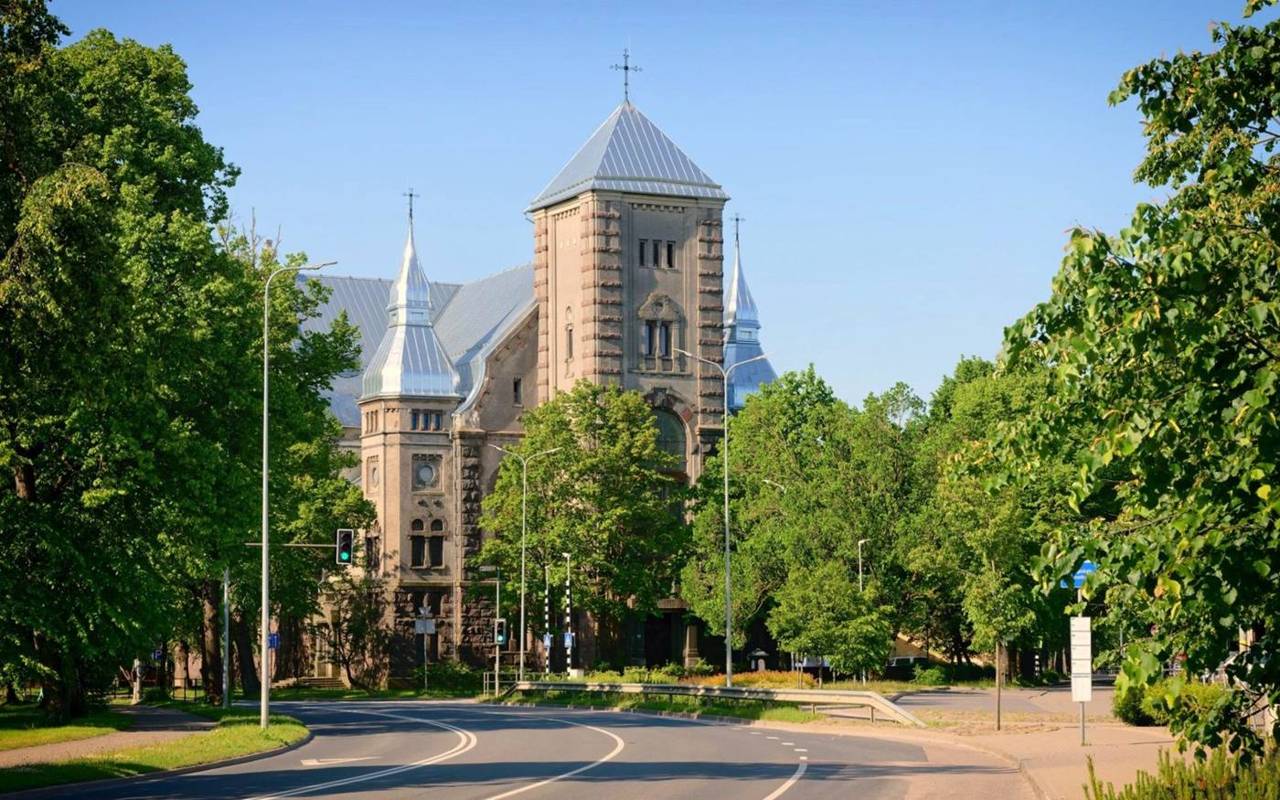
Courland and the coast
The baroque Rundāle Palace, Europe's widest waterfall at Kuldīga, Liepāja and Cape Kolka where the gulf meets the Baltic.