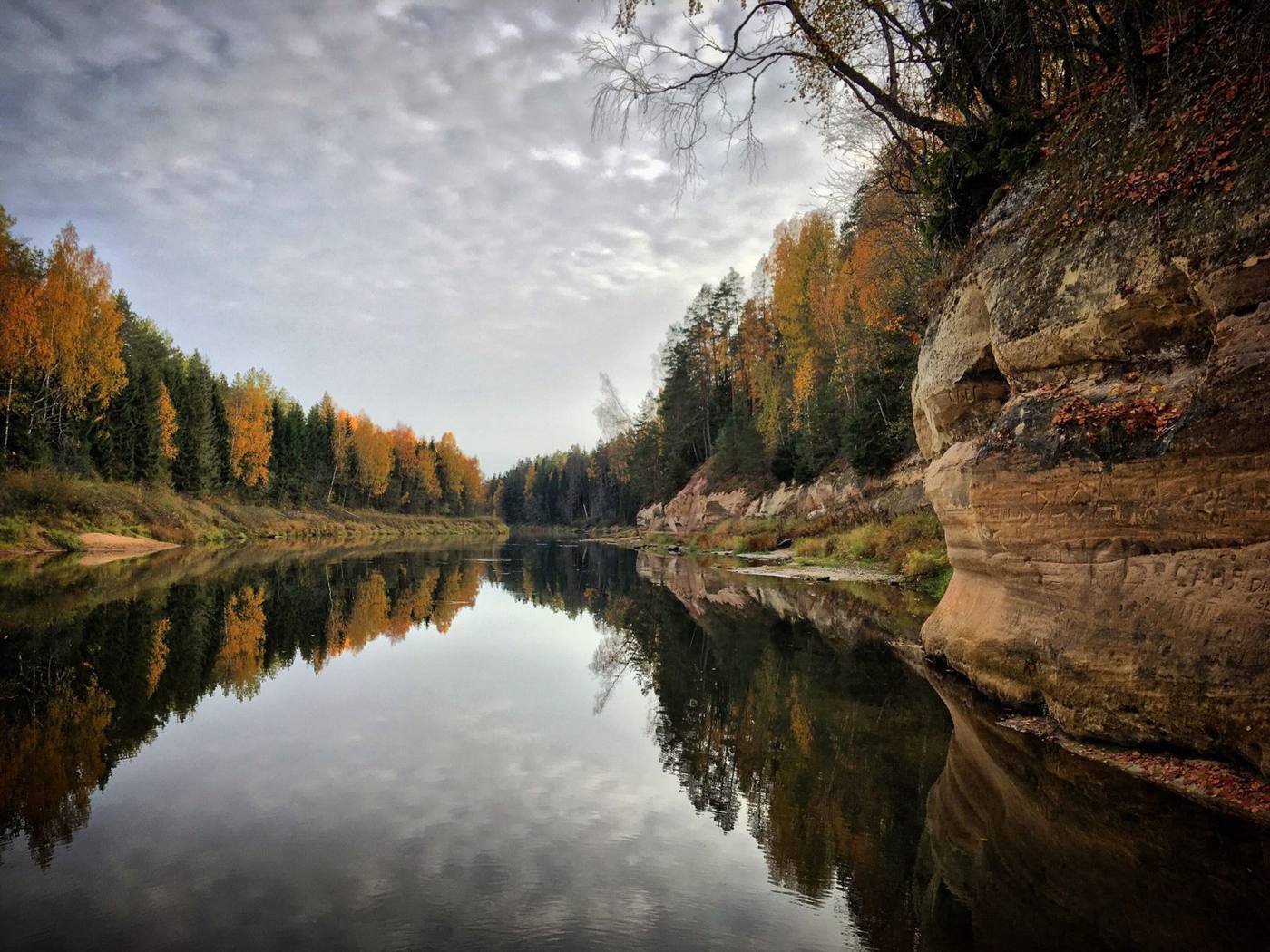
Canoeing the Gauja
Three days canoeing from Valmiera to Sigulda on Latvia's most beautiful river, among sandstone cliffs, woods and riverside campsites.
- Valmiera
- Cēsis
- Līgatne
- Sigulda
Day by day
- Day 1
Valmiera and setting off by canoe
This trip takes you by canoe down the Gauja, Latvia's most beautiful river, from Valmiera to Sigulda: about eighty-four kilometres through Gauja National Park, between red sandstone cliffs, pine forests and campsites on the banks, with stops at Cēsis and Līgatne.
Before you go: Italian citizens can enter Latvia with an electronic identity card or a passport, with no visa needed. Latvia is in the European Union and the Schengen area, and the currency is the euro. Other nationalities should check their own rules. The country is safe, and the closed or restricted borders with Russia and Belarus are far from this route. Along the river there are many ticks, which in Latvia can carry encephalitis: talk to your doctor about the vaccine before you go, use repellent and check yourself every evening.
From Riga you reach Valmiera by train or bus in about two hours. Take a walk around the small town, with St Simon's Church, the ruins of the Livonian Order castle and the park above the river.
In the early afternoon you meet the rental company at the launch point in town. Many rental companies bring the canoe to the start, carry your luggage between campsites and pick you up in Sigulda. You receive life jackets, paddles, dry bags and a map with the rest areas. Check prices and conditions.
Paddle downstream for a couple of hours. The river is calm and wide, with low banks and woods. In the evening pitch your tent at one of the rest areas on the bank, for example near the white cliff of Sietiņiezis.
Practical tip: in the national park camp only in the marked areas and light fires only in the fire pits; take all your rubbish away with you.
- Day 2
From the Sietiņiezis cliffs towards Cēsis
The second day is a long day on the water: you paddle down towards Cēsis, with a break for a walk.
Early in the morning, before setting off again, climb the Sietiņiezis trail. It is a long, high cliff of pale, almost white sandstone above the river, with a wooden boardwalk and steps to the top. From above you see the green valley and the bends of the Gauja. The sandstone is soft: do not write on or carve anything into the rock, because it is protected.
Then set off again by canoe. The river winds through wide bends, sandbanks and fallen trees. Now and then the current speeds up near the bends: keep the canoe in the middle and look ahead to avoid logs. Stop on a small sandy beach for a packed lunch and a swim, if the water is warm enough.
In the afternoon you reach the area of Cēsis, one of the oldest towns in Latvia. If you have the energy, leave the canoe at the rest area and walk up into town: visit the medieval castle of the Livonian Order, where in summer you can climb the towers with a lantern, and the park next to it. Check prices and times.
Sleep at a campsite near the river, under the pines.
Practical tip: load the dry bags evenly and tie everything to the canoe; if you capsize, your luggage must not float away on the current.
- Day 3
Down to Līgatne and the Eagle Cliffs
On the third day you paddle the most spectacular stretch of the Gauja, between Cēsis and Līgatne.
Here the valley narrows and the banks rise high. Cliffs of red and orange sandstone drop straight into the water, with caves, springs and roots hanging from above. The best known spot is the Eagle Cliffs, Ērgļu klintis, a long sandstone wall above a bend in the river. Pass beneath it slowly, then pull in and climb the path to the viewpoint above the cliff: from there you see the Gauja curving through the forest.
Along the river you often see herons, kingfishers and, with a little luck, beavers or their dams. Keep quiet and keep your distance from the animals. On this stretch the rest areas are frequent: stop often, drink and rest your arms, because the day on the water is long.
In the afternoon you reach the Līgatne area. If you still have the strength, walk the park's nature trails, where there are enclosures with animals of the Latvian forest, such as deer, elk and bears, in large open spaces. Check prices and times. The village of Līgatne grew up around an old paper mill, with workers' wooden houses and cellars dug into the sandstone.
Sleep at a campsite on the banks.
Practical tip: at the end of summer, when the water is low, some stretches are shallow and you have to get out and drag the canoe; bring closed water shoes.
- Day 4
Arrival in Sigulda and back to Riga
On the last day you paddle the final stretch to Sigulda, where the Gauja valley becomes deeper.
In the morning the river flows between wooded hills and passes beneath high sandstone cliffs. You reach the rest area near the Sigulda bridge, where the rental company collects the canoe. Change out of your wet clothes and leave your luggage somewhere safe.
In the afternoon explore Sigulda. Visit Turaida Castle, a red brick tower above the valley, with a museum and a sculpture park dedicated to Latvian folk songs. Check prices and times. Nearby is Gūtmanis Cave, the largest cave in the valley, with names and dates carved by visitors over past centuries. If you have time, also see the ruins of Sigulda's medieval castle and the view over the valley from the hill.
In the evening take the train to Riga, about an hour.
Trip summary: in four days you have canoed down the Gauja from Valmiera to Sigulda, with the white cliff of Sietiņiezis, Cēsis castle, the Eagle Cliffs, the forests of Līgatne and finally Turaida Castle and Gūtmanis Cave. It is a calm and safe river, suitable for anyone with a little canoeing experience.
When to go: from June to August, with warmer water and long days. At the end of summer the water level can be low.
Practical tip: book the canoe rental and luggage transport in advance for July and for Jāņi, the midsummer festival.
A calm, safe river suitable for families with some experience. Rental companies transport canoes and luggage. With low water in late summer, some stretches are shallow.
Before you go
- Documents and visa
- EU citizens need a valid identity card or passport: Latvia is in the EU and the Schengen area. Other nationalities should check the Schengen rules and the Entry/Exit System.
- Health and vaccines
- No vaccines required. EU citizens should bring their EHIC, plus insurance covering medical costs and repatriation. Throughout the country, from spring to autumn, forests and meadows have ticks that can carry encephalitis: if you camp, canoe or hike, ask your doctor about the vaccine. Emergencies: 112.
- Money and payments
- Euro. Cards and phone payments are accepted almost everywhere; carry some cash for markets and small rest areas in the countryside.
- Power sockets
- Types C and F, 230 volts: you need an adapter for British plugs.
- Time zone
- Eastern European Time (UTC+2, summer UTC+3).
- Safety
- A safe country, with pickpocketing and bag snatching in Riga's Old Town, at the Central Market and at stations; watch your drinks and beware of card fraud. The border with Belarus is closed or heavily restricted, with closures at short notice, and the area within 2 km of it requires a special licence from the State Border Guard; crossings into Russia are also reduced. Do not try to cross these borders. Some Ukrainian drones aimed at Russia have crossed into Latvian airspace: follow official guidance. Official advice: GOV.UK.
Information checked in November 2026 for Italian and EU citizens. Rules change: always check before you travel.
Variations
In 2 days: only the stretch from Cēsis to Sigulda, the most spectacular, with one night camping.
In 6 days: paddle more slowly and add two days in Riga before or after the river.
Frequently asked questions
Do you need experience to canoe the Gauja?
A little experience is enough. The river is calm, with no difficult rapids, but there are bends with current, logs and shallow stretches at the end of summer.
Where do you sleep along the river?
At rest areas and campsites on the banks, some of them paid. In the national park you may camp only in marked places. Check prices and rules.
Do I need the tick vaccine?
It is not compulsory, but the risk of tick-borne encephalitis exists throughout Latvia. If you are camping and canoeing, talk to your doctor about the vaccine a few weeks before.
Indicative itinerary written by World Atlas. Before booking, check timetables, seasonal openings, documents and safety.
 3 daysEasy
The Daugava valley
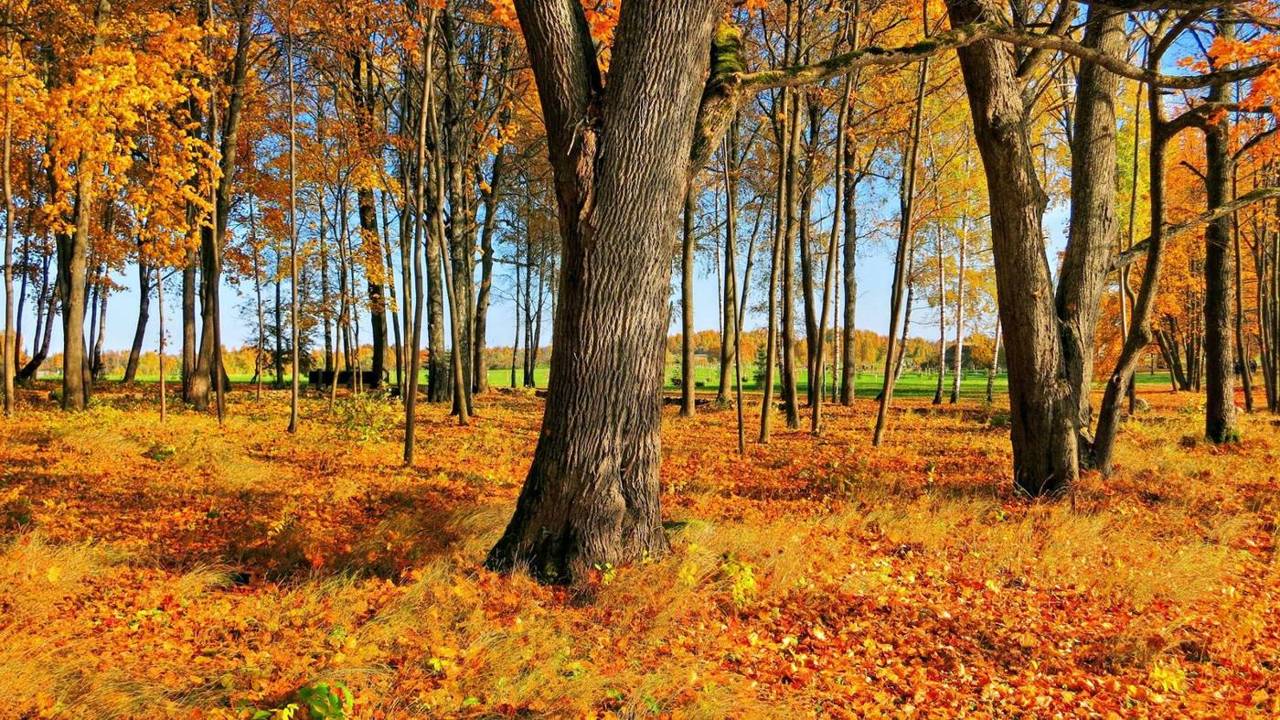
Along Latvia's great river: Koknese castle ruins, the Garden of Destinies, Aizkraukle and the town of Jēkabpils with its open-air museums.
 9 daysEasy
The three Baltic capitals
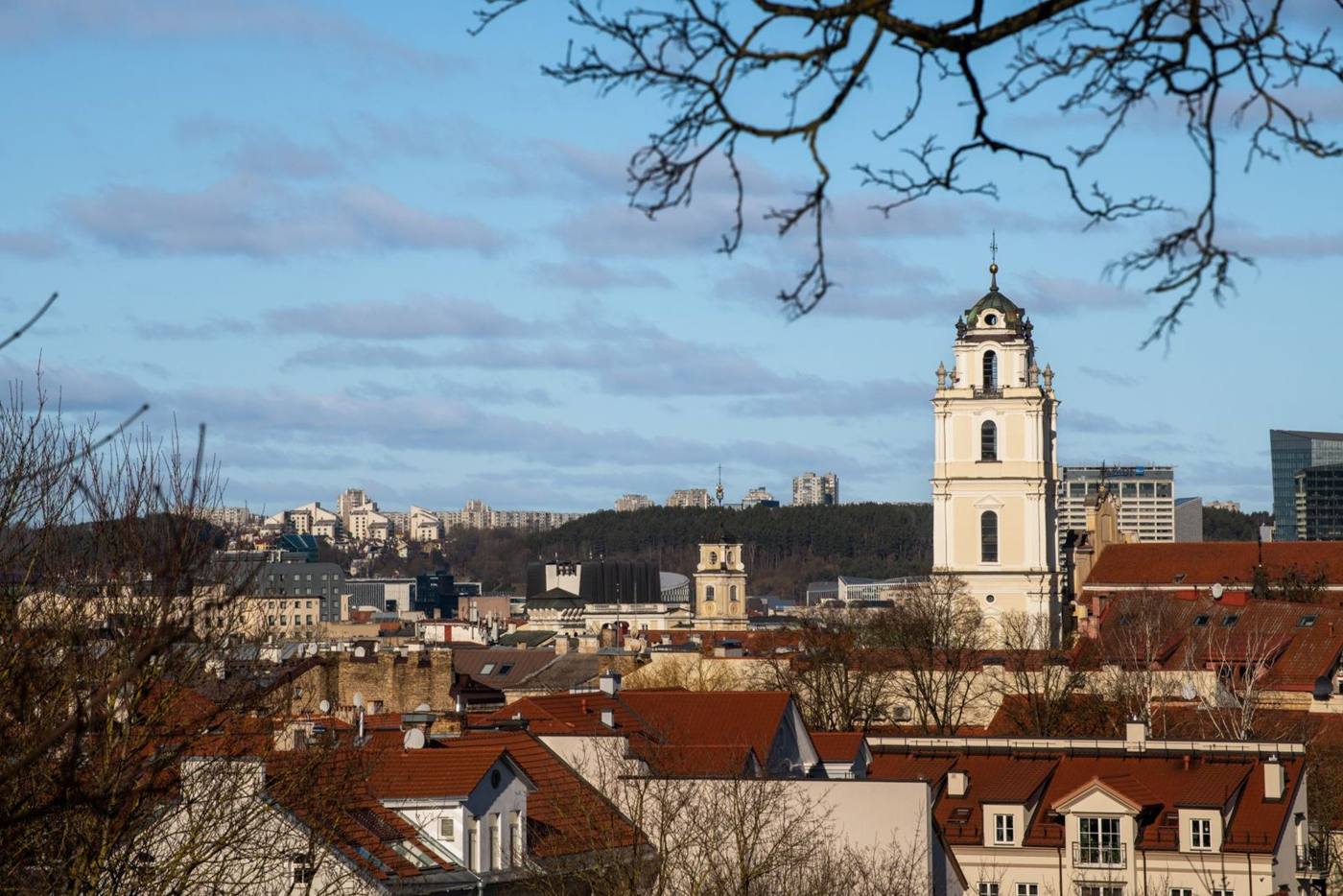
Vilnius, Riga and Tallinn in one trip by bus, with stops at the Hill of Crosses, Rundāle Palace and Sigulda.
 4 daysEasy
Riga and Jūrmala
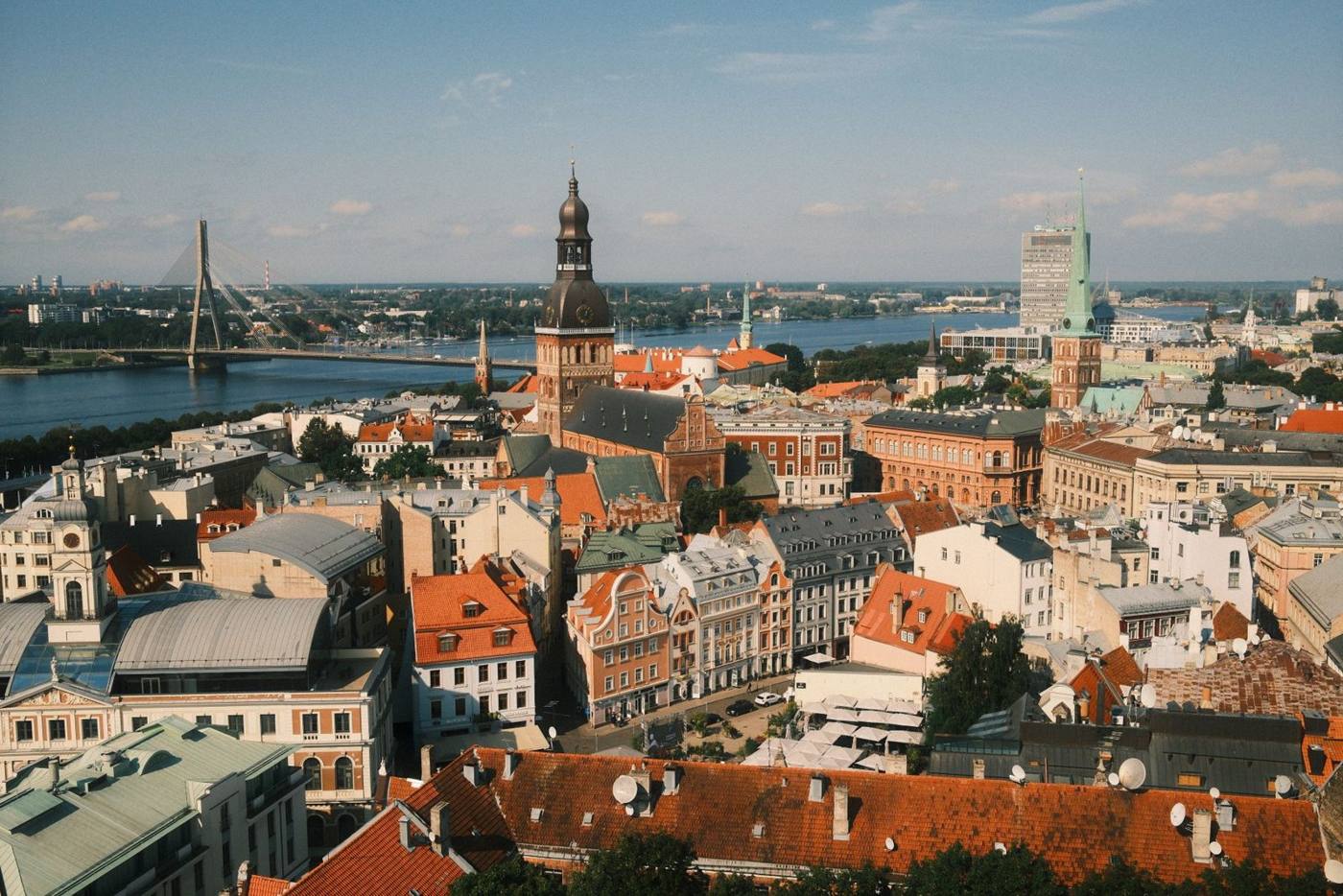
The UNESCO old town, the Art Nouveau buildings of Alberta street, the central market in the zeppelin hangars and Jūrmala's beach with its wooden villas.