Luang Prabang
The UNESCO town of temples on the Mekong, the monks' alms round at dawn, the Kuang Si falls and the Pak Ou caves.
- Luang Prabang
- Wat Xieng Thong
- Phou Si
- Kuang Si
- Pak Ou
Day by day
- Day 1
Wat Xieng Thong, the royal palace and sunset from Phou Si
This five day trip is devoted to Luang Prabang, the city of temples on the peninsula between the Mekong and the Nam Khan, a UNESCO World Heritage Site since 1995. You will see the monks' alms round at dawn, the turquoise Kuang Si waterfalls, the Pak Ou caves and Lao cooking.
Before you go: for Laos Italian citizens need a passport valid for at least six months from entry, with two blank pages, and a tourist visa. Apply for the eVisa only on the official website laoevisa.gov.la, at least five days ahead, or get a visa on arrival at Luang Prabang airport. Also fill in the LDIF digital form within the three days before arrival. Other nationalities should check their own rules.
Safety: the city is calm. In bars drink only from sealed bottles and cans, because there have been methanol poisonings in Laos, and outside town stay on the paths.
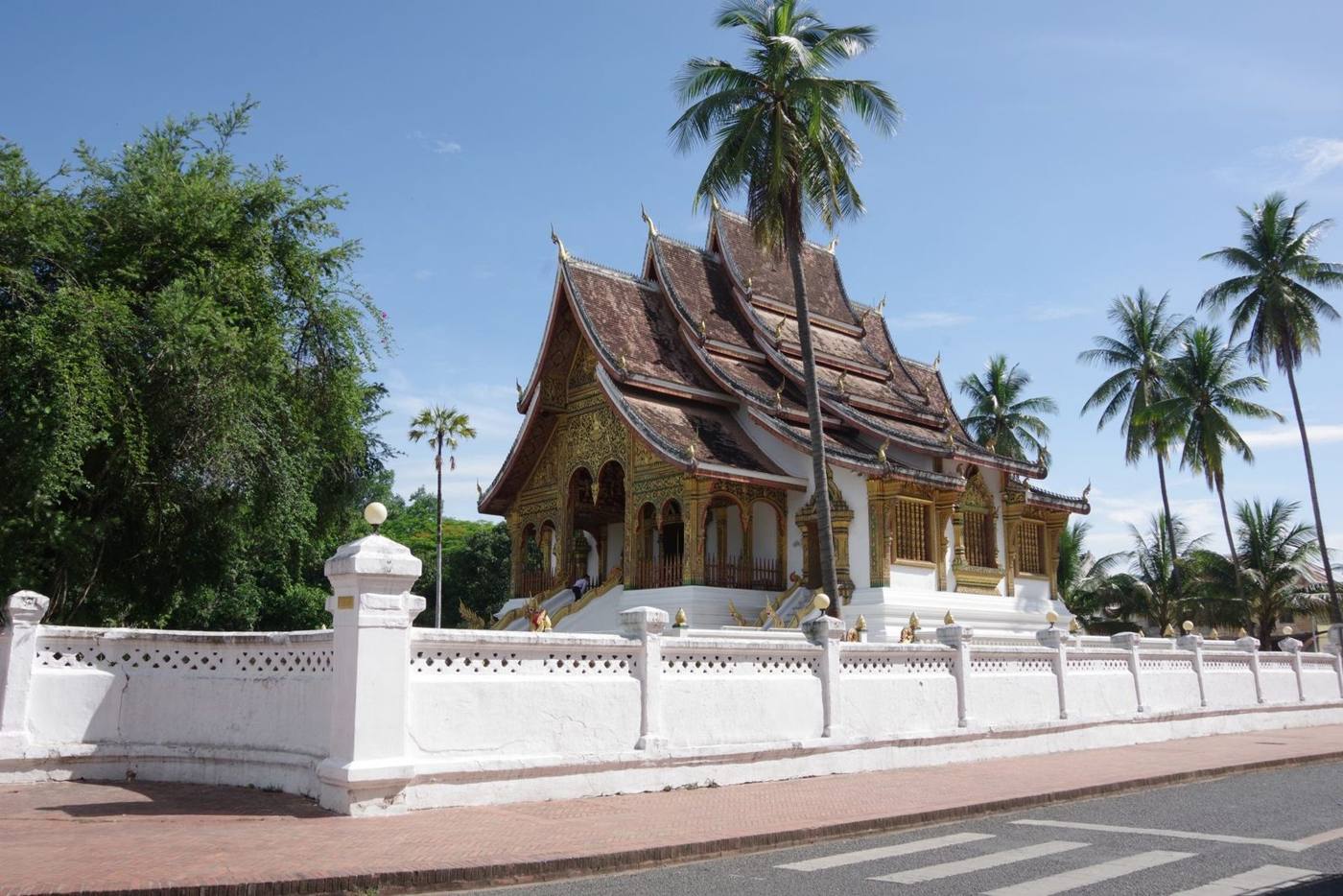
Start with Wat Xieng Thong, at the tip of the peninsula, built in the sixteenth century: its layered roofs sweep almost to the ground, and on the back wall a coloured glass mosaic shows the tree of life. Then walk along the main street to the Royal Palace Museum, the residence of the kings built in the early twentieth century, with the throne halls and the shrine of the Phra Bang, the most revered statue in the country. Check prices and times and wear clothes covering your shoulders and knees.
In the late afternoon climb the more than three hundred steps of Phou Si, the hill in the middle of town, and watch the sun go down over the Mekong.
Practical tip: climb Phou Si a little early, because at sunset the small terrace at the top fills up quickly.
- Day 2
The turquoise Kuang Si waterfalls
Get up early for tak bat, the monks' alms round. At first light lines of monks in orange robes walk barefoot through the streets of the centre, and kneeling worshippers offer sticky rice. Watch in silence and from a distance, without flash, and do not stand in their path.
After breakfast set off for the Kuang Si waterfalls, about thirty kilometres south of town, by car, shared minivan or tuk-tuk. At the entrance to the site there is a rescue centre for moon bears saved from illegal trade, which you can see along the path.
Then the forest opens onto a series of turquoise pools, separated by small limestone cascades. The path climbs beside the pools to the main waterfall, tall and spectacular. In some marked pools you can swim: follow the signs and do not jump where it is forbidden. Check prices and times. If you have the energy, a steep trail leads to the top of the falls.
Have lunch at the stalls near the entrance with grilled chicken and papaya salad, then return to town in the afternoon.
Practical tip: arrive at Kuang Si as soon as it opens, because by midday the groups fill the pools and the light on the water is less beautiful.
- Day 3
By boat on the Mekong to the Pak Ou caves
Today you sail on the Mekong, the great waterway of Laos. In the morning take a boat from the riverfront and travel north up the river for about two hours, past green hills, riverside gardens and fishermen with nets.
The Pak Ou caves open in a limestone cliff right opposite the mouth of the Nam Ou. The lower cave, near the water, is full of thousands of Buddha figures in wood, bronze and stone, left by worshippers over the centuries. A staircase leads to the upper cave, darker and quieter, where you need a torch. Check prices and times.
On the way back many boats stop at Ban Xang Hai, the village of lao-lao, the rice spirit, where you can also see weaving looms. Taste only from sealed bottles. Or stop at a weaving village to watch the women at their looms.
In the afternoon, back in town, walk along the Nam Khan and cross one of the seasonal bamboo bridges, put up in the dry season, to see the other bank. Then stop at a riverside café and watch the boys fishing with nets from the rocks as the sun sinks behind the palms.
Practical tip: bring a hat and sun cream, because on the boat the sun is strong even when the air is cool.
- Day 4
Lao cooking class and the night market
Today you discover Lao cooking, simple and fragrant, with fresh herbs, chilli and sticky rice. In the morning go to Phosy market or the morning market in the centre, which sells mountain vegetables, Mekong fish, dried buffalo and big bunches of herbs. Let the sellers explain the roots and leaves you do not know.
Then join a cooking class: it usually starts with shopping at the market and you prepare a menu of four or five dishes. You will learn to make larb, the minced meat salad with mint and toasted rice, jeow, the spicy dip of roasted chilli and tomato, or lam, the Luang Prabang stew with chilli wood, and fish cooked in banana leaf. Check prices and times.
In the afternoon rest or visit the centre of traditional arts and ethnology, which presents the peoples of Laos with clothes, objects and photographs. Check prices and times.
In the evening go to the night market on the main street: hundreds of stalls with textiles, mulberry paper, lanterns and bags embroidered by Hmong women. At the end, down an alley, are the buffet food stalls.
Practical tip: at the market bargain calmly and with a smile, without pushing too hard on prices.
- Day 5
Departure or train to Vang Vieng
Last day. Have breakfast with a strong, sweet Lao coffee with condensed milk and a baguette, a legacy of the French period, then stroll once more among the colonial houses and temples of the peninsula, stepping into those you have not yet seen, such as Wat Mai, with its golden facade.
Then leave. The airport is a few minutes from the centre. If you want to continue your trip, take the fast Laos-China train from the station, outside town: heading south you reach Vang Vieng in about an hour, among karst peaks and lagoons.
In these five days you have seen Luang Prabang: Wat Xieng Thong, the Royal Palace Museum, sunset from Phou Si, the monks' alms round at dawn, the Kuang Si waterfalls, the Pak Ou caves, the markets and Lao cooking.
When to go: the best period is from November to February, with dry weather, warm days and cool mornings. Between February and April the smoke from farm fires often covers the sky and it is very hot. From May to October it rains, the countryside is green and the waterfalls are more powerful, but the water is less turquoise.
Practical tip: buy your train tickets a few days ahead, at the station or on the official railway app, with your passport.
One of Southeast Asia's calmest and most beautiful towns. Watch the monks' alms round in silence and from a distance, without flash. From February to April smoke from crop burning often hazes the sky.
Before you go
- Documents and visa
- Passport valid for at least six months from entry, with at least two blank pages, and a tourist visa: the eVisa, to be requested only on the official website laoevisa.gov.la (accepted at the main airports and at Friendship Bridges I and IV), or a visa on arrival at the main entry points. You must also fill in the LDIF digital immigration form within the three days before arrival and departure.
- Health and vaccines
- Malaria is present in rural areas and dengue cases are regular: use repellent. Medical facilities are poor even in the capital, so you need insurance covering medical costs and repatriation. Drink only bottled water. Emergencies: ambulance 1195, police 1191.
- Money and payments
- Lao kip. Tourist businesses often accept US dollars and Thai baht; cards work in towns, but carry cash in the countryside.
- Power sockets
- Types A, B and C, 230 volts: you need an adapter for British plugs.
- Time zone
- UTC+7 all year.
- Safety
- The British government advises against all travel to Xaisomboun province. Unexploded ordnance remains across the country: walk only on marked paths and never pick up metal objects. There have been fatal methanol poisonings from drinks served in tourist areas: avoid unsealed spirits. Drug penalties are extremely severe. Official advice: GOV.UK.
Information checked in November 2026 for Italian and EU citizens. Rules change: always check before you travel.
Variations
In three days: temples and Phou Si on the first day, the alms round and Kuang Si on the second, Pak Ou on the third.
In eight days: add three days in Nong Khiaw and Muang Ngoi, on the Nam Ou river, north of the city.
Frequently asked questions
How do I watch the monks' alms round?
At first light, along the streets of the centre. Stay silent and at a distance, without flash, and do not stand in the monks' path. If you take part, do so with respect.
Can you swim at Kuang Si?
Yes, but only in the marked pools. Follow the signs and do not jump where it is forbidden. Check prices and times at the entrance.
How do you get to Luang Prabang?
By plane to the airport, a few minutes from the centre, or on the fast Laos-China train from Vientiane and Vang Vieng.
Indicative itinerary written by World Atlas. Before booking, check timetables, seasonal openings, documents and safety.
 5 daysEasy
From Vientiane to Vang Vieng
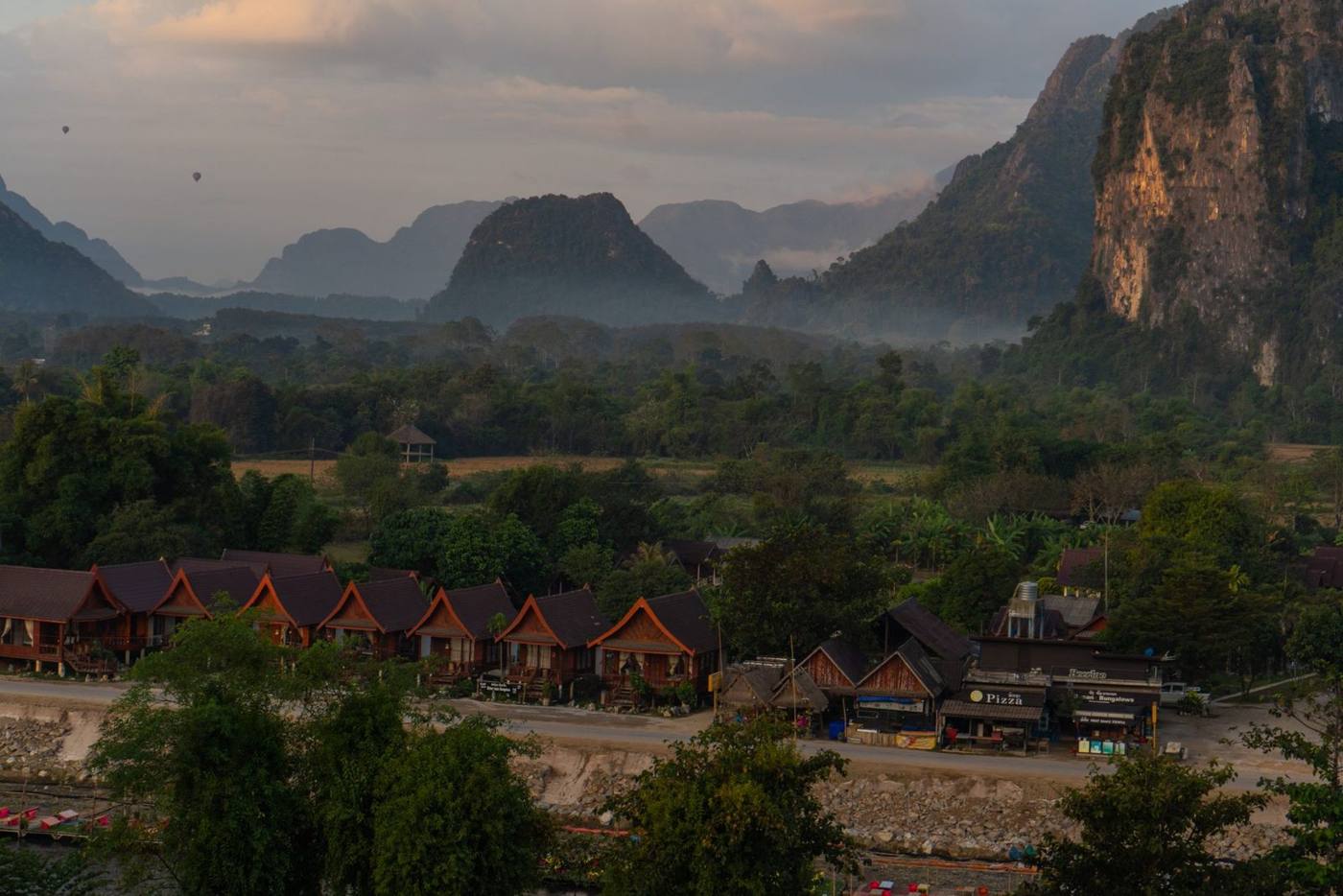
The capital on the Mekong with That Luang, then the fast Laos-China railway to Vang Vieng among karst peaks, kayaks and blue lagoons.
 6 daysEasy
The south and the 4,000 Islands
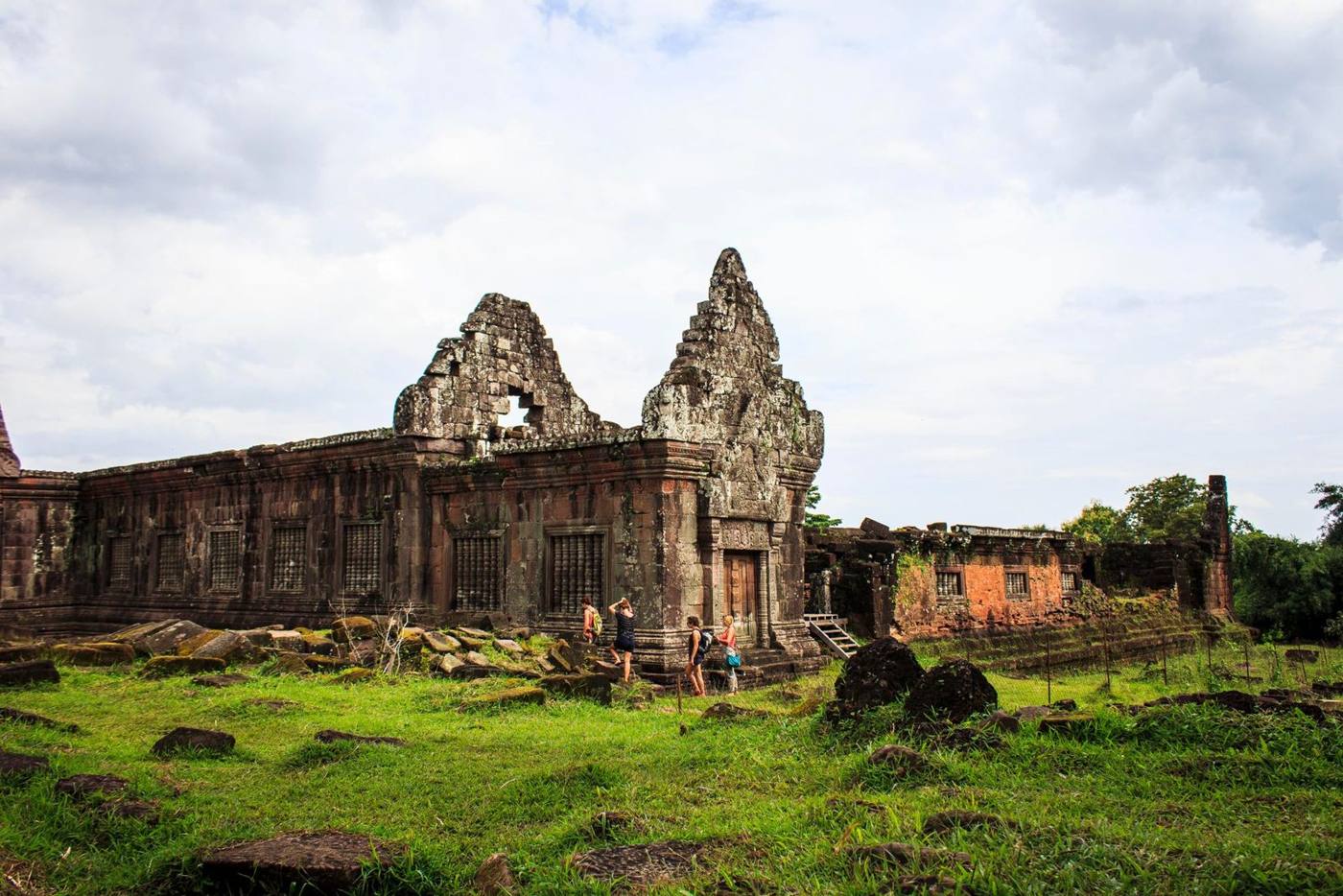
Pakse, the pre-Angkor temple of Wat Phou, the Bolaven plateau with coffee and waterfalls, and Don Det and Don Khone on the Mekong.
 4 daysEasy
Nong Khiaw and Muang Ngoi
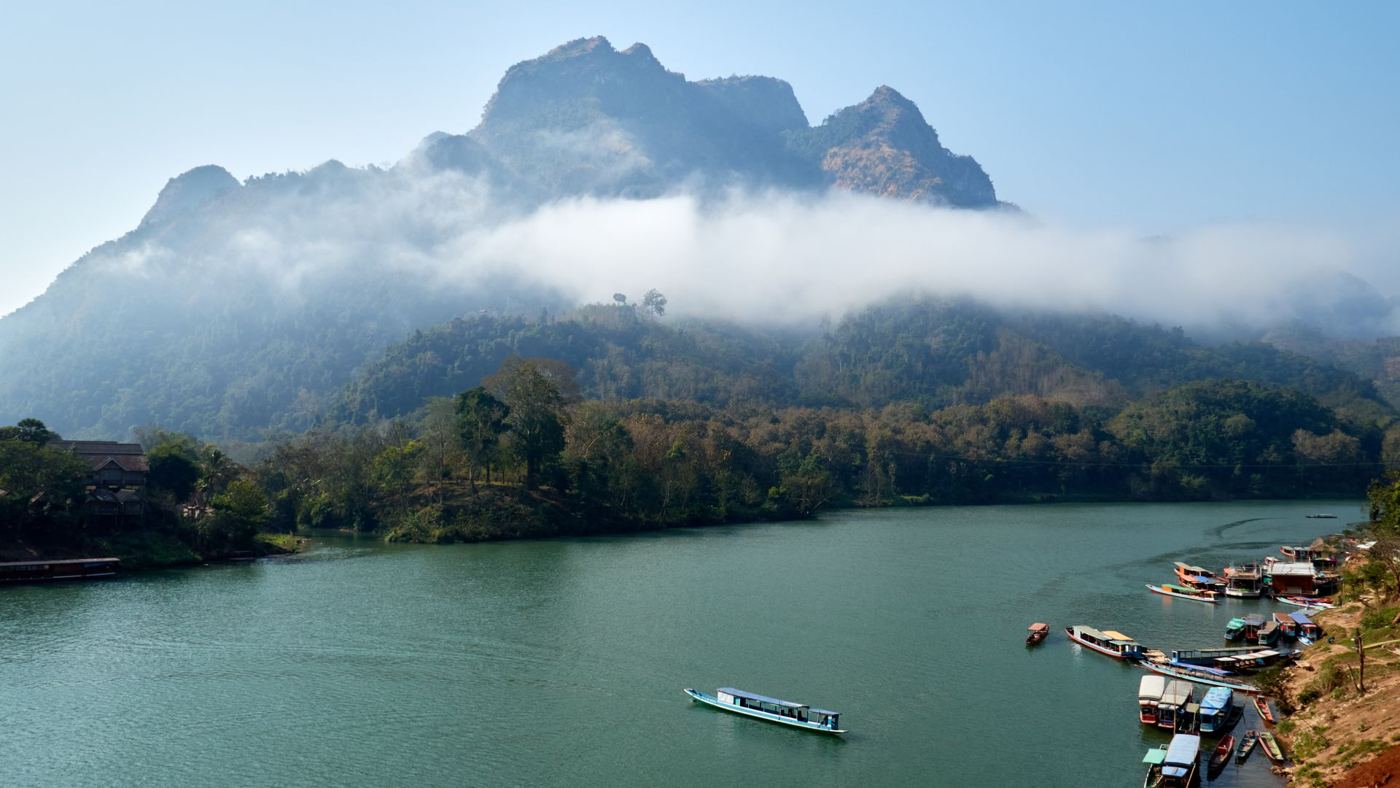
The karst peaks on the Nam Ou river: Pha Daeng viewpoint at Nong Khiaw, the boat to the roadless village of Muang Ngoi and walks among the rice fields.